New plans

Hooray! I got permission to start a new experiment this summer! This time no exotic location, however. I will stay with both feet on the university grounds, where I got access to almost 100 square meter of boring grassland on the experimental site of our research group.

Project site

This grassland will serve me well in solving some of the remaining mysteries about disturbance, microclimate and their combined effect on plants. Because it is all about the smallest scale, I do not need much more space than those few meters of grass.

Field site

I will basically walk around like a big Godzilla in my plot to create gaps. Large gaps, small gaps and all kinds of gaps in between, all free of vegetation and freely available for gap invaders. These gap invaders will get a little bit of help from me, as I will sow seeds in all the gaps. When the plants are growing, I will closely monitor the conditions within the gaps, especially temperature and humidity. The important part is that I will look on a much smaller scale, not just at gaps as a whole, but at the variation on different locations within the gaps. This will learn us what those seedlings are réally feeling, and that is what we really need to understand them! The picture shows the kind of gaps we are talking about, in this case naturally made by a mole.

Gap

With this fieldwork comes a nice chance to leave the office once in a while and enjoy spring outside. It does not matter it is only 100 meters from my office, because nature can also be found just around the corner. I already discovered a busy bee hotel at the entrance of the field site and birds were singing everywhere while spring was getting on full speed. Working could be worse…
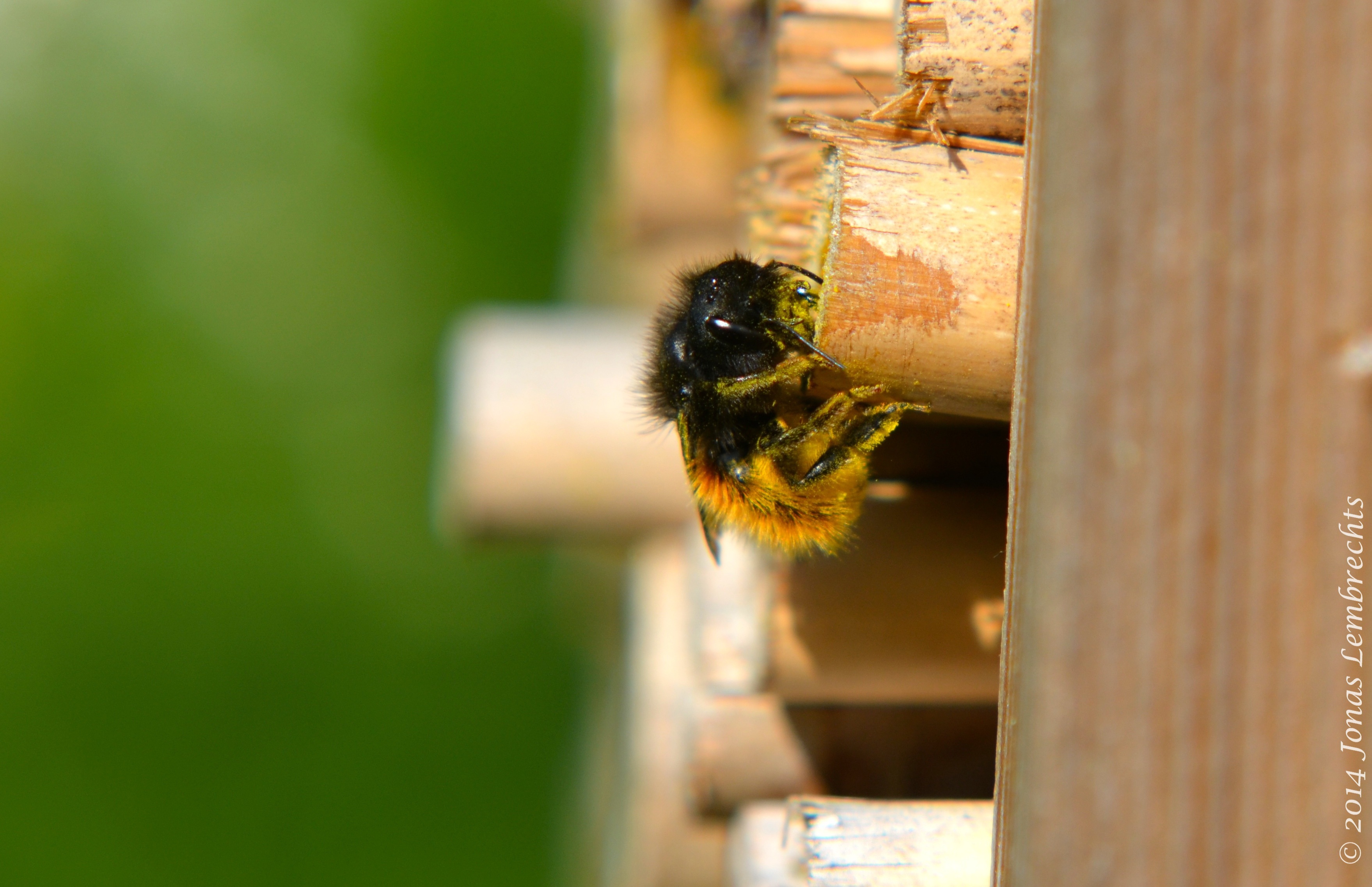
 Bee Bee hotel

Posted in Belgium | Tagged , , , , , , , , , | 10 Comments

Catch the wind

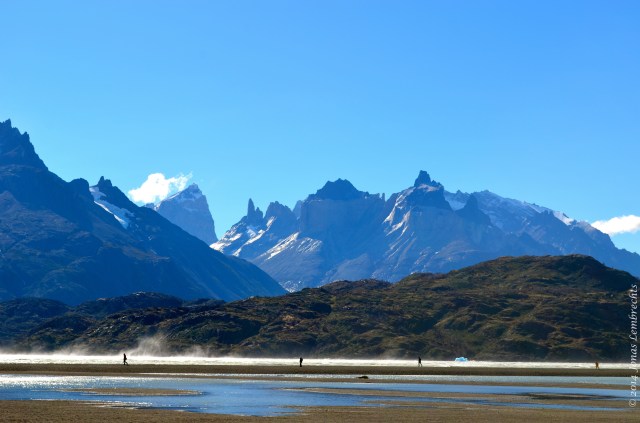
Wind blows along unseen, but not unfelt. Winds are everywhere and serve especially in the mountains as an omnipresent companion. I tried to catch the impressiveness of this natural force in pictures to help imagining what mountain plants have to face on a daily base.

Walkers facing wind

Strong and cold winds are the main forces that shape the harsh climate in the mountains. They are so important and impossible to ignore on high elevations that we expect them to be one of the main limiting factors for the establishment of plants in mountains. Our studied species in the experiment also have to deal with this major challenge, especially there where we removed the blanket of covering vegetation.

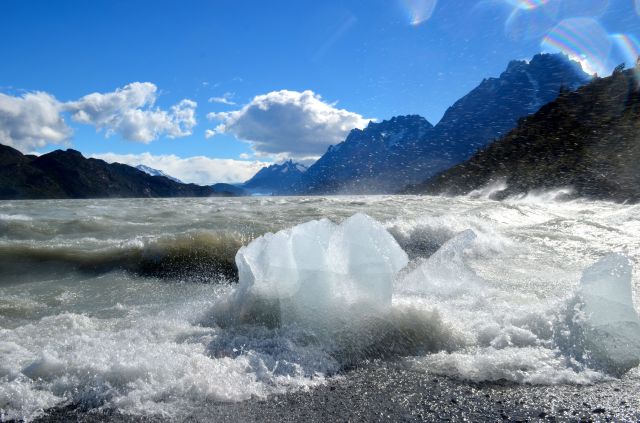
Ice and wind

Just imagine, the bare soil on a mountain slope, exposed to cold winds that bring biting frost all year long. Uncovered and unprotected plants have a hard task defying these circumstances. However, under the cover of the established vegetation reigns a totally different climate, protected against the gusting wind-power, and probably much safer for seedlings.

Lago Grey 2

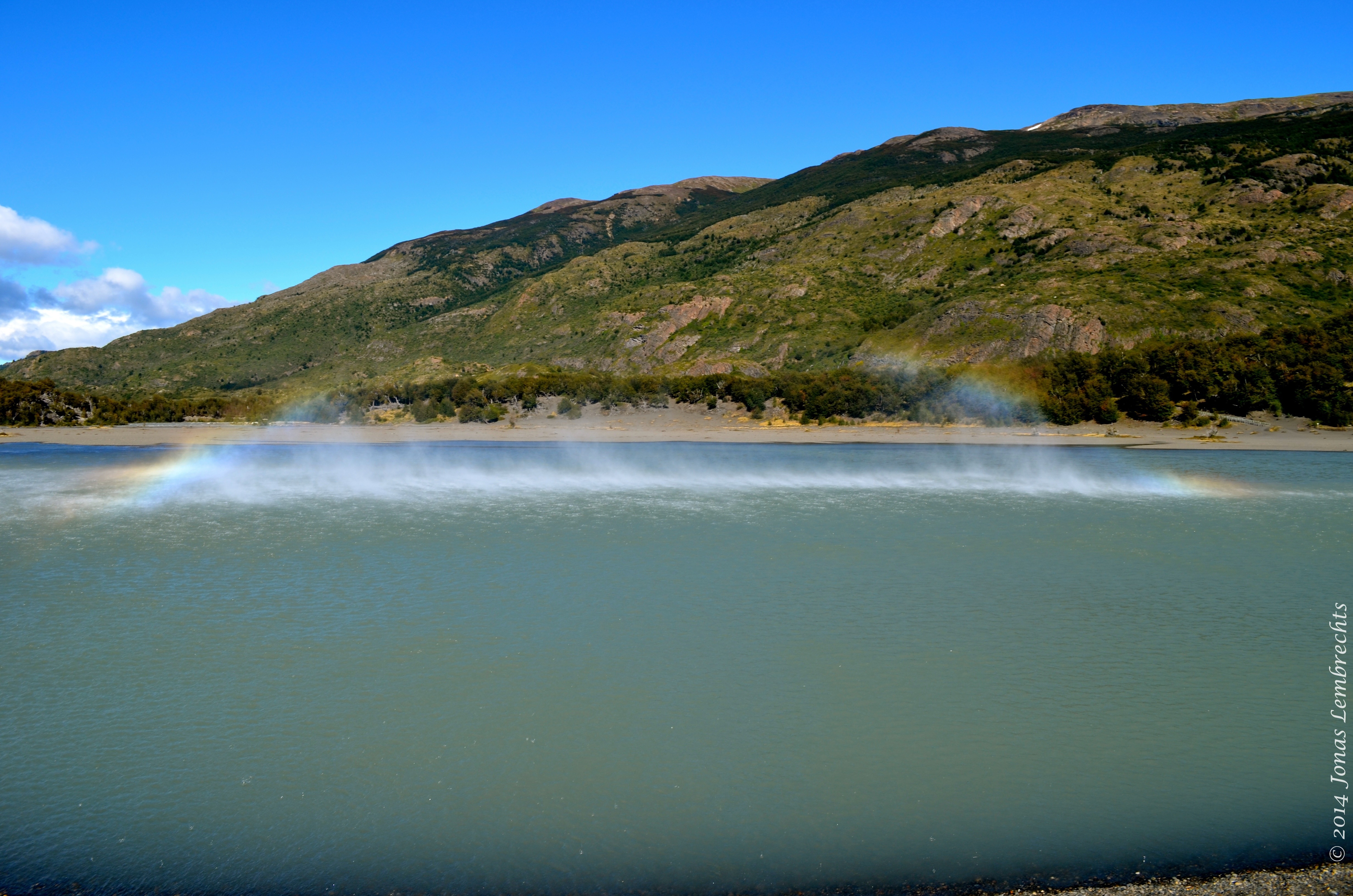
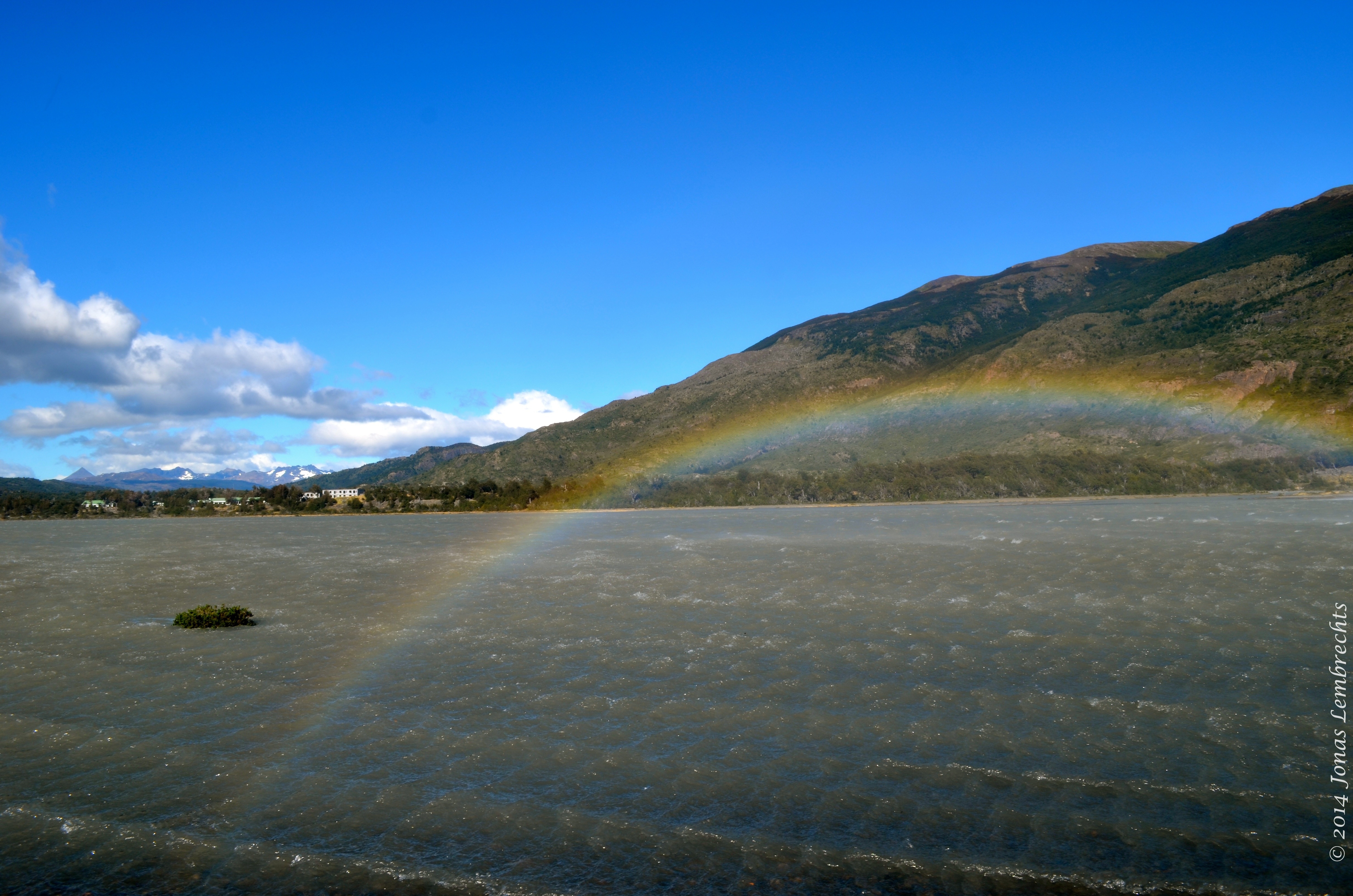
I never experienced such winds as in the Andes. There, winds were so strong they even became visible. I was especially impressed by the rainbow tornado’s, when strong winds blew over the surface of a lake to create a cloud of splashing water running fast and spinning around itself. With the right solar angle, these tiny tornado’s resulted in splendid and colorful images.

      Rainbow Tornado 2 Rainbow Tornado

The summer could have been really warm here, if it was not for the winds bringing down the temperature with several degrees. It is this significant wind-driven decrease in temperature that makes the area perfectly suited for our research at the edge of a plant’s growing abilities.

Walkers facing wind

Posted in Chile | Tagged , , , , , , , , , | 3 Comments

Puerto Natales

Chile is an amazing country, with overwhelming views around every corner. Even when you least expect it, another piece of natural beauty provokes you the awwws.

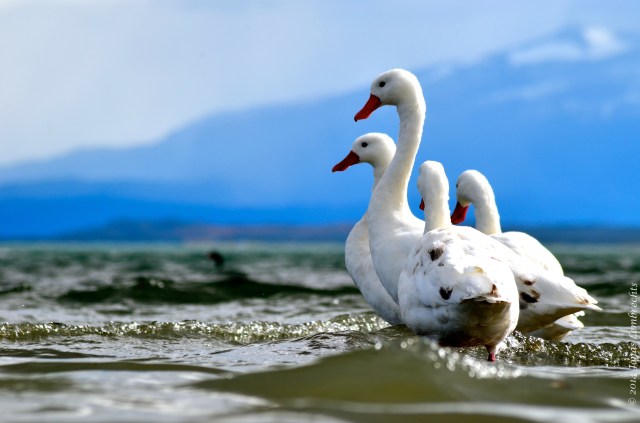
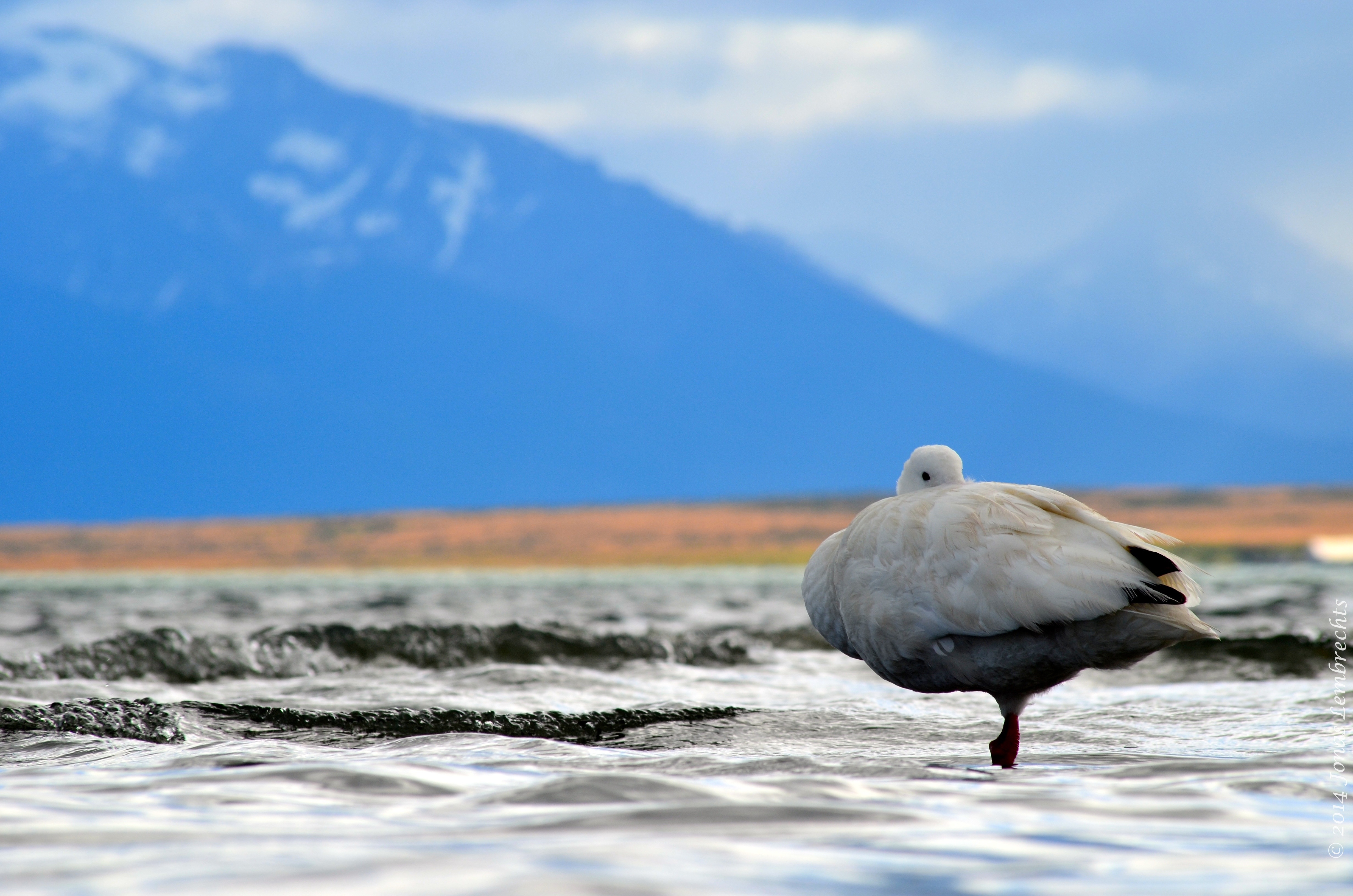
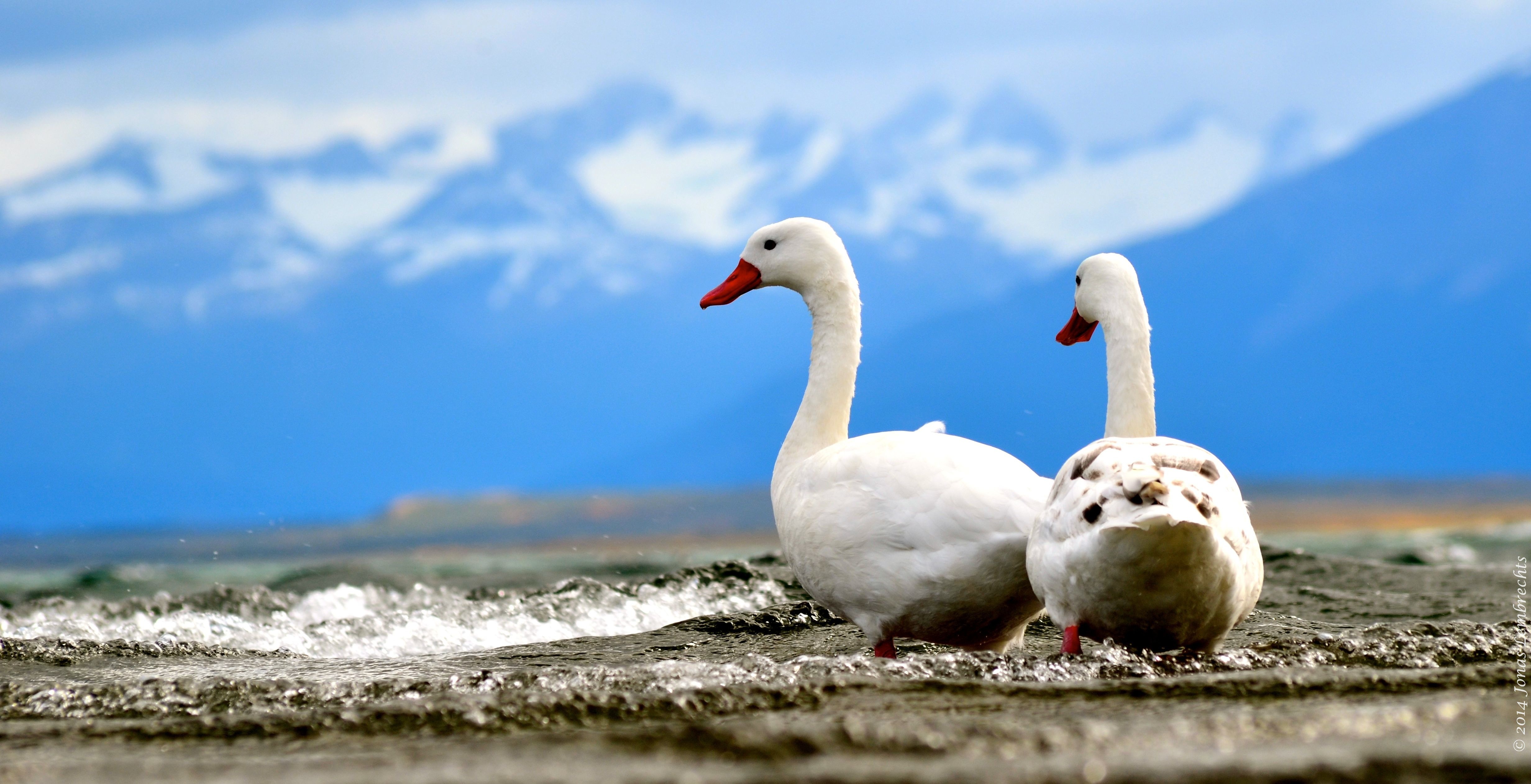
Puerto Natales goose

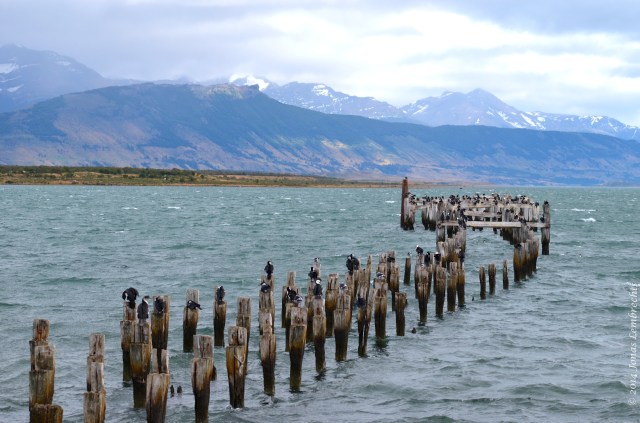
At the feet of the mountains lies a city. Not a really important city, barely worth the name, but it lies next to a gateway to the open ocean and provides the main starting point for all touristic trips to Torres del Paine. The city also hints the beauty to expect later on.

Puerto Natales

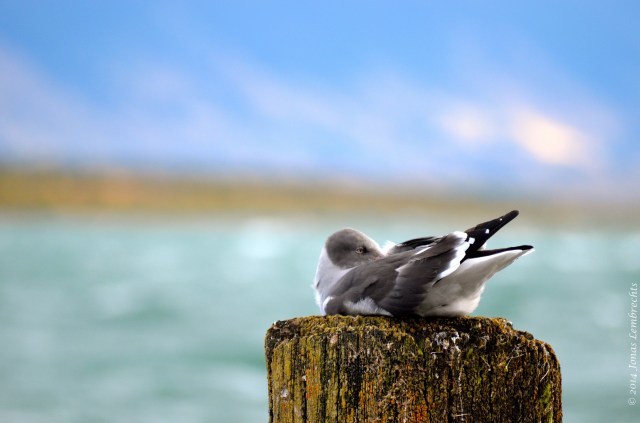
I had to stop their on my way to the north, ready to expect nothing at all. However, only five minutes in town and the seaside already amazed me. Birds everywhere, a magnificent view on the mountains and the sun playing on the water.

Puerto Natales gull

Puerto Natales goose2

It is almost an obligatory passage through Puerto Natales if you are on the way to the beauty of Torres del Paine. I would not recommend the place for a long stay, but it definitely deserves better reviews than the internet is likely to give.

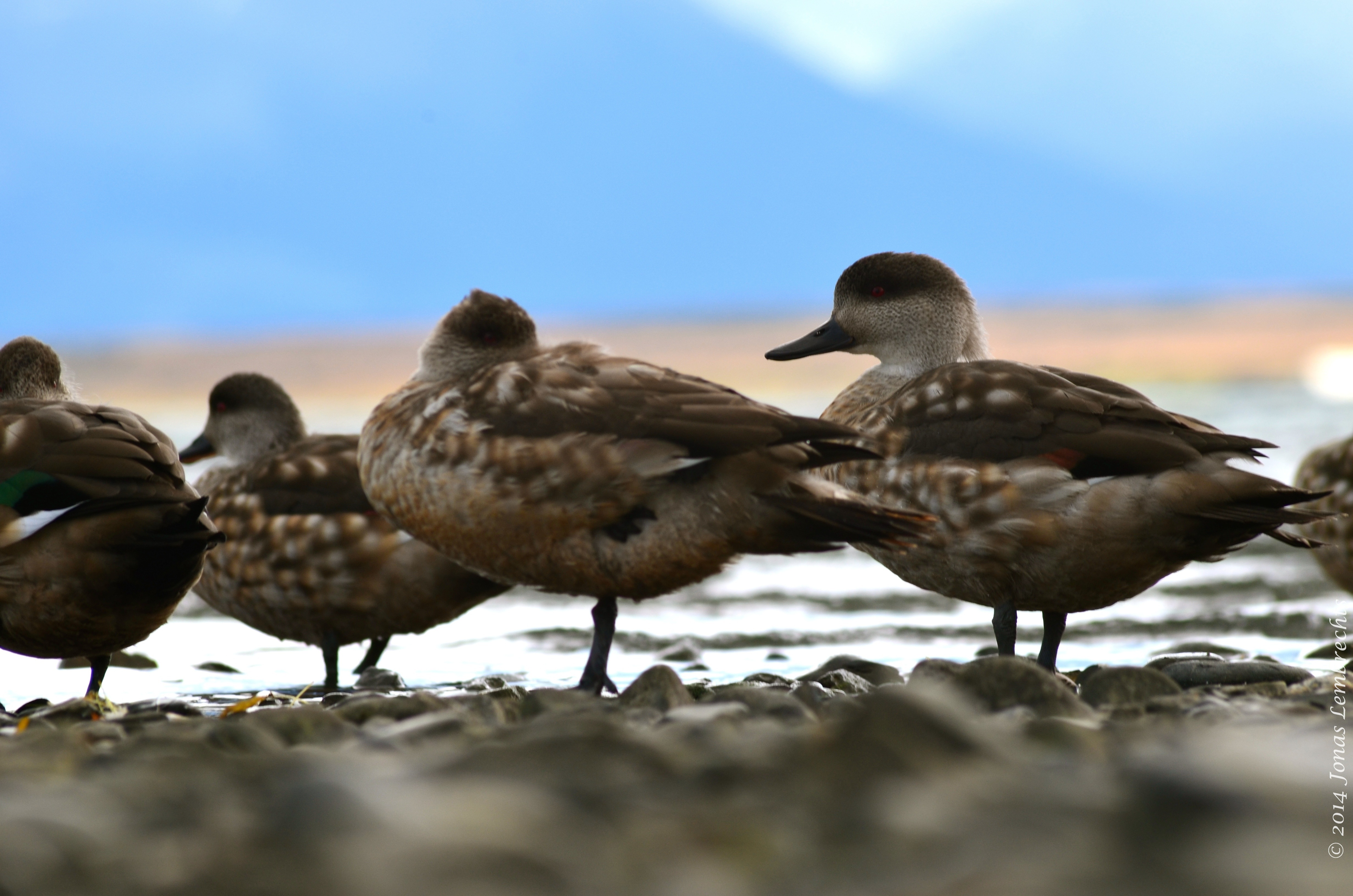
Puerto Natales goose3  Puerto Natales duck

Crested ducks, Magellan geese, Dolphin gulls and cormorants all relish with their paws in the water…

Puerto Natales geese

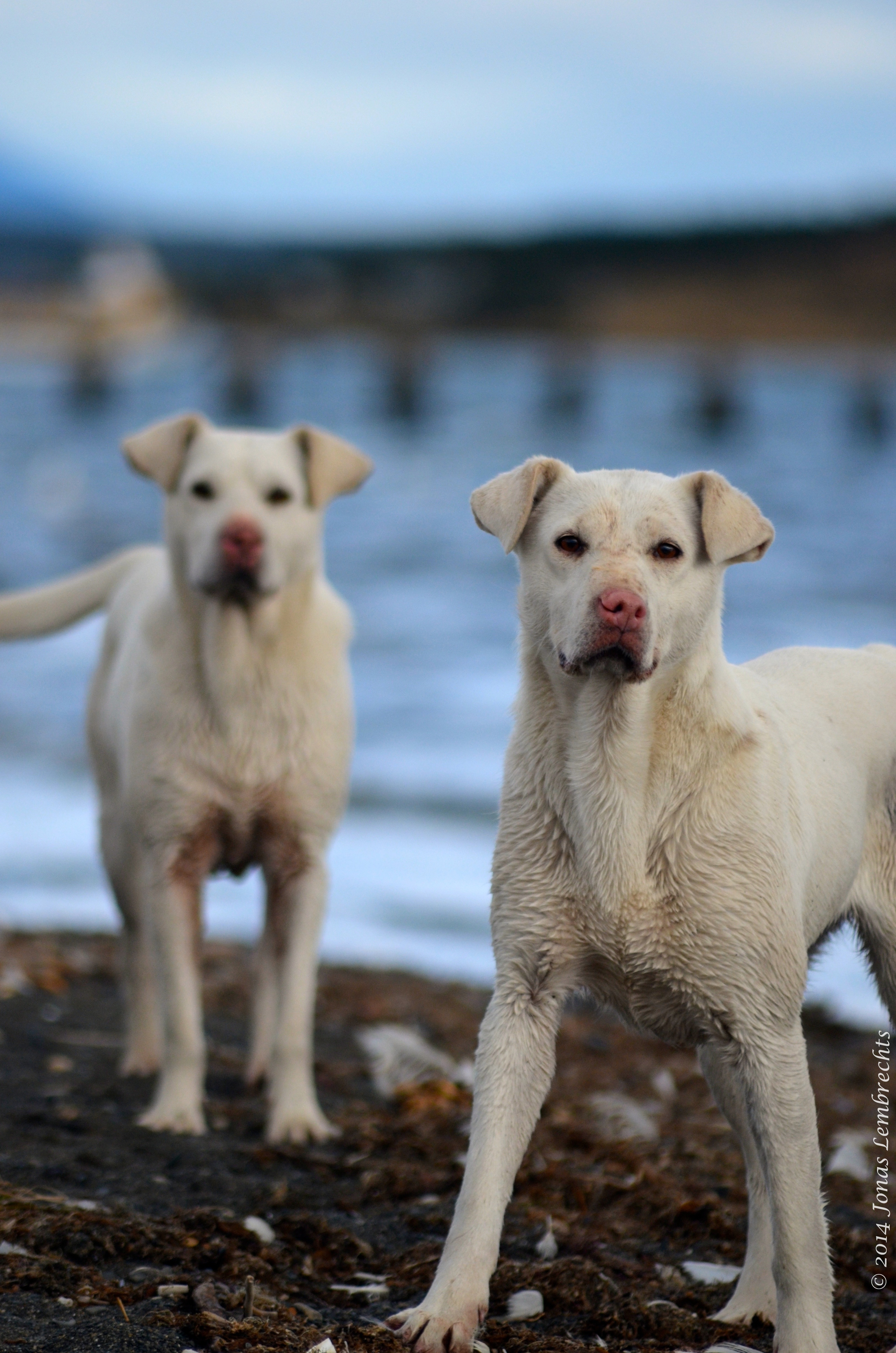
… until  a pack of feral dogs happily chased them all away.

Puerto Natales dog

— This post is one in a serie of posts on Torres del Paine in the Andes, the eight wonder of the world, where I spent an incredible weekend after my week of fieldwork in Punta Arenas.

Posted in Chile | Tagged , , , , , , , , , , | 5 Comments

The current experiment

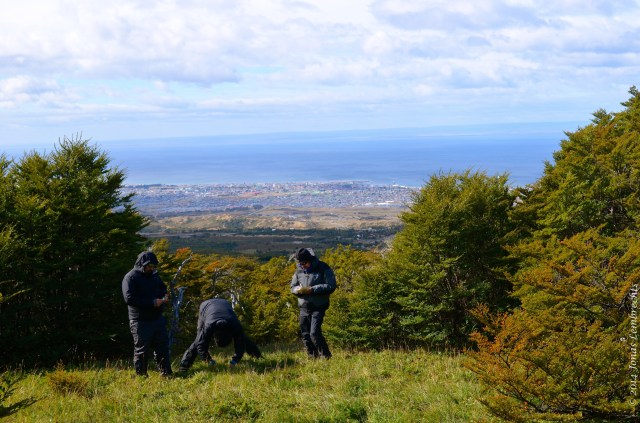
       Measuring with view on Punta Arenas

It is about time to give an overview of what I was actually searching down there in Chile.

Our research there results from a collaborative project between Sweden, Chile and Argentina. As a Belgian guy, I may at first seem a bit out of place in this collaboration, but I got involved after my thesis in the roadside project in Sweden, where we looked at the effect of roads on mountain vegetation.

Roadside

In that previous project, we investigated how alien species are currently distributed in the mountains. There we showed the strong correlation of aliens with roadsides. With this experimental approach, we want to dig deeper and find the hidden processes behind the observed patterns. Therefore, we experiment with several factors in a twin-experiment in the high north of Sweden and the very south of Chile.

First important factor is given by the elevation in the mountains. We noticed a strong decrease in aliens with elevation, but the driving factor behind this decline still needs to be defined. It could be an effect of the harsh climatic conditions, or the result of a much higher seed input in the lowlands. By sowing a similar amount of seeds on every elevation and closely monitoring the temperature, we will be able to track how the aliens deal with the mountain climate.

Undisturbed plot

Additionally, the correlation with roadsides hints to a strong positive effect of anthropogenic disturbance on the presence of aliens. (Note: a positive effect in science points towards an increase or an observed presence, not necessarily something that makes you happy). However, disturbance also changes the climatologic circumstances, especially resulting in extreme temperatures. Our plots on all the different elevations consist of a disturbed and an undisturbed part. The objective is to compare the alien performance between these two parts and measure the effect.

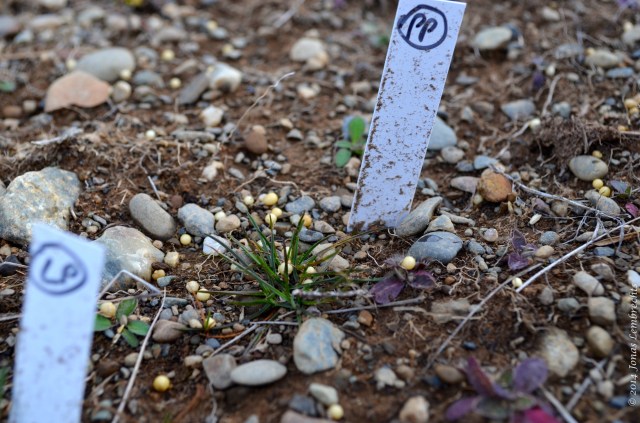
Germination in the disturbed  plot

A final hypothesis about alien plant invasion in mountains involves the soil conditions. Mountains are in general nutrient-poor areas. By adding fertilizer to part of our plots (visible as the small orange particles in the picture), we can measure the importance of these nutrients on the alien performance.

Disturbed plot

The experiment lasts two years, so we can follow both summer growth and winter survival of the aliens. On my last trip, we measured summer growth in Chile. Next summer will give us the final performance data from Sweden. After those two years of field work, we will finally be able to tell you what the future will bring for our mountains.

Measuring

Posted in Chile, The research | Tagged , , , , , , , , , | 4 Comments

Escaping the roadsides

Aliens in the lowlands! Aliens slowly fighting their way up on the mountains, surviving competition and increasingly harsh conditions! Aliens looming in roadside edges, ready to invade the undisturbed mountain vegetation… 

DSC_0044

I got the chance to present my alien plant research on a poster on the Benelux Conference on alien species last week in Ghent. This congress aimed to summarize the knowledge on invasive species and how to manage them. I focused on the biggest warning from my research. This does not lie in the presence of aliens in roadsides, where they do little harm, as I explained earlier, but in something much more worrying.

Trifolium repens

Remember from the previous post about my invasion story how the amount of aliens decreased drastically as soon as we started getting higher in the mountains. Most of them got filtered out by the cold in the alpine environment and only a few die-hards reached the top: generalists that could deal with both low- and highland conditions.

Taraxacum officinale

What matters much more is that aliens can escape the roadsides and establish themselves in the undisturbed natural vegetation. If the amount of aliens decreased so drastically in the roadsides, it can be expected that the risk for escape from the roadside would decrease accordingly: fewer aliens to escape, fewer aliens escaping. That is why the common idea in the scientific world is that mountains are safe zones for plant invasions.

DSC_0047

However, that is not what we see in the Norwegian mountains. Surprisingly, the invasion in the natural vegetation does not decrease with elevation. In fact, relative invasion even increases (see graph, full line = 25 m from the road, dashed line = 75 m). This means another process is going on, independent of the amount of aliens in the roadsides. Something that could be a problem for our mountain vegetation.

Graph alien escape

Perhaps the answer lies in the same process that explained the higher species richness in the roadsides. High elevations have also a higher amount of open spots. The dominance of mosses and crowberries is less intensive. Also, the alpine vegetation has a high diversity in habitats, vegetation and microclimates. All of this can result in higher availability of suitable conditions for invaders.

  Plantago lanceolata

If subarctic mountain vegetation is indeed less resistant against invasion, drastic changes in alpine vegetation can be expected in the future. When the climate changes even more in the future, the mountain filter will be less strong and more aliens will find their way up in the mountains. These will all have a higher chance of invading the natural vegetation. We should also be aware that humans are the main drivers of this process, as we are the vectors bringing the aliens up in the mountains, slowly changing the mountain vegetation with everything we do.

Native vegetation

All pictures show actual alien species I observed in the mountains, except for the last one, which is an example of the native vegetation we want to save. Find the paper defending this story on the website of PLoS ONE.

Posted in The research | Tagged , , , , , , , , , , , , | 3 Comments

Arctic Research

As a real and enthusiastic researcher in the arctic, I got invited to start blogging for ‘Arctic Research’, the official blog from INTERACT, the EU-supported program that promotes scientific research everywhere in the ice-cold world above the polar circle.

DSC_0562

Earlier this year, I received a grant from this program to support our two upcoming summer trips to Sweden. This grant feels in the first place as a confirmation of the quality and importance of our research by the scientific community. It also, more practically, gives me the financial opportunity to take a master student with me on this international experience. I am happy to receive his help and fresh ideas, as well as the chance to teach him the excitement and reality of ecological research in the mountains.

DSC_0354

My blogs on the Arctic Research-blog will focus on the adventures of the fieldwork in the north. I will keep you, my readers on Top of the World, informed about interesting things going on there, but my own blog here will stay my main focus for pictures and stories on my mountain/road-studies.

DSC_0323

To conclude: I am happy to announce: my first post at the Arctic Research-blog!

Posted in General | 8 Comments