Research network

Science works best when people work together. This is especially true for the big questions, that involve the whole world in all its complexity.

With our growing SoilTemp-database, that is exactly the type of questions we hope to answer: how are belowground temperatures across the world linked to the aboveground climate we all know, and how do these differences affect the distribution of species everywhere? And, most importantly: how are these belowground temperatures changing due to global change, and how is that impacting the biodiversity of everything that lives below or on the surface of our planet?
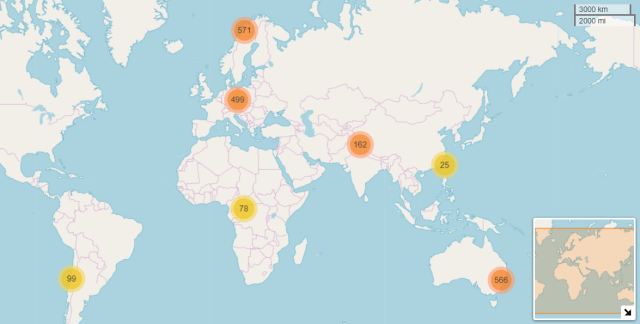
Map image

The growing SoilTemp-database, our main tool to answer these global-scale questions

Answering such ambitious large-scale questions will require input and expertise from scientists from all over the world. Luckily, the Flemish Research Council (FWO) understood this need, and now granted us with funding to set up an official Research Network.

45897127251_146975d004_o

Temperatures in the soil (like below this blanket of snow in the Norwegian mountains) are crucial to the life of so many organisms. Our goal is to improve our understanding of these soil temperatures at the global scale

For the next 5 year, the FWO gave us sufficient resources to bring together the leading experts on microclimate, species distributions and remote sensing from all over the world, to ultimately improve our understanding of where species are living and why.

We aim to make good use of that money, as we do strongly believe in the power of collaboration. Ideally, it will also turn Flanders into a knowledge hub for the worlds’ understanding of microclimate; a goal we are happy to contribute to.
26259538511_a8b30e9973_o

The climate close to the soil surface is highly decoupled from what is measured in weather stations at 2 meter above the ground. 

Posted in General, Science | Tagged , , , , , , , , , | Leave a comment

SoilTemp website launched

SoilTemp, our project working towards a global database of soil temperatures for use in ecological analyses, launched its own website: soiltemp.weebly.com!

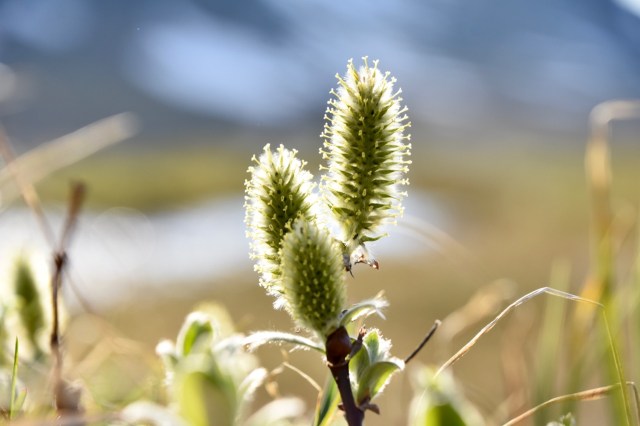
Saxifraga oppositifolia

The website allows interested visitors to explore what the project is about and, most importantly, follow the growth of the database through an interactive map.

This map, courtesy of the Environment and Sustainability Institute of the University of Exeter and framed in a bigger effort to map all available microclimatic data across the globe, provides important information on logger locations, as well as details on time, height, resolution etc.

Map image

For scientists interested in using soil temperature data for their own analyses, this map is an amazing tool, as it provides an overview of datasets within regions of interest, as well as pointers to people to contact in order to set up collaborations. This is one of the key goals of our SoilTemp-project: we hope to set up international collaborations using data that for one scientist might be trivial, yet for another holds the key to answer important (micro)climatic and ecological questions.

The map is not done yet, and might very well never be: we will keep updating it with the countless datasets that are not yet processed, and that will keep flowing in in the future. For now, numbers are already bedazzling (and we are not even halfway through): 1867 temperature sensors from 11 countries, from sea level till 6194 meter above the ocean, and covering more than a decade.

We hope this coverage will only increase, so please get in touch if you have any soil temperature data you would like to share with us!

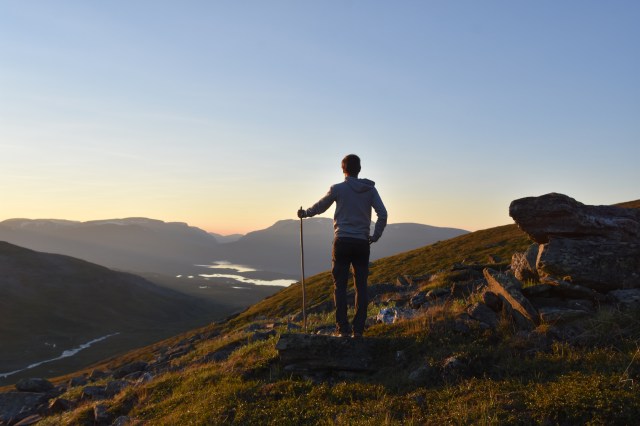
Salix lapponum in the evening sun

Posted in Science | Tagged , , , , , , | Leave a comment

PCR

It is official now: I am an aspiring microbial ecologist! What gave it away, is the following blurry picture:

SE_1-5-unlabelled vs labelled.JPG wordt weergegeven

Not convincing, you say? Think again, because this is the very first gel electrophoresis of my very first own PCR! A PCR, or Polymerase Chain Reaction, is the go-to technique to amplify and analyse DNA, and thus widely used in microbial ecology. If one wants to know the diversity of organisms that are too small to see with the naked eye, a PCR can help you. Studying the DNA of the organisms – and the variation in it between different organisms and organism groups – can give fantastic insights in that regard.

And let that be exactly what we want: link the aboveground patterns of plant biodiversity to the mysterious world belowground, where microbes wave the stick. But in order to understand this ‘black box’ of ecology, one needs a lot of lab work. That is exactly what is happening now, and oh boy, does that make me feel like a real scientist!

Posted in General, Science | Tagged , , , , , , , , | 1 Comment

Species (re)distributions in Scandinavian mountains

I am happy and honoured to announce some fantastic news: this week, we got a 4-years Fundamental Research Grant from the Research Foundation Flanders (FWO) to strengthen our research on species (re)distributions in the Scandinavian mountains, in the framework of the Mountain Invasion Research Network (MIREN).

43113646534_360acf28d3_o

A four-year grant to look even closer at the alpine vegetation of northern Scandinavia than we already did, aiming to check off some important scientific questions off our list

This major consolidation of the work we have been doing throughout my PhD and postdoc and with the whole MIREN-network, is a unique opportunity to get closer to the answers we are hunting for.

43783636602_bbb1d1e5f0_o

We have been zooming in more and more throughout the years, while our knowledge of species (re)distributions grows. This grant is another opportunity to delve below the soil surface

A dedicated PhD-student will be focussing on the dynamics of upward moving plant species along mountain roads and trails, and dive deeper into the role of mycorrhizae in this. We will do more in-situ experiments in the mountains and start building more on the growing long-term MIREN-dataset.

28895381427_f51d0386e4_o

Trifolium repens, the white clover, has been one of our favourite go-to study species for long. It better braces itself to be bothered a bit more in the future! 

This is another giant leap forward for our mountain ecological research, and we are thus endlessly grateful to the FWO and its reviewers for believing in the potential of our proposal. We promise not to disappoint!

29962189798_19d9de0a7f_o

So buckle up, cause our scientific ride just got a bit wilder again!

Posted in General, Norway, Sweden | Tagged , , , , , , , , , | 1 Comment

To the growth chamber

This week, a new exciting research direction opened up: our PhD-student in Gembloux (Wallonia) launched a growth chamber experiment!

46507843_534541757019722_4417571148963774464_n

The growth chamber

For me, this is an absolute first: to experience the ability to entirely control all conditions, without any noisy outside factor obscuring the outcome. In this case, we will use the advantages of the fully controlled environment to test if non-native plant species have locally adapted to growing conditions in the cities.

46648859_765376677136083_706080451525083136_n

Rows and rows of Matricaria seeds, ready to experience their artifical summer

We harvested seeds from Matricaria discoidea (see earlier) all across Flanders, in cities and rural areas, and now brought them all together in the controlled environment of our growth chamber. In these growth chambers, we manipulate the climate: we are simulating both a typical growing season, and a growing season with conditions as one might experience in the city (where the Urban Heat Island-effect dramatically increases temperatures).

46473835_507183879775509_3258467923697598464_n

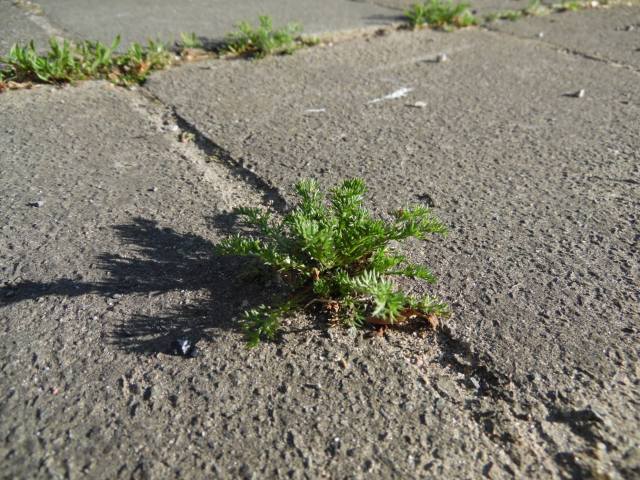
Matricaria discoidea, loving the urban environment

By bringing all of this together in the growth chamber, we can make sure we are actually testing for the effects of the changed temperature regime in the city, excluding all other possible drivers, which will give us a lot more information than we could get in the field.

46468074_207918256766948_68828491595907072_n

For now, it is ‘fingers crossed’ that the seeds want to germinate!

46459369_198927820986969_3077263816120074240_n

All pictures courtesy of Charly Geron

Posted in Belgium, General | Tagged , , , , , , , , , | Leave a comment

Smart bud(die)s

Smart bud(die)s, or Knappe k(n)oppen in Dutch, is a citizen science project initiated by our research group at the University of Antwerp (together with ReaGent). It is tailored towards high schools, and aims to provide them with a fun and instructive way to be part of a real scientific experiment. In this case, aim is to study the budding of trees (hence the name), and the effect of daylength and climate on this budding.

45757856962_cf3ef1ef31_o

Bringing a classroom in the forest: citizen science as it should be

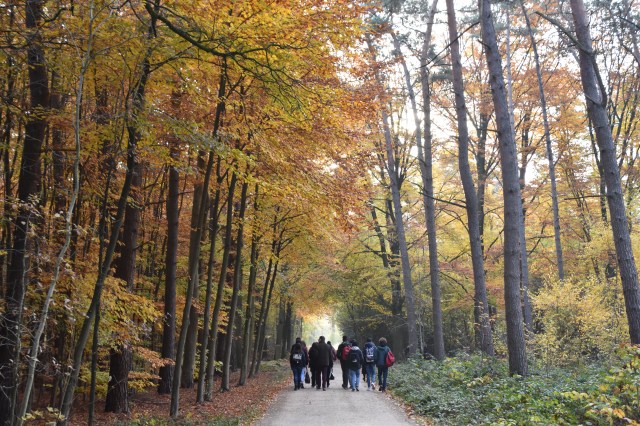
Last week, I spent half a day in the forest with one such enthusiastic group of highschool students, and the dedicated scientists from our research group who introduced them to the forest. The goal that day was to slowly build up their knowledge of and interest in forests: first show them in general what a forest is, why it matters in the light of climate change, and how scientists like us are studying these forests.

31936266678_f6052c9e7f_o

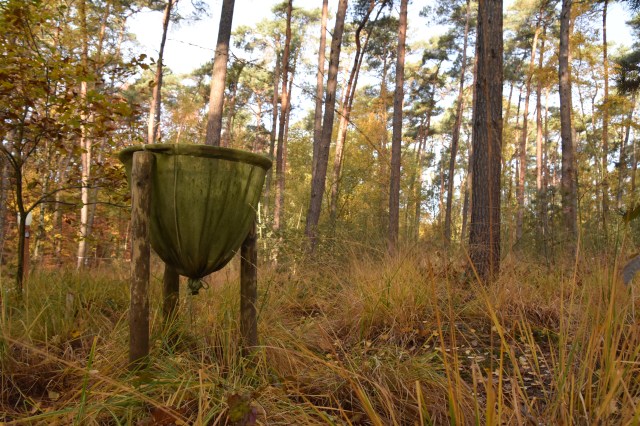
A litter trap: capturing falling leaves to study the effect of climate and weather on forest dynamics

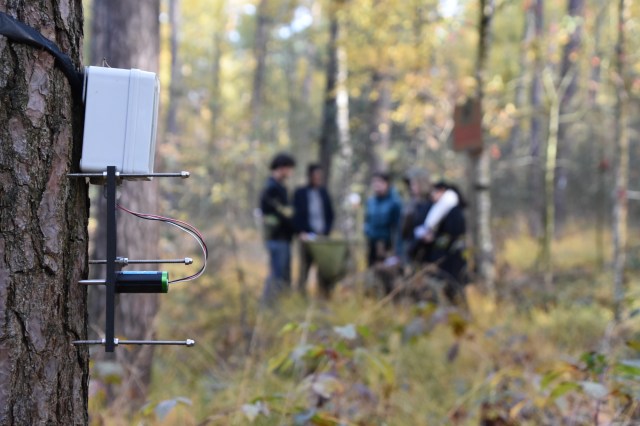
The students got to make their own preparation of leaves to study under a microscope, explored the different measurement devices spread throughout the forest (which is a dedicated ICOS long-term research site, and thus closely monitored on all levels), and learn a range of facts from photosynthesis to heathland management. They got to run through the forest, and admire its mushrooms. All of it to get them involved and fascinated about the trees they will be studying next.

45757956112_4962db69e5_o

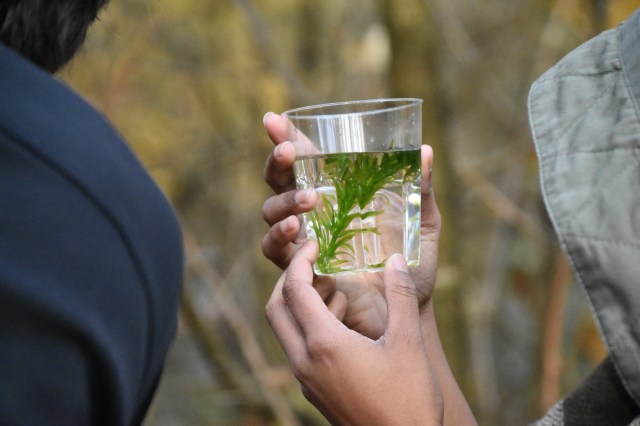
A student counting bubbles in the water as a measure of photosynthesis

Such community-driven science is very different from how science is traditionally done, at the far end of the spectrum one might consider when thinking about scientific outreach. It is putting science and the community into one pot and stirring it vigorously. The resulting dish tastes fascinatingly refreshing: children who get to learn about science while doing it, who experience how to care about the world that surrounds them, and look at it with curiosity.

45082994284_9042bb946a_o

Learning about forests and their role in climate change in one of the best monitored forests of the country

It is a huge commitment for the involved scientists, that much is certain. But it serves one of the main goals of science, and as such is worth as much effort as any experiment.

45807271471_8fb13063ec_o

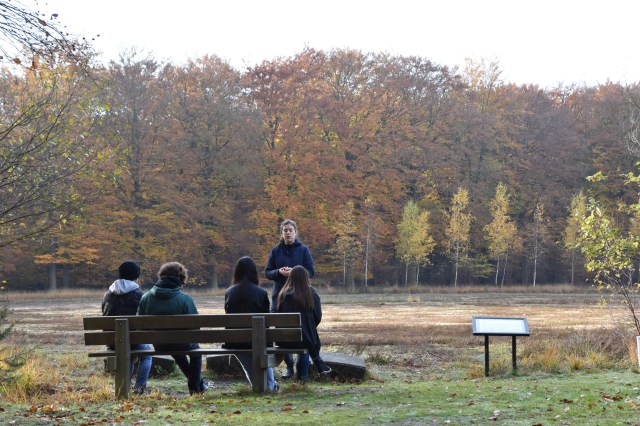
Heathland management and why it matters

43990719870_8e5dbf4e2d_o

When science and society come together

Posted in Belgium, General | Tagged , , , , , , , , , | 3 Comments