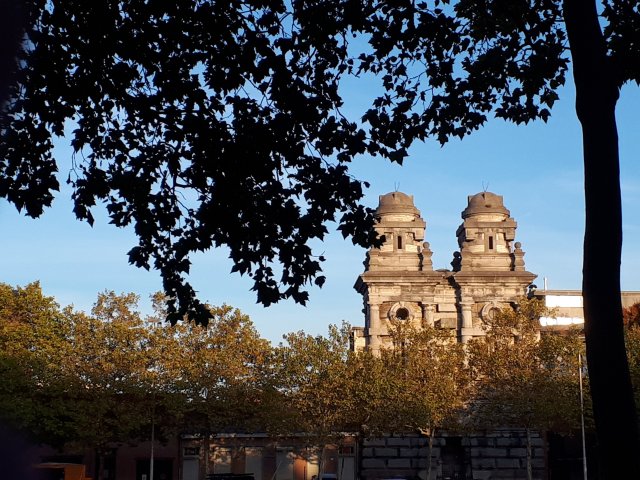
Dovre

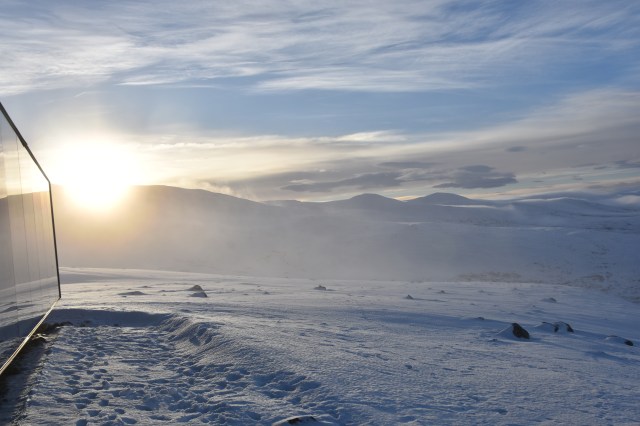
The beginning of this week brought me to Dovre, a stunning National Park in the center of Norway.

45897251171_c013b61049_o

The viewpoint on Snøhetta in Dovre

The area is sitting a 2,5 hours of steady uphill driving south of Trondheim, and was covered in a beautiful November snow blanket.

45897150851_044f132e37_o

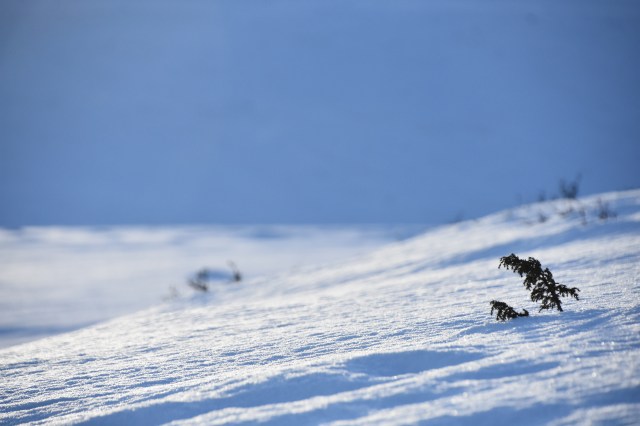
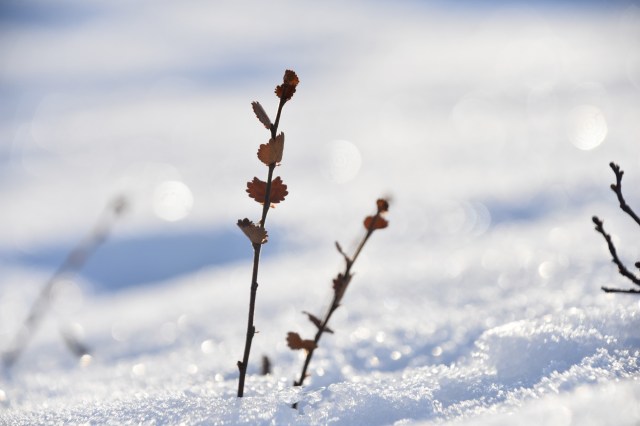
A little juniper sticking its head through the fresh November snow

Yet the beauty and the vastness of the place were not the reason why I went there. No, that reason was science: we met with a team of 4 to officially launch our recently started PhD-project on the effect of trails on mountain vegetation.

45847399902_920907fc42_o

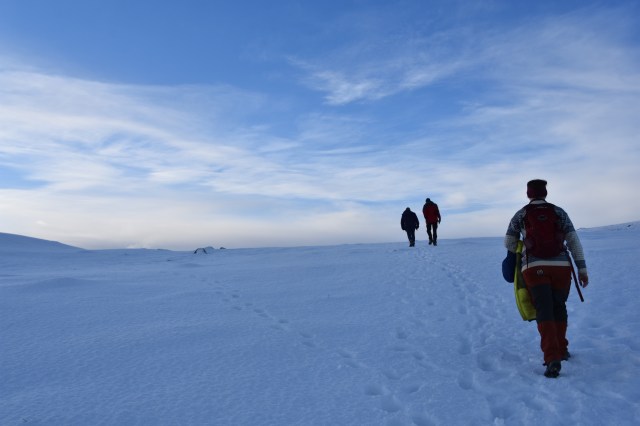
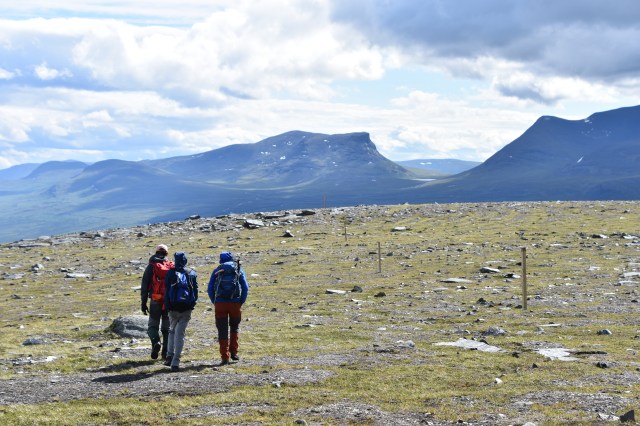
Hiking up a trail in winter will affect plants in summer

The 3 days of discussion turned out to be the kind of meeting every scientists dreams of once in a while: little distractions, just brainstorming with fascinating ecologists about what could be happening along our mountain trails – and how we could figure that out.

45847470252_b799d6bb0d_o

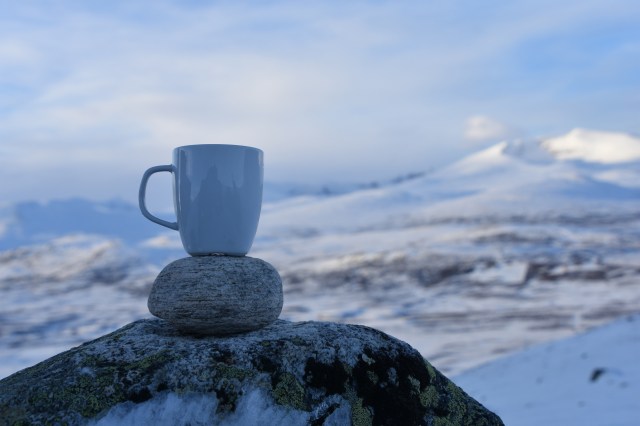
Tea and talks with a view

We all are very much looking forward to the coming 3,5 years, with fieldwork both in this area and higher north, in Swedish Lapland. If all goes well, these years will teach us how hiking trails affect the vegetation in our mountains, and what we should do about it.

44983937025_35ed0f6587_o

Betula nana

Exciting times ahead!

More pictures of Dovre on the right of this blog.


Posted in General, Norway | Tagged , , , , , , , , , | 3 Comments

Food on the move

On this blog, we mostly talk about how global change is causing species to go ‘on the move’, towards areas where they do not occur naturally. For this post, however, I’d like to turn that perspective around, and talk about another type of species movement, one that is a large part of this global change: the transportation effort needed to bring your food from farm to plate.

Most of all, I want to highlight here an alternative to this #FoodOnTheMove: short-chain farming and community-supported agriculture.

20181110_1508208977213173473517229.jpg

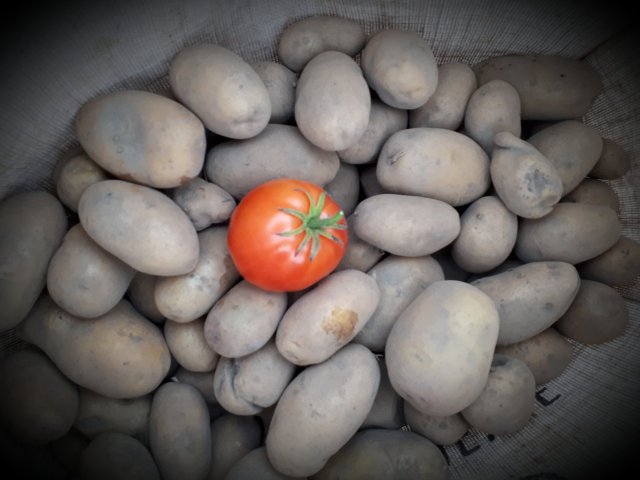
This week, our local community-supported farm distributed this autumn’s potato harvest among its members. I got to take home a nice 17 kg – and one tomato that was looking to perfect to let go.

CSA – or community-supported agriculture – is an agricultural system that aims to connect producer and consumers more closely. Usually, one subscribes to the harvest of one farm or a group of farms. CSA is also on the rise in Western societies, and below I would like to make a strong case why I think that is a good thing.

20180705_214441

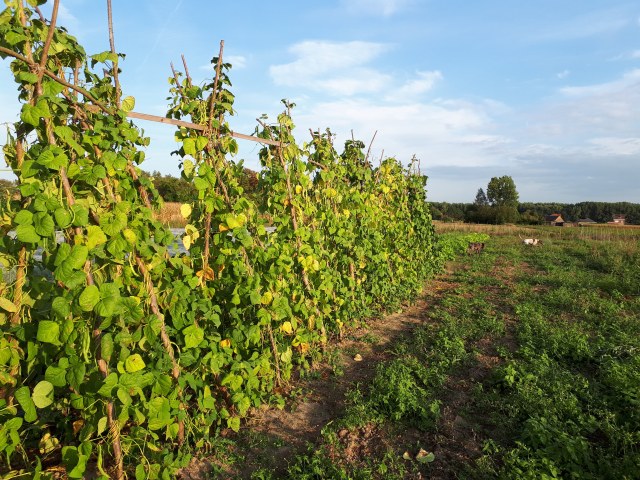
Anticipating a summer full of beans at our local CSA-farm

Based on my own experience, CSA is beneficial to me – and the world – in a wide range of ways:

  • First of all: the environmental gain! A largely plant-based diet is already a big plus for the environment compared to a meat-oriented one, but if those plants are being brought in from far away (or grown in heated greenhouses), there is a substantial environmental cost associated with them. Short-chain farming largely cuts out that transport chain, and the environmental cost associated with it. Moreover, a farm with a diversity of vegetables, as opposed to the kilometers long monocultures seen in industrial farming provides a certain advantage for biodiversity, as does the space gained in third-world countries if you don’t let your food fly in.
  • Delicious vegetables, and an un-dreamed variety of them. Vegetables coming fresh from the soil are just that much tastier than their packed and transported shop counterparts. At our farm, there is also so much choice that one is much easier ‘tricked’ into discovering less-known vegetables.

20180830_191439

  • Following the season: CSA can teach you again how it is not to have all vegetables available in each season. We now follow ‘earth’s heartbeat’ again, instead of having the same common vegetables all year round. The latter also has a big environmental cost associated with it, as the off-season versions of vegetables often need a serious energy investment.
  • Get out in the field: often, CSA-farms offer their community the option to help in the field, harvest their own vegetables, or assist with planting and weeding. While this is a great way to get your mind empty, your longs clean and your hands dirty, it also brings back the connection with nature and what you eat. To me, it also thought me how much effort is needed to feed the world as a whole (and me in particular).
20180510_140350

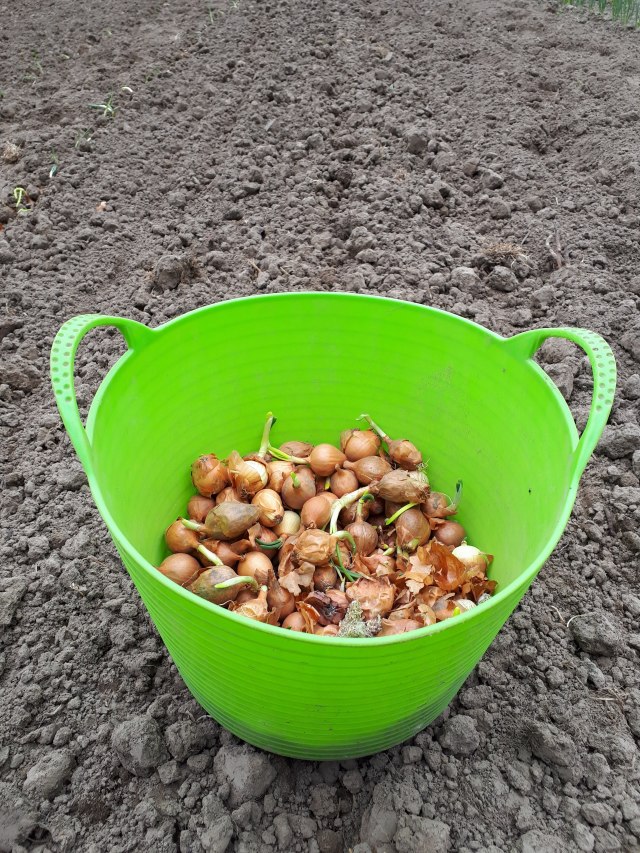
Volunteering on the farm to plant onions is a joy. Eating your ‘own’ onions a few months later even more so.

Any downsides to this way of farming? The price perhaps, it is obviously not as cheap as what you would find in the supermarket, and – at least in our case – you pay up front at the beginning of the year. The latter implies that a bad harvest is also carried by the community.  The cost for the farmer is another thing: this type of agriculture usually implies a large personal investment from the farmer, not in the least regarding time and energy.

That aside, I do think that CSA can and should play a major role in how we live our lives in the future.

For the locals: I can totally recommend our CSA-farm ‘de Plukheyde‘ in Kampenhout, Belgium.

Posted in Belgium, General | Tagged , , , , , , , , | 2 Comments

The Tundra Trait Team

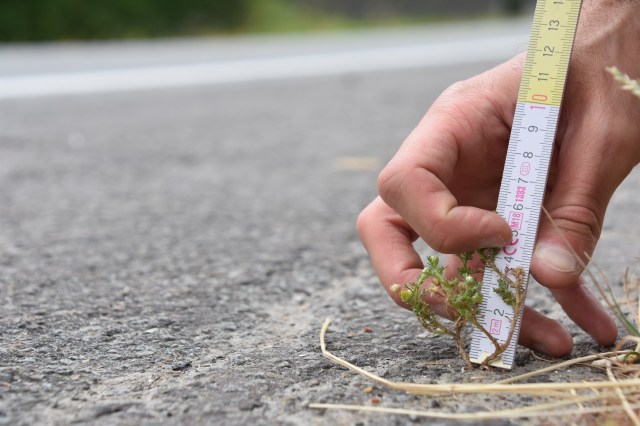
In ecology, it is not only relevant where a plant is growing (as is the usual topic of our research here), but also how it looks like when it grows there. The latter is reflected in the concept of traits: characteristics of a species’ ecological strategies and life histories, underlying differences in the way species acquire and use resources. For plants, these traits could reflect values related to their size, nutrient acquisition or seed production.
28538695927_f595dee7d2_o

Measuring the height of an individual of Matricaria discoidea in a roadside

Such traits reflect the direct interaction between a species and its habitat, even more than their presence or absence at a certain location does. Variation in traits is thus often closely linked to environmental variation, like changes in climate.
42021103870_bb34079373_o

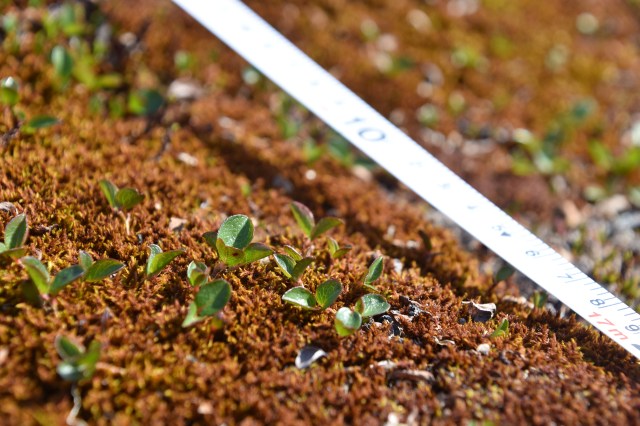
In the high tundra (like here in the northern Swedish mountains), plants usually stay close to the ground, as illustrated by this Salix herbacea in a soft moss bed.

In order to analyze large-scale effects of the environment on plant performance, however, a lot of trait data is needed. But here is the great news: countless scientists are collecting such data all over the world. The trick is just to bring all this data together. The TRY-database does a great job in that regard, yet that database had a big and important limitation: the Arctic was highly underrepresented. A new effort (led by Anne Bjorkman and the Tundra Trait Team) has now filled that void, by collating a database of over 90.000 (!) data points about plant traits from tundra vegetation.

DSC_8753

Measuring the Specific Leaf Area of the Arctic birch (Betula pubescens czerepanovii)

That is a lot of trait data, and the possibilities with such a database are virtually endless. We can use it to see how species react to climate across the whole tundra biome, for example, which can shed important light on how the tundra vegetation will be (and is) reacting to the changing climate. The latter is illustrated in another recent paper from the same team in Nature, in which Bjorkman et al. explore the relationships between temperature, moisture and plant traits across the whole tundra. Their conclusions? Plant height is rapidly increasing with the warming climate in recent decades, yet most other traits are lagging behind.

28894164957_37fa03598c_o

Thalictrum alpinum, a small alpine version of a genus with usually tall-growing species

Another example of how scientists are teaming up everywhere to tackle issues that are to big to handle alone. And that’s exactly how I love it.
42023052570_5c0dd98a03_o

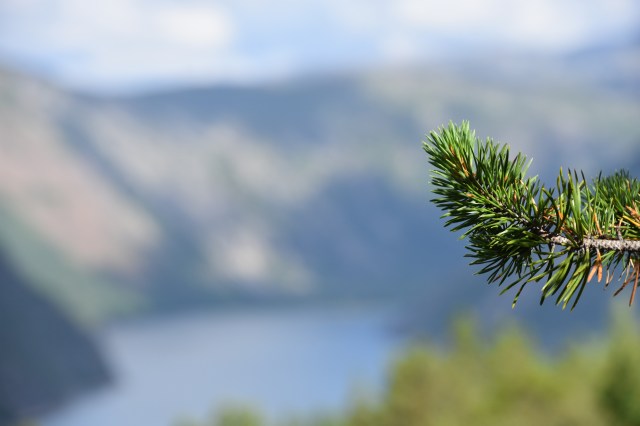
Tall, woody species (like this pine, Pinus sylvestris) only occur up till a certain elevation and latitude

Reference:

Bjorkman et al. (2018) Tundra Trait Team: A database of plant traits spanning the
tundra biome, Global Ecology and Biogeography.

Bjorkman AD, IH Myers-Smith, SC Elmendorf, S Normand, N Rüger, et al. Changes in plant functional traits across a warming tundra biomeNature. DOI: http://dx.doi.org/10.1038/s41586-018-0563-7

28894169197_caef569fee_o

Astragalus alpinus

Posted in General, Science | Tagged , , , , , , , , , , | Leave a comment

Stress

It is that time of year again: the course on plant stress for our master students at the University of Antwerp (as I also wrote about previous years).

This year, the practical part got a long-anticipated upgrade. It is now framed within a new course called ‘Plant and soil ecology’, which is thought to the master students in Conservation Ecology and the very new masters on Global Change Ecology. We could now also step away from teaching only about chlorophyll fluorescence as we did the previous years.

20181022_1615374023461918577669307.jpg

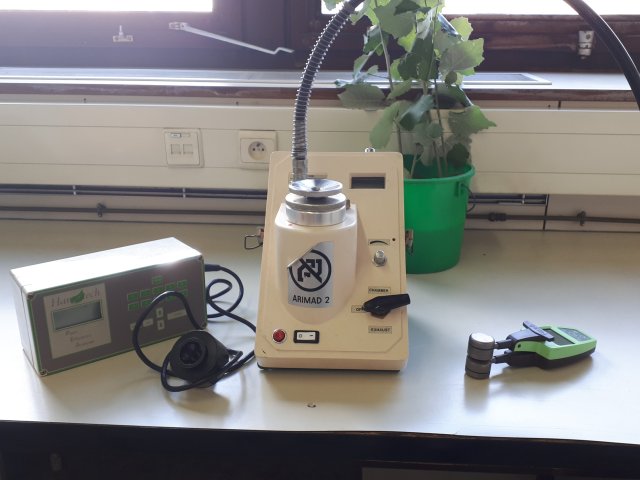
The new set-up of the practicum, featuring the fluorometer to measure chlorophyll fluorescence on the left, the pressure bomb in the middle, and our little friend Dualex Scientific+ on the right. 

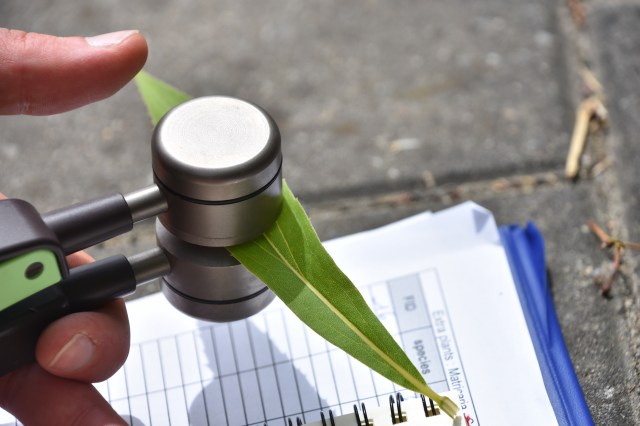
Now, the practicum is about plant stress in general, and we use it to highlight different ways in which ecologists can measure stress. Students get to try 3 different methods – using the traditional fluorometer I always used, but also a very practical tool called the Dualex Scientific+ that rapidly measures chlorophyll and pigment content in the leaves, and a pressure bomb, that allows them to assess the water status of plants by putting pressure on a leaf till water emerges.

42609580734_8262dc6190_o

Measuring chlorophyll content with the Dualex Scientific+ in a project on the effect of Urban Heat Islands on non-native plant species in Flanders

The practicum thus now truly reflects the wide range of opportunities ecologists have to get answers to this fundamental question in our field: how happy is this plant? And I truly hope the students find that knowledge inspirational for their future careers as conservation biologists of global change ecologists.

Posted in General, Science | Tagged , , , , , , , , , , | Leave a comment

Website updated

As I officially started my postdoc this month, it was due time to update the content of my website. As from today, this website has officially completed its transformation from a personal blog narrating the personal thoughts and adventures of a PhD-student into a platform displaying the research of me and my main collaborators.

You can now see this reflected at the top, where the menu is streamlined into 3 main headings:

  • About: details on me and my scientific goals, with now a big section on my closest colleagues.
  • The science: the main research section, consisting of two parts:
    • Main conclusionsa brief summary of the main outcomes of our research, sorted by topic.
    • Publication listan overview of all our published papers up till now, with for each of them a link to a blogpost summarizing the results.
  • Blogstill the main part of the website: updates on all the science we do, and adventures we have in search for answers.

43783201872_fb544d4a8b_o.jpg

My faithful followers do not have to worry, as for you, not much will change: you will still get a steady stream of adventures across the globe, and cool scientific results brightened up with pictures. Yet for new or accidental visitors, it became much easier to grab who I am (/who we are) and what scientific questions we answered so far.

I hope you like the change!

Posted in General, The research | Tagged , , , , , , , | 1 Comment

Study day

This week, we gathered in the beautiful city center of Antwerp for the PLECO Research Day, a yearly event that brings together all members of our research group for a day of discussions.

20181008_0846057481975227519237461.jpg

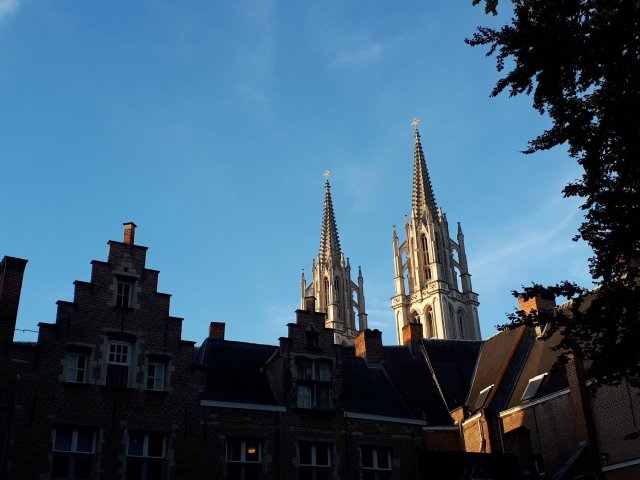
The towers of the church of Saint Joris above the Elzenveld, our meeting venue for the day in Antwerp.

As our group is steadily growing (over 60 active scientists now, with 4 professors at the steering wheel), such a yearly check-up is vital for the lab to keep running smoothly. It helps us to keep in touch with what the others are working on, and see how the group is moving forward, but it also gives the opportunity for new faces to get an overview of who is who, and what is what. It also serves as a necessary reminder for easy-to-forget lab rules.

Most importantly, for me, it provides the opportunity to seek for in-house expertise, which might otherwise be overlooked. With the topics I am focussing on being slightly detached from what the rest of the group is working on, it is tempting to seek partnerships across the globe. But oh the blessing when you realize the necessary expert is just sitting 3 doors away from you!

20181008_0835076064498207411256788.jpg

The ‘Zuiderpershuis’ in Antwerp, on my early-morning commute to the meeting

An excellent belated kick-off of the academic year, so to say.

Posted in Belgium, General | Tagged , , , , , , , , | Leave a comment