An overview

In these closing posts of 2016, I want to give you a quick (and slightly biased) overview of everything what happened this year, based on the ten most appreciated posts on this blog. This is part one.

2016 has been an important year for the science here On Top of the World. The year brought a high in- and output, with sessions of highly successfull fieldwork, international collaborations, a few scientific publications, and outreach to the larger public as a cherry on the cake. At 3 years and 3 months in the project, the efforts are finally truly being rewarded. Here are 5 of the highlights:
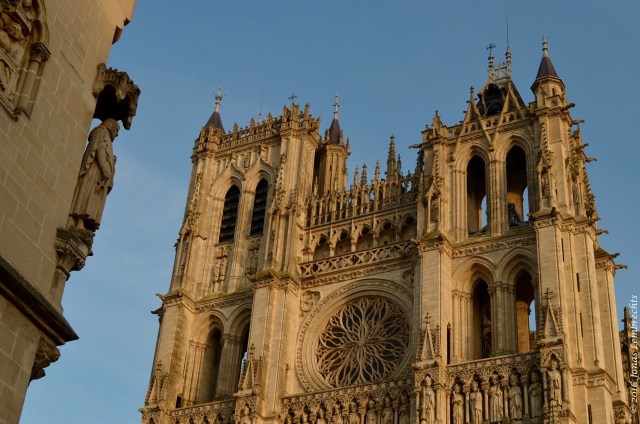
The cathedral of Amiens

The cathedral of Amiens, France

The princess of the north: January started bright, with a visit to colleagues in Amiens, France. The visit lasted no longer than a week, yet sometimes even a few hours in the presence of someone with more experience results in a leap forward with your own work. Statistical tricks and climatic models, a lot of what I am still doing now had its origin there in Amiens.
Fot - 18

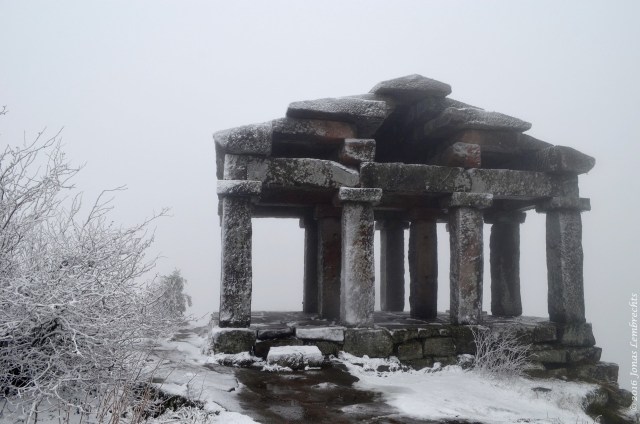
Temple on top of Le Grand Donon, a peak in northern France

Lessons from history: Topic-wise, the whole year has been about disturbance. Humans intervening with nature, changing its balance and the cascade of effects that results from such disturbance. This disturbance has been around as long as humans have, as shown by the temple on top of Le Grand Donon in this picture. Yet recent increases in this disturbance, together with an inevitable climate change, results in impressive changes all over our natural world. We want to find out what will do to the plants.
Litter Soroe 02

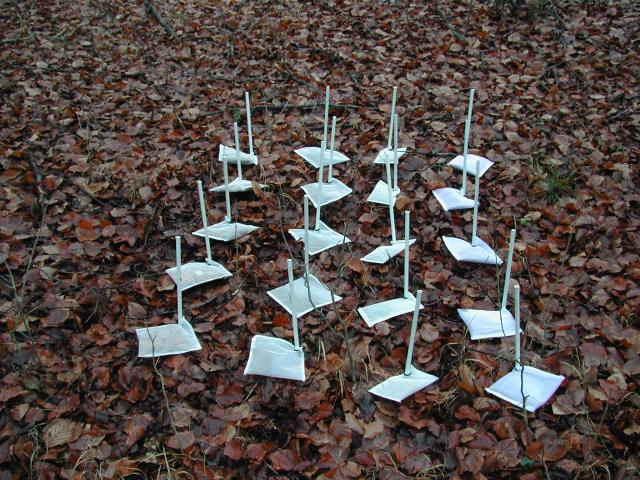
Experimental litter in bags in beech forest in Denmark

On how leaves decompose: While we originally focussed on aboveground processes within this project, I got more and more convinced this year that a big chunk of the important stuff actually happens in the soil below our feet. We are digging deeper and deeper, looking at how fast the soil breaks down plant material, how fungi in the soil affect where plants can be found and if the climate at soil level is actually much more relevant for plants than what we usually use.
19150984736_b5329369ab_o

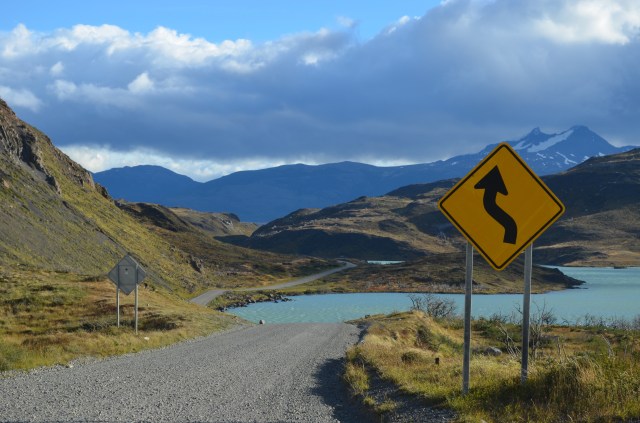
Gravel road through Torres del Paine National Park in the Chilean Andes

Plant traffic along mountain roads: With MIREN, the Mountain Invasion Research Network, we look at mountain roads and how they affect plant species distributions. They facilitate plant invasions, we knew that, but it turns out that roads are also busy with native species travelling both up and down the mountains. These travels in both directions were shown in our paper in Ecography.
Hallerbos - 8

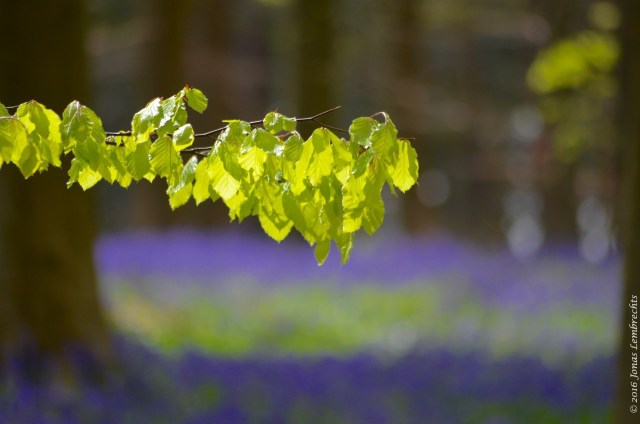
Young beech leaves with a bluebell field in the background

Beech and bluebell: Research also involves teaching the next generation of scientists, one of the most beautiful parts of the job. My favourite way of doing that is by showing the students the magic of the Hallerbos, the mythical and world-famous bluebell-forest close to Brussels. Every spring, we send them on an exploratory day through the forest to learn about the interactions between soil and vegetation and how to learn a lot about a system by just looking at the plant species.

More soon on the peaks of 2016 on top of the world!

Posted in General | Tagged , , , , , , , , , , | 1 Comment

Wave out the year

Take a step back. Wave out the year. Cherish your treasures. Take your time for it…

20218556306_18def8e3e9_o

These buzzy burrs (Acaena magellanica) put on some festive hats to celebrate the end of the year with you. And admit, the name buzzy burr is already festive on its own.

Soon, there will be a new year, with plenty of new possibilities.

But for now, it’s Christmas! Now we can just be happy with what the previous year has brought. And for me, that was lots to be happy about (the summary here)!


Posted in General | Tagged , , , , , , , , , | 1 Comment

The stunning truth behind the graph

Graphs often hide a lot of intriguing information, yet it is not always easy to get to what really matters. In ‘behind the graph’, I put in the effort to explain one of the main findings of our research and get to the stunning truth hidden in those simple lines.

This truth has been known for years: the higher you get into the mountains, the less non-native plant species you will find. They are common in the lowlands, gradually disappear towards higher elevations and are completely absent at the top.

Idyllic Norwegian valley - Skjomen

Non-native plant species diversity virtually always decreases with increasing elevation in mountains.

That was hence exactly the pattern we expected to find when we decided to put these observations to the test in mountains close to the north- and southpole. A nice declining curve: the higher we got, the colder it would be and the lower our study plants’ success.

DSC_0161 (2)

Putting the observations to the test with a seeding experiment in the mountains in northern Sweden (here) and southern Chile.

You will have to imagine the surprised looks on our faces when what we found was something completely different from theory. You’ll have to check for yourself on the graph:

graph

Probability of invader establishment as a function of elevation in subantarctic Chile in disturbed (red) and undisturbed (black) plots. 

Quadratic! The pattern we discovered turned out to be quadratic! Fascinating, isn’t it?

This means that the invaders actually perform worse at the elevation where they are most likely to be found in highest numbers at the moment. Their chances of success only rise to a maximum around the tree line (which is close to the highest elevation where they are currently found).

This quadratic function means that there is not one, but actually two different processes limiting invader success along the gradient; one at the top and one at the bottom of the mountain.

29464404440_9b101e2be1_o

The higher you get, the colder it becomes. A day in the beginning of september at a 1000 meters in the Swedish mountains.

The one at the top is the easy one: the higher you get, the colder it becomes and the lower the chances for the non-natives to survive (who are not used to such cold from their home range in Western Europe).

DSC_0461

Fresh snow on a plot close to the tree line in subantarctic Chile

The limiting factor in the valley is more intriguing, though. To understand what happens there, we need to take a look at our little graph again. As you can see, we have lines in two colours, a black and a red one. The black line displays the results from seeding non-native species in intact, undisturbed vegetation. Surprisingly, virtually none of them managed to germinate, nowhere along the elevation gradient. This implies that the vegetation in these cold mountains is highly resistant to invasion, at least when left alone and undisturbed.

29464282510_4e34350501_o

The dwarf shrubs, grasses and sedges of the subarctic vegetation are not welcoming to intruders, at least not when left alone.

Our red line, which nicely shows the quadratic relationship, is for seeds sown in disturbed plots, where we removed the native vegetation as happens in roadsides, along trails or with construction works. The positive effect of this disturbance on the non-native species is astonishing: create a gap in the native vegetation and the resistance to invasion drops dramatically.

That is, it drops most dramatically at intermediate elevations, where temperatures are not too cold yet, but the native vegetation also fails at regrowing again. At low elevations, where we saw the unexpected drop in performance, the native vegetation manages to regrow fast enough to limit the success of the invaders.

29120777843_6ebc01cd23_o

Disturbance events like mountain trails are a blessing for non-native species coming in.

So why is there this big differences in the expected and observed trend? The key lies in the amount of seeds that come in: at the moment, there are many many more seeds of non-native species at low elevations, which trumps the fact that they have lower chance of success. Yet that information predicts a grim future: if more seeds make it to higher elevations, and we keep messing around with disturbance of the natural vegetation like we currently do, plant invasions will rapidly increase in the very near future.

All of that in one little graph!

29662215141_07f54a82ca_o

Trifolium pratense, a non-native species in the high north

Source: Lembrechts et al. (2016) Disturbance is the key to plant invasions in cold environments. PNAS. 

Posted in Science | Tagged , , , , , , , , , | 3 Comments

Happy International Mountain Day!

Today – the 11th of December – is International Mountain Day, the yearly celebration of mountains since 2003.

19467504584_4472af5dba_o

A hotel in the beautiful Patagonian Andes in Bariloche

A day on which we try to increase awareness for the importance of mountains for all life on earth. A day to think about the opportunities and constraints that come with mountain development and conservation. A day for mountains, yet as much for all of us.

29632639172_3723a87f3d_o

A ski lift in the National Park of Abisko in Northern Sweden

A day to share some beautiful pictures of mountain views, but more importantly, remind us all of the impact we as humans have on these mountains.

27811474143_eaa3a2833d_o

Peace and quiet in a little valley in northern Norway

More than ever, we will have to search for a balance between nature and culture, between ecology and economy, between what we need, and what the mountains need.

20305471012_7ac5100782_o

Enjoying the view from the top of a mountain in the Northern Scandes

With every step we take in the mountains, we disturb them, and this disturbance has a cascade of effects, that we might never be able to grasp fully. It is a fast change, that is often irreversible, and like all changes in nature, it comes with winners and losers.

28144944310_72ff84017a_o

Wooden signs marking a snowscooter trail in a green valley in northern Sweden

Our research for example has shown ample times how humans and their disturbances in the mountains play a leading role in changes in the vegetation, with changing distributions of plant species and the introduction of many non-native intruder.

Yet the winners are similar – often even the same – everywhere around the world, making all disturbed sites looking more and more like each other. And that is a big loss for biodiversity.

You can always check our conclusions on the page ‘PhD-cv‘.

Posted in Science | Tagged , , , , , , , , , | Leave a comment

Compensations

We all play a part in CO2-emissions, the main culprit of many of the climate-related disasters we more and more observe on this rapidly warming planet. We all play a part, and especially in our Western world, we can say with certainty that we are responsible for  the emission of a larger cloud of carbon per person than is good for us and our world.

img_20160812_195847_29135616334_o

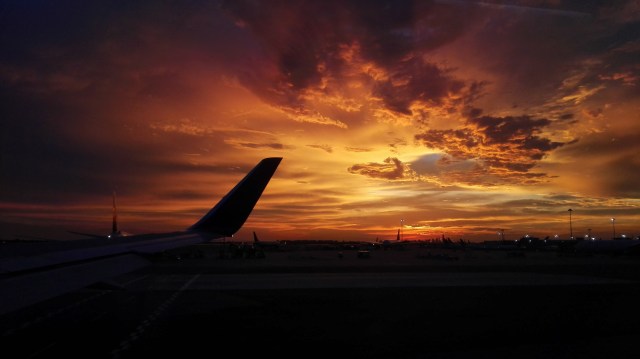
Sunset on J.F. Kennedy airport, New York

As a research group studying global change, the Global Change Ecology Centre can not just sit back and enjoy our gigantic carbon footprint. Besides studying the effects of climate change, we have the responsability to at least aim at reducing our own impact on the climate.

By far one of the biggest culprits of the increases in CO2 in the atmosphere can be found above our heads: airplanes. There are various ways in which airplanes play a role in climate change, but the International Panel on Climate Change (IPCC) currently estimates aviation to be responsible for 3.5% of the global anthropogenic climate change. For one individual, however, flying often counts up to one of the biggest chunks of the carbon footprint.

dsc_0099_20539167320_o

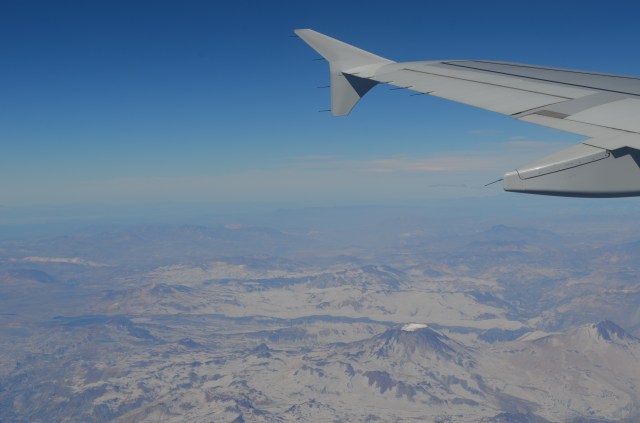
Flying over the Andes

Scientists travel a lot. Fieldwork, conferences, meetings with colleagues; science is a global business and flying is part of the bargain. This fact, combined with the previous one, implies that we ecologists from the Global Change Ecology Centre have a much larger carbon footprint than we should have.

Realising that is the first step, yet the second step should be action. We started by setting up a scheme of carbon compensation: all flights travelled by one of the scientists in our group will be compensated through an official carbon compensation program, called Wildlife Works. We invest money in this program that will be used – among other environmental and developmental projects – to conserve forests in Africa that are on the verge of being cut. Conserving these forests conserves one of their main global ecosystem services: they capture the CO2 we emit and as such counteract the greenhouse effect of this CO2.

19893349680_46e8311484_o

Bariloche, Argentina

Compensating is one thing, yet prevention is even better. A carbon compensation program is not worth much if it does not come with an extra effort to reduce the amount of flights. The idea is to think more consciously about every flight that you take, and check if it can not be replaced with Skype-meetings, destinations closer to home or other means of travel. There is plenty of ways we might be able to cut back on these expensive flights.

20074950458_614cdda656_o

Only if we do this consciously, we can make a difference. And making a difference is exactly what we need now, only if it is just a small one.

Posted in Conservation | Tagged , , , , , , , | Leave a comment

Short days, cold nights

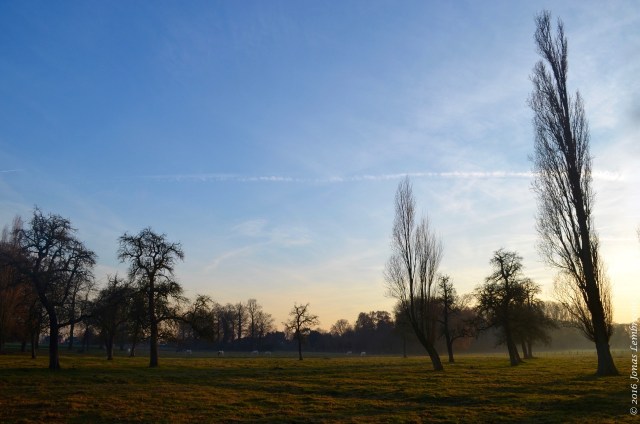
short-days-cold-nights-4The darkest part of the year on the northern hemisphere is upon us. Temperatures below zero, and days getting overwhelmed by the night before they even got the chance to start.
short-days-cold-nights-1

This post is in honour of the Arctic, where they are now deprived of any sunshine. Perhaps they feel a sparkle of hope when they see the sun in these pictures.

short-days-cold-nights-3

I love the Arctic and I have spend many weeks there, yet I have never experienced it during its darkest times. No plants there at the moment, you know…

short-days-cold-nights-1-1

Perhaps it is safe to dream of the dark and cold from here in Belgium, where temperatures stay safely close to zero and the sun still appears to keep up the good spirit.

Pictures from a December sunset in Zemst, near Brussels, Belgium.

Posted in Belgium | Tagged , , , , , , , , | Leave a comment