Dark diversity

Spring finally arrived here in Belgium, and with that spring the  fieldwork vibe inevitably starts blossoming as well.

Kalmthout - 3

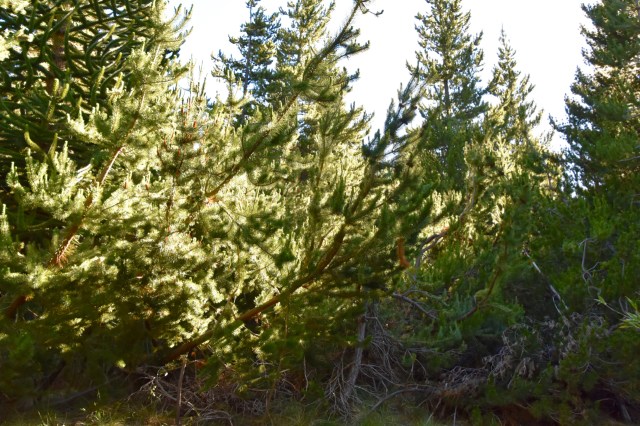
The ‘Kalmthoutse Heide’, north of Antwerp, on a grey day just before the start of spring

To get that fieldwork vibe up to speed, we headed north of Antwerp, to the ‘Kalmthoutse Heide’, a large swath of semi-natural heathland on the border with the Netherlands, and – in my opinion – the jewel on nature’s crown around Antwerp. There, we had a meeting with a forester of the Agency of Nature and Forest (ANB) to scout for plots for a new and exciting experiment for this summer, with a fascinating name: Dark Diversity.

Kalmthout - 2

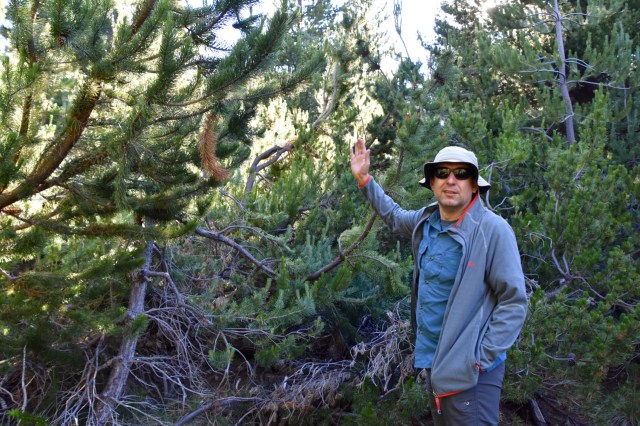
A sandy road through typical heathland vegetation

No, we will not be monitoring orcs, trolls and other dark spawn, dark diversity simply refers to those species that are NOT present in a certain place, although they theoretically could be there. The absent biodiversity, so to speak. To get a formal idea of which species are not present in a certain area, we joined the global DarkDivNet Network, who will be monitoring this absent diversity all over the world.
Kalmthout - 7

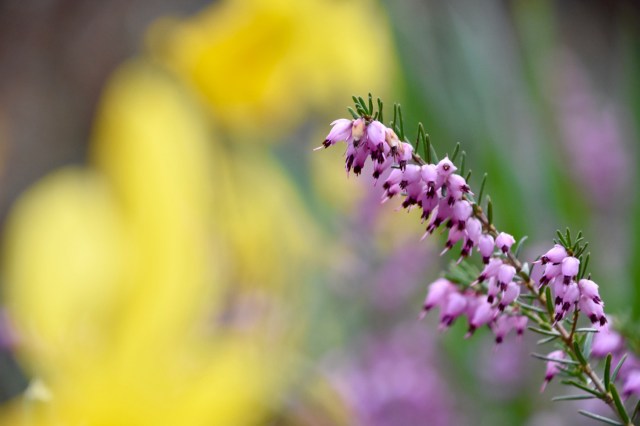
Some colour on that grey day: a garden variety of Erica tetralix, with Narcissus in the background

The idea is to monitor the vegetation in a typical natural or semi-natural ecosystem in your region, and compare that with the total plant species diversity in the whole are. That should show that only a subset of all species in a region can tolerate the ecological conditions of a given site. Of those, not all are realized in local communities. The absent part of the species pool forms the dark diversity of a community.

It is for this reason that we drove north to the heathland area in Kalmthout, a fascinating ecosystem with high conservation interest. Including this vegetation type as flagship of our Flemish nature into the global network sounded like a great decision.

Kalmthout - 6

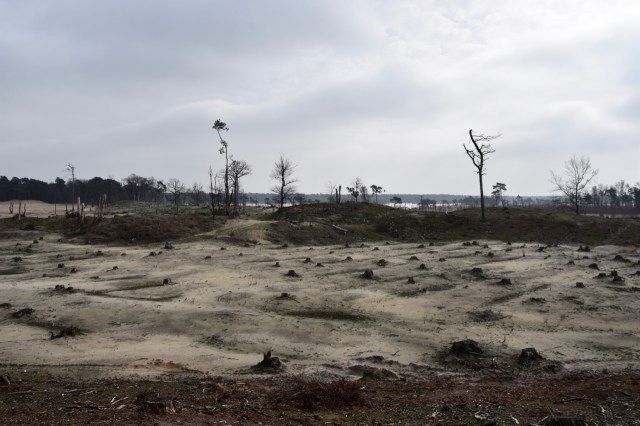
Dramatic landscape where recently a forest has been cut, aiming for heathland recovery

To study those processes that influence the dark diversity, we will compare the typical  heathland vegetation with a side that has seen recent anthropogenic disturbance. We went for a drastical disturbance: the complete removal of a pine forest – complete with invasive shrubs and all – for heathland restoration.
Kalmthout - 5

This site is still far from the target heathland vegetation, yet will over time hopefully slowly converge. This should reveal some cool dynamics in the dark diversity as well.

Kalmthout - 1

For now, we stuck to a short scouting mission. We will return in summer for the real deal: vegetation surveys and soil sampling, hopefully under a sunny summer sky! Stay tuned!

Posted in Belgium, General | Tagged , , , , , , , , | Leave a comment

Kalø

Yes, that title looks very Danish! I just returned from a short trip to the beautiful-yet-rainy east coast of Danmark, at the Aarhus University in Rønde. Besides for some outstanding Danish cuisine (did you try their amazing rye bread lunches?), we mostly met up their to talk microclimate.

20190314_2112445465829104806539972.jpg

The ‘Gl. Løgten Strandkro’, strongly recommended if you can get excited about the idea of a good, windy Danish seaside

Topic of our little meeting was how one could measure the local climate for insects and other arthropods in the tundra. For our global SoilTemp-project, this is a very interesting question, as these little creatures are one of the key organism groups for which we believed our initiative very important: a ground beetle crawling through an Arctic moss bed will not have the faintest idea about the climate conditions at 2 meter in the air as measured in a weather station, making it very urgent to go measure there where it matters.

20190314_2111557287420649816421366.jpg

The fairytale-like forest tracks around the Aarhus University in Rønde

Our meeting was short yet very productive: we got much closer to what kind of data we need, what challenges lie ahead if one wants to measure exactly ‘what the beetle feels’, and to how the available microclimatic measurement devices can get us the closest to that answer.

20190314_21103151708544532242311.jpg

Very Danish view from my hotel window

If all goes well, our knowledge of the environment as experienced by these little, often neglected, creatures in a changing Arctic and Antarctic will soon start increasing, as data will flow in over the coming field seasons.

20190314_2113476468509465924130106.jpg

Sunset at the National Park Mols Bjerge

And that feels good: witnessing the start of such an ambitious, yet much needed plan to improve our understanding of a crucial component of cold-climate biodiversity. In a few years from now, when we will have our answers, we will look back on this Danish meeting with fond memories, as here it was where it all started.

Posted in Denmark, General | Tagged , , , , , , , , , , | Leave a comment

The all-seeing eyes of the guanaco

This is the 6th post in a series of stories from our fieldtrip to South America. Check out the arrival in Concepcion, the first, second and third fieldwork day and this post on pine invasions <–

46146705065_863faa2a29_o

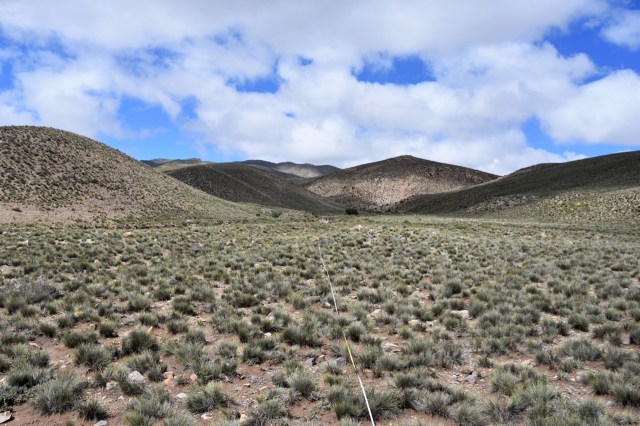
MIREN study plot at high elevations in the dry Andes around Mendoza

We are now making a major jump compared to the previous posts on this fieldtrip to South America: from the lush and very European looking vegetation at the feet of the Andes in central Chile to the very(!) dry lands around Mendoza, Argentina.

46146705005_cdcfeff98f_o

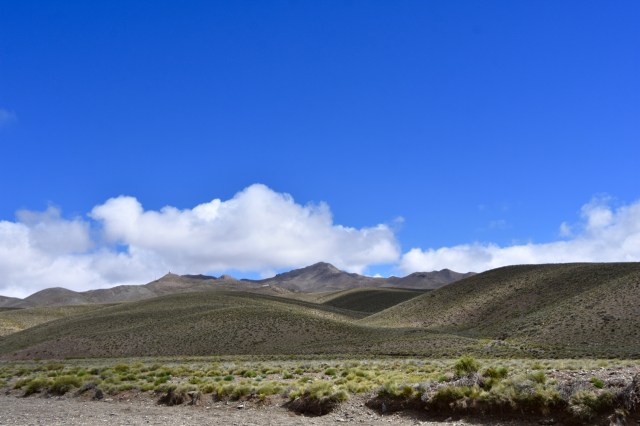
Rolling hills with patchy grass vegetation, a typical view in the area

Our first fieldwork day over there immediately felt like the jackpot: rolling hills, amazing views, and working under the all-seeing eyes of guanaco’s, the uncrowned kings and queens of the Andes.

47060440391_63f37fd581_o

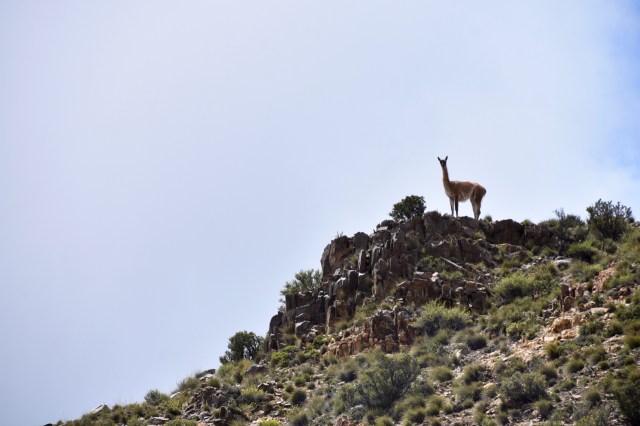
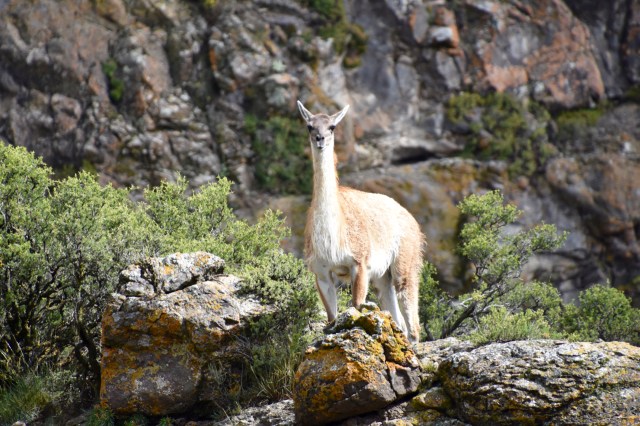
A guanaco overlooking its mountain realm from the top of a cliff

The latter are fascinating creatures. They have a strong preference for viewpoints, and thus keep popping up on the most stunning mountain ridges, cliffs and rocks. They always keep a watchful eye out for us, but did not care too much about human passage. And their ears are just plain adorable.

46146702095_1ded8761a3_o

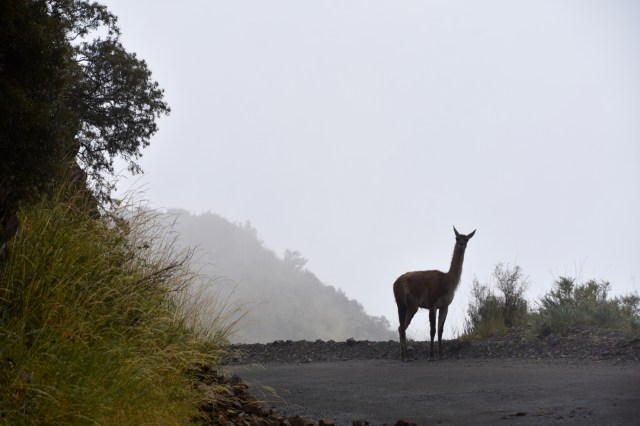
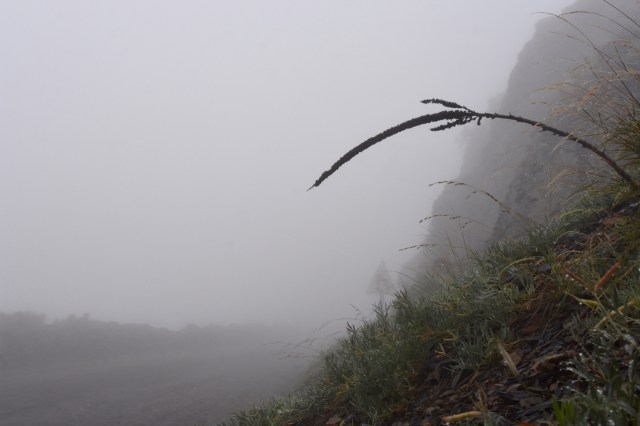
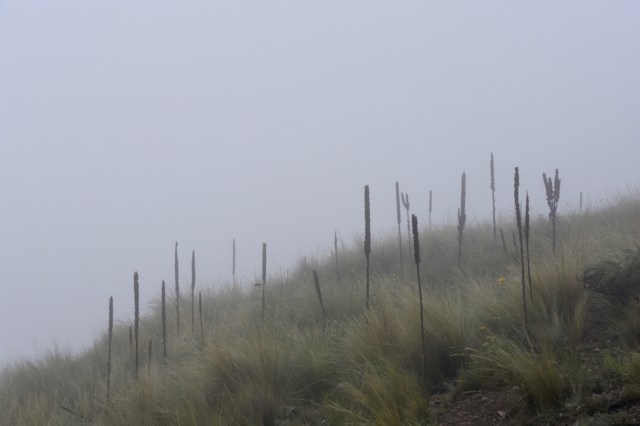
A guanaco on the road in the mist, a funnily spooky sight

As you can see from the pictures above, our first fieldwork day in the Andes slowly and surely turned more cloudy. Our first plots in the morning, at the top of our study road for the day, were conveniently situated high above the clouds. However, as the day proceeded, we drove deeper and deeper into a foggy soup of greyness.

47060445971_6149733423_o

Old ‘candles’ of Verbascum thapsus kept popping up through the fog

This weather was rather unusual, so our local guides warned us. And rightfully so, as we had been preparing for baking summer suns in the desert climate around Mendoza, where scorching temperatures were the rule. Not so on our first fieldwork day; we even got some rain, and temperatures low enough to consider putting on a jacket. For those of us used to summers in the Norwegian subarctic, it again felt surprisingly much like home (albeit with guanacos appearing in the mist instead of the traditional reindeer).

46146703195_d2043455b8_o

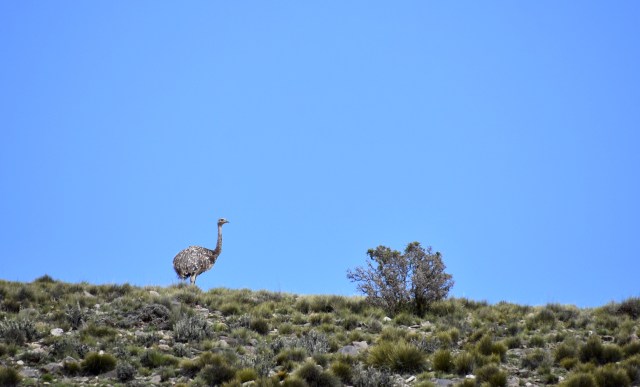
A nandu on a mountain ridge, high above the clouds

From a scientific viewpoint, that first day in Mendoza also turned into a success. Our protocol – thought up at home with mostly Scandinavian heathland as a reference – managed to withstand the totally different vegetation structure in the region. But, oh boy, how many plant species do they have there!

46146705165_3bb661a95a_o

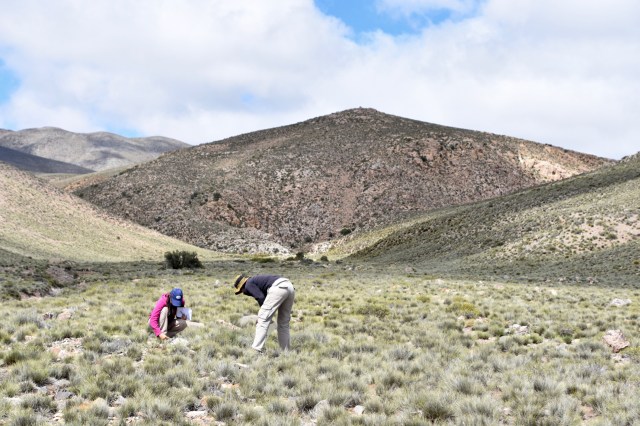
Part of the MIREN Mendoza team sampling leaf traits

It might not appear as such in the pictures, but these alpine grasslands hosted a diversity that was far too much for me to learn in one week. The shrublands in the valleys were an even bigger challenge, with time and time again several different species of shrubs in every plot. Luckily, we could again count on an enthusiastic team of local experts, without whom this would have been an impossible challenge.

46146702985_6a3d3df972_o

And with that, the remaining fieldwork time was getting shorter, but the dataset – and our sample bag – was steadily growing. Fieldwork is most certainly rewarding!

47060442821_113843e38c_o

Posted in Argentina, General | Tagged , , , , , , , , , , | 2 Comments

KittenR

I finally got an opportunity to put my R skills to ‘good use for society’: I visualised the numbers of kittens that were brought to our local animal shelter throughout the season, and modelled how much milk, kitten food, and foster homes are needed to take care of them .

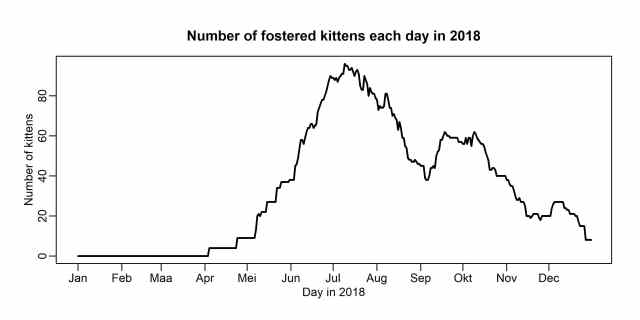
Aantal kittens per dag

And, oh dear, these numbers! Season only slowly starts in April-May, but then numbers rapidly take off to over 80 kittens present in the shelter at the peak of the season in July. If you know that all these kittens need to be raised by foster parents until they are old enough to be adopted, you can imagine there is a big team of volunteers needed (ideally around 25 foster families, especially in the summer months).

43476379_325733348202705_5177904038234030080_n (1)

The animal shelter takes care of over 200 foster kittens each year (picture credit Kami St.)

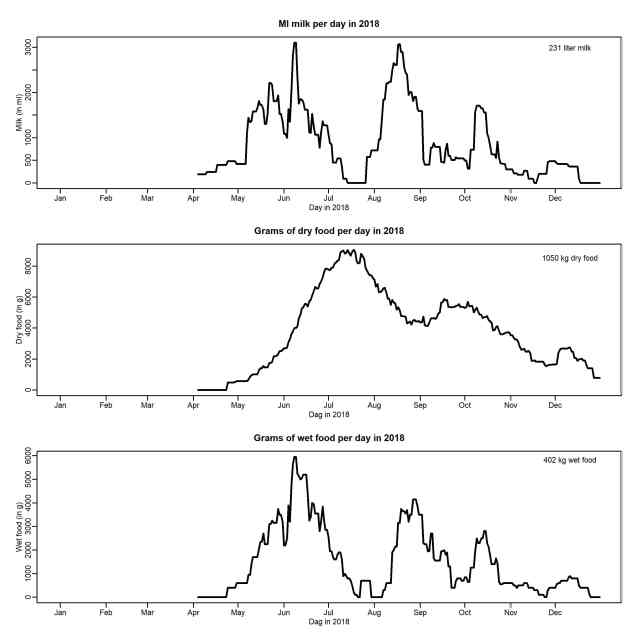
To make the life of this team of kitten lovers and the animal shelter a bit easier, I visualised how much kitten food they would need throughout the season on a daily basis. Herefore I linked up the age of each kitten on each day with the average amount of milk, wet or dry food a kitten should eat at that age.

DSC_8221

Eten per dag

The conclusion? A stock of 231 liter of kittenmilk, over 1000 kg of dry food and around 400 kg of wet food should last them through the season, based on last years numbers.

20180810_122753

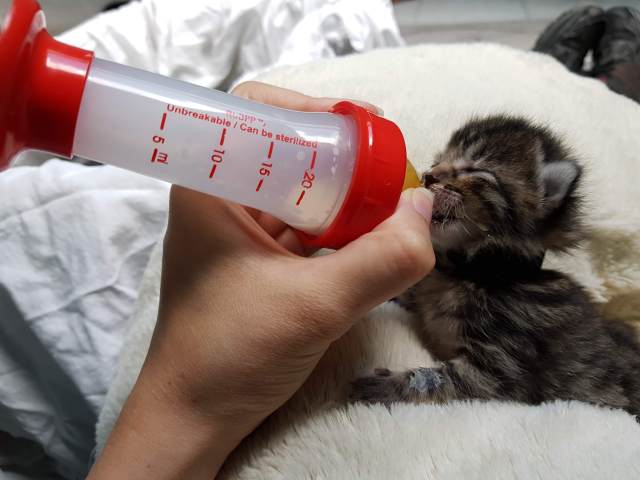
The youngest kittens still get their milk from a bottle every few hours, day and night

Interestingly, these graphs visualise some distinct patterns within the season. Our first graph already showed three peaks: a first big one with the bulk of the kittens in July, but a clear second wave around October, and a last little bump in December.

These peaks are even clearer in the graphs of the necessary food supplies. As kittenmilk is only needed for the youngest, and wet food when they are transitioning from milk to dry food, peaks in the different food needs stand out clearly throughout the season. The youngest kittens peak in June, August and October, yet at the height of our kitten season in July, there is virtually no need for kittenmilk. At that point, the cohort of youngest kittens – which will stay longer in their foster families and now transition to wet and then dry food, are now joined by older kittens (perhaps thrown out of their homes when they are approaching the age of vaccination and sterilisation, an unwanted expense for many unvoluntary kitten owners). The result is a group of older kittens, mostly eating dry food, that are largely gone to their forever homes by the time the new wave of kittens arrives around August.

DSC_8105

Last year’s foster kitten (left) taking care of a little fluffball from this year’s bunch

This is the first year that I have such detailed information on kittens at hand. I hope to continue monitoring this in the future however, as I am curious to see if there is a climate signal in the data. For example, this second and third bump in the number of kittens (especially visible for the milk-loving youngest ones) could relate to an increase (and delay) in the length of our summers here in Belgium. It would be fascinating to link this up to interannual variation in weather, to see if long and warm summers indeed increase the length of the kitten season at our shelter.

42247575800_b34617f66c_o

Freshly fed kittens, with the milk still on their noses

PS: no, this post was not an excuse to finally post some of these cute kitten pictures on this otherwise very scientific website!

28906400408_68c5a9bc92_o

Posted in Belgium, General | Tagged , , , , , , , , , , | Leave a comment

Home?

This is the 5th post in a series of stories from our fieldtrip to South America. Check out the arrival in Concepcion, the first and second fieldwork day and this post on pine invasions <–

40095442063_dd0845af3f_o

Lush meadows at the feet of the mountains in Chile

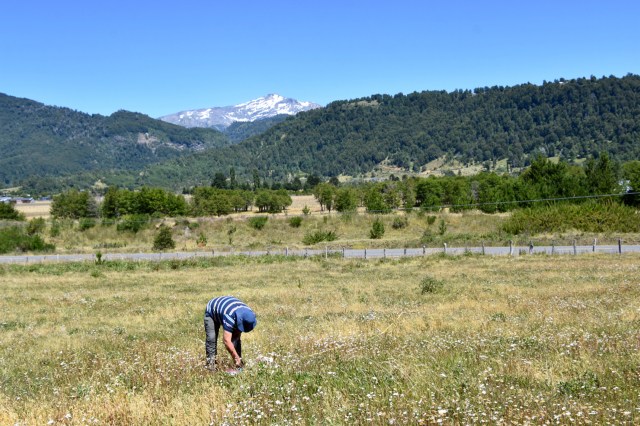
Sometimes, one travels far to arrive seemingly close to home. That was the experience I got on our last fieldwork day in the Chilean Andes, where we surveyed some of the long-term MIREN-plots at the feet of the mountains in National Park Malalcahuello.

40095442723_56d647c2fb_o

Taking nutrient samples in a longterm survey plot

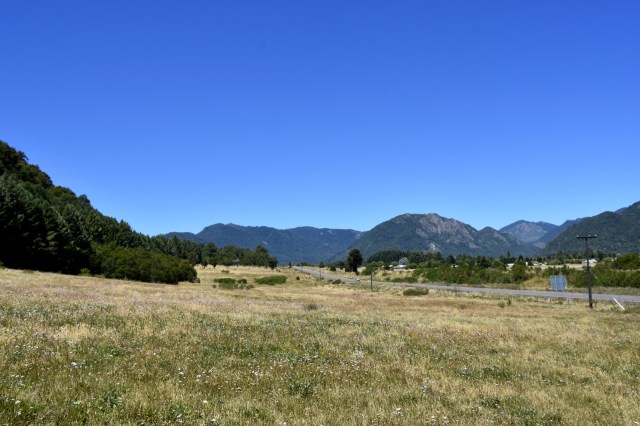
What we found there was a vegetation so European that it could have very well been southern France or Switzerland. Not only the feeling of the lush green nutrient-rich meadows, but also – and mostly so – the plant species themselves.

46995023992_7d896e25b0_o

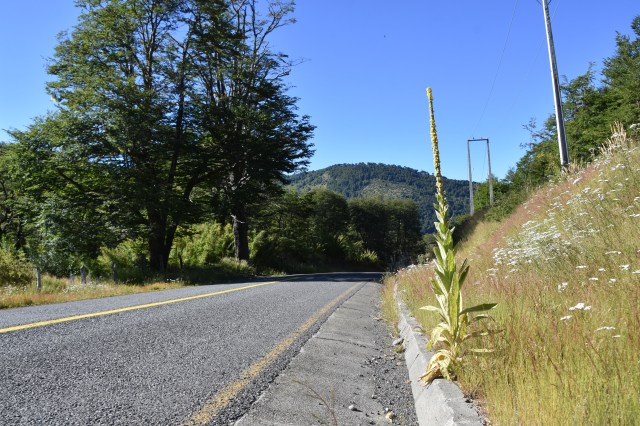
Verbascum thapsus in a Chilean roadside, exemplifying how the species can withstand almost everything.

The whole vegetation, both in the roadsides and in the meadows bordering them, consisted virtually entirely of European weed species. If you would have dropped me there blindfolded, I would have taken me a while to tell that these roadsides were not in Europe. It is this kind of invasions that provided the exact reason why the Mountain Invasion Research Network came into existence over 15 years ago: they are brought here by humans following agriculture, and are now spreading rapidly towards higher elevations in the mountains. And they are doing so well so far away from home!

32118544747_6505b3ffca_o

Echium vulgare

It was a weird feeling that my Western European botanistic background allowed me to identify all species in a Chilean vegetation plot. But I only saw familiar sights: Echium vulgare, Verbascum thapsus, Trifolium repens and pratense, Achillea millefolium, Anthoxanthum odoratum and many more. They were all there, and thriving.

40095440063_3600dc8b11_o

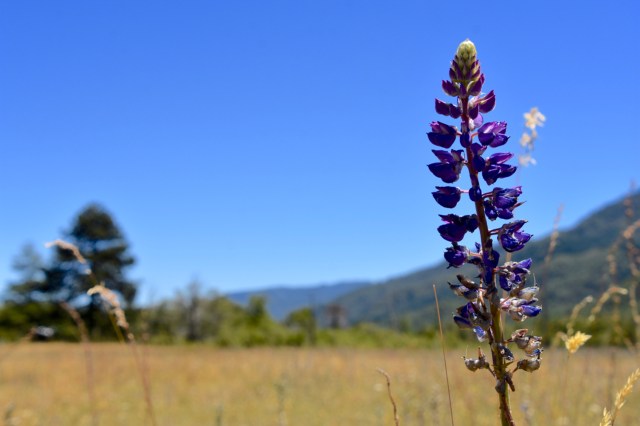
Lupinus polyphyllus, one of the few non-native meadow species in the region with a North American and not a European origin

40095438973_27d702d71b_o

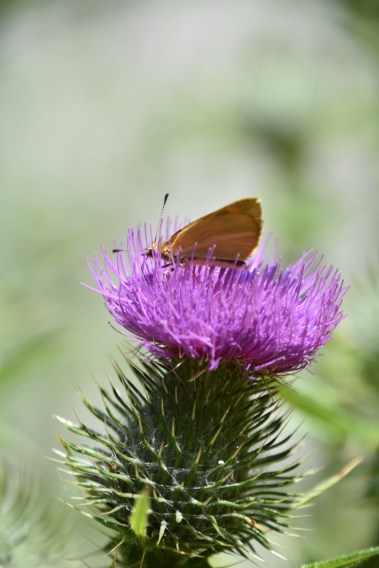
Skipper butterfly on a European thistle

And so we spent a warm summer afternoon at the end of January in a Western European meadow, bathing in the sun and feeling very much at home. Forgetting for a second that at home, 4-degree-rainstorms were what we should get.

Yet, at home in Flanders, we would have called this nature. Here, it was an invaded countryside, with close to no native species in sight. A beautiful landscape, yet with a dark edge to it.

32118542737_0d176e7cd8_o

40095438773_8d989600ec_o

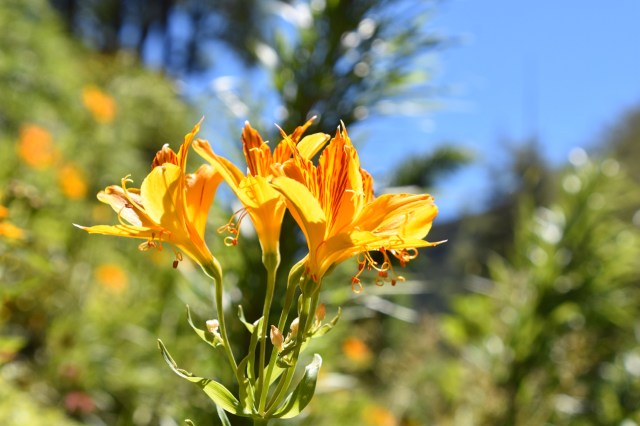
Alstroemeria aurea, one of the few native species seemingly thriving in the roadside. Its golden flowers an exotic touch to the otherwise almost entirely European flora.

Posted in Chile, General | Tagged , , , , , , , , , , | Leave a comment

Pines!

This is the 4th post in a series of stories from our fieldtrip to South America. Check out the arrival in Concepcion, and the first and second fieldwork day <–

46336425394_6d61d74005_o

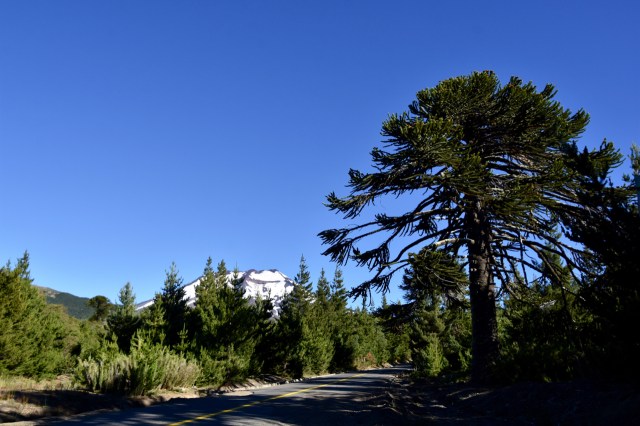
Road through a native Araucaria-forest, with the view on the Lonquimay-volcano obstructed by recent pine invasions

Our local partner in Chile, the Laboratorio de Invasiones Biológicas (LIB), has a very important task at hand: understanding and managing the problem of invasive species in Chile and the Andes, a problem that is almost nowhere in the world as bad as it is in the region around Concepcíon. Visiting the group, the area and the important work they are doing served as a real eye-opener to me, showing the situation in the field behind all the data I have seen: oh, how rapid and impactfull the spread of invasive species can be!

40095431483_11a6bc584c_o

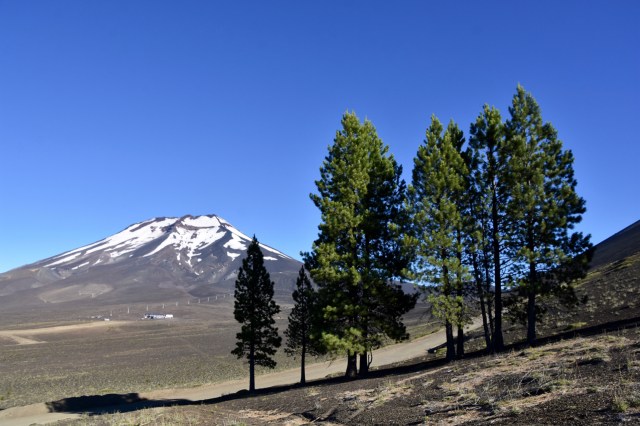
A line of lodgepole pines planted above the treeline at the foot of the Lonquimay-volcano

We were lucky enough to have time for a short visit to one of their study sites in National Park Malalcahuello, where they are battling a rapid expansion of lodgepole pines (Pinus contorta) into and beyond the native Araucaria-forests (see my previous post for more details on the Araucaria). The pines are spreading rapidly since some small plantations have been planted in the national park in the 70s, and now cover an area of over 100 hectares with their dense green needle-rich branches.

46336425684_d5df8c0b43_o

Information sign on lodgepole pine invasion

The LIB is working hard to understand the nature of these invasions, their impacts on the system, and the possibility of managing them. And all of that is urgently needed, as the pines are found to be highly resistant, and highly effective invaders.

47060387601_2968f77c51_o

A dense stand of expanding lodgepole pines, with stems growing in all directions, creating an understory that is almost impossible to pass

The LIB is monitoring the long-term effects of different management strategies on the abiotic conditions and the biodiversity in the park, and following up on recovery of the native diversity (or new pine seedlings) after pine removal for restoration purposes.

A very important project to keep track off, and I hope to be able to report here on the main outcomes of this study and its high conservation importance!

47060388151_b19f6eaeda_o

Prof. Aníbal Pauchard of the LIB, showing us around the invaded areas

Posted in Chile, General | Tagged , , , , , , , , , , | Leave a comment