Pines!

This is the 4th post in a series of stories from our fieldtrip to South America. Check out the arrival in Concepcion, and the first and second fieldwork day <–
46336425394_6d61d74005_o

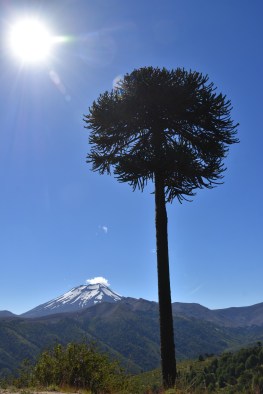
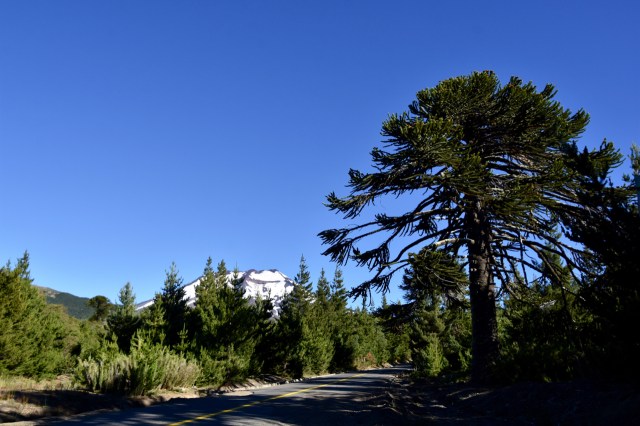
Road through a native Araucaria-forest, with the view on the Lonquimay-volcano obstructed by recent pine invasions

Our local partner in Chile, the Laboratorio de Invasiones Biológicas (LIB), has a very important task at hand: understanding and managing the problem of invasive species in Chile and the Andes, a problem that is almost nowhere in the world as bad as it is in the region around Concepcíon. Visiting the group, the area and the important work they are doing served as a real eye-opener to me, showing the situation in the field behind all the data I have seen: oh, how rapid and impactfull the spread of invasive species can be!
40095431483_11a6bc584c_o

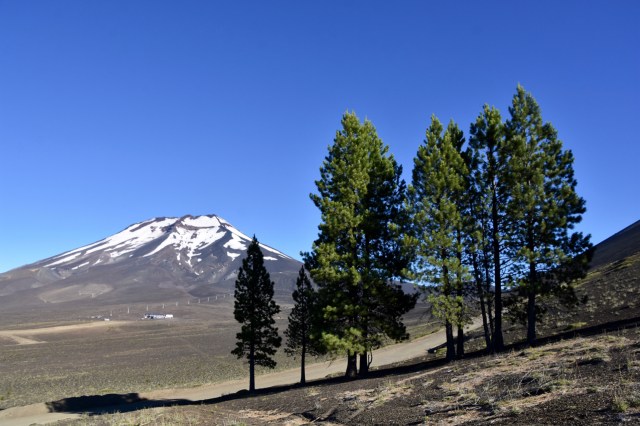
A line of lodgepole pines planted above the treeline at the foot of the Lonquimay-volcano

We were lucky enough to have time for a short visit to one of their study sites in National Park Malalcahuello, where they are battling a rapid expansion of lodgepole pines (Pinus contorta) into and beyond the native Araucaria-forests (see my previous post for more details on the Araucaria). The pines are spreading rapidly since some small plantations have been planted in the national park in the 70s, and now cover an area of over 100 hectares with their dense green needle-rich branches.

46336425684_d5df8c0b43_o

Information sign on lodgepole pine invasion

The LIB is working hard to understand the nature of these invasions, their impacts on the system, and the possibility of managing them. And all of that is urgently needed, as the pines are found to be highly resistant, and highly effective invaders.
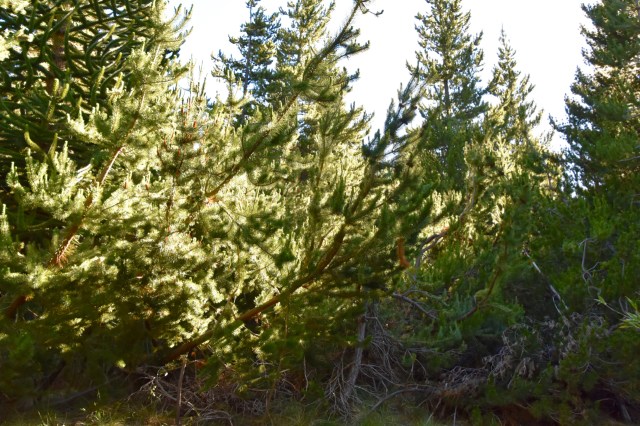
47060387601_2968f77c51_o

A dense stand of expanding lodgepole pines, with stems growing in all directions, creating an understory that is almost impossible to pass

The LIB is monitoring the long-term effects of different management strategies on the abiotic conditions and the biodiversity in the park, and following up on recovery of the native diversity (or new pine seedlings) after pine removal for restoration purposes.

A very important project to keep track off, and I hope to be able to report here on the main outcomes of this study and its high conservation importance!
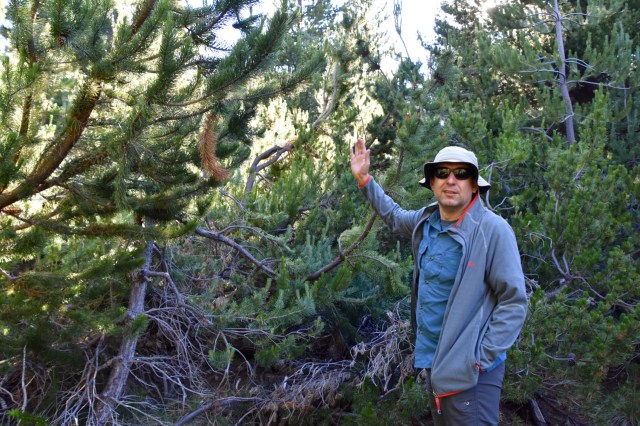
47060388151_b19f6eaeda_o

Prof. Aníbal Pauchard of the LIB, showing us around the invaded areas
Posted in Chile, General | Tagged , , , , , , , , , , | Leave a comment

Malalcahuello

This is the third post in a series of stories from our fieldtrip to South America. Check out the arrival in Concepcion and the first fieldwork day <–

DSC_3432

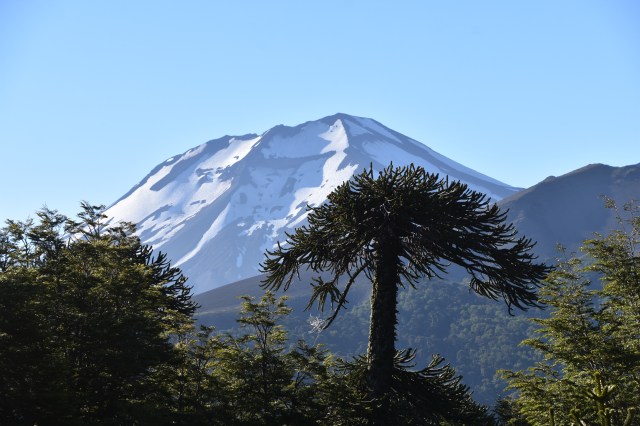
The Lonquimay-volcano, towering over the native Araucaria-forests

DSC_3340Fieldwork day 2 of our South American journey brought us to national park Malalcahuello, where our next mountain road was waiting to be surveyed, under the all-seeing eye of Volcan Lonquimay. There, we were introduced to the amazing Araucaria-forests.
 

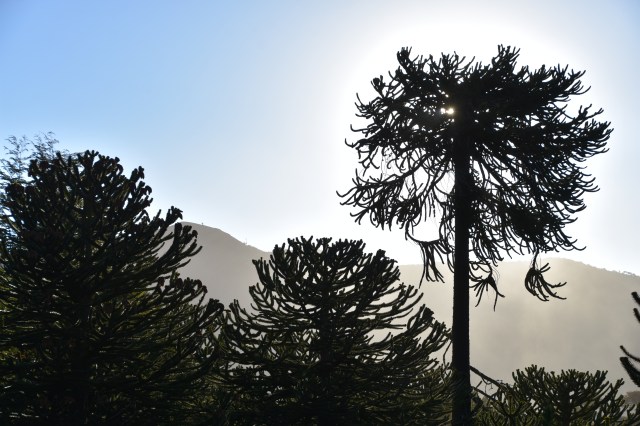
The Araucaria, or monkey puzzle tree, is a common sight in many European gardens, where he is often planted for his excentric looks. Seeing the tree in its native habitat, growing tall and proud on the steep mountain slopes, is simply breath-taking.


DSC_3388

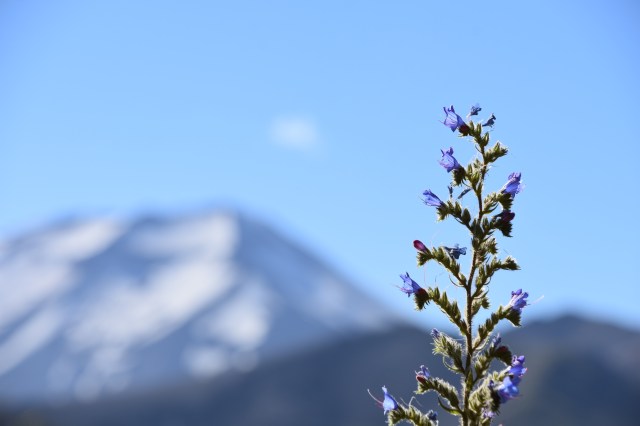
Echium vulgare, a common introduced European weed in the park

Yet these native forests are also threatened by non-native species. Again, the roadsides we monitored were packed with familiar species, often even more common here as in their native range in Europe.

DSC_3390

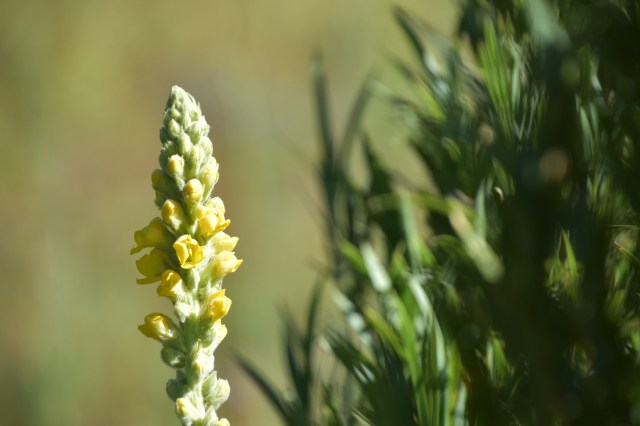
Verbascum thapsus, one of the most common mountain invaders across the globe

That is another interesting question we hope to be able to answer with this study: are these plants relying on the same mycorrhizae to invade in the Andes as they use in their native range? A nice package of root samples, soon to be send to our University of Antwerp-lab, should shed light on that.

DSC_3423

Acaena pinnatifida, the Argentinian biddy-biddy

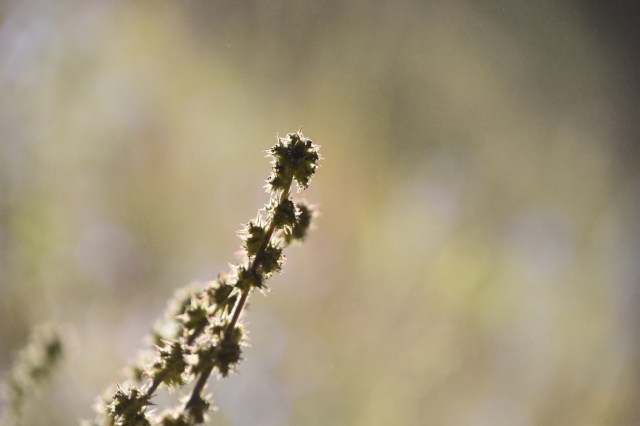
Fieldwork in the Andes also introduced us ample of times to the so-called Argentinian biddy-biddy (according to its rather short Wikipedia page). Despite its cute name, Acaena pinnatifida is a rough fellow. On its own, it hammer the concept of ‘assisted seed dispersal’ right into you: their seeds are provided with spiky little extensions that cling to your cloths like the best velcro. We spend a significant part of our time getting these annoying clingy hedgehogs off of us!

DSC_3479

But even the most dreadfull biddy-biddy fields cannot take away the beauty of this amazing park in the Chilean Andes. We spend the night at the foot of the mountains, in a beautiful Swiss lodge, shared a local wine with our amazing Chilean colleagues, and looked forward to another day of fieldwork in that wonderful place.

To be continued…

Posted in Chile, General | Tagged , , , , , , , , , , , | Leave a comment

Laguna del Laja

This is the second post in a series of stories from our ongoing fieldtrip to South America. Check out the first one <–

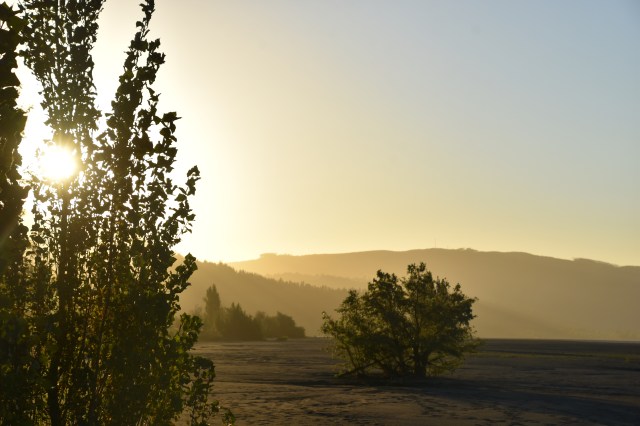
Our first day of fieldwork in the Chilean Andes brought us to Laguna del Laja, a national park at the foot of the Antuco-volcano. There, in a desolated landscape of rocks and gravelly slopes, we would survey our first South American mountain road.

DSC_3107

A mountain road through a desolated landscape

In that alien world, we would study the interactions between different plants, and between plants and the belowground world along mountain roads, in order to understand better how climate and human land use together shape the mountain vegetation.

DSC_3141

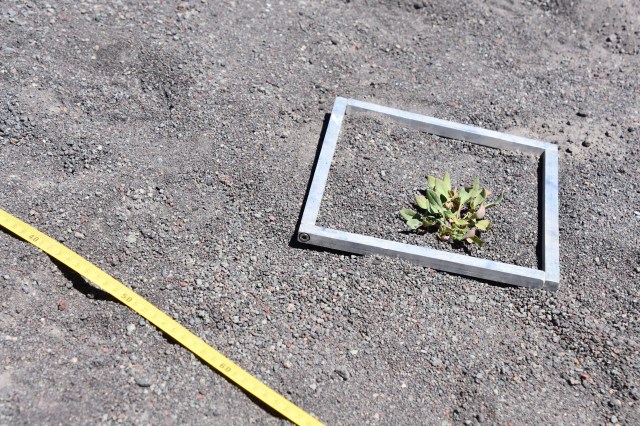
A lonely patch of Rumex acetosella in a volcanic wasteland

At high elevations, there does not seem to be much to interact with, though, as plants are far apart in the volcanic wasteland. Yet that first view is deceiving: a lot is happening below the soil surface, where mycorrhizae (root fungi) dictate the crucial nutrient uptake of most plants. We are sampling these roots, and will use DNA-analyses to get an idea of the diversity of mycorrhizae in the system.

DSC_3078

A Senecio-species braving the harsh conditions of the high Andes

Roads will be drastically changing all these interactions, both above ànd below the soil surface. How that exactly works, that is still a mistery, but the data of this fieldtrip, combined with data from several other collaborating MIREN-regions, will hopefully shed light on that in the near future!

DSC_3198

Cytisus scoparius, a common European invader in South America. In the background: the peak of the Antuco-volcano

Very important in that regard is the role of roads as highways for non-native plant species, rapidly funneling new intruders upwards towards higher elevations. These non-native species are bound to mess up the established interaction-network. At the same time, the present interactions will be crucial to define the faith of the invaders.

DSC_3218

A native cushion-forming cactus (Maihuenia) between the volcanic rocks

The Chilean Andes have very high amounts of non-native species, especially compared to some of our other study regions in northern Scandinavia. That is another reason why we are here: to compare the effect of invaders on the vegetation in high versus low-impacted regions.

For now, it is the sampling that needs to be done, the questions will be answered later (after hard work in the field, in the lab and behind the computer). More on all that to follow!

Posted in Chile, General | Tagged , , , , , , , , , , | Leave a comment

Concepcíon

Brussels-Madrid, a midnight cross-over of the Atlantic Ocean and the whole of South America, and a one hour flight south from Santiago, and there we were: Concepcíon, close to the Pacific Ocean, in Central Chile.

DSC_2989

There, on the shores of the Biobio river, we spend our first Chilean evening, meeting the local MIREN-people, making plans for fieldwork to come, eating delicious food, and washing away the tiredness of the travels.

DSC_3016

Walking across the riverbed of the Biobio-river

With this post, I like to introduce you to an upcoming series of stories from our ongoing fieldtrip to South America. A fieldtrip that brought together French, Belgian, Chilean and Argentinean MIREN-people to tackle cool new questions on plant distributions along mountain roads. Stories will slowly trickle in, as fieldwork and bad internet might hold me back.

Next up: the Andes!

Posted in Chile, General | Tagged , , , , , , , , | 5 Comments

Winter to summer

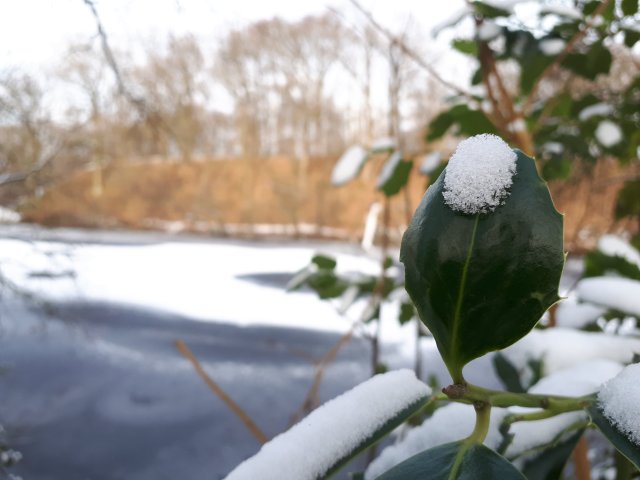
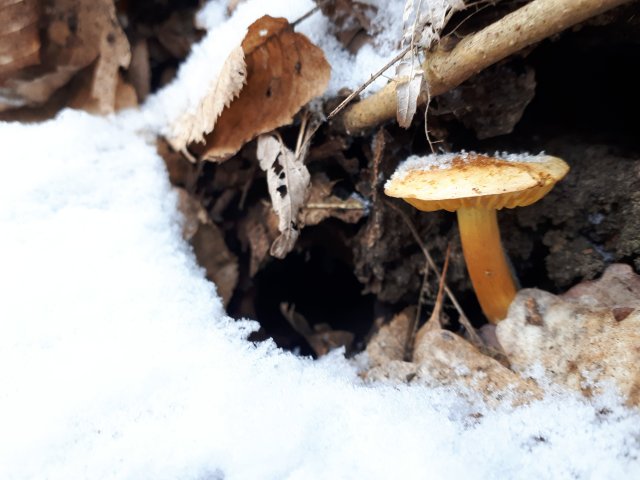
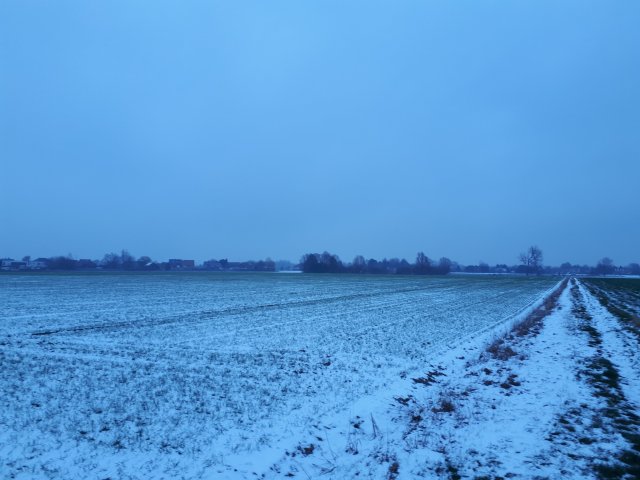
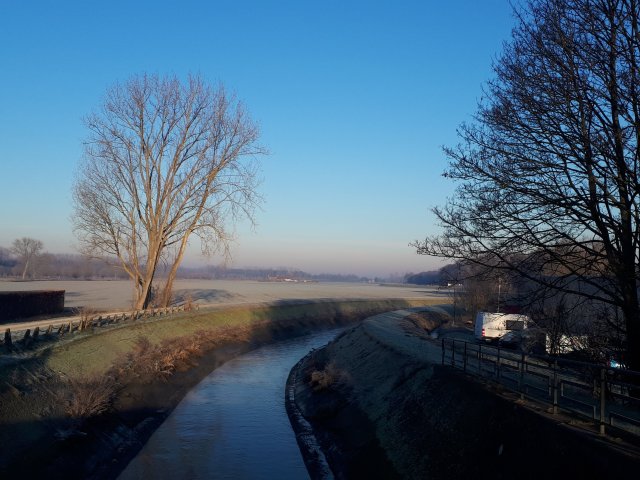
Winter is here in Belgium, bringing gusts of frost, snow and icy rain that make for cold noses and toes.

20190123_1238546860231399268507145.jpg

Little snow hat on an Ilex at our university building

With all that cold, I am getting pretty ‘warmed up’ about our upcoming fieldwork trip to South America. Next week, we are sending a little delegation to Concepcíon, Chile and Mendoza, Argentina to collect data for some of our many fascinating MIREN-projects.

20190123_1237113257978331979972667.jpg

We are visiting some of our long-term MIREN-collaborators, so besides warm fieldwork days, I am also really looking forward to a warm welcome from colleagues and friends that we get to see so little.

20190124_083356816491733364956287.jpg

Early morning snowy walk close to Mechelen, Belgium

The main goal: gathering data for our projects on mycorrhizae, biotic interactions and plant traits, and their role in species redistributions along mountain roads!

20190121_0947428717152650486755465.jpg

The river Zenne on a frozen morning

So stay tuned, as the landscapes on these pictures are likely to get a lot more exciting soon!


Posted in Argentina, Belgium, Chile | Tagged , , , , , , , , , | 2 Comments

Green living things

There is an interesting challenge around, inspired by a comic from xkcd, in which scientists try to explain their research with only the thousand (or better: “ten-hundred”) most common words in the English language. Well, that’s the kind of challenge I can stand behind! It makes for fun reading, but also challenges the scientist to go ‘back to basics’ with what their working on. Here is my attempt about the ‘green living things’ I work with (yes, ‘plants’ is not in the list):

We study green living things moving away from their homes as the world gets warmer and more filled with people. We want to get better at knowing why they are moving and where they are going. Green living things can not walk on their own, but we see that we humans take them with us if we go somewhere. We also change the places where they grow with all the building and working we do, which some green living things like, but many others don’t.

46815960831_34ccf5df72_o (1)

A green living thing living in a warm place

If we know why the green living things are living where they are, and not where they are not, we can get a good idea of what they will do later, when everything will be very different!

Posted in General | Tagged , , , , , , , , , , | Leave a comment