Let me tell you a little story. It is an impressive story, one of the more exciting stories from the world of plant invasions I have heard so far. It sounds like a fairytale, but do not settle for a happy ending, as it is still real live we are talking about.
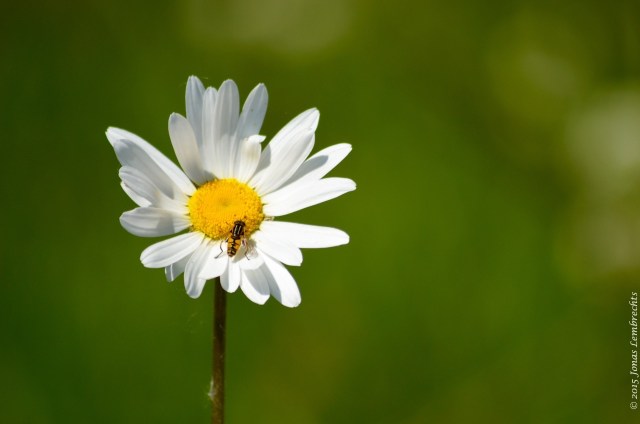
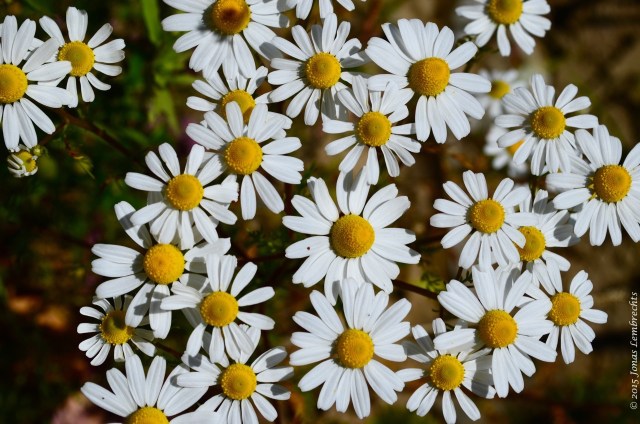
The setting is Australia, the continent were all big stories seem to happen. More precisely in Kosciuszko National Park, a reserve of about 600,000 ha of mountainous country in the south-eastern part of the country. The main character is called Ox-eye Daisy (if that does not sound like a fairytale to you…), or Leucanthemum vulgare, a meadow species well known from any European countryside.
As is so often the case in historic tales, it is hard to pinpoint the moment when it all begun. The species probably escaped from gardens in the beginning of the 20th century in Australia, first observations in the mountains of the national park of our story date back to the sixties. After that, not much happened (but you might guess ‘not much’ is not why I am telling you the story…)

Fast forward to the beginning of the 21st century. Vegetation relevees in the Kosciuszko park mention virtually no Ox-eye Daisies. There had been a tiny patch next to a stream for a decade or two, but there did not seem to be any expansion from there. And then, boom, all of a sudden in January 2010, park managers noticed a hill completely (completely!) covered with the species. Tens of hectares within the landscape showed a virtually hundred percent cover of Ox-eye Daisies, turning them into beautiful but worrying white snow landscapes. The first question was obvious: had a growing patch of daisies managed to escape from the observing eye of scientists and park managers during decades, even though the infected area was huge and clearly visible from the road?
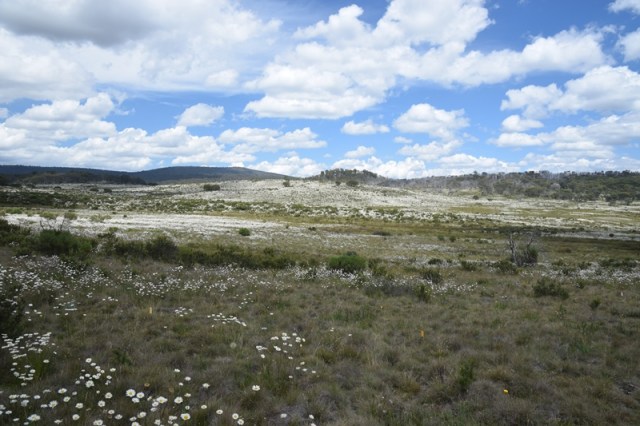
A ‘snowy’ hill covered in Ox-eye daisies in Kosciuszko National Park – K.McDougall
Of course, such an assumption is a bit unrealistic, even for a fairytale. But it turns out the truth might be even more fascinating. Recent experimental research in the park revealed some characteristics of the Ox-eye Daisy, showing the species is just an incredible survivor. The seeds and seedlings easily survive under a very dense native vegetation, without any access to light. During years, they do not grow or flower, patiently remaining small and unnoticed. Until times are right…
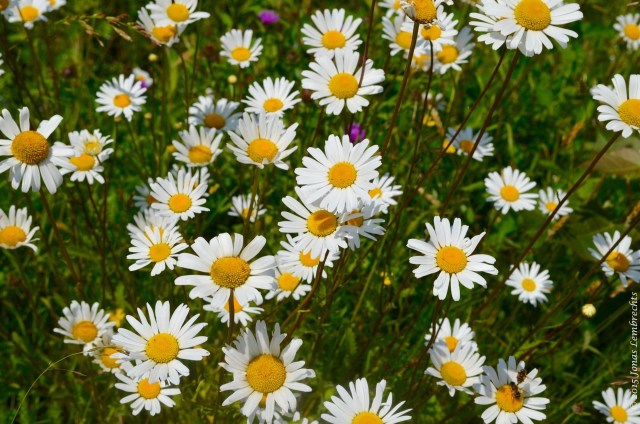
The seeds of this curious species are spread easily by animals , and those are plentiful in the park: native kangaroos, wallabies and wombats and non-native horses all roam freely through the hills, and they might have been spreading seeds from the small known patch of Daisy flowers at the stream for years. As soon as the seeds got dropped somewhere under the vegetation, they germinated and patiently waited, or remained there as seeds in the soil. Until times were right…
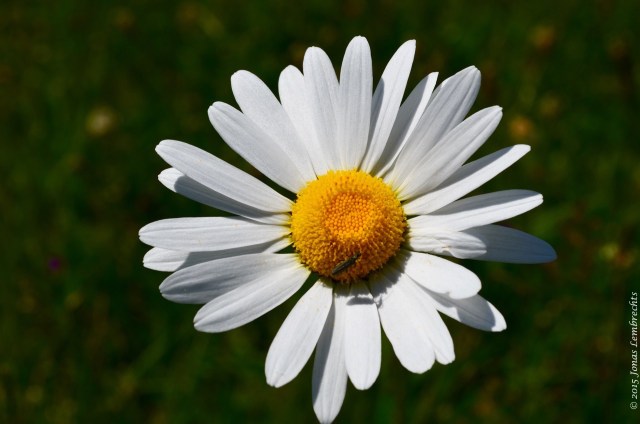
In 2007, a wildfire, started by lightning, burned tens of hectares on a (previously mentioned) hill in the park. It had been the first fire on that location since the 1960s. That fire was the trigger for the massive expansion of our L. vulgare. The species grew much faster than the native vegetation and easily outcompeted it after a disturbance event like this, leaving virtually no room for other plants.
Park management noticed another similar event only last year, after a massive die-off of the native grass vegetation.

So it is clear, again, how disturbance serves as the main driver of invasion, and this story is just another example. Where to go for a happily ever after is still uncertain. Management currently aims for containment of the Ox-eye daisy within the infected areas, but it is impossible to tell how far the seeds and seedlings have been spreading over the years. It is even harder to prevent them from spreading even further now, as the animals that carry them cannot be contained.
This story originated from a personal communication from Keith McDougall, botanist at the Office of Environment and Heritage in New South Wales, Australia. More information can be obtained via keith.mcdougall@environment.nsw.gov.au or genevieve.wright@environment.nsw.gov.au.












 The 3D lab