From valley to mountain top

“I care about lots of things,” said Slartibartfast, his voice trembling partly with annoyance, but partly also with uncertainty.

“Such as?”

“Well,” said the old man, “life, the Universe. Everything, really. Fjords.”

“Would you die for them?”

“Fjords?” blinked Slartibartfast in surprise. “No.”

“Well then.”

“Wouldn’t see the point, to be honest.”

From Douglas Adams’ A Hitchhiker’s Guide to the Galaxy.

DSC_0038

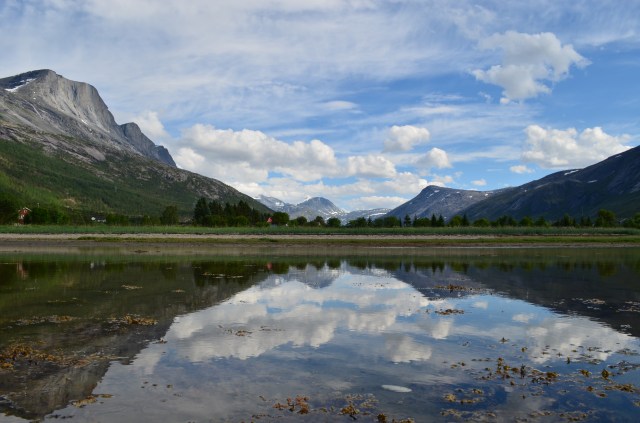
I might not feel like dying for fjords either, but I sure don’t mind a 3 day fieldwork/camping-session in my personal favourite fjord-and-valley in Norway, as part of our yearly visit to our long-term observation sites. As always, the fjord did not disappoint.

Not sure what I liked the most: having a day of beautiful summer weather, or finding out that the data look super interesting…

Posted in Norway | Tagged , , , , , , , , , , | 2 Comments

Changing the view

I changed my office view again for a while…

DSC_0552

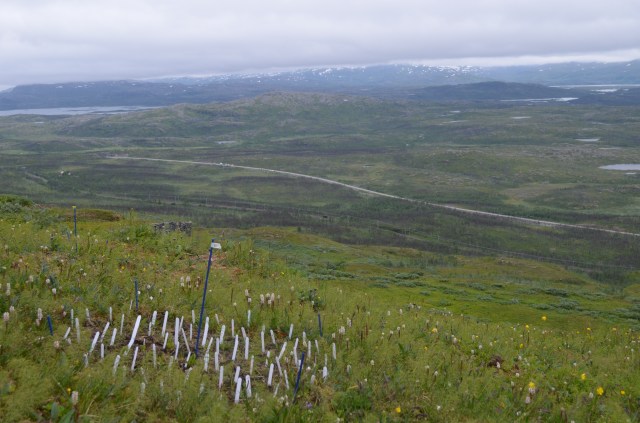
Up north again, above the polar circle, hunting for our beloved plants. With a tight schedule and lots to do, but hopes are high for amazing output.

DSC_0521

I’ll keep you updated!

Posted in Sweden | Tagged , , , , , , , , , , | Leave a comment

How hikers can help science

The Mountain Invasion Research Network (MIREN) calls on mountain enthusiasts to help collect observations of mountain plants.

Heading to the mountains this summer, armed with your best hiking boots? You can make a scientific contribution while you are out conquering some peaks! Your observations of some indicator plant species can help ecologists understand the effects of climate change and track the spread of invasive species.

Citizen science projects are hot: projects in which volunteers and scientists join their forces to answer real-world questions and gather data. Such projects exist in countless disciplines, involve hundreds of thousands of volunteers and have recently helped achieve some important scientific break-throughs, like finding supernova’s in outer space and disentangling the complex structure of proteins. MIREN, an international network of mountain ecologists who study plant invasions, is now launching its own citizen science project. All you need are some good hiking boots, a smartphone or a gps, and a destination!

To help us understand how climate change is affecting the distribution of invasive species, hikers simply need to keep their eyes peeled for 4 common species, take a picture and upload their observations through the iNaturalist smartphone app, or mark their find in their gps. That’s all. We gather all this information from all these hiked trails all over the world, and use the information to get the most detailed idea of the distribution of mountain invaders ever.

speciesfinal6

We focus on common yarrow (Achillea millefolium), narrowleaf plantain (Plantago lanceolata), red clover (Trifolium pratense) and white clover (Trifolium repens). These four species can be found on every continent and are renowned for their ability to adapt to changes in their environment. Their chameleon-like powers of adaptation make them perfect indicator species for monitoring rapid responses to climate change and human influences. In the wake of climate change, they have been seen to move towards higher elevations over the years in mountains in Europe. The same European species have also been introduced elsewhere in the world, where they are suspected of invading even more quickly than they do on their home turf..

Trirep

The European white clover (Trifolium repens) along a trail in the Chilean Andes

Interestingly, the expansion of these species is closely related to that of another species: us humans. Plants looking for cooler locales cling to cars or hiking shoes and thus often follow roads and trails to find their way up into the mountains.

If you are a mountain scientist, land manager, botanist, teacher, student or any other outdoor enthusiast, you can easily get involved. All detailed information can be found here: http://bit.ly/28ZTfqK or on the MIREN website www.mountaininvasions.org/?page_id=20. Or just easily send us an e-mail at miren.trails@gmail.com.

Posted in Science | Tagged , , , , , , , , , , , | 1 Comment

How to make finding a needle in a haystack seem easy

I’ve always considered field work to be a kind of treasure hunt, one in which I march up and down mountains, shading my eyes against the sun in search of the next tell-tale clue. I like to imagine that this is at least how my non-science friends think about me and the fieldwork I do in remote parts of the world. The reality does have these treasure hunts, albeit maybe slightly less poetic than I might have hoped. 
scenery-300x199

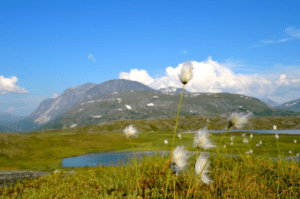
Fjords and lakes, ahoy! A perfect day for fieldwork.

Ecological fieldwork in the mountains can be challenging. There are days you wish that you were cozily stacking test tubes in the lab, or safely analyzing data in the office. Some days, battling rain, cold, mosquitos and 50-kg packs that don’t include lunch just doesn’t add up to a dream job, even if you’re working in a dream location (if only you could actually see it beyond the clouds!) And then there is the work itself, which brings with it its own set of difficulties.

Just imagine: hundreds of soil temperature sensors, only one cm in diameter each. Let me tell you from my own experience: that is super tiny, especially when you scatter them in the soil over a large area in the Norwegian mountains. Then, just to test our scientific dedication, we leave them for a year before – fingers crossed! – retrieving them and their valuable data.

sensors

Soil temperature sensors, ready to be hidden in the mountains

We started this game of scientific hide-and-seek last July, and will soon return to our plots in the Northern Scandes, above the polar circle in Norway. We will indeed shade our eyes as we look out over fjords and steep slopes, but that will be in between staring hard at the ground as we use our best treasure-hunter skills to re-find our little sensors.

Of course we are not going to build our luck of re-finding these treasures on our memories alone. We will come prepared. Accurate gps coordinates. Colourful plastic sticks poking out of the ground at the exact locations where we planted the sensors. Pictures of the plots from afar and from up close. A written description of where to find them. A metal detector. A little metal rope from the sensor – 3 cm below the surface – to the marking stick. In short: we took all possible measures to make our hunt successful.

sticks

Sticks marking the sensor

We are not in the lab, nor seated comfortably at the computer. No, we are out in the vast Scandinavian mountains. All these extra measures are not a luxury, but rather a necessity for ensuring that our chances of re-finding the sensors are actually somewhat better than finding a needle in a haystack. Luckily, our hunts are usually fairly efficient, thanks to all these back-ups. Very few of the sensors disappear during their year out in the wild. In fact, the metal detector has rarely been necessary. Yet we do have some enemies here:

lemmings

A lemming screaming at us for stealing ‘his’ sensor.

Lemmings! Even though our find rate is currently above 90%, there are a few sensors that go permanently MIA. Almost all of these disappearances show traces of rodents, the cute little bastards. Probably, they love to decorate their nests with them. Although I would not usually deny a fluffy rodent any decoration for its nest, it would be much more worth our project money if we could actually use our sensors for what we bought them: linking the yearly temperatures to the distribution of plant species in the mountains.

So the game is on! Let us again aim for more than 90% again this year. Let us hope for a bad lemming year, no landslides, no crazy human disturbances, no surprises… For science!
findingsensor-300x199

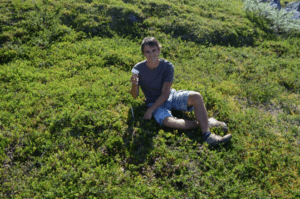
The author, happily re-finding a sensor.
Posted in General | 2 Comments

Supercell

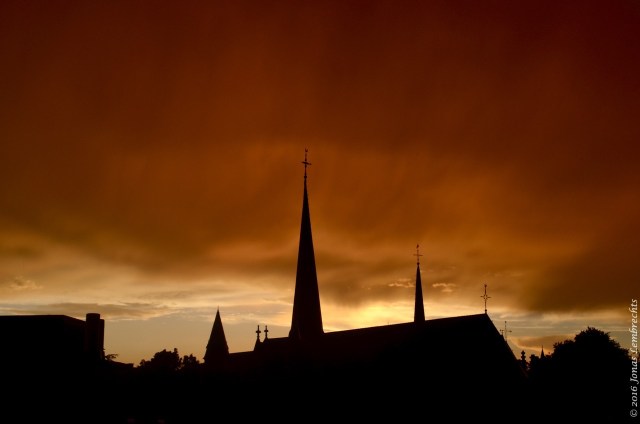
It is as if Sauron from The Lord Of The Rings is sending his black clouds over the country and we are looking at the last ray of sun before the darkness of the Dark Lord overtakes our lands.

Supercell - 4

That is the current situation here in Belgium. I do not usually blog right from ‘in the action’, but this dramatic weather had to be shared with you.

Supercell - 2

These are views to the west over the roofs of Kontich, a little village between Antwerp and Brussels. To the east, there is pitch black skies with stroboscopic lightning, so I seem to be right in the middle of it!

And again, 2016 delivers with some more crazy weather.

Posted in Belgium | Tagged , , , , , , , , , , | 5 Comments

The modern botanist

For what it’s worth: I tried out this new fancy smartphone app called Pl@ntNet, and as a plant ecologist, I can happily give it my seal of approval. Everybody who has only the most remote interested in plants, stay tuned for the future of plant identification:

Pl@ntNet is a fascinating example of a big step forward towards what I think will be the norm in a very near future. In short, this application helps you identifying plant species based on a quick picture.

Fot - 1

It is that easy! You see a plant, take a picture and the app gives you – if all goes as hoped – the name of the plant you are looking at. In my opinion, that’s just brilliant.

I have to admit I was a tiny bit sceptical at first. The concept might be pure genius, but I was not so sure they could make it work that easily.I have  had some frustrating experiences with Google Image search, and I also know how many lookalikes a plant species can have. Yet it turns out that when the concept is well organised and the database is large enough, it can be very effective.

20160616-120831.jpg

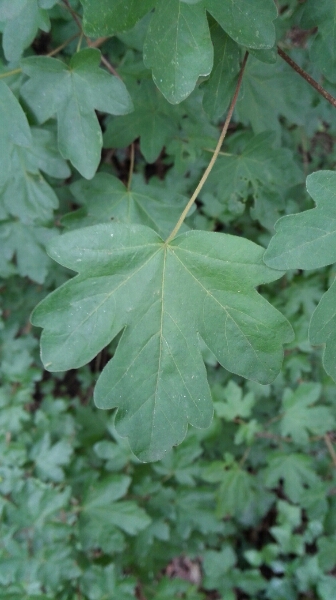
Acer campestre, with its very distinct leaves, is an easy one for the app to recognise.

Let me get this straight: there is no magic involved. The app recognises shape and colour of leaves, flowers and stems and matches it with the shape and colour of what it has in its database. But it managed to deliver almost a 90 % success ratio on the common Western European forest and weed species I tried it on (update after some more difficult species: success ratio stabilised at 80 %). One picture is often enough, although the accuracy is greatly improved if you add both a picture of a flower and a leave (or a stem or fruit).

Two other easy successes: Geranium robertianum (left) and Potentilla indica

But – and this might be the biggest drawback – this 90 % accuracy does not mean that the app returns you the name of the species just like that in 90 % of the case. It means that the app gives you a list of species of which it thinks that the features match with those in your picture, and in 90 % of the cases, the one you are looking for is somewhere in that list. So a bit of knowledge of which species it could be might still be necessary, although it is possible to browse through the extensive list of pictures associated to each species to decide which one it is.

Other things I found out during my first days of using Pl@ntNet:

  • the app is currently most useful in Western Europe, where it promises to recognise more than 6000 plant species with the help of almost 250 thousand pictures.
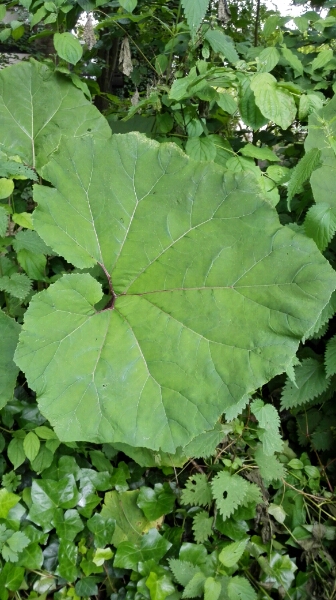
  • shape and colour are handled perfectly fine, but size might be an issue. The app does not know for sure if it is looking at a 1 meter diameter leave of the butterbur (Petasites hybridus), or the 20 centimeter variant of its smaller nephew the coltsfoot (Tussilago farfare).
  • a big advantage is that you can specify the family or genus to which you think the species belongs. If you have a bit of prior knowledge of where your identification is heading, you can definitely get a lot out of this app.
20160616-122613.jpg

Butterbur and not coltsfoot, but how to tell the app that much?


Posted in Ecology | Tagged , , , , , , , , , , , | 4 Comments