Compensations

We all play a part in CO2-emissions, the main culprit of many of the climate-related disasters we more and more observe on this rapidly warming planet. We all play a part, and especially in our Western world, we can say with certainty that we are responsible for  the emission of a larger cloud of carbon per person than is good for us and our world.
img_20160812_195847_29135616334_o

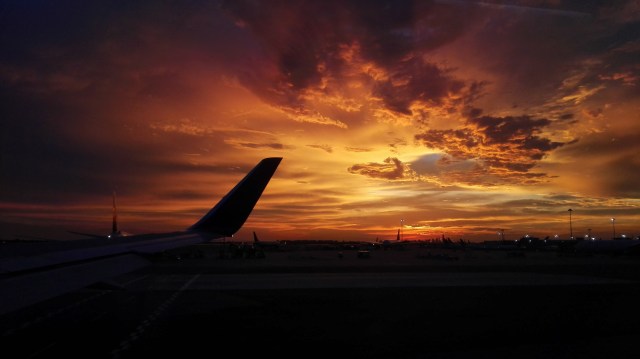
Sunset on J.F. Kennedy airport, New York

As a research group studying global change, the Global Change Ecology Centre can not just sit back and enjoy our gigantic carbon footprint. Besides studying the effects of climate change, we have the responsability to at least aim at reducing our own impact on the climate.

By far one of the biggest culprits of the increases in CO2 in the atmosphere can be found above our heads: airplanes. There are various ways in which airplanes play a role in climate change, but the International Panel on Climate Change (IPCC) currently estimates aviation to be responsible for 3.5% of the global anthropogenic climate change. For one individual, however, flying often counts up to one of the biggest chunks of the carbon footprint.
dsc_0099_20539167320_o

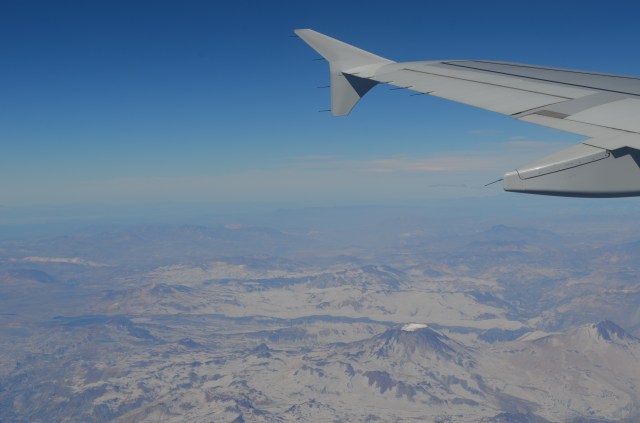
Flying over the Andes

Scientists travel a lot. Fieldwork, conferences, meetings with colleagues; science is a global business and flying is part of the bargain. This fact, combined with the previous one, implies that we ecologists from the Global Change Ecology Centre have a much larger carbon footprint than we should have.

Realising that is the first step, yet the second step should be action. We started by setting up a scheme of carbon compensation: all flights travelled by one of the scientists in our group will be compensated through an official carbon compensation program, called Wildlife Works. We invest money in this program that will be used – among other environmental and developmental projects – to conserve forests in Africa that are on the verge of being cut. Conserving these forests conserves one of their main global ecosystem services: they capture the CO2 we emit and as such counteract the greenhouse effect of this CO2.

19893349680_46e8311484_o

Bariloche, Argentina

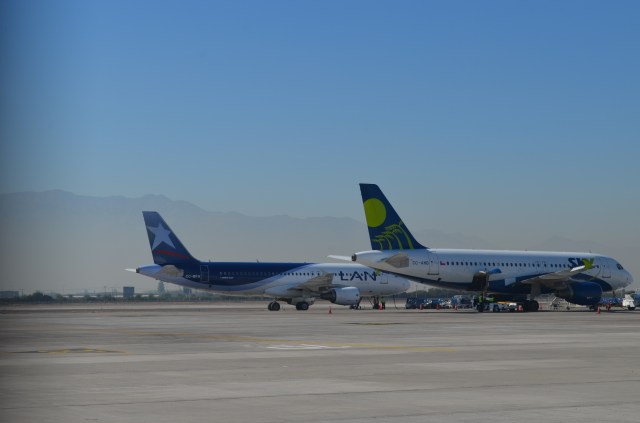
Compensating is one thing, yet prevention is even better. A carbon compensation program is not worth much if it does not come with an extra effort to reduce the amount of flights. The idea is to think more consciously about every flight that you take, and check if it can not be replaced with Skype-meetings, destinations closer to home or other means of travel. There is plenty of ways we might be able to cut back on these expensive flights.
20074950458_614cdda656_o

Only if we do this consciously, we can make a difference. And making a difference is exactly what we need now, only if it is just a small one.

Posted in Conservation | Tagged , , , , , , , | Leave a comment

Short days, cold nights

short-days-cold-nights-4The darkest part of the year on the northern hemisphere is upon us. Temperatures below zero, and days getting overwhelmed by the night before they even got the chance to start.
short-days-cold-nights-1

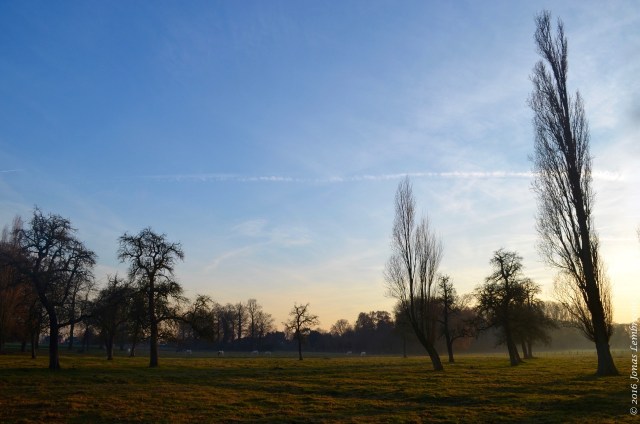
This post is in honour of the Arctic, where they are now deprived of any sunshine. Perhaps they feel a sparkle of hope when they see the sun in these pictures.

short-days-cold-nights-3

I love the Arctic and I have spend many weeks there, yet I have never experienced it during its darkest times. No plants there at the moment, you know…

short-days-cold-nights-1-1

Perhaps it is safe to dream of the dark and cold from here in Belgium, where temperatures stay safely close to zero and the sun still appears to keep up the good spirit.

Pictures from a December sunset in Zemst, near Brussels, Belgium.

Posted in Belgium | Tagged , , , , , , , , | Leave a comment

Success

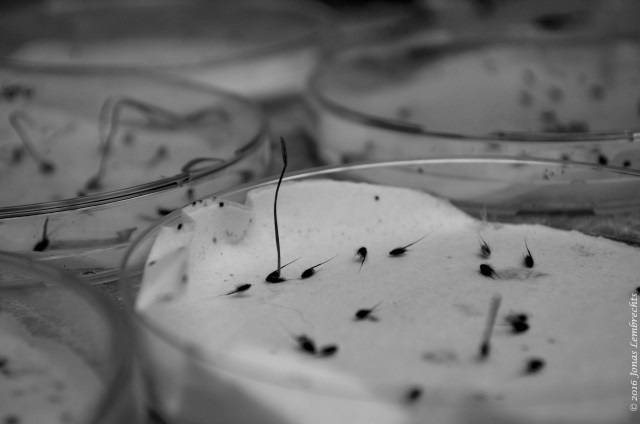
germinated-seeds-2You might recall my excitement from a few weeks ago (here): we sew the seeds we harvested this summer in the subarctic mountains. Our expectations for them where pretty low, as the plants had to go through so much stress throughout their life that it was highly unlikely that they would have found enough energy to invest in their future.

Yet there they were: tiny seedling, the ancestors of a few brave absolute winners! Not more than a few centimeters tall they were – and thin as a razor, yet they were the proof that in the world of plants, virtually everything is possible.

germinated-seeds-1

Do not ask me to survive day in day out in the freezing cold above the polar circle ànd find time to invest in a healthy family. But then again, that is probably why I am not a plant.

Posted in Belgium | Tagged , , , , , , , , , | 1 Comment

Science Day

Tomorrow is ‘science day’ in Flanders, a day in which scientists and the public are brought together (at least, that one day this is done in a much more spectacular way than usual). A day in which young and old can explore, discover, experiment and enjoy everything scientific. A day worth every scientist’s best effort.

With our research group, we can of course not let the opportunity slip by to get our story told, so we will bring the science of climate change and plant invasions to the center of Antwerp.

img_20160226_130506_25278483325_o

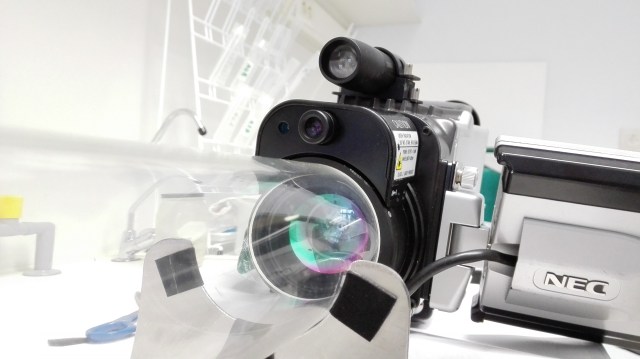
Measuring the effect of CO2 on the climate with a thermal camera, this sunday in Antwerp!

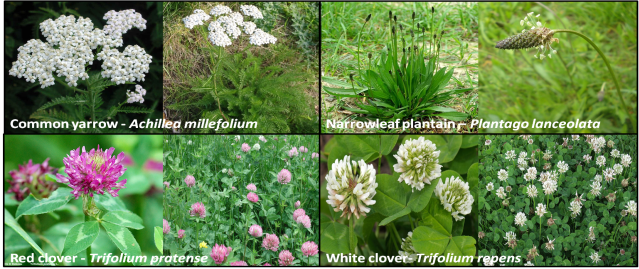
I will give people the chance to discover our little citizen science project, in which we ask everybody who travels to the mountains to keep an eye out for travelling plants: plants that use hiking trails just like we do, to get from one place to the other.

speciesfinal6

Wanted! Help us keep an eye out for these Fantastic Four.

Check here and here for our plans for the Science Day. But you can also check here to get all information on our citizen science project. Then you don’t need to be in the neighbourhood to join in on our science day: if you are close to the mountains, just go out there and find us some plants!


Posted in Belgium | Tagged , , , , , , , , , , | 2 Comments

Where we disturb nature, the invaders quickly follow

Non-native plant invaders. Ecologists have been keeping an eye on them for a long time already. Species that flew in from somewhere far away and enter an environment where they don’t belong. Species that happily profit from our changing modern world as they outsmart their native counterparts in adapting to human influences. The uncrowned winners of global change, so to speak.

In cold environments like mountains and the poles, non-native plant species have always been a rare sighting. The harsh climate would be an unbreakable barrier and with most of these areas being so remote and pristine, no non-native plant seed would ever managed to come close. For a long time, that was the concensus: invasions are limited to places with an agreeable climate.

dsc_0179-1

Yet those times are now over. Year after year, non-native species have been slowly creeping further uphill and northwards. To do so, they make good use of what we humans are offering them: worldwide and unprecedented fast changes to our pristine nature. We do indeed observe increases in disturbance in both mountains and the (ant)arctic: construction works, roads and walking trails, everywhere humans are removing the natural vegetation and leaving open space in their traces. The perfect breeding grounds for non-native species. Additionally, human actions are also increasing the amount of nutrients in the poor mountainous soils and seeds of non-native species are hitching a hike on car tires and the soles of our shoes. Add a warming climate to the stew, and you have the perfect recipe for an increase in non-native plant species.

SONY DSC

Non-native common yarrow in a grassland in northern Sweden


The pushy character of non-native species has of course never been a secret. Several studies also showed undeniably that the aforementioned factors played a role in the matter. Yet science was far from solving all remaining mysteries in the mountains. To know which of these factors plays the decisive role, what drives the recent expansions of non-natives to colder environments, and – most importantly – what the future of plant invasion in mountains will be, an overarching experiment was needed to disentangle what was seen in observational studies. With that idea in mind, a team of ecologists from Europe and South-America joined forces. They went to extreme ends of the world to set up an experiment in two sub(ant)arctic mountain areas, one in the northern Scandes in Sweden, the other in the southern Andes in Chile.

There they seeded ten different non-native plant species, varying the levels of disturbance, nutrients and amount of seeds, on an elevation gradient that reached far above the current range edge of the species. The ideal design to finally disentangle the roles of these key factors in the life of the mountain invaders.

19697075030_1e895529f1_o

Experimental set-up in the mountains in Swedish Lapland

The results showed how much the experiment was needed to shake up all we know and expected from plant life in the mountains: no matter how high in the mountains, disturbance was the biggest positive driver of the performance of the non-natives. Even at the highest elevations, the invaders had to deal most and foremost with competition, with only little chances for germination and growth underneath the slow-growing yet dense alpine vegetation. Removing this vegetation significantly increased the chances for the non-natives to succeed. A result that could not contrast more with the usually observed facilitation at high elevations, a process in which the established vegetation at high elevations actually helps invader establishment, as it reduces the impact of the harsh climate.

pnas_ive_dsc2912

Success of the non-natives was followed from up close. ( (c) Ive van Krunkelsven)

Even though the alpine climate did reduce the performance of the invaders, and nutrient addition was often needed to add successful reproduction to the establishment, the non-natives clearly performed best at and above their current range edge, close to the tree line. This result is worrisome: it suggests that it might be mostly a matter of time before levels of invasion at these elevations will increase, especially when there are roads, trails or other disturbances to give them the headstart. If then the climate keeps warming, non-native species will only find more chances to colonise currently cold environments, unless we manage to contain disturbances and climate change within reasonable boundaries.

hut

Our presence in the mountains does impact its nature, and it is our task to at least be aware of the consequences.

Want to know more?

The research got recently published in PNAS (the Proceedings of the National Academy of Science from the USA) and can be found here:

Lembrechts et al. (2016). Disturbance is the key to plant invasion in cold environments. PNAS.

picture-1

Red clover is doing great in roadsites in the arctic mountains. There they profit clearly from human disturbances.

Posted in Chile, Sweden | Tagged , , , , , , , , , | 2 Comments

Will they make it?

seeds-1

For two years, we let our plants endure a variety of stressful conditions up in the high north: snow, cold, competition, nutrient limitations, they all got to deal with it in various amounts.

We monitored them all along the way, to see how well they could cope with it. Some couldn’t, lots of them died, not strong enough to deal with the stress. Some survived, a few of them even managed to grow, and only the lucky few won the game of life: they produced seeds, the one and only goal of a plant.

But producing seeds is one thing – and it definitely makes you look the hero of the plant world. Yet these seeds still need to succeed on their own, otherwise their parental care was not enough.

That is what we are testing now: to find the winners among the winners. Those plants who – among all the stress that comes with living in the Arctic – took the best care of their offspring.

I will of course inform you about the winners!

Posted in Science | Tagged , , , , , , , , | 1 Comment