It has begun!

I was walking through a snowy forest, this morning, hands hidden deep in the pockets. All of a sudden I saw something that lightened my heart and made me shout: ‘it has begun!’

IMG_2108Every winter, it is waiting for this first tiny sign of spring, the first spring flowers breaking through the frozen forest floor. Today was my lucky day.

I know it is too early to throw away scarves and hats, but it is still worth its own little celebration!

Posted in Belgium | Tagged , , , , , , , , , , | 10 Comments

Database needs adventurers

Climate change is a global issue, and its effect will be felt on every square centimeter of this earth, that issue is more or less cleared in the scientific community. The changing climate might not have as much impact everywhere and anytime, but there won’t be many places escaping its wrath.

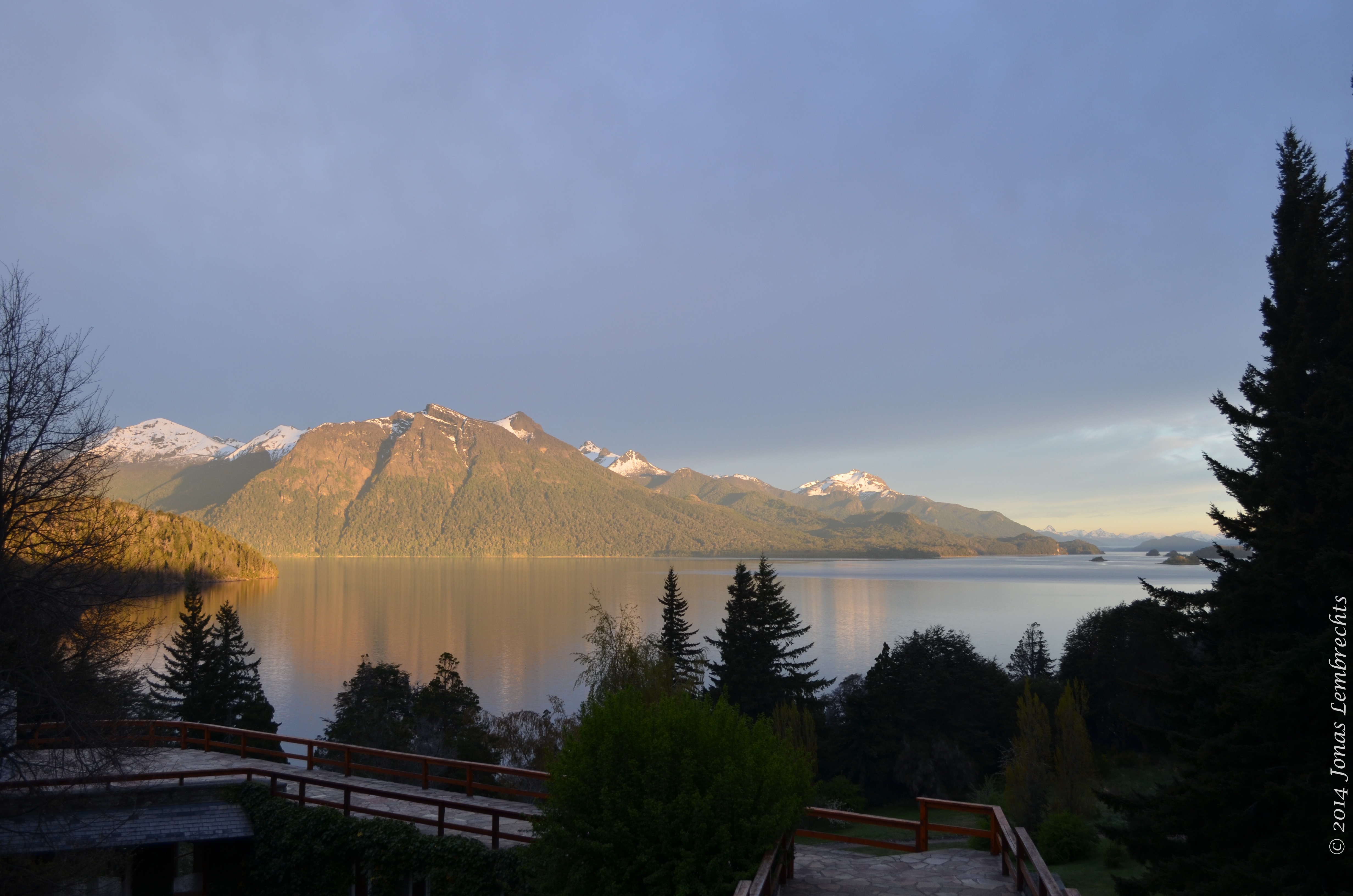
Morning sun on lake Nahuel Huapi, Bariloche

We do know all this, we have known it for years. And still, we scientists manage to make the same mistake over and over again. We do know that our own backyard might not be the most important place on earth, but it is just much more difficult to look beyond its borders. Ecologists are not evenly distributed over earth’s surface either, an issue reflected in our research every time again. In a recent and highly interesting review about the impact of climate change on species distributions, this pitfall is painfully brought to light again.

Scientists should try to look a bit further than their backyard, unless it looks like this.

Scientists should try to look a bit further than their backyard, unless it happens to look like this.

In their review, the scientists mapped the ecoregions (a, on the map) and biomes (b) from where species distribution papers were available. It will not come as a surprise that the majority of research is focused on Europe (and to a lesser degree on North America). Massive parts of South America, Africa and Asia remain until now bare, empty spaces in our knowledge.

Map Lenoir and Svennings

Not that those areas don’t need any climate change research; the tropical forests with their biodiversity hotspots should not be easily forgotten. They just seem to be… too far.

The Scandinavian mountains turn out to be the ideal location for climate change research

The Scandinavian mountains turn out to be the ideal location for climate change research

Even in this globalised world, the need remains for good and trustworthy information on the less accessible places on earth. What climate change biology really needs now is hence a new generation of adventurers, ready to risk their life and love to fill the gaps on the map and in our knowledge. Our databases crave for it; big, raw pieces of unprocessed data… Please, bring it to me, it does not even need to be a time series of 40 years at once!

Torres del Paine

(Off course, there is a lot of work going on at the moment to get this issue out of the way; science never sleeps! With the MIREN-network (Mountain Invasion Research Network), for example, we try to fill in the gaps with a joint five-yearly field campaign in 8 different mountain regions from all over the world. Check my role in it here.)

Reference

Lenoir, J. and Svenning, J.-C. (2015), Climate-related range shifts – a global multidimensional synthesis and new research directions. Ecography, 38: 15–28. doi: 10.1111/ecog.00967

Posted in The research | Tagged , , , , , , , , , | 5 Comments

Keep your head above the water

It is winter time in Belgium, and winter time means water!

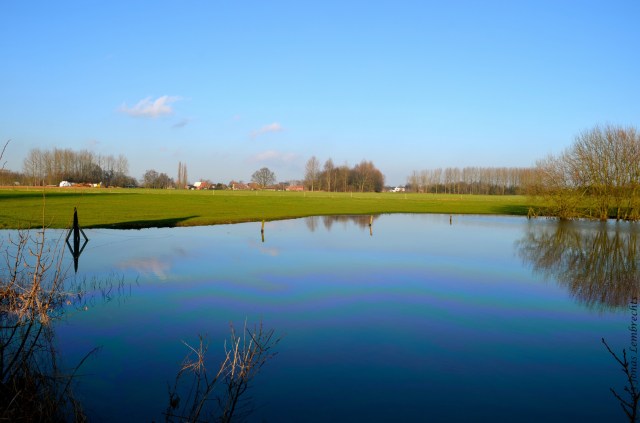
High water in meadow

Belgium is kinda famous for its bad weather, with 800 mm average annual precipitation evenly spread over all months of the year.

Fence in flooded meadow

This 800 mm is in no way comparable with the liters of rainfall in a tropical rainforest, but it is enough to play an important role in the functioning of the local ecosystems.

Didge and flooded meadow

Especially in winter, these rains might cause serious stresses for the vegetation. With the cold weather and the short daylight periods during the winter months, the vegetation is inactive and hence unable to fix a problem that would be solved within a day in summer. This inactivity and hibernation indeed means only limited evapotranspiration or water loss through the leaves, and as a consequence restricted water uptake by roots from the soils.

Knotted willows in flooded field

Combined with the lower transpiration levels of the soil in the cold winter months, our landscape soon accumulates excessive water in (and on) the soils.

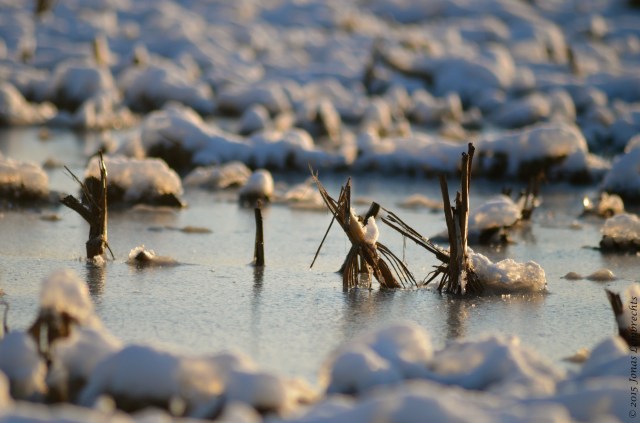
Frozen flooded corn field

For those out in the Belgian fields these days, the impact is obvious. Everywhere you look, meadows and forests are flooded, and the high water levels are persistent over the weeks. For meadow plants trying to survive the winter, these continuous floods will not provide the best environment, placing water stress close to the top of the list of plant stressors in the struggle to survive.

  High water in forest

Posted in Belgium, Science | Tagged , , , , , , , | Leave a comment

Invasive plants reaching new elevations

With humans traveling and occupying the world more intensively every day, invasions by nonnative plant species are becoming an omnipresent pattern. People transport countless plant seeds as they travel that might, or might not, establish and disrupt local ecosystems.

Until recently, remote places in the alpine and sub(ant)arctic world were considered safe from these plant invasions. It was generally accepted that climate conditions where too harsh to allow the survival of species that weren’t cold-adapted.

This fairly optimistic statement has been refuted by several recent observational studies that listed an ever growing group of nonnative species, steadily marching uphill and towards the poles.
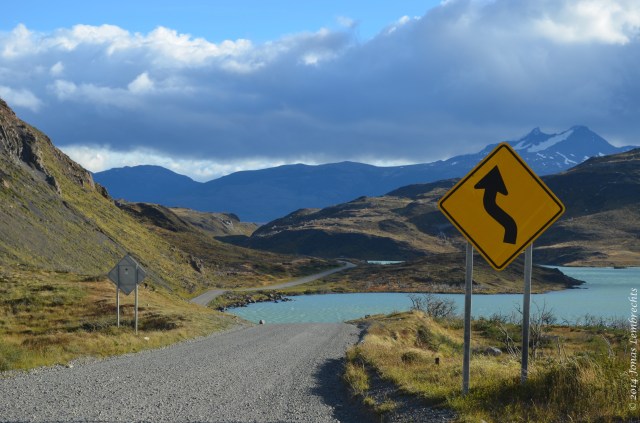
Mountain roads serve as vectors for invading plants.

Mountain roads serve as vectors for invading plants.

A very important factor is that their invasion is facilitated by us humans as we build roads, railways, walking trails, and several other forms of disturbances that are known to be the perfect vectors for plant invasions.
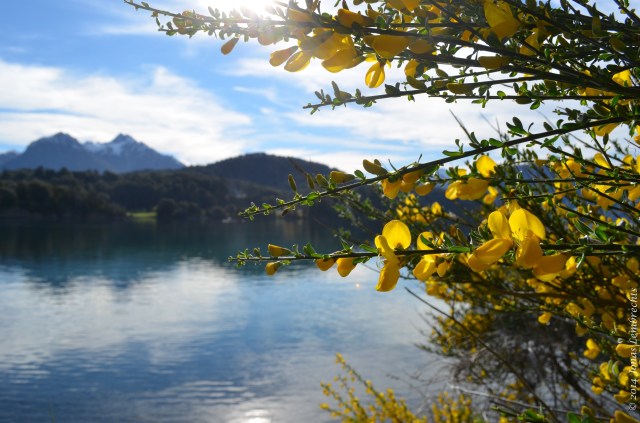
Invasive broom along the shore of a Patagonian mountain lake.

Invasive broom along the shore of a Patagonian mountain lake.

The South American continent hosts some of the world’s most precious mountain regions, but it is also a continent with severely advanced levels of plant invasions. Fast action is needed to preserve the untouched beauty of these areas.

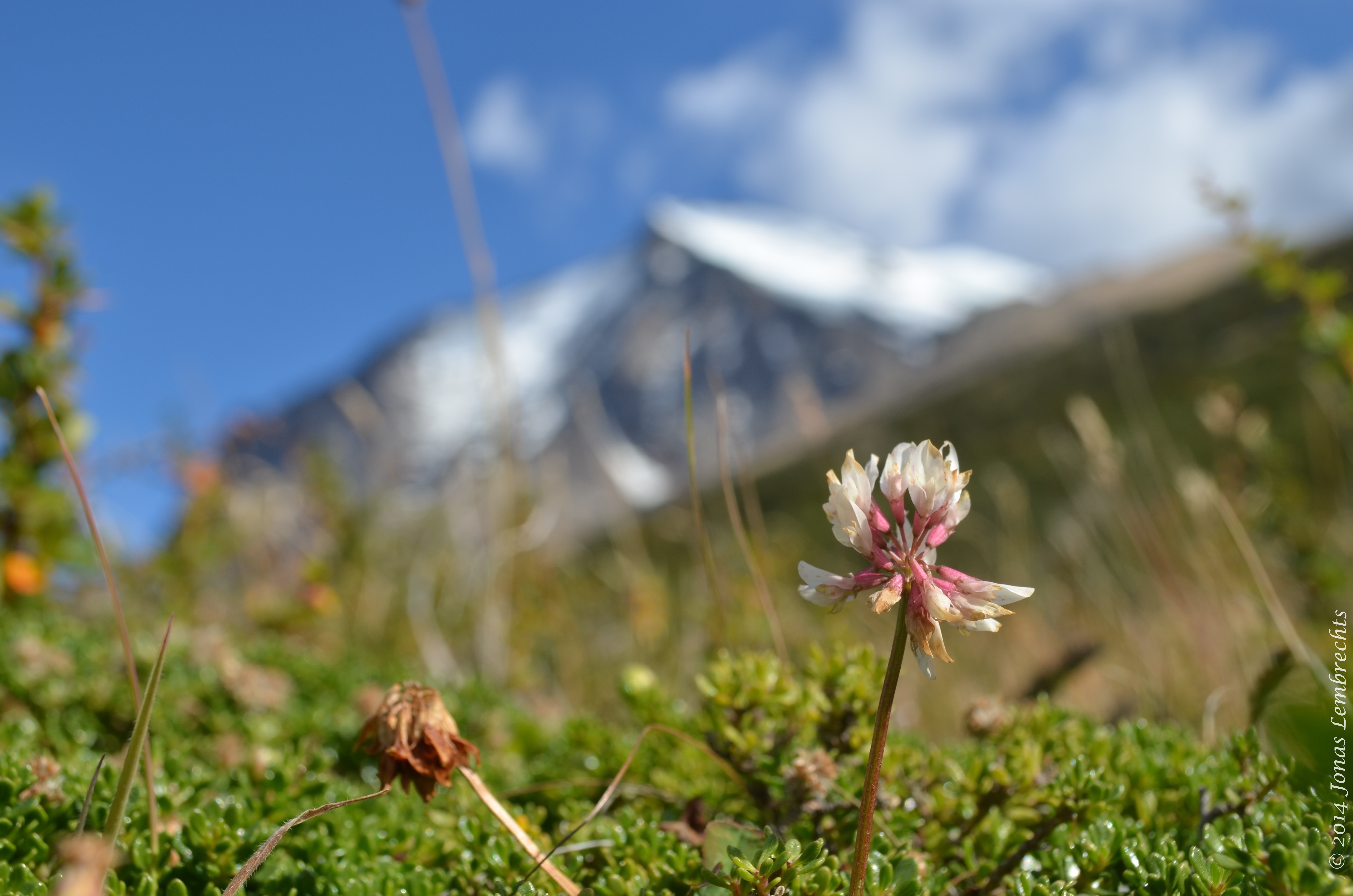
Non-native white clover, introduced by Europeans

Non-native white clover, introduced by Europeans

But there is a problem. A large part of the information on plant invasions comes from lowland environments in the heavily studied Western world. Invasive species might however react completely different to the conditions on high elevations. Disturbance might be the big promotor of invasion in the lowlands, but the effect can as easily be the complete opposite at the highest peaks. We don’t know. How many other factors is this the case for?
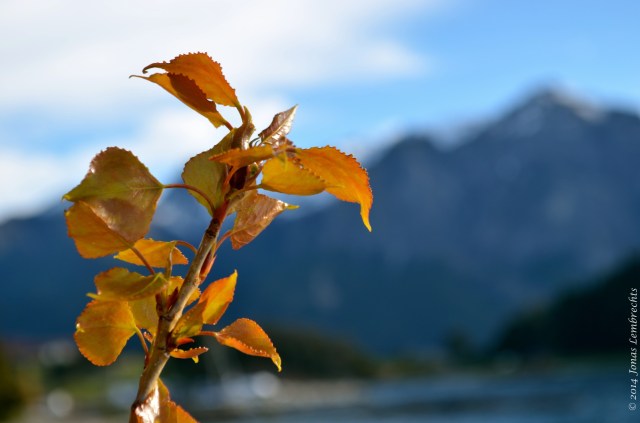
Poplar invasion in the Patagonian Andes

Poplar invasion in the Patagonian Andes

It is our goal to disentangle these factors. We are on a hunt for the differences between lowland and highland invasions, a hunt that should ultimately result in reliable predictions for the future of invasions in the mountains. Focussing on South America will add valuable and highly lacking information on the processes of plant invasion on the Southern Hemisphere to the story.

With a team of plant ecologists from all over the world, we are trying to synthesize the knowledge about mountain plant invasions to come up with good strategies to prevent the further spread of potentially dangerous species.

It might not be too late, but the clock is ticking…

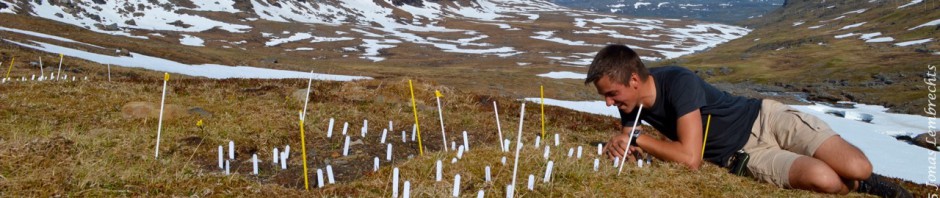
Fieldwork overlooking Punta Arenas in southern Chile.

Fieldwork overlooking Punta Arenas in southern Chile.

This post was originally posted on www.latinamericanscience.org after a question of their redaction to blog about our research plans in South America. 

There even exists a Spanish version of the post, which got serious Twitter coverage on the Southern Hemisphere!! Very excited about that!
Posted in Chile, The research | Tagged , , , , , , , , , , , , , | 3 Comments

The sparrow is first

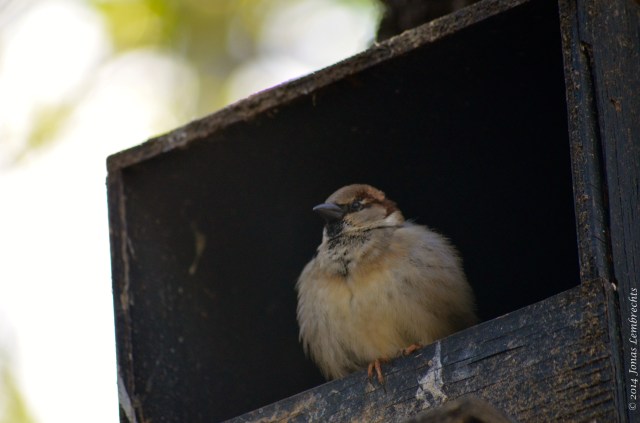
For those who liked the cute house sparrows of last week, I have some news! The house sparrow is (for the second year in a row already) back as the most abundant bird species in Belgian gardens.

House sparrow in bird house

This ‘first place’ does however not necessarily relate to an upward trend in their absolute numbers. It is more likely that other species, like the finch and the great tit, do not visit our gardens that often when winters are mild and they are not running out of other food sources in the forests.

More details on the exact numbers are not available yet, as you can still submit your own counts here.

Posted in Belgium, Birds, Conservation, Ecology, Gardens, Nature, Natuurpunt, Photography, Science | Leave a comment

Count the birds

This weekend will bring Belgium its yearly ‘bird counters weekend’! This event is one of the best examples of citizen science in the country, as every person with a garden can participate. You just have to spend half an hour in the weekend counting the birds that come and visit the garden.

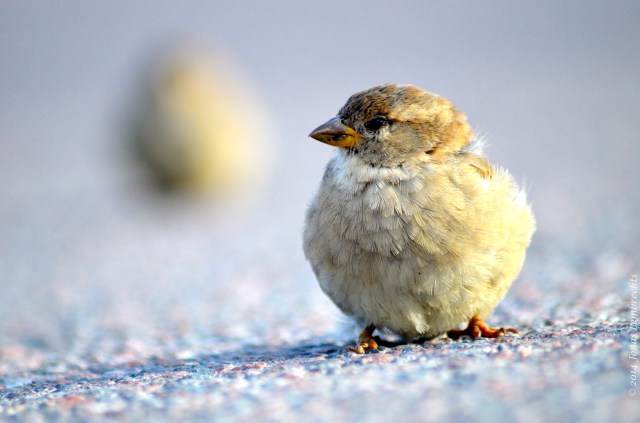
Female house sparrow

With a little help of bird feeders, these visits can be fairly spectacular with impressive diversity. Natuurpunt, our main organisation for nature conservation, collects the data from all these gardens over the whole country and uses them to follow the patterns of our garden birds over the years.

Male house sparrow

For my Belgium readers, this post can serve as a little reminder to put out some food and keep an eye on the window for a while this weekend.

Feeding house sparrows out of hand

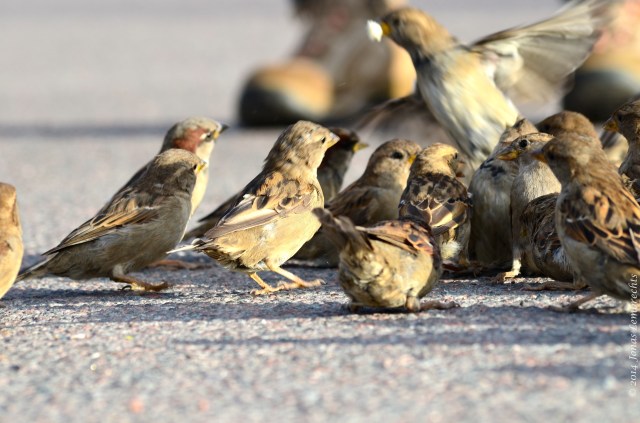
The non-Belgians can just enjoy these pictures of house sparrows enjoying delicious bread crumbs. Year after year, the house sparrow turned out to be the most common garden bird, but unfortunately, numbers are declining steadily lately.

Feeding house sparrows

It had to give its gardenbird-crown to the finch and the great tit, but I hope for upward trends one day that bring back these cute fellows to our gardens!

 Female house sparrow Male house sparrow

Posted in General | Tagged , , , , , , , , , , | 7 Comments