Our new paper on moving plants featured on the EOS-blog, the blog of the Belgian popular science journal!
Nice read for the Dutch-speaking readers of this blog. For all others: this was the English version.
Our new paper on moving plants featured on the EOS-blog, the blog of the Belgian popular science journal!
Nice read for the Dutch-speaking readers of this blog. For all others: this was the English version.
Roads help us to get from point A to point B. They are extremely useful structures for doing exactly that, which is why mankind has spend considerable amounts of energy to create a network of them that spans the whole globe, with tentacles reaching to the furthest desert and highest mountain region.
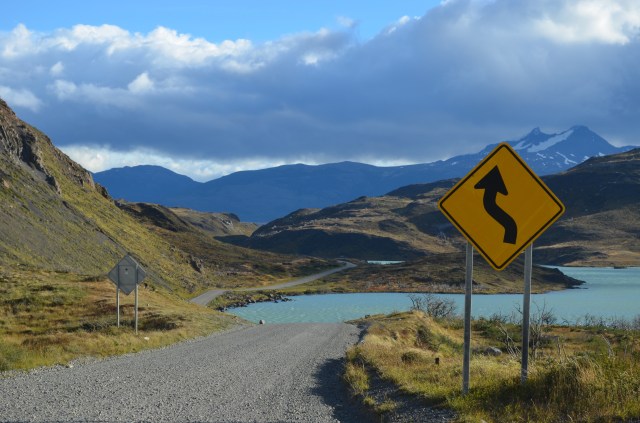
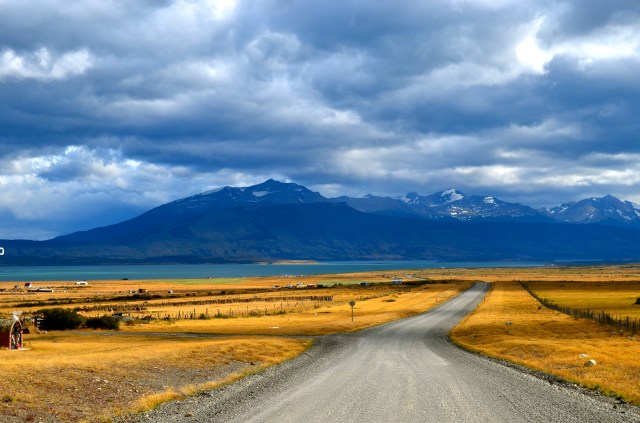
Gravel road through Torres del Paine National Park in the Chilean Andes
But it is not only us humans who love these roads. Several species can use them to travel far and wide. Yes, even plants are not too proud to hitchhike a ride to discover new horizons. A new paper from the Mountain Invasion Research Network (MIREN, www.mountaininvasions.org) in Ecography shows that mountain roads all over the world indeed host busy plant traffic. With the help of thorough plant surveys along roads in eight mountain regions, they show how the elevational ranges of a wide variety of plant species change along these roads.
In short: the elevation range at which these species occur, differs significantly between roadsides and adjacent vegetation. Some species grow at higher elevations in the roadsides than in the surroundings, while others reside at lower elevations. In general, most of them have distributions spanning larger elevational ranges in the roadsides than next to them.
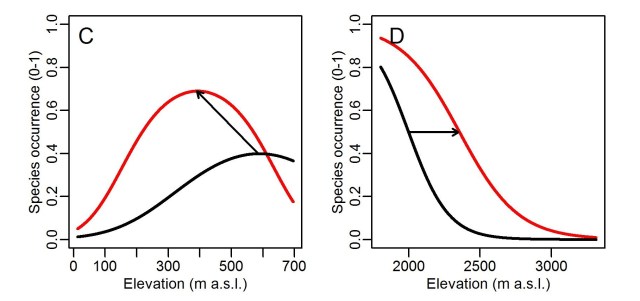
Examples of different elevational niches in roadsides (red) and the adjacent vegetation (black) for Pinguicula vulgaris in Norway (left), and Tragopogon dubius in Montana (right).
That non-native species would use the mountain roads to expand their ranges towards higher elevations in the mountains does not come as a surprise anymore. These species have the reputation of being fast at following humans wherever they go. Expanding their ever-growing ranges into high mountain areas is just as predicted. This new study however expands on this by showing how several native species mimick this behaviour of upward movement and occur at higher elevations in mountains along roads than they do in the natural vegetation. Even more surprisingly, a group of high elevation species expands its range in the opposite direction, towards lower elevations.
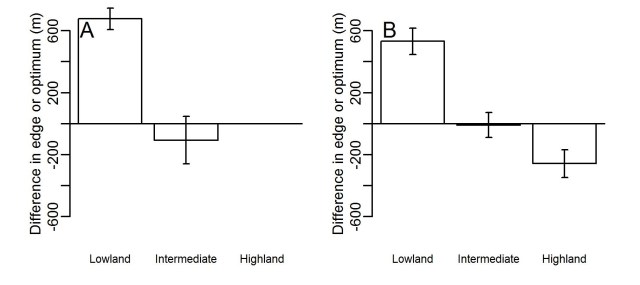
Average differences in elevation optimum for non-native (left) and native (right) species. Most non-native species are introduced in the lowlands, but their roadside distribution is more than 600 meters higher in elevation than their achieved distribution in the natural vegetation. Native species with a lowland origin follow the same pattern, highland species on the contrary have on average elevation optima of more than 200 meters lower in the roadsides than in the adjacent vegetation.
Roads thus play a much more significant role as drivers of range changes than always assumed, and for a wider range of species. They can provide important facilitation for climate-induced upward range shifts, for both native and non-native plant species, and they could serve as corridors to allow the exchange of alpine species between adjacent mountain sites.

Mountain roads can span steep environmental gradients and as such facilitate transportation of species from one system to the other.
We have to keep in mind though that roadside systems in mountains, as everywhere, will be highly sensitive to short-term instability. It is however clear now that for various groups of plant species, these roadsides can serve as a way to go from one place to another, invade new areas and connect distant populations.

Global invaders like white clover (Trifolium repens) make use of roadsides to invade mountain ranges.
From a species perspective, that might be a good thing. These processes will however also facilitate the reshuffling of the original species composition, and as always there will be winners and losers. The large set of non-native species shows the danger in this: roadsides might play an important role in the global homogenisation of the vegetation, with the same few species being successful in human-influenced ecosystems all over the world. From an ecosystem perspective, that is definitely a bad thing.
Reference
Lembrechts JJ et al. (2016). Mountain roads shift native and non-native plant species ranges. Ecography, doi: [10.1111/ecog.02200].
Small-scale variation. It is a super important part of my research. I mostly look at it from a human perspective: how humans can disturb an ecosystem and change the whole hidden set of abiotic and biotic factors that drive these systems with it.

Arum maculatum (arum lily), a species of the dry beech forest floor
Yet, microvariation is of course not limited to human influences, it is omnipresent in many ecosystem and an important driver of the large diversity we observe in many places.

Golden saxifrage (Chrysosplenium), typical for wet forests
One of my favourite examples of natural microvariation is given by forests accompanying creeks. This forest type never counts for a large percentage of the forest area, yet it means an important lot for the biodiversity.
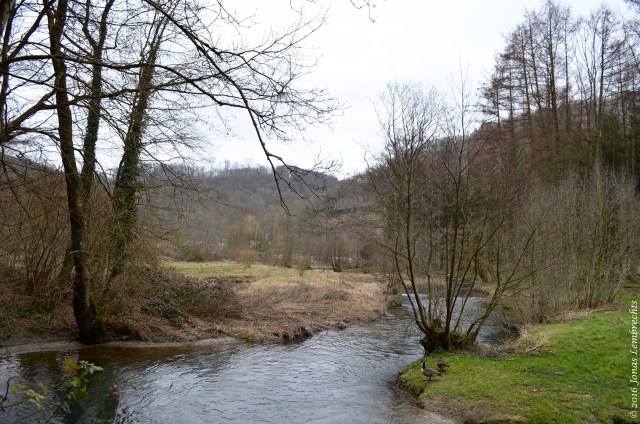
As conditions can change dramatically over the course of tens of centimeters, so does the vegetation, with the most rare species survival only on these few small spots throughout the forests of the region.

Forest anemone
We found a beautiful patch of this forest type in the Condroz in the Walloon region, last week. Even more interesting, it was accompanied by some human disturbance: old stone walls and remnants that provided the totally opposite conditions and were a walhalla for rock species.

Maidenhair spleenwort, a typical rock fern

Pine forest in southern Estonia
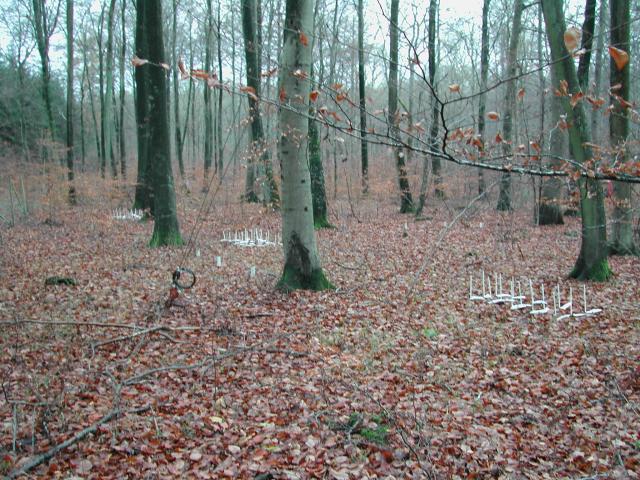
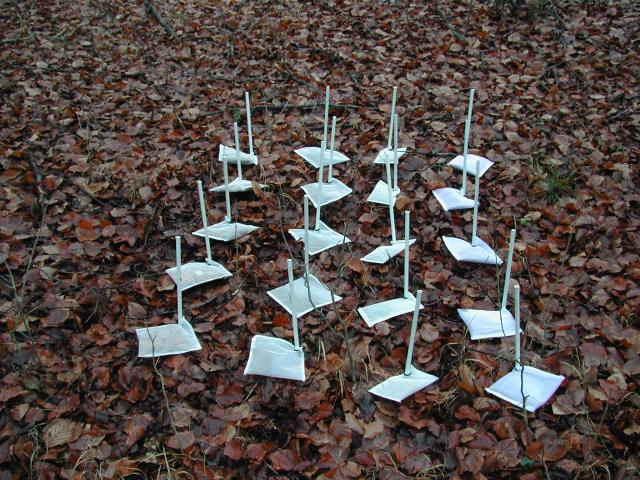
Litter bags distributed on the forest floor
This nice correlation with the climate of course does not replace the role of all kinds of other factors that drive decomposition on a small scale (like mycorrhiza and soil organisms, for example), yet the broad correlations found along the European gradient prove that fast large-scale predictions are definitely possible.
Reference
… is now really on its way here in Belgium!

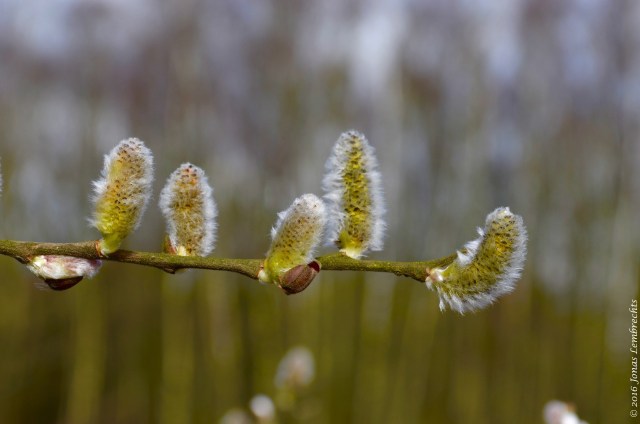
First flowers are coming through (with the catkins as usual in the lead), bringing the much desired colour back to the world. And finally, I can bike home from work in the beauty of the evening sun instead of the dark depths of endless winter nights.
And this year I am prepared to face the growing season. I spent considerable amounts of time this winter learning plant species, and I feel it is already paying off with the first ones coming through.
Of course, it is still necessary to see them in real life, be close to them and study them, but keeping my summer knowledge alive during winter strongly improves my chances to get beyond what I knew in the previous years.

And that is from vital importance in a business that relies as heavily on the correct determination of plant species as mine!
Outreach is to the scientific project as the church steeple to the church. It comes at the very end, and might not take the longest, but you definitely need it to finish up a story and get a feeling of satisfaction.
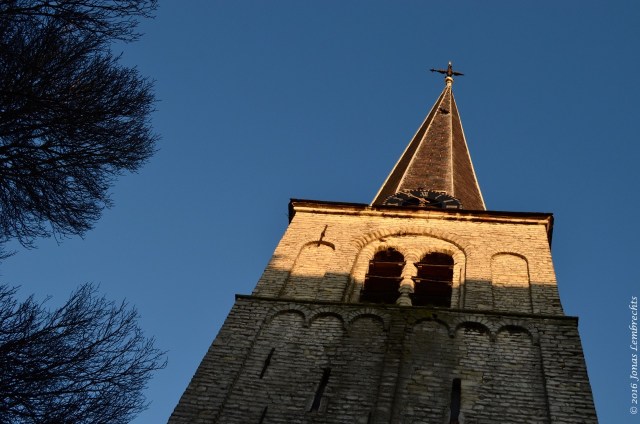
The steeple of the church of Kontich in the evening sun
I am currently very busy putting steeples on two finished churches. The first one is a paper in Ecography, of which I am the first author, which we will try to promote through a press release, as I am convinced the results are relevant and interesting for a broad audience. There might then of course follow some more detailed explanations through blog posts as well.

The second one is a paper in Biogeosciences, on which I collaborate as a statistician. For this one, the outreach will stay limited to a blog post.

With these two papers, it has thus been a busy 2016 already, and we are only March… I truly hope we will have some more steeples to add to our churches before the year ends, but I assure you we are working hard to make that happen!
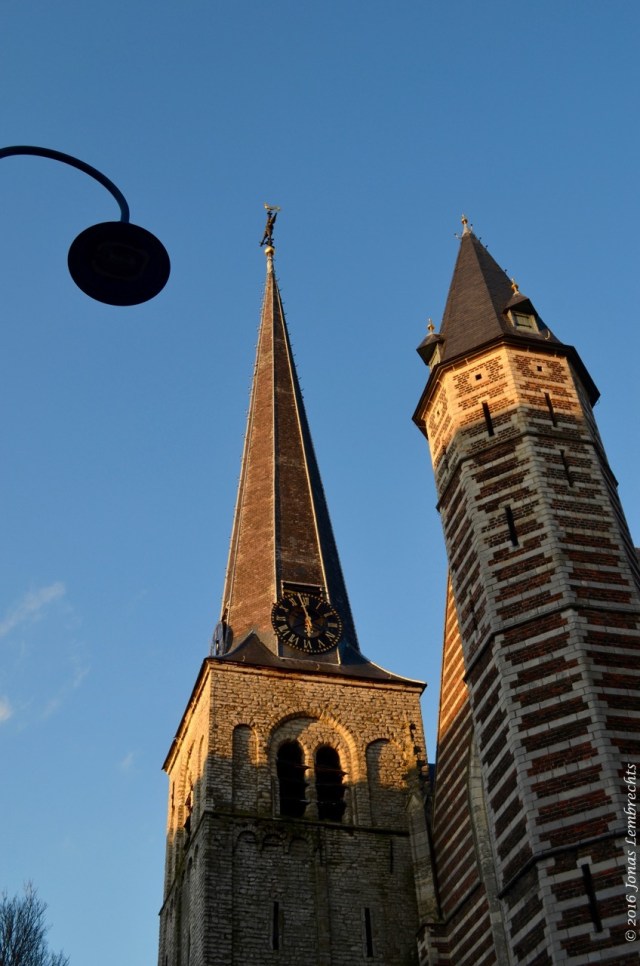




 The 3D lab