Matching the plant with the environment: what makes invasive plant species so successful?

Scientists have been wondering for a long time why some exotic species become invasive while others do not. A new paper we just published on invasive and non-invasive plant species in Belgium reveals that the answer should be sought at the smallest scale. The authors, a team lead by ecologists from the University of Antwerp, indeed showed that there is a lot of variation in conditions at the local scale, and that each different habitat favors different traits in the exotic species. The exercise revealed many of the standard culprits that make habitats vulnerable (like temperature, light availability, native plant species diversity and soil fertility) and non-natives successful (like plant size, photosynthesis ability and nutrient status), yet invasive species were much better at matching their traits with the environment at the local scale than their non-invasive counterparts. Most invasive species indeed managed to produce many more seeds than the non-invasive species, and that even in habitats normally considered less easy to invade, as long as they locally had the correct trait arsenal to deal with these aversive conditions.
Impatiens

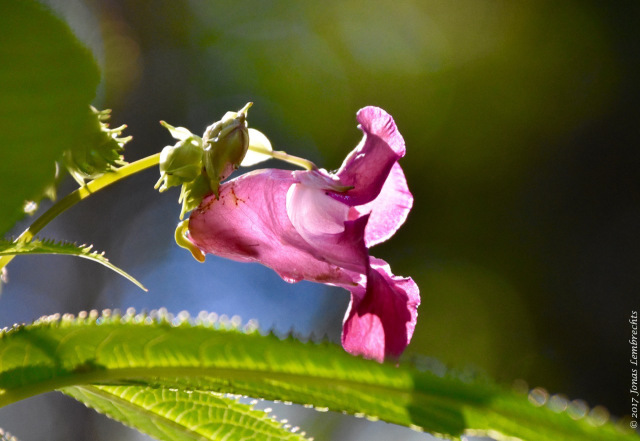
Invasive plant species, like this Impatiens glandulifera (Himalayan balsam) in Belgium, often produce many more seeds than their non-invasive counterparts, yet their invasive success largely depends on finding the perfect match between their own traits and the local site conditions.

This shows that the fight between invasive plants and the native vegetation is likely to be won at the smallest scale, with invasive plants cherry-picking sites that best match their characteristics. Unfortunately, it also means that predicting the invasive success of plant species did not become any easier. Yes, exotic plant species with a higher seed production are much more likely to be invasive, yet this seed production itself is at the small scale highly influenced by the match between both habitat conditions and the other traits of the plants. And as the study shows, this local match-making often has some surprises up its sleeve.
 

Fallopia

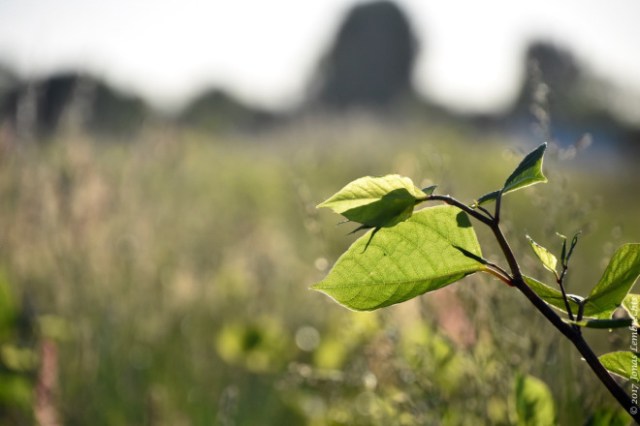
Fallopia japonica (Japanese knotweed) has been a highly successful invasive species in Europe, partly due to its flexible adaptation to different environmental conditions.

Reference

Lembrechts JJ, Rossi E, Milbau A, Nijs I (2018). Habitat properties and plant traits interact as drivers of non-native plant species fitness at the local scale. Ecology and evolution.

Posted in Belgium, Science | Tagged , , , , , , , , | 2 Comments

Spring

41023600022_bd47933320_o

Fumaria officinalis on a wall in Portugal’s city of Évora.

Spring is on its way, I promise! I went to Portugal to check it out for you myself. If you want to know why I was there, check out my previous post.

41065960041_b23c4690c6_o

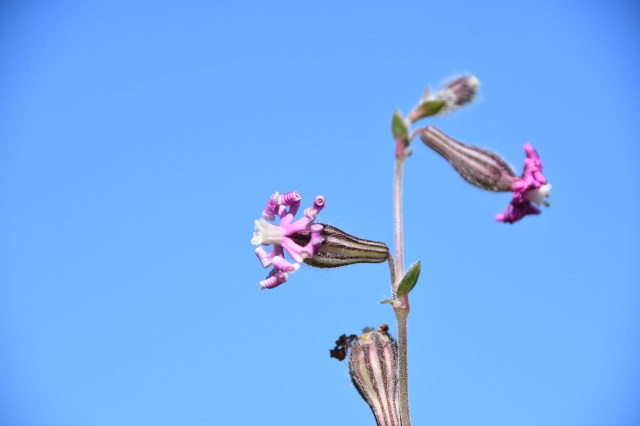
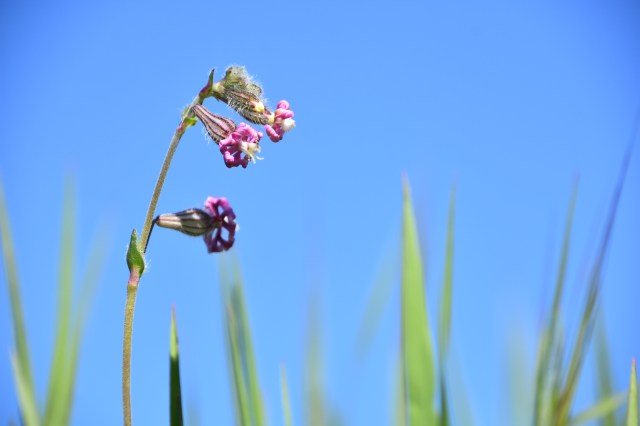
Silene colorata

Even that far south, spring seemed to be slightly later than usual, yet we were luckily enough to have some warm, sunny days, with the first flowers springing up everywhere.

41023564262_5fd19e6f28_o

The rest of the European continent will soon follow, I hope. And with that in mind, we started preparing for summer, and the upcoming field season, as that is what summer is for.

41023572612_b422aa3c8a_o

Silene colorata

As always, we have some awesome plans for the coming summer. And this year, they are bigger than ever, so stay tuned for what is coming, cause ‘On Top of the World’ is truly gearing up!


Posted in Portugal | Tagged , , , , , , , , , | Leave a comment

Climate change biogeography

There are several ways in which one can tackle climate change and its effects on our world. Biogeographers are approaching the issue via one of its core fundaments: how is climate change affecting the distribution of all living things on earth. And they are doing that en mass.

41065776821_e72fa917bb_o

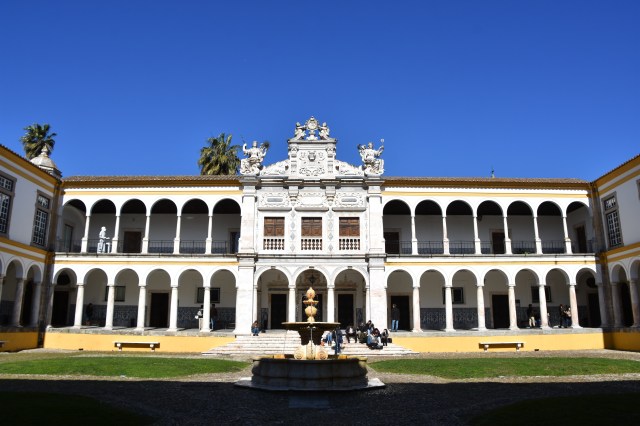
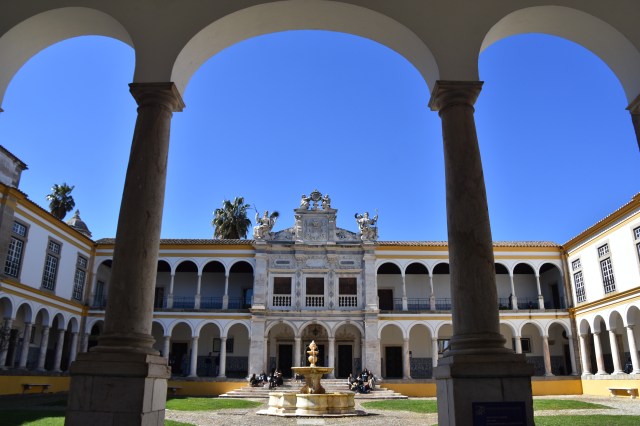
The University of Evora in Portugal, which kindly welcomed up to 300 biogeographers for a week of cutting-edge scientific discussion

I had the honour to be present at a gathering of biogeographers in the beautiful ancient city of Évora in Portugal, where the International Biogeography Society invited up to 300 scientists to discuss the current state of our knowledge on the impact of climate change on species distributions. Such a gathering is bound to provide some interesting insights, and I’d like to take this opportunity to summarize a few, in between these visual impressions of the hosting city.

40356846104_4826e92279_o

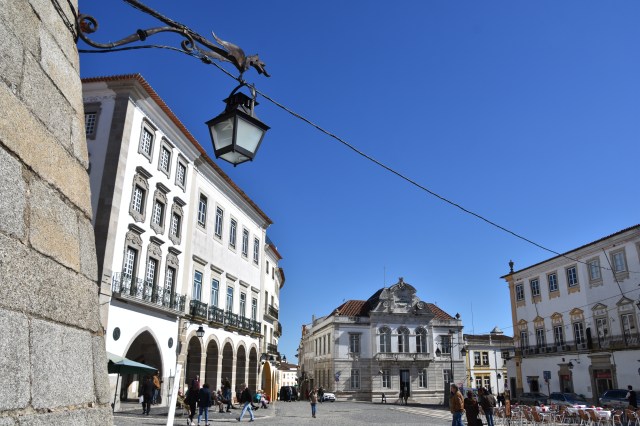
Praça do Giraldo – Giraldo Square – in the city center of Évora

The meeting looked at climate change from three points of view: the past, the present and the future. The first important insights thus came from thousands to millions of years ago: paleobiogeographers are using the response of species to past cycles of climate change as a reference of what could happen now. They showed us rapid distribution changes, flexibility in morphological changes and important speciation. Yet we also learned that often enough, things only start going wrong when humans appear on the scene.

26194884757_9c44fbcdae_o

The ‘Igreja Sao Joao Evangelista’ as seen through the ruins of the Roman temple of Évora

With rapid climate change happening right beneath our eyes, its effects on species distributions are being observed in the very present as well. In that regard, mountains turn out an important case study: with their environmental gradients over a short distance, it is there that shifts in species distributions first become visible. Again, however, the direct impact of humans cannot be ignored: the most rapid upward shifts we observe now are often those of non-native species profiting from an increasing human pressure on mountains.

At the same time, we saw how native species are often lagging behind climate change, while even unexpected downward range shifts are being observed. Overall, current distribution changes thus make one thing very clear: we are evolving towards novel combinations of species, which have never before lived together, and we far from understand all these novel interactions yet.

41065820551_5d4100c03a_o

Little archer tower on a corner of the city walls of Évora

Finally, we shifted our attention to the future, highlighting some of the most important benefits of the biogeographical approach to climate change: we are evolving towards increasingly reliable predictive models of species distributions. Even though several technical issues still need to be tackled, the field is evolving rapidly. We can now even start including biotic interactions in our models to get a better idea of how the novel ecosystems will function, and we are increasing our understanding of evolution and its legacy effects.

41065780781_20d258498e_o

The hosting University of Évora

In short: climate is changing rapidly at the moment indeed, but the speed at which biogeography is evolving is astonishing as well, and therewith comes a growing understanding of what species distributions are and will be doing. And that rapid growth is a big accomplishment for a research field that will soon celebrate the 250th birthday of one of its key founders, Alexander von Humboldt: old, but relevant as ever.

Read more about the meeting on the blog of Nature Ecology & Evolution or in this post.


Posted in Portugal | Tagged , , , , , , , , , | Leave a comment

Paleo-patterns

DSC_8235

The ruins of the Roman temple in Evora, Portugal

This week, I joined an army of far over 200 biogeographers at the conference of the International Biogeographic Society in Evora, Portugal. Biogeowhat, you might ask? Well, biogeography is the study of the distribution of species, in the past, the present and the future.

DSC_8381

The aquaduct of Evora

Most of our own work fits that definition, as we are studying what drives plant species distribution in mountains. While I focus mainly on the present, there is this whole branch of paleobiogeography that I only really discovered here. Studies on the extinction of megasharks, on the effects of past climate change, or on the impact of thousand-year-old effects on the current distributions of species, it almost feels like an art how these paleo-people can find such intriguing patterns in such scarce and long-buried data.

DSC_8227

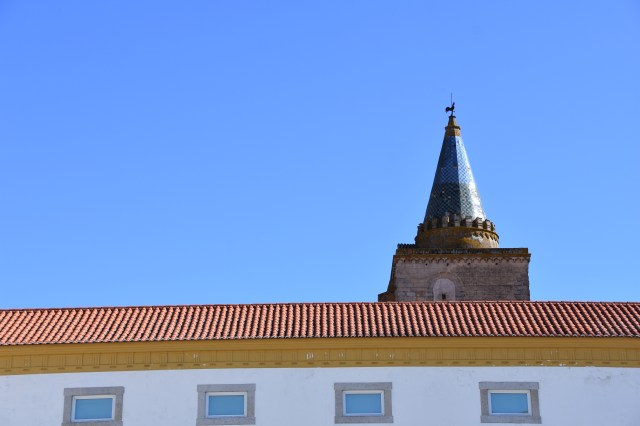
The cathedral of Evora

Cause pattern-finding, that’s the true skill of a biogeographer. We often work with large datasets, at a global or continental scale, linking whatever distribution data we have to environmental drivers like climate and land use (change). There is a lot of advanced statistical modelling involved as well, turning the artform even more into magic. But for a paleobiogeographer, this data is even harder to come by. They rely on a tooth or a jawbone or the identification of plant pollen, yet can still tell you that climate is driving species size, and which direction species have travelled to cope with changes in this climate.

DSC_8203

These studies of the past are teaching us a lot about the present as well, what the current global changes will do to our species distributions. I did learn a lot about adaptation, for example: the notion that many species not only move when climate changes, but that they also have a certain flexibility to adapt, either just as an individual or genetically. And that’s why I really start liking paleobiogeography.

(Pictures of patterns in the old city of Evora more or less related – as pattern-searching is our life)


Posted in General, Portugal | Tagged , , , , , , , , | 1 Comment

A little walk

Winter - 1

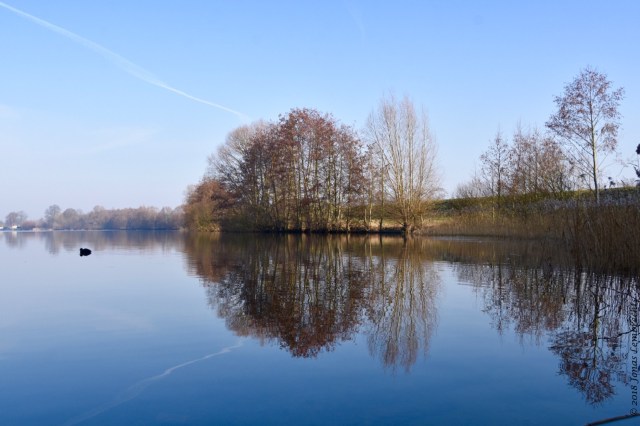
Rainy weather and thesis writing joined forces to lock me up inside a bit more than I would like in the first months of 2018, yet that is a pattern that I am determined to break.

Winter - 3

Because what is nicer than a stroll through a sun-blazed world? We did get lucky recently with some beautiful winter weather, in anticipation of what I strongly believe to become a perfect spring.

Winter - 7

Next week, I will exchange the cold weather for the soft Mediterranean spring of Portugal, where I will be joining a meeting of the International Biogeographic Society, to discuss the recent state of our knowledge on species distributions.

Winter - 8

No complaints about the beautiful nature of Flanders, but a bit of the Iberian peninsula will not hurt either, I suppose, so I hope I can soon offer you all some more exotic pictures and stories than those in this post.

Winter - 6

Posted in Belgium, General | Tagged , , , , , , , , | Leave a comment

Lagging behind

Species have been reported to be moving poleward and upward in mountains as a result of climate change. Evidence of this movement is piling up rapidly, and with every passing year the increasing speed at which species are moving up- and poleward is becoming ever so visible. Yet new studies also reveal that this species movement is often not as straightforward as it looks at first sight.

Indeed, one might think: climate warms, so species will follow. The problem is, however, that a species’ reaction to a change in their environment is not always that fast. They often need some time to adjust and move towards where climate is now suitable. This delayed reaction is especially true for sessile species, like plants, that depend almost entirely on seed transportation to travel around.

36358982090_814358cbb2_o

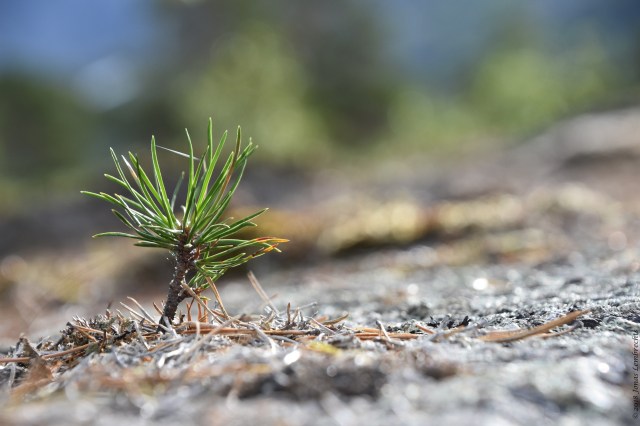
Plants and other sessile organism often show a delayed response to climate change. (Northern Scandes, Norway)

These so-called lags in species distribution shifts are currently not well understood, and even less well accounted for in our predictions of species distributions for the coming centuries. Which is why the recent review paper (Alexander et al., 2017, arising from a workshop organized by the Mountain Invasion Research Network) provides such timely steps forward for our understanding of these lags.

The paper distinguishes three different types of lags: “dispersal lags” indicate that a species has trouble to spread to higher elevations or towards the poles at the pace of the changing climate, while “establishment lags” result from problems with getting a foothold after arriving in a new environment. The last type of lag, called “extinction lags”, indicate that a species fails to disappear from an environment that might have become inhabitable.

35567047994_a65c55d8fa_o

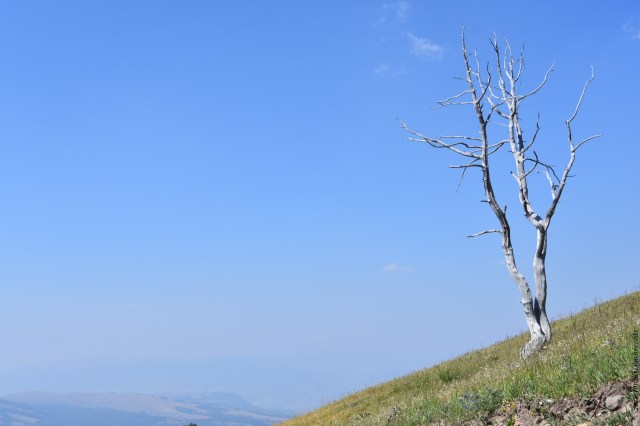
Species often show an extinction lag, surviving for a certain time in an averse environment until time catches up with it. (Yellowstone National Park, USA)

Establishment and extinction lags seem to play a crucial role in shaping species distributions in this dynamic world. For example, closed vegetation in arctic/alpine ecosystems turns out to be very resistant to establishment of upward moving plants species. Thus even when low elevation species arrive at higher elevations, they often find a highly resistant native vegetation that is hard to overtake.  At the same time, many species seem to persist at their lower range edge, even through substantial climatic changes. Again, biotic interactions are likely at play, which are said to be more important than climate at the lower range edge of species.

36265407901_1af07db23f_o

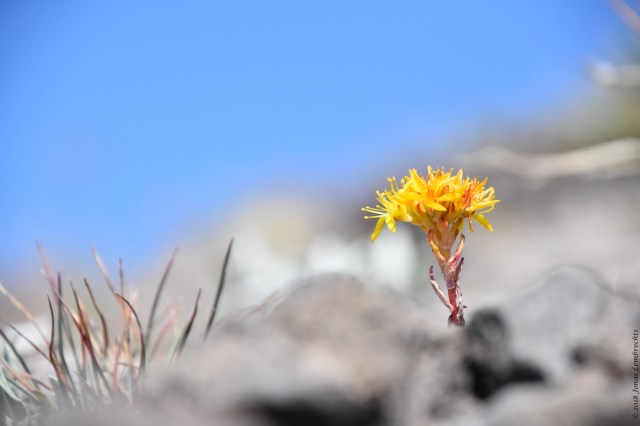
Alpine species can often survive in areas at their warmer range edge if they are spared from competition with fast-growing species. (Yellowstone National Park, USA)

We humans play a critical role here as well. Surprisingly often, human influence is seen to reduce lags in distribution shifts: humans help with transportation of species to colder environments, for example through seeds sticking to clothing, and as such reduce the dispersal lag. Anthropogenic disturbance will reduce the resistance of the receiving community at high elevations as well, making establishment a lot easier for newcomers and thus reducing the establishment lag. Finally, these new invaders might indirectly reduce the extinction lag by outcompeting the native community, forcing them to retreat upward.

36755629035_d0304a992f_o

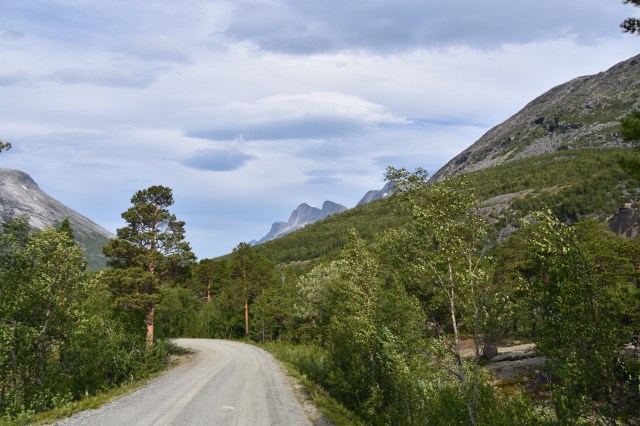
Humans can transport species to colder environments  via roads, and as such help them to better track climate change. (Northern Scandes, Norway)

So why do we care about these lags? Well, they are critical to understand what will happen to our nature in the coming years, with increased climate warming and unlikely-to-cease anthropogenic disturbances looming at the horizon. Ecosystems are already seen to be changing drastically, with novel communities sprouting up of species that might have never lived together before. Yet as species are likely to be lagging behind to these changing in their environment, much more change might still be on the way. For a species, lagging behind climate change might indicate an inability to keep up with the changes. Good dispersers, on the other hand, might easily be able to track the climate, only to find the novel communties they enter to lack the species they usually interact with and desperately need to survive.

Further reading:

Alexander et al. (2018) Lags in the response of mountain plant communities to climate change. Global Change Biology 24(2): 563–579.


Posted in Science | Tagged , , , , , , , , , | Leave a comment