Taking the temperature of forest microclimate research

Imagine: it’s a hot summer day. You’re sweating away in an urban apartment. Perhaps ice-cream would come to mind, or a dive in a swimming pool. Or a nice stroll through a lush and cool summer forest. Yes, that last one could be a great solution as well: forest microclimates contrast strongly with the climate outside forests, and on a bright summer day that difference could be up to several degrees Celsius. However, the climate inside forests is significantly more complicated than simply this air-conditioning on a hot summer day. Nevertheless, it is crucial for the understanding of the biodiversity and functioning of our forests to get to this true forest microclimate and integrate it into our ecological research.
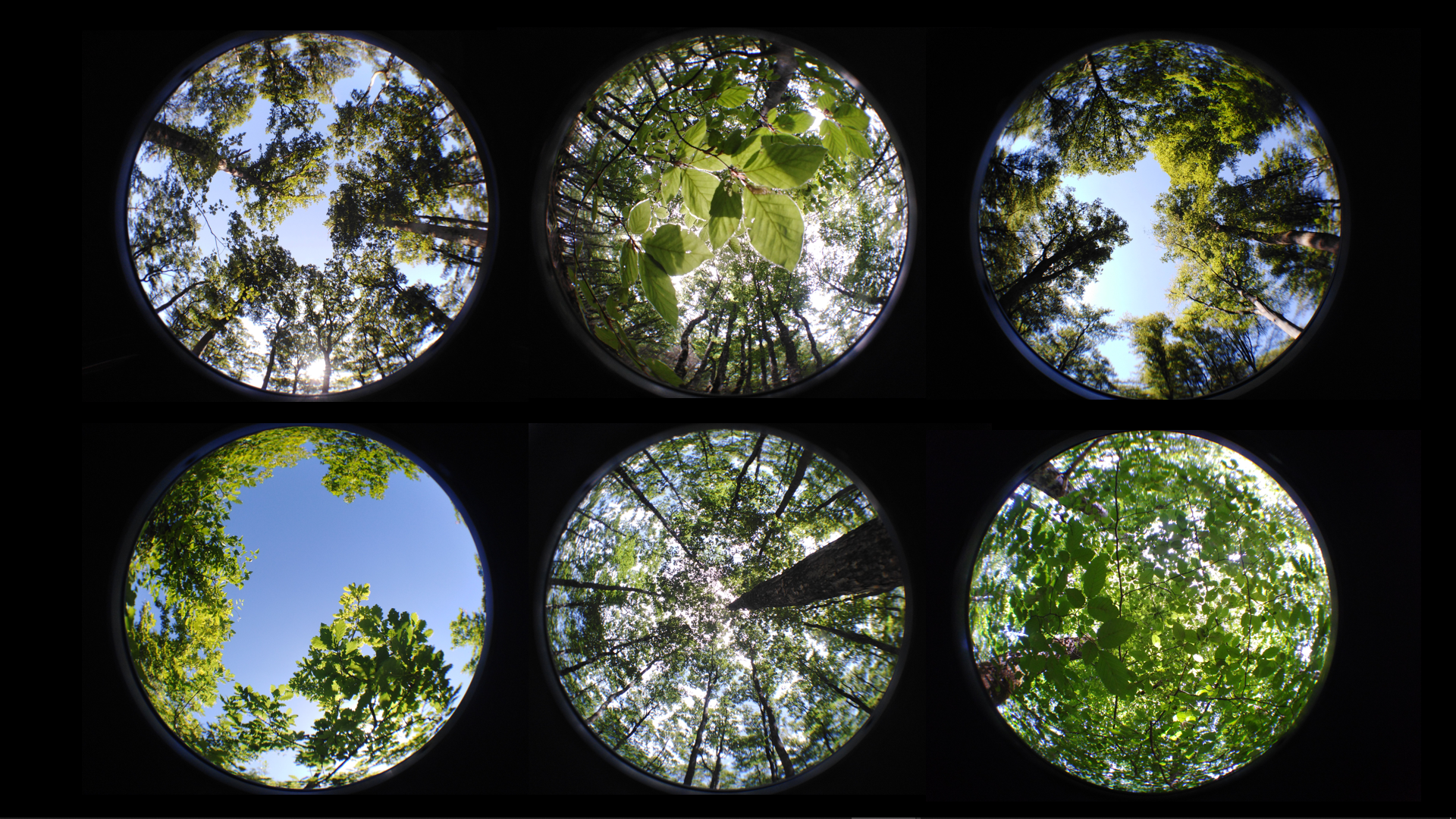
The beautiful diversity of forest canopies (pictures by Eva Gril and Hugo Mahier)

Despite the potentially broad impact of this microclimate on the response of forest ecosystems to global change, we have long lacked a good idea of how microclimates within and below tree canopies drive nature’s response to global change. Recently, however, the importance of microclimate has moved firmly into the spotlights (see e.g. Zellweger et al. 2020, Lembrechts and Nijs 2020), and our understanding of what climate means below our forest canopies has been rapidly increasing.

With a team of (forest) microclimate experts, we decided we’d have to sit together and ‘take the temperature’ of what we know and what we don’t about forest microclimates. We met in a beautiful mansion in the middle of Sweden during a winter snowstorm in late February 2020 (for many of us the last time we got another view than our own home office as soon after the world got into lockdown). In that inspiring atmosphere, we discussed our current knowledge on forest microclimate and set a first step towards a paper summarizing that knowledge. That paper is now out for all to read!

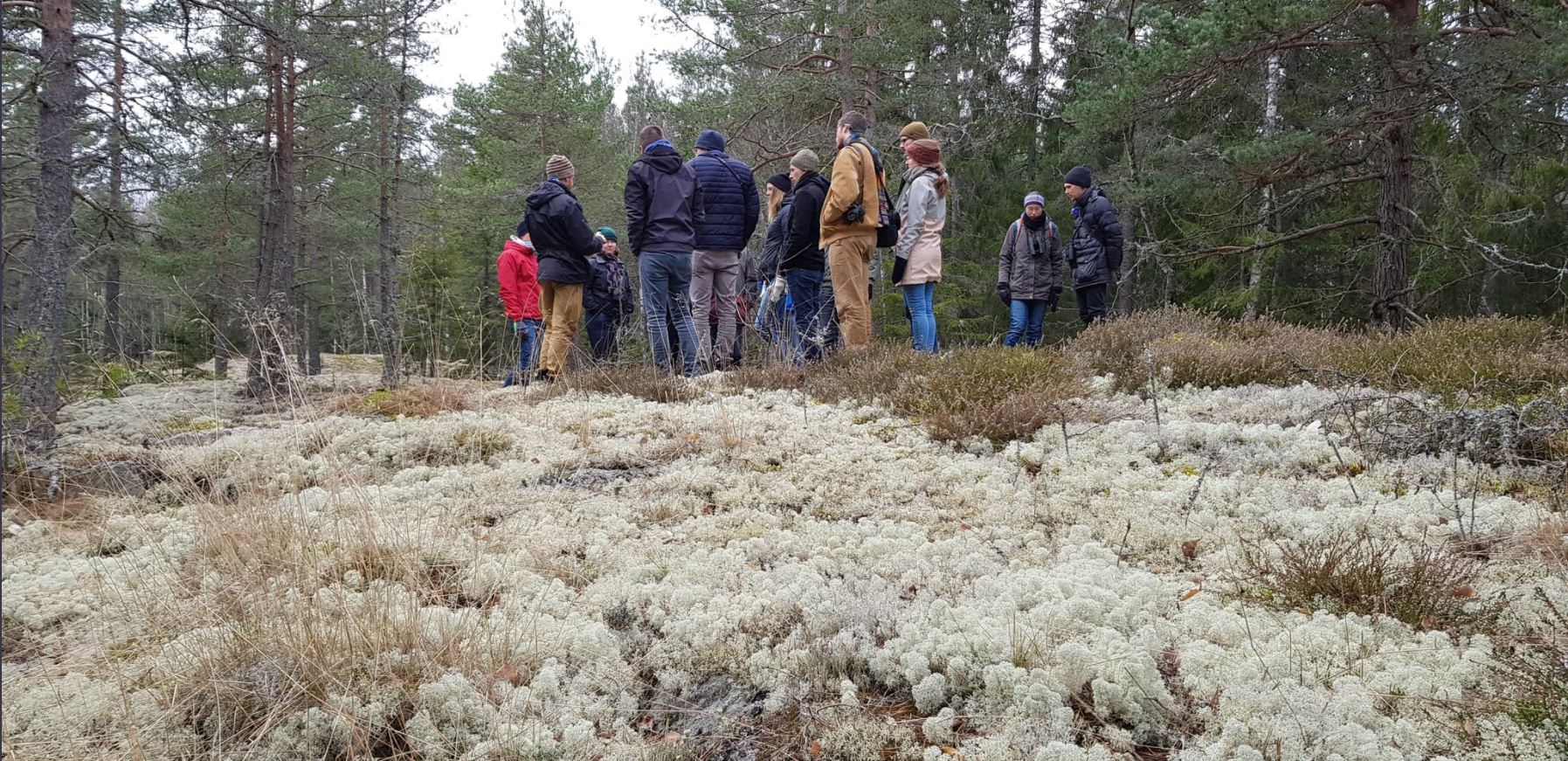
A Swedish winter wonderland

In this review paper, we explain how variation in forest microclimates over space and time results from an interplay of forest features, topography and landscape composition. We stress and exemplify the importance of considering forest microclimates to understand variation in biodiversity and ecosystem functions across forest landscapes. Next, we explain how macroclimate warming (of the free atmosphere) can affect microclimates, and vice versa, via interactions with land-use changes across different biomes. We summarize all drivers of forest microclimate to provide a good idea of the many factors at play and how they are influencing the outcome (as shown in the figure below).
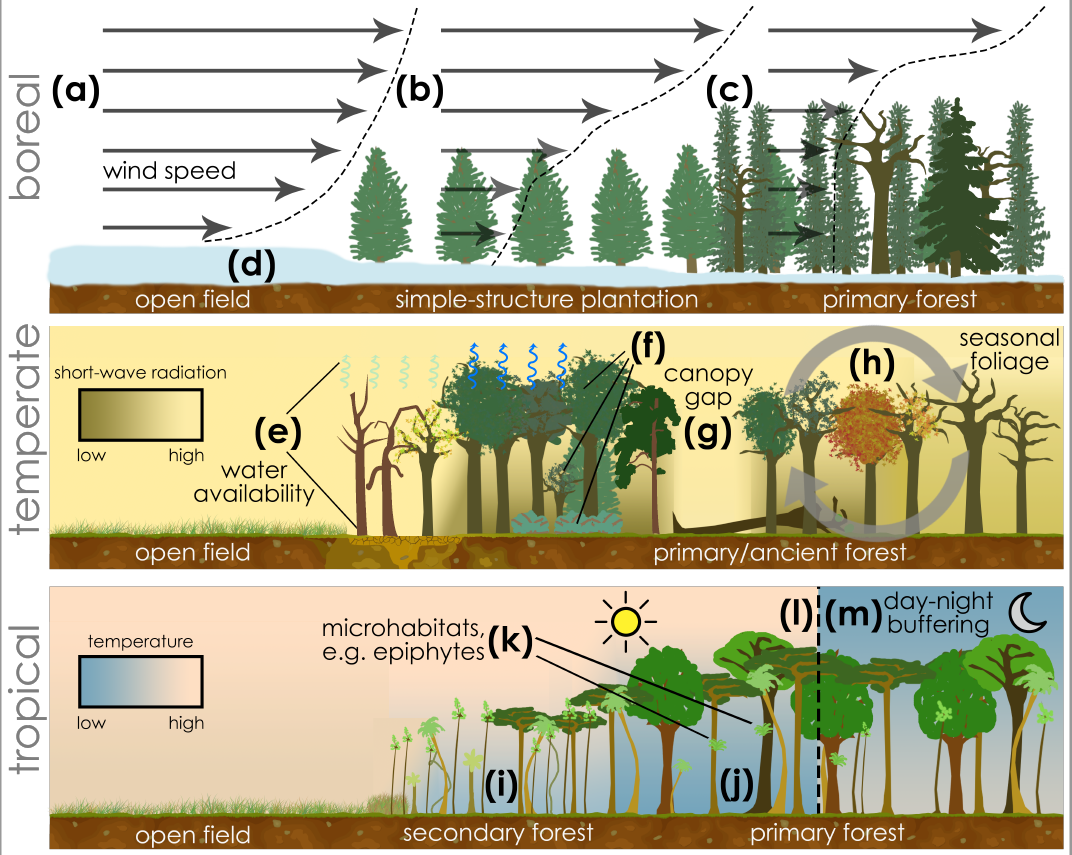
Overview of drivers of microclimate from the paper. Multiple vegetation drivers of microclimate might be of different importance in forest at boreal (top), temperate (middle), and tropical (bottom) latitudes, even if most processes are general. Increasing tree density from open non-forest habitats (A), to plantations with a simple canopy structure (B), to (semi-)natural forest with complex structure (C) reduces below-canopy wind speeds above ground. Forest canopies can reduce ground snow cover and thus decrease the insulating effect of snow cover on cool soil temperatures during the cold season (D). Vertical vegetation distribution (E-F) influences the amount and quality of incoming shortwave radiation, outgoing longwave radiation and moisture exchange. Disturbances can create canopy gaps (G), providing a local shift in microclimate. Seasonal reductions in canopy cover (tree phenology, H) during the cool and/or dry season increases the exposure of the internal forest to ambient conditions. Forests also buffer the temporal (i.e. daily, seasonal and interannual) variability in temperature conditions compared to adjacent non-forest systems (bottom panel). This buffering effect varies with vegetation height and structure, with reduced buffering in secondary, post-agricultural forests (I) relative to primary or ancient, (semi-)natural forests (J). Microhabitats within a forest, such as those created by epiphytic plants (K) can offer an even more buffered microclimate, critical for the ecology and physiology of many forest species. Finally, the temperature offset in forests can change throughout the day, with cooler forest interiors vs. open areas during the day (L) and warmer at night (M). For the sake of simplicity, we chose to depict wind, shortwave radiation, and temperature in the boreal, temperate, and tropical panel, respectively. However, of course all of these microclimate variables can be relevant to systems across latitudes.

Finally, we wanted to know what had to come next. With all those present at the meeting in this beautiful and peaceful Swedish mansion, we did a priority ranking of future research questions at the interface of microclimate ecology and global change biology. We realized progress was needed (and luckily soon to be expected) on three key themes: (1) disentangling the drivers and feedbacks of forest microclimates; (2) global and regional mapping and predictions of forest microclimates; and (3) the impacts of microclimate on forest biodiversity and ecosystem functioning in the face of climate change.

Priority ranking of forest microclimate research ideas

We end with a very positive note: good microclimate data is increasingly becoming available (see e.g. Lembrechts et al. 2020), opening the door to accurate and trustworthy models of climate variability at spatial and temporal scales relevant to our forests. This will revolutionize our understanding of the dynamics, drivers and implications of forest microclimates on biodiversity and ecological functions, and the impacts of global change. Yet this data is coming not a minute too late, as it is urgently needed to support the sustainable use of forests and to secure their biodiversity and ecosystem services for future generations. Together, and with good data at hand, we can make that last point a reality.

Posted in Sweden | Tagged , , , , , , | Leave a comment

Wet nature as airco?

Cycle from the city to a nearby nature reserve during a hot summer day, and you’ll immediately notice a few degrees difference. The higher temperatures are a result of the urban heat island effect. Smart urban planning with room for greenery and water can help to counteract this urban fever. Natural areas close to the city may also provide natural air conditioning.

Together with nature conservation organization Natuurpunt, CurieuzeNeuzen investigates how natural areas can take up their role as natural climate buffer and air conditioning for our living environment. Stefan Versweyveld, head of the Projects Department of Natuurpunt: “We are looking for answers to questions such as: is the cooling effect of a nature reserve greater close to the city than further away from it? Is the cooling effect of natural areas perceptible in the surrounding gardens?” Therefore, researcher Stijn Van de Vondel (University of Antwerp) will install 200 “garden daggers” in nature reserves across the province of Antwerp. The results will be compared with measured values in nearby gardens.

Wetlands4Cities

It is mainly the wetlands that can play a role in cooling our cities in summer. Stefan: “Wetlands provide very important ecosystem services. They retain water in the event of severe drought, replenish the groundwater level, mitigate flooding during heavy rainfall, and possibly play a crucial role in cooling our warm urban environment during heat waves.” Because Flanders has lost some 75% of its wetlands over the past 60 years, Natuurpunt has started the ‘Wetlands4Cities’ project: restoring and creating existing and new wetlands to give a boost to wetlands in urbanized areas. “CuriousNoses in the Garden now makes it possible to start effectively quantifying the cooling ecosystem services of wetlands.”

The management of these nature reserves is in the hands of Natuurpunt’s voluntary nature managers. They are responsible for the purchase, management and opening up of 25,000 hectares of Flemish nature. And it is these volunteers who will follow up the measurements in the field.

“The volunteer nature managers are very involved in their nature reserves,” says Stefan. “They observe the negative effects of climate change and desiccation on a daily basis. It poses great challenges to them and to us: mowing seasons have to be brought forward, large summer floods send site management into disarray, and the absence of frosts prevents ice mowing.” *

Through the dashboard, the nature managers themselves gain insight into the state of their area. “Because good water management in a nature area is crucial for plants and animals, our managers also already monitor water levels at regular intervals to keep track of their evolution. The soil sensors and the associated Internet of Things technology from the citizen science project ‘CurieuzeNeuzen in de Tuin’ will be of great benefit. After all, the data are immediately available, and in this way we can monitor the situation much more closely. We therefore expect to use more of these new monitoring techniques in the future. Our volunteers are therefore enthusiastic to participate in the project.”

More information (in Dutch) on the CurieuzeNeuzen website.

* In the winter, reeds are cut to get dense reed vegetation and to keep the water clear. If the water is frozen, this can be done by mowing or cutting the reeds on the ice.

Posted in Belgium | Tagged , , , , , , , | 2 Comments

Urban invaders loving the heat

Guest post by Charly Géron, PhD student in The 3D Lab and lead author of a new study on how urban microclimates might facilitate plant invasions in cities.

They are submerging the news, movies, papers and talks everywhere. I am of course talking about the challenges the world has to face right now such as urbanization, climate warming and invasive species to only cite three. Anxiety is quite growing for a year now since we are directly affected by Covid 19 which can actually be placed in that last category (let me tell you that us humans can also be considered as belonging to that category 😉 ).

However, we don’t have to be frightened by these concerns, and we should look for ways to tackle them. My PhD has been an excellent way so far to better understand how they can interact with each other. Indeed, invasive species are listed among the biggest threats to the native nature but also to human activities. Historically, alien plant invasions have been mainly studied in natural environments focusing on their impacts on the local biota for example. It is only in the last few decades that alien plant invaders have received growing attention in cities. Urban environments are usually not perceived as containing major native species richness due to the habitat modifications by anthropogenic activities. 

Cities are incredibly connected via a dense transport infrastructure network, and they are hubs of exchanges of goods and people. This leads to a high number and proportion of alien plant species in urban areas, and especially of new comers. Moreover, one has for sure noticed how warm a city center can get in a heatwave compared to the fresh rural outskirts. This is one of the signs of the modified microclimatic conditions of the urbanized environments. They not only display higher temperatures but also drier soils due to the important use of materials such as asphalt or concrete characterizing our often – too – gray cities. It is also important to note that these microclimatic differences present along the urban-to-rural gradients are predicted to be more prominent in the coming years with climate change.

Ailanthus altissima taking over urban landscape

Cities then sound as the perfect laboratories to study emergent alien plant invasions. They not only display warmer and drier growing conditions, but they also concentrate newly arrived alien plant species. We decided to test the long lasting hypothesis that urban alien plant invaders are coming from warmer native climates. Indeed, the successful colonization of new environments by alien plant species highly depends on the match between their requirements and the local environmental conditions. Moreover, several observations and study have proven for other alien species from more favorable climates the clear link between warm cities and their establishment. For example, the persistence of alien aquatic animals locally depends on heated water effluents from cities in Germany. We focused on the European regions with a temperate oceanic climate termed “oceanic Europe”, which represents an area from the north of Spain to the south of Norway, through France, the UK, Belgium, the Netherlands, Germany and Denmark. We selected alien plant species that still have a limited distribution there, and we modelled their native range with a species distribution model framework, to visualize their native range climatic conditions. We analyzed their distribution in oceanic Europe along the urban-to-rural gradients using the percentage of built up area, with high values corresponding to highly urbanized areas.

Paulownia tomentosa at ease on top of brick walls.

We analyzed if the distribution of the selected alien plant species along the urbanization gradient in oceanic Europe was linked to their native climate conditions along 3 variables: the winter temperatures, the summer temperatures and the precipitation quantities, while taking into account the year of first observation in the wild. We found that more urban alien plants in oceanic Europe were coming from warmer or drier native ranges than the one currently found in oceanic Europe. A very good predictor of the distribution along the urbanization gradient of oceanic Europe was the annual mean temperature of the native ranges of the studied species, with the ones developing in more urban areas coming from warmer native ranges than oceanic Europe.

Mean urbanity (in %) of the studied alien plant species as a function of their native range climatic conditions. Mean urbanity of alien plant species as a function of: a) “precipitation” axis with high values indicating more precipitation; b) “summer temperature” axis with high values indicating higher temperatures, and c) the scaled year of first observation in the wild, ranging from 1683 (low values) to 2008 (high values). Each point corresponds to a species, colored following the main Köppen-Geiger climate class in which it was observed the most in its modelled native range. Full lines correspond to significant effects, while dashed lines correspond to non-significant effects.

We argue that despite the fact that alien plant invasions depend on a complex set of components, microclimatic barriers might be one of the reasons why some alien plant species thrive in urban areas, while others prefer rural environments. However, with the global changes listed earlier, the barriers that currently constrain numerous alien plant species to cities may be lifted. As cities are now recognized as hotspots for plant invasions, they could act as new potential “sites” for the seeding of future plant invasions, with the help of structures such as rivers or roads for their spread. We are now trying to disentangle what could be the underlying reasons of the preference of urban areas for some alien plant species, but this is for later.

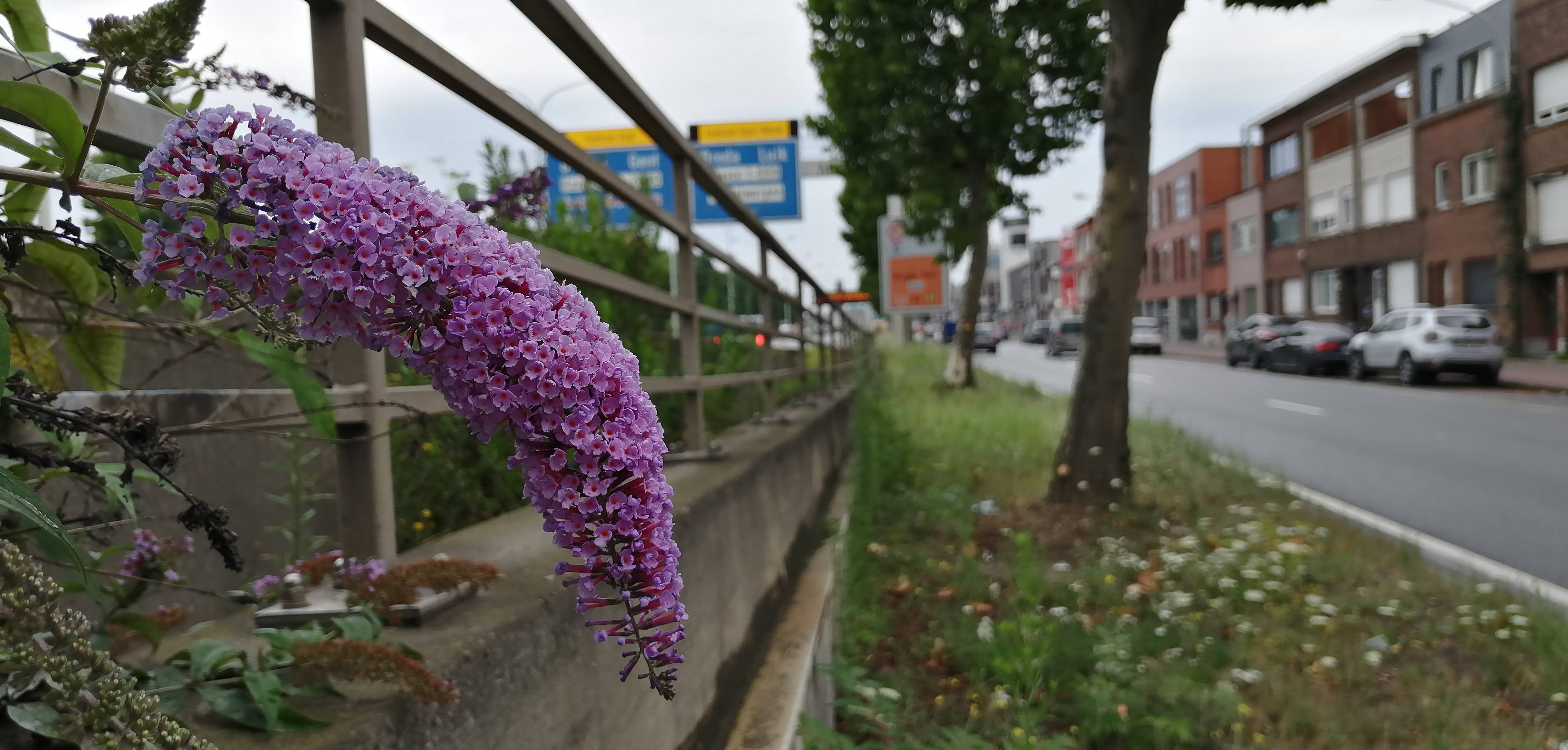
Roads as paths for urban plant invaders?

The full story got published in Biological Invasions here.

Posted in Belgium, General | Tagged , , , , , , | Leave a comment

Grey day in the field

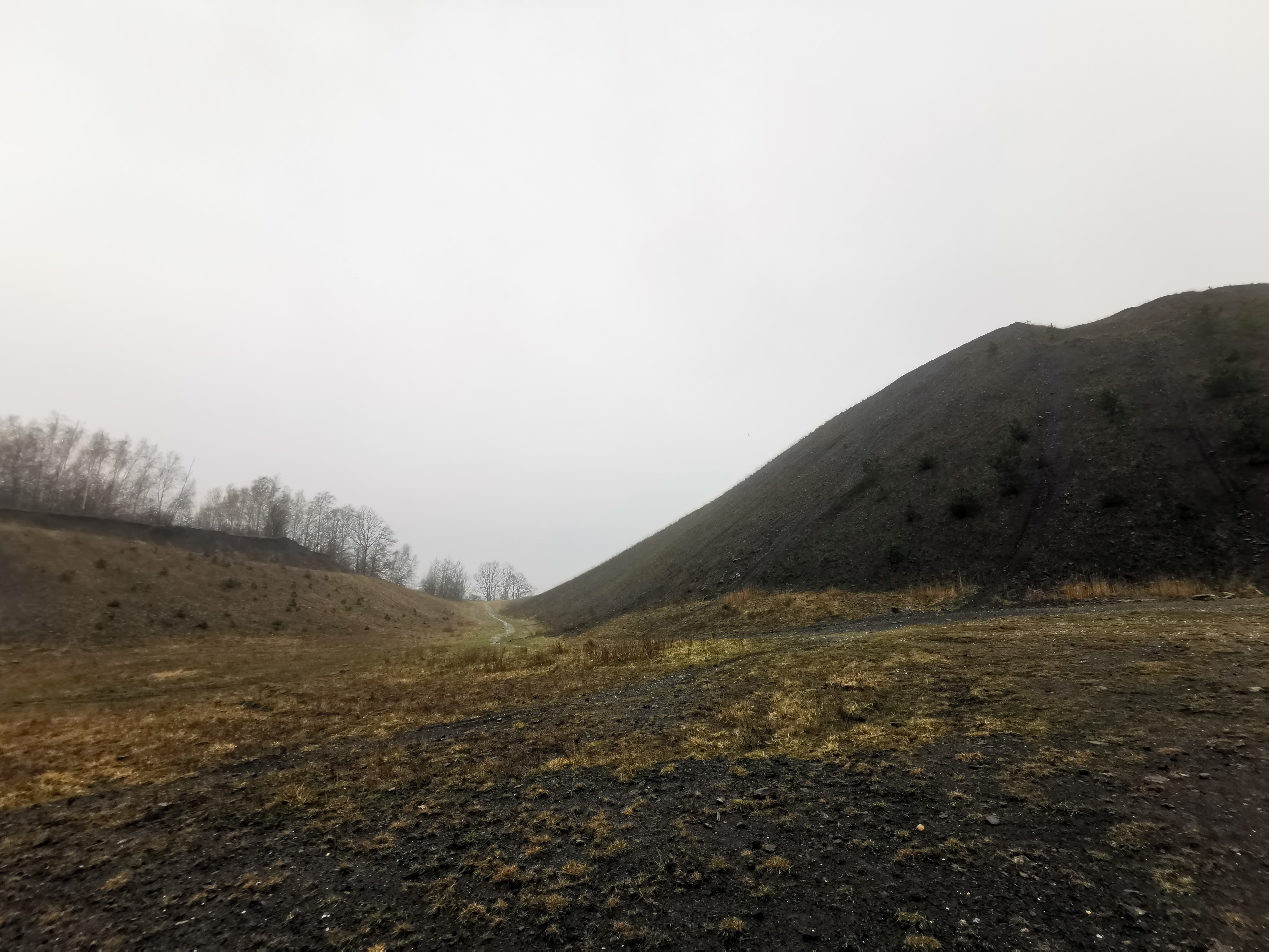
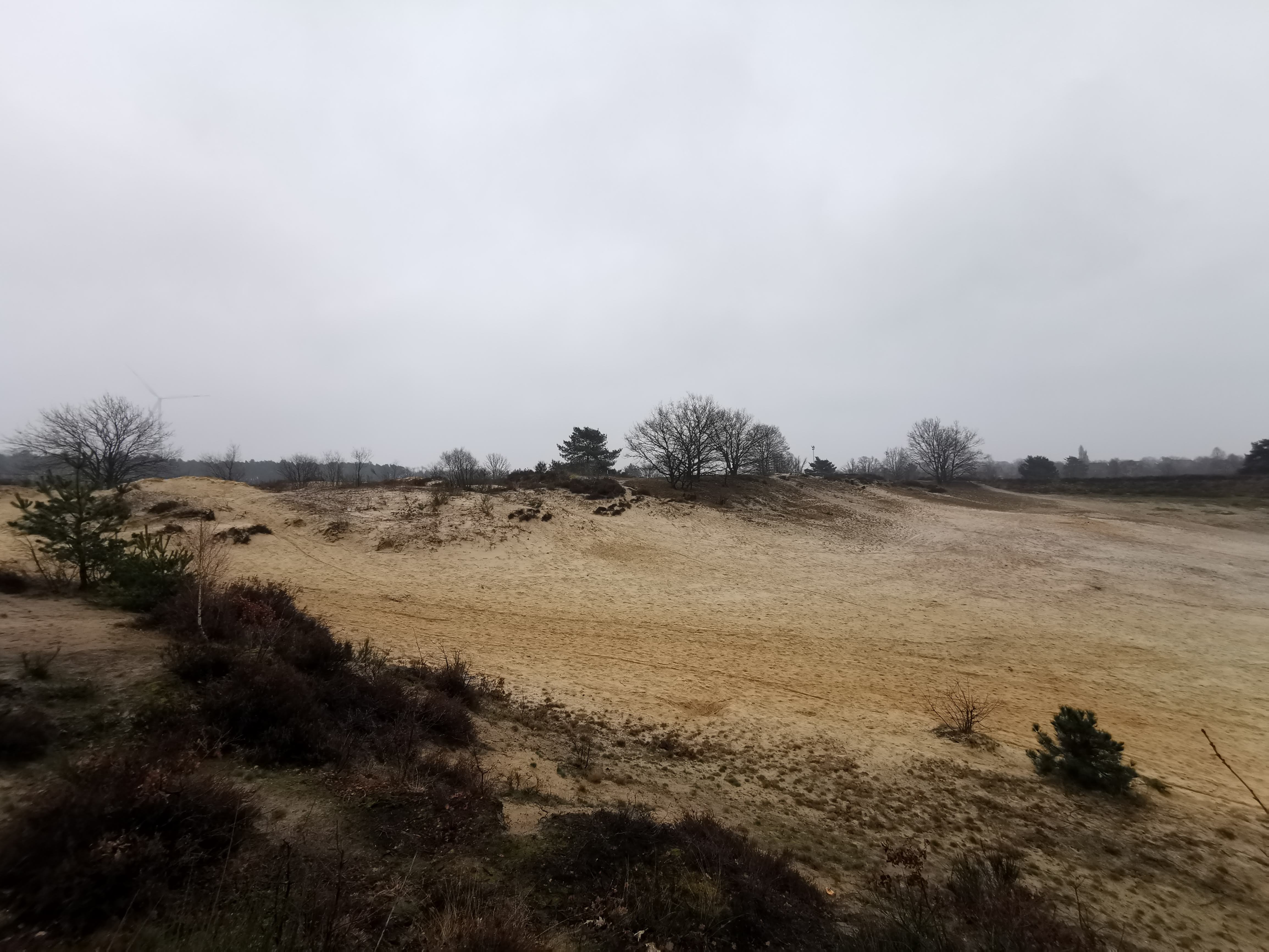
Yesterday, we spent a pretty grey day in the east of Flanders to dig up microclimate loggers. The view: heavy clouds on top of the shades of brown provided by the late-winter heathland, as is so typical for the region.

The world in the east of the country gives of a bit of an otherworldly vibe, especially when the heathland gives way to the famous ‘slag hills’ of the old coal mines, where one might expect a Mars Rover behind every corner.

Temperatures of these otherworldly environments will be very interesting to compare with the rest of the region, and those dug-up loggers will thus be a fantastic contribution to our upcoming Flemish soil microclimate maps. For that, this one fieldwork day was also just a small teaser, as from next week, the citizen science project will get into full swing, with 5100 sensors installed all across Flanders.

More on that very very soon…

Posted in Belgium | Tagged , , , , , , , | Leave a comment

Preparation time

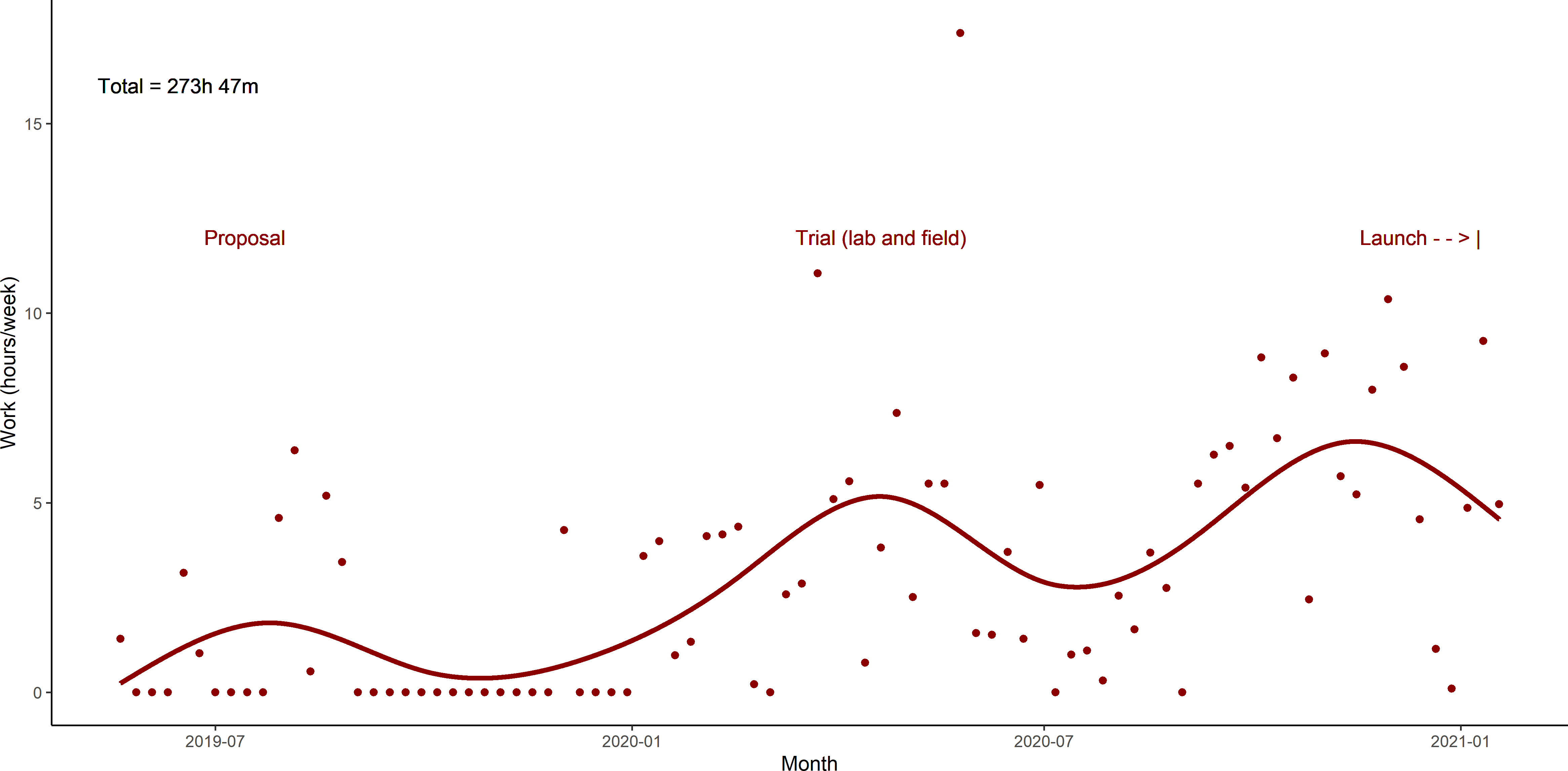
This weekend, we’ll be (finally!) launching the call for our giant citizen science project (more on that here). Truly a mastodont of a project, and that is reflected in the numbers. I decided to look back at my time tracking data, from the first spark of the idea of the project till today, two days before its launch.

Hours per week spent on preparing the project, from the first idea back in spring 2019, over the writing of the proposal, the first trials in lab and field, and the preparations for the big launch in January.

Turns out I already spent close to 300 hours on this project alone, since the spring of 2019. While this is not a surprise to me, it is intriguing to see how work effort has come in three increasingly big waves:

1) idea development and proposal writing, after which a big slump while we wait for grant approval.
2) Trials in the field and the lab, exploring what works and what not, how data will look and how to improve the workflow. Followed again by a little drop over summer, while sensors where out in the field ‘doing their thing’.
3) In autumn, we picked up where we left of, started working with that data from the trial, and got into full swing for preparations towards the big big launch.

And that’s just me, mind you, I’m just one link in the chain. Luckily, as I for sure lack the resources to keep tackling increasingly big waves for this project, without loosing track of all other things I’m working on!

Interestingly, this also nicely highlights the lifespan of projects. Spring 2019 feels like ages ago, but if you want to make a genius scientific idea work, persistence is the key. So please, check back in with us over 2 or 3 years, when perhaps first published results of this 2019 idea start coming in!

Posted in Belgium | Tagged , , , , , , , , | Leave a comment

Small forests, big benefits

Since I started hiking along Flemish backroads with my little girl – our favourite activity – we got to meet already lots of little patches of forest in a matrix of agriculture. I must say: nothing pleases me more than wandering in and out of forests, with different views around every corner and landscape paintings opening up to you around every corner.

From the forest into the open, my all-time favourite kind of experience of the Flemish countryside

However, one could wonder what the value of these little forest patches is. Wouldn’t it be better if we would have big forests, with less edges and a big and undisturbed core? Surely, this ancient state of forests should be preferable? Turned out I wasn’t the first one to ask that question while strolling through nature’s best. A recent publication from the ‘SmallFOREST’-project , a European-wide research network by some of my favourite colleagues, got out to find the answer!

A little forest patch flanked by agriculture. High quality nature, or a plaster on a sore wound for our ecosystems?

Obviously, more and bigger patches of nature are better, no doubt in that, and it is known that bigger forest patches support higher biodiversity. That doesn’t mean, however, that all these little forest snippets are a ‘waste of space’! Surprisingly, small forests can actually disproportionally contribute to so-called ecosystem services.

Indeed, small woodlands in agricultural landscapes, especially ancient woodlands, have a higher potential to deliver multiple ecosystem services such as carbon storage and resource availability for animals, on a per area basis.

A reassuring thought to have when wandering through Flanders, which is especially well-known for the increasingly smaller fragments of nature in a matrix of agriculture and urbanity. Of course, there are big fights to fight: the small fragments that are there, need long-term conservation, and there is an ongoing need for better connectivity between such patches. Yet that every inch of forests can have its merits for the landscape, that does make me very happy.

As always exploring Flanders nature, and enjoying every second of it

You like this idea of highly beneficial little forest patches? Check out the paper itself!
There is also much more where that came from, for example the work on the importance of hedges for biodiversity in the landscape, here!

Posted in Belgium | Tagged , , , , , , , , , | Leave a comment