Truth be told, we just had a little pot of money that needed spending. That pot of money came from a successful application to the University of Antwerp to enhance communication between universities.
Now, communication between universities, that’s my kind of thing, and we realized we had just the set-up at hand: the high density of microclimate research groups in Belgium and beyond. A quick invitation to our friends in Leuven, Ghent, Liège and Amiens (also basically Flanders, no?) immediately gave a positive response: we all agreed that it would be great to sit together for a few days and learn from each others successes, deep dives and mistakes.
To make things even more attractive, we lured in some big names from abroad, and soon we had a workshop programme buzzying with potential. This, combined with a perfect location and host lab (the ForNaLab at Ghent University, embedded in its own research forest, and the workshop was destined to be successful.
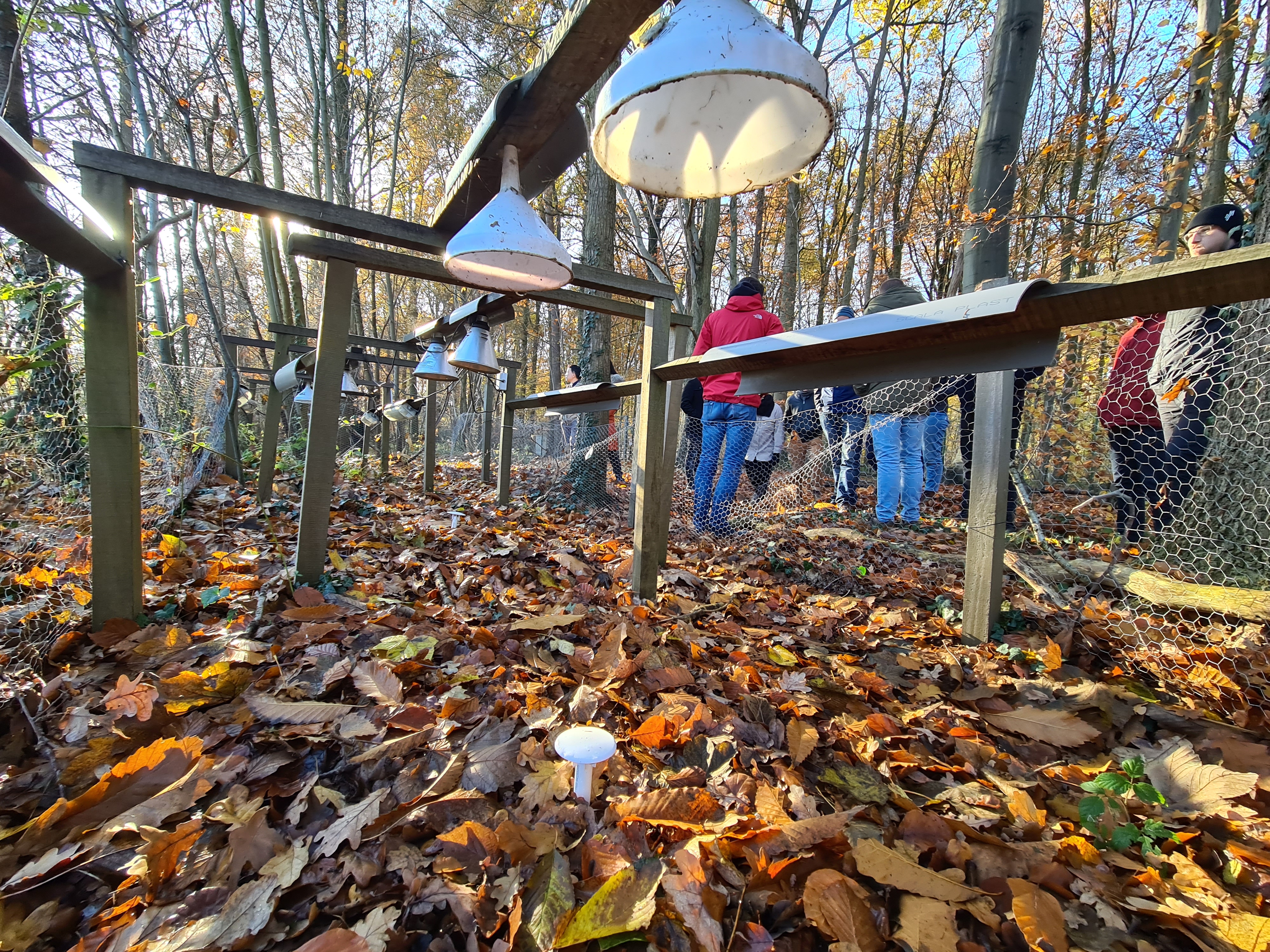
Outdoor forest heating experiment – basically just two steps from the offices of the lucky ForNaLab-scientists!
And I know, we had a fantastic microclimate conference only recently, but we felt there was room for something else: a smaller group of people, with more room to go in-depth on the tricky stuff. Especially the younger members of the labs could benefit from a bit more time to explain their work, their goals and dreams, and the things they struggle with. Together, we might have some answers that could propel their work forward.
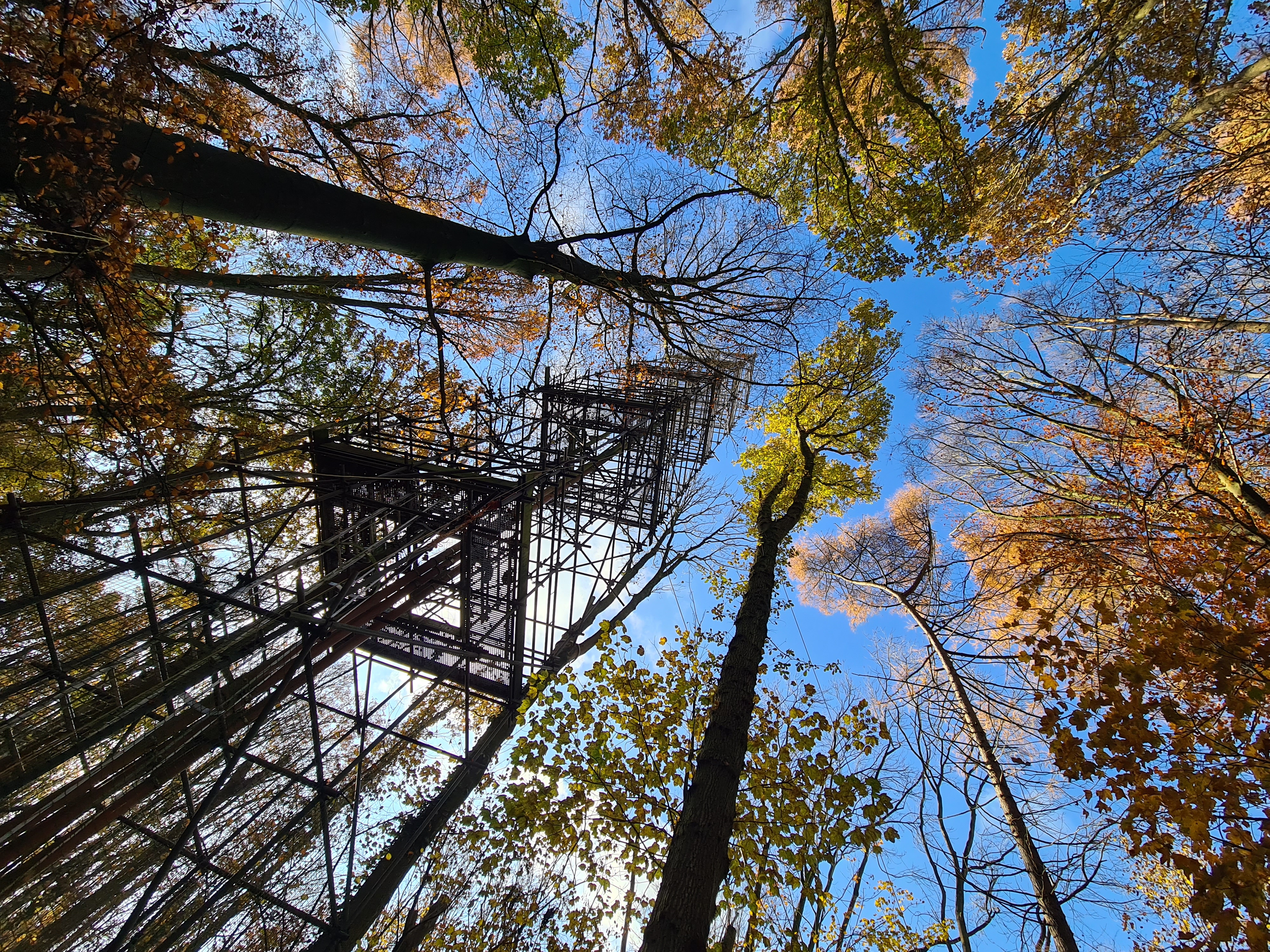
The research tower in the forest is positioned just in between a few different species of trees, for optimal monitoring.
So that’s how we got to spend two days in a forested environment outside of Ghent, and how I got another notebook full of great ideas and suggestions for the future.
Thinking, planning, dreaming and scheming
But that’ll be news for another day – and another year most likely!
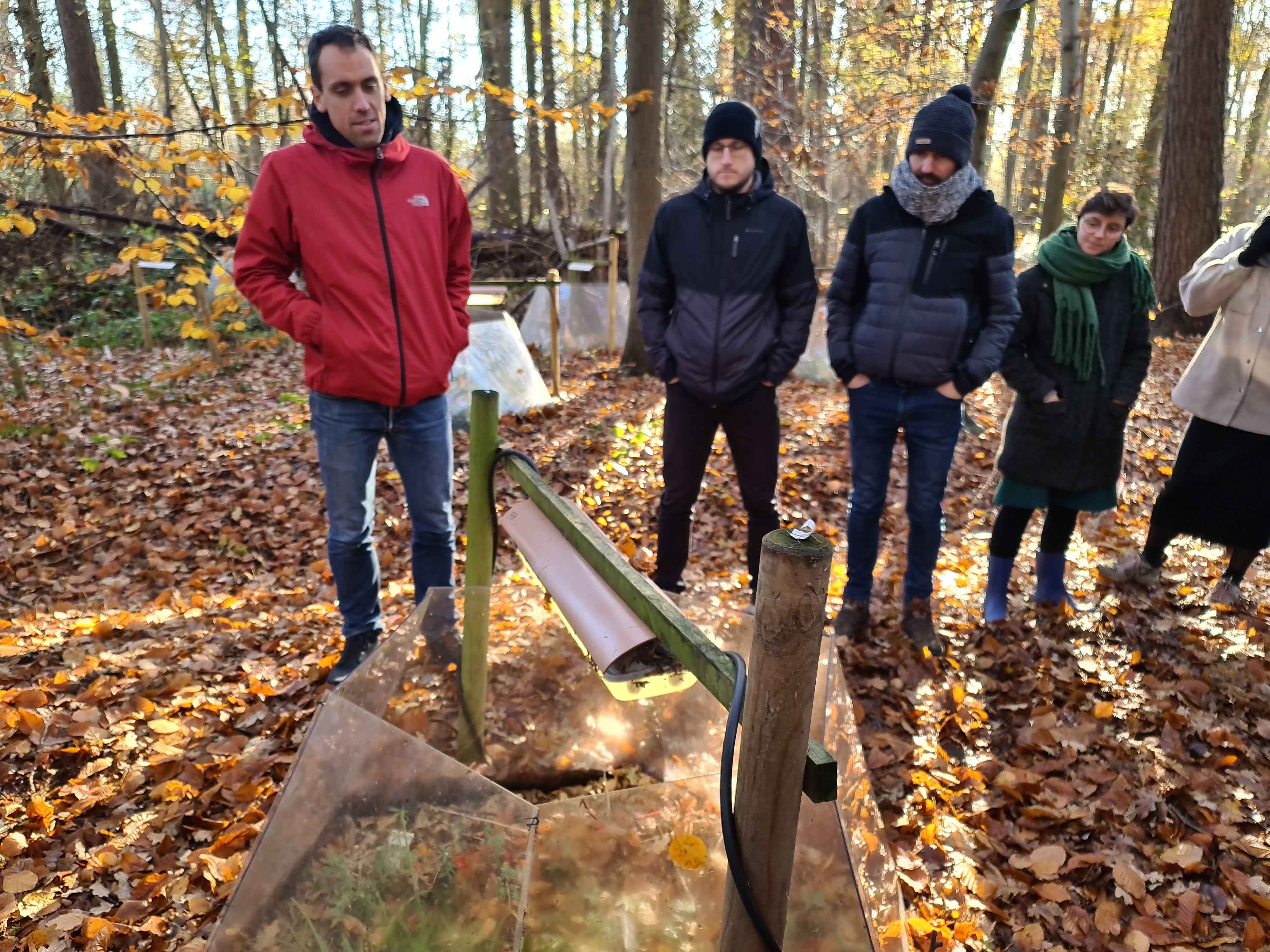
Host professor Pieter De Frenne explaining their ‘open top chambers’ – climate warming experiments
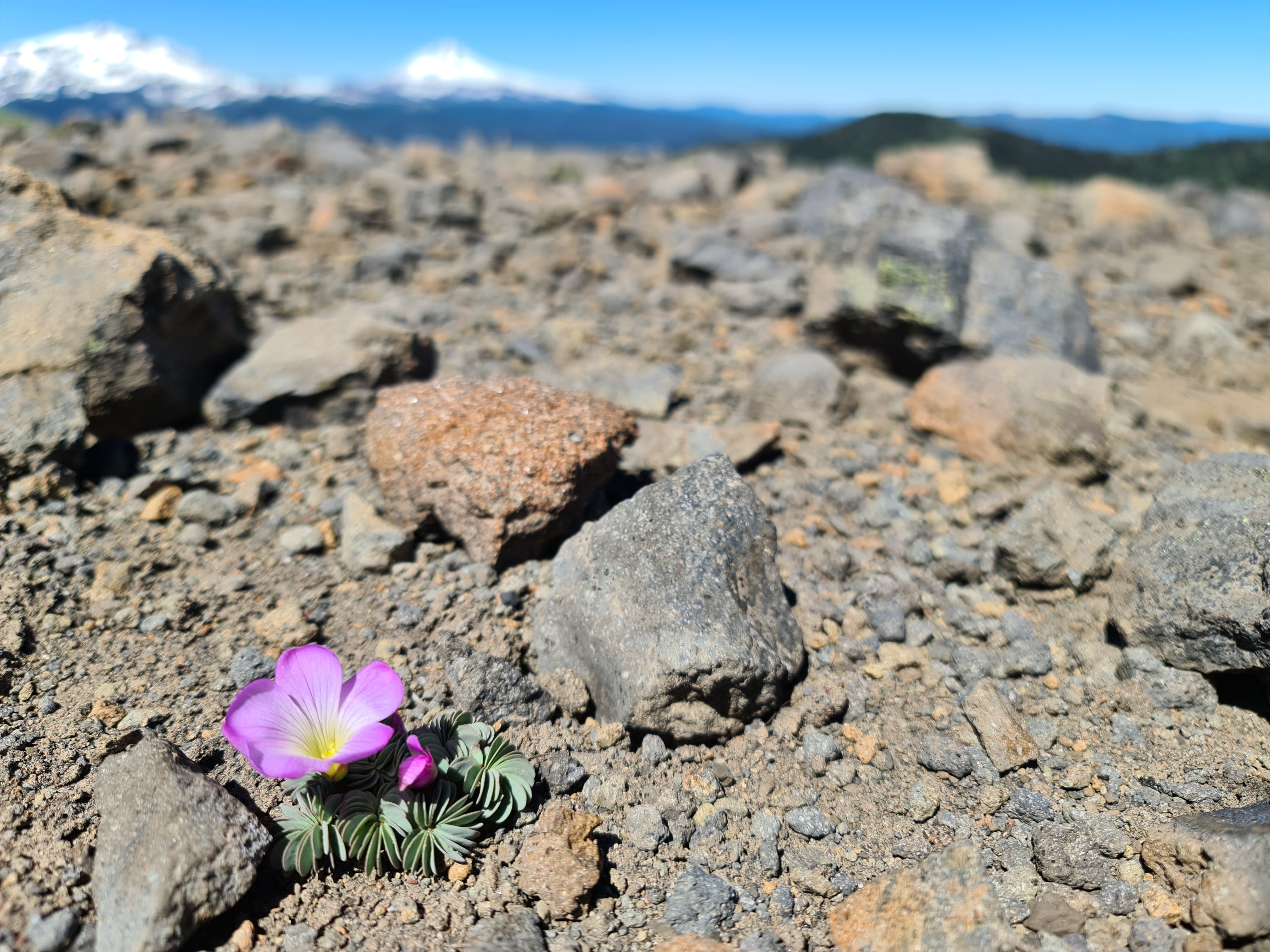
A few hundred kilometers south of Santiago de Chile, nestled in a green valley at the foot of a string of snow-clad volcanoes, lies the ‘Suisandina lodge’, a place that breaths hospitality, with all facilities a mountain ecologist needs to spark a good scientific discussion. It is there, between the chickens, lama, and friendly-but-sad-looking dogs, that our latest MIREN Steering Committee meeting took place.
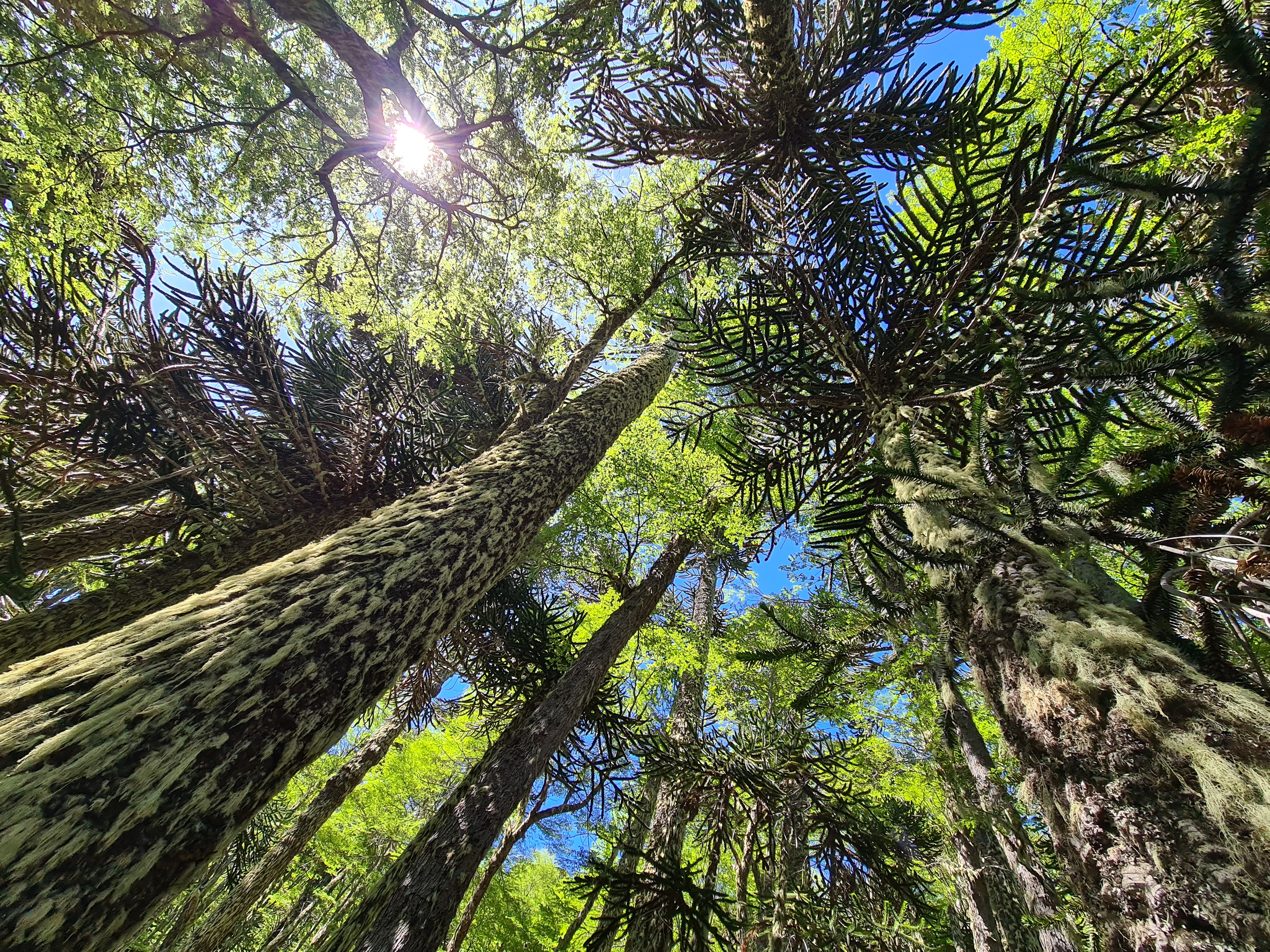
The native Araucaria and Nothofagus forests in the region are simply breathtaking
MIREN, that is the Mountain Invasion Research Network, the network in which I have been involved since my master’s thesis in 2012 (a loooooong time ago, mind you!). Since 2007 (and I thus since 2012), the network has been maintaining long-term (every 5 years) vegetation monitoring along mountain roads and trails in mountain regions across the globe, with already 17 global regions in 2018 and a whole bunch of new ones being added now in 2022.
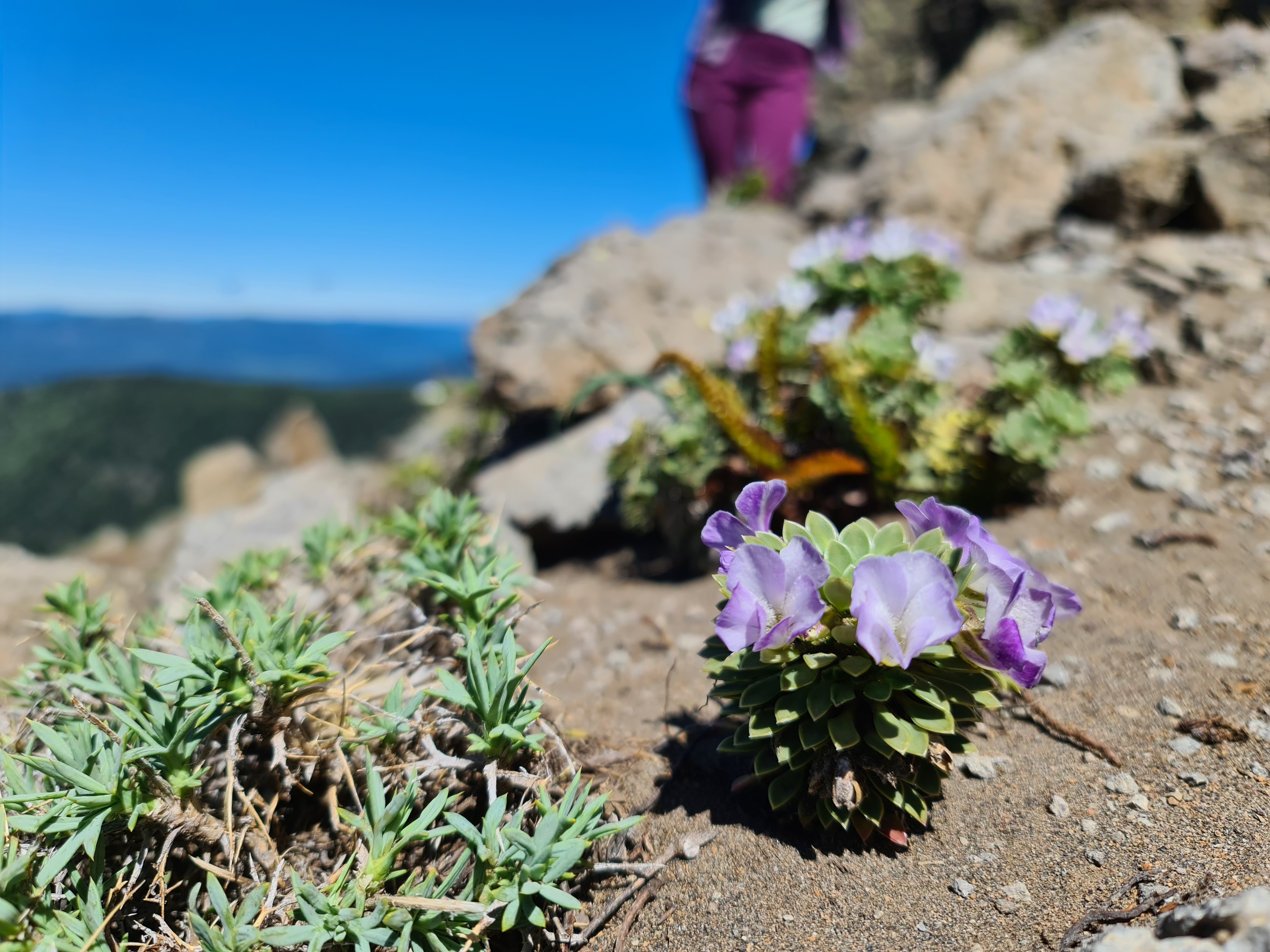
Alpine violin species flowering delicately
Such a global network needs an occasional global meeting to put all noses in the same direction. While we have all been working very hard with our survey data from our respective field sites and offices, getting a bunch of people in the same – inspiring – environment for a few days is what is needed for true momentum building.
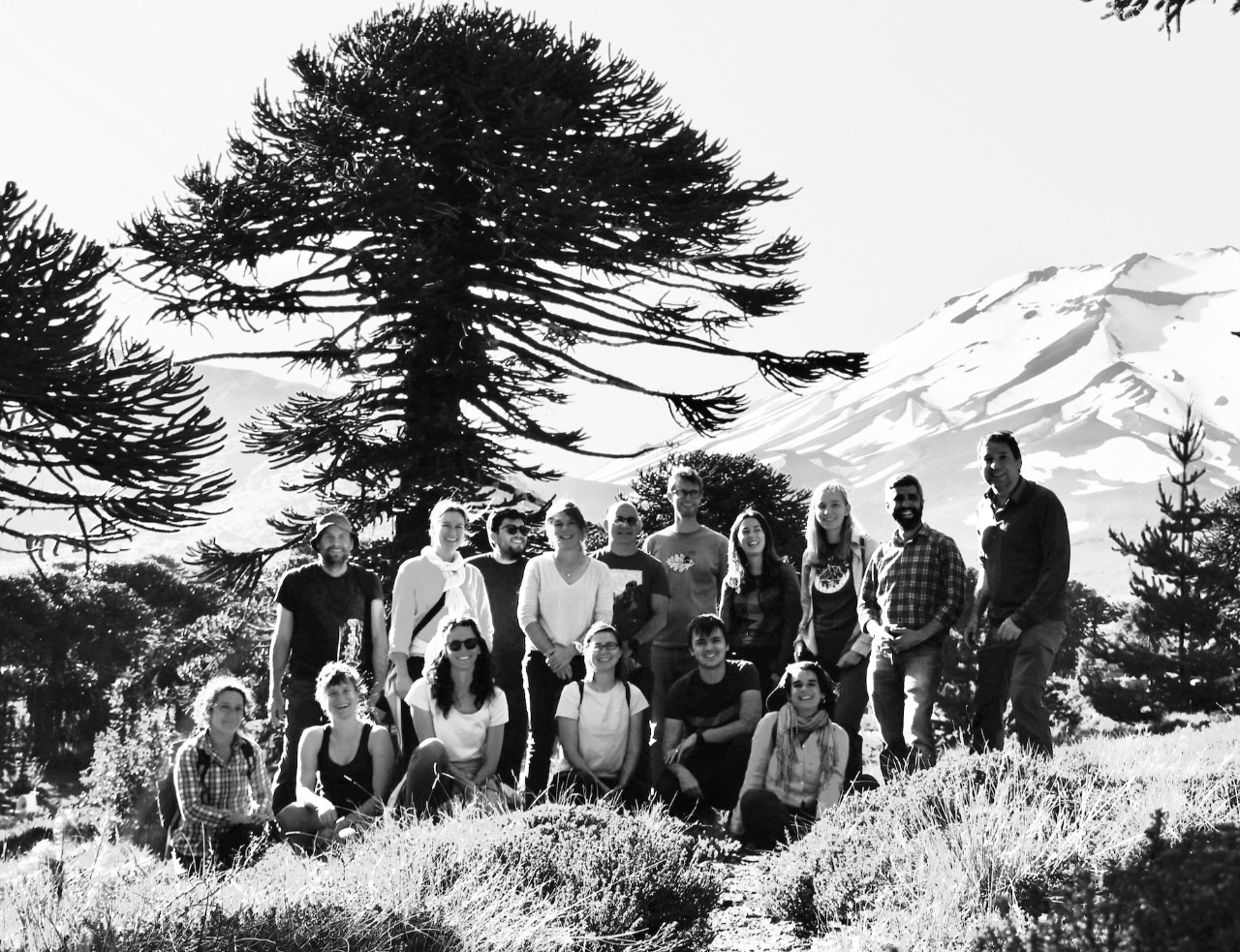
The team at this years’ MIREN meeting, in a beautiful setting of Araucaria trees and volcanoes. We brought in the MIREN Steering Committee and invited some ‘fresh blood’ to spice up discussions. Picture by Aníbal Pauchard
As you can imagine, this was thus an inspiring week! Discussions on new paper ideas, group coding sessions on long-awaited analyses, and inspirational dreaming about future plans and project ideas, we had it all, dressed with a delicious sauce of Araucaria forests and Andean volcanoes.
The main conclusion of this all was clear: there aren’t many networks out there like our precious MIREN. Global long-term vegetation monitoring in mountains is – to the best of our knowledge – limited to us and our good friends over at GLORIA, who focus on vegetation surveys on mountaintops. That we managed to maintain this monitoring effort for 15 years already despite the lack of any significant funding for the network is a wonderful achievement. Seeing the enthusiasm of existing regions to resurvey, and new regions to establish their own gradients, we are definitely still on the rise!
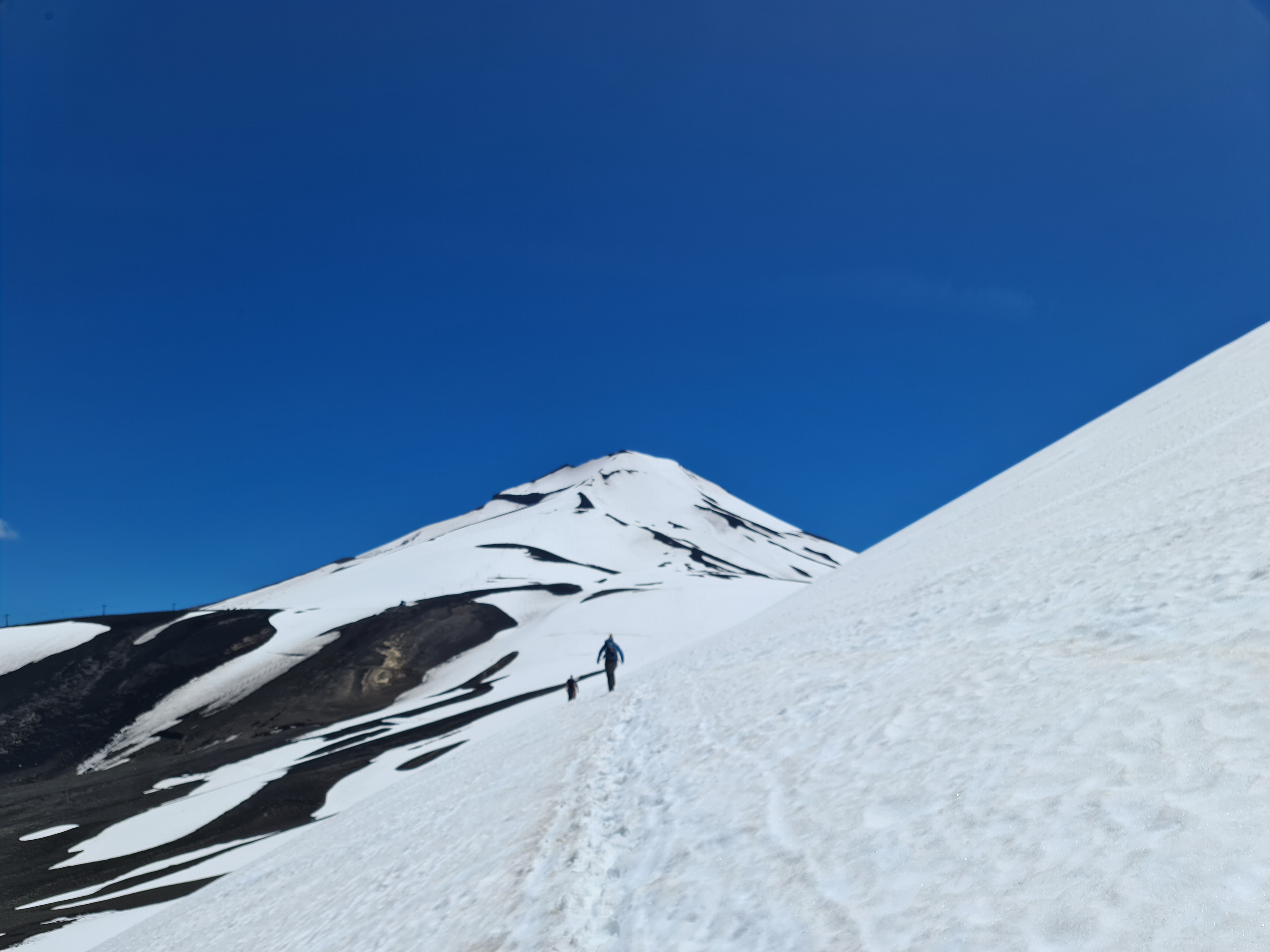
Refreshing the mind on the young slopes of a volcano
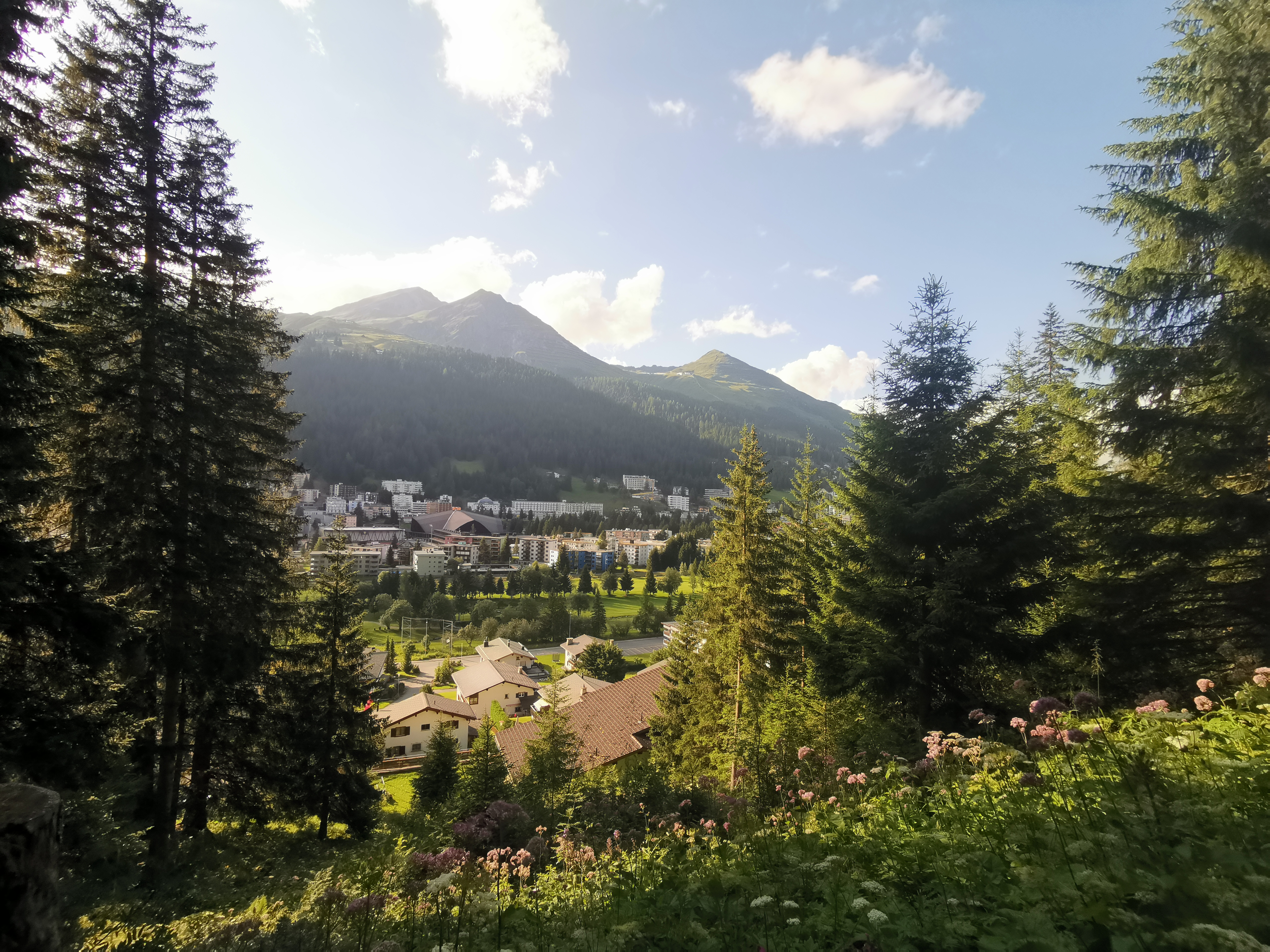
There was an almost tangible sense of urgency at the World Biodiversity Forum in Davos, last June. A string of the world’s experts on biodiversity research gathered there under a pleasant mountain sun to discuss the state of and – perhaps even more important – the way forward for our biodiversity in a world under pressure from all sides. A story significantly grimmer than the sunny landscape!
I joined the session on soil biodiversity, that subset of biodiversity hiding underneath our feet and therefore even more obscure than the plants and animals we see aboveground. The consensus of that session was cloudy, yet with clear rays of that sun still shining through: our understanding of soil biodiversity, its drivers, and functioning is rapidly increasing, although there is still a long, long way to go.
To make that long road ahead more concrete for scientists and policymakers alike, we decided to take a step back, have a good thorough discussion and write down the main issues in front of us. The result of that effort is now published in the Journal of Sustainable Agriculture and Environment, summarizing the eight most urgent frontiers in global soil biodiversity to urge the international scientific community to help tackle them.
So what are these big tasks to tackle urgently? They range from 1) data integration, building on the recent splurge of global databases and products to create better integration of soil biodiversity monitoring across the globe, over 2) the mechanistic understanding of soil biodiversity (causal inference) to 3) the creation of more accurate scenarios of soil biodiversity in an uncertain future and 4) the increased understanding of other aspects of biodiversity (traits, genetic diversity, hidden diversity)…
They include 5) the need for better global data on drivers of soil biodiversity (from microclimate to heavy metals in the soil) and 6) the call for increased global collaboration and exchange of knowledge, e.g. surrounding the precious and rare taxonomic knowledge of many obscure soil species groups.
Finally, they highlighted 7) the need for the application of our increasing knowledge in conservation and 8) improved communication of our knowledge – and needs – to public and policy to get to that final and most critical step: actually protecting that soil biodiversity before it is lost.
These eight frontiers will need to be overcome in the near future to ensure the conservation of soils for the next generations. Critical, as with the words of Franklin D. Roosevelt (1937):‘The nation that destroys its soil, destroys itself’.
Soils have unfortunately long been neglected and only now our understanding of – and enthusiasm for – them is making a comeback. Indeed, the significance of soils has now moved more and more into the scientific focus, finally changing from a niche topic with many specialized journals and conferences to a mainstream topic in ecology, earth‐system sciences, and nature conservation over the last two decades.
Let’s keep it there, where it belongs!
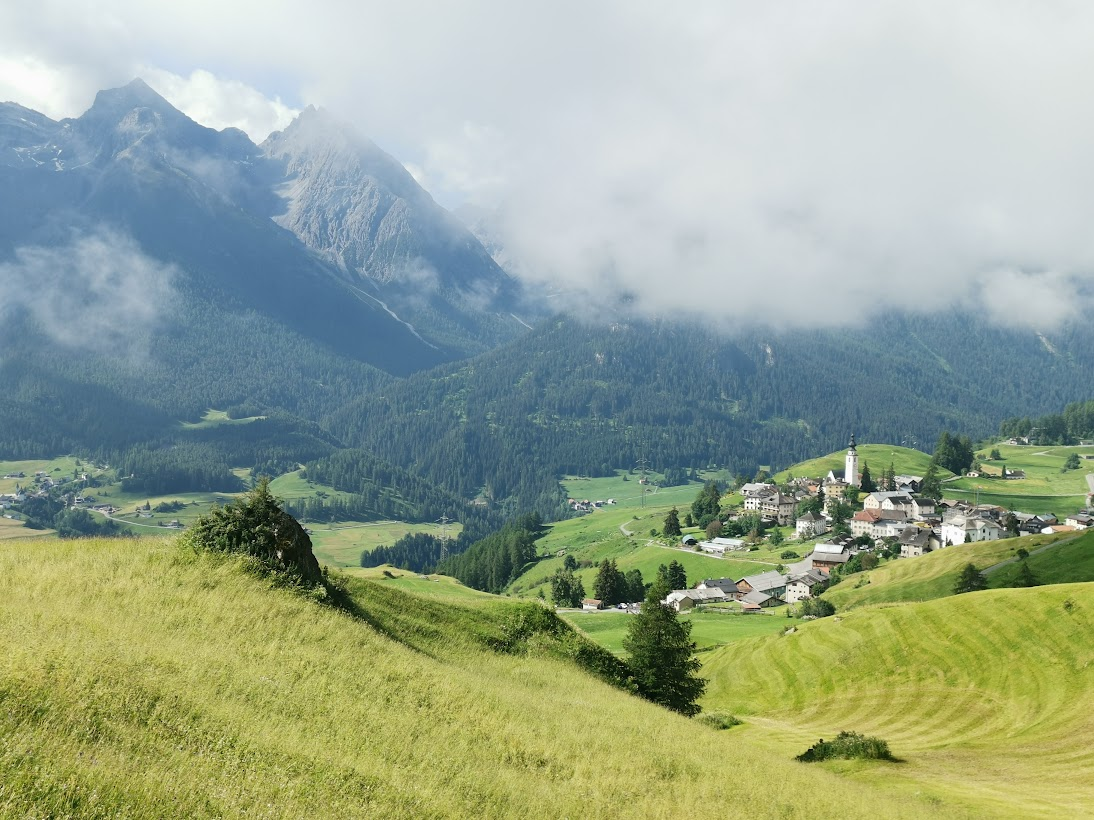
The Swiss mountains, home to a fabulous diversity of landscapes and soils
With chapter 4 now published, the now finished PhD of Charly Géron has created quite the storyline on how non-native plants are invading our urban environments!
In his first paper, we found out that alien plant species in European cities originated from warmer and drier native ranges, as they are often much better at ease in the warm and often drier climates in our cities than many native plants. The urban heat island in action!
Pauwlonia tomentosa, one of our studied tree species, at ease on a rooftop
In the second ‘Géron et al.’, we dove deeper into the performance of alien plants in the city, with the help of 6 species from the Asteraceae family, one of the families of plant species with the most global invaders. A hitherto unresolved question was how stressful the urban environments become during climate extremes such as heatwaves and droughts. Do such episodes still favor alien plant species, or set them back? The results were a tad surprising: all studied species, regardless of their climate of origin and thus their love for heat or cold, showed fewer signs of stress during a heatwave when shaded (by nature or concrete alike).
Interestingly, this positive effect of shading was found again when focussing on woody invaders, again both for species from warmer ánd from cooler origins. Interestingly, however, we did see a clear contrast in WHERE along the urban-rural gradient species were growing: those from warmer origins preferred the city, those from cooler origins the countryside. Yet despite this clear segregation, all of them were remarkably less stressed when trees or buildings provided them with shade during one of Western Europe’s recent hot and dry summers!
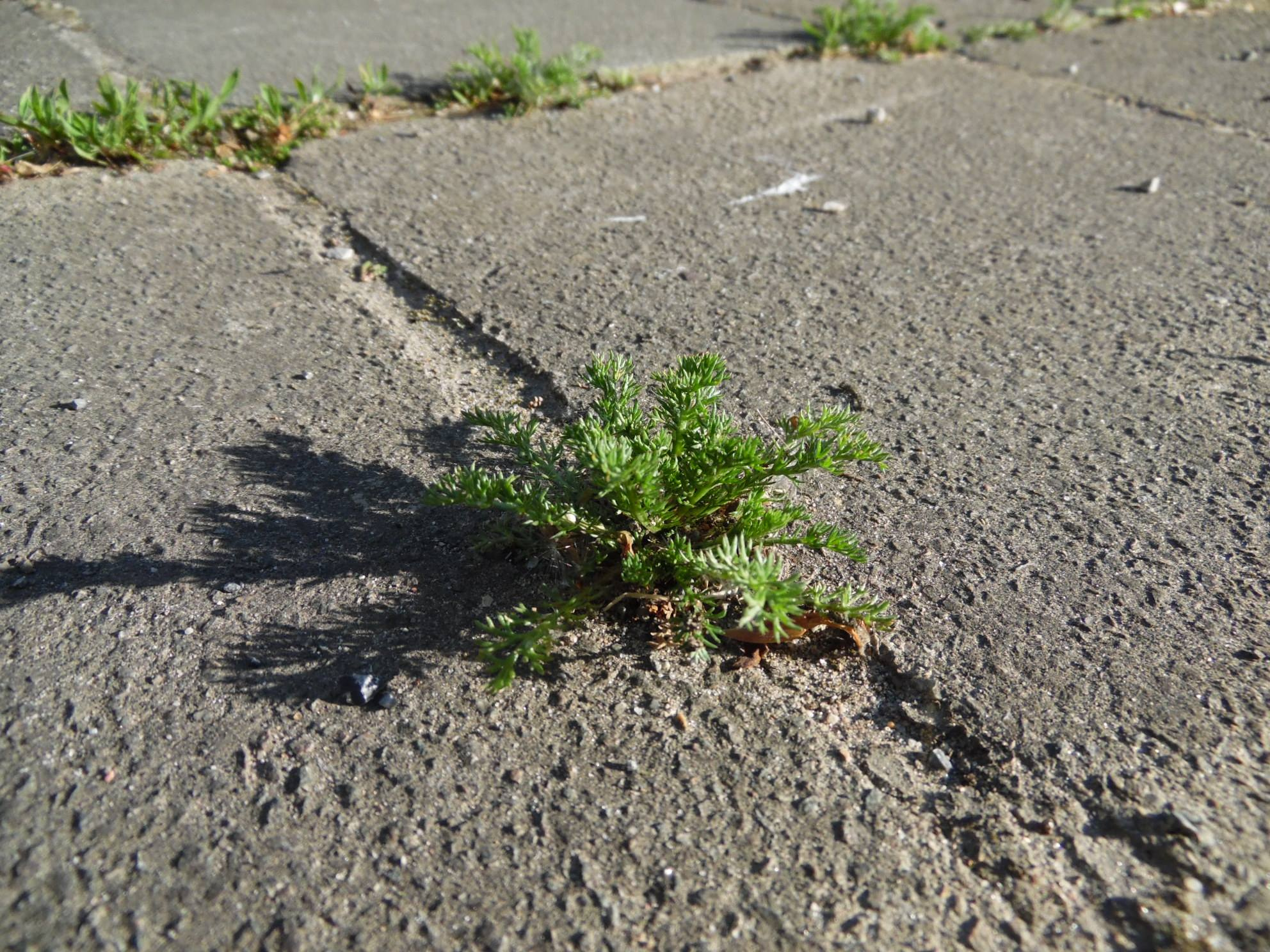
So now, there is Géron et al. number 4, and it takes us even deeper into the story. We wondered if the strong variation in environmental conditions along the urban-rural gradient (hot/dry vs. cool/moist) would result in natural selection within a species: would populations from urban environments perform better in warm and dry conditions than their nephews from the same species yet coming from cool environments? Pineapple* weed (Matricaria discoidea), a tiny Asteraceae plant, came to the rescue.
Pineapple weed in its favorite environment: cracks! (c) Charly Géron
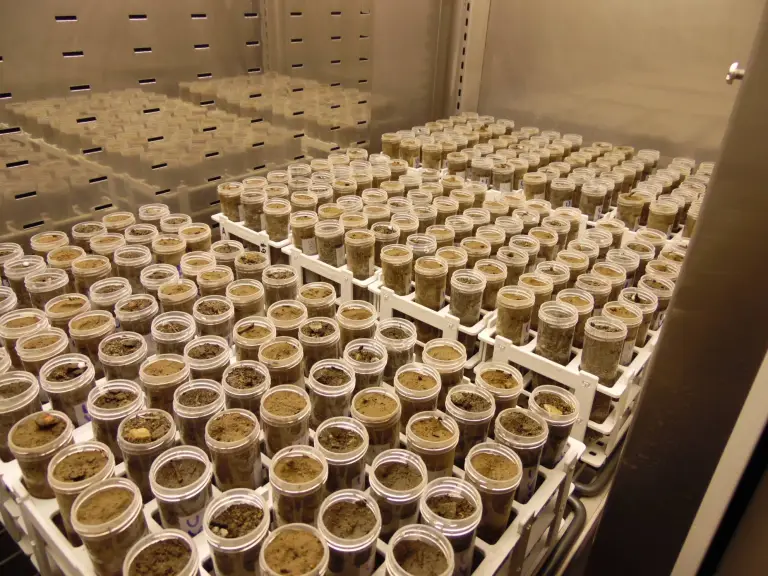
We harvested seeds from several populations from urban and rural environments across Belgium, and put them in growth chambers with either urban or rural climate and/or soils. With a smart experimental design (‘a simulated reciprocal common garden experiment’, in scientific terms), we could disentangle performance differences between the different populations and, very important, if these were due to plasticity, natural selection, or an influence of the mother plant.
Racks of tiny test tubes with seeds of pineapple weed – ready to be subjected to urban climate conditions in the growth chamber. Working with small plants is definitely convenient from the space-perspective! (c) Charly Géron
So, what did we find here? First of all: things are pretty complicated in the realm of population genetics, as tons of things interact with each other. Secondly: most of the observed variation in the growth chamber was related to the conditions of the mother plant (working through e.g. seed size), while our little pineappleweeds from the same populations also showed substantial plasticity when subjected to different environments. The ‘holy grail’ we were looking for – local adaptation, populations changing genetically as a result of the urban environment – could however not be found.
And thus: are non-native species adapting to a city life? No clear genetic adaptation could be observed in our case, at least nothing that resulted in a different performance. But that’s just our little stone on the pile of science – others might find other things in other environments, as so often in ecology.
The CurieuzeNeuzen team is one of the winners of the Annual Science Communication Prize of the Royal Flemish Academy of Belgium! The prize is awarded to researchers who are committed to creative and accessible science communication.
CurieuzeNeuzen in de Tuin was praised by the jury for the ‘clever communication campaign and innovative Internet-of-Things technology’, with which we reach a large audience, and thus ‘widely raise awareness about an important climate theme: heat and drought’.
This would of course not have been possible without our partners and enthusiastic participants: so this price is definitely for all of you!
Nice extra: we are still in the running to take home the EOS audience award: you can vote via eoswetenschap.eu.
The end has arrived: this weekend, the 3000 participants of our large-scale citizen science project sent back their ‘garden dagger’ to us, closing the lid on the data collection for the most ambitious thing I have ever undertaken.
Starting of with 50.000 enthusiastic citizens, selecting a representative set of 4400 of them, augmented with a few hundreds of agricultural fields and nature reserves, we set off on a wild measuring rollercoaster in the spring of 2021. After an extremely wet year that made us wade through an unprecedented wealth of data on how garden soils buffer extreme precipitation events, 3000 of our original citizens were found willing to join us again in 2022 for part 2. A little bit less rain, we hoped this time around, for the sake of science…
We were not disappointed, although our gardens and groundwater reserves definitely were.
We could track average soil moisture in Flemish gardens throughout the dry season of 2022, and compare it with the extremely wet summer of 2021.
Yet, even such an exciting project like this one has an end. We have (more than!) enough data to now dive deep into the science. Unexpectedly interesting data as well, with two extremely contrasting summer seasons, and some interesting cold spells in spring.
What’s funny: normally, I would tell you to now ‘stay tuned for the results’! Yet what makes this project especially exciting is that results rolled in every day, and we had plenty of opportunities to keep the participants – and the general public – on what was happening across Flanders’ gardens. Just scroll through the list of articles on De Standaard newspaper website to see (in Dutch) the many interesting insights we got to communicate so far!
August 2022, Flemish lawns have turned brown after one of the most intensely dry summers since measurements started. A sharp contrast with the wettest summer ever the year before!
Much more to come, of course, so I’ll say it anyway: stay tuned for more cool results!
So, what’s next? My main wish is that this creates a spark, a movement. We want scientists and society to join forces and start monitoring the environment together, as we did here and as is done in other large-scale community science projects (iNaturalist or eBird, to name two). We want more microclimate networks like this, to get a better view of the very local variation in weather conditions there where it matters for plants.
The good news is: that spark is clearly there. We have MANY talks ongoing with people who want to build on what we have here. So again: stay tuned for more!!!
Lake Törnetrask, Abisko Research Station, Abisko, Sweden
Little red-and-white lighthouse
Skjomen valley, northern Norway
Eriophorum vaginatum
Luscinia svecica
Summer in the Skjomen valley, northern Norway
Laktatjakka valley
Sweden
Norway
Luscinia svecica, Abisko, Sweden
Narvik, Northern Scandes, Norway
Saxifraga aizoides, Narvik, Norway
Lake Torneträsk
Narvik, Norway
Lake Torneträsk, Abisko, Sweden
Common heather
Lake Torneträsk, Abisko, Sweden
Abisko, Sweden
Skjomen valley, northern Norway
Lake Torneträsk, Abisko, Sweden
Angelica archangelica along mountain road in the northern Scandes, Norway
Oenanthe oenanthe
Norway, Narvik
Hair’s tail cotton grass
Hallerbos 2017
Young bluebell (Hyacinthoides non-scripta) surrounded by flowers of yellow archangel (Lamium galeobdolon)
The common bluebell (Hyacinthoides non-scripta), the signature flower of the Hallerbos
Single bluebell flower surviving on a wetter spot, as indicated by the field of wild garlic (Allium ursinum)
A really wet patch of forest, with giant horsetail (Equisetum telmateia) in a field of wild garlic (Allium ursinum)
Wild garlic (Allium ursinum) in the Hallerbos flowers a bit later than the bluebells, yet this one was already in full bloom
A bumblebee visiting yellow archangel (Lamium galeobdolon)
A bumblebee visiting yellow archangel (Lamium galeobdolon)
Wild garlic (Allium ursinum)
Wild garlic (Allium ursinum)
Weirdly beautiful, the inflorescence of pendulous sedge (Carex pendula), typical for the wettest spots in the forest
Weirdly beautiful, the inflorescence of pendulous sedge (Carex pendula), typical for the wettest spots in the forest
A little stream in the Hallerbos, surrounded by endless fields of wild garlic (Allium ursinum)
The herb-paris (Paris quadrifolia), less common in the forest
Wild garlic (Allium ursinum)
Bluebells (Hyacinthoides non-scripta)
Weirdly beautiful, the inflorescence of pendulous sedge (Carex pendula), typical for the wettest spots in the forest
Another one from the wet plots: large bitter-cress (Cardamine amara)
Another one from the wet plots: large bitter-cress (Cardamine amara)
Young beech leaves, as soon as they are fully grown, spring in the understory is over
A beech forest without understory, most likely too dry and too acid for any survivors
A young beech seedling (Fagus sylvatica), looking nothing like a beech, yet everything like a tiny dancer
Young beech seedling (Fagus sylvatica)
Bluebells (Hyacinthoides non-scripta)
Bluebells (Hyacinthoides non-scripta)
Bluebells (Hyacinthoides non-scripta)
Mountain melick (Melica nutans), a grass in the most amazing green
Bluebells (Hyacinthoides non-scripta) in a rare patch of mountain melick (Melica nutans), a grass in the most amazing green
Bluebells (Hyacinthoides non-scripta)
Bluebells (Hyacinthoides non-scripta)
Montpellier 2017
The entrance to the cathedral of Montpellier
The cathedral of Montpellier
The entrance to the cathedral of Montpellier
The cathedral of Montpellier
Narcissus poetics
The cathedral of Montpellier
The botanical garden of Montpellier
The botanical garden of Montpellier
The botanical garden of Montpellier
Brackish Camargue vegetation
Brackish Camargue vegetation
Brackish Camargue vegetation
A typical lagune
Brackish Camargue vegetation
Camargue horses
Camargue horses
Camargue horses
Brackish Camargue vegetation
Brackish Camargue vegetation
Brackish Camargue vegetation
Camargue horses
Brackish Camargue vegetation
Little egret in the evening sun
Flamingo’s in the evening sun
A typical lagune
Dandelion fuzz
Grass lily
Grass lily
Dandelion fuzz
Veronica in a sea of poplar fluff
Euphorbia in a sea of poplar fluff
Poplar
Gare du Midi, Brussels
Gare du Midi, Brussels
Gare du Midi, Brussels
Gare du Midi, Brussels
Sweden autumn 2016
Autumn in Abisko
Yellow leaves of mountain birch, with lake Torneträsk in the background.
Lapporten, the gate to Lapland, in Abisko
Rain blowing over the Abisko National Park
The colours of the north: red fireweed and yellow mountain birches, with lake Torneträsk on the background
Yellow leaves of mountain birch, with lake Torneträsk in the background.
Rain on the background, the ski lift in Abisko on the foreground
The steep slope of mount Nuolja on a dramatic looking morning
The beautiful colors of lake Torneträsk in Abisko
A little stream on top of the mountain, with a view on Lapporten, the gate to Lapland
Well, that is a beautiful table with a nice view on lake Torneträsk in Abisko
Our little experiment on top of the mountain in Abisko, with a view on Lapporten
Autumn in Abisko is extremely colorfull
The ski lift with a view on Abisko National Park and Lapporten
Hiking dowhill towards lake Torneträsk
This green is greener than the greenest green: moss on top of mount Nuolja
Well, that is a beautiful table with a nice view on lake Torneträsk in Abisko
The ski lift with a view on Abisko National Park and Lapporten
The ski lift with a view on Abisko National Park and Lapporten
The most beautiful hiking trail of the world: Nuolja in Abisko
Angelica archangelica, often the biggest plant of the Arctic
The most beautiful hiking trail of the world: Nuolja in Abisko
Cirsium helenioides, the melancholy thistle
Hiking down mount Nuolja
The steep slope of mount Nuolja on a dramatic looking morning
The colours of the north: red fireweed and yellow mountain birches, with lake Torneträsk on the background
The prettiest yellow and blue: autumn in Abisko
Fireweed, Epilobium angustifolium
Campanula or bellflower, I think ‘uniflora’
Vaccinium myrtillus
Cornus suecica, the prettiest red of the world
Hieracium alpinum, alpine hawkweed
Carex atrata, one of my favourite sedges
Alpine clubmoss, Diphasiastrum alpinum
Agrostis capillaris, bentgrass
Common yarrow (Achillea millefolium)
Anthoxanthum odoratum, sweet vernal grass, fully grown and mature
Snow scooter trail
Our plot in the mids of a field of horsetails (Equisetum pratense)
Equisetum pratense
Cliff overlooking the valley with the road to Norway
Seedling of Taraxacum officinale, the dandelion, after two years of growing in bad conditions
Poa alpina, the alpine meadow-grass, with its viviparous seeds
Massive flowerhead of Angelica archangelica
Angelica archangelica
Blueberry (Vaccinium myrtillus) in autumn
A lowland marsh in Abisko in autumn
Installing the plots of our trail observations on top of mount Nuolja
Installing the plots of our trail observations on top of mount Nuolja
Tanacetum vulgare (Tansy), non-native for the high north
Autumn forest down in the valley
The valley of Nuolja to Björkliden
Summer on the Nuolja-side
A full rainbow behind mount Nuolja in Abisko
It’s raining in the west, clouds trapped behind the mountains
A strong wind blowing rain from behind the mountains to our side
A strong wind blowing rain from behind the mountains to our side
Betula nana, the dwarf birch, mini autumn forest
Betula nana, the dwarf birch, mini autumn forest
The valley of Björkliden in autumn
The valley of Björkliden in autumn
The valley of Björkliden in autumn
The valley of Björkliden in autumn
Sweden spring 2016
The valley of the lakes
Trifolium pratense
Trifolium repens
A rainy hike
Oxyria digyna
Although the alpine zone has been harder for invasives to access than most places, human structures like trails are often an easy gateway for the invaders to get up there. Picture from Abisko, Swedish Lapland.
Cornus suecica
Rubus arcticus
Silene acaulis
Ranunculus glacialis
Overlooking the valley of Laktajakka
Western European species like the red clover (Trifolium pratense) here are often listed as non-native species in mountain regions.
Silene suecica
Ranunculus glacialis
Bartsia alpina
Melting snowpatch on a lake
Dryas octopetala
Eriophorum vaginatum
Salix reticulata
Amiens
Sunny but cold, the Quai Bélu
The museum behind the beautiful gates
Cathedral at night
View from my office window
Sun rising above the water
Almost cold enough for ice-skating
Winter sun on the Place du Don
Colourful mirror
View from my office window
Frozen to the bone
Cathedral seen from the frozen Parc Saint-Pierre
Frozen mirror
Cathedral at night
Cathedral with a glimpse of spring
Cathedral at night
The southern side
Maria without a shirt
House on the square before the cathedral
Le Club d’Aviron in winter weather
Amiens is filled with cute little houses
Cold!
Just outside of Amiens
Nice architectural curve
Sunny but cold, the Quai Bélu
Gargoyle planning to eat the cathedral
Enjoying silence and the morning sun
Cathedral at night
Sweden autumn 2015
Lichen
Sweden summer 2015
View on the 1000 meter plots
Doing research on a cold Arctic morning
Plots flooded by the snowmelt
Flooded by the snowmelt
Meltwater river, racing down the mountain
After a hike, even the most basic house looks cosy. Little hut in the mountains, open for everybody
Snowbridge, maybe don’t cross…
Snowbridge
View from a cliff
Silene acaulis or cushion pink, cutest plant of the Arctic
Two seasons in one image
Steep slope
Hiking down
Narvik Kirche, church of the subarctic
Narvik Kirche
Reindeer on top of the mountain
Narvik Kirche
Summer at the church
Summer flowers
Massive waterfall
Young willow catkins
View from Narvik’s hospital, with lilac flowers
Building a bridge over the fjord will gain al drivers at least an hour
Norwegian fjord
Posing with the water, getting soaked
Minimalistic mountains
Insect investigating our reindeer antler
Catching mosquitoes with our license plate, harvest of the year!
Posing with the plot
Fieldwork on the most beautiful spot of the world
Fieldwork on the most beautiful spot of the world
Summer bridge – still next to the sadly impassable river
Rhinanthus flower in the mountains
Plateau in the valley, beautiful brown
Experimental view from my favourite plot
Salix catkins
Extremely old Betula tree
Waterfall from a cliff
Buttercup is the earliest in spring, here
Rocks!
Alpine views
Views!
Fieldwork
Jumping over rivers
Plot
Golden plover
Angry lemming
Green, the whole north is green!
Snow, so much snow left!
Minimalistic mountain moments
Fieldwork
The research center
Red clover – focal invader
Look at this tiny cute snail!
Massive floods of melting water
Bartsia alpina
Hooray, a toilet!
Dryas octopetala
Lowest elevation plots
Butterball!
That’s a lot of water
Midnight sun is the best
At the lakeside
Beautiful Bistorta vivipara
Don’t fall in the water
Midnight sun
Wild river
Art – made by ages of wild rivers
Baby firework for America’s independence day
Midnight sun at the lake
The Abisko canyon was wilder than ever
That’s a crazy amount of water!
The Abisko canyon was wilder than ever
The Abisko canyon was wilder than ever
Black and white
Stone-man overlooking Abisko
Nothing as soft as a willow catkin
Label and soil temperature sensor attached
I’d drive to the top every day
Reflections
Rocks and clouds
Brave little birch
Brewing our camping poison
Basic camping stuff
Camping in Norway
Home-made temperature houses
Roadside research at its best
Norway is crazy
Horsetail is so funny
Little creek in magical forest
Birches, birches everywhere
Beautiful rock, a gift from the river
Another roadside fellow
Lichen
Ready to rock the summer
Collecting mosses
That’s a crazy old lichen
Tiny tiny piny trees, but old, so old!
Ready to jump into the fjord?
Ready to jump into the fjord?
That’s a spiky stone!
Views on Norwegian fjords
Silene in the mountains
Cute little orchid
Skua
Attacking skua, mind your heads!
Watch out for the attack of the fierce skua!
Black snail
New plot!
Still a lot of snow to melt, but this spot was free for a new plot
Reindeer are better than people
Two seasons in one picture
Let’s see what is happening to the balance in mountains! Is this a starting avalanche, or will it last a bit longer?
Cute little hut
Climbing mountains by car
Softest moss in history
Drosera in the marsh
Hiking in no-man’s land
The clouds are coming
Abisko valley
‘Butterball’
Fieldwork in the tundra
Abisko valley
Little plot
Clouds and sun and mountains
Making soup on a campfire with a view
Little creek on high elevations
Skua on the look-out
Melting snow in a river
Rhodiola rosea and the Törnetrask lake
Beginning of spring
Flooded plots, melting snow, impassible wetness
Ferns and horsetails
Chile 2015
Trips to the field sites were sometimes a real adventure, especially right after snowmelt
Lunch made by our local colleague, with funny bread (tasty as well!)








 The 3D lab