To spring or not to spring

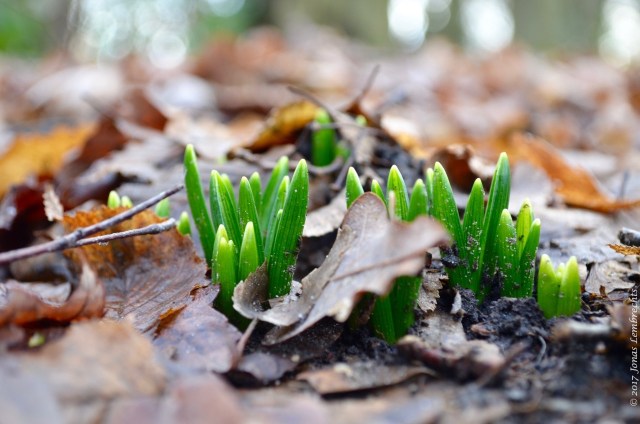
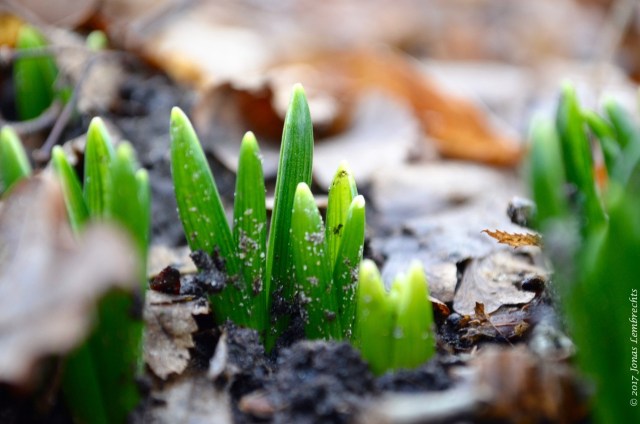
Climate and weather might be more unpredictable than ever, yet there is one little thing I can always count on: a small patch of crocuses close to the office, that starts to pierce the often frozen soil already in January.

to-spring-or-not-to-spring-1

It would be interesting to mark the date of their first appearance every year, and see if they follow the global trend: spring flowers emerging earlier and earlier. They have been observed to arrive up to 4 days faster for every 1 °C warmer in spring, at least according to an American study from 2013.

to-spring-or-not-to-spring-2

They will have to show their best skills to cope with extreme climate though, because winter is far but over in Belgium. I will keep an eye on them, see if they manage to conquer a frost event. But my hopes are high, because early spring flowers are used to this yearly gamble.

Reference

Ellwood ER, Temple SA, Primack RB, Bradley NL, Davis CC (2013) Record-Breaking Early Flowering in the Eastern United States. PLoS ONE 8(1): e53788. doi:10.1371/journal.pone.0053788

Posted in Belgium, General | Tagged , , , , , , , , , , , | 3 Comments

On the horizon

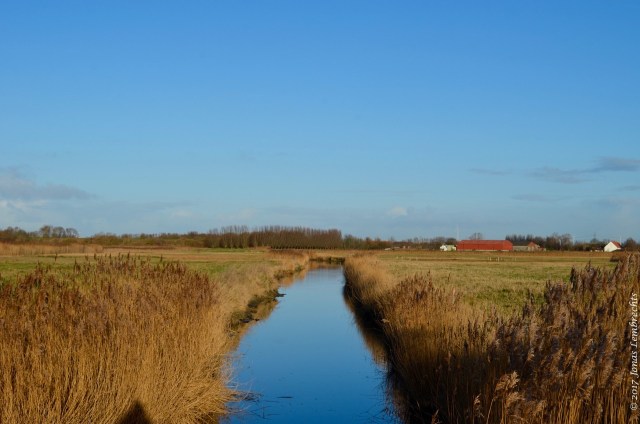
uitkerkse-polder-2

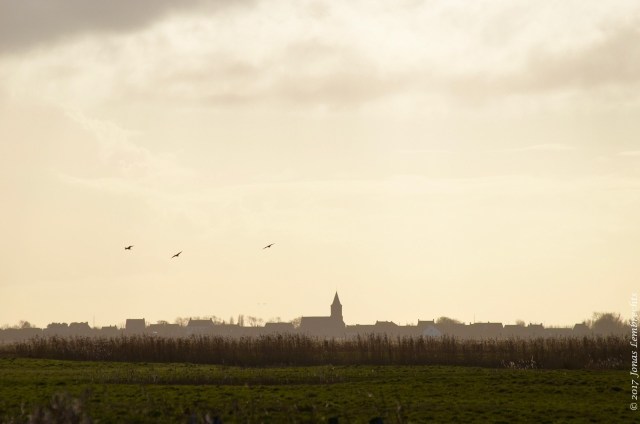
What’s there on the horizon?

With the start of 2017, I have to start looking at what is on the horizon: the long run to the finish of this PhD.

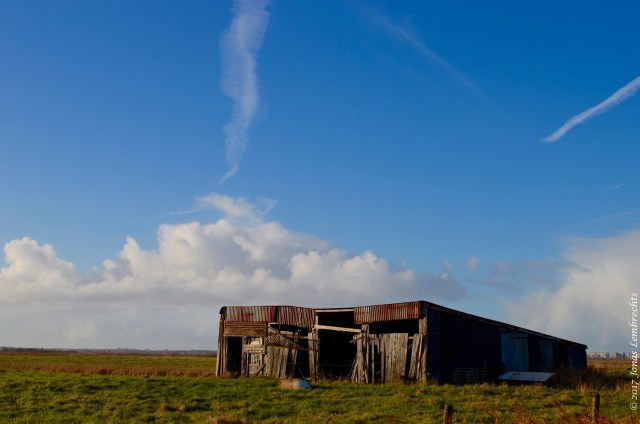
uitkerkse-polder-27

The end is still far away in the future, yet it will be here soon enough. From now on, everything I do should be focussed on what comes afterwards.

uitkerkse-polder-20

With that horizon rapidly coming closer and closer, all I should now be doing is writing, writing, writing. The first part of the PhD brought lots of data, the end of the PhD can now benefit from that.

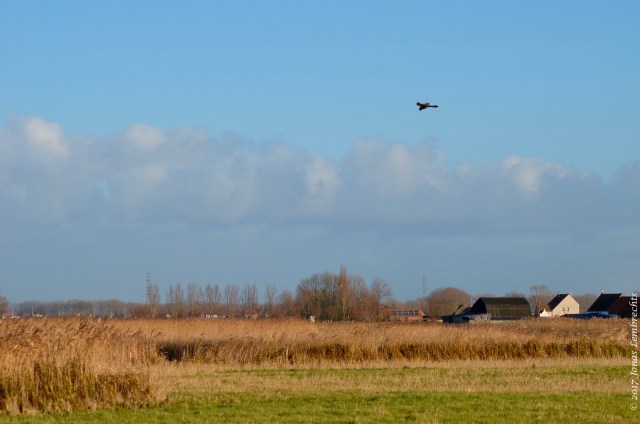
uitkerkse-polder-15

Luckily I love to write. Bringing the story, that is what the work has always been about.

uitkerkse-polder-11

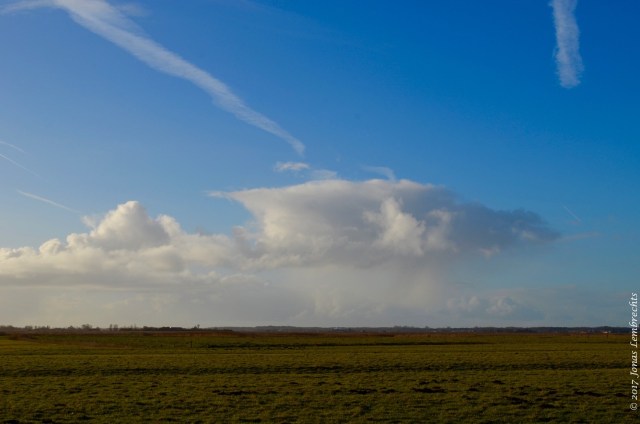
So no worries about that upcoming horizon yet. There is no rainclouds on the horizon yet.

uitkerkse-polder-18

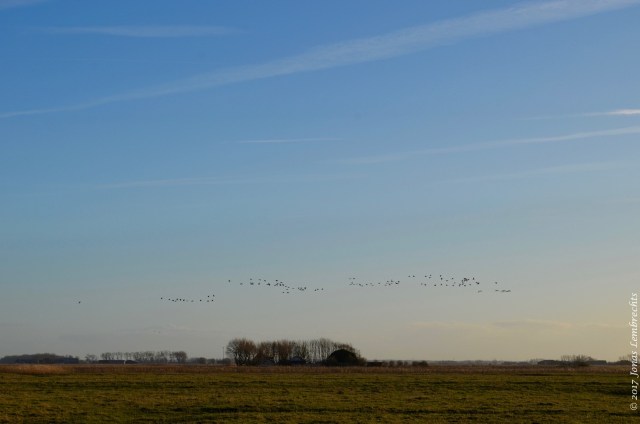
Rainclouds in the distance?

Pictures from a winter day in the Uitkerkse Polder, close the Belgian coast

Posted in Belgium | Tagged , , , , , , , , , , | 1 Comment

From Alaska to the Alps

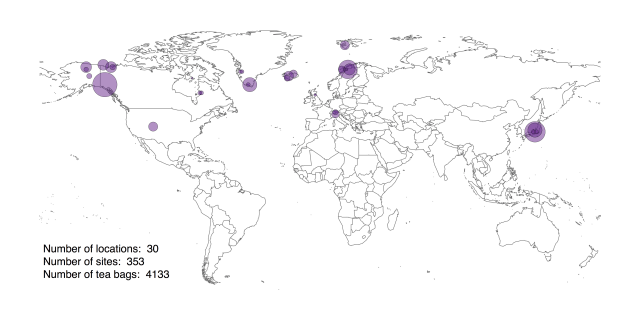
Some very good news from our colleagues working on the Tundra Tea Bag experiment! The nice big blob on their map in Sweden/Norway, that’s us. Very much looking forward to the global results.

teamshrub's avatartundra teabag experiment

The year is ending and the data is in…and there is a lot of it!

Thanks to the great efforts of all those working on the tundra teabag experiment we have over 4,000 tea bag decomposition samples, spanning more than 350 sites around the tundra. And there’s still more to come.

teamap2 Teabag sites capture differences in decomposition right across the tundra biome

With 2017 just around the corner the analysis has now begun, testing three questions:

  1. Does environmental variation do a better job of explaining decomposition than the type of tea? Or does decomposition rate just depend on what is decomposing?
  2. How does decomposition of tea change over time and between the seasons. Arctic winters are cold, dark and long; does that mean decomposition only happens in the summer?
  3. What aspects of the environment most affect decomposition rate? Is it temperature, moisture, surrounding vegetation, or something else?

With such a great…

View original post 11 more words

Posted in General | Leave a comment

An overview – part 2

In these closing posts of 2016, I want to give you a quick (and slightly biased) overview of everything what happened this year, based on the ten most appreciated posts on this blog for this year. This is part two.

While the first half of 2016 had had a big focus on fieldwork, learning skills and optimising plans, the second half was mostly dedicated to the wrapping up of stories. Publishing. Outreach. Telling a story. We are learning important things about how our world functions in this project, and we want these things to be known.

Here are my 5 highlights for the second half of the year:

19161665240_dfed5d9677_o

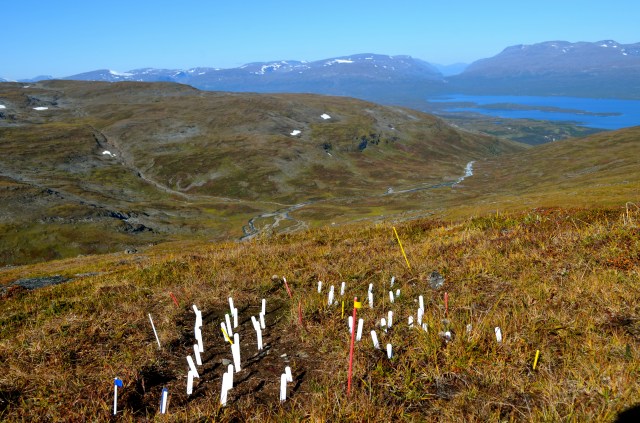
The little hut in the forest: This summer, as every summer since 2012, we went to the high north to gather more data. Our exotic destination: Lapland, the subarctic part of Scandinavia, where summers are short, yet with plenty of sunshine. Thanks to great collaborations and a good research design, less than three weeks of adventure every year results in enough data to keep us busy. A blessing!

Closing chapter - 2

Closing chapters: When you finally read the output of your work in the newspapers, it feels like you are closing a chapter. Discovering something, and getting the opportunity to tell the world about it, that is what science is all about! Telling stories; stories built on facts, yet exciting enough to enchant the reader.

Swedish subarctic - 164

Cornus suecica

The modern botanist: it was 2016, so even ecologists need to keep up with the times. The digital age is undeniably upon us, and we should take advantage of it! 2016 thus brought the increased implementation of modern technology in our fieldwork: tablets for data input in the field, digital pictures for plot recognition, a picture-recognition app to aid in plant identification and an app with which anybody (yes anybody!) can help us collecting data. Go digital, or go home!

Trail

How hikers can help science: For that specific citizen science project, we make use of the app iNaturalist – or your gps – to record a selection of plant species every time you see them along a mountain trail anywhere in the world. This surprisingly easy design will help us getting global information on how humans move species along mountain trails, without the need for us to travel everywhere ourselves. You are warmly welcomed to help us next time you are in the mountains!

19774617119_d81529a6a0_o

Where we disturb nature, the invaders quickly follow: How better to finish this series on the highlights of 2016 than with our last paper: an intercontinental experimental collaboration between Europe and South-America, that recently got published in the Proceedings of the National Academy of Science of the USA. An experiment that answered many of the questions we had about plant invasion in the mountains, yet created enough new ones to keep us busy in the next year. So now on to the next one!

Hoping to see you all here again in 2017, with more exciting science. As for now, thanks for reading.

Posted in General | Tagged , , , , , , , , , | 2 Comments

An overview

In these closing posts of 2016, I want to give you a quick (and slightly biased) overview of everything what happened this year, based on the ten most appreciated posts on this blog. This is part one.

2016 has been an important year for the science here On Top of the World. The year brought a high in- and output, with sessions of highly successfull fieldwork, international collaborations, a few scientific publications, and outreach to the larger public as a cherry on the cake. At 3 years and 3 months in the project, the efforts are finally truly being rewarded. Here are 5 of the highlights:
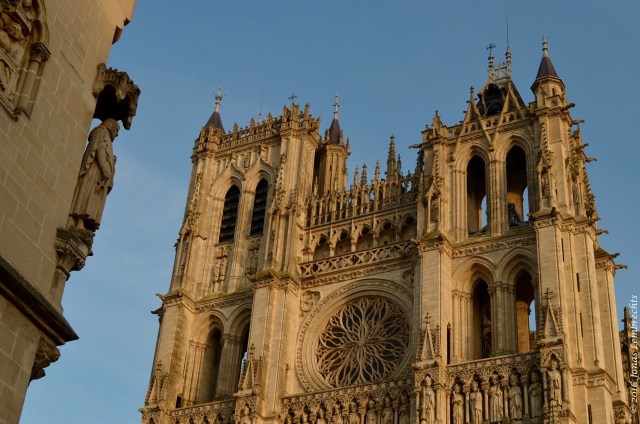
The cathedral of Amiens

The cathedral of Amiens, France

The princess of the north: January started bright, with a visit to colleagues in Amiens, France. The visit lasted no longer than a week, yet sometimes even a few hours in the presence of someone with more experience results in a leap forward with your own work. Statistical tricks and climatic models, a lot of what I am still doing now had its origin there in Amiens.
Fot - 18

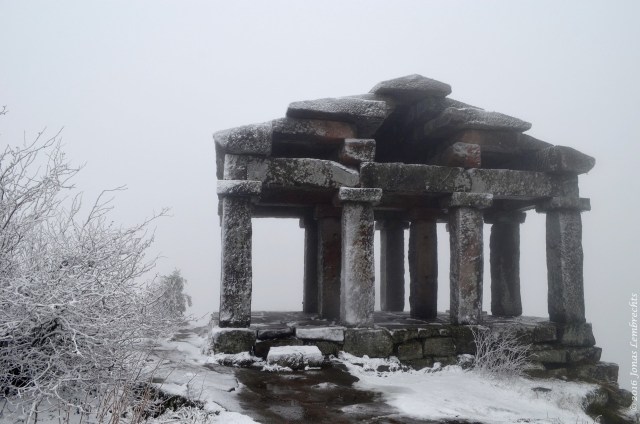
Temple on top of Le Grand Donon, a peak in northern France

Lessons from history: Topic-wise, the whole year has been about disturbance. Humans intervening with nature, changing its balance and the cascade of effects that results from such disturbance. This disturbance has been around as long as humans have, as shown by the temple on top of Le Grand Donon in this picture. Yet recent increases in this disturbance, together with an inevitable climate change, results in impressive changes all over our natural world. We want to find out what will do to the plants.
Litter Soroe 02

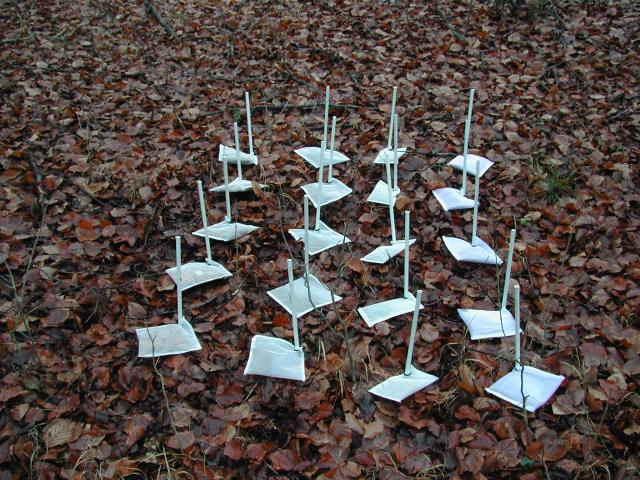
Experimental litter in bags in beech forest in Denmark

On how leaves decompose: While we originally focussed on aboveground processes within this project, I got more and more convinced this year that a big chunk of the important stuff actually happens in the soil below our feet. We are digging deeper and deeper, looking at how fast the soil breaks down plant material, how fungi in the soil affect where plants can be found and if the climate at soil level is actually much more relevant for plants than what we usually use.
19150984736_b5329369ab_o

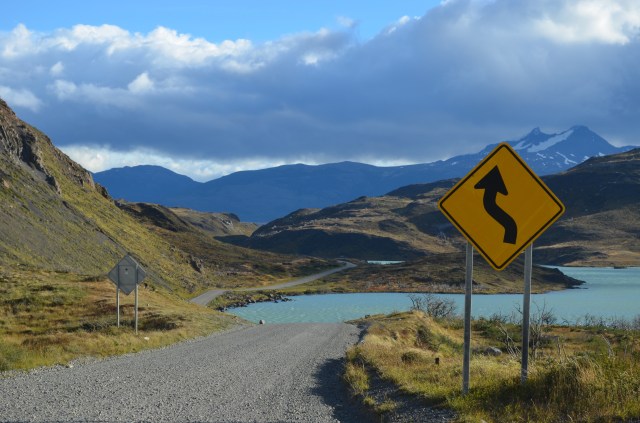
Gravel road through Torres del Paine National Park in the Chilean Andes

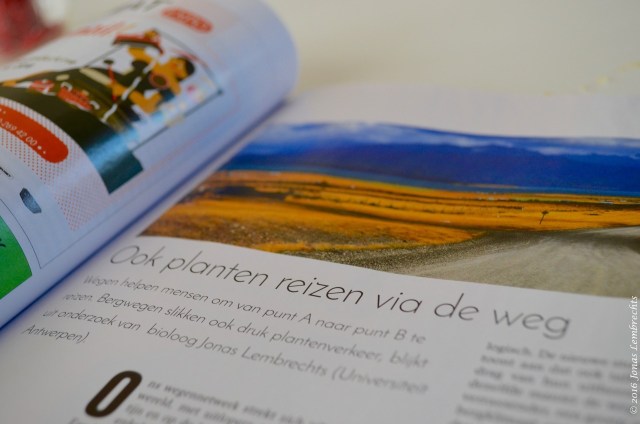
Plant traffic along mountain roads: With MIREN, the Mountain Invasion Research Network, we look at mountain roads and how they affect plant species distributions. They facilitate plant invasions, we knew that, but it turns out that roads are also busy with native species travelling both up and down the mountains. These travels in both directions were shown in our paper in Ecography.
Hallerbos - 8

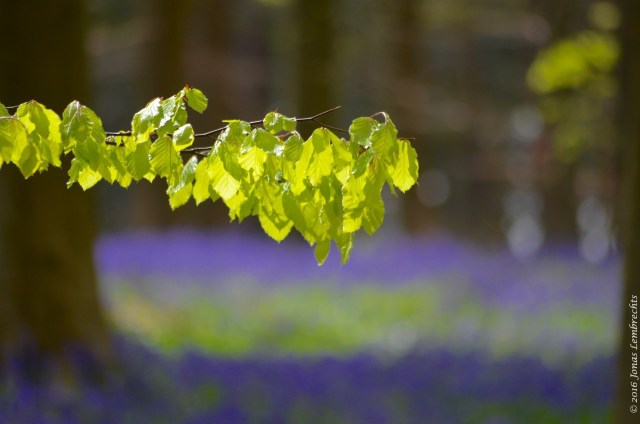
Young beech leaves with a bluebell field in the background

Beech and bluebell: Research also involves teaching the next generation of scientists, one of the most beautiful parts of the job. My favourite way of doing that is by showing the students the magic of the Hallerbos, the mythical and world-famous bluebell-forest close to Brussels. Every spring, we send them on an exploratory day through the forest to learn about the interactions between soil and vegetation and how to learn a lot about a system by just looking at the plant species.

More soon on the peaks of 2016 on top of the world!

Posted in General | Tagged , , , , , , , , , , | 1 Comment

Wave out the year

Take a step back. Wave out the year. Cherish your treasures. Take your time for it…

20218556306_18def8e3e9_o

These buzzy burrs (Acaena magellanica) put on some festive hats to celebrate the end of the year with you. And admit, the name buzzy burr is already festive on its own.

Soon, there will be a new year, with plenty of new possibilities.

But for now, it’s Christmas! Now we can just be happy with what the previous year has brought. And for me, that was lots to be happy about (the summary here)!


Posted in General | Tagged , , , , , , , , , | 1 Comment