Humans x environment

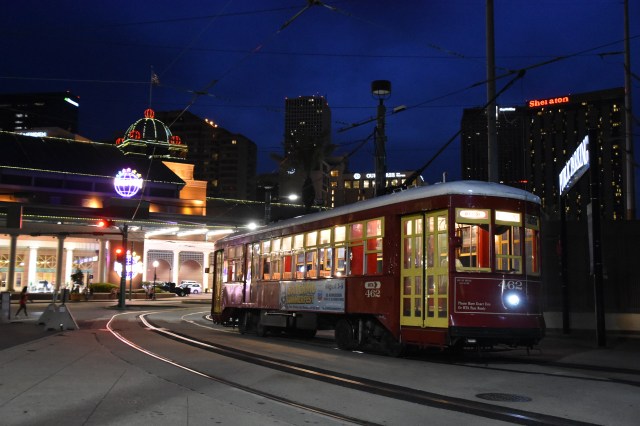
I am currently in New Orleans, Louisiana, on the shores of the Mississippi river, at a gathering of several thousands of ecologists: the annual meeting of the Ecological Society of America (ESA).
DSC_6866

The city of New Orleans by night

This year’s theme of the conference is an especially fascinating one, and closely intertwined with the recent history of this beautiful city: extreme events, ecosystem resilience and human well-being. More specifically, these thousands of ecologists ask the question how the world bounces back when it gets an uppercut, how humans affect this ability to bounce back, and how this in return affects us humans.

Human and natural structures in New Orleans

Critical questions, and dramatically illustrated by the aftermath of hurricane Katrina, a true exemple of such an extreme event that devastated the city of New Orleans more than a decade ago. A lot of bouncing back happened since that day, but it took an extraordinary amount of time and resources, and it made apparent that when people alter the environment too much, resilience drops.
DSC_7058

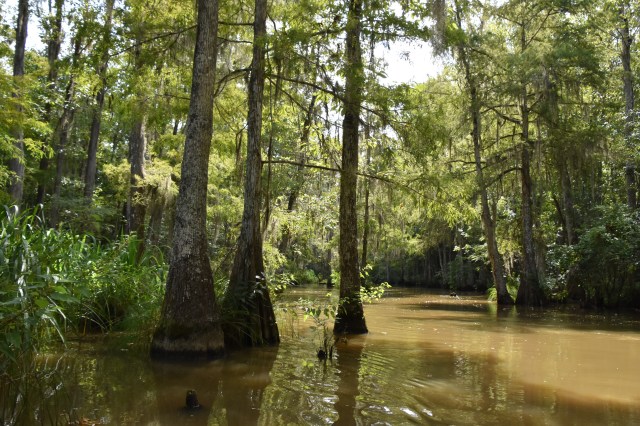
The swamps, marshes and bayous of Louisiana protect the shores against extreme events like hurricane Katrina, yet they are increasingly under threat.

A lot of what we are working on fits neatly into this theme. Right at this moment, for example, one of our PhD-students is monitoring the effects of Urban Heat Islands on non-native plant species in Flanders, right in the driest summer Western Europe has seen in a very very long time.
DSC_6907

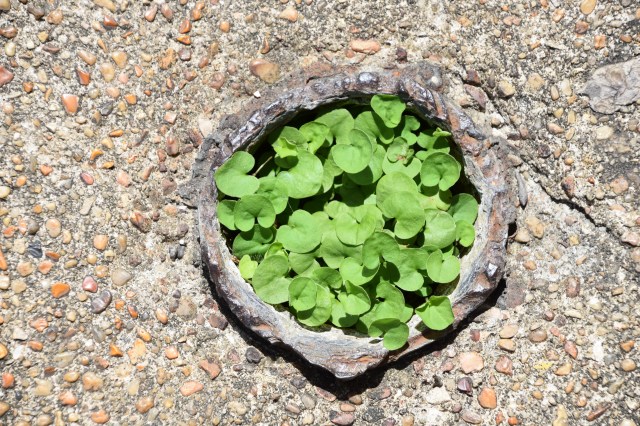
Little (Dichondra?) leaves in a hole in the streets in New Orleans. People and the environment are closely intertwined, and despite the dramatic changes in nature’s status quo that this gives, we will have to learn to deal with it.

Assessing the combination of the direct effects of humans (in cities, yet also along roads and trails, etc.) and the indirect ones (through climate change, for example) on plant species is indeed an important cornerstone of our work. I will be presenting a lot more ideas on that matter on Thursday morning in my talk, which will focus on how these direct anthropogenic disturbances are overruling all other possible drivers of plant species distribution changes in mountains. For those of you in New Orleans: you do not want to miss that!
DSC_6909

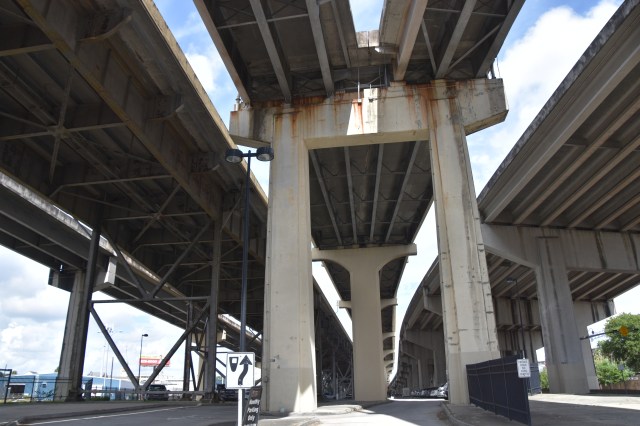
he ability of ecosystems to respond to extreme events requires their resilience mechanisms to be intact. However, these have often been severely undermined by land-use practices that increase effects of extreme conditions, a thought not hard to believe amidst the giant human-made structures in a large city like New Orleans.
Posted in General, USA | Tagged , , , , , , , , , , | 4 Comments

Live from the mountains

A live blog from the field! That happens rarely!

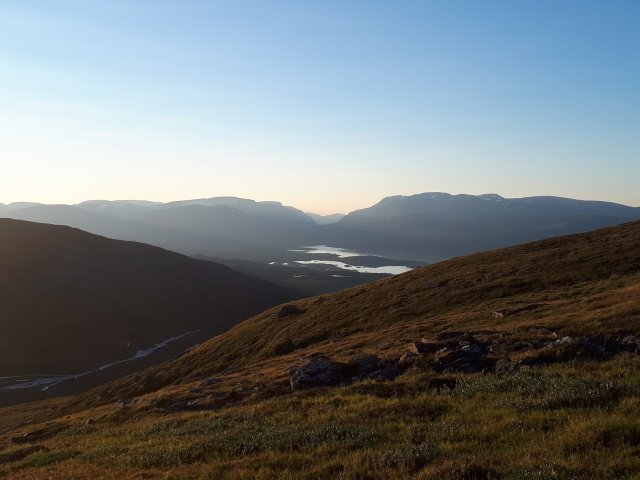
We are currently taking a break on top of mount Nuolja, close to Abisko, Sweden, after a long day of fieldwork. We resurveyed a nice set of high elevation plots along the mountain trail for our longterm MIREN-survey.

Now it is down to enjoying the sunset, listening to the cry of the golden plover, and take in the magic of the Arctic.

More soon!

Posted in General | 1 Comment

Data flows

Each year, we have a few days in which the data flows in like a tidal wave.

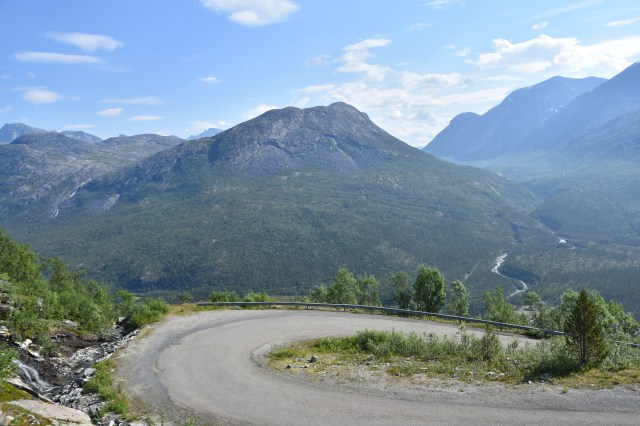
We go to Norway, to our  long-term observation gradients along mountain roads to check out on the temperature sensors we have out there. For the fourth year in a row, we can now add a whole lot of microclimatic data to our growing database, with very limited field effort required.

DSC_5675

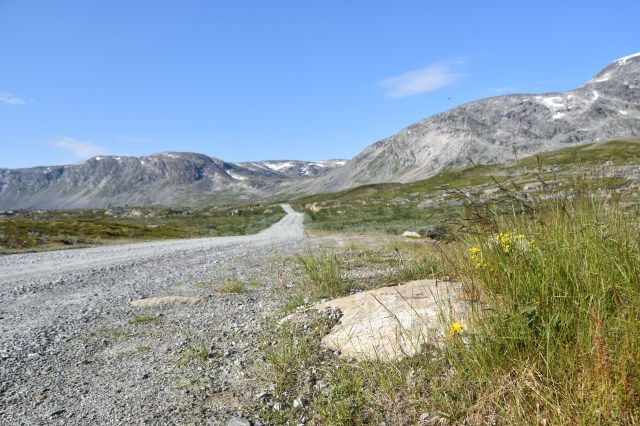
One of our mountain roads, within the longterm observational network of MIREN, the Mountain Invasion Research Network

This steady long-term data flow provides great opportunities for add-on projects. We look at leaf traits, root traits, soil conditions, mycorrhizae, bacterial membrane lipids… A whole variety of questions that all build on that beautiful backdrop that is our temperature data.

DSC_5719

Studying plant species and everything related to them along Norwegian mountain roads

All of that brings a great set of data home, and next months will involve a lot of lab- and computerwork to get all of it figured out. Yet with every extra year in this field campaign, we start to know the system a little bit more, and we can put more and more pieces together.

DSC_5768

Close to midnight in northern Norway

And that is what makes this little trip to Norway feel so great: every year, you feel you understand it more and better. Every year, more questions have been answered.

DSC_5652

More questions will be raised as well – of course – but that is for ‘future me’ to deal with in next year’s field campaign.

DSC_5634

Posted in General, Norway | Tagged , , , , , , , , | Leave a comment

Hot

Fieldwork in northern Scandinavia, above the polar circle. What is the first things that come to your mind? Sunstroke? Shorts and t-shirts at midnight? Probably not.

And yet, that was what we got in the first days of this summer’s fieldwork trip to Abisko, Swedish Lapland. Temperatures easily rose all the way to 30 °C, and in the morning, the north of Scandinavia was even warmer than southern Spain.

DSC_5358

Temporarily bathroom at our camping site – with a view

While it is rather worrying to see more and more extreme weather events plague the north, I have to admit it did make for rather convenient fieldwork conditions in the mountains. We strategically chose this hottest day on record to camp out on the mountain while surveying plant species composition along mountain trails.

DSC_5452

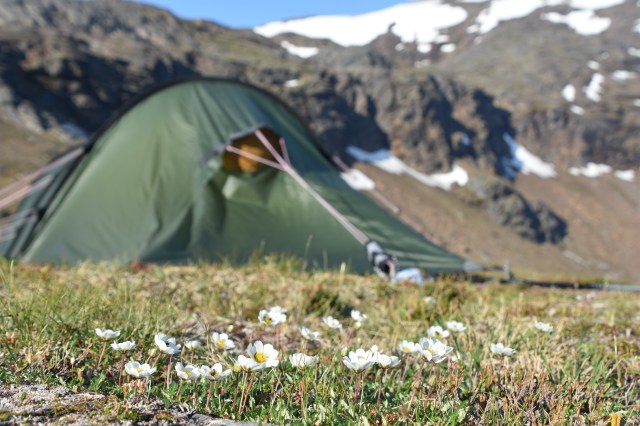
Camping spot in the mountains, with mountain avens (Dryas octopetala) in the front

Two days full of sun, mountain plants and nature, with a steady flow of incoming data, it again made northern Scandinavia in a mountain researcher’s paradise.

DSC_5391

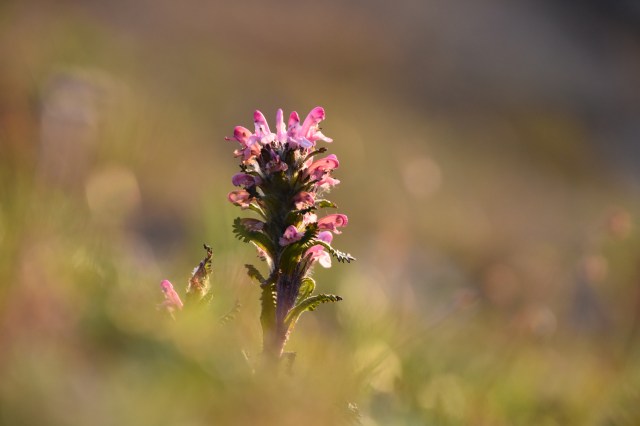
Pedicularis hirsuta, just one examples of the beautiful mountain plants we encountered

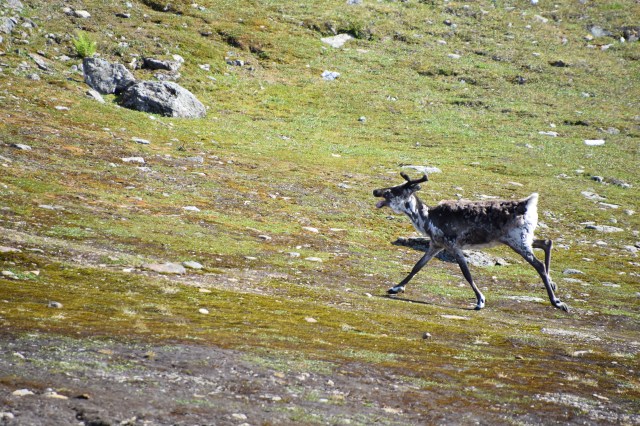
Now a much-needed thunderstorm broke the heat spell, and brought temperatures back to close-to-normal. Much needed, as the reindeer were seemingly suffering quiet a bit from the heat, searching for every bit of refreshment they could find on the retreating snow beds at high elevations.

DSC_5149

A reindeer in search of a cool snow patch, mouth open to cool down

More stories soon of what is turning into an amazing fieldwork stay – as usual.


Posted in General, Sweden | Tagged , , , , , , , , , | 2 Comments

Flemish road trip

It might not be everybody’s favorite holiday destination, but we spend last week enjoying a true and original ‘Flemish road trip’.

From Bruges to Brussels, from the port of Antwerp to the outskirts of Kortrijk, we saw it all in a few days time. Our goal? Hunting down non-native plants in their ‘natural’ habitat, with a focus on city environments.

41517757620_af062b00f8_o

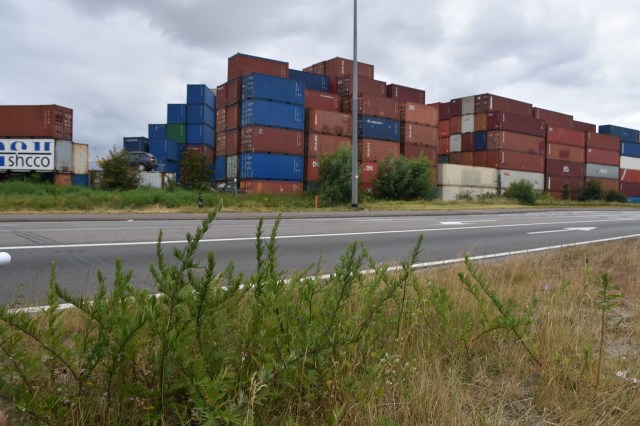
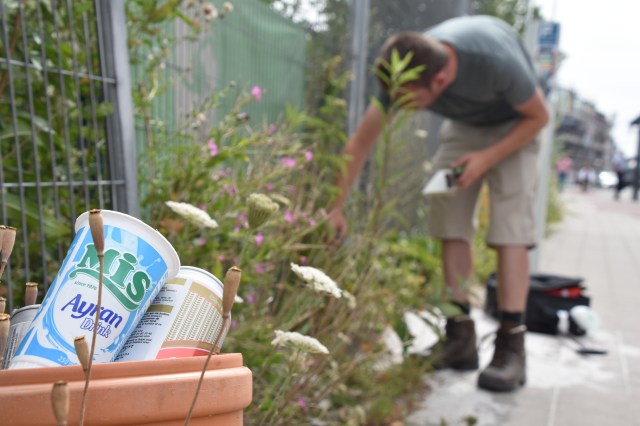
Searching non-native Asteraceae in the port of Antwerp

The peculiarities of this goal made for some interesting sightseeing opportunities, as it turns out that most of our study objects (a set of 8 non-native Asteraceae species) seem to have a preference for what one could call ‘ugly places’: cracks in pavements, depressing flower beds, busy crossroads, abandoned roadsides… Flanders seems full of them, and non-native species are thriving there.

42423587545_841dcd076c_o

This pavement was not going to win any beauty contest, yet it did host at least 3 interesting non-native species

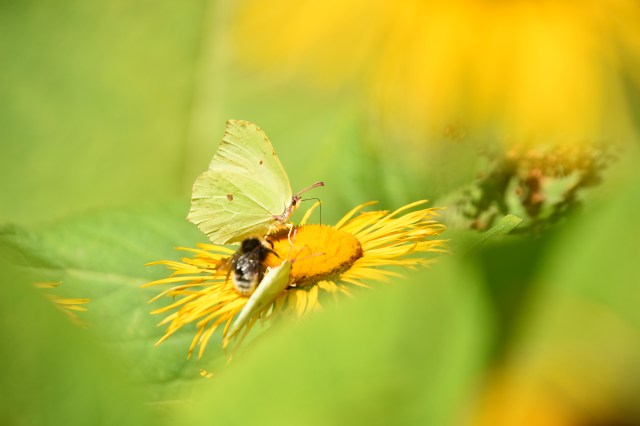
The occasional relief was provided by Telekia speciosa, a species that mostly seems to escape from large, rural gardens, with a love for the shadow-light dance of the forest understory.

28538742097_6849e3ff12_o

Telekia speciosa with a brimstone butterfly

Beautiful or not, our treasure hunt through Flanders cities has been highly successful so far. And that could have been different. We relied for a large part on freely-accessible observations of our species from the previous decade, and it was always a mix of excitement and fear when arriving at a new locality: would the mentioned species actually be growing there at the moment? Many a population had been destroyed, wrongly named or simply wrongly georeferenced, which did not facilitate our search.

28538695927_f595dee7d2_o

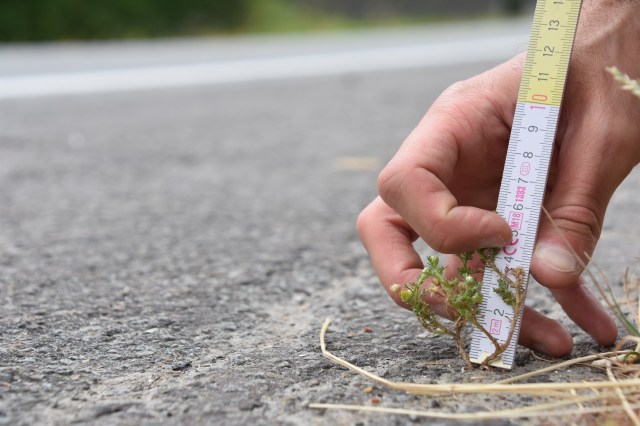
Measuring Matricaria discoidea along a Flemish road

Yet in the end, the harder it was, the bigger the reward when seeing those beautiful flowers looming in the distance when turning the last corner after a long drive. Scientific treasure hunts as they should be!

Posted in Belgium, General | Tagged , , , , , , , , | Leave a comment

Running off the road

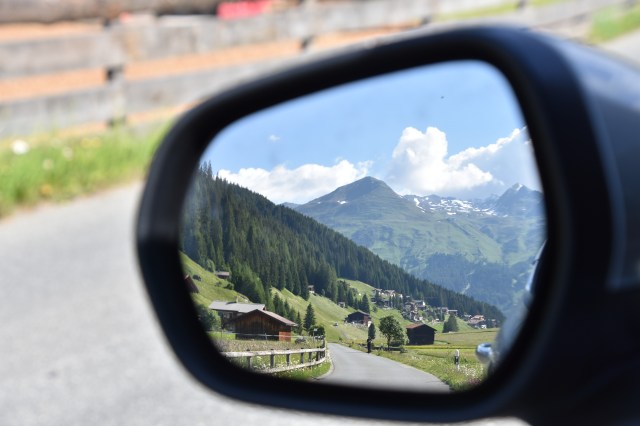
It is a known pattern by now, as it is confirmed over and over in virtually all mountain regions we study: roads are facilitating non-native plant species introduction into mountains. Humans introduce – on purpose or by accident – new species in the valleys and from there, they start spreading uphill. On their way up to high elevations, mountain roads serve as a great highway. Yet with increasing elevation, less and less non-natives will be found, as they progressively drop out the higher you get. The few that make it all the way to the top by road, could possibly spread from there into the natural mountain vegetation, but even less species manage that.

42024667615_0fc142df73_o

Mountain roads – and the cars and people on them – facilitate non-native species movement up to high elevations. Here: Davos, Switzerland

All of that we knew, indeed, yet a crucial question remains: who wins this race to the top? What traits make a non-native species good at this quest for the high elevations?

These questions we aimed to answer in our latest paper in the journal Biological Invasions, using our multiregional MIREN database (www.mountaininvasions.org). We looked at all these species that are travelling uphill, and hunted down the global patterns.

36234201052_50f6cfb2ff_o

You’re eager now to know what turns these non-native plants into winner material, right? Well, the key is: it’s a lot tougher than you might think. The magical words describing the problem these plants face: the double filter.

First of all, the colonizing non-native species need to be able to handle roadside conditions: highly disturbed environments, with open vegetation and a peculiar microclimate. Moreover, they should be able to handle these conditions along the whole elevational gradient, from warm all the way to cold conditions. That is the first filter, which slashes out a lot of species. Annual species are progressively filtered out like this, for example, as it gets increasingly hard to perform your life cycle within one growing season. Warm-adapted species slowly disappear as well (yet not as fast as we assumed).

35593676583_595880b027_o

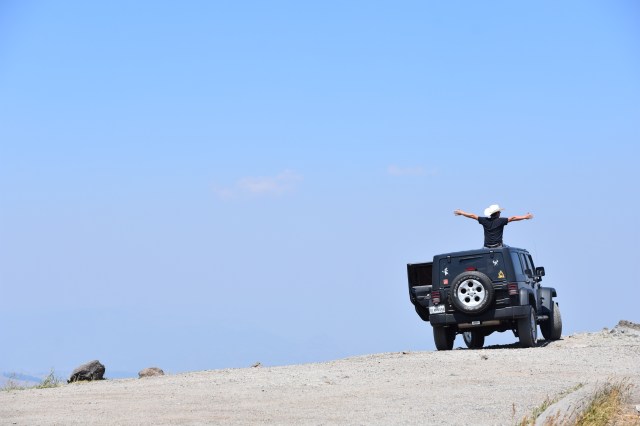
Some non-native plant species are better at reaching the top of a mountain road than others. Especially those that are good at handling the open, disturbed conditions of mountain roadsides and the cold of high elevations. Here: happy tourist on a mountain top in Yellowstone National Park, USA. 

Then there is a second filter, one that decides if you can run off the road, into the natural vegetation. This filter selects for totally different traits than the first one: moist- and shade-adapted species do better in this case, for example, as they’ll need to colonize an environment that’s already covered with plants.

42214728064_6d7ef37275_o

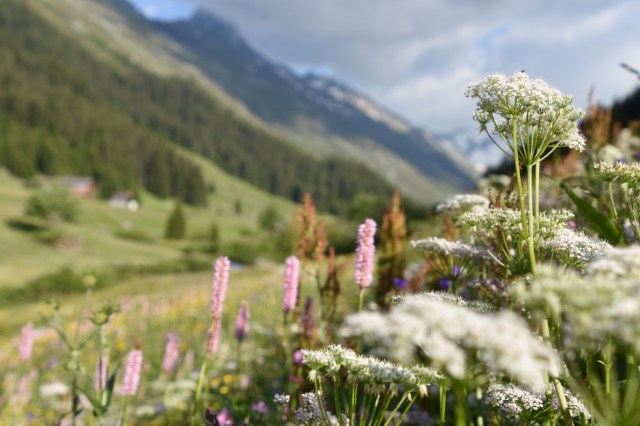
Colonizing the native mountain vegetation is easier if you can handle the shade underneath their leaves. Here: meadow vegetation in Dischma, Switzerland.

It is unlikely that many species have traits that help them pass both those filters at the same time. And then we haven’t mentioned the specificities of the receiving habitat yet: conditions there should also promote non-native species colonization, for example through the availability of bare ground. These results thus show that a lot of things need to be ‘just right’ for a non-native species to succeed in high elevation natural environments, which explains why so few non-native species are currently present there: passing the double filter test is just really hard.

36234304092_386d978aec_o

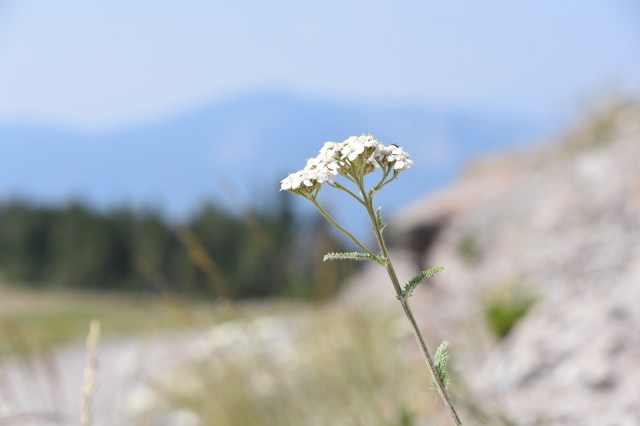
Achillea millefolium (common yarrow, here in Montana, USA) seems to be a species with the potential to pass the double filter, as it is successful in mountain regions worldwide. Further studies will have to figure out what exactly makes it stand out. 

So we do not have to worry about non-native species invasions in mountains? Well, not quiet. There is another common pathway of introduction that helps non-native species to get around this double filter issue. Indeed, if humans introduce mountain plants directly at high elevations, for example in ski resort gardens, invasion becomes much more likely.

42024691675_821a243231_o

Want to know more?

McDougall, K. L., Lembrechts, J., Rew, L. J., Haider, S., Cavieres, L. A., Kueffer, C., … & Seipel, T. Running off the road: roadside non-native plants invading mountain vegetation. Biological Invasions, 1-13. Check it here or contact me for the full paper

Posted in Science | Tagged , , , , , , , , , | 1 Comment