Four fronts

Summer arrived, and that means: fieldwork! And this summer, more than ever before, that fieldwork is spreading across the world. We will have four important fronts of research open this summer, and I aim to keep you updated about all of them as they unfold.

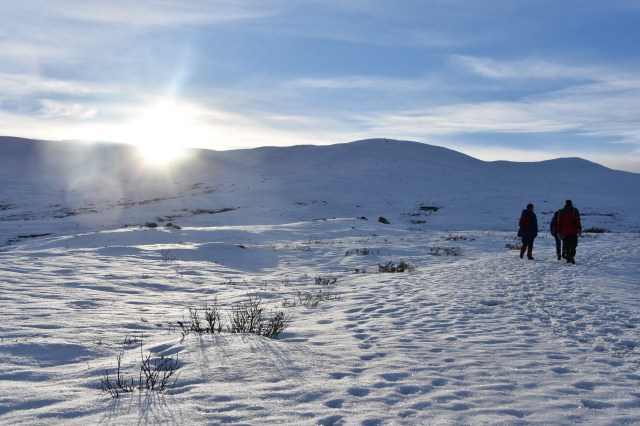
First, we have our team in Norway, in the mountains of Dovre. There, under the expert lead of PhD student Ronja Wedegärtner, we are looking at the impact of hiking trails on biodiversity. This project now has its own website!

32025904948_dd7d04dab0_o

Dovrefjell, Norway, here still under its blanket of snow

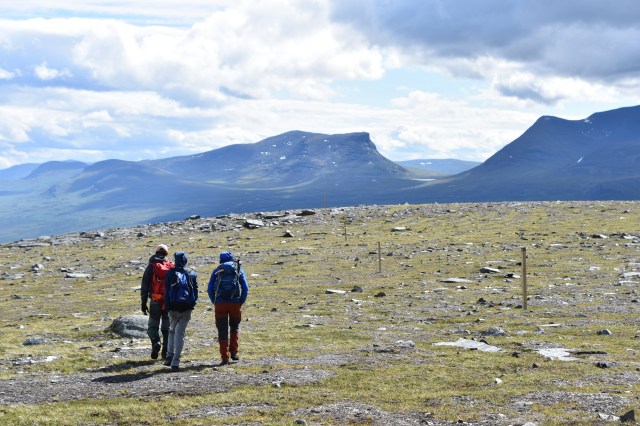
Secondly, there is our team in Abisko, Sweden, with PhD-student Jan Clavel. There, the summer will bring a lot more insights on belowground interactions, while we will also greatly expand our microclimatic network in collaboration with the awesome people at CIRC (the Climate Impact Research Center).

43783201872_fb544d4a8b_o

The long-term vegetation monitoring gradient of CIRC, which will be the scene of microclimatic research this summer

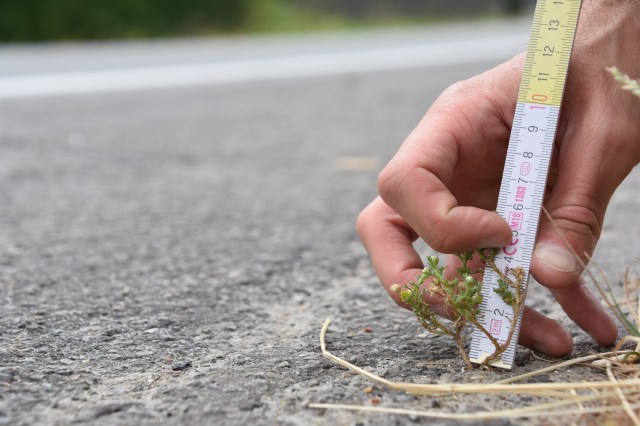
A bit closer to home, there is our work on the invasion of exotic plant species in our Flemish cities, led by PhD-student Charly Geron. This will be expanded with a study on dark diversity in the heathlands of Kalmthout.

28538695927_f595dee7d2_o

Measuring the stress of non-native species across the urban-rural gradient

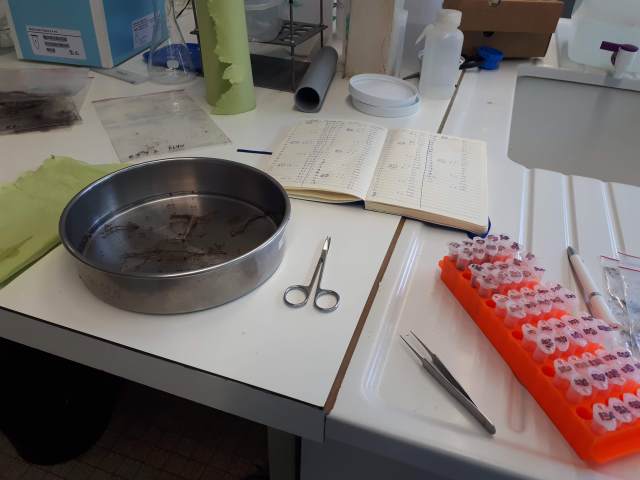
And then finally, there is our lab component: the processing of root samples from all over the world (currently working on samples from Tenerife) is also in full swing. Less glamorous pictures, yet the results promise to make a splash.

20190626_145107

Cutting roots for the analysis of fungal DNA

46146705165_3bb661a95a_o

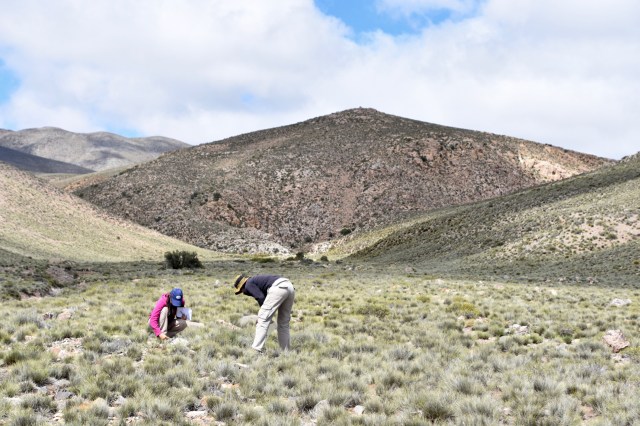
Fieldwork in the Argentinian Andes earlier this year, now being processed in the lab

Posted in General, Science | Tagged , , , , , , , , , , , | Leave a comment

For MIREN, we are working on an awesome new blog series summarizing our scientific findings from the last 15 years for conservation, policy makers and the global public. This is chapter 1, so stay tuned for more! Originally posted on www.mountaininvasions.org.

In July 2005, a group of mountain ecologists got together near Vienna, Austria, to discuss what was at that time an unknown and hardly studied issue: the invasion of non-native plant species into mountains1. Up till then, mountain regions had mostly been considered resistant to invasion. Yet those times were changing,  and mountain areas were increasingly threatened by invasive alien plants.

That group of mountain ecologists in Vienna launched the Mountain Invasion Research Network (MIREN), following the cry that ‘now it is time to act’: by addressing the issue before it spiraled out of control, science could prove to be the gatekeeper of biodiversity in the fragile mountain world2.

The MIREN-network started off with 6 core-regions, covering all major climatic zones and including both islands and continental ecosystems1. In these 6 regions, it aimed to initiate and integrates surveys, monitoring, experimental research, and management of plant invasions into mountains1. The key goals of these endeavors where two-fold: to increase awareness about the growing importance of species expansion—both non-native and native—at high elevation and high latitude with global change3, and to offer possible solutions for conservation management and policy-makers.

Overview of the regions participating in MIRENs baseline screening and monitoring as of October 2018.

Since this first meeting in 2005, the network has steadily grown, and now it features over 20 mountain regions that participate in standardized baseline screening and monitoring, including the “T-transect” survey along mountain roads or trails and other experiments (see map). Through the years, MIREN has shown dedication to take on board scientists from developing countries 4,5 and has stated the case for transdisciplinary research that draws upon the expertise of social scientists, economists and bioengineers6. The network now even has its own mascot: Poa mireniana, a new grass species identified within long-term MIREN surveys in Kosciuszko National Park, Australia 7.

Poa mireniana, a new species of grass discovered during MIREN-fieldwork in the Australian Alps

We felt that after all these years of work, time was ripe to share our main conclusions with you. Mountain scientists, conservationists, mountain enthusiasts and policy-makers all over the world: read and take note, as in the following posts, we will summarize the fruits of 13 years of studying native and non-native species movement in the mountains. We will discuss patterns and processes of species movement and discuss the observed and predicted impacts of these travelling species on our mountain ecosystems. Ultimately, we hope to offer some useful suggestions for conservation and management.

The MIREN team at its latest meeting in 2017 in Centennial Valley, close to Yellowstone, USA.

A lot to tell, so stay tuned for the next episode!

References

  1. Dietz, H. et al. (2006). MIREN: A new research network concerned with plant invasion into mountain areas. Mountain Research and Development 26, 80-81.
  2. McDougall, K. et al. in Mountain Forum Bulletin. 23-25 (ICIMOD).
  3. Pauchard, A. et al. (2016). Non-native and native organisms moving into high elevation and high latitude ecosystems in an era of climate change: new challenges for ecology and conservation. Biological Invasions 18, 345-353.
  4. Pauchard, A. et al. (2009). Global networks: a reply to Khuroo et al. Frontiers in Ecology and the Environment 7, 518-518.
  5. Khuroo, A. A. et al. (2009). Plant invasions in montane ecosystems. Frontiers in Ecology and the Environment 7, 408-408.
  6. Kueffer, C. (2010). Transdisciplinary research is needed to predict plant invasions in an era of global change. Trends in ecology & evolution 25, 619-620.
  7. Walsh, N. G. & McDougall, K. L. (2018). A new species of PoaL.(Poaceae) from Kosciuszko National Park, New South Wales.
Posted on by lembrechtsjonas | Leave a comment

SoilTemp meeting I

20190604_081039

SoilTemp symposium in the ‘Hof Van Liere’ of the University of Antwerp

The beginning of June saw a gathering of great minds in the city center of Antwerp. Thanks to support of the Research Foundation Flanders (FWO), we could invite over 30 ecologists and microclimate specialists to our beloved city, to have 3 days of inspiring discussions on our SoilTemp-initiative.

20190603_115506

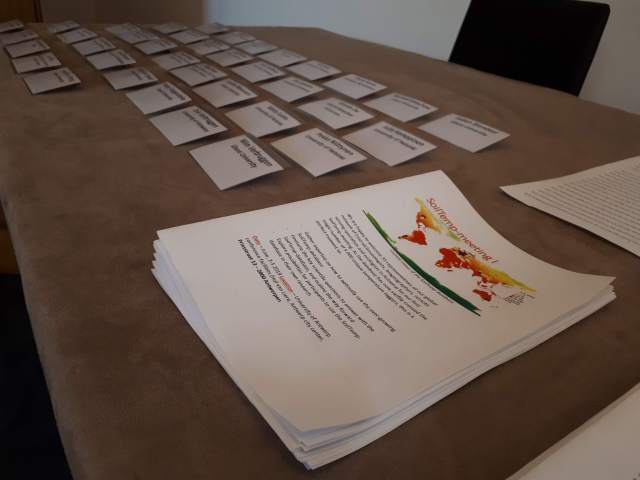
In exciting anticipation of the meeting: programs and people, bring them together and  magic will happen

SoilTemp is a new global network, launched in autumn 2018, aiming to build a database of in-situ soil temperature measurements for use in ecology. A critical initiative, as has been shown that we are currently lacking an overview of the temperatures that truly matter for organisms, with many of our global climate models based on weather stations in controlled environments at more than a meter up in the air.

20190603_124849

Discussions over lunch

SoilTemp brings together all these scientists who are measuring the microclimate in the soil, and uses the combined power of global teamwork to once and for all answer the question how soil and air temperatures differ, and what those differences mean for our biodiversity.

To kick this initiative off officially, scientists from Flemish universities and far beyond put their heads together to decide how to answer the most crucial questions with the database at hand. In the inspiring setting of the ‘Hof van Liere’ at the University of Antwerp, plans were made for the future: papers to write, pitfalls to avoid, global collaborations to expand.

20190605_130250

(Part of) the international crowd propelling SoilTemp to the future. There is many more people to thank: those who already left, yet also especially also all data contributors who form the backbone of the network 

After a first afternoon with keynote lectures of experts from Antwerp to Australia, and two days of finetuning plans for the future, now it’s all hands on deck. The more than 15.000 years of temperature data from all over the world are being put in position, and first results are rolling in. Stay tuned for more, or – even better – join this amazing endeavour!

20190604_075238

Finetuning the SoilTemp-roadmap on the train to the meeting. May the rails be straight and the SoilTemp-train ride fast!

20190604_075855

Riding a camel over the morning sun at the central station in Antwerp

Posted in Belgium, General, Science | Tagged , , , , , , , , | Leave a comment

Botanical beauty

A sunny spring day brought me to the botanical garden in Meise, close to Brussels. An amazing garden with picturesque views behind every corner.

48021269412_402dd36407_k

Spring in the botanical garden, with the castle of Bouchout in the background

A friend of mine makes it a point to stroll through the botanical garden of each place he visits; a philosophy I can definitely get behind. Botanical gardens not only are the ideal place to stroll, they also give a fantastic sample of biodiversity – of that particular place and well beyond.

48021268092_8d3815b51d_k

The greenhouses of the botanical garden in Meise, hosting hundreds of (sub)tropical species from across the world

Moreover, they provide a continuous reminder for the importance of botany; the study, and description of plant species and their diversity. This knowledge provides the critical base for all the research we are doing: you can’t study the effects of global change on biodiversity if you cannot identify that diversity first. And for that, our botanists and botanical gardens are of critical importance.

48021190758_38f4221c62_k

So while it was only a short visit – no time to photograph all beautiful nature there was to see – it was a great reminder of its importance. Next time you visit one yourself, please keep this in mind while you take in its beauty.

Posted in Belgium, General | Tagged , , , , , , , , | 1 Comment

Climate stripes

I got myself a little present to celebrate two important milestones. First of all, today I am honoured to present my research in Utrecht, the Netherlands, as finalist of the New Scientist Science Talent Award. A fantastic opportunity to communicate the importance of global change to the wider public.

Next week then brings the first SoilTemp-meeting, where we gather over 35 specialists to discuss our growing database of soil temperatures, and how to move forward with this precious dataset. For me, this is a major step towards the future, in which we hope this global and accurate climate dataset will help us better predict the current and future state of biodiversity.

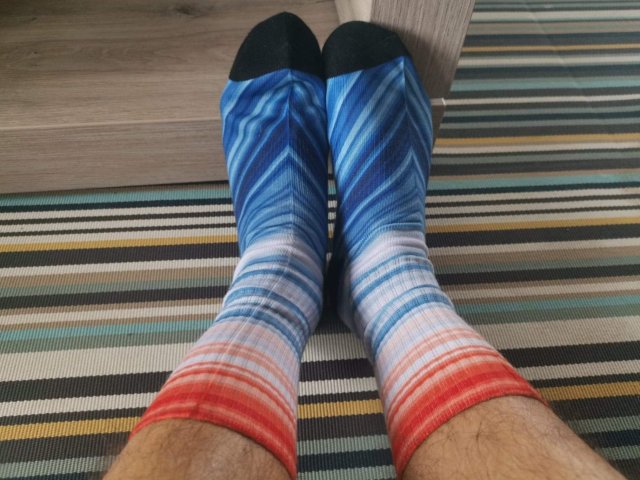
The present I got myself: climate stripe socks! This is a graph of the mean annual temperature of our planet from 1870 (my toes) to 2017 (the top of the socks). Nothing visualises the ongoing climate change better than this scarily beautiful colour pattern, if you ask me, and the perfect attire for our presentations on climate and land use change.

There is many more cool things where these come from, thanks to Ed Hawkins! Want to wear climate change yourself? Try out the ties, leggings or flip-flops. Cause as I always say: if there is flip-flops made out of it, the problem is undeniably serious.

Posted in General | Leave a comment

Podcast

For the Dutch-speaking followers of this website: check me happily podcast-ing away with the crew from the Dutch ‘Makkelijk Praten’-podcast! They made a 40-minute podcast about our research, in honours of my nomination as New Scientist Wetenschapstalent 2019.

IMG_0730

Are you up for 40 fun minutes (in Dutch) about plants on the move? Then check out the podcast here, or in your favourite podcast app:
Spotify: https://spoti.fi/2I40TUs
Apple: https://apple.co/2WbDSsr
Stitcher: http://bit.ly/2I9T5R8
Overcast: http://bit.ly/2I2DS44

Posted in General, Science | Tagged , , , | Leave a comment