The baby goes to Reykjavik

As a parent in academia, travelling – and leaving wife and kid behind – is far from easy. That is why we decided to take an ambitious plunge when I had to go to Reykjavik for the conference of the Nordic Society Oikos: the whole family would come!

20200305_144650

Our little family enjoying the views in Iceland

Oh, boy, that was an adventure! Baby’s first international travel, baby’s first airplane flight, baby’s first scientific conference… While conferencing an sich is already a challenge (let’s face it, days packed with social interactions and high-impact science are fun, but take a mental and physical toll), conferencing with a baby is next-level stuff.

Of course these were unforgettable times! Exploring the wild beauty of Icelands’ winter wonder land with wife and baby resulted in fantastic memories of happiness in a breathtaking setting. Those pictures coming out of this week will forever have a prominent place in our albums. Having my loved ones close also meant I did not have to miss them – and they did not have to miss me. Fantastic for me, close to lifesaving for them: we were all in it together.
Icelandfriday - 61

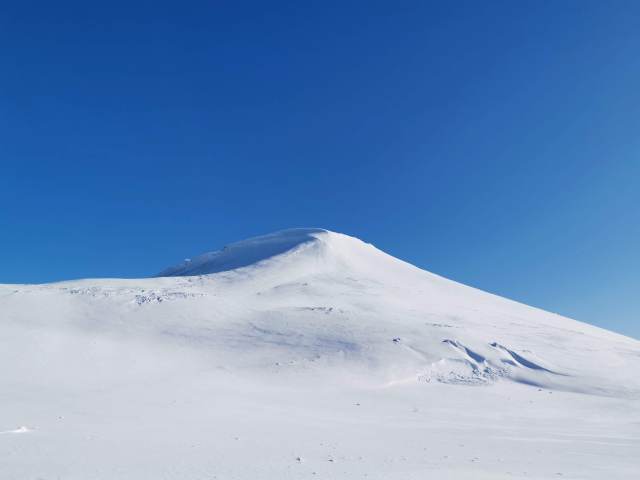
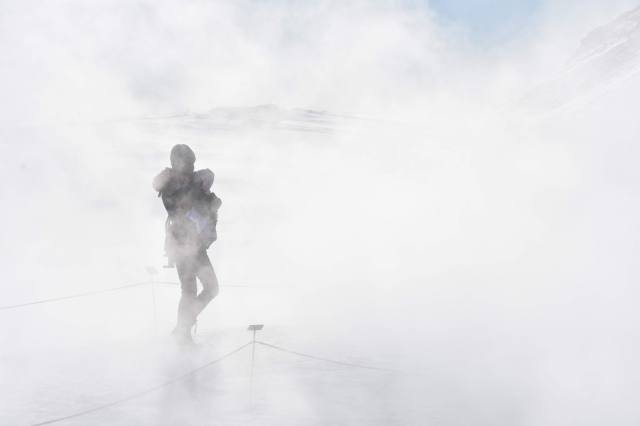
Visiting Icelands’ volcanic beauty with a baby in a sling. Unforgettable!

This adventure of course did not come without its challenges. There was a reduced time for social interactions (as in: oh no I will not go to the bar with you after this long day of talks, there is a cute baby waiting for me at home!). Most important challenge, however: conferencing with a baby is TIRING!

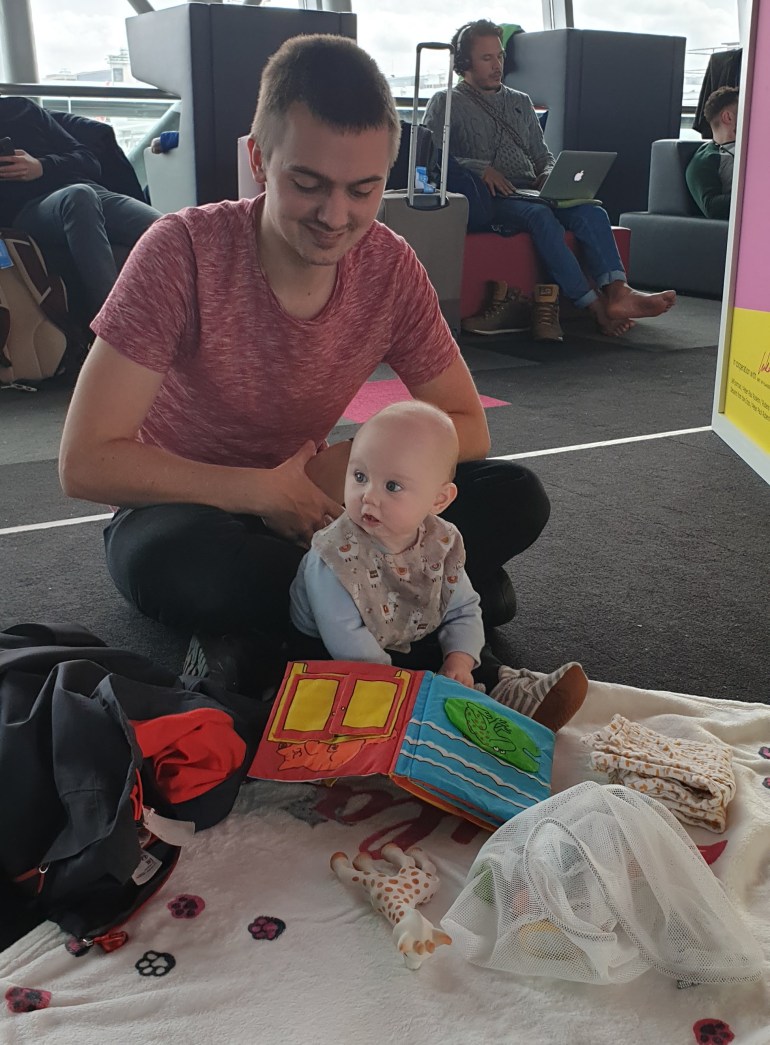
It already started on the way to Iceland. Our plane suffered a five hour delay, so we had to spend a whole afternoon at the airport. The flight only left after baby’s bedtime in the end, so that meant me walking up and down the isle to keep her asleep. Baby didn’t notice – best day ever! – but the tiredness was kicking in.
20200301_145122

Turning the departure hall into a playground

And then the baby tumbled right off her schedule. New house, new place, different time zone, a totally different routine: sleeping became problematic. Struggling at night to get her to sleep, back to sleeping in my arms or in our bed instead of quietly in her own, you definitely feel that harder after a day of conferencing.

So, how bad was that sleeping? I know it felt pretty tough, but I wouldn’t be the data scientist I am if I wouldn’t dive right into the numbers again. So I expanded on the graph I made for an earlier post to see how sleeping really went.
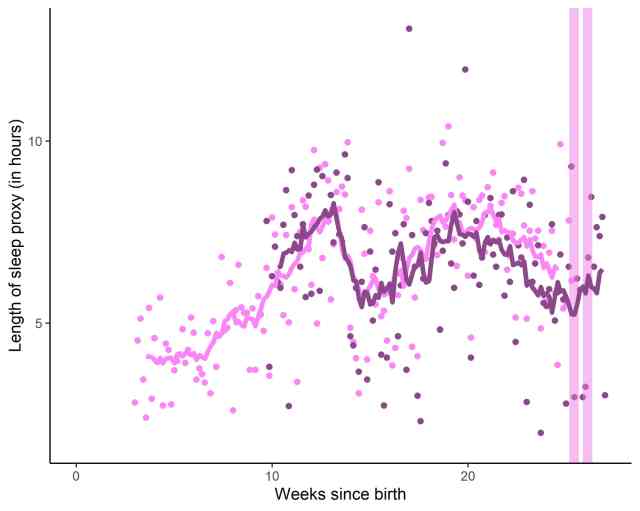
Figure NS

Proxy of how much sleep we have been getting at night over time, using two different methodologies. In pink: the hours between the two main night feedings. In purple: the length of the main block of sleep. Note that we started tracking actual sleep only later, and currently only track the sleeping, so lines do not fully overlap in time. Lines are the rolling mean with a window of 10 days. Pink vertical zones mark our trip to Reykjavik

So what does the data show? As in my earlier post here, her sleep was gradually improving up till around 15 weeks, when we dropped into the ‘4-month sleep regression’. Using a rigorous sleep schedule, we fought our way out of this slump, up till we got a block of 8 hours of sleep again at around week 20.

IMG_20200303_180354

Family dinner at the famous ‘Hofnin’ restaurant

But then, with the trip to Iceland approaching, sleep gradually worsened again, with a new low the week before her trip (both baby and mother were ill, while daddy was at a meeting in Sweden). We thus started our Iceland-adventure with a deficit, partly caused already by my earlier academia-related travelling. The trip to Iceland created another slump on top of what was already pretty much going wrong (note the set of nights where we didn’t get blocks longer than 2 (!) hours). These things get you.

I have to say the downfall was less steep than it felt to us at the time, but I think that is exactly the thing of taking your baby on an international trip: things are worse, but you also just have much less energy to deal with it all.

All in all, I would recommend this. Being a dad in academia inevitably means that time needs to be divided more stringently between home and work, so keeping up that spirit at the conference isn’t that much of a difference. But did I loose ‘conferencing-ability’? I bet you I did! And an important side-note is the following: we had some extra much-needed help on this trip, as my wife’s parents travelled to Iceland with us. Without them, I do not think any of this would have been possible.

Icelandmonday - 100

Baby loving the winter hikes close to her mommy

PS: I acknowledge these things can be tremenduously harder even for moms in academia. But there is other people who can tell those stories.


Posted in General, Iceland | Tagged , , , , , , , | 6 Comments

Can collaboration help us tackle the big issues of ecology?

Ronja Wedegärtner, PhD student at NTNU in Norway and in The 3D Lab, takes you on a reflective tour of the key discussion point of last weeks’ meeting in Reykjavik, Iceland: how we as ecologists can take up our task to preserve our biodiversity in a rapidly changing world, and doing so before things get too far out of hand. More on Ronja’s work here!

During the last week I had the chance to attend OIKOS 2020 the fourth conference of the Nordic Society Oikos with the overarching topic “Ecology in the Anthropocene”. Attending the conference made me reflect not only about our research, but about our responsibility as ecologists and private people. How can we contribute solutions?

We are living in tumultuous times for ecology. Land-use change, and the climate crisis are changing and endangering nature as we know and love it. The issues seem so enormous, dark, and threatening that they can appear like a “black hole” as writer Andri Snær Magnason poignantly formulated in the wrap-up of the OIKOS conference in Reykjavik. And while a black hole cannot be seen directly, rather must be inferred from near surroundings we can observe its pull. Our “black hole”, our global threats to the environment are already pulling at our research, spinning and accelerating it.

IMG_20200304_163303

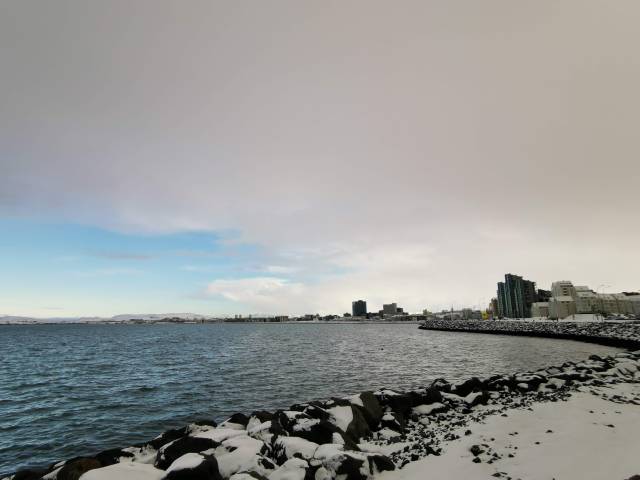
Seaside view of Reykjavik, pictures by Jonas Lembrechts

At the OIKOS conference over 300 participants joined to hear 4 great keynotes, more than 120 talks and speed-talks in parallel sessions and browsed a multitude of posters. Each of the contributions was shining its light into one corner of our ecological universe, providing some enlightenment on one issue or ecological sub-question. Together, we produce many blips in the darkness of the unknown, clustering around our galaxies of interest. But our blips are spread out far and wide.

The OIKOS conference brought together many great scientists, but also many great people. Kind and caring for ecology, the environment and their surroundings. We listened to many contributions, but one thing was lacking for me until the last day: an open discussion about the issues we face and what we can do.

IMG_20200303_081923

More than 300 ecologists gathered in the Harpa Concert Hall in beautiful Reykjavik

So, how do we look at the pressing issues of nature degradation and the climate crisis then? And how do we do so in a timely manner? As Vigdis Vandvik remarked in the final discussion: “Knowledge synthesis is the key to changing the world”. Examples such as The IPBES report show us, how much impact we as ecologists can have, if we join forces, coordinate well, and set ourselves tough deadlines. Therefore, I think that we, as ecologists, should take the challenge. We should identify the most pressing and relevant questions together with policy makers and the people who are impacted by the changes. And then we should follow the example of the physicists that produced the first image of a black hole: band together and collaborate.

IMG_20200303_092343

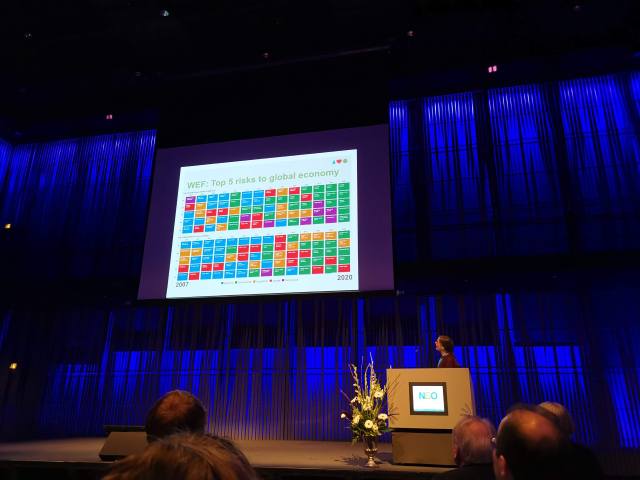
Vigdis Vandvik showing how nature-related risks like climate change and the global biodiversity crisis (in green) made it to the top of the list of risks to the global economy

We should come together, virtually or in real life, and discuss how we can solve those challenges as a group and at least approximate solutions. Ideally joining forces with social scientists, traditional knowledge holders … maybe even economists. I think at our conferences we need more time to discuss and exchange in larger groups, not only to present and take notes. And we need to follow up on these discussions with work.

Still, if we want to produce results in a timely manner, I am wondering if we can stick to the academic model as we know it to find and make available these results.

It may sound crazy, but this conference and the discussions after it have me thinking about abandoning the traditional publishing process for a while – of course preserving peer review as the pillar of our community.

wp-15838337188714916539018484661032.jpg

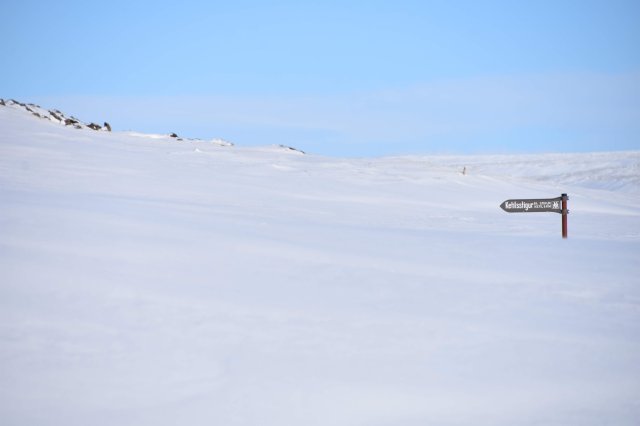
As a research community, we should make sure that the road to our ultimate goal does not get snowed under by a blind acceptance of ‘how we always did things’

I suggest that we as community, take our big challenges, divide it into smaller proportions, and in the end into bite-size peer reviewable work packages that we assign “merit points” to. Then we as the community who peer-reviews and contributes could still gain visibility and earn scientific merits even though we publish less or no journal articles for a while.

There will not be a perfect solution. But after the OIKOS conference I am more certain than ever: We must talk about the future. Because, as Magnason pointed out: Those who we love will be alive far beyond the horizon that we comfortably think in.

IMG_20200305_140440

Posted in Iceland, Science | Tagged , , , , , , , | Leave a comment

Iceland

IMG_20200302_154125

This week brought three members of The 3D Lab (Jonas, Ronja and Jan) to the 4th meeting of Oikos, the Nordic Society for Ecology, in beautiful Reykjavik. As ecologists rooted in northern Scandinavia with most of our fieldwork and research topics, this bi-annual gathering of nordic ecologists seemed like the perfect place to learn.

IMG_20200303_081923

The Harpa concert hall in beautiful Reykjavik, the venue of this year’s Oikos meeting

And oh yes, were we right! With the theme of this year’s meeting ‘Ecology in the Anthropocene’, the meeting focused on how we can study and save our biodiversity in Scandinavia and beyond in a time with rapid global changes. And no setting is better suited for that than wild and fragile Iceland.

Icelandmonday - 111

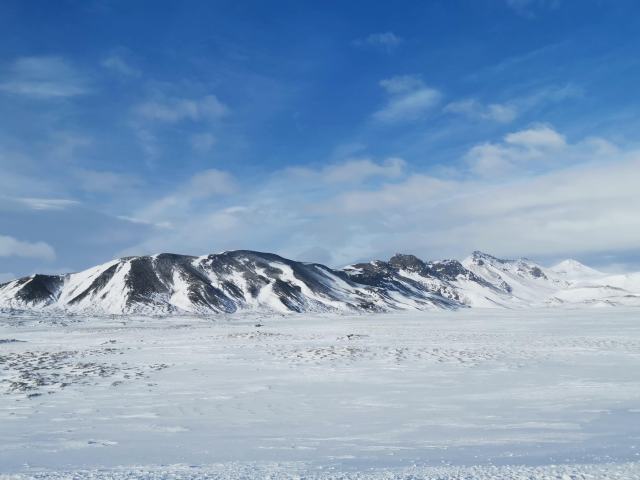
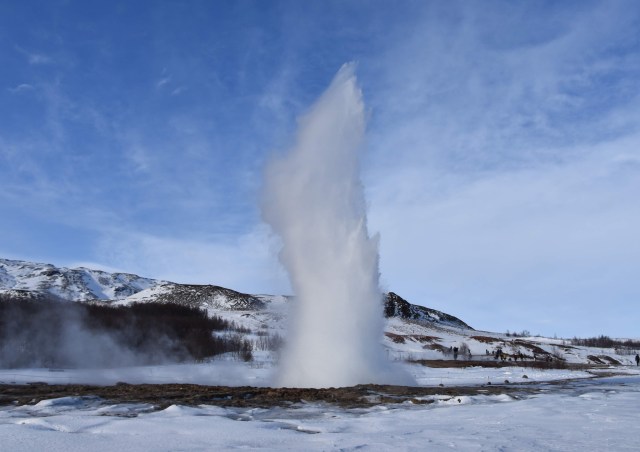
With its impressive waterfalls, geysers, mountains and volcanoes, Iceland is the place to be to admire the indestructable power of nature. On the other hand, however, it is part of the vulnerable Arctic, more than any place on earth suffering from rapid climate changes.

Icelandmonday - 101

Warm water under the soil surface makes this place the perfect dramatized ‘artists impression’ of a world affected by large-scale climate change

This wild winter wonderland provides the perfect backdrop for a group of 350 ecologists to discuss ways in which we can conserve our precious nature. And The 3D Lab was happy to contribute.

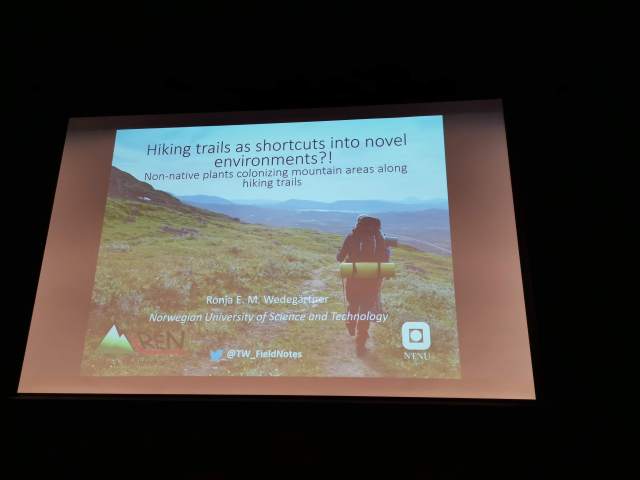
Ronja presented her work on how non-native plant species are moving into the mountains along hiking trails, while Jan showed his results on the role of mycorrhizal fungi and their interaction with plant roots in defining how high these invasive species can move up in the mountains.

IMG_20200303_143330

I myself will present in tomorrow morning’s session the first results of our global SoilTemp database initiative, arguing that in these times of global change, more than ever ecologists need the correct climate data to answer their questions. Not what’s measured in these standardized weather stations, yet what is actually felt by the biodiversity we are studying.

Icelandmonday - 87

The Gullfoss waterfall displaying the magnificence of Icelandic nature


Posted in Iceland | Tagged , , , , , , , , | 1 Comment

Two firsts

Logo

This has been a very important week for The 3D Lab: two of our PhD-students submitted their first ever paper!

Charly submitted his work on the climatic origin of urban plant invaders, a first in a series studying how the urban heat island effect promotes the expansion of warm-loving aliens.

49303633952_0b6c8aa3b6_o

Charly in action measuring performance of non-native Ailanthus altisimma in Flemish urban regions.

Jan submitted his study on the role of mycorrhizal fungi as drivers of plant invasions along mountain roads in the northern Scandes, again a first step on our road to a better understanding of how these fungal friends can affect plant species distribution changes.

46412417222_5f39d575c7_o

Jan digging up roots with dedication in a cold Norwegian mountain roadside

Great job, both of you!

Posted in Belgium, General | Tagged , , , , , , , , | 1 Comment

Revisiting Ekenäs

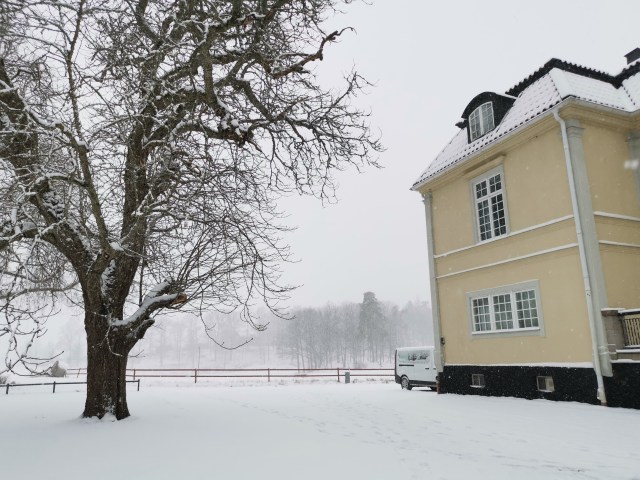
A little addendum to my previous post on our microclimatemeeting: I had been there before, in the Ekenäs Herrgård. That time, June 2015, the mansion was bathing in the suns of spring, and the chestnut in the garden was in full bloom. What a beautiful contrast with this week’s snowy whiteness!

DSC_0235IMG_20200227_075724

Posted in General, Sweden | Tagged , , , , , , | Leave a comment

Microclimate ecology and biogeography

It’s one thing to have a great database. It’s a second one to put it to good use.

The data is there, our SoilTemp-database for example has accumulated over 7500 loggers from all over the world now, and contributions are still pouring in. But before we dive headlong into more analyses with all this information we have, we took some time again to reflect about the scientific questions.

IMG_20200227_075750_1

The idyllic scenery for our microclimate meeting in Ekenäs, Sweden

We thus gathered some like-minded microclimate enthusiasts from all over the world in an old mansion in the countryside, 2 hours out of Stockholm, to answer some very important question: what are the most important research directions in the field of microclimate that need answering, and do we have the data for this?

IMG_20200226_153408

Ranking scientific questions based on importance – an important excercise before diving into the analysis.

We discovered that microclimatic research truly is at a crossroad now. Thanks to global databases reporting what happens in soils and forests, we have the tools to one by one tackle the big mysteries of climate at the smallest scale: how does the microclimate differ from the reported macroclimate across all of the world’s biomes, and how does that impact biodiversity and ecosystem functioning?

IMG_20200226_140625

A hike through the semi-natural grasslands of the region showed us the importance of microclimate in a variety of settings, and its interaction with biodiversity – no snow yet on the second day!

So now it’s on to the way foreward! This will be a joint effort from scientists all over the world, so we’re pretty lucky that it is such a fun, enthusiastic and dedicated group of researchers!

IMG_20200226_131748

The micro-world of lichens, ruled by processes at the centimeter-scale

IMG_20200226_074903

Thinking about the future, surrounded by the past


Posted in General, Sweden | Tagged , , , , , , , , | Leave a comment