16h25-16h40 Global soil frreeze/thaw project (Jeremy Johnston, 12’+3’) 16h40-16h45 Soil moisture fluctuations affect forest temperature buffering (Caroline Greiser, 5’+0’) 16h45-17h10 4 community presentations (Robert Weigel, Matej Man, Diana Stralberg, Martin Dovciak, 5’+0’) 16h10-17h20 How to submit your data? (Jonas Lembrechts, 10’+0’)
17h20-17h45General questions (0’+25’)
Friday May 12th (add-on session)
9h00-9h05 Trickle in – welcome screen 9h05-9h35 SoilTemp overview, database and main projects (Jonas Lembrechts, 25’+5’) 9h35-9h45 How to submit your data (Jonas Lembrechts, 10’+0’) 9h45-10h30 General questions (0’+45’)
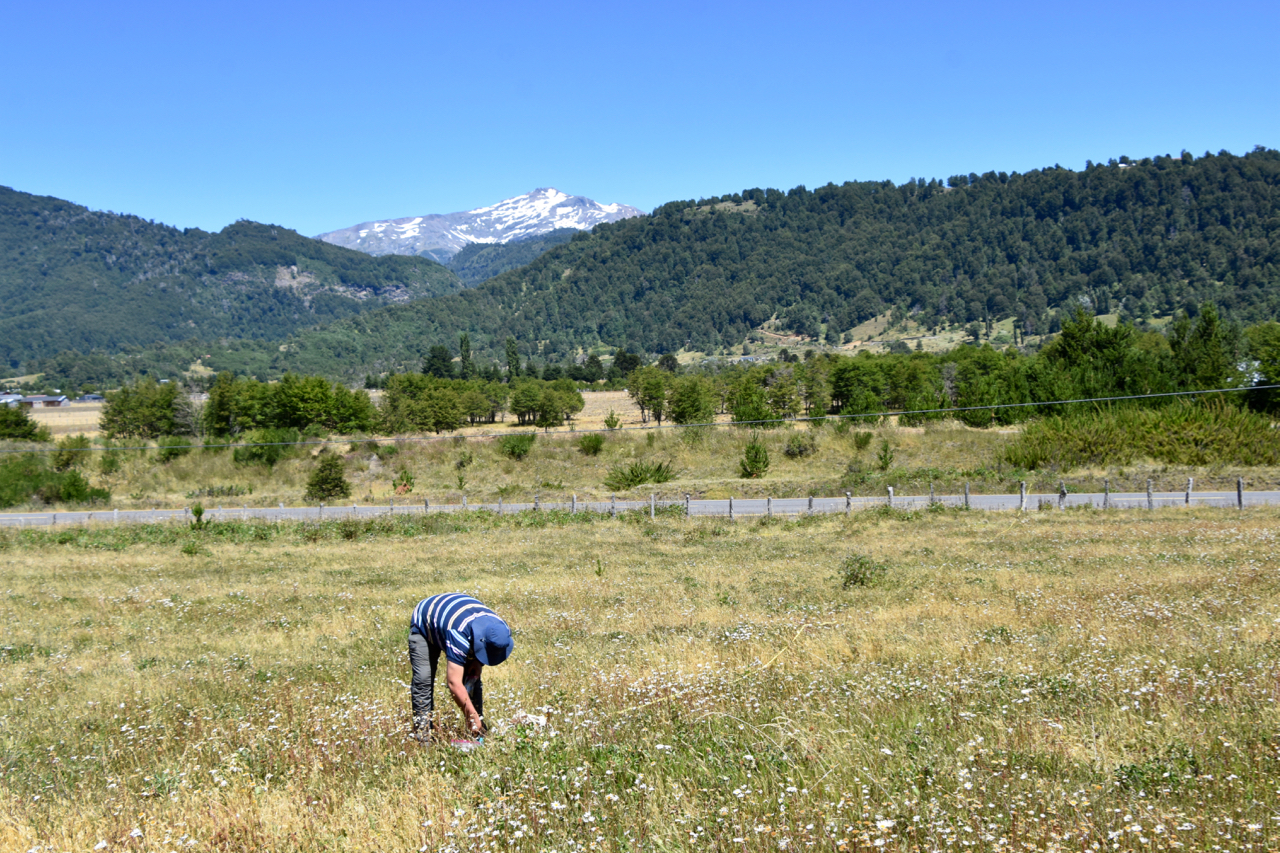
Picture by Stijn Van de Vondel
Please spread the word and invite your colleagues! This symposium is open to all and THE opportunity to get in touch with the network towards publication of the database itself. We will soon start one final push for data submissions towards that publication, which we plan to finish in autumn 2023 (so this will be the final chance for anyone to contribute data and get an invite to co-author our big database). More information on this will follow!
Looking forward to seeing many of you at our symposium!
Picture this: it’s the 20th century and people are planting pine trees all over Chile. Pines of the genus Pinus, that is, which is very different from the native Araucaria araucana (the monkey puzzle tree). The latter might very well be called the ‘Chilean pine’ by some, but lacked the versatility for those wanting efficient wood production and erosion protection. So: in come the Pinus-pines, to help the economy!
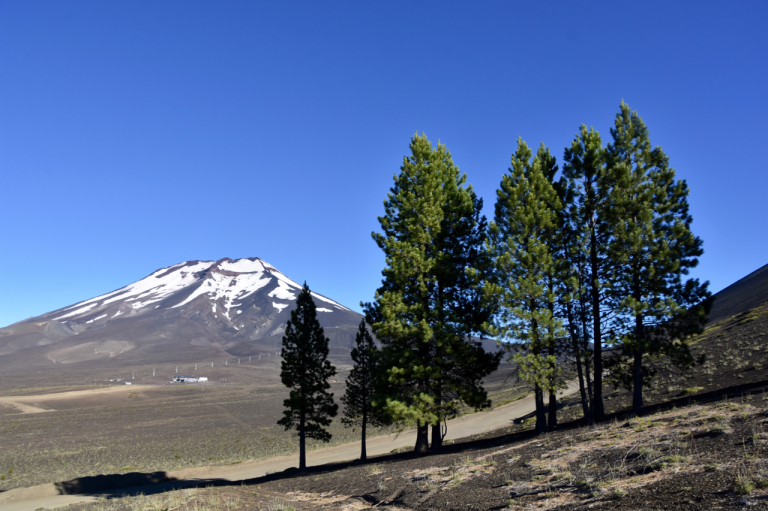
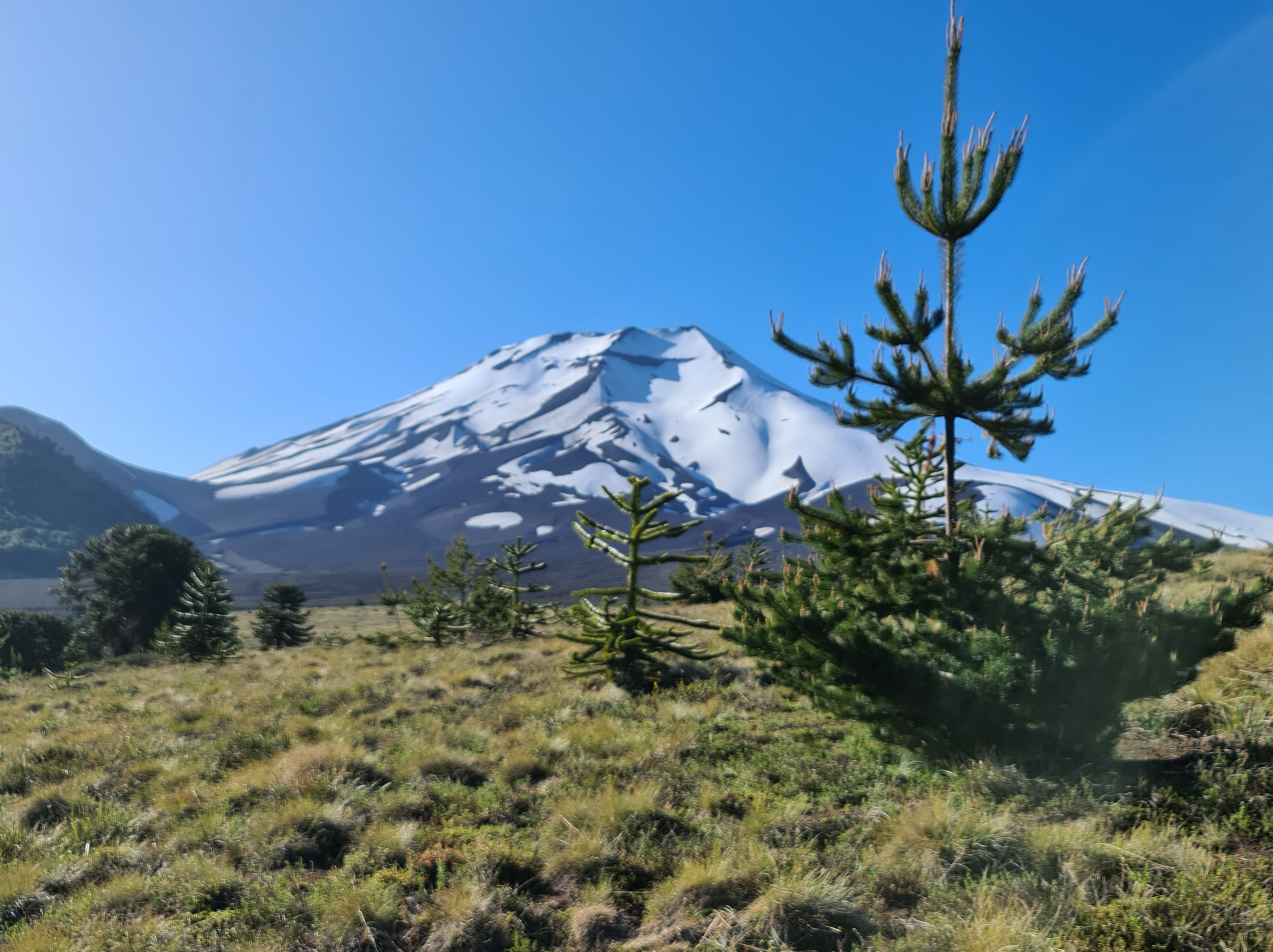
A line of lodgepole pines (Pinus contorta) planted above the treeline at the foot of the Lonquimay-volcano
These might have looked like good ideas – and perhaps still do too many – but now the tables have drastically turned: these pines have spread like wildfire and are causing havoc on the ecosystem. Indeed, those pine trees have the tricky habitat not to remain where they are, and especially in the native Chilean landscape of Araucaria forests and Patagonian steppe, pine trees come across very little resistance. As a result, the once so characteristic landscape is now a tangled mess of pine branches and trunks.
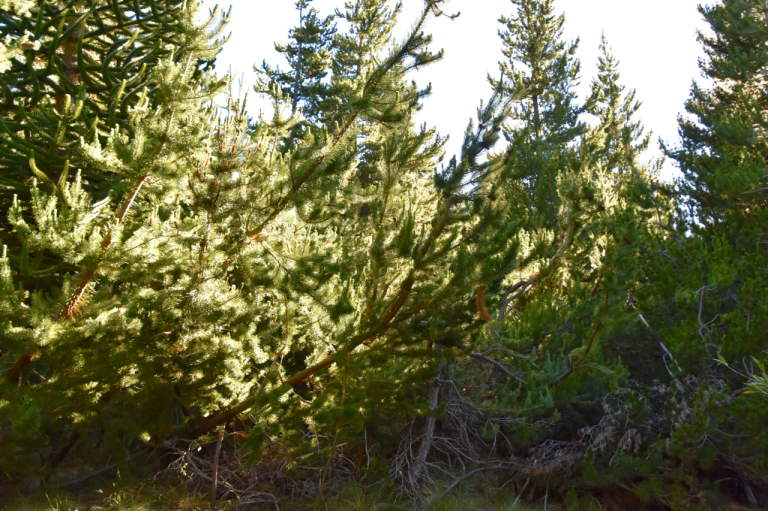
A dense stand of expanding lodgepole pines, with stems growing in all directions, creating an understory that is almost impossible to pass
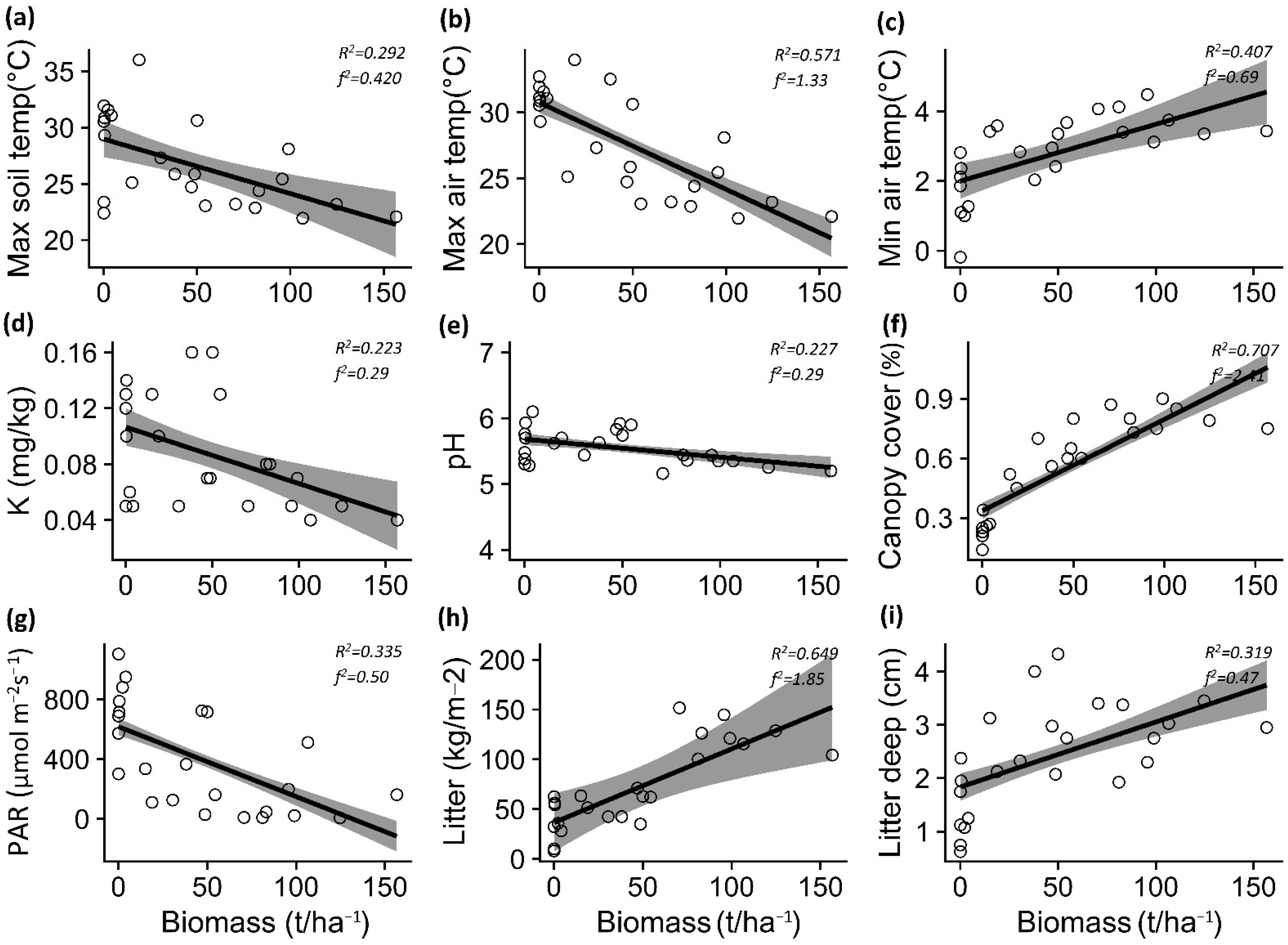
But what’s happening beneath these dense canopies? How much are the microclimate and soil suffering from these stubborn pine trees? And, even more importantly, what is the impact of these changes on the native vegetation? In a recent study led by our Chilean partners from the University of Concepcíon, we set out to investigate this effect for invasions of lodgepole pine (Pinus contorta). We measured everything from temperature to soil pH to nutrient availability across a gradient of pine biomass, from scattered individuals to dense entanglements.
Pinus contorta biomass significantly correlates strongly with a wide range of environmental conditions: more pines result in buffered temperatures, loss of light, loss of Potassium, decreased pH and increased litter depth.
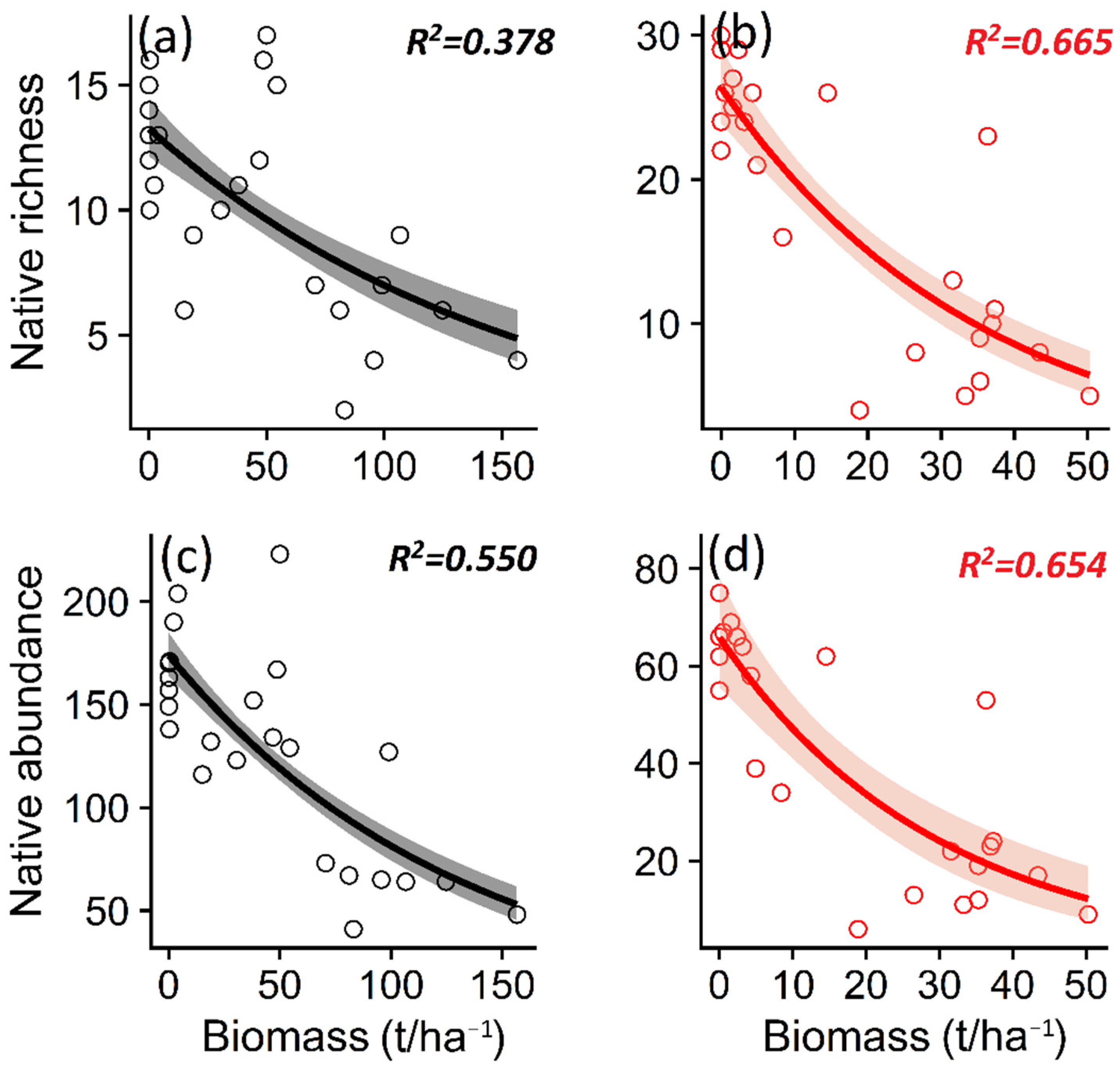
Our results – published in ‘Diversity – were alarming – the impact was as huge as we suspected based on visual assessment alone. The more pine trees, the worse it got. The local micro-environment was drastically altered, resulting in a loss of light and nutrients, decreased pH, and increased litter depth, amongst others. But our biggest worry? The native plant diversity was virtually wiped out in the most densely invaded plots.
Native plant species richness (top) and abundance (bottom) decreased significantly with increasing pine biomass, both in the Araucaria-forest (left) and on the Patagonian steppe (right).
Our study revealed that it is probably the interplay of all these environmental factors – all so dramatically changed from background conditions – that explains the progressive drop in native plant species in the understory. Indeed, few native species likely have the necessary flexibility to deal with changes in all these defining environmental characteristics at once. The mechanisms behind the loss of biodiversity of native species associated with plant invasion would thus not only depend on the competition exerted by P. contorta, but also on the modifications that this species exerts on the abiotic environment. Moreover, these microenvironmental changes can have significant effects on other functional groups (e.g., pollinators, decomposers) with important consequences for the whole trophic network of the invaded ecosystems.
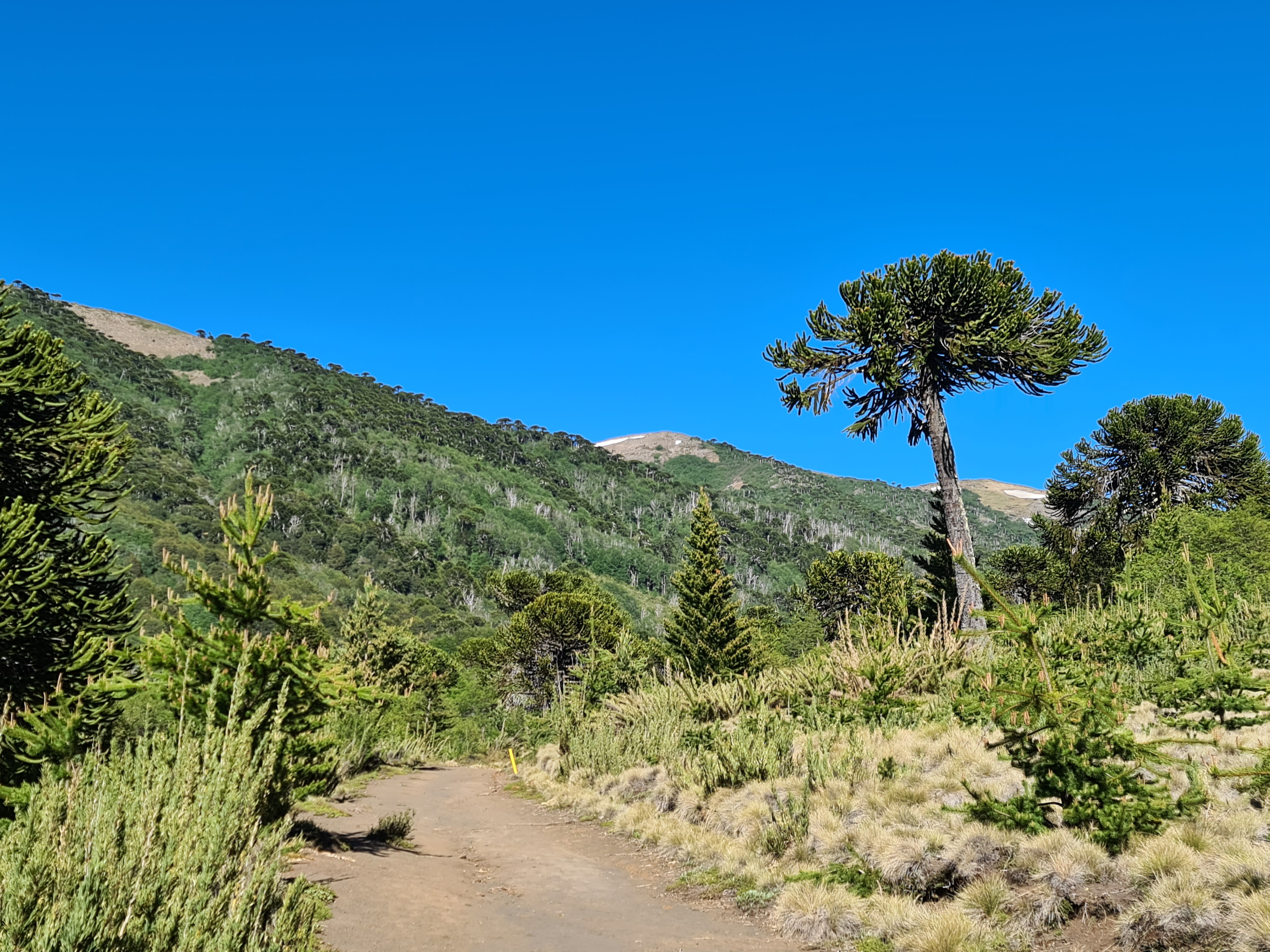
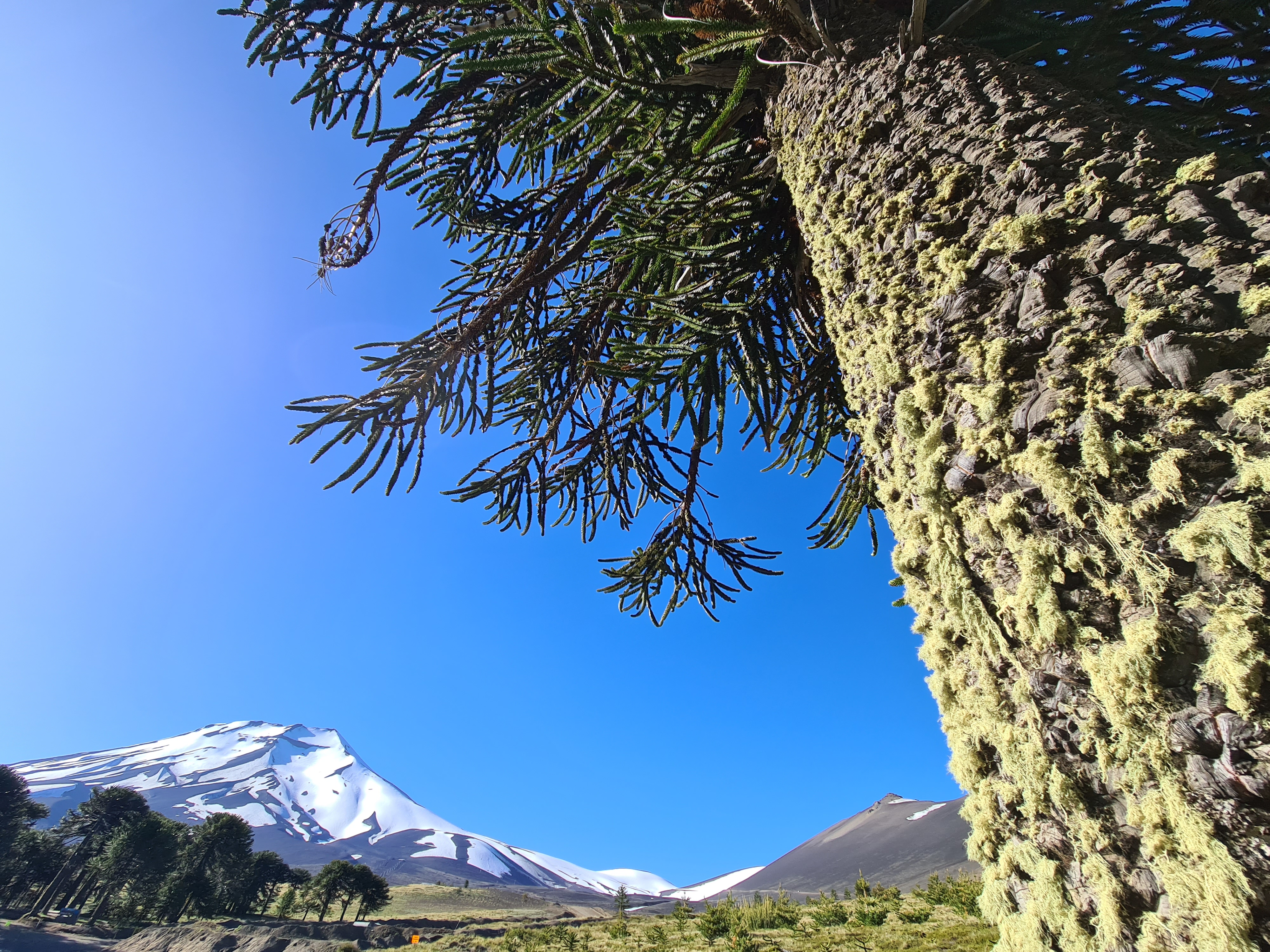
Scattered pine trees in between a few old and persistent Araucaria trees
So, what’s the plan of action? Can we get rid of these pine trees, and if so, what happens to the microenvironmental conditions? How long will it take for the ecosystem to bounce back? Once that question is answered, it is of course still a matter of finding affordable solutions to get those stubborn pine trees out of there…
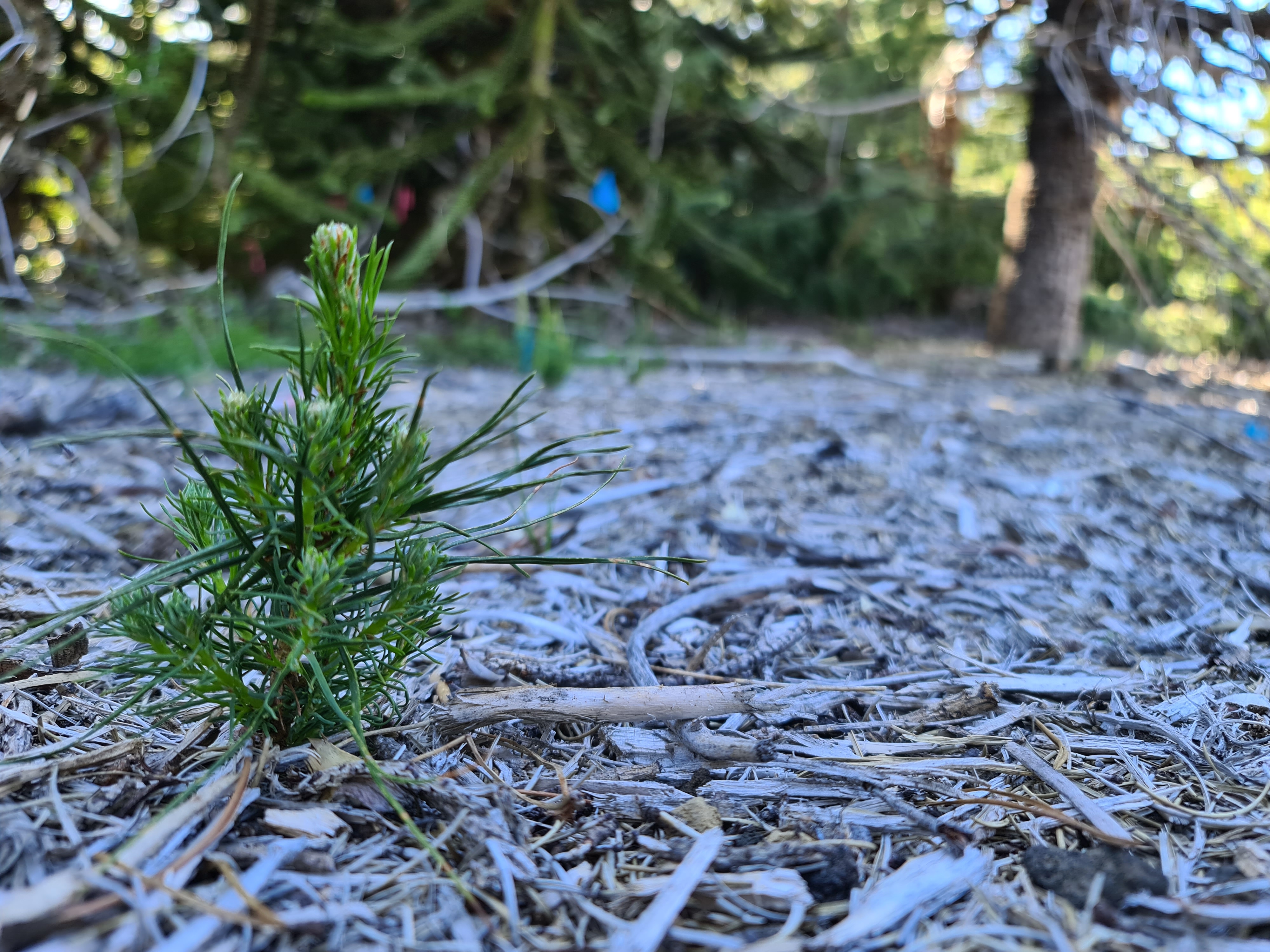
A lodgepole pine seedling just popped up after experimental pine removal, suggesting that recovery of the native vegetation will not be that easy.
I started tracking my time at work in detail at the start of my postdoc in 2018, using the amazing app ‘Timeular’. This series of stories provides some insights into postdoc life using that data.
In a postdoc, not everything goes according to plan. In fact, it’s more likely that they won’t! It’s important to realize that that is totally ok. But it’s important to understand that this is perfectly normal and an inherent part of the scientific process. We can try new things, experiment, make changes, backtrack, change direction. We can fail!
I know he academic climate of recent decades has not been forgiving of failure, but it’s a crucial and valuable aspect of scientific discovery. After all, if success was guaranteed, would it still be considered true science?
Through my time tracking practices, I now have a clear understanding of the amount of time I have spent on ‘failed’ projects – those that I invested hours into but never got published. Note that this is of course just one type of failure and does not include rejected proposals, failed experiments with published negative results, or the countless micro-failures encountered along the way. To give a visual representation, I created a plot of the 35 most time-consuming papers of my PhD.
Ranking of my 35 most time-consuming papers, coloured by my authorship position, with a border colour for their status. Green borders indicate ongoing papers for which I’m confident we will get them published eventually. Red borders are for cancelled papers – papers that I’m confident will never get published.
Good news first: the largest chunk of my time went towards a paper that actually got published! This is our Global maps of soil temperature-paper, a massive effort with a looooong co-author list. However, it’s evident that a significant portion of my time was also dedicated to projects that didn’t see the same success. The list of 35 time-consumers includes seven (7!) cancelled papers and several others that are yet to be published.
One particular project that deserves mention is the cancelled paper ranked second in terms of time invested. It was an ambitious attempt to apply the theoretical concept of higher-order interactions (HOIs) to real-world data. At the time, HOIs were and still are a hot topic, but modeling them correctly proved to be challenging. Most prior attempts were limited to experimental communities, petri dishes, or simple models.
I started modelling on my messy real-world community data (in parallel to a theoretical ecologists who was making data-free models of the same), and solved roadblock after roadblock. Our goal was to confirm the theory through real-world findings, and we worked tirelessly to overcome each obstacle. Despite these efforts, the limitations of the data became increasingly apparent and the impact of methodological decisions was more noticeable. Nevertheless, we completed a manuscript with a story we were confident about and submitted it to our first high-impact journal.
However, the manuscript faced rejection after rejection, luckily with constructive feedback from reviewers. We took their comments into account and worked to make the manuscript better and clearer, highlighting more and more of the unearthed methodological limitations up front. Despite these efforts, the limitations became increasingly difficult to ignore and started to overshadow the findings that I first had been so proud of. After several rejections, we ultimately made the difficult decision to cancel the project, recognizing that we couldn’t get a good grip on higher-order interactions (HOIs) with this messy data. It was a failure.
The list contains other failures.
The list of failures also includes valuable learning experiences. For instance, there were some engaging master’s theses that I invested a lot of time in, but the students had to leave before the manuscript was finished and I no longer had the capacity or expertise to complete them. Another paper that I was enthusiastic about got overtaken by a new one with a more sophisticated methodology, while a dataset that didn’t fit the original research question eventually found use for a different purpose. I also invested a lot of effort into some analyses, only to discover that they would require even more work and were not aligned with what I had promised to the funders.
Although these projects may not have ended in publication, they are not true failures. I learned a lot from each of them and some of that knowledge has, and will continue to, inform my future work in different ways. While the “publish or perish” mentality is prevalent in the scientific community, I firmly believe that the real value of science lies in the learning. Publishing is a great way to share your learning with others, but not all learning has to be public. Personal growth as a scientist and a person is equally important and even if it’s not reflected on your CV, it will benefit you in the long run. I hope this story will encourage you to embrace failures in your own scientific journey.
Sometimes one needs patience to answer a research question. Lots of it. The Mountain Invasion Research Network (MIREN) already asked itself this important question back in 2006: how fast are non-native species travelling uphill along mountain roads? Now it’s 2023, and for the first time we have an answer to this, thanks to long-term vegetation monitoring by a team of researchers across the globe, and the work of MIREN master-turned-PhD candidate Evelin Iseli, whose work now got published in Nature Ecology & Evolution (!).What follows is the English translation of the press release by our university. The paper itself can be found here!
Suppose you put your hiking boots in your backpack, fly to another continent and go hiking in the mountains. Chances are that you may find that seeds of local vegetation travelled the whole way with you in the mud on the soles of your shoes. If these fall off your shoe abroad, an alien plant may sprout where that seed has fallen. Thus, without realising it, you contribute to the spread of non-native plant species.
Moving uphill
Ecologists from the global MIREN-network found that the number of non-native plant species in mountain areas around the world has significantly increased in the past decade. Until now, alien plant species were advancing less in mountains compared to their increase at lower elevations. But due to climate warming on the one hand and increasing human influence at high elevations on the other, it now appears that non-native plants in mountains are also advancing steadily uphill.
The number of non-native species increased by 16% in mountain areas.
“Although the presence of native species in mountains is relatively well documented, long-term studies of alien species in mountain areas are very rare,” says Jonas Lembrechts, biologist at UAntwerpen. Lembrechts and his colleagues have therefore been monitoring non-native species along mountain roads since 2007, in 11 mountain areas around the world: in Norway, Switzerland, the Canary Islands, New South Wales, Victoria (Australia), central and southern Chile, India, Hawaii, Montana and Oregon.
“There are big differences in the speed of the invasion, but the general increase is unmistakable,” says Lembrechts. The study of the 11 mountain regions worldwide shows an increase in the number of alien species by as much as 16% over the past decade.
Mainly European plant species
Moreover, in 10 of the 11 regions studied, the scientists found the alien species at significantly higher altitudes than ten or even just five years ago. Moving to higher altitudes to follow their preferred climate is a well-known strategy for plants to defend themselves against climate change. Only, the rate at which alien species are climbing upwards is higher than if climate alone were the culprit.
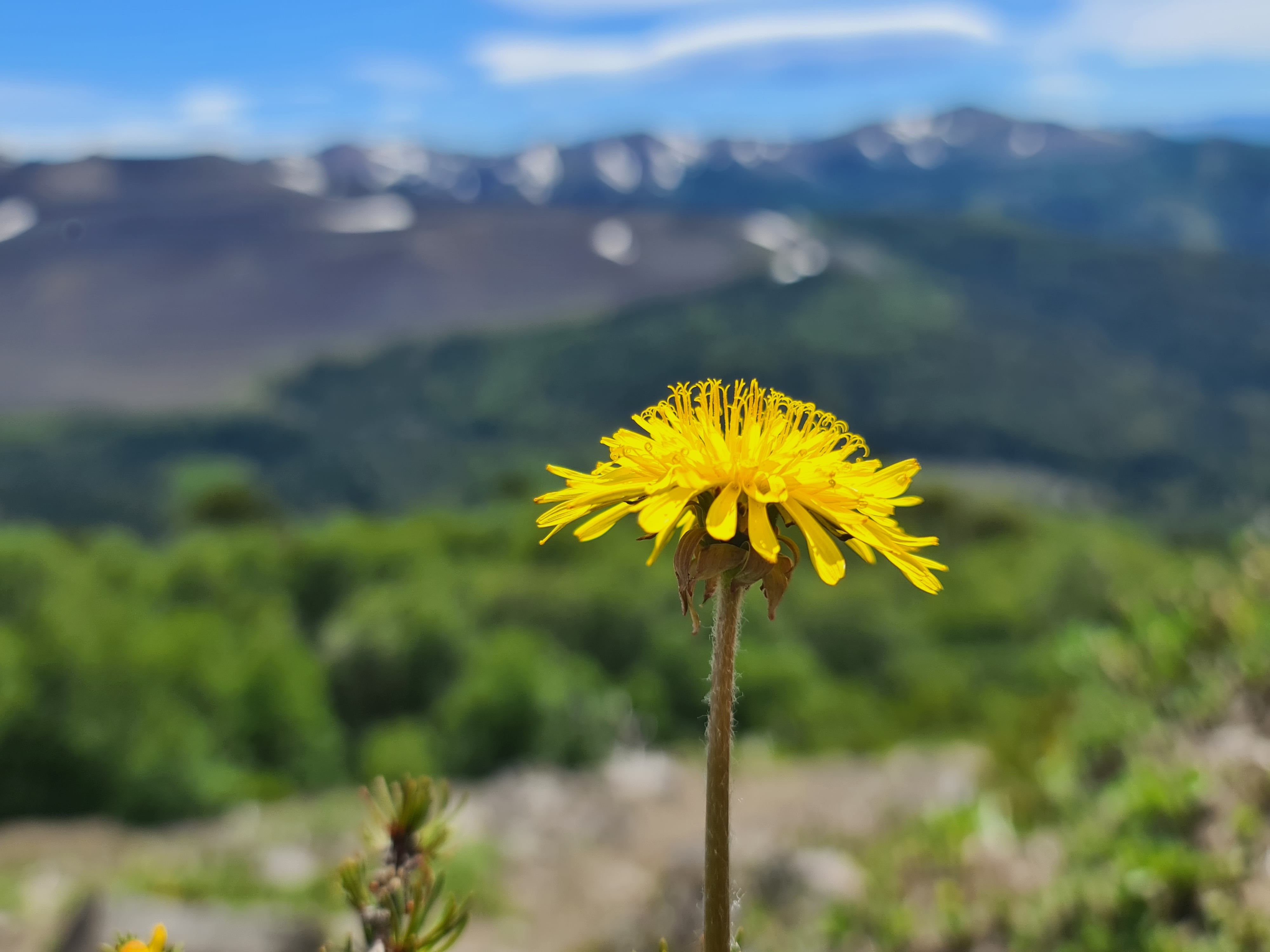
“Europe is the largest exporter of exotic plants to mountainous regions worldwide, says Jonas Lembrechts.Left: Trifolium pratense from Western Europe in the Norwegian Scandes. Right: the European Taraxacum officinale in the Chilean mountains.
“Exotic species often enter new regions through the lowlands, where most of the people are,” says Lembrechts. “From there, they find their way to the mountains. But with a little help from humans, their spread can sometimes be lightning-fast, especially along mountain roads and trails.”
Off balance
Often these are then also European plant species, research shows. “Europe is currently by far the biggest exporter of exotic plants to mountain areas worldwide,” Lembrechts explains. “Not so strange, when you consider that in recent centuries it was also mainly Europeans who started visiting mountain areas on other continents, for tourist and commercial purposes.”
However, this is not good news. “Mountain nature is often very fragile,” says Lembrechts. “Alien plant species can threaten or drive out native species, which are important in the local ecosystem, throwing the system out of balance.”
The southern Indian Ocean is home to the little known archipelago of Crozet. Despite its harsh weather and lack of substantial human presence, the island is a haven for penguins and elephant seals. Among the island’s inhabitants is a seemingly ordinary beetle, the Amblystogenium pacificum. It crawls over and under the rocks, hunting for smaller things to eat, and just lives his normal beetly life. There is just one thing with this beetle that sparked the interest of the (unusually persistent colony of) French scientists on the island: there are two colour versions of it. A light and a dark one.
Star of the show: the endemic Carabid beetle Amblystogenium pacificum
Now, we wouldn’t be scientists if we didn’t want to dig deeper into this.
Scientists have proposed several hypotheses to explain this phenomenon, including Gloger’s rule, which states that darker coloration is a common response among insects exposed to cold conditions. If Gloger’s rule were at play, we would expect to see a fitness advantage in the darker insects when it’s colder. However, it’s rarely that simple in ecology. It’s worth noting that previous studies have observed that the proportion of dark beetles increases by about 8% for every 100 meters in altitude on the island. This results in a clear distinction in the spatial distribution of the two morphotypes. More recent observations made in fellfield habitats have reported that the proportion of brown to black beetles ranges from a 2:1 ratio of brown insects at low altitudes to a 2:1 ratio of black adults at higher altitudes. This further supports the idea that Gloger’s rule may be at play. But as scientists, we can never jump to conclusions too quickly, and we must always keep an open mind to other possibilities.
Find the beetle, happily running across a soft ‘moss forest’. Picture by Diane Espel
Nevertheless, there were both dark and light individuals across the entire elevation gradient on the island. This raises the question of whether the dark beetles fare better at higher elevations (in terms of being bigger, having more nutrient or lipid reserves, etc.) and vice versa.
However, there are other rules that come into play, such as Bergmann’s rule, which states that insects tend to get larger as the temperature gets colder. This is because larger body sizes in endothermic species often correspond to a smaller surface area to volume ratio and reduced heat dispersion in colder climates. Additionally, there is the rule of sexual size dimorphism, which states that female insects are typically larger than males.
So, how does all of this play out on our windy island? The good news is that the elevation (and thus climate) gradient is responsible for many trait differences among the beetles. However, it turns out that coloration does not seem to be a major factor in determining the performance of the beetles. Bergmann’s rule does appear to be at play, as elevation does seem to boost beetle body size (although at the very top of the mountain, the extremely harsh conditions have made them smaller again). Sexual dimorphism is also present, with females having more lipid and sugar reserves (which is pretty clever of them, if you ask me).
Body size as a function of altitude for dark (blue) versus light (green) male (dashed) versus female (full line) beetles. Elevation clearly affects body size, but with virtually no difference between the two colorations or even genders.
However, a so-called ‘functional hypervolume analysis’ did not show clear niche partitioning of the insects along the studied altitudinal gradient, and we had to conclude that niche partitioning was happening for body sizes rather than coloration types.
In conclusion, the mystery of the dark and light beetles on Crozet Island remains unsolved. The absence of clear patterns in the relationship between temperature and size highlights the complexity of the interactions between insects and their environment. Factors such as low temperatures and limited resources at higher altitudes likely play a role in shaping the beetles’ functional traits. But hey, isn’t that what science is all about? Asking questions and trying to find answers, even if they’re not always easy to come by. So let’s just say, the adventure continues!
Ok, I’ll bite. The internet is literally full of fancy people jumping on the bandwagon called ‘ChatGPT’. The amount of lists I’ve seen floating by with ‘you are only using 1% of ChatGPTs full potential’ or ‘this is how I convinced the queen to marry me by using ChatGPT and so can you’ cannot be counted. But the thing is: we HAVE to talk about it. As this thing is a game changer (whether a big or a small game changer I leave open to discussion).
The potential applications for ChatGPT are numerous, but – let’s be honets – it’s important to acknowledge that it’s not as good as it looks for many questions you could ask it. Despite the opportunities it presents, there are also risks to consider. I have gained *some* insight on the tool and its appropriate usage now, and I wanted to share my perspective as an ecologist and lab leader.
First of all, it is important to note – as many have done before – that ChatGPT should not be used to write academic papers. Despite its ability to generate coherent introductions, deeper analysis of the text reveals a lack of credibility and depth. The tool lacks the capability to cite credible sources and often creates made-up papers as a result. It is thus unlikely that a thesis written by the robot would pass scrutiny: the introduction might sound good enough, but for the methods and results, and any depth in the discussion, they are still entirely on their own.
I know some of these people, but never ever have I published in Enviornmental Modelling & Software. So Veraverbeke, Bauwens & Muys, time to get writing!
Despite its limitations, ChatGPT can be a powerful tool when used correctly. Here are a few ways I have found it useful in my work:
Improve first drafts. Using ChatGPT to improve first drafts can be an effective way to save time and improve the overall quality of writing. By quickly jotting down ideas and creating a rough storyline, I can then feed this rough text through ChatGPT to improve sentence structure and coherence. This added step allows me to focus on refining and polishing the content, rather than spending time on correcting grammar and sentence flow. The ability to quickly identify and incorporate the good suggestions while discarding the bad ones, has significantly reduced the time and effort required to finalize my writing. Additionally, this approach ensures that the grammar and flow of sentences are already on point when I start polishing things myself, which ultimately leads to a polished and well-written final draft.
Ask it to change the tone of text. Why settle for plain and boring text when you can jazz it up with a little help from ChatGPT? By using it to change the tone of your text, you can add some pizzazz to your blog posts and tweets. ChatGPT can even serve as your personal brainstorming buddy, suggesting intriguing snippets of text and clever wordplay to make your writing more attractive. And while I can’t say I use the final version it proposes, I do like to sneakily steal a few improvements here and there. So next time you’re struggling to add a touch of personality to your writing, don’t be afraid to turn to ChatGPT for a little inspiration. (Ok, I admit, all the witty wordplay is entirely ChatGPTs-doing, this paragraph was significantly more boring!)
Shortening texts: I asked ChatGPT to suggest how to shorten a project proposal from 8 to 4 pages. It came up with great suggestions to regroup or rewrite sentences in a more compact way, which also helps with email writing and other types of writing that need to be concise.
Annotate R-code. This is a relatively new discovery for me, but I think it will be a GREAT tool for my students! I just feed in a piece of R-code and ask it to annotate it, and it writes down in text what all the steps mean. For students, who are often unfamiliar with many of the tips and tricks of R that I learned over the years, this can make R-code I sent them a lot easier to understand.
Suggesting formatting for things I am not familiar with writing: For example, I haven’t written too many recommendation letters yet, so I ask ChatGPT for an example by feeding it some keywords for the candidate in question. This gets rid of the ’empty page’-issue where you don’t know how to start writing and lets you build on a good foundation.
My final words are perhaps the most important part of this blogpost: we HAVE to discuss this tool with our students. They are more tech-savvy then we are, so they will find out about it. Yet they might not get all the pro’s and cons, and they might especially brush over the ethics. Can they use it? Sure, I’m all in favour of getting all the help one can, the main goal of their work (in their master or PhD thesis, mind you, not in other courses) in my opinion is anyway to advance science and grow as a human in the process. They can use whatever tool they want, be it a fancy and expensive measurement tool or a chatty robot. As long as they know the strengths and weaknesses. That’s the same for that fancy measurement tool for that matter.
It’s a common question – is the text I’ve written still mine when I’ve utilized a language model like ChatGPT? I firmly believe it is. While the model may offer suggestions, I ultimately have the final say on what to include or not. Think of it as having a co-author, one who carefully reads and offers suggestions, but it’s ultimately up to me to decide what makes the final cut.
Lake Törnetrask, Abisko Research Station, Abisko, Sweden
Luscinia svecica, Abisko, Sweden
Skjomen valley, northern Norway
Narvik, Norway
Lake Torneträsk, Abisko, Sweden
Lake Torneträsk, Abisko, Sweden
Luscinia svecica, Abisko, Sweden
Abisko, Sweden
Narvik, Norway
Laktatjakka valley
Summer in the Skjomen valley, northern Norway
Luscinia svecica
Lake Torneträsk
Phyllodoce caerulea
Narvik, Norway
Skjomen valley, northern Norway
Laktatjakka valley
Narvik, Norway
Pinus sylvestris, Narvik, Norway
Sweden
Skjomen valley, northern Norway
Oenanthe oenanthe
Lake Törnetrask, Abisko Research Station, Abisko, Sweden
Trifolium repens
Angelica archangelica
Laktatjakka valley
Common heather
Norway
Narvik, Norway
Hallerbos 2017
Young bluebell (Hyacinthoides non-scripta) surrounded by flowers of yellow archangel (Lamium galeobdolon)
The common bluebell (Hyacinthoides non-scripta), the signature flower of the Hallerbos
Single bluebell flower surviving on a wetter spot, as indicated by the field of wild garlic (Allium ursinum)
A really wet patch of forest, with giant horsetail (Equisetum telmateia) in a field of wild garlic (Allium ursinum)
Wild garlic (Allium ursinum) in the Hallerbos flowers a bit later than the bluebells, yet this one was already in full bloom
A bumblebee visiting yellow archangel (Lamium galeobdolon)
A bumblebee visiting yellow archangel (Lamium galeobdolon)
Wild garlic (Allium ursinum)
Wild garlic (Allium ursinum)
Weirdly beautiful, the inflorescence of pendulous sedge (Carex pendula), typical for the wettest spots in the forest
Weirdly beautiful, the inflorescence of pendulous sedge (Carex pendula), typical for the wettest spots in the forest
A little stream in the Hallerbos, surrounded by endless fields of wild garlic (Allium ursinum)
The herb-paris (Paris quadrifolia), less common in the forest
Wild garlic (Allium ursinum)
Bluebells (Hyacinthoides non-scripta)
Weirdly beautiful, the inflorescence of pendulous sedge (Carex pendula), typical for the wettest spots in the forest
Another one from the wet plots: large bitter-cress (Cardamine amara)
Another one from the wet plots: large bitter-cress (Cardamine amara)
Young beech leaves, as soon as they are fully grown, spring in the understory is over
A beech forest without understory, most likely too dry and too acid for any survivors
A young beech seedling (Fagus sylvatica), looking nothing like a beech, yet everything like a tiny dancer
Young beech seedling (Fagus sylvatica)
Bluebells (Hyacinthoides non-scripta)
Bluebells (Hyacinthoides non-scripta)
Bluebells (Hyacinthoides non-scripta)
Mountain melick (Melica nutans), a grass in the most amazing green
Bluebells (Hyacinthoides non-scripta) in a rare patch of mountain melick (Melica nutans), a grass in the most amazing green
Bluebells (Hyacinthoides non-scripta)
Bluebells (Hyacinthoides non-scripta)
Montpellier 2017
The entrance to the cathedral of Montpellier
The cathedral of Montpellier
The entrance to the cathedral of Montpellier
The cathedral of Montpellier
Narcissus poetics
The cathedral of Montpellier
The botanical garden of Montpellier
The botanical garden of Montpellier
The botanical garden of Montpellier
Brackish Camargue vegetation
Brackish Camargue vegetation
Brackish Camargue vegetation
A typical lagune
Brackish Camargue vegetation
Camargue horses
Camargue horses
Camargue horses
Brackish Camargue vegetation
Brackish Camargue vegetation
Brackish Camargue vegetation
Camargue horses
Brackish Camargue vegetation
Little egret in the evening sun
Flamingo’s in the evening sun
A typical lagune
Dandelion fuzz
Grass lily
Grass lily
Dandelion fuzz
Veronica in a sea of poplar fluff
Euphorbia in a sea of poplar fluff
Poplar
Gare du Midi, Brussels
Gare du Midi, Brussels
Gare du Midi, Brussels
Gare du Midi, Brussels
Sweden autumn 2016
Autumn in Abisko
Yellow leaves of mountain birch, with lake Torneträsk in the background.
Lapporten, the gate to Lapland, in Abisko
Rain blowing over the Abisko National Park
The colours of the north: red fireweed and yellow mountain birches, with lake Torneträsk on the background
Yellow leaves of mountain birch, with lake Torneträsk in the background.
Rain on the background, the ski lift in Abisko on the foreground
The steep slope of mount Nuolja on a dramatic looking morning
The beautiful colors of lake Torneträsk in Abisko
A little stream on top of the mountain, with a view on Lapporten, the gate to Lapland
Well, that is a beautiful table with a nice view on lake Torneträsk in Abisko
Our little experiment on top of the mountain in Abisko, with a view on Lapporten
Autumn in Abisko is extremely colorfull
The ski lift with a view on Abisko National Park and Lapporten
Hiking dowhill towards lake Torneträsk
This green is greener than the greenest green: moss on top of mount Nuolja
Well, that is a beautiful table with a nice view on lake Torneträsk in Abisko
The ski lift with a view on Abisko National Park and Lapporten
The ski lift with a view on Abisko National Park and Lapporten
The most beautiful hiking trail of the world: Nuolja in Abisko
Angelica archangelica, often the biggest plant of the Arctic
The most beautiful hiking trail of the world: Nuolja in Abisko
Cirsium helenioides, the melancholy thistle
Hiking down mount Nuolja
The steep slope of mount Nuolja on a dramatic looking morning
The colours of the north: red fireweed and yellow mountain birches, with lake Torneträsk on the background
The prettiest yellow and blue: autumn in Abisko
Fireweed, Epilobium angustifolium
Campanula or bellflower, I think ‘uniflora’
Vaccinium myrtillus
Cornus suecica, the prettiest red of the world
Hieracium alpinum, alpine hawkweed
Carex atrata, one of my favourite sedges
Alpine clubmoss, Diphasiastrum alpinum
Agrostis capillaris, bentgrass
Common yarrow (Achillea millefolium)
Anthoxanthum odoratum, sweet vernal grass, fully grown and mature
Snow scooter trail
Our plot in the mids of a field of horsetails (Equisetum pratense)
Equisetum pratense
Cliff overlooking the valley with the road to Norway
Seedling of Taraxacum officinale, the dandelion, after two years of growing in bad conditions
Poa alpina, the alpine meadow-grass, with its viviparous seeds
Massive flowerhead of Angelica archangelica
Angelica archangelica
Blueberry (Vaccinium myrtillus) in autumn
A lowland marsh in Abisko in autumn
Installing the plots of our trail observations on top of mount Nuolja
Installing the plots of our trail observations on top of mount Nuolja
Tanacetum vulgare (Tansy), non-native for the high north
Autumn forest down in the valley
The valley of Nuolja to Björkliden
Summer on the Nuolja-side
A full rainbow behind mount Nuolja in Abisko
It’s raining in the west, clouds trapped behind the mountains
A strong wind blowing rain from behind the mountains to our side
A strong wind blowing rain from behind the mountains to our side
Betula nana, the dwarf birch, mini autumn forest
Betula nana, the dwarf birch, mini autumn forest
The valley of Björkliden in autumn
The valley of Björkliden in autumn
The valley of Björkliden in autumn
The valley of Björkliden in autumn
Sweden spring 2016
Although the alpine zone has been harder for invasives to access than most places, human structures like trails are often an easy gateway for the invaders to get up there. Picture from Abisko, Swedish Lapland.
Overlooking the valley of Laktajakka
Trifolium pratense
Oxyria digyna
Western European species like the red clover (Trifolium pratense) here are often listed as non-native species in mountain regions.
Rubus arcticus
Eriophorum vaginatum
Salix reticulata
The valley of the lakes
Ranunculus glacialis
A rainy hike
Silene suecica
Bartsia alpina
Melting snowpatch on a lake
Dryas octopetala
Ranunculus glacialis
Silene acaulis
Cornus suecica
Trifolium repens
Amiens
Gargoyle planning to eat the cathedral
Just outside of Amiens
Almost cold enough for ice-skating
The southern side
Sun rising above the water
Le Club d’Aviron in winter weather
Cathedral at night
House on the square before the cathedral
Enjoying silence and the morning sun
Cathedral with a glimpse of spring
Amiens is filled with cute little houses
View from my office window
Colourful mirror
The museum behind the beautiful gates
Frozen mirror
Cathedral at night
View from my office window
Maria without a shirt
Frozen to the bone
Sunny but cold, the Quai Bélu
Nice architectural curve
Sunny but cold, the Quai Bélu
Cathedral at night
Cathedral at night
Winter sun on the Place du Don
Cold!
Cathedral seen from the frozen Parc Saint-Pierre
Sweden autumn 2015
Lichen
Sweden summer 2015
View on the 1000 meter plots
Doing research on a cold Arctic morning
Plots flooded by the snowmelt
Flooded by the snowmelt
Meltwater river, racing down the mountain
After a hike, even the most basic house looks cosy. Little hut in the mountains, open for everybody
Snowbridge, maybe don’t cross…
Snowbridge
View from a cliff
Silene acaulis or cushion pink, cutest plant of the Arctic
Two seasons in one image
Steep slope
Hiking down
Narvik Kirche, church of the subarctic
Narvik Kirche
Reindeer on top of the mountain
Narvik Kirche
Summer at the church
Summer flowers
Massive waterfall
Young willow catkins
View from Narvik’s hospital, with lilac flowers
Building a bridge over the fjord will gain al drivers at least an hour
Norwegian fjord
Posing with the water, getting soaked
Minimalistic mountains
Insect investigating our reindeer antler
Catching mosquitoes with our license plate, harvest of the year!
Posing with the plot
Fieldwork on the most beautiful spot of the world
Fieldwork on the most beautiful spot of the world
Summer bridge – still next to the sadly impassable river
Rhinanthus flower in the mountains
Plateau in the valley, beautiful brown
Experimental view from my favourite plot
Salix catkins
Extremely old Betula tree
Waterfall from a cliff
Buttercup is the earliest in spring, here
Rocks!
Alpine views
Views!
Fieldwork
Jumping over rivers
Plot
Golden plover
Angry lemming
Green, the whole north is green!
Snow, so much snow left!
Minimalistic mountain moments
Fieldwork
The research center
Red clover – focal invader
Look at this tiny cute snail!
Massive floods of melting water
Bartsia alpina
Hooray, a toilet!
Dryas octopetala
Lowest elevation plots
Butterball!
That’s a lot of water
Midnight sun is the best
At the lakeside
Beautiful Bistorta vivipara
Don’t fall in the water
Midnight sun
Wild river
Art – made by ages of wild rivers
Baby firework for America’s independence day
Midnight sun at the lake
The Abisko canyon was wilder than ever
That’s a crazy amount of water!
The Abisko canyon was wilder than ever
The Abisko canyon was wilder than ever
Black and white
Stone-man overlooking Abisko
Nothing as soft as a willow catkin
Label and soil temperature sensor attached
I’d drive to the top every day
Reflections
Rocks and clouds
Brave little birch
Brewing our camping poison
Basic camping stuff
Camping in Norway
Home-made temperature houses
Roadside research at its best
Norway is crazy
Horsetail is so funny
Little creek in magical forest
Birches, birches everywhere
Beautiful rock, a gift from the river
Another roadside fellow
Lichen
Ready to rock the summer
Collecting mosses
That’s a crazy old lichen
Tiny tiny piny trees, but old, so old!
Ready to jump into the fjord?
Ready to jump into the fjord?
That’s a spiky stone!
Views on Norwegian fjords
Silene in the mountains
Cute little orchid
Skua
Attacking skua, mind your heads!
Watch out for the attack of the fierce skua!
Black snail
New plot!
Still a lot of snow to melt, but this spot was free for a new plot
Reindeer are better than people
Two seasons in one picture
Let’s see what is happening to the balance in mountains! Is this a starting avalanche, or will it last a bit longer?
Cute little hut
Climbing mountains by car
Softest moss in history
Drosera in the marsh
Hiking in no-man’s land
The clouds are coming
Abisko valley
‘Butterball’
Fieldwork in the tundra
Abisko valley
Little plot
Clouds and sun and mountains
Making soup on a campfire with a view
Little creek on high elevations
Skua on the look-out
Melting snow in a river
Rhodiola rosea and the Törnetrask lake
Beginning of spring
Flooded plots, melting snow, impassible wetness
Ferns and horsetails
Chile 2015
Trips to the field sites were sometimes a real adventure, especially right after snowmelt
Lunch made by our local colleague, with funny bread (tasty as well!)