Follow your nose

In between the corrections of the reports of my students in the course on forest types, I took some free time roaming through little forest patches in the southern half of Flanders, close to the capital.

Wood garlic in Hellebos

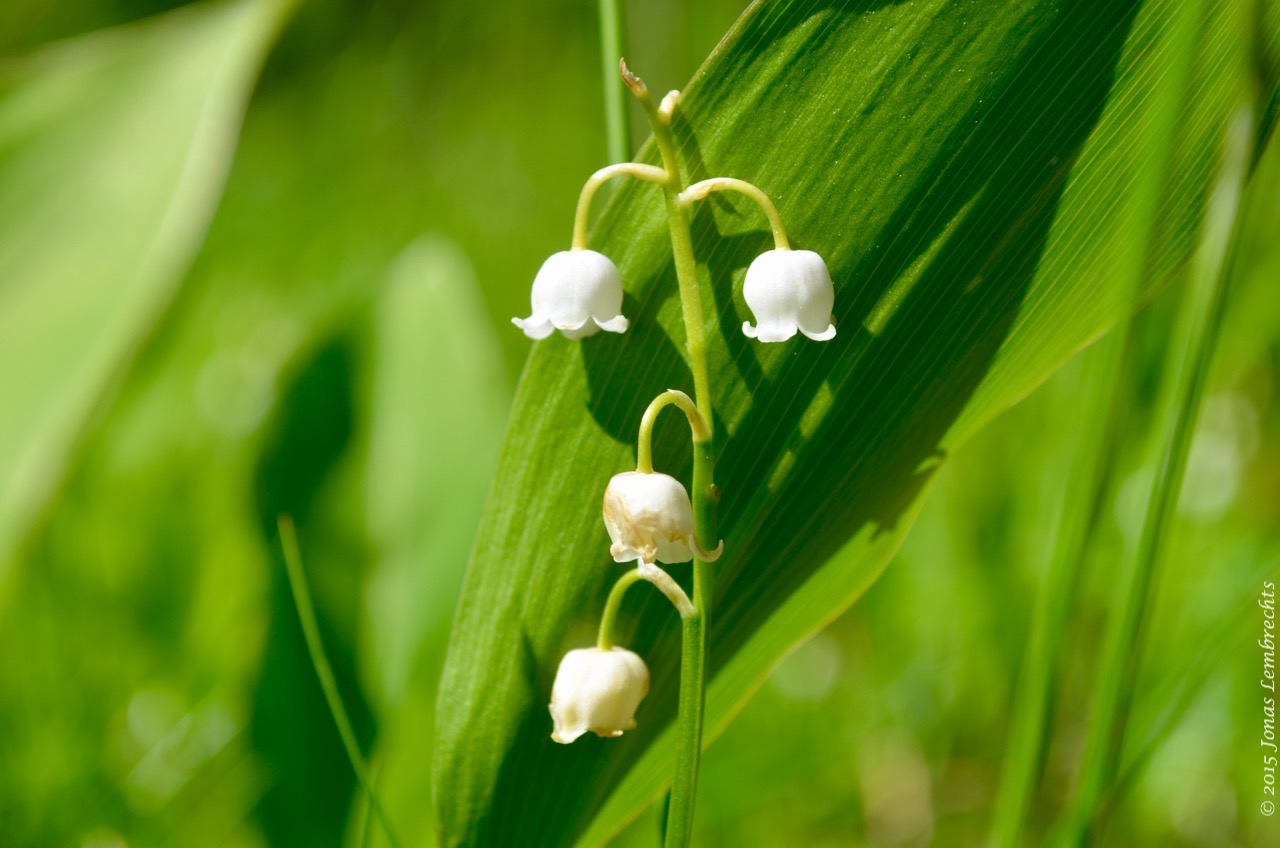
It was in one of these patches that I stumbled on a nice surprise, early on an otherwise normal spring morning in May. The surprise was called wood garlic and was preceded by an unmistakable fragrance. Following my nose, I found whole forest floors filled with this nice wild garlic plant with its white starry flowers.

 Wood garlic in Hellebos

For a guy who spent his whole life in Antwerp in the north of Flanders, these forests filled with wood garlic are an uncommon sight. The species prefers loamy nutrient-rich soils right outside seeping areas; conditions that are hard to find in my home region.

Wood garlic in Hellebos

And that is a pity, cause this species represents a highly valuable forest type with a wonderful feel (and smell!) But be quick if you still want to see their delicate beauty this year, cause most of the little white stars are fading to green at the moment of writing.

 Wood garlic in Hellebos

The students did a fine job with their reports, although they, too, seemed to struggle with  the borders of the different forest classification. If you move ten meters, and your understory changes completely to the complete other side of the spectrum, this task is indeed not an easy one.

Posted in Belgium | Tagged , , , , , , , , , , , , , | 3 Comments

Don’t forget the roadsides!

In this spring seasons, flowers are sprouting everywhere, artistically colouring the whole world, as they happily do every year.

Greater celandine

Celandine in Wilrijk

It is every year a surprise to see the variety and diversity of flowers that lighten up our days. And it is not only the nature reserves and natural areas that contain this variety, a lot of it can easily be seen from the road.

Narrowleaf plantain flowers

Narrowleaf plantain in Grobbendonk

I know that roadsides get a fairly negative image through my research, as I study them in the less disturbed world of the mountains, where they show a strongly degraded ecosystem. In Belgium, however, they are amongst the most important areas of nature we have left.

Broom flowering in a village

Broom in Grobbendonk

Indeed, roadsides are only a degraded ecosystems. Yes, they only show a fraction of the possible flower diversity in our nature. But still, we should not forget about them, as they are the strongholds of nature within our cities and the much-needed connections between the remaining patches of ‘true’ nature.

Chickweed flowers

Chickweed in Kontich, Antwerp

Posted in Belgium | Tagged , , , , , , , , , , | 1 Comment

A helping hand

This is a good moment for a little applause for the staff of my local garden shop.

Time after time, they have been giving helpful advice with a smile on their face. And I assure you my questions are not the lightest, as an ecologist might seem to have a peculiar taste for garden equipment.

Scientific gardening in Chile

Scientific gardening in Chile

My most recent complicated question involved fertiliser. What I needed was not just for any garden plant, but for our upcoming experiment in the Swedish mountains, where we want to add an exact known amount of nutrients to the soil. We ploughed through all available nutrient types, all with their small but significant differences, to find the one that suited me best and matched our goals and what we used in our previous experiments.

Adding our carefully debated fertiliser

Adding our carefully selected fertiliser

They might have been wondering a bit about the peculiar composition and location of my garden, but they helped me with excellent advise anyway! And that is how they help  tirelessly every time.

Posted in Belgium | Tagged , , , , , , , , | 1 Comment

Curly

I just love buckler ferns! For me, they are the true embodiment of spring, the season in which they start swarming forest floors with their endlessly amazing shapes.

Broad buckler fern

The broad buckler fern emerges from the soil as a cute little ball of fur, growing close together with its other buckler friends.

Broad buckler fern

Carefully, it starts sticking out its head and stretching out its stalk; but it will keep its precious leaves safe for a little while longer. And that is exactly what makes them so adorable: with their strong stalks folded around their precious leaves to protect them against the angry outside world, they look like a mother holding her baby in her arms.

Broad buckler fern

Only when the coast is clear – or so it seems – they slowly unfold their delicately green leaves to their full glory. Ready to green up the forests once again!

Leaves of buckler fern

Oh, yes, spring is a truly poetic season!

Broad buckler fern

With this happy spring feeling in mind, I am currently preparing everything for the summer – buying seeds, buying labels, finalising the designs – so I will soon be able to show you one by one the realisations of all my new plans!

Posted in Belgium | Tagged , , , , , | Leave a comment

Forest fun

Young bracken

In the middle of April, I had to teach a course on forest ecology with an excursion to the Hallerbos, one of the most famous forests in Flanders.  Besides its endless rolling hills with old beech trees, it is especially well known for its wild hyacinths, a typical understory species of Atlantic oak and beech forests.

Hyacinth

You should take my word for granted that we had the best day of the year to visit the spring flowers: the sun shining through the delicate light green beech leaves on the endless fields of blue hyacinths. All spring flowers in their full glory, absorbing all the precious light before the forest canopy closes some weeks later. You should take its beauty for granted, as I did not take any pictures!

Summer oak

I made up for that by visiting the ‘Kloosterbos’ in East Flanders, a forest with less obvious appeal, but certainly not less potential!

Pine forest

The Kloosterbos has poorer soils than the Hallerbos, resulting in an understory dominated by broad buckler fern and common bracken (although some richer spots might have potential for hyacinths and other pretty understory flowers).

Inland oak

As so often in Europe, however, the original deciduous forest has been replaced by pine trees, a species with a devastating effect on forest quality. The good news for this forest is that most pine replacements are from a recent date and not older than a century.

Pine forest with buckler fernsPine cones on the forest floor

Therefore, a large amount of the typical understory is still intact, as the inevitable acidification of the soil caused by the pines is still in process. At the moment, important measures are taken to replace the pine plantations by natural birch, oak and beech and recreate the forests we have lost (and some patches of poor heath land).

Cleared pine forest

This is a valuable management decision, as it will conserve a forest vegetation that is so typical but yet so underrepresented in our country.

DSC_0337

You might understand I had a most interesting forest walk in again a surprisingly interesting part of our own little country.

Pine cone

Posted in Belgium | Tagged , , , , , , , , , , , | Leave a comment

Buzzy burr

I can again proudly announce that I wrote a new post about Chile on Scilogs.be, the Belgian science-blog. Find it here (but pay attention, it is in Dutch!)

Acaena with goose feather

Don’t worry, more English posts will follow soon! In the meantime, enjoy this little flag called buzzy burr. Isn’t that cute?

Posted in General | Tagged , , , , , , , , | Leave a comment