
Top Posts & Pages


One of my all-time favourite plants in the high north: the cloudberry. The fruits look like solidified clouds and they can grow where almost no other plants survive, from nutrient-poor marches to wet and acidic heathlands. They can withstand temperatures as low as -40 °C and there they still stand, beautiful as ever.

And they are tasty! I often imagine them tasting like clouds as well, but not the boring white fluffy clouds, but tasty, dark, thunderclouds, rolling over the mountains late in the evening, with red edges from the setting sun.
I love them in yoghurt as well, but they are best as the occasional tiny snack on a strenuous hike to the alpine area.
The subarctic might be more famous for its natural wonders than its architecture, but I realised it still has some beautiful human constructions to show, albeit often hidden in the vast wilderness. Now I am back home from another amazing trip to the high north, I thought it interesting to show some of the most beautiful subarctic architecture I have seen on my travels.

I especially love the typical Swedish style of building, with nice, small wooden houses in the brightest red. Scattered through the birch forest, you can see them looking cosy, warm and hospitable.
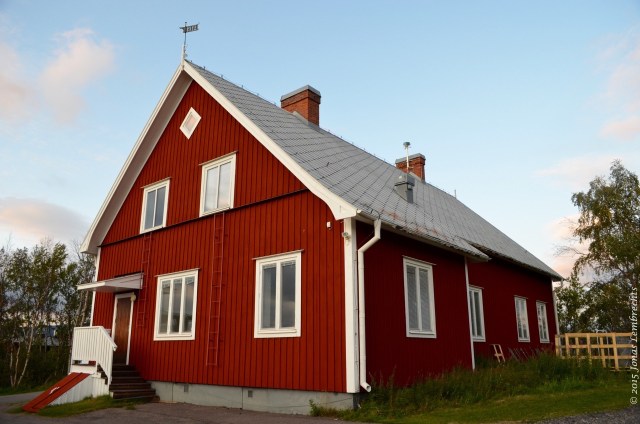
The Abisko Research Station hosts a beautiful example of one of these typical Swedish buildings represented in their oldest building. If I could believe the proud metal flag on its top, it has been build in 1912 and heralded the start of already more than hundred years of continuous scientific research in the high north. As a scientist, that makes you feel humble.

The train station of the little village of Torneträsk
Another set worth mentioning is the serie of beautiful old train stations scattered along the old ore train line between Kiruna – the mining city – and Narvik, one of the northernmost year-round ice free ports in the world. They are the same in many of the little villages all along the railroad, and they breath an old robustness. I fear they are not in use anymore, but their towers are landmarks visible from far.
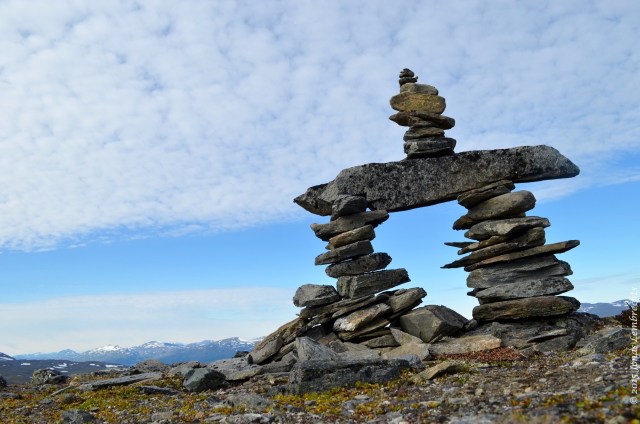
And then off course there are the tiny little pieces of architecture in the mountains, made by hiker after hiker and maybe the most impressive example of architecture I could find. The stone men of the mountains, officially called ‘cairns’.

It asks for some pretty interesting balancing to get these pieces of art erected, and they mark trails and the most impressive spots in the mountains. This example was the proud top of mountain Nuolja, more than 1200 meter height of proud rocks overlooking the valley of Abisko’s national park.
I imagine generations of hikers adding their own little stone to the construction, improving its architecture little by little, and keeping the stone men of the mountains alive.
It was very bad weather, with clouds hanging low in the mountains. My body begged to stay inside, but I still put on my rain jacket and bravest smile and aimed for my steepest mountain gradient.
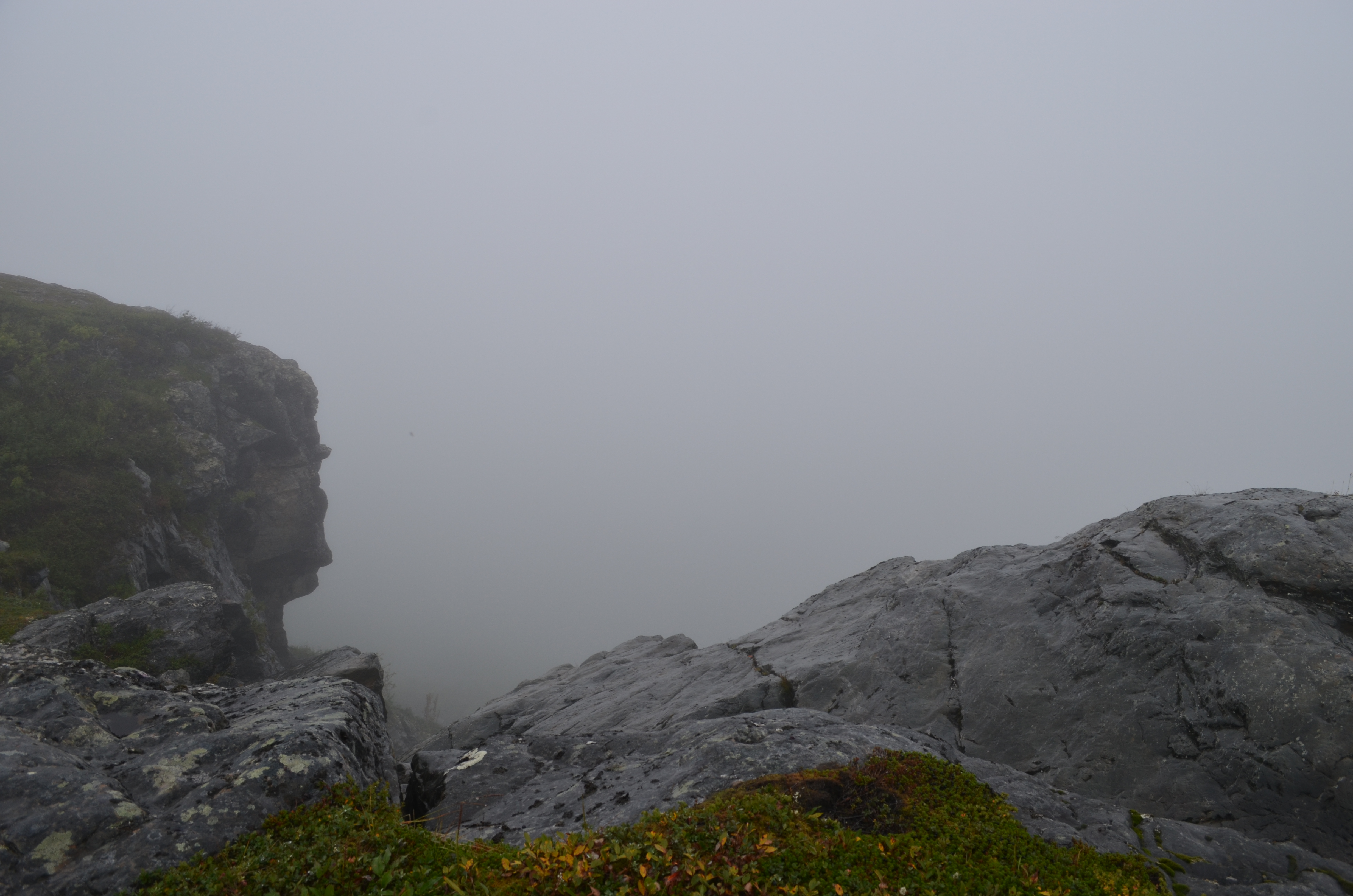
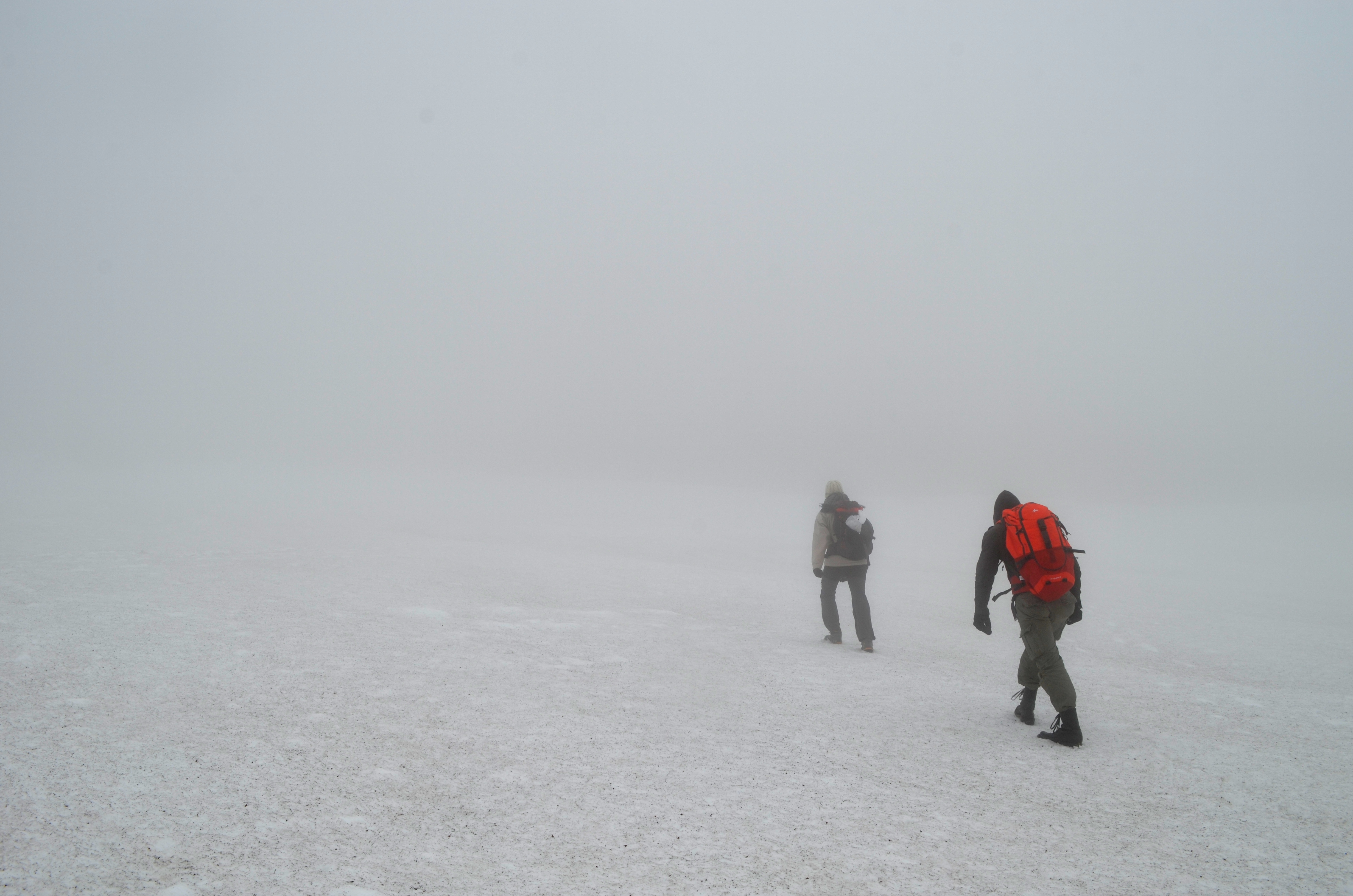
There I found a totally different world than I was used to. After the first hundred meter climbing, I already got absorbed by the cloud, limiting my sight till a few meters all around me. Even though I had climbed that mountain for years in a row, I did not recognise anything that I saw.

At world’s end
The world seemed to end right in front of me. Purely based on the arrow on my gps-compass, I made my way up to my plots, my inner compass helplessly getting lost more with every step I put. Luckily my gps did not worry about the mist. It aimed without hesitation directly to my destination.

The god of the mountains…
When I had been hiking for almost two hours in this dream landscape, I saw the god of the mountains loom up in the distance. A horned creature, looking at me from afar, guiding me to where I had to go. I decided I had started hallucinating, until I realised it was just a curious reindeer checking out what this human was looking for up there on this rainy day.

Alpine hawkweed collecting clouds
When I finally reached my plots, I had survived the worst. Slowly, the sun started piercing through the clouds, first only faintly and then finally revealing piece by piece the beautiful views it had been hiding.
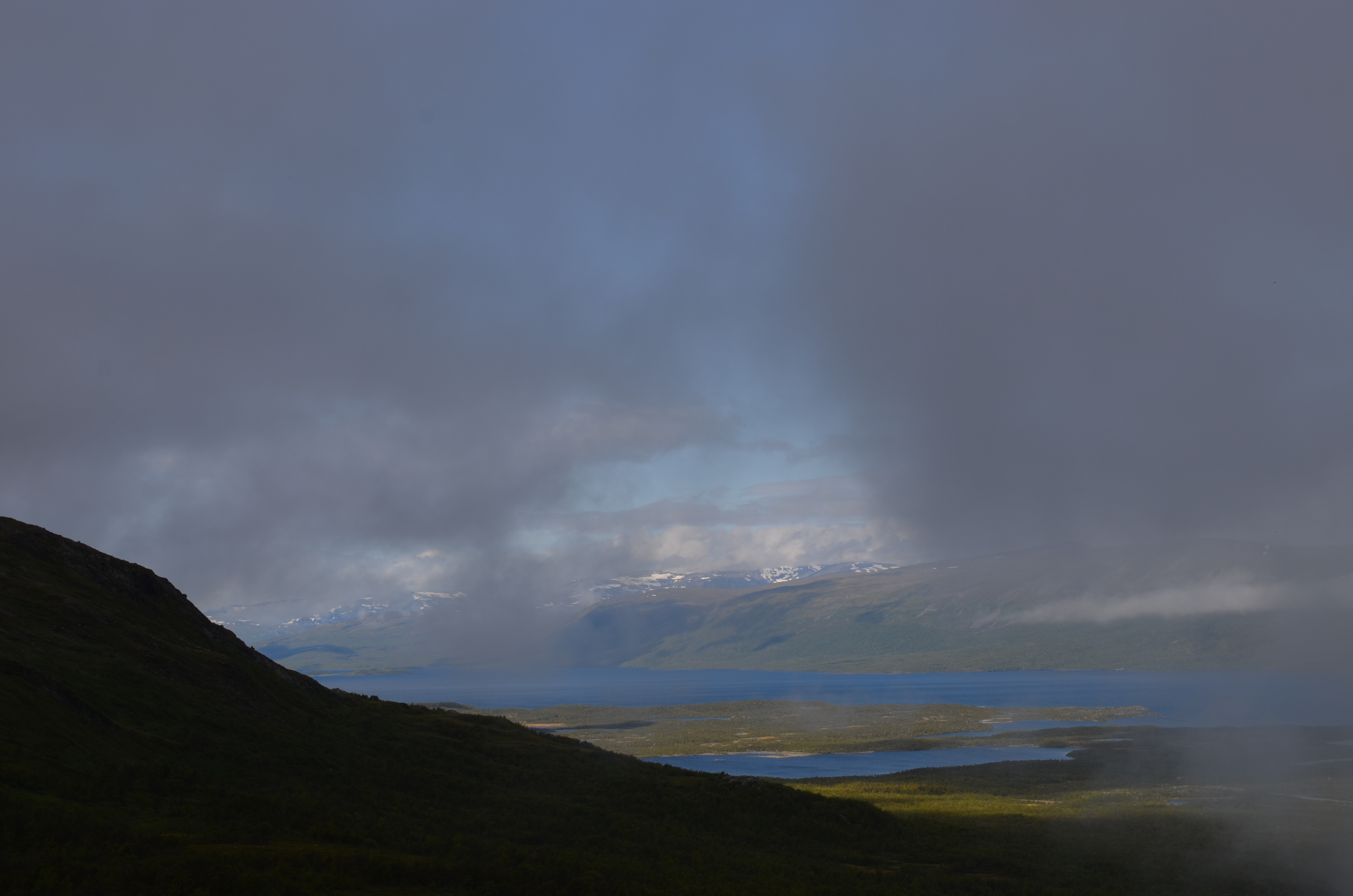
I can hike in this mountains a thousand times, they never cease to amaze.
In northern Sweden, rainbows mostly mean just one thing: that the sun is not where you are.
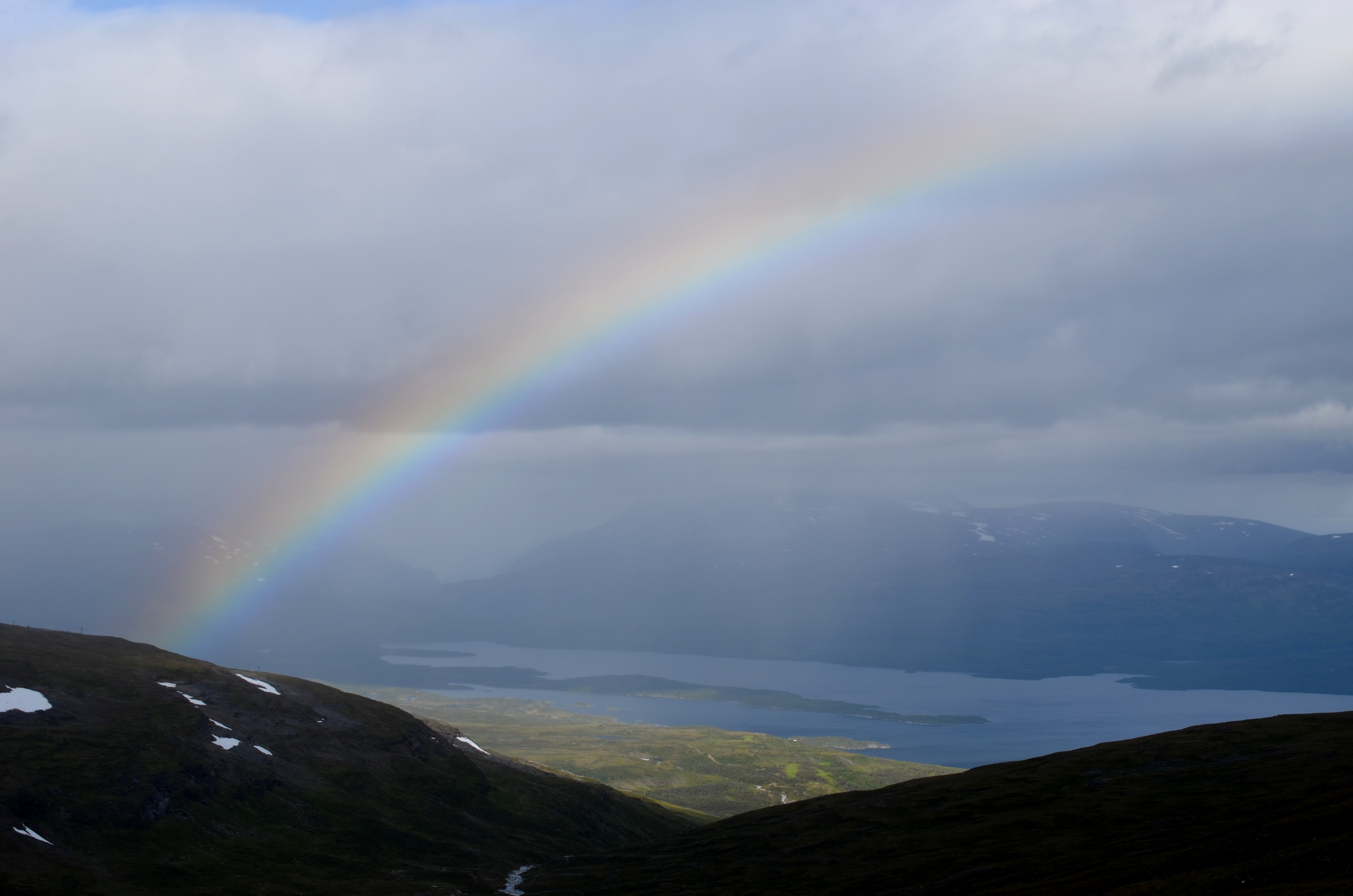
I have seen a lot of rainbows already this week, and consequently a lot of rain. The effect of topography on the weather often results in the clouds hanging lazily on top of the mountains- where me and my tiny plants are – while the valleys get splendid sunshine.

Angelica archangelica, the arch angel or Holy Ghost, looking splendid as ever
But I do not have to complain, at least I did get an amazing view from my plots, and rainbows still mean at least the promise of good weather in the end…

Common yarrow invading the mountains in a very dramatic setting
In the meantime, my experiments are all going very well, and nice results are coming out of these rainy fieldwork days. I hope to be able to show some more of them soon!
By the way, my next fieldwork days should get much colder weather (fall is really on its way) but the sun signed present as well, so I am really looking forward to that.
It was a quarter past twelve. I just survived 3 countries and 4 airports on my way up north and now had to drive for another hour to finally reach my bed. The weather had been really bad up here all day – after two weeks of amazing sunshine, which I thought might be a bad omen for the rest of my week. But then it happened. The clouds opened up for a few minutes, revealing a sky that was barely dark, and a green light started dancing.
I pulled over in a parking lot and enjoyed my first northern lights. They were definitely a good omen, I thought. Then, after a while standing alone in the middle of the night on an empty road, gazing at the sky, I realised what I loved the most about it: the true, complete, breath-taking absence of sound while the light was dancing through the sky. It was as if it even sucked up lights from the environment.
I was totally not prepared for this to happen, as I was tired and just driving to my bed as fast as possible, so I could only take this crappy picture. Then the clouds closed again, leaving me to find back my breath.
If I was an inuit, the sky would definitely be my god.
— To be honest, I saw northern lights two years ago, but it was only twenty seconds, a very light shade of green, not moving nicely, and my camera was broken. So I thought it was allowed to start counting from zero again. —


 The 3D lab