Barbeque is not on the menu

 With autumn well on its way in the Northern Hemisphere, this is a perfect time to share one of our autumn field stories from the top of the world: Lapland. Hurry inside and grab your warmest blanket, this story is going to be chilly! You might know this story from a previous post already, but this version was on request for the MRI Mountain Blog.

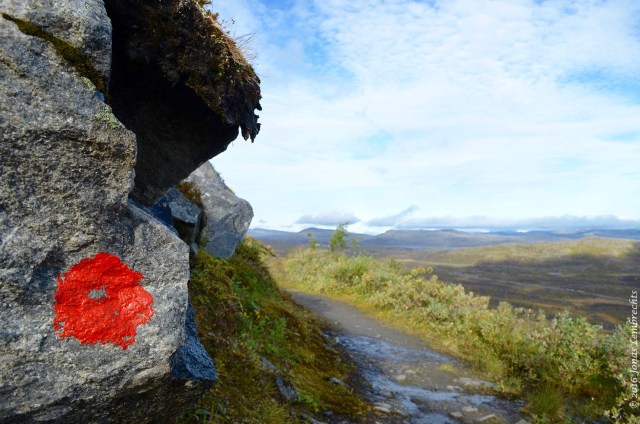
On the 5th of September, a late summer heat wave was battering Western Europe. In France, Belgium and Germany, even in large parts of southern Sweden, everybody had their barbecues out. For better or worse, however, we had chosen that glorious late summer day to venture up above the polar circle. While the rest of Western Europe was out swimming and barbequing, Lapland was getting ready to hunker down for winter. No matter how badly we wanted it, barbecue would not be on our menu that day.

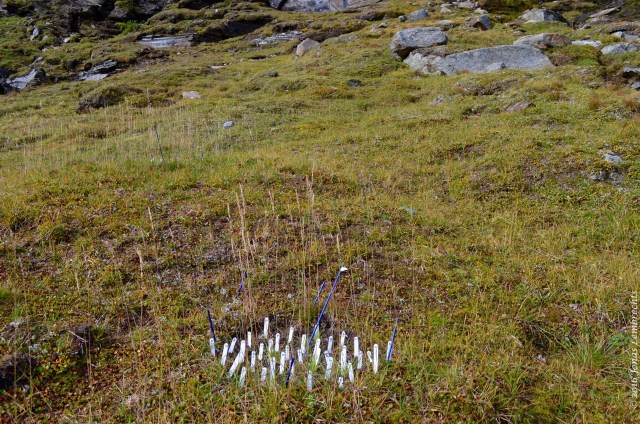
We had made the trip up north to the mountains near the village of Abisko, Sweden, to study the effect of tourist trails on mountain vegetation in extreme climates. Although we were interested in vegetation in extreme climates, we weren’t particularly interested in experiencing the extreme climates themselves. After all, if you spend your days crawling through the vegetation on a mountain slope without any protection from the elements, it’s best to avoid these elements.
29644447052_42efd1f95e_o

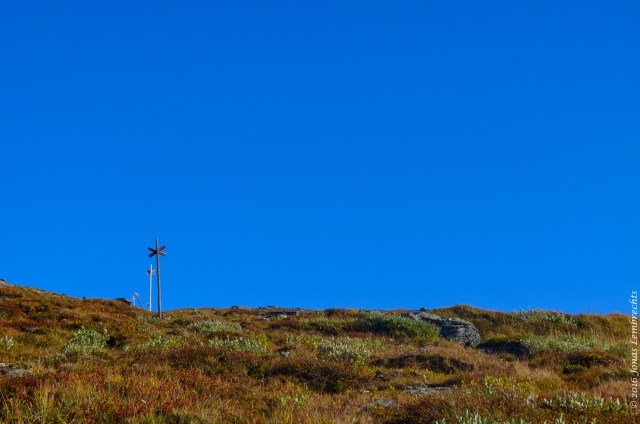
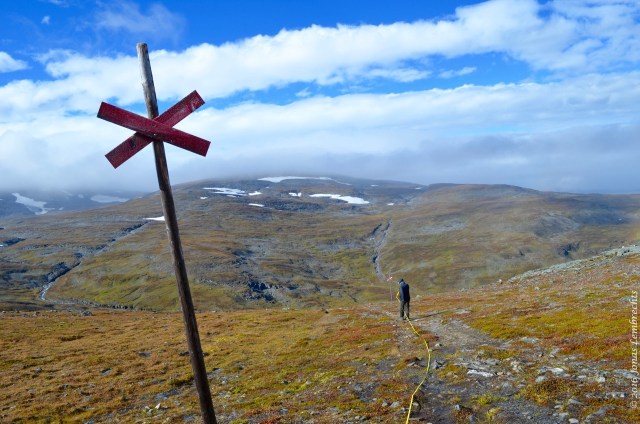
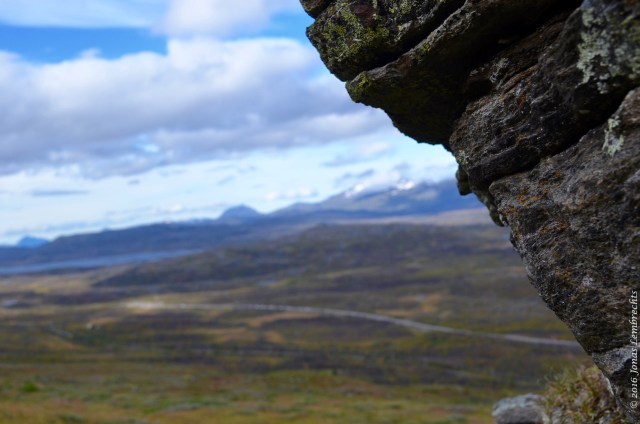
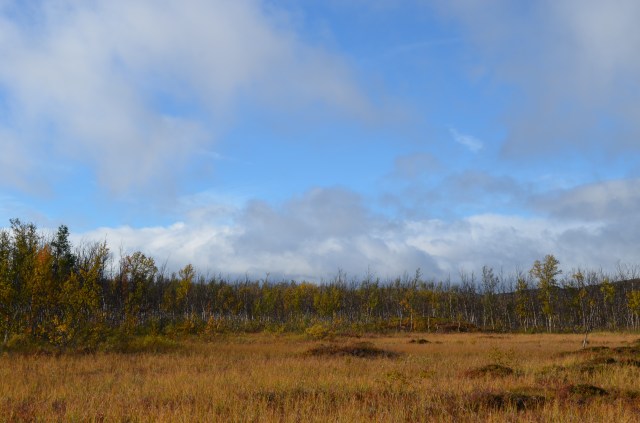
A late summer day in Lapland.

That particular 5th of September, we started our day down in the valley with a nice little subarctic summer sun. We were headed for Låktatjåkka, a valley famous for its breath-taking views on (rare) sunny days and even more (in)famous for its complete lack of views on most days. We had to be there for the walking trail spanning the whole gradient from the lowland forest till the rocky tops. A strenuous hike, but a long gradient was exactly what we were looking for.
29129381554_9f72663ea2_o

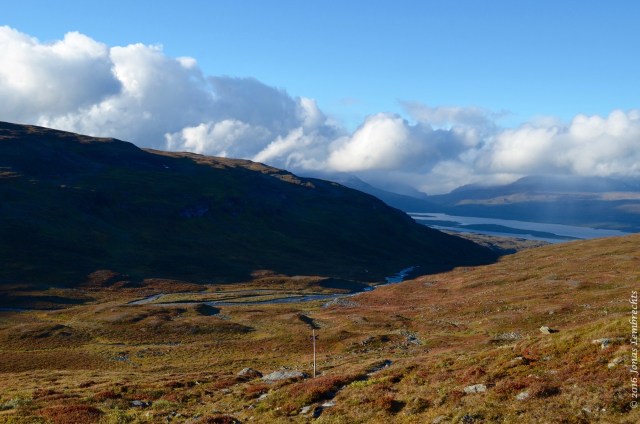
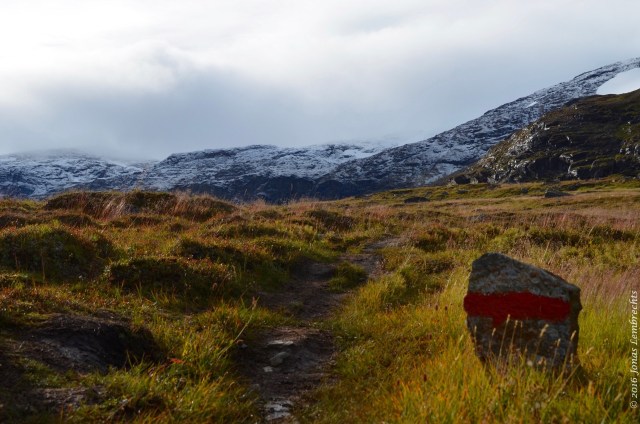
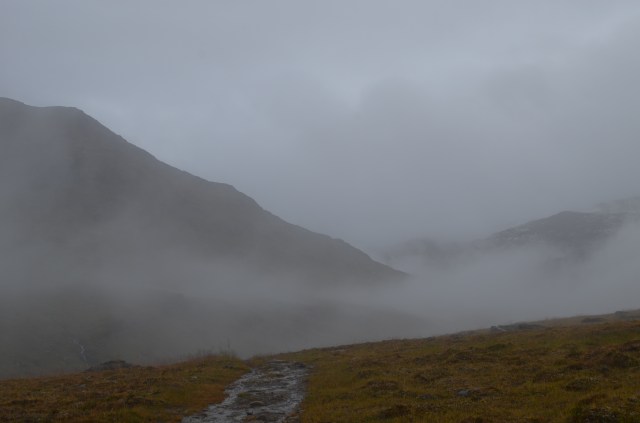
Entering the cloud. The valley of Låktatjåkka is famous for its ability to hold clouds in its grip forever.

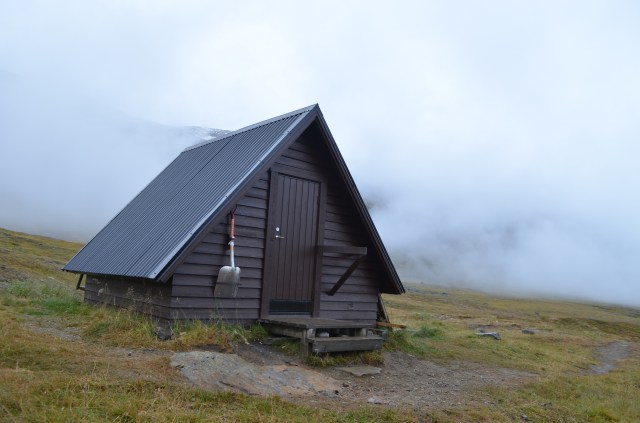
 As we headed toward the valley, the rays of the morning’s cheery subarctic sun faded behind ever-grayer tendrils of fog. Our apprehension grew as we entered the valley and headed into the fattest, most stubbornly unmovable cloud I have ever seen. At an elevation of 600 meters, it started drizzling. At 800 meters, temperatures had dropped to 0°C. At 900 meters, we arrived at our last hint of comfort, a little hut that provided a minimum of shelter and a place to warm our hands around our precious thermos of hot tea.
29674679871_3483b064b9_o

We discussed our options as we nursed our tea. If temperatures were already so low, a drizzle in the valley inevitably signaled a snowstorm at the top. As we debated, the first patches of white appeared on the vegetation behind our little shelter. We didn’t really have any choice other than to continue, though. The bad thing about autumn is that the snow is unlikely to melt as the season advances; if we didn’t get our data now, we’d have to wait until next year.
29129000514_4fa7baacc8_o

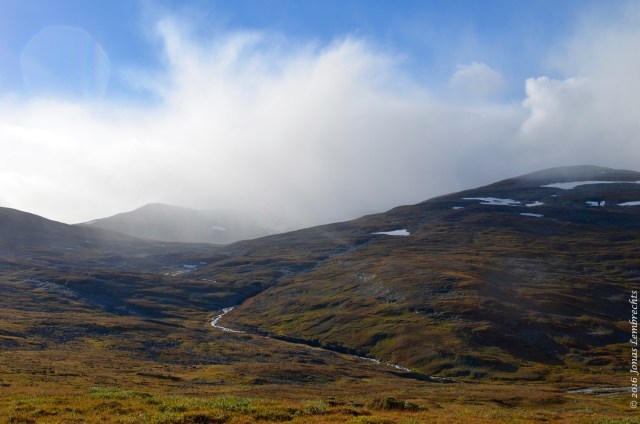
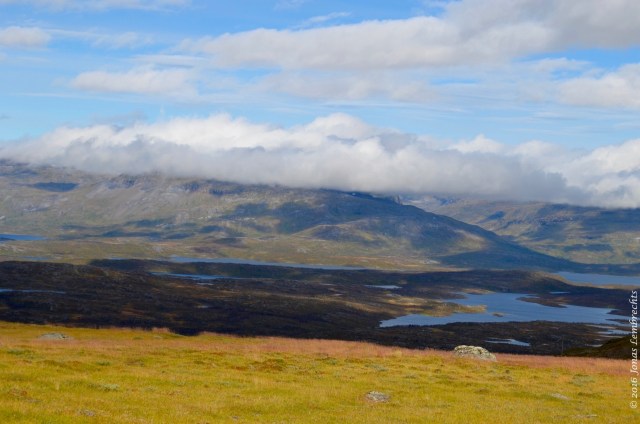
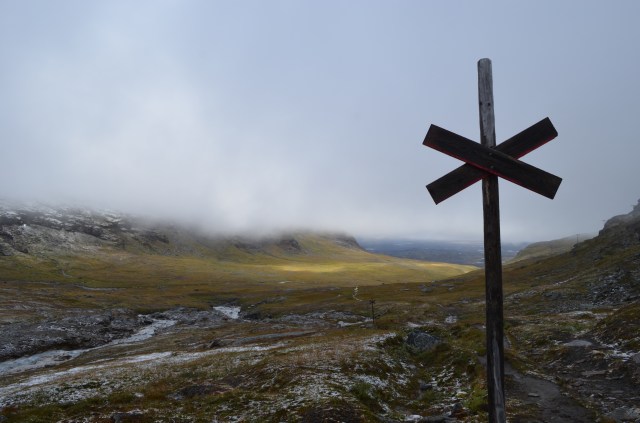
Entering the world of snow, a last look at the patch of sun in the distant valley.

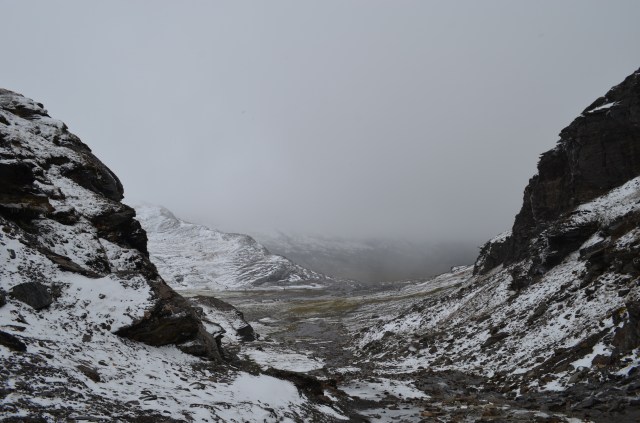
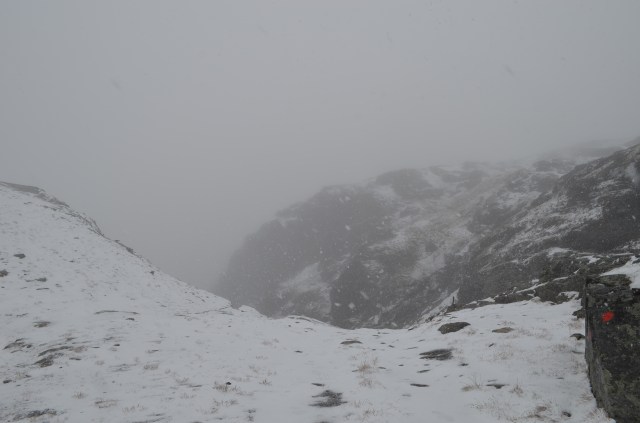
So we braced ourselves, zipped up our windstoppers and headed out into the swirling snowflakes. Soon enough, the little bit of snow started to pile up and before we reached the top, we felt as if we were stuck in a snowstorm in the midst of winter.
29464404440_9b101e2be1_o

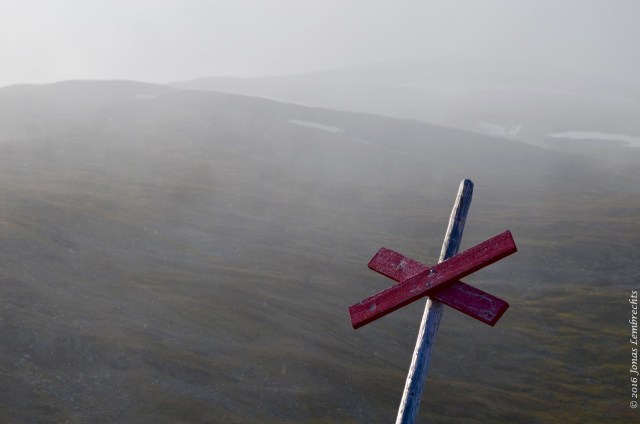
We tried, though, we really did. We crouched down and blew snow from leaves, ruined our flora’s while searching for species names and numbed our fingers digging up sensors. But identifying plant species under a layer of snow – while fresh snow continues to pile up – is just not as accurate as you would hope. The mountain had won. Our highest plots were lost for the season, no matter how hard we tried.

Heading down, it turned out that we even had had the wind to our back the whole time. You can imagine the difference. The mountain had not only denied us our highest plots, it now even felt like it wanted to keep us up there forever, assembling all its forces to blow us back uphill.
29674353261_42dba03ac9_o

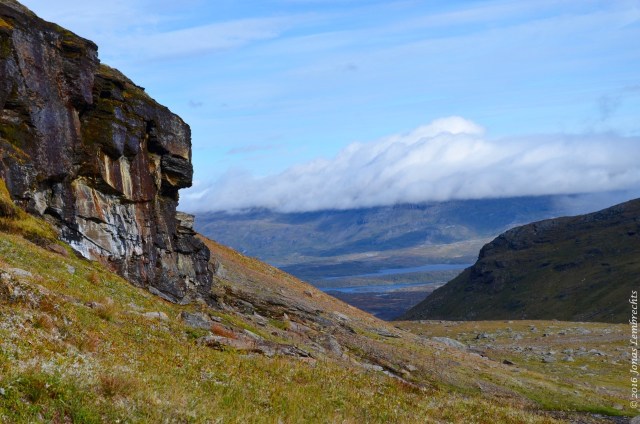
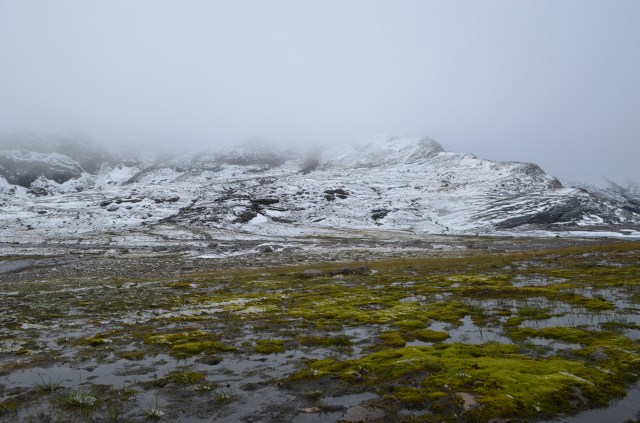
Mountains are beautiful, unpredictable creatures that take little notice of lowland niceties like heatwaves and barbeques. But if you ask me, it’s an honour to study them, and one that guarantees a lifetime of adventure. And a good appetite for hot chocolate.
29720725176_50f62d5eb3_o

If you are interested in participating in the fast version of our trail investigation – on a better day than we had – don’t hesitate to contact us at miren.trails@gmail.com. We are on a hunt for typical mountain invaders, like red and white clover (Trifolium pratense and T. repens) and welcome everybody to keep an eye out for them. If you want to justify an extra hour or two of hiking, every extra observation will be cherished. Just save its location in your gps every time you see one, it is that simple!

Posted in Sweden | Tagged , , , , , , , , , | Leave a comment

The Grande Ronde Valley

Does that not sound like a majestic place? The Grande Ronde Valley! A valley in Eastern Oregon, where a road winds up to the top of Mount Harris.

0

The Grande Ronde Valley in Oregon

The bad news: I have totally not been there at all. The good news, though, is that our research has been there, and that data is currently flowing in.

Nothing as good to start the day as the news that the research is going well, especially if that news is coming from all over the world.

Good day!

Posted in USA | Tagged , , , , , , , | Leave a comment

At the end of the tunnel

zookie-1

At last, we are slowly seeing the light at the end of the tunnel for our big paper. Okay, it is still a process of slowly crawling towards the end, yet every step is bringing us closer. Let me summarise the virtually endless process of submitting a paper again: when the project was finished (2 years), all data was analysed, graphs were made, text was written and polished to perfection (another 14 months), we sent it out to the journal. Then it needed to be accepted by the editor (19 days) and sent out for review (2 days). Three independent reviewers – when finally found – sent their suggestion to the editor (2 months), who decided in our favour (1 day). Then we got all comments back, with the task to answer one by one every issue raised by these reviewers (1,5 months).

That work is done now. Now it was back to the editor (6 days), who sent it back to the reviewers (possibly the same three) (0 days), of which we await the decision. And then it might be us answering again, the editor deciding again,…

zookie-1-1

There seems to be no slower process in science than finally getting your results out there. Yet it does not make me loose the appetite for science. All that waiting at least leaves plenty of time to finalise the next paper in row. Cause the more you hunt, the more you catch.

And oh, we did save a tiny black kitten from a certain death on the streets, but that is a different story. At least it helps searching for the light at the end of her tunnel, and preserving the appetite. 


Posted in Belgium | Tagged , , , , , , , , , | 5 Comments

From DNA to the world

Biology is a discipline as wide as the world. Studying all species, from elephants to worms, from trees to bacteria, and digging into all aspects of their life, behaviour, body, evolution or ecology.

And biology might not sound as the most  relevant discipline for outsiders, yet its main research aim – saving the whole world by understanding it – is undeniably the most important task there is.

That much was clear again on the second Biology Research Day at the University of Antwerp, where the university brought together all biologists.

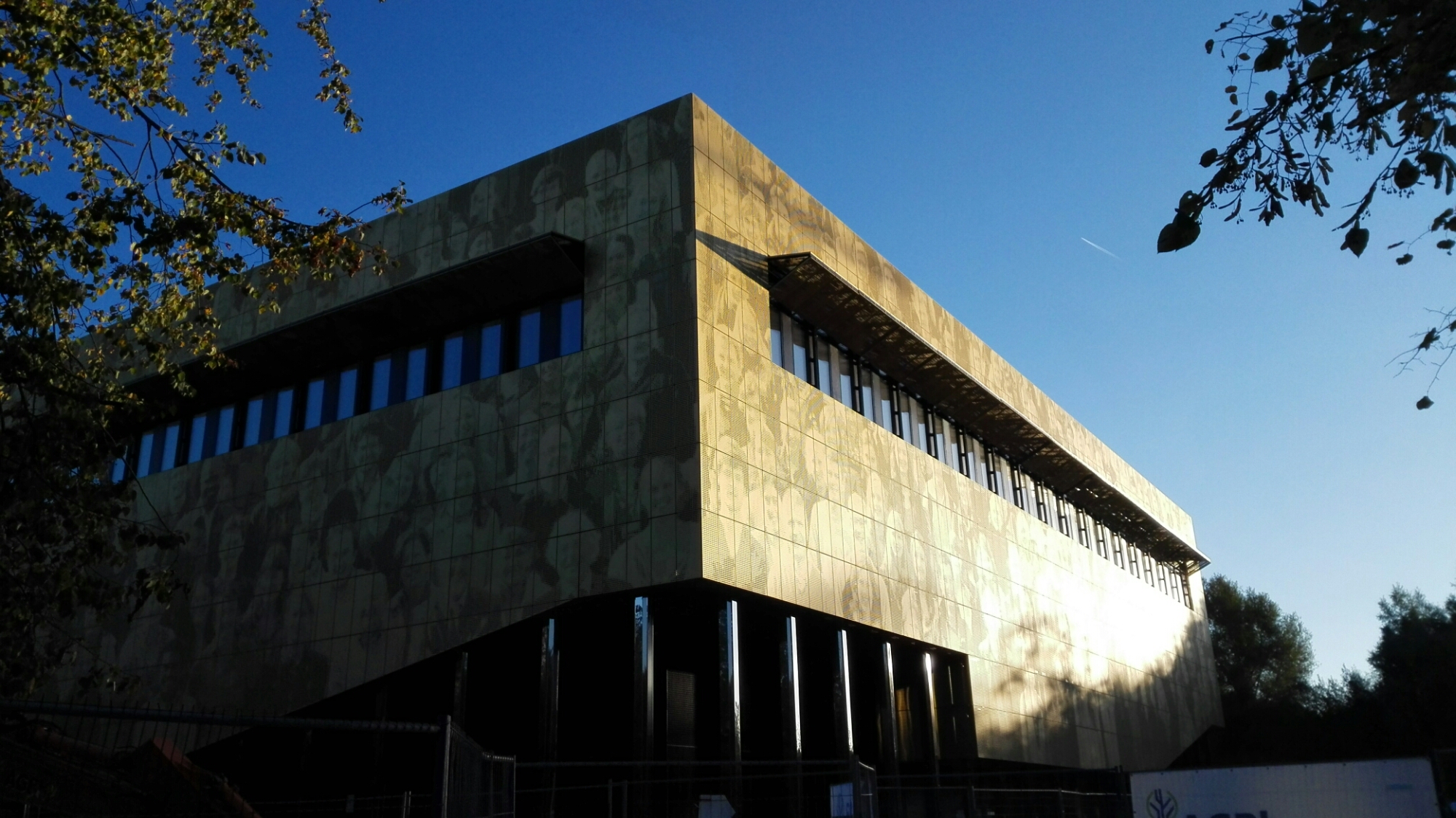
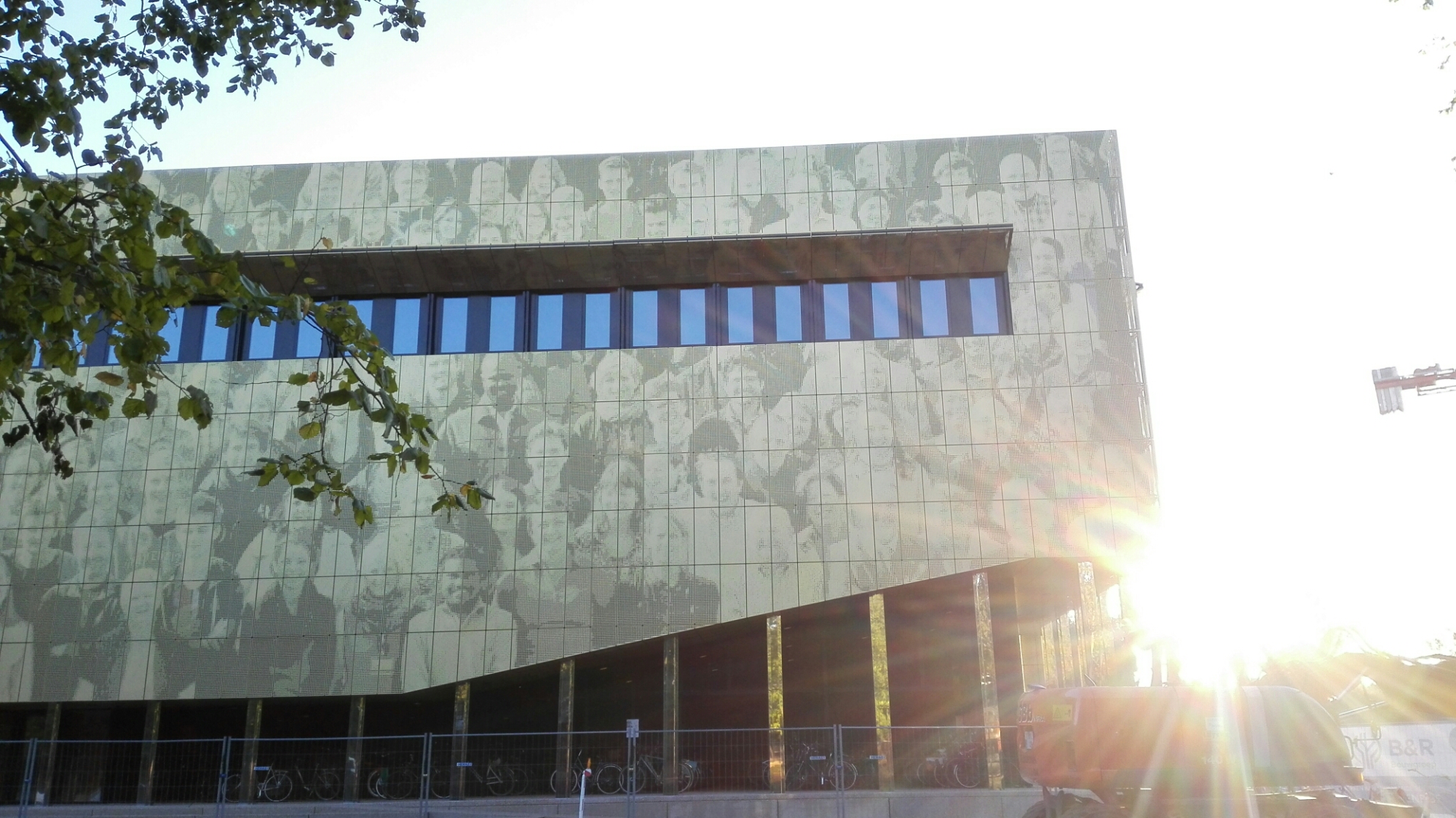
We were even honoured to be in the new building from the university (see pictures). 

A new building, 7 research groups, connecting Antwerp to the world, with the broadest variety of cutting-edge research I haveeer encountered in one day.

World, better remember Antwerp, cause we matter.  

Posted in Belgium | Tagged , , , , , , , | Leave a comment

one valley, two seasons

With autumn creeping up on us at home, I’ll bring to you a series on our fieldwork in the amazing autumn of the Arctic in Abisko. This is part III. Click here for part I and II.

abisko-autumn-96

Summer on the Nuolja-side of the mountains

Another day of wild weather wonders in the north.

abisko-autumn-107

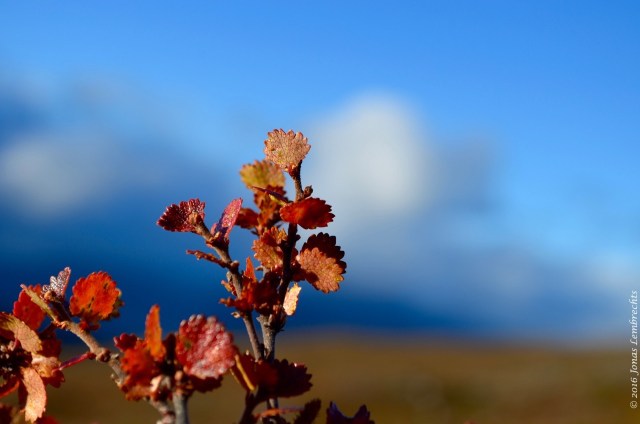
Betula nana, the dwarf birch, a mini autumn forest on its own

After two successful days of harvesting our experiments, we changed to something new: observations of the effect of mountain trails on the vegetation.

abisko-autumn-91

Installing the plots of our trail observations on top of mount Nuolja

Long story short, we track a whole stretch of trail from the lowlands up to 1200 meters and monitor the vegetation next to it.

Installing the plots of our trail experiment

That job brought us all the way up on the slope of mount Nuolja (which you might still now from day I). Sunny, but extremely windy, that was the verdict.

abisko-autumn-103

The valley of Björkliden in autumn

But in the distance loomed the danger: a cloud filled with rain, hail and snow, hiding behind the mountains towards Norway. It could easily reach us in a few seconds with these winds, and ruin our whole plan for the day.

abisko-autumn-94

It’s raining in the west, clouds trapped behind the mountains

Yet topography was a blessing today: once in a while, a little wisp of cloud escaped from the mountain tops, but soon enough it blew over again. Once in another while, it was just horizontal rain, flying straight from the other side of the valley into our eyes.

abisko-autumn-99

Yet there we were, enjoying rainbows and sunny skies, while the horizon was groaning under a feel of winter. Unfortunately, that was exactly where we would have to go next.

abisko-autumn-98

More pictures? There is a growing picture gallery on the right of my blog, check it out!


Posted in General | Tagged , , , , , | Leave a comment

Surviving

abisko-autumn-48

Day 2 of our awesome autumn field trip to Abisko in the north of Sweden (day 1 here) brought us to the beautiful valley of Laktatjakka.

abisko-autumn-53

This year, we did not have the best relationship with this otherwise amazing valley, as especially weather-wise it can be quite a troublemaker.

abisko-autumn-70

You might recall from my previous post that I described the magic of Nuolja, the mountain blessed with the skill to block out the rainclouds from Norway. Laktatjakka has its own magic, but in the opposite direction: it holds the clouds as long as possible, so it often stays damp and cloudy even when the rest of the world is blue.

abisko-autumn-60

Day 2 was a uniquely good day, though. The mountain was kind to us, and delivered an easy and relaxing hike in the sun to 900 meters.

abisko-autumn-59

One of our experimental plots, where we measure the chances of plant invaders in disturbed and undisturbed mountain vegetation

Again, that is where our plots awaited us. And they had a big surprise for us, even those at the highest elevations:

abisko-autumn-62abisko-autumn-78

The growing season must have been fantastic, as even at 900 meter, far above the tree line, many of the non-native plants we had sown there had managed to grow to maturity.

abisko-autumn-77

Not all of them, of course, plenty of them did not survive the winter, but in any case many more were flourishing than you would expect based on the cold climate of the area. Just imagine, it was sometimes hard to stand it counting plants up there in summer, but these little plants, with parents used to the mild climate from the Netherlands, did not seem to bother at all.

abisko-autumn-51

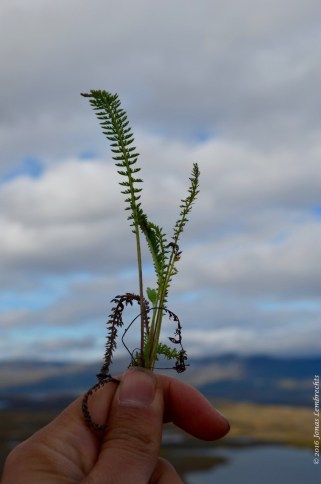
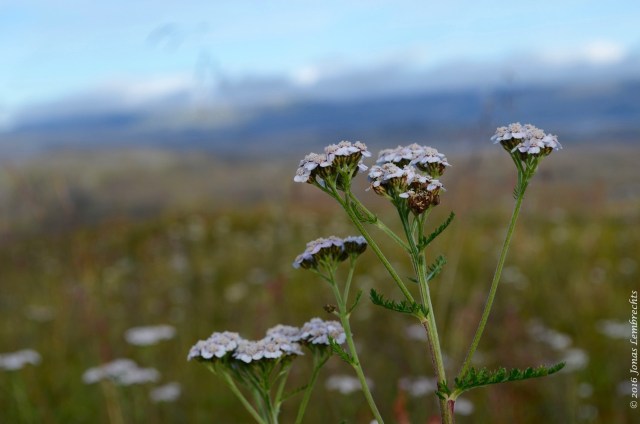
Achillea millefolium, the common yarrow, at 650 meters elevation along a trail

Another sign of the amazing flexibility of these species, as our research has been showing over and over again. It was thus not much of a surprise to see whole patches of common yarrows (one of the most adaptive ones) all along the trail.

abisko-autumn-58

Alpine clubmoss (Diphasiastrum alpinum), small growth, tough leaves, all ready for the cold.

It is interesting to see that these vulnerable-looking species succeed so easily here, while many other plant species in the area look like they only manage to deal with the cold thanks to a whole set of adaptations: small growth, tiny leaves, thick skins.

abisko-autumn-80

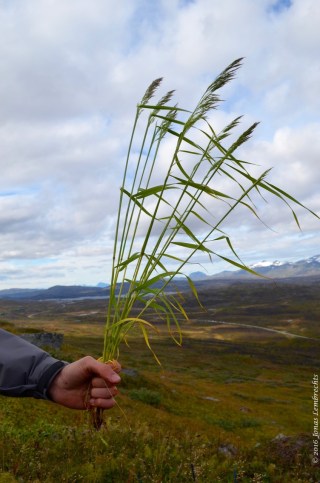
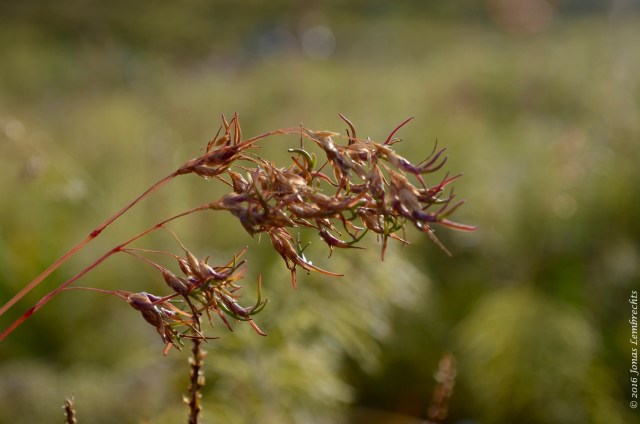
Viviparious Poa alpina, the alpine meadow-grass, with the seedlings growing from the seeds when the seeds are still attached to the plant

Some of them even protect their offspring by growing their seedlings on the mother plant, and only releasing their babies in the wild when they are already more than a centimeter long (like on this picture of Poa alpina, the alpine meadow-grass). All to battle the extreme conditions with low nutrients and cold temperatures in the north.

abisko-autumn-75

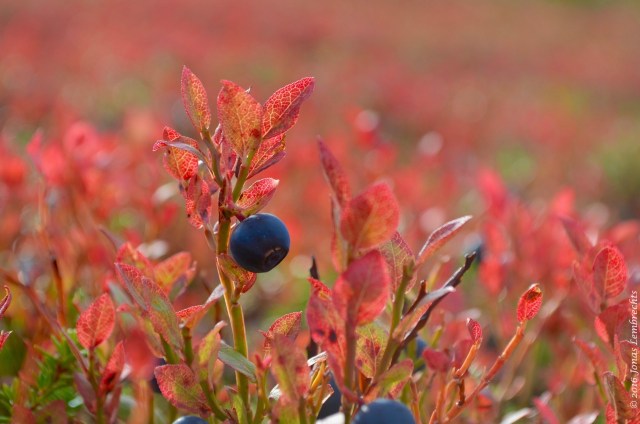
After a day of admiring these impressive skills, we hurried back down to the safety of the lowlands, only stopping halfway for a minute to gather another one of the blessings of autumn: blueberries.

abisko-autumn-87

Vaccinium myrtillus, the blueberry, ripe and tasty

Like what you see? All pictures from day 1 and 2 can be found in the picture gallery on the right of my blog!

Posted in Sweden | Tagged , , , , , , , , , , | 1 Comment