Zürich

DSC_6795

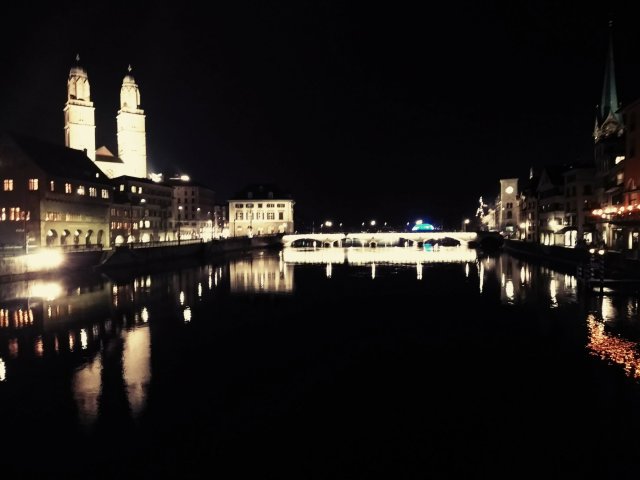
This week brought us to Zürich, the magnificent city of bank buildings and rösti. We were heading for a highly interesting meeting, organised by the GMBA, the Global Mountain Biodiversity Assessment. They gathered a team of leading scientists from two different disciplines: ecology and remote sensing.

Ecologists, like I am one, are interested in the distribution of species. To understand these distributions, we need detailed information of the environment in which the species are living. The remote sensing community on the other hand uses drones, airplanes or even satellites to monitor the environment with extremely high detail.

Aha, you might say, sounds like you two are made for eachother! Yes, indeed. Yet as often, one community does not really know what the other has to offer, while the other is not entirely sure what the one community needs. This meeting tried to bridge that gap, on the one hand show ecologists which remote sensing techniques are ready to use, and what to expect in the near future, and on the other hand let us ecologists make up our mind on what we would like to get next from remote sensing.
And all that was a tremenduous success in my opinion. What a promising field is this remote sensing! You will definitely hear more on this later!


Posted in Switzerland, Uncategorized | Tagged , , , , , , , , , , | 1 Comment

Global risks

Each year, at the eve of the World Economic Forum in Davos, the Global Risks Report is published. The Global Risks Report is created by experts and decision-makers from all over the world, and this year’s version covers more risks than ever. It focuses in particular on four key areas: environmental degradation, cybersecurity breaches, economic strains and geopolitical tensions.

While the 80-page document (find it here) is definitely worth the read, it is the first graph on page 3 that most easily catches the eye:

Global Risk Report

The graph distinguishes between impact and likelihood of the different threats to our world (with the different colors depicting the 4 different groups of threats identified above. While the largest impact is predicted from weapons of mass destructions (“my nuclear button is much bigger than yours”), the three dark green dots on the top right seem the most impressive: a high impact combined with a high likelihood; i.e. the prediction of very likely and very serious damage.

19965654066_b7a1bf9f_89yzX

These three green dots are environmental risks, with the one at the top depicting extreme weather events, followed closely by natural disasters and failure of climate-change mitigation and adaptation. But even the next one (the dark orange dot of ‘water crisis’), albeit a societal issue, is highly related to the abovementioned environmental threats. Later graphs in the document show this interconnection between environment and societal issues even more (see the original file). Water crises, food crises, involuntary migration, spread of infectious diseases, all of them are strongly intertwined with the issue of a changing climate.

What does that mean? It means it is ‘two minutes to midnight’ on the Doomsday Clock, as officially stated by the Bulletin of Atomic Scientists. Worrisome, yes, but do not forget that our Doomsday Clock can easily count backwards again, so do not give up hope as long it is exactly midnight!


Posted in Science | Tagged , , , , , , , | 2 Comments

Light

24713893167_db81eb89e3_o.jpg

Christmas lights in Mechelen, Belgium

The season of darkness – and tons of artificial little lights to compensate for that – is finally coming to an end again. Here in Belgium, we are again gaining two minutes of daylight every day, on our steady road to spring and summer.

Did you know that the increased competition for light is one of the main reasons biodiversity goes down when a vegetation gets more nutrients? A famous paper in Science (Hautier et al. 2009) once showed this elegantly: they added artificial light sources underneath the vegetation in a grassland and showed how this extra light counteracted the loss of biodiversity through the addition of nutrients.

Normally: more nutrients, more competition for light as competitive plants get bigger, and thus less biodiversity.

Now: more nutrients, light artificially kept high, biodiversity didn’t go down.

Reference:
Hautier et al. (2009). Competition for light causes plant biodiversity loss after eutrophication. Science. 324, 636-638.

Posted in Belgium | Tagged , , , , , , , , , | Leave a comment

Unusually warm

2018 has started of relatively stormy, here in Belgium. Water on the quays in Antwerp, and the first ever use of the large controlled flooding areas along the Scheldt, the year does indeed start unusual. In the Netherlands, it was even the first time ever that all five flood barriers have been closed at the same time! (Note that the latter does not imply a particularly strong storm, yet the unusual situation of storm tide conditions in the whole country).

Maastricht - 1

A cold day in Maastricht, the Netherlands.

Unusually stormy and warm, perhaps, yet I do not want to talk about that kind of unusually warm winter weather now. I want to introduce you to a different kind of unusually warm: the urban heat island. The what!?-island, you think?

Maastricht - 4

Well, the urban heat island effect describes the fact that cities (the urban environment) are islands of warmer temperatures in the sea of cooler rural area around them. In summer, but especially in winter, city temperatures have been observed to be several degrees higher than those in the rural areas. In the evenings, these differences can even add up to 12 °C.

Maastricht - 3

While it was relatively cold in the city, the countryside surrounding it was even covered in a layer of snow

You might have experienced this already yourself: not only the breathtaking heat of a summer heat wave in the city, but also how your car windows freeze less often when parked in the city center over night, or how cities have less snow, or earlier snowmelt, than the surrounding countryside.

Maastricht - 2

Intriguing, isn’t it? Another case of strong microclimatic variation, like we study in the mountains, yet in a totally different environment. And its effects on species and their distributions might be even bigger! But more on that later, hopefully…

Posted in Netherlands | Tagged , , , , , , , , , , | Leave a comment

This was 2017 (2)

Here is part 2 of ‘2017 in stories’, our very own end-of-the-year list. Dive with us into what happened on this blog the last twelve months, with this list of the ten most visited posts. Missed part 1? It’s here!

A story of hotspots and stepping stones

Closing a chapter, it’s an amazing feeling. In 2017, we published the second paper on the experimental half of my PhD, a fascinating story on hotspots and stepping stones. Find out how non-native plants manage to beat all the odds at elevations far above their current elevational limits, and how that affects our predictions for the future of our mountains.

19697075030_1e895529f1_o

Science with doormats

Closing off some chapter, opening up many others, that is what 2017 was all about. We have been trying out some fascinating new things in preparation of our research for the next few years. Science with doormats is one of these experiments. Doormats, you might ask? Yes, indeed, boring, simple, non-sciency doormats, and you might be surprised about their scientific use!

35737365266_1e58ec0c72_o

That damn snow again

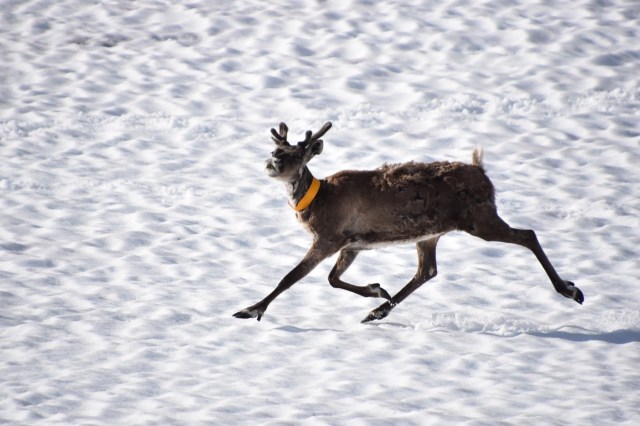
Our yearly fieldwork-adventures undeniably deserve a prominent spot in this list as well. Enjoy this happy reindeer, and our snowy summer special from right on top of the world!

Reindeer on the snow, Abisko, Lapland

The Yellowstone experience

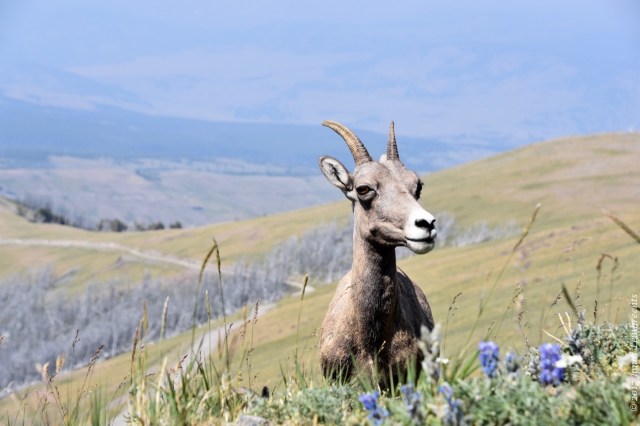
Arguably the most important milestone of 2017 brought me to the greater Yellowstone region in Montana. There, we had a fruitfull meeting with the partners of MIREN, our global network of mountain scientists. A lot of talking resulting in an impressive list of fascinating future plans. And all of that in the most mindboggling natural environment.

Sheep - 4

Throwback december

We end this list with some nostalgia to the warm days of midnight summer in Lapland. To cheer up our hearts on this dark winter days, I made a much-appreciated picture gallery of the best of our summer fieldwork. You can find it here. Beautiful plants, breath-taking views, awesome animals. If you needed a reminder of why I love this job, it’s all there!

Husky sledgehounds Lapland

And with that, we slowly put 2017 to rest. It was an amazing year, with many accomplishments I am very proud of. But most of all, it was a year of preparations. Preparations for 2018, preparations for the future. Because as from 01/01/2018, the truly big things should start happening. Stay tuned, and cross your fingers that all our hopes and dreams will come true!

Posted in General | Tagged , , , , , , , , , , | Leave a comment

This was 2017 (1)

It’s list-season again! Oh yes, the end of the year approaches and everybody bombards you with their best-offs and unforgettables of 2017. Please forgive me that I want to join in on that fun. No better way to summarise what happened on this blog the last twelve months than with a list of the ten most visited posts. Here is part 1 of ‘2017 in stories’.

1) Blinded by a snowball

winter-7

January kicked off with an intense cold spell. Our hands were freezing off enough to make us remember that US senator who brought a snowball to the parliament. A snowball, yes, to show it isn’t all as bad as it looks with climate change. Let me shortly summarise the story: his argument doesn’t hold.

2) The feel of the south

Montpellier - 26

Little egret in the evening sun

From a memorably cold winter in Belgium to the heavenly warmth of spring in southern France. April brought me a visit to Montpellier, for a conference on Functional Ecology. Besides some eye-opening insights on how organisms interact with their environment, the stay also resulted in a nice picture gallery.

3) Plants do fly

Montpellier - 15

Euphorbia in a sea of poplar fluff

These musings about flying plants are a good example of what came out of that conference. In several presentations at the conference, I heard the statement that plants cannot fly, a fact providing them with huge limitations compared to other organisms. Allow me to explain in this post why I care to disagree.

4) Species on the move

29464282510_4e34350501_o

Some more on moving species (for a reason the main topic of my research), after the publication of a critical paper in Science. The authors discuss the impact of species movement – as driven by climate change – on our everyday lives. A true eye-opener, and hopefully in time for some much-needed action all over the world.

5) Hidden treasures on the campus

Rare plant walk - 17

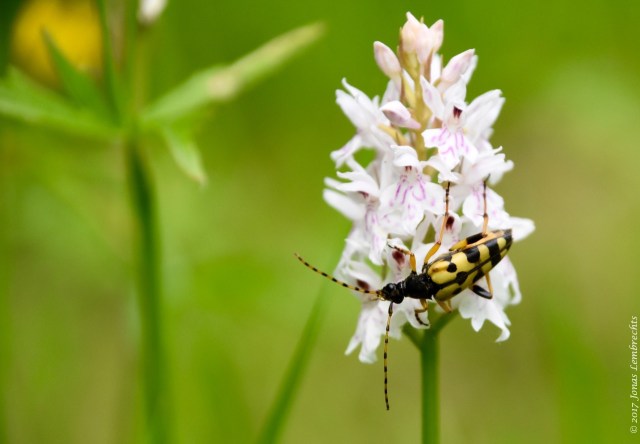
We end the highlights of the first half of 2017 a bit closer to home. In June, our Global Change Ecology center organised a quest for rare plant species… on the campus grounds. From beautiful orchids to an obscure plant in the car park called hairy ruptureworth, these little treasures on the campus proof that biodiversity can hide anywhere.


Posted in General | Tagged , , , , , , , , | Leave a comment