The Alps

How can one be a mountain ecologist without ever visiting the European Alps?

Making up for this now with a visit to Davos, Switzerland, with a visit to Polar 2018, where I will be presenting our work on the ‘third pole’, i.e. the mountains.

More stories and pictures soon, when I hunt down better internet.

Posted in General | Leave a comment

Hunting down plants

I introduced him already in an earlier post: our hero of this spring is the easy-to-overlook flower called Matricaria discoidea, the pineappleweed.

20180531_2014548161330641909353880.jpg

Pineappleweed along a trail in Zemst, Belgium

We are hunting down populations from all over Belgium to explore differences caused by humans: are the plants growing differently in an urban environment than in a rural one? What about a park in the city, or a little village in a field of green? We know a lot about how animals react to the city: bigger butterflies, smaller spiders, birds singing higher, lizards with longer legs… We hope that our little friend will be generous in providing answers on such questions for the plant world as well.

34925855595_e9ed690166_o

Zemst in early summer, an oase of greenness in a sea of concrete

This time I went to the greenness of Zemst, between Antwerp and Brussels. There, we can still find some nice rural areas amidst all the concrete of the heavily populated center of Flanders.

Posted in Belgium | Tagged , , , , , , , , | Leave a comment

Collective science is the best science

When scientists (or people in general) work together, magic happens. I am a dedicated advocate of that policy: if a lot of people all do a little bit of work, the level of interest of the results skyrockets.

I was pointed towards another one of these collaborative approaches: our dear colleagues in Amiens are trying to gather leaves from a few typical forest species from all across Europe (you can find all information on the project on the blog of Jonathan Lenoir, co-supervisor of the project).
26052842340_e8ca847729_o

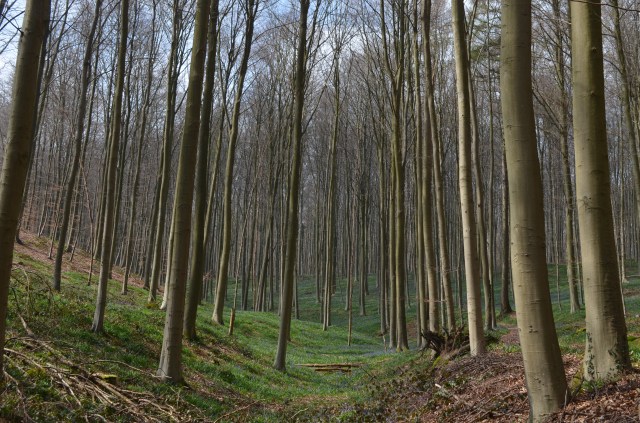
Beech forest (the Hallerbos, Belgium)

The goal is to disentangle the historical processes that drive the distribution of two common forest species (Geum urbanum – wood avens, and Oxalis acetosella – wood sorrel). For that to happen, they need a lot of leaves, from everywhere in Europe, from the Mediterranean till northern Scandinavia. And instead of travelling the thousands of kilometers needed to get the data, they call on everybody they know – or don’t know yet – in Europe to help them out.

26233086672_8d3aa81483_o

Oxalis acetosella, or wood sorrel, in the Hallerbos, Belgium

The fieldwork is super easy: if you see the plant whenever hiking in a forest, just collect some leaves from 15 or more individuals, put them each in a separate envelop, and send them by mail to Amiens, where they will be analyzed further. See: easier is impossible. And yet, if enough people participate, we can answer fundamental questions on the distribution of forest species, and how these distributions change over time.

My first population of Geum urbanum is already ready to be mailed!

20180530_1123207514180814613291018.jpg

Envelopes filled with leaves of Geum urbanum, ready to be send to the lab in Amiens!

(Not hiking in the forest, but in the mountains? Don’t forget about our MIREN trail survey, we still welcome all help!)
Posted in France | Tagged , , , , , , , , , | Leave a comment

An important tool in the toolbox

Last week, I had the opportunity to teach the students of our third Bachelor in Biology a little lesson about vegetation surveys.

20180522_1309501513309912938352221.jpg

Grassy meadow on the university campus, the perfect spot to learn about vegetation surveys

It was a half a day course in the framework of their course on Good Field Practices, in which we try to give them a good toolbox on how to perform ecological fieldwork.

Crucial tool in the toolbox of a plant ecologist? The vegetation survey! Especially in my branch of ecology, in which we look at the effects of global change, vegetation surveys are key. Global change has strong effects on the distribution of species, but without surveying where species are actually growing, it is impossible to conclude anything meaningful.

20180522_1317323423519648851179500.jpg

The pin-frame method, in which the researcher drops a pin at regular distances and writes down which plants it touches

Going outside and establishing a basic knowledge of common plant species is thus important, even in these modern times in which many ecological questions are answered from behind a computer. Someone needs to go out in the field and record where the plants are growing, indeed. There are botanists we can trust with that task (and oh, how much credit do they deserve in todays’ ecology!), but how to understand your system if you have not gone out in the field to experience it yourself?

20180522_1310019139607511891110242.jpg

Ranunculus acris

It is also important to know the strengths of weaknesses of different types of vegetation surveys: some are fast (just estimating a percentage cover), some are more meticulous (like the pin-frame method above). All of them have a significant amount of noise, as the students found out quickly enough when trying to repeat each-other survey. Yet despite all that noise, survey method and observer differences turned out rather robust. Some rare species might be missed with one method or the other, yet common species always emerge as common.

The students hopefully took an other important lesson home: looking at plants can be a lot of fun, but vegetation surveys are as ‘serious’ science as any other scientific approach. Another tool in the toolbox that a good plant ecologist needs to keep sharp.


Posted in Belgium, General | Tagged , , , , , , , , , | Leave a comment

Mascot

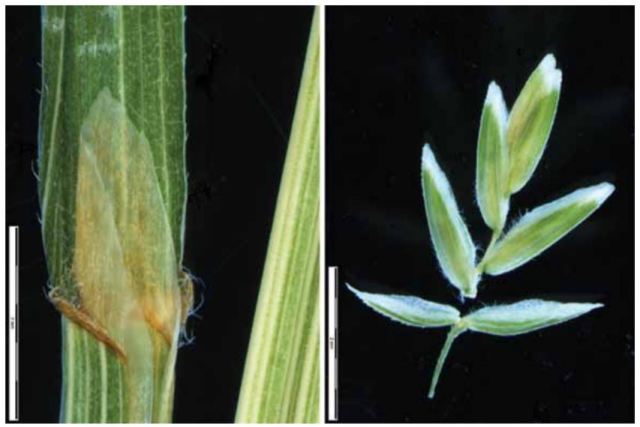
The Mountain Invasion Research Network now has its own official mascot: a grass! A newly discovered Poa-species got named after our network, carrying the Latin name Poa mireniana. Poa mireniana is a slender stoloniferous grass, with leaves with a broader and coarser character, a longer ligule, and usually more numerous florets than its nearest relatives. For those less accustomed to botanics: it is a quiet elegant and attractive specimen, and we are very proud of it.

Poa mireniana

Some distinctive characteristics of Poa mireniana. (c) Ian Clarke

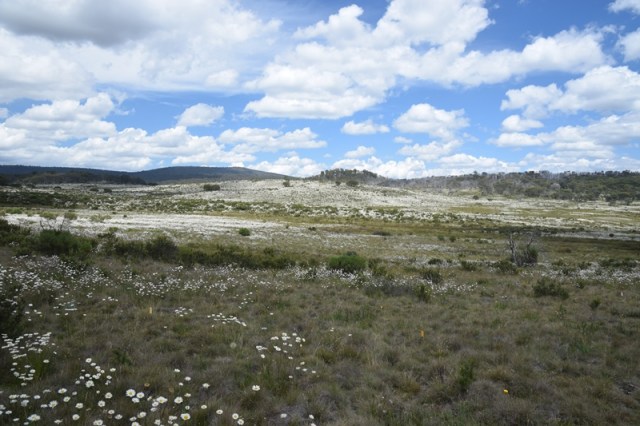
MIREN got the honour of the naming, as the species was discovered during the MIREN surveys in the Kosciuszko National Park in southeast Australia, where botanists are following the roadside vegetation in the framework of our global survey. There, the species was encountered in steep mountain forests at around 1000 m above sea level, where it baffled the botanists with its undocumented characteristics. It serves as a beautiful illustration of how monitoring work such as that of MIREN not only documents trends in biodiversity, but also unearths new diversity.

Kosciuszko

Kosciuszko National Park, where the new grass species was discovered during surveys of the native and non-native roadside vegetation. On the picture a ‘snowy hill’ covered in ox-eye daisies, a wide-spread non-native species in the park. (c) K. McDougall

Find all information on our new mascot here.

Posted in Australia, General, Science | Tagged , , , , , , | Leave a comment

Sowing the seeds

This weird-looking bunch of office plants is actually much more than it seems: it is the start of a new experiment, which will broaden our scientific horizon to the world of population genetics.

The lucky model species is Matricaria discoidea, an easy-to-overlook relative of camomile with an interesting pineapple smell to the leaves. Our dedicated PhD-student is harvesting populations in cities and rural areas all over Belgium now. Soon, we will be sowing their seeds to follow-up their performance in different environments.

Exciting!

Posted in Belgium, Uncategorized | Tagged , , , , , , | Leave a comment