Proudly presenting: an interactive (!) map of our SoilTemp-project. Click on the image to start exploring the what, how and why of our database initiative, and get warmed up for the real work to come!

This gallery contains 7 photos.
Originally posted on Jonathan Lenoir:
The research unit “Ecologie et Dynamique des Systèmes Anthropisés” (EDYSAN) is launching an open call for a PhD position in Ecology & Biostatistics. We are looking for a PhD candidate interested in climate change biology,…
If you want to do science with impact, communication is key. Thanks to the Flemish PhD Cup, a ‘scicomm’ competition for recent PhD graduates, I got the once-in-a-lifetime opportunity to learn this from professionals.
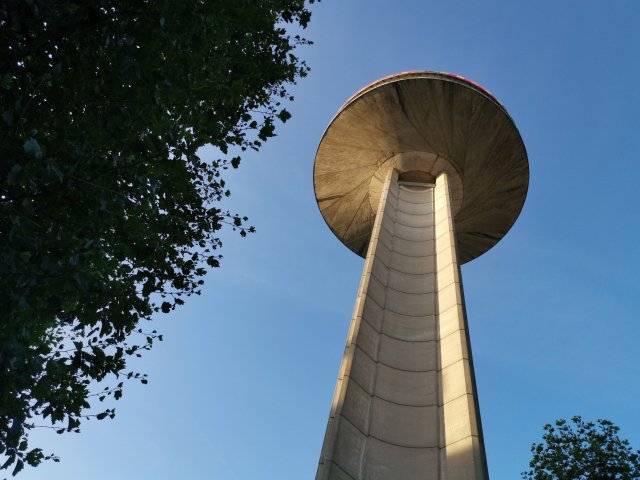
When you see this tower on a crisp sunny morning, you know that magic is going to happen. It is the old broadcasting tower of the VRT, the Flemish public-service broadcaster, and it towers over the city of Brussels. And the VRT, that is where we were heading for the second weekend of intensive media training.
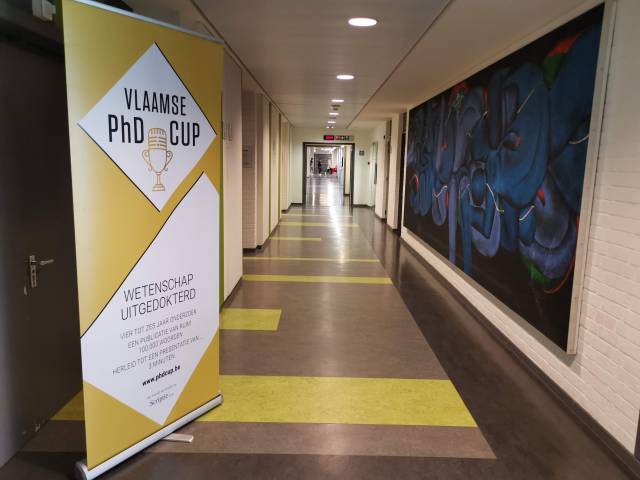
The banner of the Flemish PhD cup in the hallway of the VRT
There, you can learn communication skills from those who know how it works: telling stories that grab people by the troath, facing the news camera without freezing into a cramp, or talking with a voice that breaths authority. They know the tricks, and showered us in them.
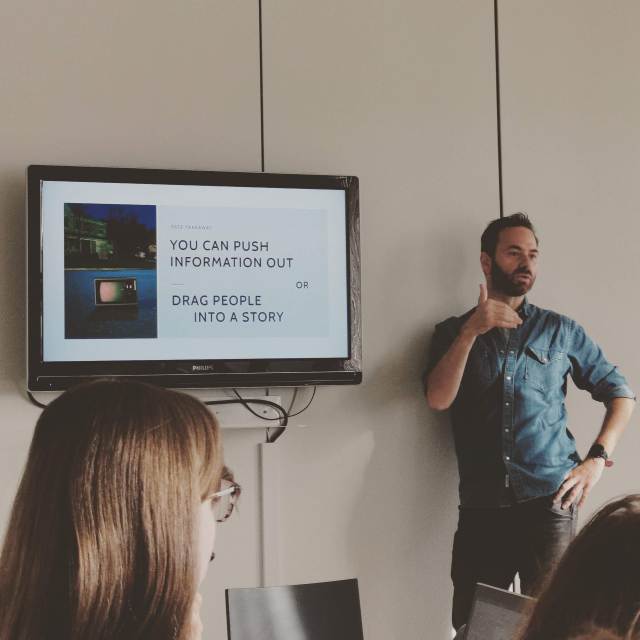
A session on story telling from Tim Verheyden, chief storyteller of the Flemish broadcaster
Even better, we learned how to think like a journalist, to facilitate the transition of our message from our heads to the little screen or the pages of the newspaper. We were trained in fascing sceptical interviewers and how to use tricky questions to strengthen our message.
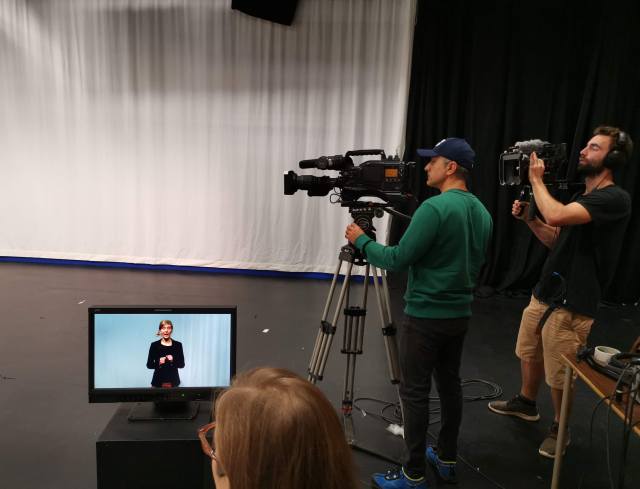
Learning how to face the cameras, in a real studio
And most of all, we were given opportunities: to write an article (here, in Dutch) about our work, for example, and give a 3-minute pitch about the core pointof our research.
Those presentations were judged yesterday, and 8 of the most convincing ones were given the opportunity to continue the competition and broaden their impact. I was not one of those lucky ones – dear lord were there many amazing presentations, yet for me the main reward was already won.
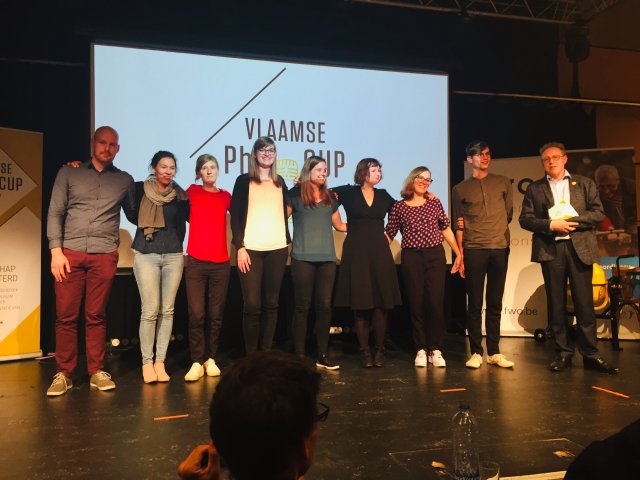
The 8 finalists of the Flemish PhD cup, each of them presenting their science with a bang
That main reward was in the whole learning process, and that was something all 16 participants earned the benefits from: they provided us all with the tools, the knowledge and the experience to step up our communication game in the future. And, oh boy, do I look forward to that!
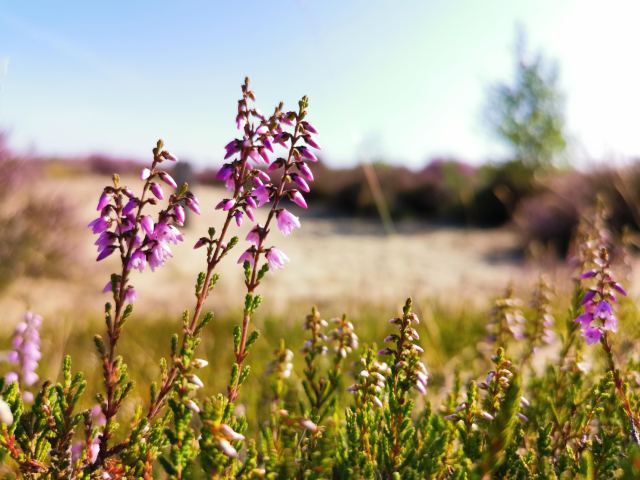
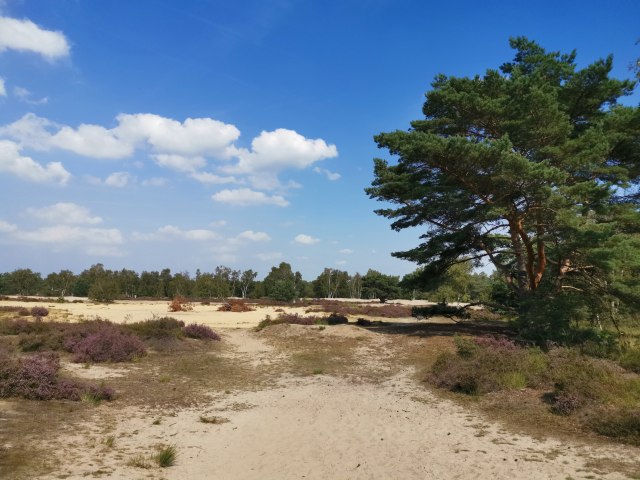
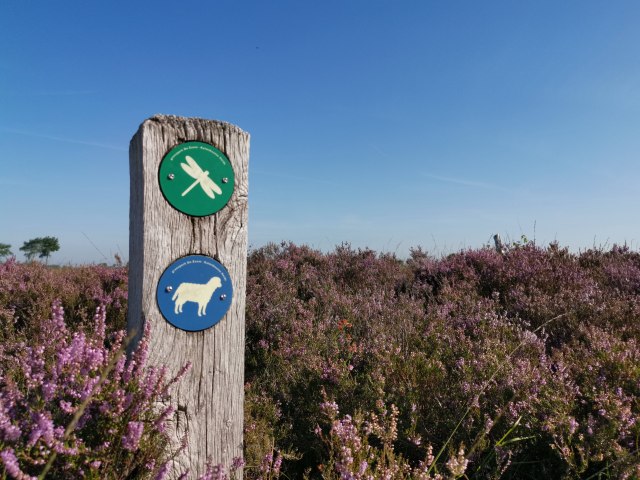
Nothing says pink like the Flemish heathlands at the end of summer. I was lucky enough to spend one of the last hot summer days on the vast pink plains of the ‘Kalmthoutse Heide’, where we have our sites for the global Dark Diversity Network.
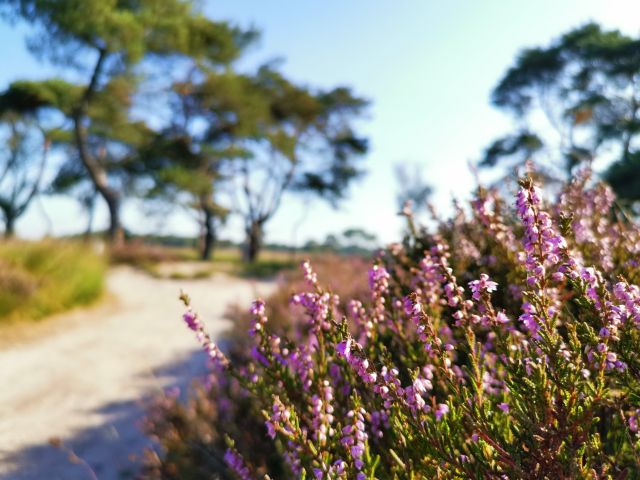
Fieldwork was of the type that I love the most: randomly selecting a plot, roaming throug it, and writing down the plant species that grow there.
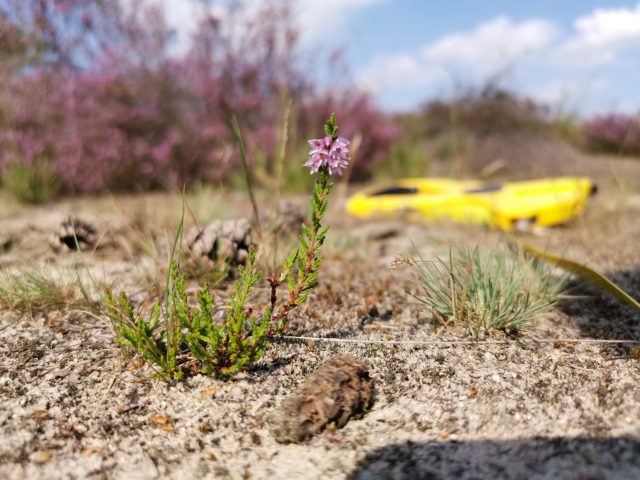
We have a good idea now of the species that occupy this harsh environment; and there is not that many. The heather species, of course, the stars of the show, and a handful of grass species. Birches and pines, the occassional fern and blackberry. Only the toughest ones of the bunch, that can deal with the poor soil conditions in the sandy soils of the Campina region.
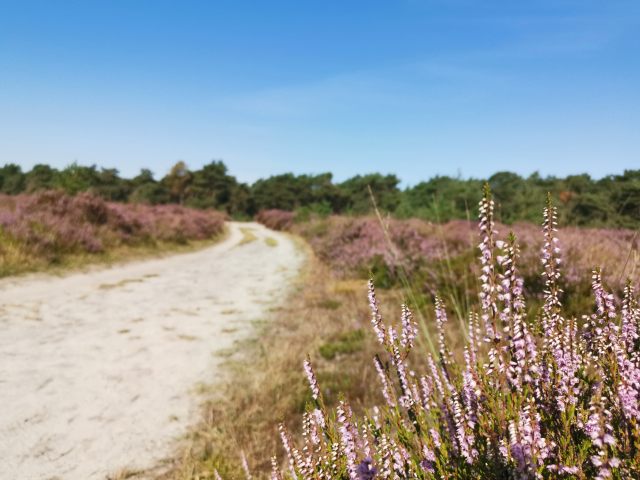
For now, this fieldwork chapter is closed again. We boxed our sandy soil samples and send them on their way to Estonia and Spain for analysis. Now it’s just typing out species list and submit them to the growing global network to explore what’s up with this Dark Diversity.
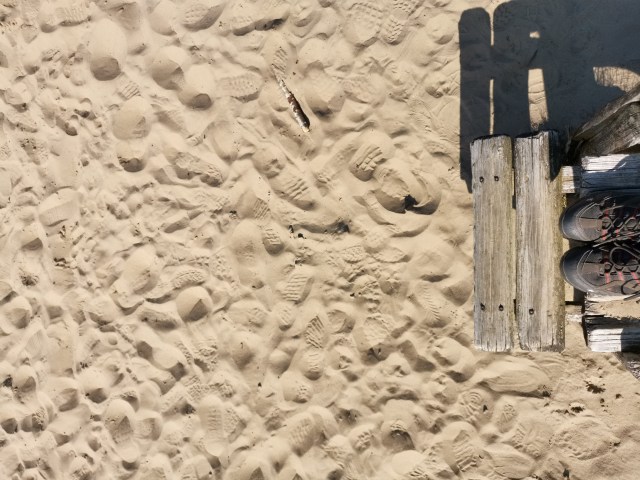
Good thing is: we’ll have to go back to the field soon, hopefully on a crispy cold winter day, to replace our temperature loggers. That’s our luck, as it is those occasional days in the field that do keep an ecologist sane.
For MIREN, we are working on an awesome blog series summarizing our scientific findings from the last 15 years for conservation, policy makers and the global public. This is chapter 3 in the series, follow the whole story on www.mountaininvasions.org.
If there is one certainty about non-native plant invasions in mountain regions, it is the following: there are less non-natives at high elevations than in the lowlands 1,2. This pattern is indeed recurring in all mountain regions studied within the network, albeit with some regional variation (most notably another decline at low elevations in tropical regions where the lowlands are too hot for many species3-5.

Presence of non-native species at high elevations is much lower than what is seen in the lowlands. Here: Taraxacum officinale in southern Chile, defying all odds.
Yet what is behind this general observation? The answers can be found in the introductory history of these mountain colonizers. Most of these non-native species are first introduced in the lowlands, and they are pre-adapted to the relatively mild climatic conditions found there 3. From there, they start colonizing areas at higher elevations, often following human constructions like roads and trails 6. This expansion of non-native species from anthropogenic sources at low elevations towards the alpine zone, and the progressive dropping out of species on the way to the top, follows a process that we call ‘directional ecological filtering’ 7: one starts with a large non-native species pool at the bottom, and then sees a progressive drop-out of species on the way up.
As a consequence of this directional filter, the non-native plants reaching high elevations around the world are not the highly specialized stress and cold tolerators one might have expected there. On the other hand, these are mostly species with broad climatic tolerances capable of growing across a wide elevational range 7, with the high-elevation non-native species pool as a whole being a subset of the adjacent lowland pool 8. These ‘winners’ found at high elevation often are perennials (and not annuals), are from temperature origin (and not Mediterranean or tropical) 5,9, and have fewer flowers yet larger seeds 10.

Harsh climatic conditions at high elevations (here early November snow and short days in the Norwegian mountains) are commonly seen as the main limitation for non-native lowland species to invade the alpine zone.
Mountains thus act as a filter on non-native species 3,7. But how exactly does that ‘mountain filter’ work? The most obvious filter is the reduction in temperature and the increase in abiotic stress 11, which is a major limitation for many of these lowland species. This increased abiotic stress is however accompanied by other filters: a decline in the amount of seeds (through a reduction in human presence) 2,11,12 and a simple delay due to the longer physical distance from the introductory point 2,3. On the other hand, one might also observe a higher resistance against invasion by new-comers in mountains 11, while the power of the nonnative species to invade is reduced at this far edge of their distribution 2.
So which one of these drivers is the most important? Our experimental research showed that many non-native plants can establish, grow, and flower well above their current elevational limits in high-latitude mountains 13, defying the theory of the temperature filter. These results imply that cold-climate ecosystems are likely to see rapid increases in plant invasions in the near future as a result of increasing human-mediated disturbances and climate warming.
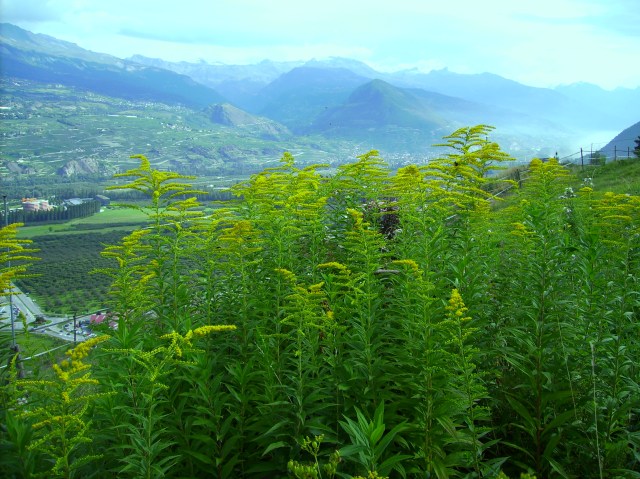
In studies on a selection of daisy species (family Asteraceae, here Solidago canadensis), all but one reached the same or even a higher altitude in the new range, so neither climatic adaptation nor propagule limitation seemed to be playing a crucial role 14,15.
Non-native species are indeed still moving upwards over time, albeit relatively slowly 2. The elevational ranges of species for example tended to increase with time since introduction on Tenerife, and the species reaching the highest altitudes were mostly old introductions 3. This movement is likely accelerated by climate warming 2,16. Nevertheless, we found little change in the elevation ranges limits of species over time in Switzerland, suggesting that at least in the Alps most species are not rapidly expanding at their high elevation range limits 17. For most species, populations were however more dynamic (with more colonizations and extinctions) at the upper range limit where their occurrence rapidly declined 17.

Common yarrow (Achillea millefolium) has been shown experimentally to be able to survive, grow and flower far above its current range limit in cold-climate mountains.
In short: invasion by lowland species at high elevations is slow yet ongoing, and most non-natives have not reached their upper limit yet. We should thus be prepared to see the problem become a lot more critical over the coming years and decades. Nevertheless, even though most of the current non-native mountain species have a lowland origin, invasion by cold-adapted non-native species actually provides a higher threat 16, as climatic matching increases invasion chance 9. Special care should thus be taken to limit introduction of cold-adapted alpine species from one mountain region to another.
References
Proudly introducing: The 3D Lab!

The 3D Lab is a virtual lab. It is not a research group in the strict sense of the word, as it is not a physical lab. Instead, it is the team of scientists, PhD- and masterstudents working with me, Jonas Lembrechts, in chasing the same goals: studying species distributions and their dynamics in a rapidly changing world.
So why create a virtual lab? The answer is simple: to bond, to unite behind a common cause, even when not physically together. I currently co-supervise 3 PhD-students: Ronja, based at NTNU in Norway, Charly, who is housed at Gembloux in Wallonia, and Jan, who works at the University of Antwerp with me. On top of that, there is a varying set of master students involved in projects with us.
Some of us rarely meet each other in real life, yet all of us are tackling similar questions and we are united behind that commong cause to understand what is happening to our biodiversity, before it is to late.
Hence, the virtual lab. We communicate our science together (see for example this first guest post from Charly), we have meetings together and we learn from eachother.
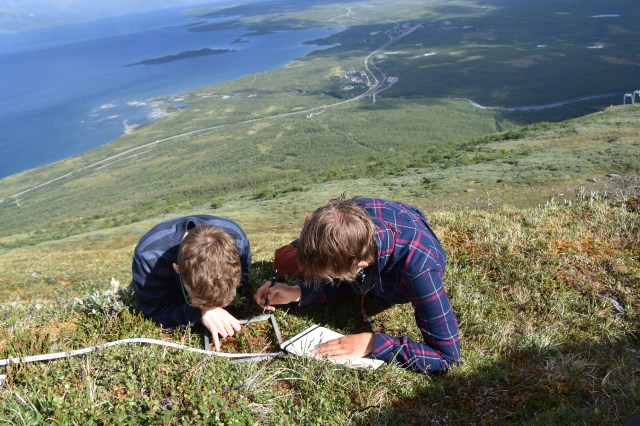
Master student Robin and PhD-student Ronja studying plants together in northern Sweden
For the name and logo, we have to thank Ronja, but I find it very fitting: our work focusses on the dynamics in distributions in 3 dimensions: longitude, latitude, and time. And while we might all be working in different systems – from cities over heathlands to mountains – we all want to discover the dynamics in these distributions. And we are all using the power of statistical analysis to tackle these questions, hence the Gaussian distribution replacing the D.
So, be welcomed on the3Dlab.org, and follow us on our joint quest to discover dynamics in species distributions, while we try to understand the mysteries of our biodiversity before it is too late to save it!


 The 3D lab