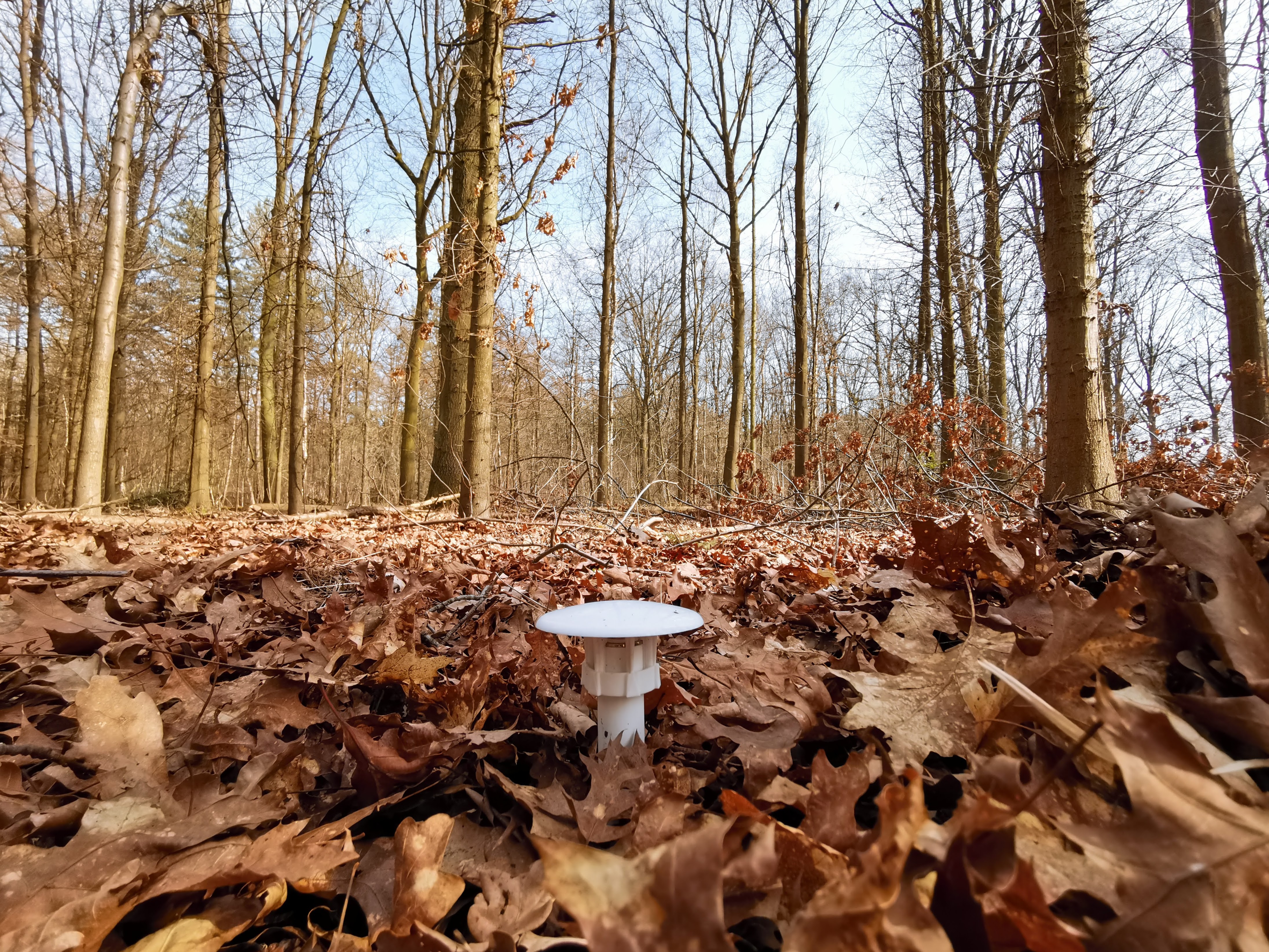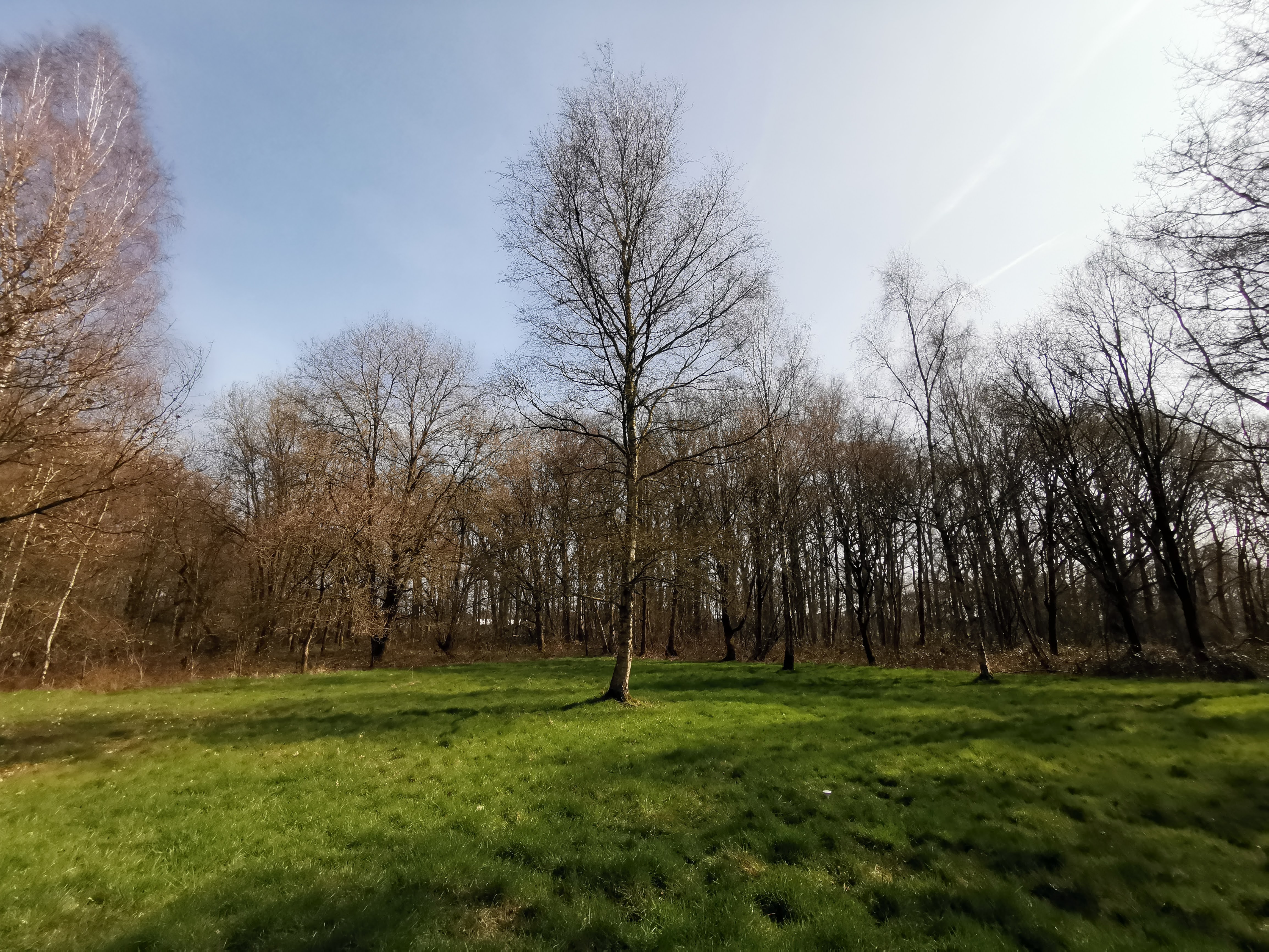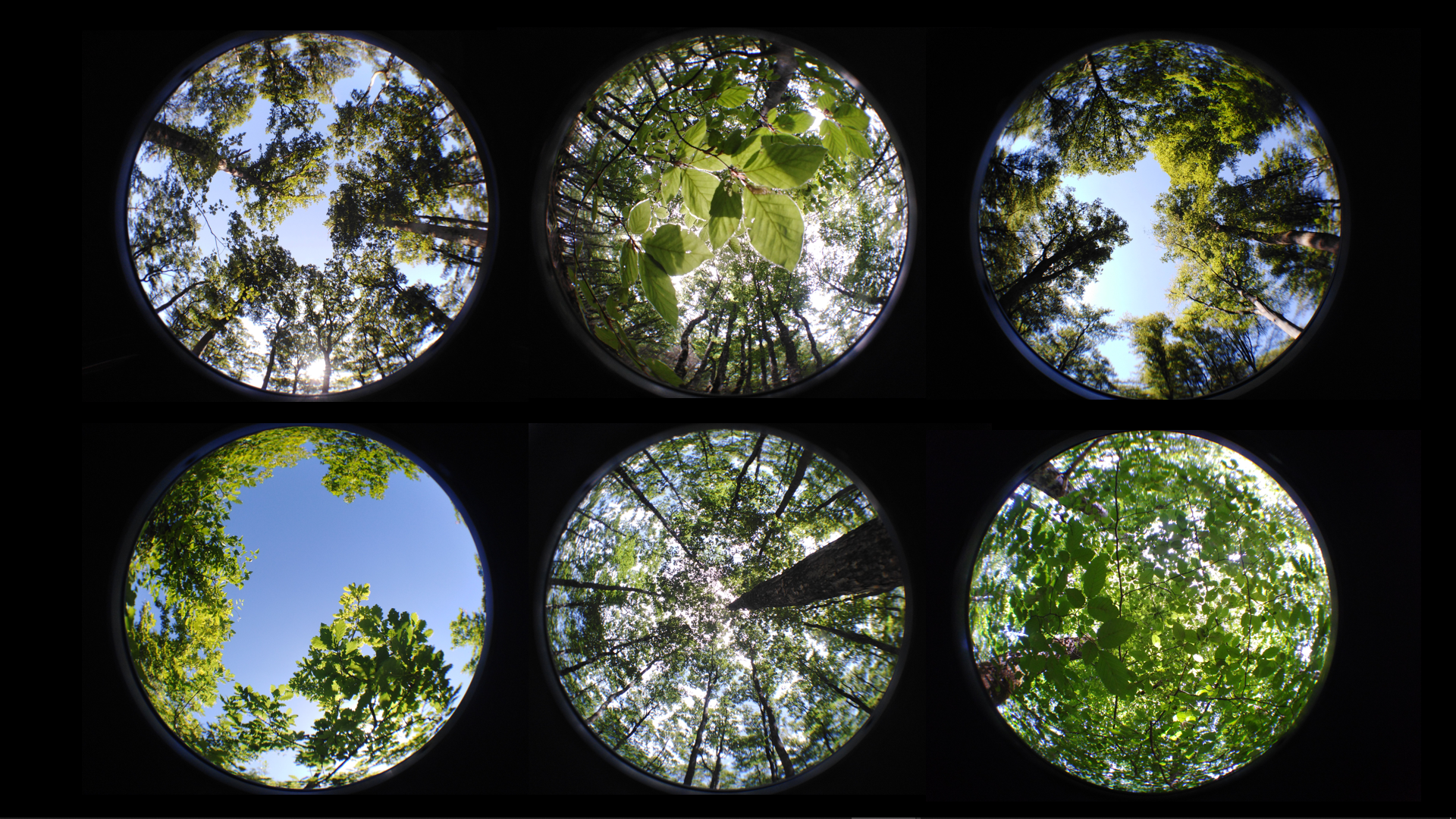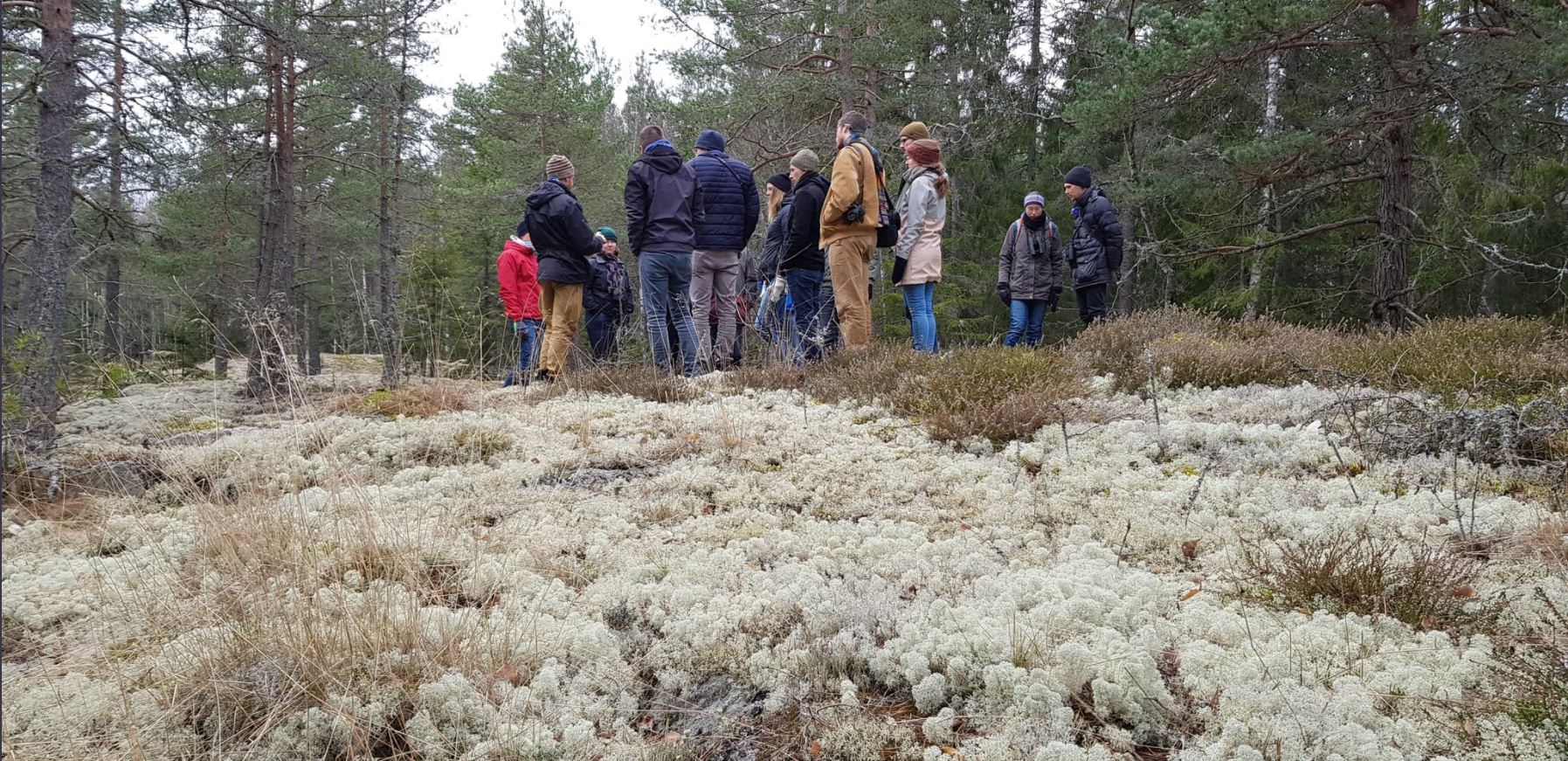
Sometimes, a picture reaches me that might not look too special at first, yet has major implications for scientific progress. This is one of them: a TMS4 mini-weather station in the midst of the rainforest of DR Congo!
It shows that we are keeping true to our promise to expand the global scope of the SoilTemp-network, in our struggle to represent microclimate in the whole world. A daunting task, especially in the tropics. But now, thanks to Matti Barthel and colleagues, we have more eyes and ears in DR Congo again, and our global map is again coloring a bit darker. It took us longer than hoped for (global pandemic, you know?) but persistence is key, and now the little mushrooms are brightening up the rainforest.
Fingers crossed the little things withstand the times.
Last summer was -normally- the last field season of my PhD which tries to better understand how cities influence alien plant invasions. One would think that the last field season would be easy and a bit melancholic, but actually it was most stressful to organize. Due to the Covid-19 situation, the trips I had to do between the Belgian cities but also the help of the students were maybe not possible which questioned my fieldwork organization.
However, I really cannot complain as we found ways to make it work, so I was really lucky compared to some less fortunate colleagues. Even better, the team we formed with the students was very efficient and the mood was always very positive!
We then began our quest for alien plants in urban and rural Belgium, driving more than 1700 km.
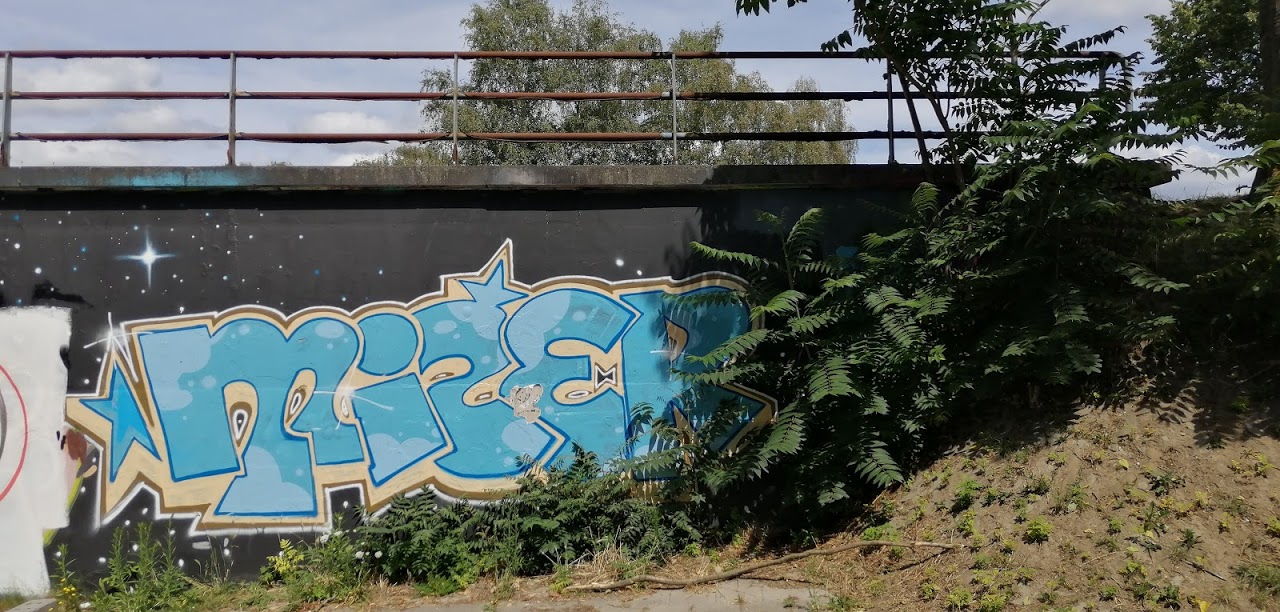
Plants thrive in an abandoned factory under the sun (left), or along the railroad tracks with a grey sky (right). The one pictured here are native!
I already hear what you are going to say, plants in cities are rare except in parks and gardens. Well, that is totally untrue! Actually, plants are everywhere, in every pavements cracks, walls, or road sides. As a plant lover this makes me very happy. The most fascinating point of this fieldwork is that alien plants grow in the most unexpected spots!
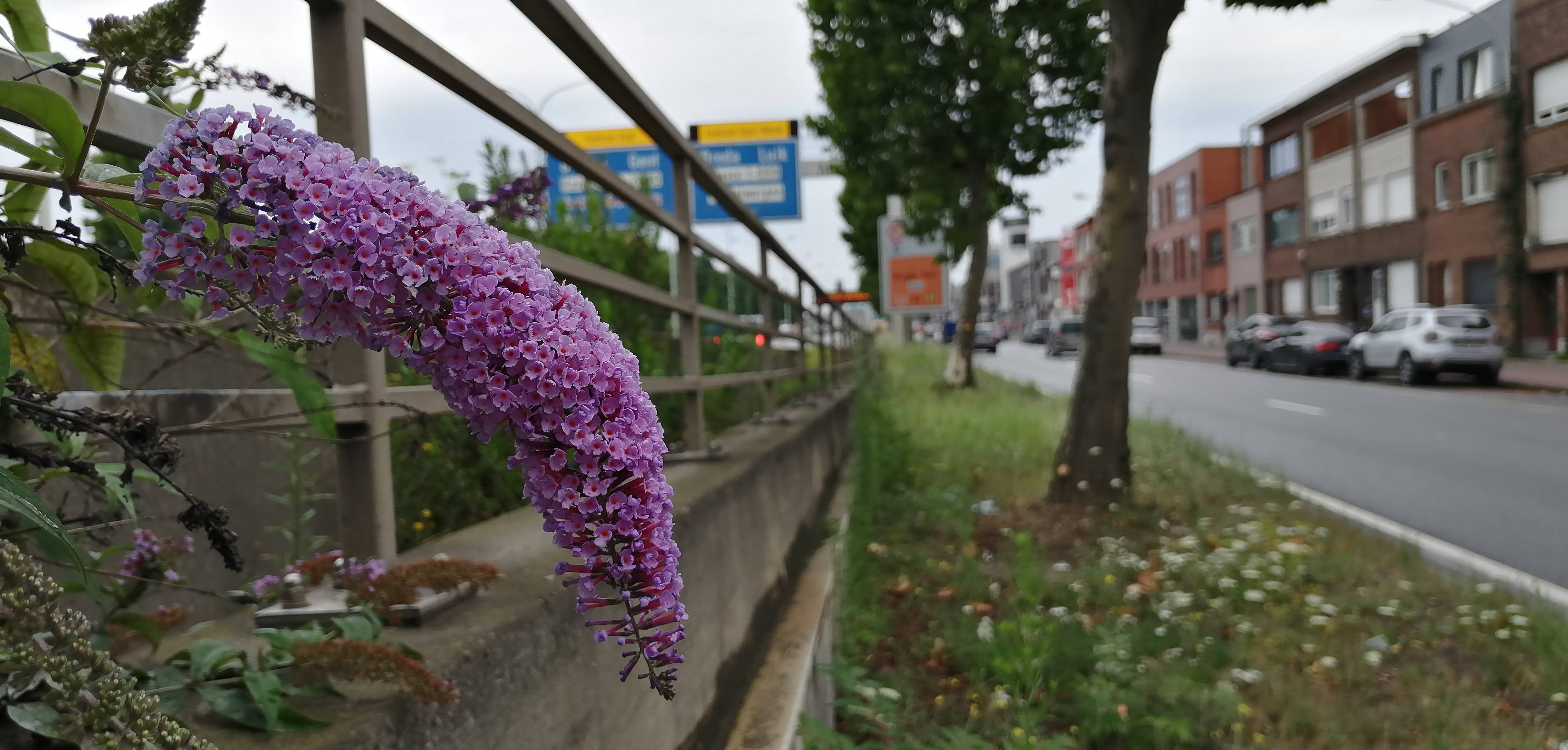
Alien plant species enjoying concrete cracks (left), pavements (middle), or even walls (right)
The elaborate look of these exotic species play with us. We tend to love those bright flowers and gigantic leaves, so we plant them and introduce them to new areas, from where they can escape and potentially impact native plants. That is one of the reasons why we need to better understand why and how they thrive in cities.
Another characteristic of urban areas is their perpetual evolution. A parking lot can become a chic housing estate within a year, when in the same time frame an old house becomes an abandoned brown site. With that in mind, some of the plants I studied simply disappeared… However, we had many good surprises, with tiny sprouts becoming lush and strong trees.
Same place, but one year apart. The tiny sprout in 2019 (left) became a lush invader in 2020 (right).
How amazing! Great for my experiment, not so much for the local environment. That is an important dilemma of being a biologist studying alien plant invasions, being amazed by a gigantic invader yet being concerned for the local ecosystem!
Buildings with high amount of alien plant species. They seem to enjoy these footwalls!
In the end, we got enough time to finish the field work and be back at the university with our hands full of samples!
Our #NatureOrNot survey has been an unexpectedly big success! More than 1300 people informed us about what they consider nature and what not. The poster above, made by master student Naomi De Vries who’s in charge of the project, summarizes nicely (and beautifully) what all of this is about.
Wander through her ‘Instagram-feed’ and learn what her thesis is about. And then, stay tuned for the actual results, which we are frantically working upon!
What you see brightening up my garden on the picture above is what we hope will be the future of microclimate monitoring: a TMS-logger with connection to the internet! Yes, you read that correctly, TOMST is currently working on a new version of their beloved logger that allows real-time data transmission, opening up a world of possibilities towards remote monitoring, science communication, and climate network management.
What I have here, is the first prototype (serial number …00000 of this new device!), ready to test it out in the garden. For the first time, we’ll see if data transmission from the field to the database works out as planned, bringing that bright future another step closer.
The prototype in all its glory, with see-through casing!
So this prototype now joins the army of microclimate loggers already occupying my garden, all in full preparation of what’s coming to us in Flanders next year: the biggest community science project on climate change ever!
Some other members of the army of TMS-microclimate loggers between the daisies in my garden – these ones measuring the impact of depth of device placement on the surface temperature
Last week, we had a new PhD candidate starting in the lab! His name is Stijn, and he is here to pull our fabulous citizen science project ‘CurieuzeNeuzen in de Tuin’, in which we will measure summer heat and drought in 5000 gardens, parks and farms across Flanders.
Stijn in action last summer – installing our microweather stations in a grassland
He will be doing the big data crunching on this one: modelling drought and heat indices over the summer, making pretty maps of temperatures across the region, and disentangling what drives the small-scale variation in our temperature and soil moisture. Exciting stuff to say the least!
Mysterious mushroom circles in the gardens, that’s the trial project of ‘CurieuzeNeuzen in de Tuin’ Already looking forward to see these mushrooms popping up all over Flanders next spring!
You will definitely hear more from him, as not only is he tremenduously motivated to get things rolling, he also fell in love with science communication already. And let that be exactly the kind of thing we love to do around here!
By now we know quite well that non-native plant invaders are fond of human disturbances. We have seen many times, across many different ecosystems, that these foreign plants use the more welcoming disturbed sites as their entry points towards new ecosystems. Roadsides and trails in particular make for great pathways for these non-native plants, which use them to spread out to new ranges that would have otherwise remained unattainable.
While this pattern clearly exist, we are still in the process of trying to understand exactly what it is about these disturbed sites that makes them so welcoming for non-native plants. Is it due to reduced competition? Abiotic changes to pH and nutrient availability? Or maybe increased seed availability thanks to transport by cars and blissfully unaware hikers? As is often the case in ecology the answer is most likely: “a bit of all of the above”.
Cars are known to transport seeds of non-native species along mountain roads, like here in northern Norway.
However, there is another factor that could prove to play a large role in facilitating non-native success and that has remained largely unstudied. That is, the relationship between plants and their fungal mutualists: mycorrhizas. This crucial symbiosis between plants and fungi, in which plants exchange sugars for precious nutrients, is a difficult one to study as it takes place wholly belowground and at microscopic level. However with ongoing improvements to our methods, it is becoming clear that these little fungi are instrumental in shaping the processes and composition of ecosystems all across the world. And as such, it is not unreasonable to think that they could shape how non-native plants benefit from human disturbance.
To test for that hypothesis we went back to our trusty roads in the beautiful northern Scandes. The great thing about these roads is that not only do we already know that they favor non-native species thanks to our previous surveys (see chapter 2 here), there is also a clear distinction between the type of mycorrhizas that naturally associate with the local plants (called ericoid and ecto-mycorrhizas) and the type that non-native plants like to associate with (arbuscular mycorrhizas or AM). This clear distinction in mycorrhizal types is really helpful as we can simply track the changes in AM and have an idea of how impacted our non-native plants are going to be.
Part of the team digging for roots of non-native species along Norwegian mountain roads
After many a day of root collecting, soil sampling and mosquito swatting, we sent a few hundred of samples taken all over our mountains roads to our home base in Antwerp, where we went looking for mycorrhizas. We did so both visually, under the microscopes, to know the quantity of mycorrhizas there was in each root, as well as through DNA analysis, to know which ‘species’ of mycorrhizas were present .
Figure 1: we found many more roots with arbuscular mycorrhizae in the roadsides than in the natural vegetation (left), as well as a much high diversity, with 23 OTUs (‘species’) unique for roadside roots.
By far the clearest result that came from all that work is that there is a very clear effect of the road disturbance on AM. There are way more of these arbuscular mycorrhizas in roadside roots than in the natural vegetation and they are also much more diverse! More AM in the roadsides means more non-native plants in the roadside, thus disturbance impacts mycorrhizas which in turn facilitate invasion success. Question answered, right? Well, if you have been around ecology for a while, you will know that things are never that easy. After all, the higher presence of AM could be a consequence of non-native plant success instead of a cause, or maybe these two things are wholly unrelated and they are both the consequence of some third factor, changes in pH for example. That’s what’s both fun and sometimes frustrating about ecology, it always keeps you guessing. But what we have found for sure is that this big difference in mycorrhizas is truly there. And that opens many exciting future research opportunities that are only asking to be seized! That chicken-and-egg problem of who’s driving what? That needs to wait till next summer, when we’ll get back to see how things have changed over time.
So we can be clear here, roadsides are full of mycorrhizae that can benefit our non-native plant species. Yet, there is something rather funny with this observation: while non-native plants have not yet reached the highest elevations of our mountain roads, that is not for a lack of adequate mycorrhizas. Indeed, contrary to our expectations we found AM to be present all over our elevation gradient, even well above the highest elevation reached by non-native plants. Moreover, the difference in mycorrhizas between roadside and natural vegetation was also constant all over that gradient. That tells us that adequate mycorrhizas are already available for non-native plants climbing up the roads, which is one less potential barrier to further invasion. So that is another chicken-and-egg problem for which we do have the answer already: while we don’t know who came first in the system, non-native plants or their mycorrhizae, the mycorrhizae where clearly first to reach the top. That non-native plants haven’t colonized highest elevations yet, is thus not from a lack of mycorrhizae. At least one potential explanation we can erase from the drawing board.
Fieldwork with a view, above a Norwegian fjord close to the city of Narvik
Lake Törnetrask, Abisko Research Station, Abisko, Sweden
Lake Torneträsk, Abisko, Sweden
Luscinia svecica, Abisko, Sweden
Angelica archangelica
Narvik, Norway
Narvik, Norway
Oenanthe oenanthe, alpine tundra Abisko, Sweden
Luscinia svecica, Abisko, Sweden
Lake Torneträsk
Norway
Summer in the Skjomen valley, northern Norway
Oenanthe oenanthe
Saxifraga aizoides, Narvik, Norway
Hair’s tail cotton grass
Narvik, Norway
Skjomen valley, northern Norway
Pinus sylvestris, Narvik, Norway
Norway
Narvik, Northern Scandes, Norway
Angelica archangelica along mountain road in the northern Scandes, Norway
Luscinia svecica
Hallerbos 2017
Young bluebell (Hyacinthoides non-scripta) surrounded by flowers of yellow archangel (Lamium galeobdolon)
The common bluebell (Hyacinthoides non-scripta), the signature flower of the Hallerbos
Single bluebell flower surviving on a wetter spot, as indicated by the field of wild garlic (Allium ursinum)
A really wet patch of forest, with giant horsetail (Equisetum telmateia) in a field of wild garlic (Allium ursinum)
Wild garlic (Allium ursinum) in the Hallerbos flowers a bit later than the bluebells, yet this one was already in full bloom
A bumblebee visiting yellow archangel (Lamium galeobdolon)
Wild garlic (Allium ursinum)
Weirdly beautiful, the inflorescence of pendulous sedge (Carex pendula), typical for the wettest spots in the forest
A little stream in the Hallerbos, surrounded by endless fields of wild garlic (Allium ursinum)
The herb-paris (Paris quadrifolia), less common in the forest
Wild garlic (Allium ursinum)
Bluebells (Hyacinthoides non-scripta)
Weirdly beautiful, the inflorescence of pendulous sedge (Carex pendula), typical for the wettest spots in the forest
Another one from the wet plots: large bitter-cress (Cardamine amara)
Young beech leaves, as soon as they are fully grown, spring in the understory is over
A beech forest without understory, most likely too dry and too acid for any survivors
A young beech seedling (Fagus sylvatica), looking nothing like a beech, yet everything like a tiny dancer
Young beech seedling (Fagus sylvatica)
Bluebells (Hyacinthoides non-scripta)
Mountain melick (Melica nutans), a grass in the most amazing green
Bluebells (Hyacinthoides non-scripta) in a rare patch of mountain melick (Melica nutans), a grass in the most amazing green
Bluebells (Hyacinthoides non-scripta)
Montpellier 2017
The entrance to the cathedral of Montpellier
The cathedral of Montpellier
The entrance to the cathedral of Montpellier
The cathedral of Montpellier
Narcissus poetics
The cathedral of Montpellier
The botanical garden of Montpellier
Brackish Camargue vegetation
A typical lagune
Brackish Camargue vegetation
Camargue horses
Camargue horses
Camargue horses
Brackish Camargue vegetation
Camargue horses
Brackish Camargue vegetation
Little egret in the evening sun
Flamingo’s in the evening sun
A typical lagune
Dandelion fuzz
Grass lily
Grass lily
Dandelion fuzz
Veronica in a sea of poplar fluff
Euphorbia in a sea of poplar fluff
Poplar
Gare du Midi, Brussels
Sweden autumn 2016
Autumn in Abisko
Yellow leaves of mountain birch, with lake Torneträsk in the background.
Lapporten, the gate to Lapland, in Abisko
Rain blowing over the Abisko National Park
The colours of the north: red fireweed and yellow mountain birches, with lake Torneträsk on the background
Yellow leaves of mountain birch, with lake Torneträsk in the background.
Rain on the background, the ski lift in Abisko on the foreground
The steep slope of mount Nuolja on a dramatic looking morning
The beautiful colors of lake Torneträsk in Abisko
A little stream on top of the mountain, with a view on Lapporten, the gate to Lapland
Well, that is a beautiful table with a nice view on lake Torneträsk in Abisko
Our little experiment on top of the mountain in Abisko, with a view on Lapporten
Autumn in Abisko is extremely colorfull
The ski lift with a view on Abisko National Park and Lapporten
Hiking dowhill towards lake Torneträsk
This green is greener than the greenest green: moss on top of mount Nuolja
Well, that is a beautiful table with a nice view on lake Torneträsk in Abisko
The ski lift with a view on Abisko National Park and Lapporten
The most beautiful hiking trail of the world: Nuolja in Abisko
Angelica archangelica, often the biggest plant of the Arctic
The most beautiful hiking trail of the world: Nuolja in Abisko
Cirsium helenioides, the melancholy thistle
Hiking down mount Nuolja
The steep slope of mount Nuolja on a dramatic looking morning
The colours of the north: red fireweed and yellow mountain birches, with lake Torneträsk on the background
The prettiest yellow and blue: autumn in Abisko
Fireweed, Epilobium angustifolium
Campanula or bellflower, I think ‘uniflora’
Vaccinium myrtillus
Cornus suecica, the prettiest red of the world
Hieracium alpinum, alpine hawkweed
Carex atrata, one of my favourite sedges
Alpine clubmoss, Diphasiastrum alpinum
Agrostis capillaris, bentgrass
Common yarrow (Achillea millefolium)
Anthoxanthum odoratum, sweet vernal grass, fully grown and mature
Snow scooter trail
Our plot in the mids of a field of horsetails (Equisetum pratense)
Equisetum pratense
Cliff overlooking the valley with the road to Norway
Seedling of Taraxacum officinale, the dandelion, after two years of growing in bad conditions
Poa alpina, the alpine meadow-grass, with its viviparous seeds
Massive flowerhead of Angelica archangelica
Angelica archangelica
Blueberry (Vaccinium myrtillus) in autumn
A lowland marsh in Abisko in autumn
Installing the plots of our trail observations on top of mount Nuolja
Tanacetum vulgare (Tansy), non-native for the high north
Autumn forest down in the valley
The valley of Nuolja to Björkliden
Summer on the Nuolja-side
A full rainbow behind mount Nuolja in Abisko
It’s raining in the west, clouds trapped behind the mountains
A strong wind blowing rain from behind the mountains to our side
Betula nana, the dwarf birch, mini autumn forest
The valley of Björkliden in autumn
Sweden spring 2016
Trifolium pratense
Ranunculus glacialis
Bartsia alpina
Western European species like the red clover (Trifolium pratense) here are often listed as non-native species in mountain regions.
A rainy hike
Ranunculus glacialis
Silene suecica
Dryas octopetala
Melting snowpatch on a lake
Silene acaulis
Trifolium repens
Oxyria digyna
Although the alpine zone has been harder for invasives to access than most places, human structures like trails are often an easy gateway for the invaders to get up there. Picture from Abisko, Swedish Lapland.
Rubus arcticus
The valley of the lakes
Cornus suecica
Overlooking the valley of Laktajakka
Eriophorum vaginatum
Salix reticulata
Amiens
Cathedral at night
Cathedral at night
Frozen mirror
Amiens is filled with cute little houses
Sun rising above the water
Cold!
View from my office window
Enjoying silence and the morning sun
Cathedral with a glimpse of spring
Winter sun on the Place du Don
Cathedral seen from the frozen Parc Saint-Pierre
The museum behind the beautiful gates
View from my office window
Cathedral at night
Frozen to the bone
House on the square before the cathedral
Just outside of Amiens
Sunny but cold, the Quai Bélu
Maria without a shirt
Gargoyle planning to eat the cathedral
Sunny but cold, the Quai Bélu
Almost cold enough for ice-skating
The southern side
Colourful mirror
Le Club d’Aviron in winter weather
Nice architectural curve
Cathedral at night
Sweden autumn 2015
Lichen
Sweden summer 2015
View on the 1000 meter plots
Doing research on a cold Arctic morning
Plots flooded by the snowmelt
Flooded by the snowmelt
Meltwater river, racing down the mountain
After a hike, even the most basic house looks cosy. Little hut in the mountains, open for everybody
Snowbridge, maybe don’t cross…
Snowbridge
View from a cliff
Silene acaulis or cushion pink, cutest plant of the Arctic
Two seasons in one image
Steep slope
Hiking down
Narvik Kirche, church of the subarctic
Narvik Kirche
Reindeer on top of the mountain
Narvik Kirche
Summer at the church
Summer flowers
Massive waterfall
Young willow catkins
View from Narvik’s hospital, with lilac flowers
Building a bridge over the fjord will gain al drivers at least an hour
Norwegian fjord
Posing with the water, getting soaked
Minimalistic mountains
Insect investigating our reindeer antler
Catching mosquitoes with our license plate, harvest of the year!
Posing with the plot
Fieldwork on the most beautiful spot of the world
Summer bridge – still next to the sadly impassable river
Rhinanthus flower in the mountains
Plateau in the valley, beautiful brown
Experimental view from my favourite plot
Salix catkins
Extremely old Betula tree
Waterfall from a cliff
Buttercup is the earliest in spring, here
Rocks!
Alpine views
Views!
Fieldwork
Jumping over rivers
Plot
Golden plover
Angry lemming
Green, the whole north is green!
Snow, so much snow left!
Minimalistic mountain moments
Fieldwork
The research center
Red clover – focal invader
Look at this tiny cute snail!
Massive floods of melting water
Bartsia alpina
Hooray, a toilet!
Dryas octopetala
Lowest elevation plots
Butterball!
That’s a lot of water
Midnight sun is the best
At the lakeside
Beautiful Bistorta vivipara
Don’t fall in the water
Midnight sun
Wild river
Art – made by ages of wild rivers
Baby firework for America’s independence day
Midnight sun at the lake
The Abisko canyon was wilder than ever
That’s a crazy amount of water!
The Abisko canyon was wilder than ever
Black and white
Stone-man overlooking Abisko
Nothing as soft as a willow catkin
Label and soil temperature sensor attached
I’d drive to the top every day
Reflections
Rocks and clouds
Brave little birch
Brewing our camping poison
Basic camping stuff
Camping in Norway
Home-made temperature houses
Roadside research at its best
Norway is crazy
Horsetail is so funny
Little creek in magical forest
Birches, birches everywhere
Beautiful rock, a gift from the river
Another roadside fellow
Lichen
Ready to rock the summer
Collecting mosses
That’s a crazy old lichen
Tiny tiny piny trees, but old, so old!
Ready to jump into the fjord?
That’s a spiky stone!
Views on Norwegian fjords
Silene in the mountains
Cute little orchid
Skua
Attacking skua, mind your heads!
Watch out for the attack of the fierce skua!
Black snail
New plot!
Still a lot of snow to melt, but this spot was free for a new plot
Reindeer are better than people
Two seasons in one picture
Let’s see what is happening to the balance in mountains! Is this a starting avalanche, or will it last a bit longer?
Cute little hut
Climbing mountains by car
Softest moss in history
Drosera in the marsh
Hiking in no-man’s land
The clouds are coming
Abisko valley
‘Butterball’
Fieldwork in the tundra
Abisko valley
Little plot
Clouds and sun and mountains
Making soup on a campfire with a view
Little creek on high elevations
Skua on the look-out
Melting snow in a river
Rhodiola rosea and the Törnetrask lake
Beginning of spring
Flooded plots, melting snow, impassible wetness
Ferns and horsetails
Chile 2015
Lunch made by our local colleague, with funny bread (tasty as well!)
Trips to the field sites were sometimes a real adventure, especially right after snowmelt