The MIREN network has turned twenty! Imagine: a global ecological network, built on friendship, enthusiasm, and a shared love for mountains, that has managed not only to survive, but to grow and thrive for two decades. In a scientific world often shaped by short funding cycles and shifting priorities, that is no small achievement.
And this truly is a year of celebration for the network. At the end of last year, we gathered in Innsbruck, Austria, for a workshop that looked both backward and forward: reflecting on where MIREN came from, while laying the foundations for where it is heading next. We also officially kicked off preparations for a new coordinated round of global mountain roadside monitoring in 2027. And now, to top it all off, a celebratory paper has just been published in Biological Invasions.
The paper tells the story of twenty years of MIREN: what the network has achieved, how it managed to sustain itself over such a long period, and what other global research collaborations might learn from it.
MIREN was founded in 2005 through the vision and leadership of Peter Edwards and Hansjörg Dietz in Switzerland, together with Catherine Parks and Richard Mack in the United States. They invited a group of ecologists to a foundational workshop on the outskirts of Vienna, where MIREN’s central aim first took shape: understanding and addressing the growing risks posed by biological invasions in mountain ecosystems.
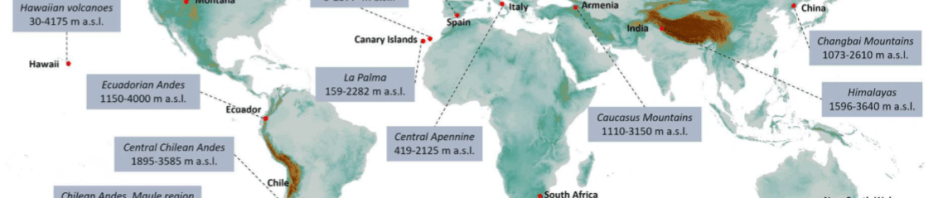
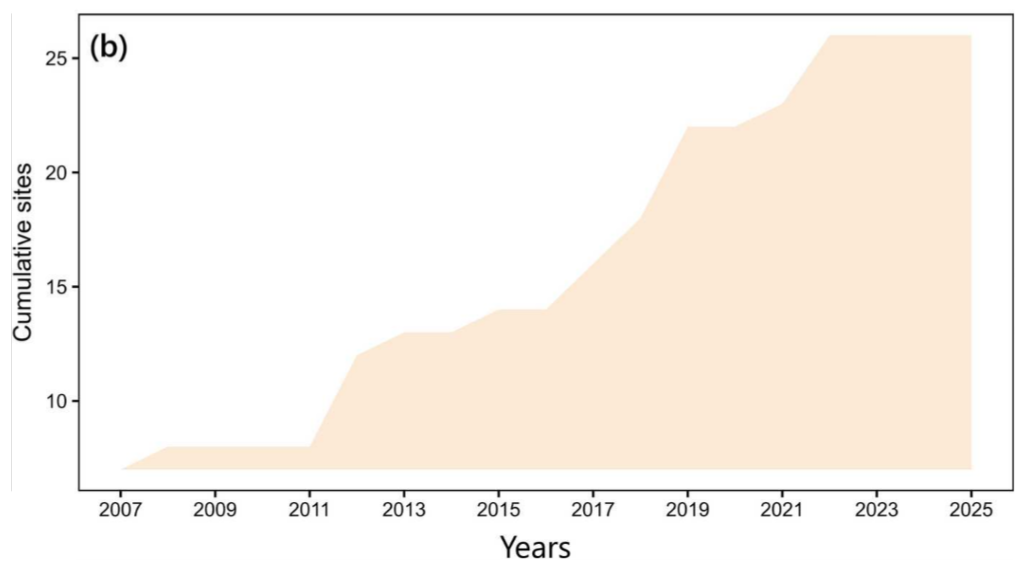
Since then, the network has steadily expanded. Our core and longest-running initiative, the MIREN road survey, now includes data from 27 mountain regions across the globe, with 30 regions already planning to participate in the upcoming 2027 resurvey.
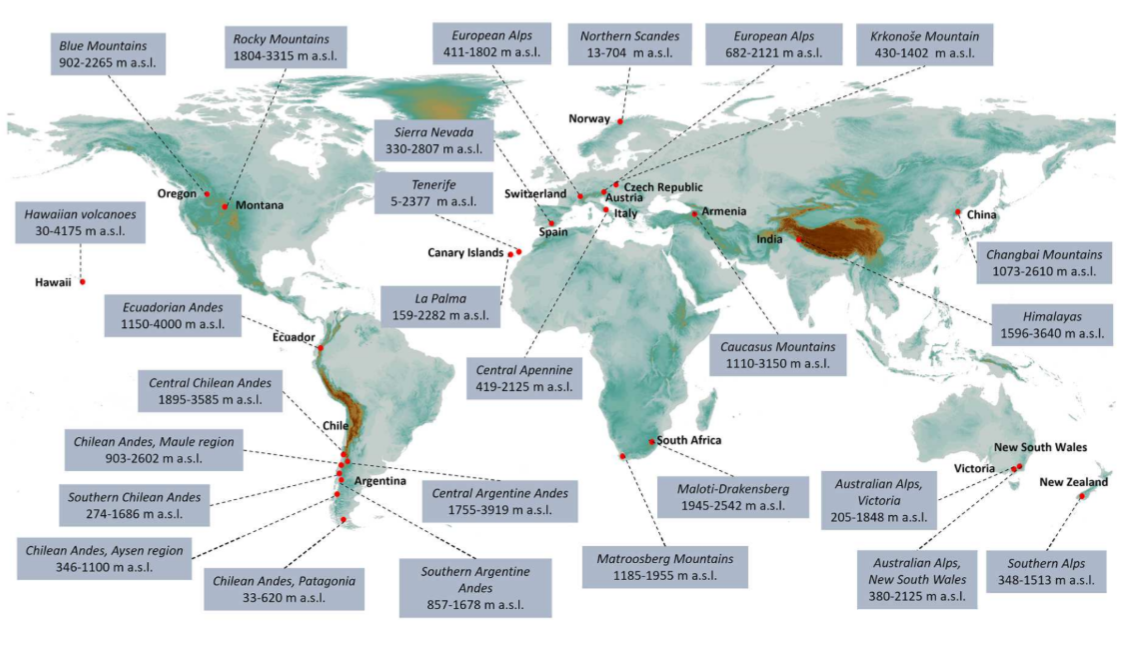
One of MIREN’s greatest strengths, at least to me, is its decentralized structure. Every region has its own ecological story to tell – and many collaborators do exactly that through regional studies and local publications. But together, these regions also allow us to answer the much larger questions that no single mountain system could address on its own. That balance between local ownership and global collaboration is rare, and incredibly powerful.
MIREN is also unusually balanced in terms of global representation. In our core road survey, nearly half of the contributing regions (48%) are based in the Global South, and the steering committee is similarly distributed across continents. Of course, important gaps remain: tropical mountains and large parts of Africa – apart from South Africa – are still underrepresented. But compared to many international ecological networks, MIREN has managed to build something remarkably global.
That global nature does come with practical consequences, of course. Steering committee meetings regularly happen either before anyone’s first reasonable cup of coffee or well past midnight. Yet those sleepy faces keep showing up, year after year. And I think that says the most about the affection people feel for this network.
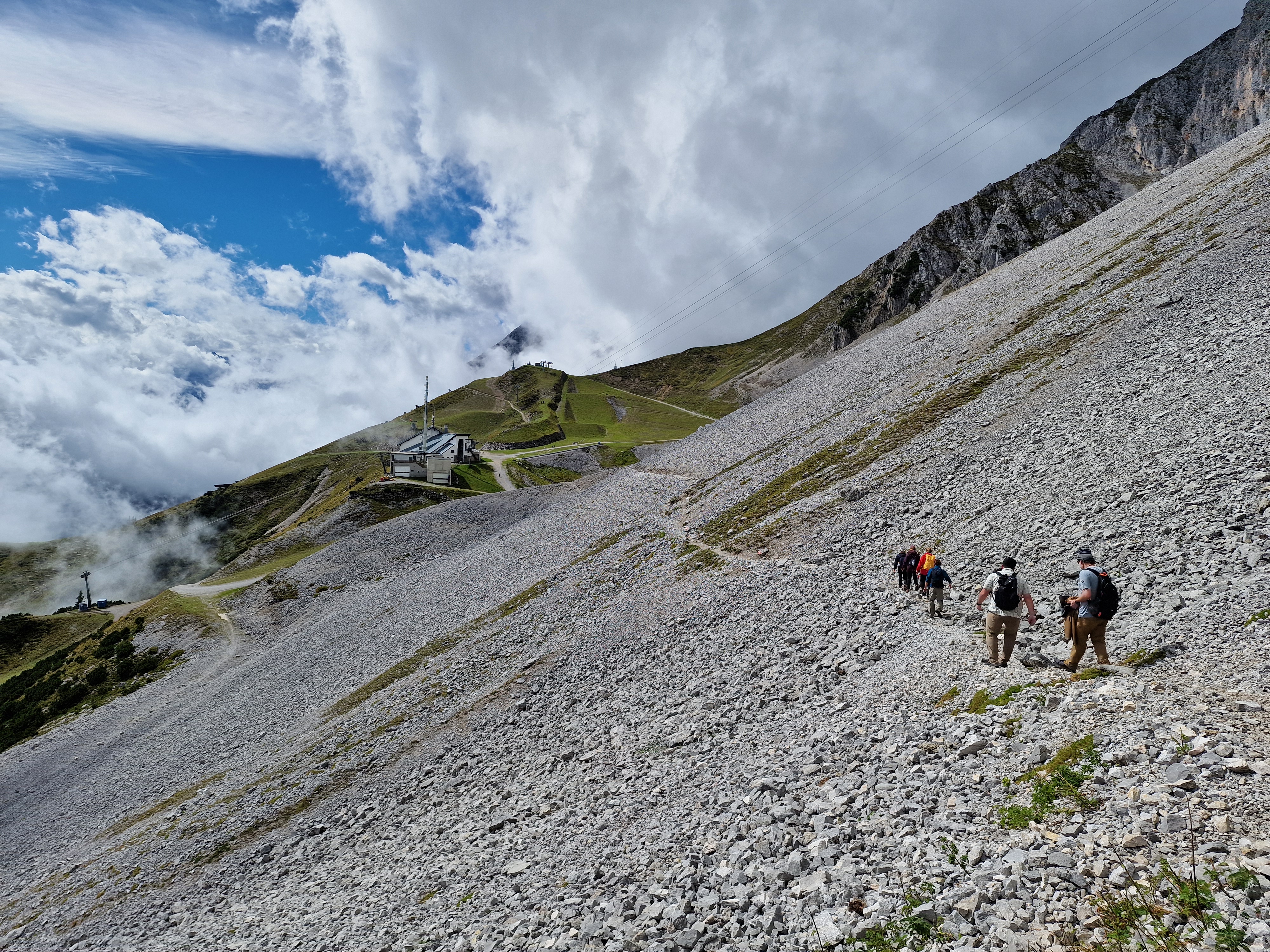
One of the key questions we discussed during our recent meeting in Innsbruck was how to remain relevant in a rapidly changing world – scientifically, socially, and in terms of conservation priorities. We certainly do not have a definitive answer. But a few important ingredients became very clear.
One is maintaining a healthy balance between long-standing and new members. New voices bring fresh ideas, energy, and perspectives. At the same time, the continuity provided by members who have been involved for years helps preserve the values and practices that allowed the network to flourish in the first place.
Another crucial element is the importance of meeting in person. Those moments together allow us to periodically rethink our objectives, create space for new conceptual directions, and recalibrate priorities – while still keeping MIREN’s core mission at the center: standardized, long-term ecological monitoring.
And perhaps most reassuring of all was the level of enthusiasm in Innsbruck. Many regions are stepping up their efforts, launching exciting new local and global research projects, and expanding collaborations. Beyond the original road survey, we have also made major progress with MIREN Trails and MIREN Rocks, elevating both initiatives to the same level of standardized monitoring as our “classic” roadside surveys.
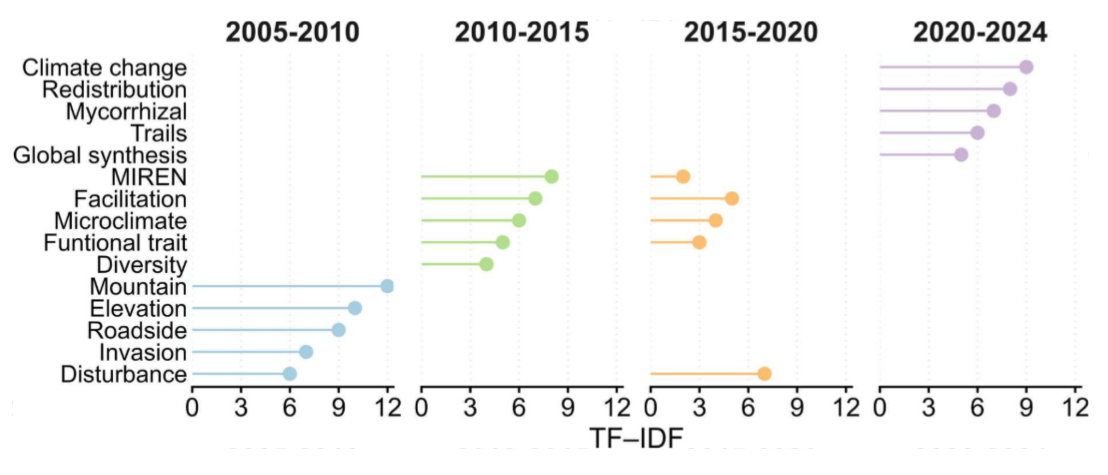
Twenty years of MIREN have resulted in a remarkable scientific legacy: ninety-nine papers so far – with this latest one becoming number one hundred.
So yes – there is truly a lot to celebrate.
And the nice thing is: the story is far from finished. You can still become part of it yourself. Join the MIREN road survey in 2027, participate in the MIREN trail survey in 2028, or contribute to MIREN Rocks whenever you feel like it.
Because after twenty years, the mountains are still full of stories waiting to be told.


