The climate update – exotics in extreme heat

In ‘The Climate Update’ gives Arne Ven, climate change advisor in the Global Change Ecology center of the University of Antwerp, us a recap of the news – good and bad – about climate change. Part 11 is about heat and exotic plants. This blog was prepared in collaboration with guest author Jonas Lembrechts (University of Antwerp) and first appeared in Dutch here.

The earth is getting warmer

When it is summer here, the news about forest fires, heat waves, temperature records … sky-rockets. In the early summer of 2021, large parts of Eastern Europe, Western America and Canada saw extreme heat. (1,2,3) These extreme events have repeatedly been linked to climate change. (4) According to one study, human-induced climate change caused one-third of heat-related deaths between 1991 and 2018. Older people and those with chronic conditions such as asthma are especially vulnerable. (5) And it’s not over: even if we meet the Paris climate goals (limiting warming to 2°C and preferably 1.5°C above pre-industrial levels), we’re going to face ‘bloody hot times’. There are scientific studies that say that, worst case, many millions of people – including some of the world’s poorest – will be routinely exposed to potentially deadly temperatures of up to 56 °C and above by the year 2100. (6,7) These extreme events will have enormous consequences, including for nature: some species will go extinct, while others will try to migrate to colder places. On top of that, new species – so called ‘exotics’ – are routinely brought in by humans. As it is getting hotter, especially those from originally much warmer regions could become of concern.

Cities are getting warmer

The increasing heat is not felt equally everywhere. In Flanders, for example, the sandy Campina region is generally warmer than the coast, while cities suffer more from heat than the countryside. Scientists have recently proven that exotic species from warm regions are more common in urban areas than in the countryside. This can be explained by the fact that, due to climate change, cities are warmer (and cool down less at night(8)) than the countryside: the heat island effect. Not only is it often several degrees hotter in cities than in the countryside, it is also often drier there, because pavement and other impermeable surfaces prevent water from seeping into the soil (9)

Photos: exotic species often like cracks in concrete (left), paving stones (middle), and transitions between stones and walls (right). © Charly Géron

A recent study by the University of Antwerp and Liège showed that exotics, originating from warmer climates, also experience heat stress in warm locations in our country during extreme heat waves. This shows that the effects of the heat island effect on plants are not as straightforward as thought: although the exotics probably benefit from the warmer winter temperatures in the city, they also need shade during hot summer days to survive. (10)

Your garden is getting warmer

Temperature differences do not only occur between city and countryside, they can even be felt at street level. Sometimes “extreme weather” can be very localized and depend on the environment, for example with Meditteranean temperatures – and associated plant species – on south-facing walls. These local hotspots can have a whole cascade of effects on humans (e.g. there are many more heat deaths in urban environments than in green environments) and on nature (e.g. exotic species start to crowd out native vegetation in locations with a suitable microclimate). However, as these differences can be so local, it means that one might have a significant influence on the local impact of extreme events, and make your living space more resilient to drought and heat yourself. This was explained by Jonas Lembrechts in an online seminar of the University of Flanders: planting trees – because trees provide shade and cool by evaporating water, not mowing your grass too short, ensuring a higher diversity of plant species in your garden, removing impermeable surfaces to ensure rainwater can infiltrate the soil, … all this can help to reduce the local impact of extreme weather events (11).

Meanwhile, scientists at the University of Antwerp are working with citizens (= citizen science) to investigate how we can better deal with the effects of increasingly extreme summers. (12) How do we ensure that our gardens remain a cooling place during a heat wave? And how do we better arm our gardens, as well as our parks, fields, and natural areas, against drought? Which of the above factors (planting trees, growing grass…) work best against heat, drought or even heavy rain? All this is being investigated in the project ‘CurieuzeNeuzen in de Tuin’. For this purpose, almost 5000 citizens have placed a small weather station (affectionally called a ‘lawn dagger’) in their lawn. These instruments transmit microclimate data on soil temperature and soil moisture for the whole of Flanders to inform us about the best measures to protect our gardens against extreme events. With the extreme rain Flanders has seen this summer, such a project has become more acute than ever.
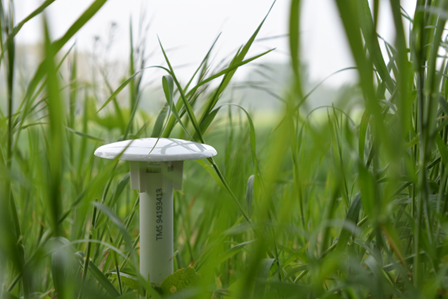
A ‘lawn dagger’ from citizen science project CurieuzeNeuzen in de Tuin.

Sources

  1.  https://www.vrt.be/vrtnws/nl/2021/06/25/warmterecords-in-british-columbia-en-moskou/
  2. https://www.carbonbrief.org/pacific-north-west-heatwave-shows-climate-is-heading-into-uncharted-territory?utm_content=bufferc621f&utm_medium=social&utm_source=twitter.com&utm_campaign=buffer
  3. https://www.vrt.be/vrtnws/nl/2021/06/30/tz-heat-dome-canada/
  4. https://www.carbonbrief.org/media-reaction-pacific-north-west-heat-dome-and-the-role-of-climate-change?utm_content=bufferbebf8&utm_medium=social&utm_source=twitter.com&utm_campaign=buffer
  5. https://www.theguardian.com/environment/2021/may/31/human-induced-global-heating-causes-over-third-heat-deaths
  6. https://www.knack.be/nieuws/wetenschap/zomers-van-56-graden-voor-half-miljard-mensen-in-2100/article-news-1719201.html?cookie_check=1618562825 ;
  7. https://climatenewsnetwork.net/half-a-billion-people-may-face-heat-of-56c-by-2100/
  8. CurieuzeNeuzen in de Tuin: Welke fascinerende beweging zien … – De Standaard
  9. https://www.eoswetenschap.eu/natuur-milieu/exoten-komen-de-stadspoort
  10. https://onlinelibrary.wiley.com/doi/10.1002/ece3.7872; https://the3dlab.org/2021/07/14/even-exotics-plants-prefer-the-shade-during-a-heat-wave/
  11. https://www.knack.be/nieuws/belgie/kan-ik-mijn-tuin-zelf-koeler-maken-tijdens-een-hittegolf/article-opinion-1750271.html?cookie_check=1626683008
  12. https://curieuzeneuzen.be/invloed-van-hevige-neerslag-op-het-bodemvocht-in-vlaamse-tuinen/

Posted in Belgium | Tagged , , , , , , , , | Leave a comment

Data-driven gardening

Our citizen science project CurieuzeNeuzen in de Tuin has been picked up by RTInsight, a US-based website focussing on the power of the Internet of Things! It’s always a struggle to reach that side of the big sea with our communication, so this article comes as a happy surprise.

Their take, in short:

The research into data-driven gardening expertly demonstrated that you don’t have to be a data scientist to engage with data in a meaningful way.

Data has the potential to solve some of our most challenging problems – food security, poverty, disaster prevention, and with a recent citizen scientist project in Belgium, climate change. The University of Antwerp is exploring the effects of climate change on gardening with its project on data-driven gardening, but with a twist and a lesson that businesses should take to heart.

Data illuminates patterns that humans miss, but without human interaction, data can skew in unwanted ways. The university’s explorations combine the best of both worlds, human expertise and problem-solving, with data insights. The results have been fascinating.

Curious about the future of data-driven gardening? Check out the story in full!

Posted in Belgium | Leave a comment

Fieldwork views

With summer in full swing, fieldwork pictures from the various The3DLab-teams keep reaching me, leaving me a bit ‘home’sick for the mountains. That feeling of standing on top of a mountain and enjoying the view after a great day of gathering fascinating ecological data…

Great views from Norway, where Ronja is following up her experiment on the role of gaps into facilitating colonization in mountains

A row of disturbances of increasing sizes in the Norwegian mountains, each of them featuring their own TOMST TMS4 microclimate stations

The team in Abisko profiting from the last day of sunny weather so far to survey plant communities on Mount Nuolja
Posted in Norway, Sweden | Tagged , , , , , , , , | Leave a comment

“The Czech Republic is a global example for microclimate science”

The soil sensor, the smart sensor that measures heat and drought in 5,000 gardens, parks, nature reserves and fields, was developed by TOMST. A small Czech company, world famous among microclimate scientists and, thanks to the citizen science project CurieuzeNeuzen in de Tuin, also in Flanders, Belgium. 

The CurieuzeNeuzen soil sensor is based on the existing TMS-4 sensor from TOMST (you can read all about that sensor in this scientific publication). The big – and only – difference is that the CurieuzeNeuzen “lawn dagger”, as it is affectionally called, is connected to the Internet of Things via Orange’s narrowband 4G network. With the old TMS-4 sensor, researchers retrieve the data manually with a cable. 

We spoke to Tomas (founder of TOMST) and Lucie Haase about the sensor and their company. Jonas Lembrechts, microclimate expert, TMS-fan and scientifically responsible for CurieuzeNeuzen, joined us at the table. 
 

How did TOMST come about? 

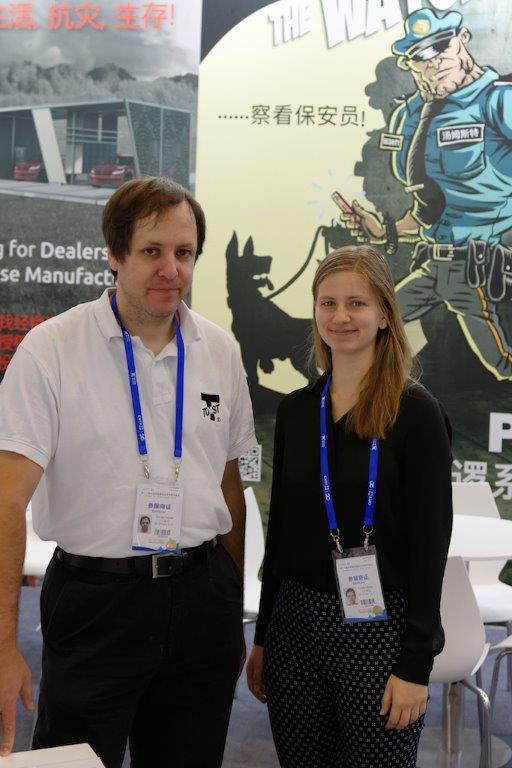
Tomas: TOMST started about 26 years ago, after I left PC Magazine and focused on iButtons. iButtons are small sensors used in badges to open doors. Our first product, the PES, was a small sensor that monitored security guards to see if they were doing their job properly. These sensors had to be extremely robust, since at that time there was a lot of abuse: security guards would destroy the sensor so that their employer would not realise that they were just sitting on their backs. 

Precisely because these sensors are so indestructible, my wife’s colleagues, who work for the Czech Academy of Science, became interested in the devices. They were looking for a sensor to measure temperature in natural areas. That’s where the idea came from, together with colleagues from the Department of GIS and Remote Sensing from the Czech Botanical Institute, for the TMS: an indestructible sensor that could withstand extreme temperature fluctuations, with thermometers at three points. 

So the reason TOMST ended up in climate science was rather accidental? 

TOMST: Indeed, it was more of a side project for us. At the time, 2008, we had a big project going in the UK with a big supermarket chain. That project was very profitable but also very stressful. The soil sensor was more of a hobby. At the time, we only asked our university colleagues to reimburse us for the cost of parts. 
 

Was there also commercial interest in your climate sensors from the outset, or was it mainly from non-profits and universities? 

TOMST: Most of our customers are universities and scientists. For scientists, a sensor that always measures in the same way is ideal. That way, scientists can always replicate their experiments. Also, it is usually less of a problem for scientists if they have to wait a few months before they can retrieve their data. 

Commercial organisations often see things differently. In Dubai, for example, they would be very interested in sensors that would tell them remotely that the soil is dry and the newly planted palm trees need water. Our current sensors can’t do that yet. 
 

The TMS-NB, the IoT-connected version of the TMS4 gets installed in a Flemish lawn

So before CurieuzeNeuzen contacted you, you were already playing with the idea of making the soil sensor wireless? 

TOMST: That’s right! We investigated the possibilities, but ran into a major problem. Our TMS sensors can last for years on one battery and we absolutely want to keep this strong point. This is not possible with, for example, Bluetooth, because it wouldn’t work at as much of a distance as necessary here. 

Wireless micro-climate sensors only recently became possible with the development of the narrowband 4G network? 

TOMST: Narrowband was indeed one of the first solutions to connect our sensors wirelessly. The advantage of 4G is that it is an existing network, so there are already transmitters everywhere and you never have to send data too far. The infrastructure is there; you don’t have to build a new network. 

Narrowband 4G uses very little energy and yet can process more data than, for example, SIG Fox, which we were also thinking about earlier (SIG Fox is another network technology for IoT, ed.). With narrowband, we can guarantee that one soil sensor can send data every day for eight years on one battery charge. 

You are a relatively small company, what was the first reaction when CurieuzeNeuzen contacted you with the request to develop and produce 5,000 4G sensors? 

TOMST: It was a very intense period. Connecting TMS to the Internet of Things would have happened anyway, only CurieuzeNeuzen accelerated the process enormously. At the beginning we were quite stunned by the request, producing 5,000 ordinary TMS-4 sensors is quite a challenge in itself, let alone developing a whole new 4G model. 

Because the corona crisis had us worried about the future of our business, we took up the challenge anyway. The chips of our sensors are entirely made in the Czech Republic. Our partner can only produce a certain number per week. So we knew that it was going to be a very tight deadline to get everything done in time. Despite COVID, it was a very busy year! 

What was Orange’s role in the development of the 4G radar band? 

TOMST: Orange provides the network to which the sensors are connected in Flanders. Their role was therefore essential. Corona provided an additional difficulty in developing a soil sensor connected to narrowband 4G. We were not allowed to leave the country, so we could not go and test it ourselves in Belgium. We hope that when the vaccination campaign gets underway, we will soon be able to come to Belgium for further testing. 

Jonas, you are scientifically responsible for CurieuzeNeuzen, what do you think the development of the TOMST soil sensors means for microclimate science? 

Jonas Lembrechts: The development of the TMS-4 by TOMST and the colleagues from the Czech Institute of Botany has meant a lot for the maturing of microclimate science as a scientific discipline. Before this, every researcher used a different sensor. Since TOMST introduced the TMS-4 to the scientific community, it is much easier to compare each other’s measurements. The low price also allows us to work on a larger scale much more quickly. 

A global microclimate network, parallel to existing weather station networks, is coming ever closer thanks to the TMS-4. Real-time data will accelerate this even further, because it will also interest commercial players. The Czech Republic is a global model for microclimate science. The Czech Republic was I think the first to have such a network covering the entire country. It would be fantastic to be able to apply this approach elsewhere across the globe. 
 

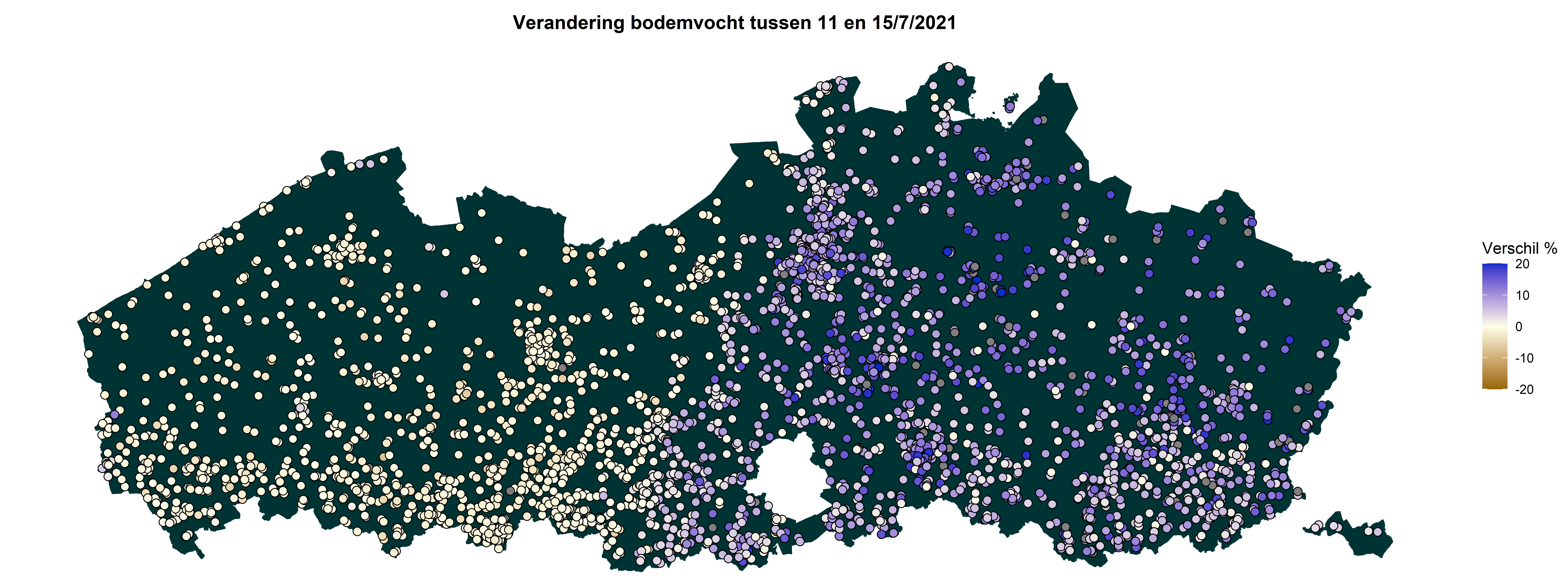
The TMS-NB provided us with quasi-real time data on the effect of the stationary storm of July 14th and 15th on soil moisture in Flemish gardens. Shown here: the absolute increase in soil moisture percentage added up to around 20% in the eastern part of the country, where the ‘water bomb’ hit hardest.

Partly due to our partnership with De Standaard, CurieuzeNeuzen gets a lot of press attention in Belgium. Was this also picked up in the Czech Republic and did you also get recognition in your own country? 

TOMST: Not at all actually, or we didn’t notice it because we were so busy (laughs). Because we mainly supply to universities and scientists, we don’t really need it. Scientists publish papers about their research with our sensors, so we have a certain notoriety within the scientific community. We can only be grateful for that. 

We are often asked if the ‘4G lawn dagger’ will become commercially available. 

Jonas Lembrechts: After completion of the research, we are going to work with iFlux (a spin-off of the University of Antwerp and VITO, ed.) to see how we can commercially deploy the soil sensors that remain. In the first instance, we are aiming at farmers, horticulturists and city councils. 

TOMST: We plan to bring the 4G sensor to the market, but the biggest problem is the network. At the moment, there is no roaming specifically for narrowband, i.e. we have to find a different provider for each market in Europe or elsewhere in the world and install different SIM cards in the sensors. We are still investigating how we can tackle this problem. We are currently thinking about virtual operators. The 5G network is gradually being rolled out, which also creates new opportunities for us. 

Due to a global chip shortage, we currently have to wait a long time for the IoT modems of our sensors. Ideally, we will bring a narrowband sensor to market in the spring of 2022. 

More information on CurieuzeNeuzen in de Tuin: curieuzeneuzen.be 

Posted in Belgium | Tagged , , , , , | Leave a comment

A railroad in Kashmir Himalaya

Kashmir Himalaya. A region famous for its breathtaking heights and steep mountain regions. From 1994 to 2013, the Indian government here worked on one of the most challenging railway lines of the world, facing major earthquake zones, extreme temperatures and inhospitable terrain, and including India’s highest railway bridge.

That’s the setting of our latest paper: we surveyed native and non-native plant vegetation along the whole stretch of the railroad to monitor its effects on plant species distributions.

Railway of Kashmir Himalaya : (a) map of the railway, with marked localities of the sampling sites,
(b) a view of a railway station, (c) a sampling site between stations illustrating
the sampling design

Both in 2014 and 2017, we (and with ‘we’, I mean Irfan Rashid and his team in Kashmir, as I was safely at home in charge of statistical analyses) collected vegetation data along T-shaped transects, adopting the common MIREN (Mountain Invasion Research Network, www.mountaininvasions.org) road survey design that might be familiar to many following this blog.

So what did we find? Plant communities changed significantly between 2014 and 2017, driven by declines in both native and non-native species richness, and increasing abundance of a few non-native species, especially in areas away from the railway track.

That both native and non-native richness would decline was unexpected, yet these patterns seem to suggest an advancing succession, where initially – rare – pioneer species are replaced by increasingly dominant and often non-native competitors. Additionally, it could suggest a trend towards delayed local extinctions after the disturbance resulting from building the railway.

Arundo.donax2web.jpg
Arundo donax, or giant reed, one of the non-native species expanding most rapidly in the region.
Picture by Forest and Kim Starr – [1], Public Domain, https://commons.wikimedia.org/w/index.php?curid=21416505

What is clear is that the plant communities next to railways do not reach equilibrium quickly after a disturbance. More than ten years after railway establishment, succession continued, and signs point towards a landscape increasingly dominated by non-native species. Our study indicates that the single disturbance event associated with constructing a railway in this Himalayan region had large and long-lasting effects on plant communities at and around this transport corridor.

Importantly, the one railway in the Kashmir valley is currently still disconnected from the national railroad system, with plans under way to finish that connection in the near future. As has been shown elsewhere, such a connection with the rest of the country would further play into the cards of non-native species. We thus highlight the need for a long-term region-wide coordinated monitoring and management program to limit further spread of such non-natives, and make specific recommendations of what is needed to manage the vegetation at and around the railway through Kashmir valley, especially with the planned connection of the railway with the rest of the countries railroad network in mind.

Conium maculatum
Conium maculatum, another rapidly expanding non-native in the region.
Picture by Djtanng – Own work, CC BY-SA 4.0, https://commons.wikimedia.org/w/index.php?curid=49059037

Posted in India | Tagged , , , , , , , , | Leave a comment

The fingerprint of last weeks’ heavy precipitation on soil moisture in Flemish gardens

Last week, the southeast of Belgium had to cope with extreme precipitation, resulting in hallucinatory images of floodings. These large amounts of precipitation also leave clear traces in the soil moisture measurements of the CurieuzeNeuzen microclimate network.

As you can see on the map below, gardens in the province of Limburg, Antwerp and Flemish Brabant show an absolute peak in soil moisture of up to more than 20% in some places compared to the reference level last weekend.

Difference in soil moisture in Flemish lawns between the peak level on July 15 (after the days of heavy precipitation in the center and east of the country) and the average soil moisture on July 11, as a reference.

Lawns as sponges

Such soil moisture peaks clearly demonstrate the importance of our lawns, gardens and nature as a sponge during heavy rains: all the water that can be absorbed by our garden soils is at least temporarily trapped, and lowers the pressure on our sewers and rivers, thus reducing the risk of flooding. The observed increases in soil moisture even occurred in garden soils that were already very wet, after a very wet first half of July (the average soil moisture percentage on July 11 in Flemish lawns was 38%).

However, at times of extreme precipitation such as this, much of the precipitation does not get absorbed into the soil: there is a maximum amount of precipitation that soils can take at one time before they are completely saturated. The excess water will have to run off above ground, causing flooding. That maximum depends among others on soil type, precipitation history (very wet, but also very dry soils can absorb less water) and soil health (soils with a high diversity of soil life can absorb more water). If a large part of the soil is also covered with concrete or asphalt, the capacity of the soil as a water buffer rapidly decreases. The result: more flooding.

Also, the data from the lawn clouds clearly show the consequences of the long duration of this unusually stationary rainstorm. On 14/7, when the heavy rainfall in Flanders was still concentrated in the east of the region, the increases in soil moisture in the lawns of the CuriousNeuzen network in Limburg were still limited to 10 to 15%.

Difference in soil moisture in Flemish lawns between the peak level on July 14 (after the day with heavy precipitation only in the eastern part of the country) and the average soil moisture on July 11, as a reference.

More extreme weather

We also expect more of these extreme precipitation events in the future. Even if the total amount of precipitation in Belgium remains the same, it will be more difficult for plants to get water if that precipitation falls in fewer, but larger showers, just because the soil becomes saturated and has to lose much more water.

This summer, unlike previous years so far, Flanders was on the ‘wet side’ of persistent weather events in Europe, resulting in a lot of precipitation. This precipitation did allow the soil water stocks to fill up again. Such a wet start also reduces the chance of heat waves in our gardens: the summer sun will need a lot of energy to evaporate all that water, leaving less energy for heating up. A wet soil as we have now is the best air conditioner against heatwaves one can have. With the data from this summer, CurieuzeNeuzen will dive deeper into the role of this soil moisture in keeping our gardens cool.

The patterns on the maps above also clearly show that there can be large regional and local differences in the impact of precipitation on soil moisture. Our scientists will analyze these patterns to see if and how much garden location and management can affect the impact of precipitation on soil moisture, and how much we ourselves can manipulate the infiltration potential of our gardens.

Posted in Belgium | Tagged , , , , , , , , , | Leave a comment