Remember my magical measuring devices for logging soil temperature over long time periods? Remember how excited I was about how cheap, practical, strong and easy to use they are?
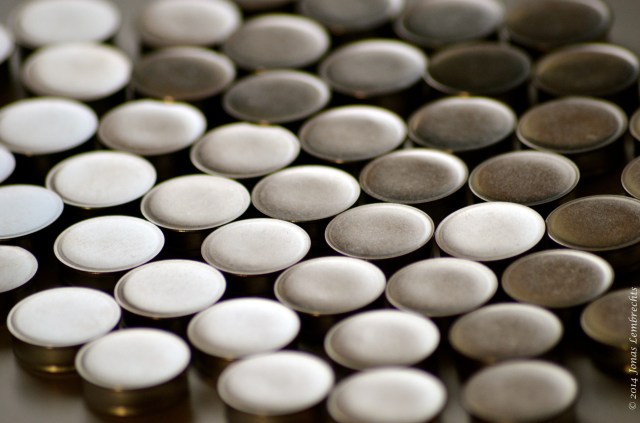
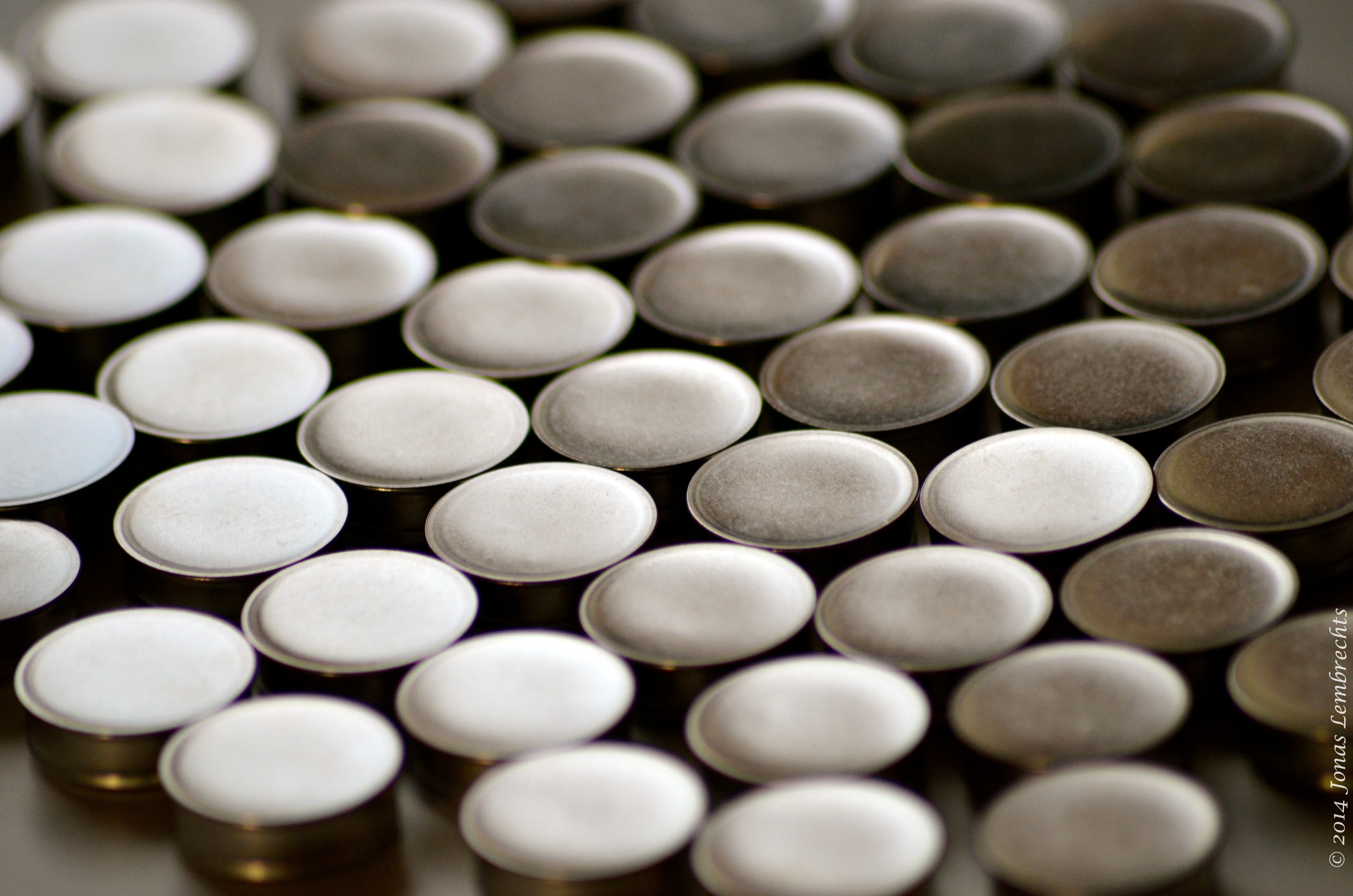
iButtons, endless rows of iButtons!
I still am as excited, but I was however pondering about a few little concerns. As these tiny temperature sensors were originally designed to insure the cold chain of cooled food products in the food industry, they are not perfectly adapted for life in the soil. Their main limitation is their seal, which is not a hundred percent waterproof. This means they need some protection to survive the harsh times below the soil surface.
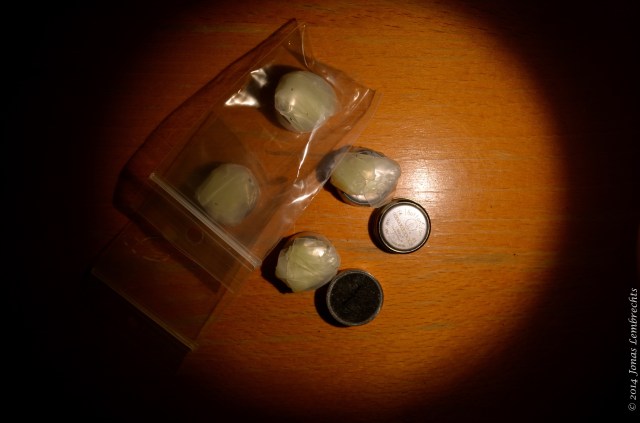
I now already have a lot of experience with iButtons within a little rain coat (as displayed in the picture), and one by one they safely delivered their valuable data. Success ratio: 96 %. This thanks to the combined powers of parafilm and a little ziplock plastic bag.

The iButtons have to help me discover the effect of such slopes on mountain plant life.
Protection works perfectly, that should be clear, but there is one remaining issue: how big is the effect of this packaging on the measured temperature? Layers of packed air and protective foil dampen the temperature measurements, buffering the peaks .

Left – no protection, right – protection
Black: no protection, dark orange: parafilm, licht orange: parafilm + ziploc bag.
So I performed a tiny test to measure the effect of our protective coat. First, as a control treatment, I put three iButtons in a cooler without any protection, to see if they indeed measure exactly the same temperature and to get an estimation of their inherent lagging time (graph on the left). You can see there is some small variation, especially at the end of the measurement, showing temporal errors in the temperature recordings. But more importantly, you see that iButtons lag behind in measuring abrupt temperature shocks, due to the way in which they are designed. They need almost half an hour to track the changes and refind a stable level. Keep in mind however that such abrupt temperature changes are pretty rare in the soil, making these lags acceptable in hourly measurements.
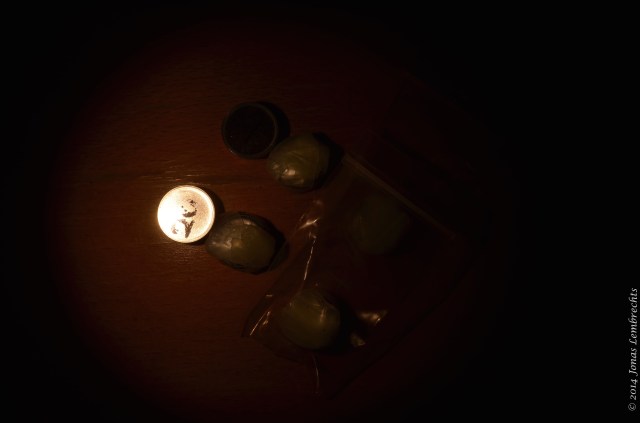
On the right, I repeated the cooling experiment, but now with packed iButtons. The red dots indicate the iButton wrapped in parafilm, the orange ones an iButton with both parafilm and a plastic bag. By adding the protection, the previously noticed lagging increases, but the difference never gets bigger than two or three minutes.

How does this little brave Saxifraga experience its environment? The iButtons will tell!
The protected iButtons almost manage to catch up as the temperature starts levelling off, although there lowest extreme value is still 0,2 °C lower than in the unprotected iButton. Note as well that the difference between the two protecting methods is negligible, which gives me reason to use the combined packing method for safety reasons.

I can be at ease in the mountains, the iButtons do what they have to do.
Conclusion: we see how iButtons lag behind in their measurements, an issue that increases even more when put in protective parafilm. However, as we measure only once every hour, and as real life temperature changes are slower, these lags have a negligible effect on the end result in ecological long-term studies.
We can hence have faith in our iButtons!














 The 3D lab