Dinner with a view

dsc_0315

Inside the castle of Vianden

While my previous post was a shout-out for all the fantastic science being presented here at the Neobiota conference in Luxembourg, this one can be short:

dsc_0361

Vianden castle by night

just how amazing is this as a location for a conference dinner!?

dsc_0346

Dining between armours, giant tapestries and life medieval local music in an 11th century castle, how not to fall in love with this country?

dsc_0307

Guarding the dining room

Luxembourg might be small, but they surely know here how to make an impression!

dsc_0341

Posted in Luxemburg | Tagged , , , , , , , | 2 Comments

A gathering of experts

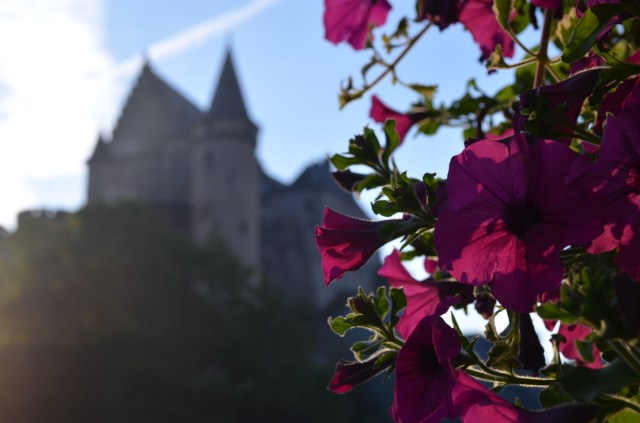
Neobiota 2016: the largest gathering of invasion ecologists I have ever seen, all under the watching eye of Vianden’s famous castle.

dsc_0242

We joined forces here in Luxembourg with more than 260 ecologists from all over the world for what – up till now – is proving worthy to compete for the best conference I ever visited.

dsc_0130

The high levels of all the presentations during this 3-day meeting clearly indicate that invasion ecology has evolved into a mature discipline. As a discipline, we are far past the stage that we remain on our own, looking at our own little specific invasion-related problems.

dsc_0224

No, we now have an important role to play, bridging gaps between evolutionary ecology, functional ecology, biogeography, climate change research, management and many more. While we are implementing knowledge from all these disciplines, invasion ecology is also giving back to the rest of ecology: invasive species have proven to be valuable test cases to understand fundamental ecological problems. From biotic interactions, over effects of human disturbances to the impacts of climate change, research on alien species provides major breakthroughs.

dsc_0223

And again, as I also said after the Perth conference on mountain ecology in 2015, the fastly increasing success and power of big global collaborations (like our own precious MIREN) and even bigger global datasets is playing an important role in these successes.

dsc_0247

There is one more days of talks coming up, but already now the list of good ideas is too long to handle.

Posted in Luxemburg | Tagged , , , , , , , , , , | 2 Comments

Landmark

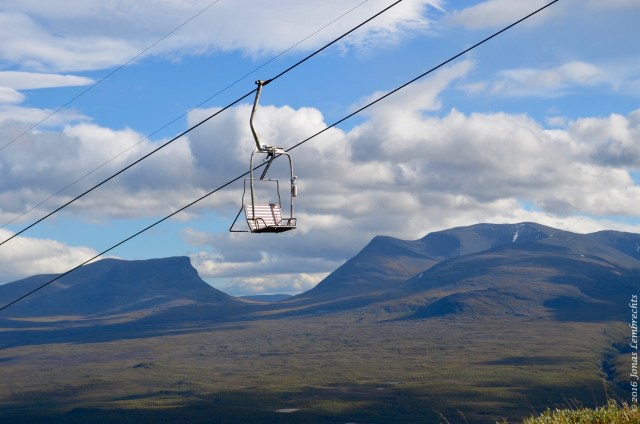
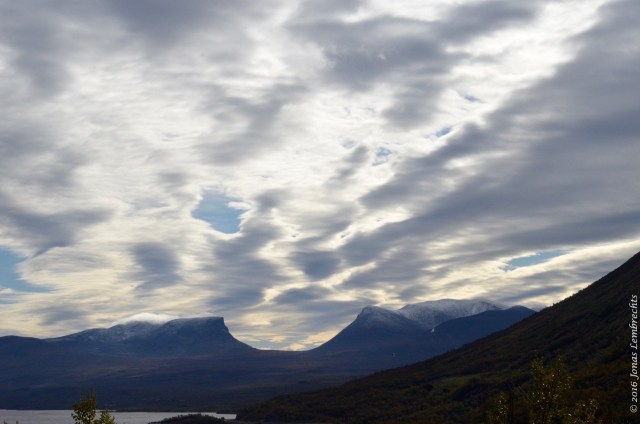
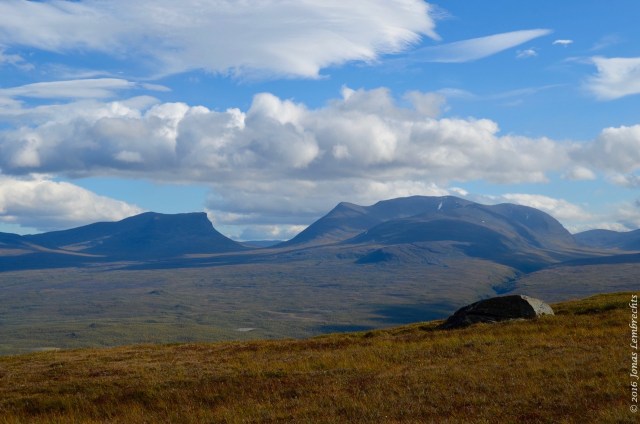
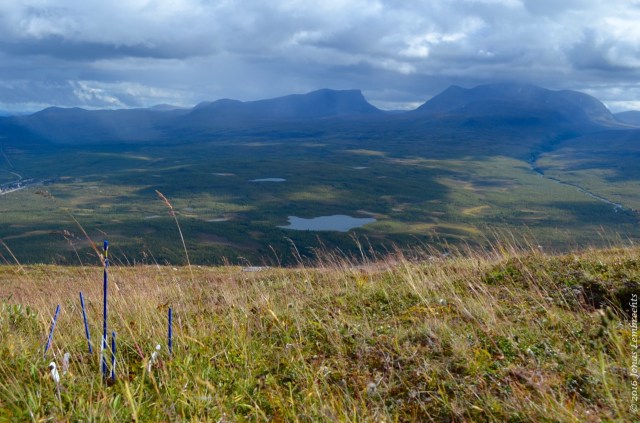
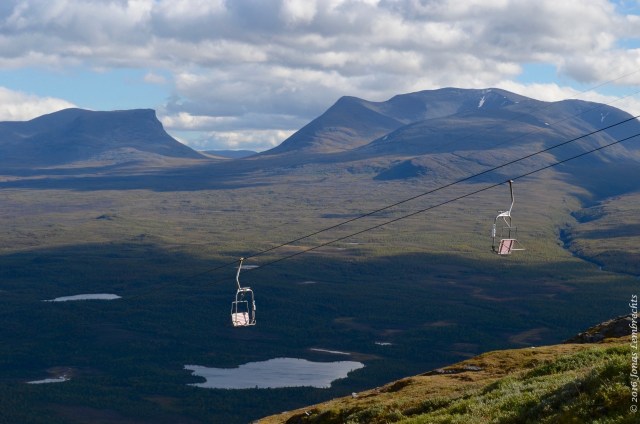
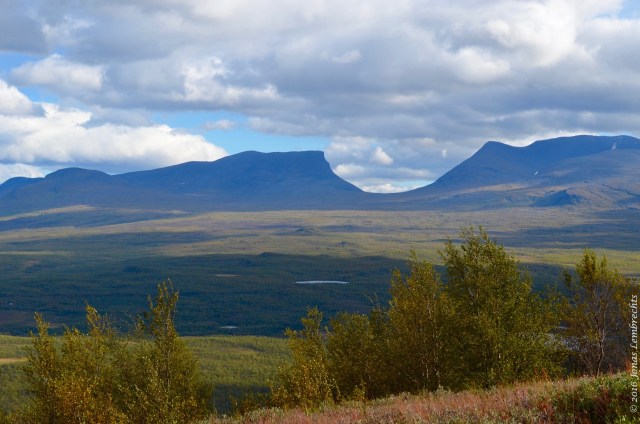
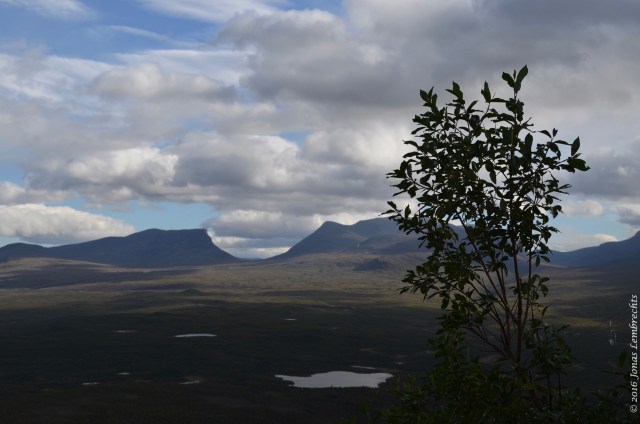
Everywhere you go in the area around Abisko, this impressive landmark jumps to the eye: the Lapporten.
lapporten-6

The ski lift that brings you up on Nuolja

This U-shaped valley overlooking the large valley of the Abiskojokka (the Abisko river) and the Abisko National Park, stands as one of the best-known views of Lapland.
lapporten-10

View on Lapporten when entering from Norway

It is shaped in this pretty characteristic way by glaciers and freeze-thaw cycles, some of the most destructive – yet slow – natural forces in the north.
lapporten-4

It is a true landmark, and most likely even used for ages by the Saami-people as a landmark while they are out to herd their reindeer. Now it marks the National Park, the views at the start of the world-famous Kungsleden multiday mountain hike and, for me, the fieldwork season in the north.
lapporten-3

Working with a view, our experiment on Nuolja

But why always here, you might ask? What brings me and all these other scientists back to Abisko year after year?
lapporten-5

There is of course the accessibility: close to Kiruna Airport, good road, impressive accommodation for being in such a remote region. It all makes it a whole lot easier to study the Arctic from here.
lapporten-8

But there is another factor at play: there is just so much known already about this place. Abisko is the Arabidopsis of the North, the lab rat of the Arctic. Having this hundreds years of research to build upon is just useful and exciting.
lapporten-7

Lapporten has been watching so many generations of scientists already, and I am maybe even a bit proud to be one of them.


Posted in Sweden | Tagged , , , , , , , , , , | 6 Comments

Defeated

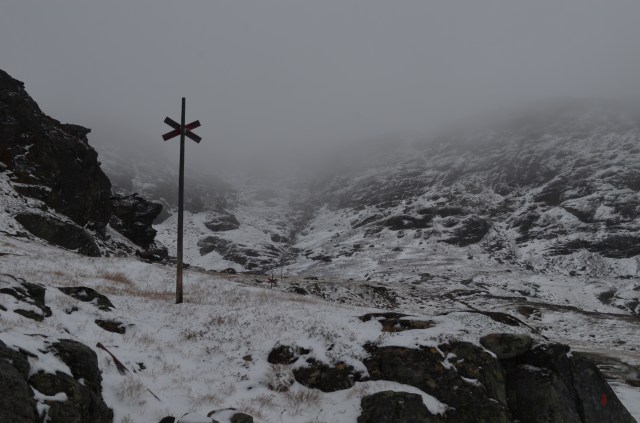
Like the fellowship of the ring trying to cross the Redhorn Pass, where Saruman sent a snowstorm to throw them back, that’s how we felt today.

DSC_0552

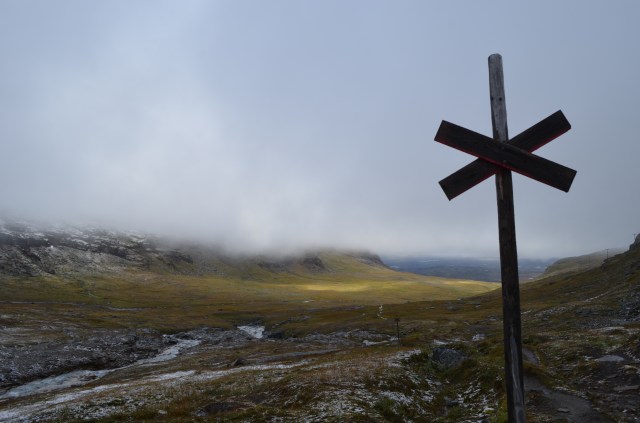
Dramatic autumn sceneries in Laktatjakka valley

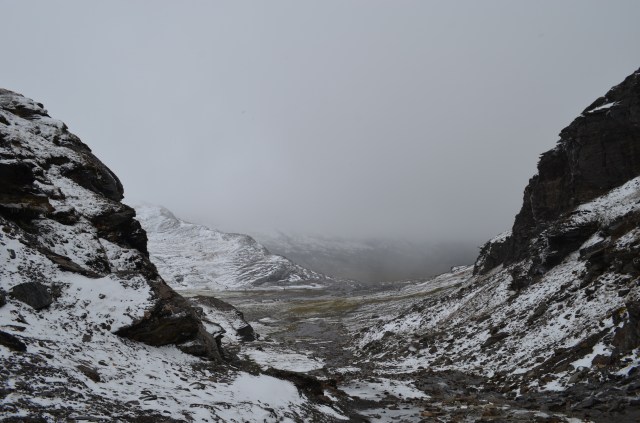
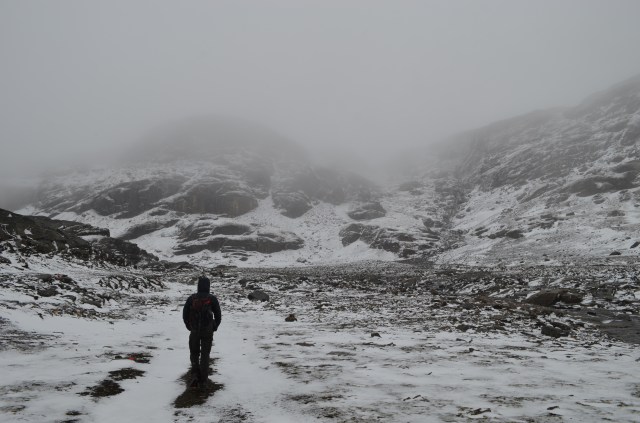
Our personal Mount Caradras was the Laktatjakka valley, the valley of doom, where a permanent cloud seems to be stationed day in day out. While in the rest of Lapland the sun got plenty of playtime today, we quickly walked into the mist. At 900 meters already, the snow started to fall, while we had to go up to a 1200.

DSC_0543

Goodbye beautiful sunny weather (in the valley in the far back), we are ready to enter the cloud!

We tried, I have to say, we tried our very best, but the mountain was too strong. Winter caught up to us in the most dramatic way. I did not want to overdo it, though, there is no reason to freeze of your fingers for a few plots, so better safe than sorry. Luckily, hiking was still perfectly doable- the snow was not that bad, but identifying plants if they are covered in a layer of fresh snow, that is just not the best idea.

DSC_0553

Aiming higher, but the snow was not gonna get less

You will have to forgive me though that photographic proof of our adventure is limited, I was just not feeling the urge to take out my camera with the snowflakes beating down at us!

DSC_0554

Posted in Sweden | Tagged , , , , , , , , , , | 7 Comments

Berrymania

Sweden is the land of the berries. That statement inevitably pops up in your head if you roam through the Scandinavian mountains in September.

DSC_0272

The bunchberry or dwarf cornel (Cornus suecica). Should be edible, but I did not try to eat it yet…

Cloudberries, blueberries, lingonberries, raspberries, stone brambles, bilberries, bunchberries, they got them all, hundreds, or even thousands of them.

They are not all as tasty, though, but it seems impossible to walk a hundred meters without seeing the blueberries, the uncrowned king of the Scandinavian berrymania.

DSC_0407

The high season for blueberry-mania; the berries are fat and everywhere

My personal favourite is once and for all the cloudberry, but unfortunately they have been impossible to find up till now. Unlike the bluebbery, they do not grow in these vast fields, yet more lonely in the bogs.

DSC_0267

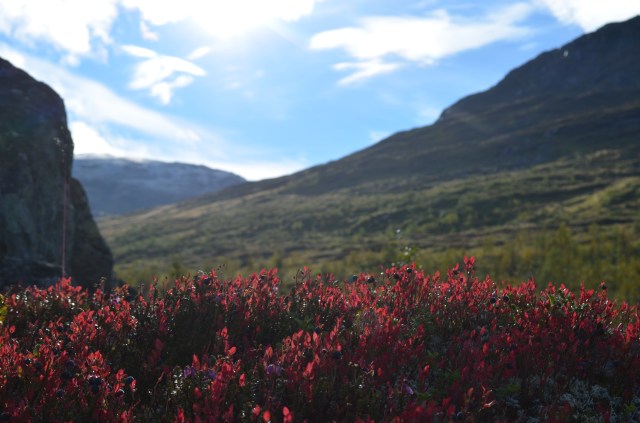
Nothing like a good field of blueberries (Vaccinium myrtillus) to colour your autumn red

The good news for us: looking at plants is our most important job here during our ecological fieldwork in Abisko in the high north. And if that includes some berry-work, so be it… We cannot let these precious things go to waste, can we?

Posted in Sweden | Tagged , , , , , , , , , , , | 7 Comments

Autumn is awesome

At least when the sun is shining…

DSC_0217

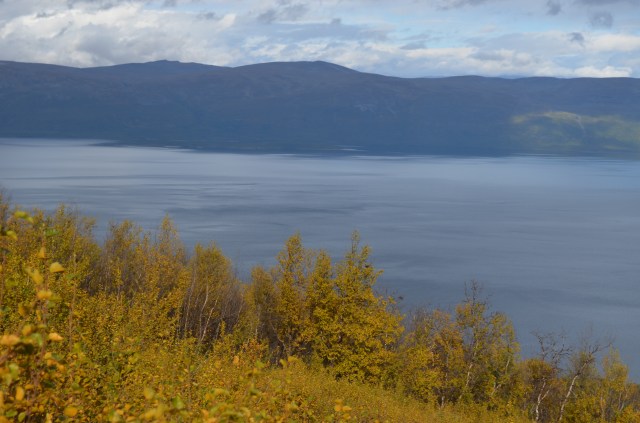
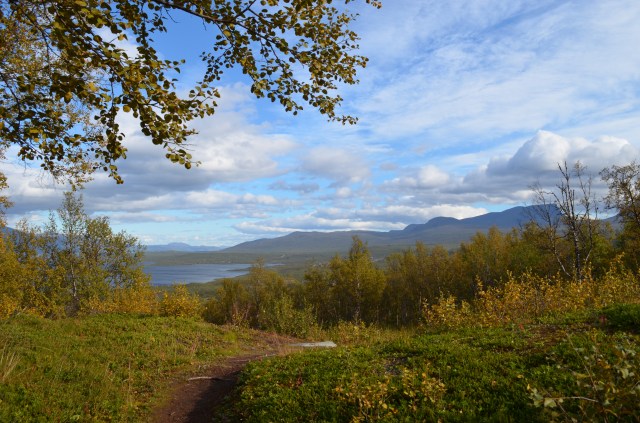
That’s what I call a color palette: yellow birch forest meets blue lake Torneträsk in Abisko.

Currently, we are hiding inside for the autumn rains and the poor 6 °C they come with. Yet when the sun is out to lighten up all the colors, the Arctic world seems to be on fire. We have 8 days of autumn fieldwork here in Abisko, Sweden, and the weather already promised to be, well, interesting.

DSC_0234

Hiking trail above lake Torneträsk in Abisko

Unfortunately, we cannot hide for long. The work needs to be done, the time is limited. We will have to face the rains and the freezing cold this afternoon, and start our struggle with wet papers and even more soaking wet willow shrubs.

DSC_0226

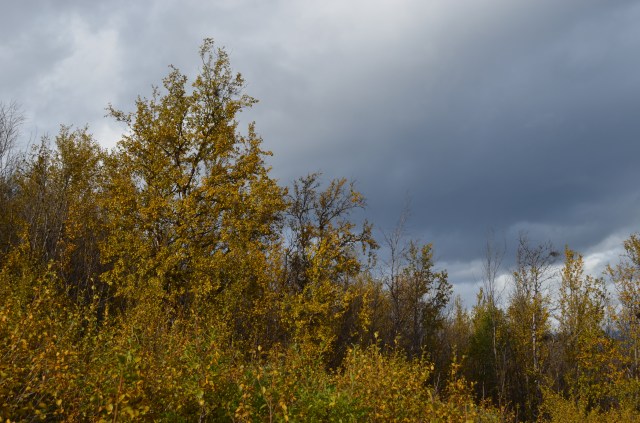
The arctic birches are at the height of their yellowness

But hey, we keep our spirits up, as long as you have hot tea to take in the field, all will be fine. But your support for our cold task is very much welcomed!

DSC_0215

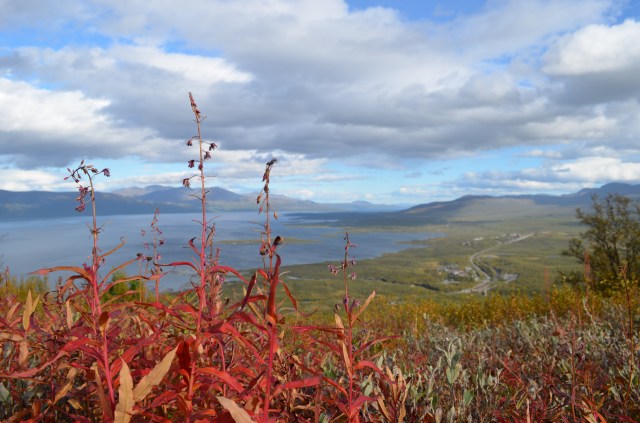
Fireweed (Epilobium angustifolium) can turn whole areas beautifully red

Posted in Sweden | Tagged , , , , , , , , , , , | Leave a comment