Climate stripes

I got myself a little present to celebrate two important milestones. First of all, today I am honoured to present my research in Utrecht, the Netherlands, as finalist of the New Scientist Science Talent Award. A fantastic opportunity to communicate the importance of global change to the wider public.

Next week then brings the first SoilTemp-meeting, where we gather over 35 specialists to discuss our growing database of soil temperatures, and how to move forward with this precious dataset. For me, this is a major step towards the future, in which we hope this global and accurate climate dataset will help us better predict the current and future state of biodiversity.

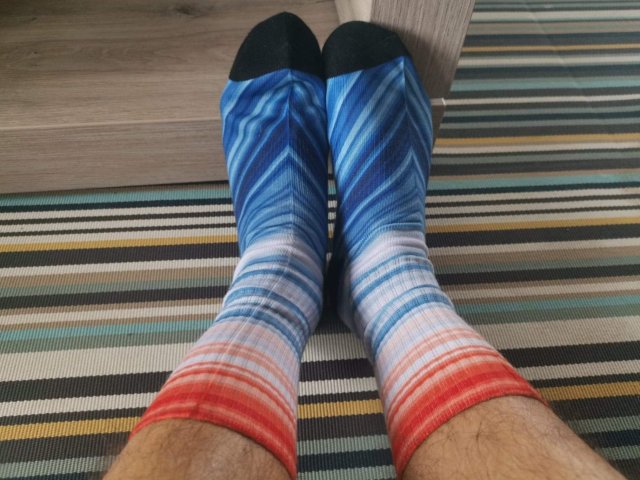
The present I got myself: climate stripe socks! This is a graph of the mean annual temperature of our planet from 1870 (my toes) to 2017 (the top of the socks). Nothing visualises the ongoing climate change better than this scarily beautiful colour pattern, if you ask me, and the perfect attire for our presentations on climate and land use change.

There is many more cool things where these come from, thanks to Ed Hawkins! Want to wear climate change yourself? Try out the ties, leggings or flip-flops. Cause as I always say: if there is flip-flops made out of it, the problem is undeniably serious.

Posted in General | Leave a comment

Podcast

For the Dutch-speaking followers of this website: check me happily podcast-ing away with the crew from the Dutch ‘Makkelijk Praten’-podcast! They made a 40-minute podcast about our research, in honours of my nomination as New Scientist Wetenschapstalent 2019.

IMG_0730

Are you up for 40 fun minutes (in Dutch) about plants on the move? Then check out the podcast here, or in your favourite podcast app:
Spotify: https://spoti.fi/2I40TUs
Apple: https://apple.co/2WbDSsr
Stitcher: http://bit.ly/2I9T5R8
Overcast: http://bit.ly/2I2DS44

Posted in General, Science | Tagged , , , | Leave a comment

Good Field Practices

Tomorrow, we have an important lab meeting with summer coming up: good field practices. We will bring together the master and PhD-students working with us to talk about the do’s and don’ts in the field, and to learn from each other experiences on how to make data collection easier.
42927598095_3416623e41_o

Good field practices are important for an ecologist. In fact, it could not only mean the difference between good science and bad science, but also between happy scientist or sad, ill, or even dead scientist

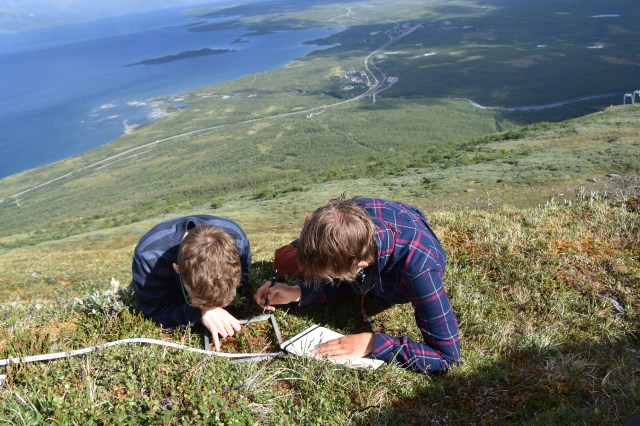
I have been spending every summer since 2014 in the wonderful landscape of northern Scandinavia, and have seen mountains, cities and oceans. I have sampled plants, soils and insects, I slept in tents, huts and even under the open sky. What I learned is this: you cannot be prepared for everything, but you can at least try: being prepared can make your life a lot safer and easier.

Our little hut in the Skjomen valley

Thinking about the location: fieldwork often takes several days and if it is in a remote location, facilities might be limited. During my masters, I spent many rainy Norwegian nights in a sad tent on a patch of grass next to the road, until we discovered this amazing little hut in the forest. Now we have a toilet hut, a campfire place ànd a stove to keep us sane even when weather is horrible.

Good field practices is a very broad topic: there is personal hygiene, energy, weather protection and first aid; there is measurement tools, data back-ups and field site documentation. There is ticks, bears, interested passers-by, suspicious land owners and police officers. There is twisted ankles, tiredness and demotivation. Some of it you can fix, some of it you can’t. But all of it goes better with a bit of thought in advance.

Snow

Weather! Somewhere close to the top of the most important things to prepare for. I have been lost in the mist (make sure you have a gps, plenty of spare batteries, an old-school compass ànd a map, for if one or the other fails you), hunted by snow storms, burned by scoarching heat and bored out by annoying drizzle, all in exactly the same mountain pass.

Measuring soil water content in the mountains

Prepare for the worst for your science as well: this soil moisture sensor gave up on us while 400 km of the field station, and we did not have a spare one. No soil moisture for us, that time!

In Good Field Practices, your personal well-being, and that of your fieldwork crew comes first (which is exactly why we are organizing this lab meeting on this critical topic). If all of that is taken care off, it is the science: thinking about what data you want to collect and what your priority order is. You will never do exactly what you planned for (sometimes more, more often less), and there is always surprises.

You see, a critical lab meeting tomorrow, and one hour is most certainly far from enough. But it is an opportunity to get us talking and thinking together, and it should get them in the field with a better picture of what lies ahead than what I had at the start.
Posted in General, Science | Tagged , , , , , , , , , | Leave a comment

On the radio

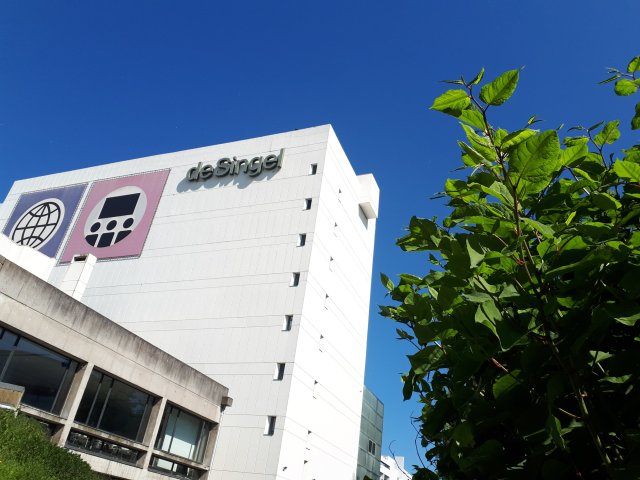
Last week, I got invited by the local radio to talk about our research. The presenter asked me if she would be taking some seeds home from the mountains when she would be travelling there next week. That got me talking, of course, about how our species are on the move, and how we are taking their seeds with us in the mud on our shoes or the tires of our cars.

20190515_1056563665359139856524421.jpg

There was a nice example right outside the door of the radio-station: Japanese knotweed growing tall and dense above everything else. The presenter was highly surprised to find this exotic wonder right outside the frontdoor, but is probably going to be on the look-out for more now!

20190515_1056424384356559756096696.jpg

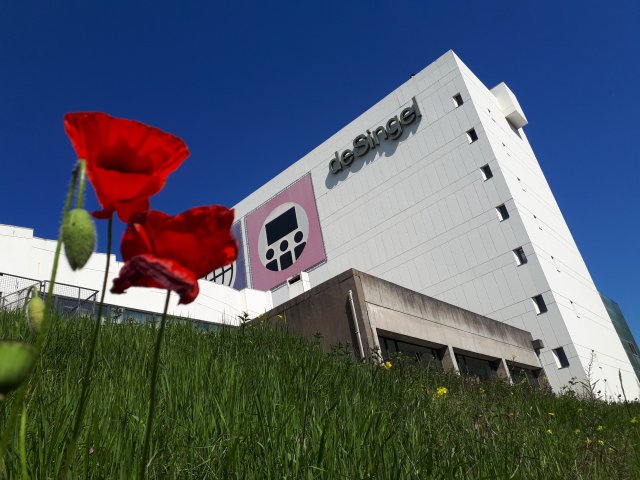
These poppies also brightened the meadow next to the radiostation. A sign of hope for our biodiversity?

The reason for my 5 minutes of radio-fame was my nomination for the New Scientist Science Talent award, where I made it to the final 5 thanks to appreciation of the broader public and a professional jury for my work and how I am communicating it. The final ceremony is at the end of this month, in Utrecht, where I will defend our national honor as only Belgian scientist among 4 Dutch contestants. Fingers crossed!

You can listen to the full interview (in Dutch) here.

Posted in Belgium, General | Tagged , , , , , | Leave a comment

Passing milestones

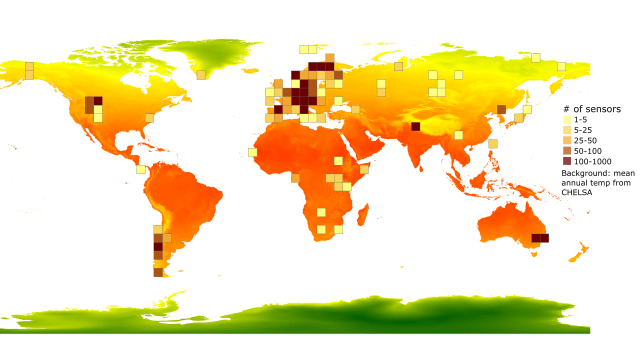
Today was a day of big numbers, for me and the SoilTemp-project we are working on: our database passed two fantastic milestones. We now have over 5000 loggers from more than 40 countries in the database, which I am currently patiently compiling.

Especially that last number is mind-boggling: friends and colleagues from over 40 countries in the world have generously offered their data to our growing project, believing we would do good science with it. And so we will!

DSC_6638

A whole new batch of loggers is ready to be installed this summer, to expand our growing network even further

A major step forward will come the beginning of next month, when a first SoilTemp-meeting will take place. We are proud to welcome a group of 35 experts microclimate and species distribution experts to Antwerp, for 3 days of exciting discussion about how to move forward with this unique dataset.

20181008_0846057481975227519237461.jpg

The city of Antwerp will be the scene for our first international SoilTemp symposium, early June

After that, it will be a head on sprint towards the first results. And keeping up the tireless work to compile more data, as the non-European coverage of our dataset is still patchy. So I am finishing with another call: if you have soil temperature data, especially from outside Europe, please get in touch, as we will be able to do great things together!

SoilTemp sensors_done.png

Posted in General, Science | Tagged , , , , , , , , | Leave a comment

TADA

Last weekend, I did something a bit different from my usual science-ing: I got invited to give a workshop at ‘TADA‘, an organisation that gives ‘workshops for the future’, a Saturday school for economically disadvantaged children in the city of Brussels.

Those children come to school (mostly) by free will every Saturday, and learn about different professions in society. These weekly classes, every time with ‘real world people’ actually presenting their own jobs, opens up their world to everything that is out there and shows them how their future could look like. And they love it!

58766054_369875156955344_4837704304397647872_n (1)

I went there as a biologist (a word they had never even heard before), to tell them about ‘life in the city’. I showed them that even in a big city like Brussels, us humans live together with a lot of wildlife and plants. I taught them how to search for traces of this wild world outside the door, and awed them with the diversity of species that they could find if they looked, even in the city.

They learned a lot, enthusiastically matching the different traces to the correct species. For me, it was another great excercise to broaden up my research, and highlight those parts that are relevant for everybody, even for the children of the suburbs of Brussels. That main message is: us humans are dramatically changing the ecosystem for plants and animals. By changing the climate, yes, but also much more directly by just living the way we live, in our cities, villages and far beyond. And that is important to realize, even (or especially so) if the feral pigeon is the only bird you’ll notice all day.

Posted in Belgium, General | Tagged , , , , , , | Comments Off on TADA