You wouldn’t guess it from the amount of work she has already put into getting the global MIREN Rocks network off the ground and moving forward, but Sarane is only at the very beginning of her scientific trajectory. That trajectory just received a major boost: Sarane has been awarded an FNRS FRIA doctoral grant, allowing her to start a PhD on her beloved rock cliffs and their ecology.
This is a fantastic achievement for her, and wonderful news for us as a team. It gives us the certainty that MIREN Rocks can now deliver much more in-depth science than would have been possible without her central role.
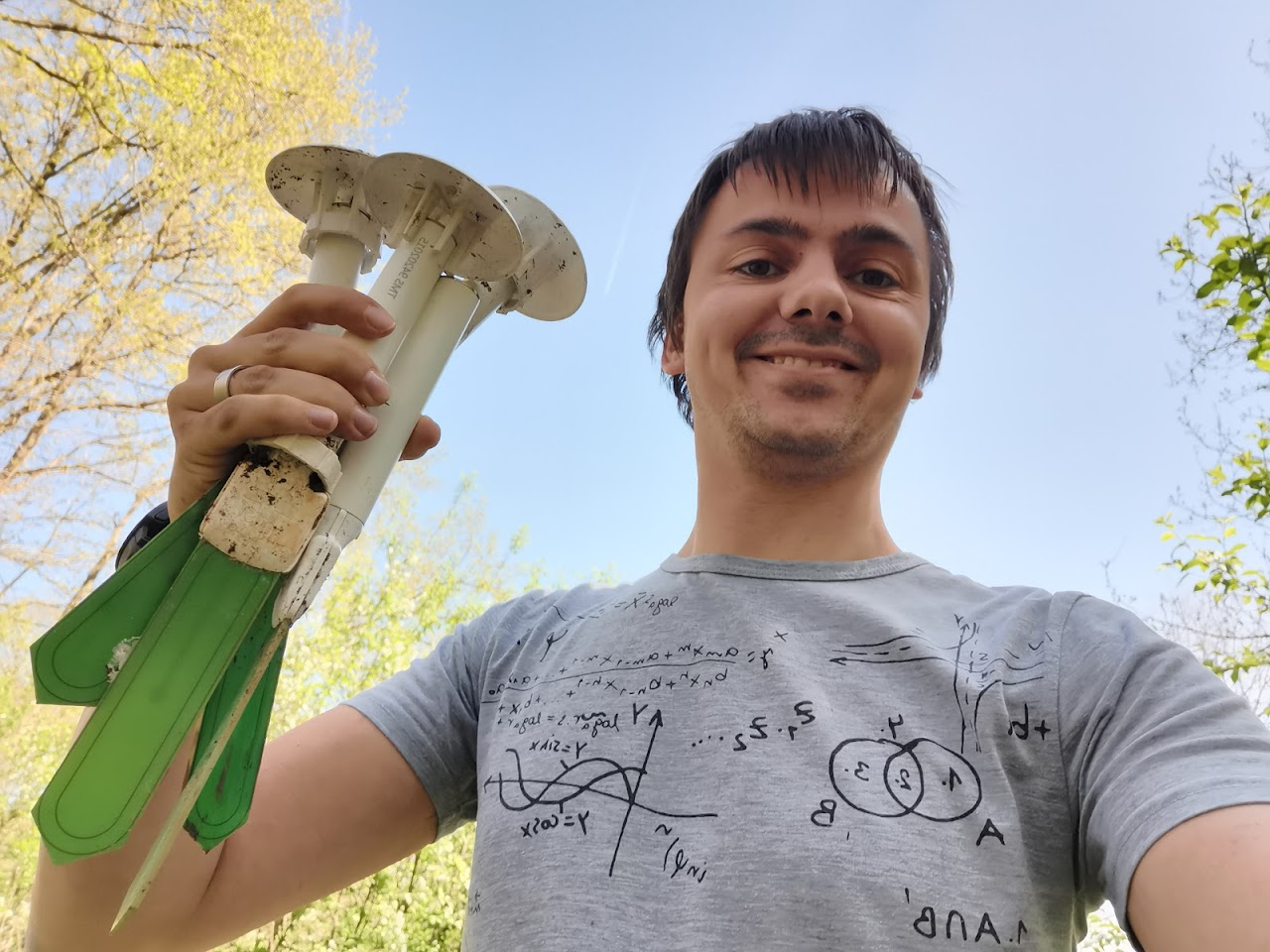
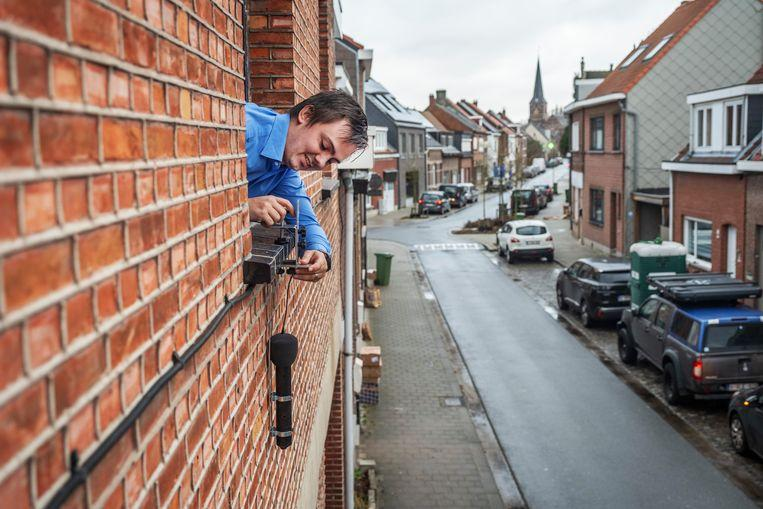
In her PhD, co-supervised by Alain Vanderpoorten (University of Liège) and myself (Utrecht University), and in close collaboration with Koenraad Van Meerbeek (KU Leuven), Sarane will work with the global vegetation database collected by MIREN Rocks partners worldwide. In parallel, she will zoom in on the mechanisms shaping rock vegetation in the Meuse valley (Wallonia). There, we will develop high-resolution microclimate models using in-situ sensors and drone-derived digital surface models, and set up a split-plot experiment to assess the role of physical (vegetation removal) and chemical (climbing chalk) disturbance on cliff vegetation.
And this is only the beginning – there is much more in the pipeline for this PhD and for the global MIREN Rocks network. So if you love cliffs even one tenth as much as Sarane does, I strongly recommend following her work.
The best place to do so? Instagram, via @mirenrocks.
Congrats again, Sarane, and looking forward to work together further the coming years!
Last year I wrote about a major milestone: moving The 3D Lab to Utrecht University and stepping into my role as assistant professor in ecological scaling. Today, I’m happy to share the next chapter in that story: as of November, I am officially tenured!
Tenure is often described as “academic job security,” and for anyone still navigating the postdoc world, I can confirm that the feeling is every bit as relieving as you imagine. It feels like finally having the space to breathe. The space to build. The space to think in decades instead of seasons, the way so many of us dream to be able to do science during the postdoc years.
And when I look back on the past few years, that shift in timescale is exactly what has brought me the greatest joy.
Building for the long term
What I’ve enjoyed most since coming to Utrecht is the ability to invest in long-term work. After years of living from grant to grant, I can finally dare to trust the foundations I was building for research that will grow, evolve, and mature far beyond the typical academic time horizon. I was doing that before, but always with the gnawing feeling that things might end prematurely.
Now also, many of the ideas that once existed only as half-finished notes in my drawer – ideas that were too slow to fit within a postdoc cycle – are finally taking shape. And more importantly: they’re taking shape with a team.
The 3D Lab is growing into a vibrant, cohesive group of people who support each other, learn from each other and build together. Watching that happen has been one of the most rewarding parts of this job. It’s a privilege to see ideas come alive not just through my own effort, but through shared enthusiasm.
And it’s of course still a struggle. Supporting that team requires more money, of course, so many projects are still slow and waiting for some stroke of luck to whip them up into action, but now the time and flexibility is there for patience.
Teaching as joy
Another (un)expected source of joy has been teaching. Having the room in my workday to help raise the next generation of scientists—from the more than 300 bachelor students to the many master thesis projects, and from the PhD students to the young scientists in the team—each bringing their curiosity and their questions—is something I value immensely.
There is something uniquely grounding about teaching. It reminds me why we do science in the first place. It keeps me accountable. And it pushes me to think carefully about what and how we teach, and what message we want them to receive.
There is, of course, a downside: it’s impossible to maintain the same amount of research output now that my teaching load has grown substantially. These are trade-offs we all face, and choices we all have to make. But I did decide I’m willing to pay the price – a few fewer scientific manuscripts – in exchange for creating opportunities for others to become the change we need.
From “My Science” to “Our Future”
One of the most profound shifts this assistant professor position brought me is the freedom to look beyond my own research papers and ask bigger questions. If I have thirty years of science ahead of me – give or take – what are the problems I want to contribute to solving? What will the world look like in 2055? And what role can ecology, microclimate science, and biodiversity research realistically play in guiding that future?
Ever since I first started doing science, my core question has been simple: why is that plant growing where it is? Now, I want to go further. Not just understanding why plants are where they are, but asking: what do we need to do to help the right plants grow where we need them? And once they are there, what can those plants do for us – and for the rest of nature?
It’s a daunting line of thought, but also an energizing one. My ambition has grown – not in the sense of personal achievement, but in terms of impact. I want my science to matter not only within my field, but in the world beyond it. This also brought me back much closer again to the ecology where it all began for me. Especially my postdoc was a lot more methodological, but now I want to be talking a lot more about the nature we’re trying to save, and how to do that. That work will involve a lot of ‘a solution for nature’ and ‘nature as a solution’, two things that go nicely together.
Utrecht is the perfect environment for this. It is a university that not only allows but actively encourages its people to work across disciplines, to connect with societal partners, and to tackle the complex challenges facing our planet. I feel supported – and yes, sometimes gently pushed – to think bigger and collaborate wider. And for that, I’m truly grateful.
I don’t know about other places, but I like that in Utrecht the time to think, discuss and learn is build in to our job – officially 10% of my time, if I’m not mistaken – and that has thought me already a lot.
The honest part
Of course, there’s a darker side to ambition. When you start looking 30 years ahead, the horizon can feel impossibly far away. The problems we’re trying to address are complex, urgent, and often overwhelming. I know I won’t “save the world” – none of us will, individually, and when I think of that long-term vision, sometimes I worry about how much ‘world-saving’ will eventually fit into my day-to-day schedule.
But I do believe in the ripple effect.
I do believe that one of the most meaningful things I can do in the decades ahead is create opportunities for as many others as possible to contribute to those ripples. If I can help equip a generation of scientists, collaborators, and students to do world-saving work – together – that is impact.
That is enough.
Onward
So I’m really looking forward to this next chapter as a tenured scientist: to long-term vision, to interdisciplinary collaboration, to teaching with purpose, to scaling up ecology in every sense of the word, and to the remarkable people I get to work with every day.
And above all: to create the conditions for others to shine.
If any of this resonates – if you’re interested in joining the lab, collaborating, or thinking together about microclimate, species redistributions, or ecological scaling – my door (physical or virtual) is always open.
The journey continues. And it’s only getting more exciting.
[ENGLISH] A cold, dark autumn night. My alarm goes off at 1:15 a.m., and for a moment I wonder what on Earth I was thinking. Then it hits me: I had been invited for a night-time interview on NPO Radio 1, in the weekly programme The Night of NTR Science. Ninety minutes of uninterrupted conversations about science—yes, that is exactly the sort of thing you can wake me up for.
And there is so much to talk about. So much we have learned over the years that we urgently need to start applying. So much work left if we want to protect this beautiful planet we call home.
During the interview, we explored the state of nature today—still far more fragile than many realise—and the enormous value it brings us in return. We talked about what smart, science-based nature management can do, and how nature-based solutions must become a central part of creating a healthier, more resilient world.
The full conversation is now available as a podcast (in Dutch). Highly recommended for anyone who wants to dream along with me about how we can steer our world in a better direction.
[NEDERLANDS] Een koude, donkere herfstavond. Mijn wekker gaat om 1u15, en heel even vraag ik me af waarom ik dit mezelf aandoe. Maar dan herinner ik het me: ik ben uitgenodigd voor een nachtelijk interview op NPO Radio 1, in het programma De Nacht van NTR Wetenschap. Negentig minuten onafgebroken praten over wetenschap – daar mag je me nu eens altijd voor wakker maken.
Want er is zoveel om over te praten. Zoveel inzichten die we intussen hebben maar dringend moeten beginnen toepassen. Zoveel werk dat nog voor ons ligt als we onze prachtige planeet willen beschermen.
In het gesprek doken we in de staat van onze natuur – die helaas alsmaar meer zorgwekkend is – en in alles wat die natuur voor ons terugdoet. We spraken over de rol die slim, wetenschappelijk onderbouwd natuurbeheer kan en moet spelen. Over hoe nature-based solutions een sleutel zijn om onze wereld gezonder en veerkrachtiger te maken.
Het volledige interview is nu te beluisteren als podcast. Warm aanbevolen voor iedereen die graag even wil meedromen over hoe het anders en beter kan.
Are you working with environmental or biodiversity data and willing to help us out?
At the Microclimate Ecology & Biogeography (MEB) network, we believe that open, reliable, and collaborative data exchange is the cornerstone of understanding and predicting biodiversity and microclimate dynamics.
As part of the Forest-Web 3.0 project (funded by Biodiversa+), we’re exploring new ways to make environmental data sharing more effective – and we’d love your input!
We’re collecting insights from researchers working with environmental or biodiversity data to learn:
What works well in current data-sharing practices
What challenges you face
How we can make sharing easier, fairer, and more collaborative
Your anonymous responses will directly help us design new tools that support both FAIR (Findable, Accessible, Interoperable, Reusable) and CARE (Collective Benefit, Authority to Control, Responsibility, Ethics) data principles.
By participating, you’ll help us strengthen the open science foundation of the MEB community and shape the next generation of user-friendly data-sharing platforms.
Microclimate data are finally finding their way more routineously into ecological models – and rightly so. Hooray for that! The growing availability of in-situ measurements is helping us bridge the gap between the coarse world of macroclimate and the fine-scale environments that organisms actually experience. But as more researchers start integrating these data into distribution models or other ecological questions, a new issue has arisen, and it’s one we have to deal with soon: what do we actually do with all this detail?
When faced with high-frequency microclimate time series, the temptation is often to reduce them to a familiar set of summary statistics – mean temperature, perhaps minimum and maximum values, or that so-familiar set of bioclimatic variables that we are so used to be using. Yet, those choices strip your microclimate data of its power. The real story lies in its variability, its seasonal contrasts, and the way it interacts with snow, vegetation, and topography. In other words: the fine-scale thermal landscape is more than a few summary statistics.
So, what do we do then?? A good starting point is to explore a broader range of summary statistics. Yes, this can feel like stepping into chaos – dozens of potential variables, each telling a slightly different story. Like trying to cook a soup with everything in your pantry — from chocolate chip cookies to bean sprouts.
But here comes our recent paper in Oikos – expertly led by Kryštof Chytrý – with a recipe to avoid disaster. As with the right tools, the complexity becomes manageable. A straightforward cluster analysis, for example, can help reveal sets of variables that move together. Rather than drowning in endless variation, you’ll see that many microclimate metrics are strongly correlated, allowing you to identify a few meaningful clusters that capture most of the relevant information.
Across the slopes of Mount Schrankogel – a mountain fast becoming a symbol for microclimate research, make sure you remember I warned you – more than 900 sensors and vegetation plots capture the microclimate of a unique ecosystem. With this unprecedented dataset, we took a stab at how microclimate variability translates into ecological meaning.
Depending on your study system, these clusters will likely make ecological sense. In snow-affected regions, for instance, winter and summer temperatures tend to form distinct groups, each shaping species distributions in opposite directions. Spring and autumn may emerge as their own transitional cluster, with temperature dynamics that reflect phenological shifts. Meanwhile, variables capturing variability — the day-to-day swings, or microclimate buffering capacity — form yet another cluster, particularly important when studying ecological stability or resilience.
The broader message here is one of balance. We shouldn’t oversimplify microclimate data into a handful of familiar metrics, but neither should we be paralysed by the complexity. Using our new summary statistics – even after reducing them through cluster analysis – consistently outperformed traditional bioclimatic variables in capturing ecological variation. There is a pattern in the noise, and finding it takes that extra analytical step, as we describe in this paper.
This is more than a technical issue; it’s a conceptual one. As microclimate data become increasingly available, the community needs to converge on best practices for summarising, selecting, and interpreting these variables. Our choices here will shape the next generation of distribution models, biodiversity forecasts, and ecosystem predictions.
I see this paper as a conversation starter, but a very important one. We now need similar analyses across diverse ecosystems to test whether these clustering patterns hold up, and if parameter simplification is achievable everywhere. But there’s reason for optimism: modelling species distributions with only a few climatic variables seems to be a viable strategy. It’s just that the most suitable variables may often be different from those that are commonly used nowadays.
Reference: Chytrý et al. (2025). Reconsidering climatic predictors for high-resolution niche models of alpine plants. Oikos. https://doi.org/10.1002/oik.11545
I’ve always been intrigued by ecological scaling – it’s literally in my title: Assistant Professor in Ecological Scaling.
One of the main reasons we care so much about scaling is that ecological theories don’t always hold up when we change scales. What seems true in a single valley, forest plot, or mountain slope can fall apart when we zoom out to continents or the globe. That mismatch often gets us into trouble when trying to generalize from our favourite local case studies to something that has real global relevance.
A classic example: homogenisation
The theory goes like this: when ecosystems are invaded by non-native species, they start to look more and more alike. We call this biotic homogenisation – a reduction in beta diversity, meaning less variation among communities. It’s often linked to lower ecosystem functioning, and by extension, poorer ecosystem health.
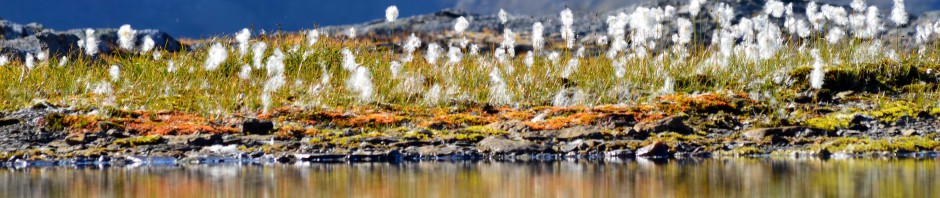
Native mountain vegetation tends to be highly distinctive, yet the introduction of non-native species is expected to erode that ecological uniqueness. Here, a highly biodiverse spring meadow in the Scandinavian mountains.
So far, so simple. Except the evidence is a little bit messy. Some studies find strong homogenisation, others don’t. We suspected that part of this inconsistency comes from differences in spatial scale – not all studies are asking the same question in the same “ecological zoom level.”
Scaling up with global replication
To test this idea, we turned to one of our favourite tools: globally replicated monitoring. Thanks to the Mountain Invasion Research Network (MIREN), we could explore patterns of homogenisation – and its opposite, differentiation – across 18 mountain regions worldwide. The findings of this exercise – led by Meike Buhaly – are now published in Global Ecology and Biogeography.
Our hypothesis (perhaps a bit naively in retrospect) was that homogenisation would dominate across all scales, though we expected it to weaken with elevation.
Study design, showing how we compared beta diversity within gradients (local), between mountains (regional), between regions on the same continents (continental), and between continents (global)
Yet that was, surprise surprise, not what we found. At the global scale, the classic theory held neatly: non-native species homogenized communities. Plant assemblages across continents became more similar (lower beta diversity) once non-natives were included. But when we zoomed in, the pattern fell apart. At local and regional scales, homogenisation and differentiation were almost evenly balanced. And even more intriguingly, the pattern split along continental lines:
In the New World (the Americas and Australia), homogenisation dominated.
In the Old World (Europe, Asia, Africa), differentiation was more common.
Patterns of homogenization and differentation across scales in our dataset.
The pattern depends on where (and how far) you look
In the New World, we found consistent homogenisation across local to continental scales, particularly in lowland plant communities. This likely reflects both the high number and shared history of non-native species: many are widespread across entire continents, occurring in more plots than native species.
At higher elevations, however, in some regions this pattern reversed. When non-native species became rare and patchy, this lead to community differentiation instead, especially in the Andes and Rocky Mountains.
The Eurasian mountains told a different story. There, non-native species actually caused differentiation at local and regional scales, even though some were shared across regions. At the continental scale, these same shared species produced a faint signature of homogenisation, but much weaker than in the New World.
The consistent differentiation we found in Eurasia might simply reflect an earlier invasion stage. With fewer non-native species and fewer widespread invaders, communities still differ strongly from one another. But as non-native species continue to spread, homogenisation may increase into conditions that mirror what we already see in the Americas and Australia.
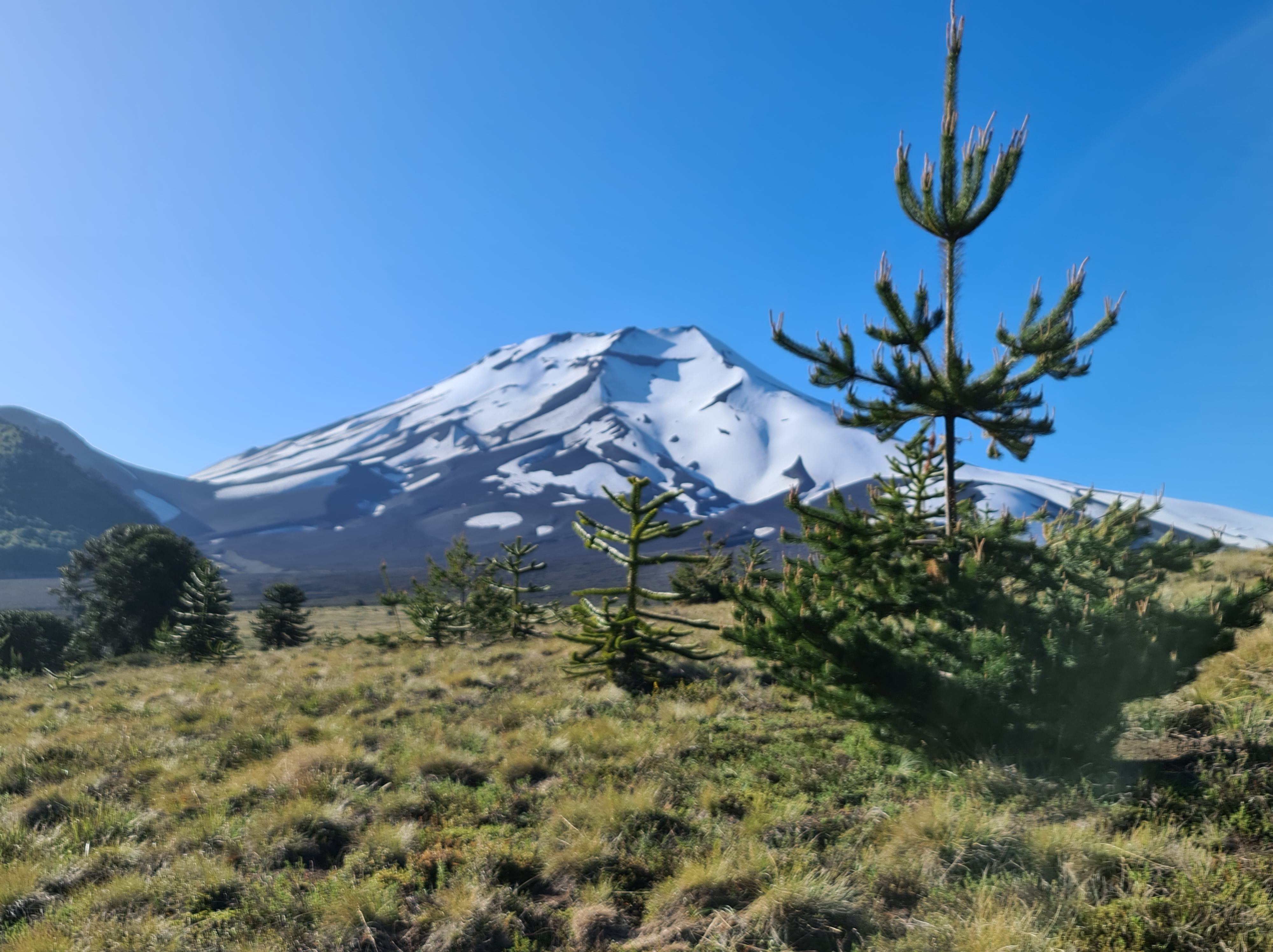
Dandelion in the Chilean Andes – a pretty common site in the Americas and one of the reasons we observed homogenisation in the New World.
Scaling reveals nuance – again
So, as so often in ecology, the story depends on scale. At large, continental scales, non-native species clearly homogenize plant communities: ecosystems across continents begin to share the same species. But when you zoom in, that signal becomes patchy. Homogenisation dominates in regions with long invasion histories, while newer invasion fronts still show differentiation.
It’s a pattern that fits a familiar ecological theme:
a little change might be positive – but a lot can be profoundly transformative.
More information: Buhaly et al. (2025). Global Homogenisation of Plant Communities Along Mountain Roads by Non-Native Species Despite Mixed Effects at Smaller Scales. Global Ecology & Biogeography. https://doi.org/10.1111/geb.70137
Lake Törnetrask, Abisko Research Station, Abisko, Sweden
Oenanthe oenanthe
Norway
Angelica archangelica along mountain road in the northern Scandes, Norway
Oenanthe oenanthe, alpine tundra Abisko, Sweden
Norway, Narvik
Epilobium angustifolium
Laktatjakka valley
Phyllodoce caerulea
Skjomen valley, northern Norway
Lake Torneträsk, Abisko, Sweden
Hallerbos 2017
Young bluebell (Hyacinthoides non-scripta) surrounded by flowers of yellow archangel (Lamium galeobdolon)
The common bluebell (Hyacinthoides non-scripta), the signature flower of the Hallerbos
Single bluebell flower surviving on a wetter spot, as indicated by the field of wild garlic (Allium ursinum)
A really wet patch of forest, with giant horsetail (Equisetum telmateia) in a field of wild garlic (Allium ursinum)
Wild garlic (Allium ursinum) in the Hallerbos flowers a bit later than the bluebells, yet this one was already in full bloom
A bumblebee visiting yellow archangel (Lamium galeobdolon)
Wild garlic (Allium ursinum)
Weirdly beautiful, the inflorescence of pendulous sedge (Carex pendula), typical for the wettest spots in the forest
A little stream in the Hallerbos, surrounded by endless fields of wild garlic (Allium ursinum)
The herb-paris (Paris quadrifolia), less common in the forest
Wild garlic (Allium ursinum)
Bluebells (Hyacinthoides non-scripta)
Weirdly beautiful, the inflorescence of pendulous sedge (Carex pendula), typical for the wettest spots in the forest
Another one from the wet plots: large bitter-cress (Cardamine amara)
Young beech leaves, as soon as they are fully grown, spring in the understory is over
A beech forest without understory, most likely too dry and too acid for any survivors
A young beech seedling (Fagus sylvatica), looking nothing like a beech, yet everything like a tiny dancer
Young beech seedling (Fagus sylvatica)
Bluebells (Hyacinthoides non-scripta)
Mountain melick (Melica nutans), a grass in the most amazing green
Bluebells (Hyacinthoides non-scripta) in a rare patch of mountain melick (Melica nutans), a grass in the most amazing green
Bluebells (Hyacinthoides non-scripta)
Montpellier 2017
The entrance to the cathedral of Montpellier
The cathedral of Montpellier
The entrance to the cathedral of Montpellier
The cathedral of Montpellier
Narcissus poetics
The cathedral of Montpellier
The botanical garden of Montpellier
Brackish Camargue vegetation
A typical lagune
Brackish Camargue vegetation
Camargue horses
Camargue horses
Camargue horses
Brackish Camargue vegetation
Camargue horses
Brackish Camargue vegetation
Little egret in the evening sun
Flamingo’s in the evening sun
A typical lagune
Dandelion fuzz
Grass lily
Grass lily
Dandelion fuzz
Veronica in a sea of poplar fluff
Euphorbia in a sea of poplar fluff
Poplar
Gare du Midi, Brussels
Sweden autumn 2016
Autumn in Abisko
Yellow leaves of mountain birch, with lake Torneträsk in the background.
Lapporten, the gate to Lapland, in Abisko
Rain blowing over the Abisko National Park
The colours of the north: red fireweed and yellow mountain birches, with lake Torneträsk on the background
Yellow leaves of mountain birch, with lake Torneträsk in the background.
Rain on the background, the ski lift in Abisko on the foreground
The steep slope of mount Nuolja on a dramatic looking morning
The beautiful colors of lake Torneträsk in Abisko
A little stream on top of the mountain, with a view on Lapporten, the gate to Lapland
Well, that is a beautiful table with a nice view on lake Torneträsk in Abisko
Our little experiment on top of the mountain in Abisko, with a view on Lapporten
Autumn in Abisko is extremely colorfull
The ski lift with a view on Abisko National Park and Lapporten
Hiking dowhill towards lake Torneträsk
This green is greener than the greenest green: moss on top of mount Nuolja
Well, that is a beautiful table with a nice view on lake Torneträsk in Abisko
The ski lift with a view on Abisko National Park and Lapporten
The most beautiful hiking trail of the world: Nuolja in Abisko
Angelica archangelica, often the biggest plant of the Arctic
The most beautiful hiking trail of the world: Nuolja in Abisko
Cirsium helenioides, the melancholy thistle
Hiking down mount Nuolja
The steep slope of mount Nuolja on a dramatic looking morning
The colours of the north: red fireweed and yellow mountain birches, with lake Torneträsk on the background
The prettiest yellow and blue: autumn in Abisko
Fireweed, Epilobium angustifolium
Campanula or bellflower, I think ‘uniflora’
Vaccinium myrtillus
Cornus suecica, the prettiest red of the world
Hieracium alpinum, alpine hawkweed
Carex atrata, one of my favourite sedges
Alpine clubmoss, Diphasiastrum alpinum
Agrostis capillaris, bentgrass
Common yarrow (Achillea millefolium)
Anthoxanthum odoratum, sweet vernal grass, fully grown and mature
Snow scooter trail
Our plot in the mids of a field of horsetails (Equisetum pratense)
Equisetum pratense
Cliff overlooking the valley with the road to Norway
Seedling of Taraxacum officinale, the dandelion, after two years of growing in bad conditions
Poa alpina, the alpine meadow-grass, with its viviparous seeds
Massive flowerhead of Angelica archangelica
Angelica archangelica
Blueberry (Vaccinium myrtillus) in autumn
A lowland marsh in Abisko in autumn
Installing the plots of our trail observations on top of mount Nuolja
Tanacetum vulgare (Tansy), non-native for the high north
Autumn forest down in the valley
The valley of Nuolja to Björkliden
Summer on the Nuolja-side
A full rainbow behind mount Nuolja in Abisko
It’s raining in the west, clouds trapped behind the mountains
A strong wind blowing rain from behind the mountains to our side
Betula nana, the dwarf birch, mini autumn forest
The valley of Björkliden in autumn
Sweden spring 2016
Oxyria digyna
Salix reticulata
Rubus arcticus
Silene acaulis
Cornus suecica
Overlooking the valley of Laktajakka
A rainy hike
Although the alpine zone has been harder for invasives to access than most places, human structures like trails are often an easy gateway for the invaders to get up there. Picture from Abisko, Swedish Lapland.
Bartsia alpina
The valley of the lakes
Dryas octopetala
Silene suecica
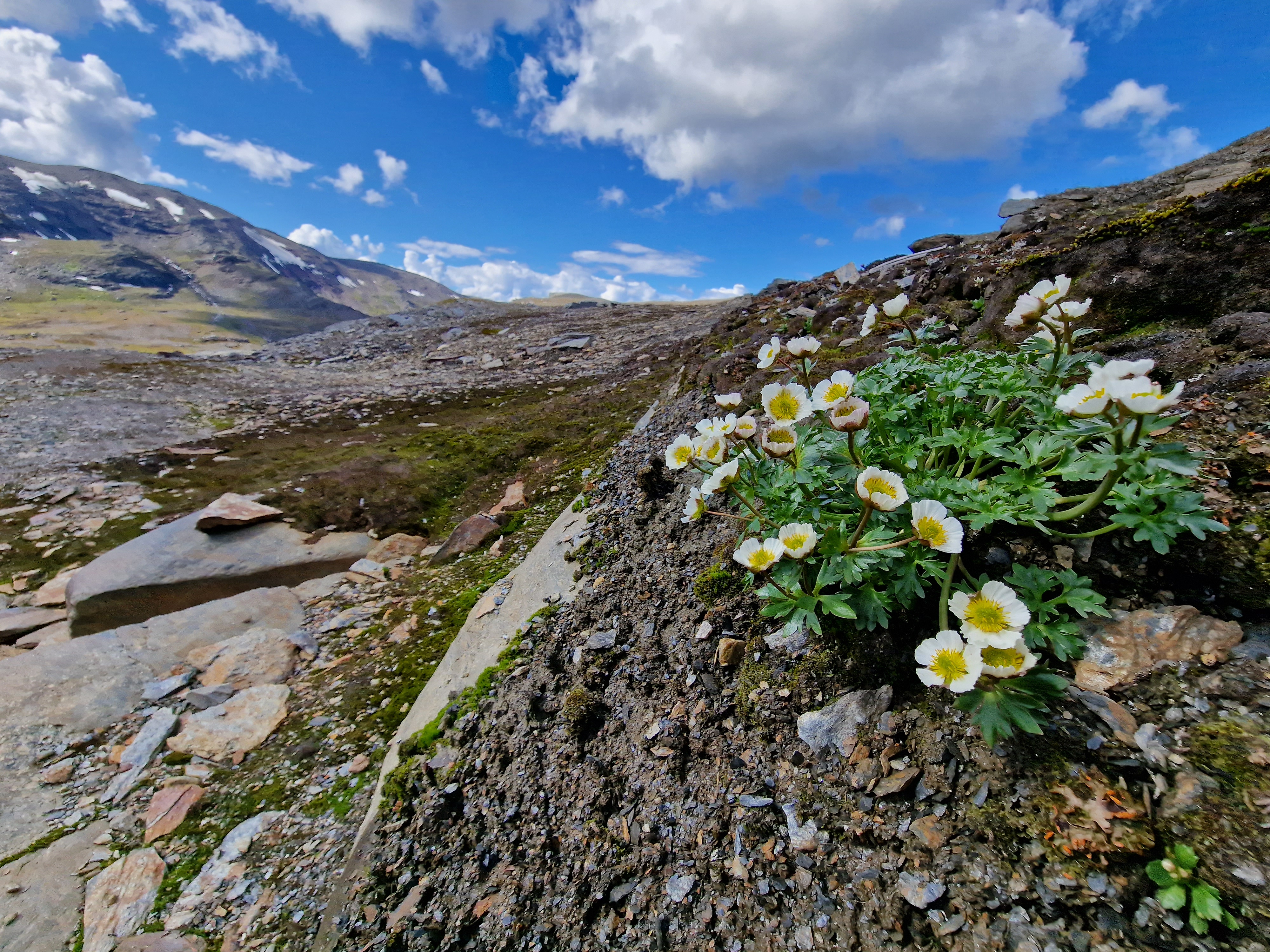
Ranunculus glacialis
Trifolium pratense
Trifolium repens
Eriophorum vaginatum
Ranunculus glacialis
Melting snowpatch on a lake
Western European species like the red clover (Trifolium pratense) here are often listed as non-native species in mountain regions.
Amiens
Frozen mirror
The southern side
Cold!
Frozen to the bone
Maria without a shirt
Cathedral seen from the frozen Parc Saint-Pierre
The museum behind the beautiful gates
Cathedral at night
Amiens is filled with cute little houses
Cathedral at night
Almost cold enough for ice-skating
Sunny but cold, the Quai Bélu
House on the square before the cathedral
Winter sun on the Place du Don
Sun rising above the water
Cathedral with a glimpse of spring
Colourful mirror
Cathedral at night
Nice architectural curve
Enjoying silence and the morning sun
View from my office window
Sunny but cold, the Quai Bélu
Le Club d’Aviron in winter weather
Gargoyle planning to eat the cathedral
Cathedral at night
Just outside of Amiens
Sweden autumn 2015
Lichen
Sweden summer 2015
View on the 1000 meter plots
Doing research on a cold Arctic morning
Plots flooded by the snowmelt
Flooded by the snowmelt
Meltwater river, racing down the mountain
After a hike, even the most basic house looks cosy. Little hut in the mountains, open for everybody
Snowbridge, maybe don’t cross…
Snowbridge
View from a cliff
Silene acaulis or cushion pink, cutest plant of the Arctic
Two seasons in one image
Steep slope
Hiking down
Narvik Kirche, church of the subarctic
Narvik Kirche
Reindeer on top of the mountain
Narvik Kirche
Summer at the church
Summer flowers
Massive waterfall
Young willow catkins
View from Narvik’s hospital, with lilac flowers
Building a bridge over the fjord will gain al drivers at least an hour
Norwegian fjord
Posing with the water, getting soaked
Minimalistic mountains
Insect investigating our reindeer antler
Catching mosquitoes with our license plate, harvest of the year!
Posing with the plot
Fieldwork on the most beautiful spot of the world
Summer bridge – still next to the sadly impassable river
Rhinanthus flower in the mountains
Plateau in the valley, beautiful brown
Experimental view from my favourite plot
Salix catkins
Extremely old Betula tree
Waterfall from a cliff
Buttercup is the earliest in spring, here
Rocks!
Alpine views
Views!
Fieldwork
Jumping over rivers
Plot
Golden plover
Angry lemming
Green, the whole north is green!
Snow, so much snow left!
Minimalistic mountain moments
Fieldwork
The research center
Red clover – focal invader
Look at this tiny cute snail!
Massive floods of melting water
Bartsia alpina
Hooray, a toilet!
Dryas octopetala
Lowest elevation plots
Butterball!
That’s a lot of water
Midnight sun is the best
At the lakeside
Beautiful Bistorta vivipara
Don’t fall in the water
Midnight sun
Wild river
Art – made by ages of wild rivers
Baby firework for America’s independence day
Midnight sun at the lake
The Abisko canyon was wilder than ever
That’s a crazy amount of water!
The Abisko canyon was wilder than ever
Black and white
Stone-man overlooking Abisko
Nothing as soft as a willow catkin
Label and soil temperature sensor attached
I’d drive to the top every day
Reflections
Rocks and clouds
Brave little birch
Brewing our camping poison
Basic camping stuff
Camping in Norway
Home-made temperature houses
Roadside research at its best
Norway is crazy
Horsetail is so funny
Little creek in magical forest
Birches, birches everywhere
Beautiful rock, a gift from the river
Another roadside fellow
Lichen
Ready to rock the summer
Collecting mosses
That’s a crazy old lichen
Tiny tiny piny trees, but old, so old!
Ready to jump into the fjord?
That’s a spiky stone!
Views on Norwegian fjords
Silene in the mountains
Cute little orchid
Skua
Attacking skua, mind your heads!
Watch out for the attack of the fierce skua!
Black snail
New plot!
Still a lot of snow to melt, but this spot was free for a new plot
Reindeer are better than people
Two seasons in one picture
Let’s see what is happening to the balance in mountains! Is this a starting avalanche, or will it last a bit longer?
Cute little hut
Climbing mountains by car
Softest moss in history
Drosera in the marsh
Hiking in no-man’s land
The clouds are coming
Abisko valley
‘Butterball’
Fieldwork in the tundra
Abisko valley
Little plot
Clouds and sun and mountains
Making soup on a campfire with a view
Little creek on high elevations
Skua on the look-out
Melting snow in a river
Rhodiola rosea and the Törnetrask lake
Beginning of spring
Flooded plots, melting snow, impassible wetness
Ferns and horsetails
Chile 2015
Trips to the field sites were sometimes a real adventure, especially right after snowmelt
Lunch made by our local colleague, with funny bread (tasty as well!)