Eating villages

The Port of Antwerp is very hungry. In the last century, it has been eating several villages and thousands of acres of land to meet the requirements of being a globally competing economic center.

DSC_0008

I find it interesting to wander in and around this massive economic monster, and study its behaviour. It feels as if the port is a giant dragon, ready to consume everything in its surroundings.

DSC_0073

Peaceful polders with the smoke of the port-of-Antwerp-dragon in the far distance.

On a sunny winter day, we hiked through the little village of Verrebroek, on the eastern side of the port and currently not yet consumed by the endless hunger of the port-dragon. There, it is only a grassy green dike that separates you from Europe’s second largest sea port.
DSC_0037

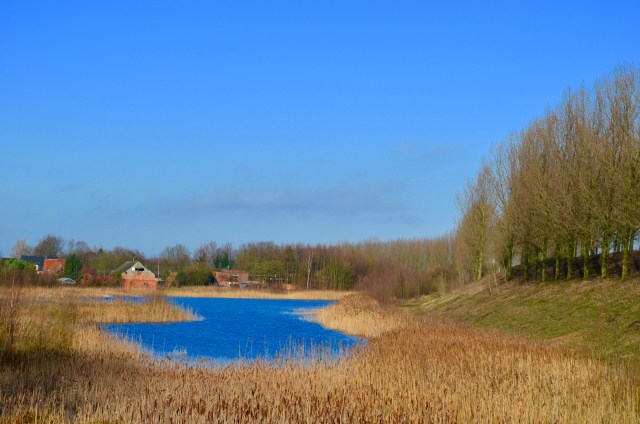
Nature protected by a grassy green dike

But that is the funny part, at our side of the dike, there was only nature and agriculture, and no sign of a port at all. This sudden boundary made me wonder. I am used to gradients in my work, relatively slow changes from one condition to the other.

DSC_0084

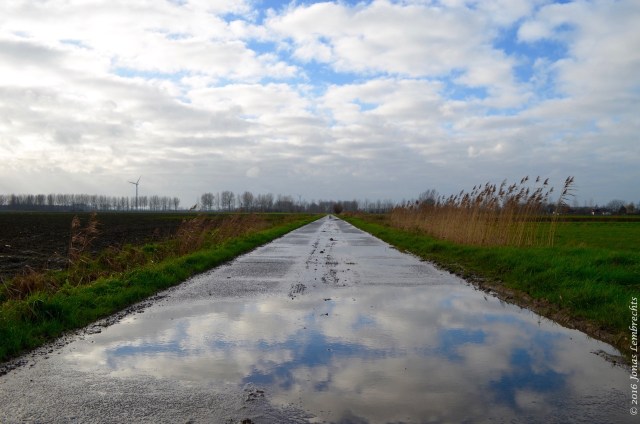
We study these gradients in the mountains, where they range over hundreds of meters or a few kilometers from the mild and more densly populated lowlands to the cold and desolated alpine zone. But next to the port of Antwerp, there is not much of a gradient. There is a port – a busy economic center with virtually no place for nature – or there is none.
DSC_0091

For travelling species, there is a big difference between a gradient of hundreds of meters like the one in the mountains, or one of only a few steps, like here next to the major connection to Europe’s hinterland.

DSC_0019

One moment, you are flying over your own nice little puddle, the other you are caught amid the smoke of the dragon…

Posted in Belgium | Tagged , , , , , , , , , | 6 Comments

Christmas lights shine bright

I received an amazing present from under the christmas tree this holiday season. It is called WakaWaka (‘Shine bright’ in Swahili) and it is a beautiful little solar panel.

DSC_0111

And now I am just holding a little bit of future in my hand: this kind of stuff is what we need if we want to realise any of our goals for a livable future. It is durable, provides cheap and endless energy wherever you go and with every one you buy here, there is one donated to someone in the third world without access to elektricity.

DSC_0115

For me, it is mainly a chance to get elektricity wherever I am in the field. Charging my cellphone whenever I am on a camping trip in the mountains, fixing my measurement devices whenever they start losing power, all of this now becomes possible. But for a family far away from any elektricity source, WakaWaka could of course mean much more.

A nice extra advantage for me is that above the polar circle, where I do my research, there is 24 hours of sunlight, so I do not even have to worry about nightfall to get things charged!

Important edit: it turns out that the donation of the WakaWaka to a third world family is not automatic, you have to go to their website and use the code that comes with your device to get the process up and running!

Posted in General | Tagged , , , , , , , , , , , | 5 Comments

Chilling

For the next year, I will have four master thesis students joining in on my projects, so I will definitely be chilling day in day out (and this cute cat is happy to teach me how to do that).

DSC_0152

No, I am just kidding, of course. It will be very rewarding to have such a large team, but I will have to put in a lot of effort to guide them along the way.

I will have a student on four different topics. For most of them, all data is already collected (with their help), but I only glanced at this data shortly, so they will have the chance to come up with the story first.

DSC_0151

That last fact is important. I want them to have something new to discover, some science to do, some exciting and relevant stories to dig into. That is what I consider the first main pillar of a thesis under my supervision. The second pillar is guaranteed results. I have not looked into the data yet, but I am familiar with the experiments and datasets and I know that at least some important results will come out of it. What exactly, that is a surprise, but they will not have to go through the disappointment of a failed experiment.

DSC_0144

So I will leave the chilling to the cat, who is definitely better at it than I am, while I try to guide the students towards a successful and satisfying master thesis.


Posted in The research | Tagged , , , , , , , , , , | 2 Comments

A soft ending

We ended 2015 with almost spring-like temperatures.

DSC_0249

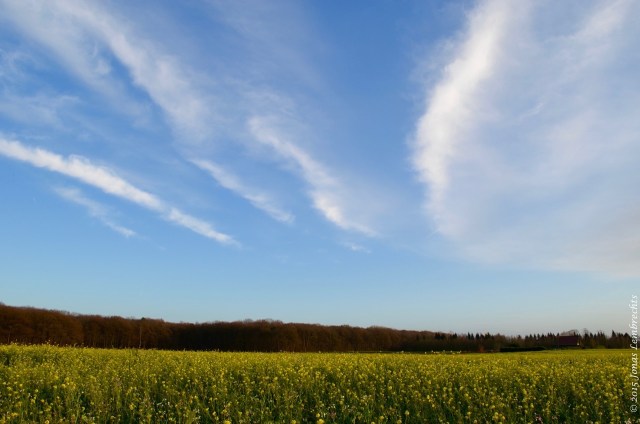
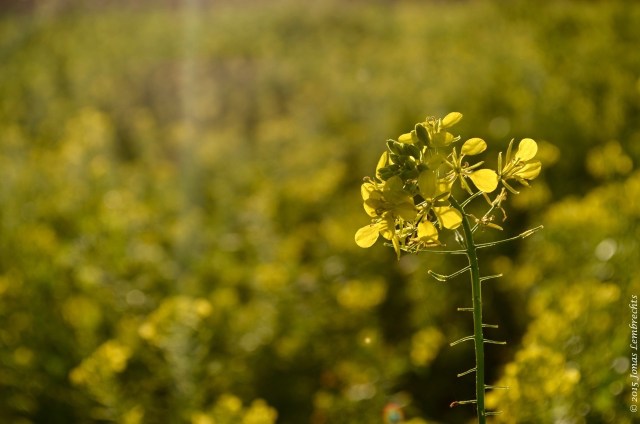
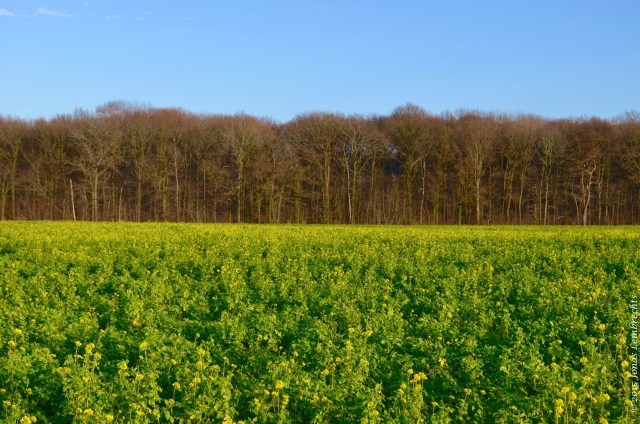
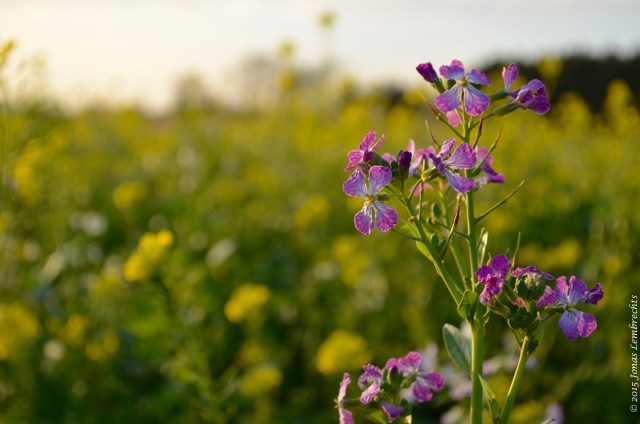
The feeling of a new beginning was even more accentuated by the endless fields of flowers of white mustard and fodder radish we wandered through on a nice walk on the last day of the year.

DSC_0224

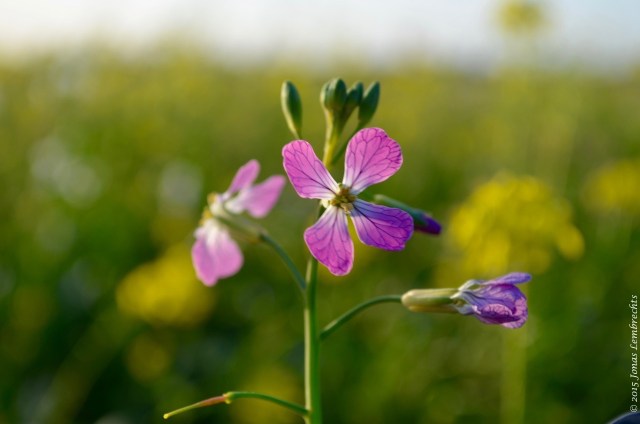
I was used to the yellow flowers in winter, but mixing it with the pink of the fodder radish flowers created an even more spring-like atmosphere.

DSC_0233

Such a monoculture (or in this case bi-culture) of overtime the same plant is of course not too exciting for biodiversity, but the flowers can be nice for those brave insects that still fly around with these mild temperatures.

DSC_0230

Note: I tried my best to get the names of the flowers correctly, but there are so many lookalikes (like rapeseed), so do not take my word for it just like that. 

DSC_0246

Posted in Belgium | Tagged , , , , , , , | 1 Comment

Castles

Belgium hosts the highest density of castles in the whole world.

DSC_0647

The Gravenkasteel in Humbeek

With approximately 3000 castles, farm-castles, citadels, manors or palaces, there is plenty of beautiful architecture to admire.

DSC_0648

In the densily populated lowland areas of Western Europe, castles – and especially castle parks – are a blessing for biodiversity. It is there that some of the rarest but most precious habitat types are still flourishing.

DSC_0646

This kind of Belgium nature is a much smaller-scale beauty than the endless uninterrupted Swedish mountains, but I promise you the Belgian castles stand their ground in any global beauty contest.

Posted in Belgium | Tagged , , , , , , , , , | Leave a comment

News from the west

Every now and then, there arrives a much appreciated  e-mail with news from the other regions within our network. It is nice to know that they are trying to do the exact same thing as you are doing, but in the totally different conditions of their own mountain regions.

IMG_4078

The Beartooth Mountains. Picture: LRew

This time, the news came from the west, from the Beartooth mountains in Montana in the United States. Just as we did on our three day camping trip in Norway this summer (check it back here), they were installing sensors in all our permanent plots along the elevational gradient.

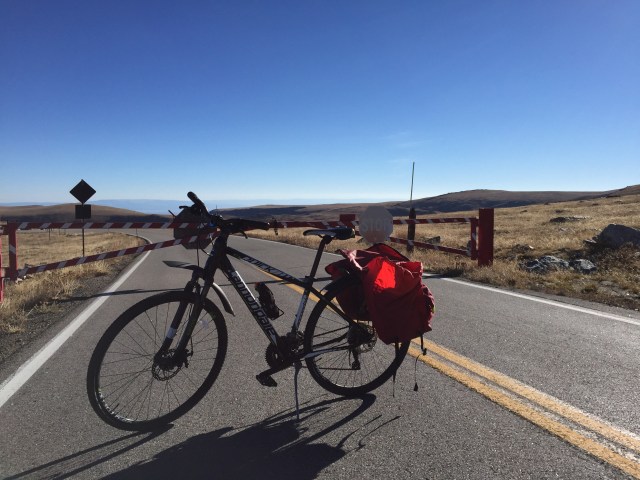
But fieldwork in the mountains has its ups and downs. And with an elevation gradient spanning a range of up to 1500 meters, a closed road in the Beartooth mountains definitily counts as one of the downs. When the road is closed, there is only one option: taking the bike.

IMG_4070

Picture: LRew

Hard work, but very well appreciated, and I’ll assure the brave biker: the final results will be totally worth the aching muscles at the end! And let me virtually invite you for a cup of soup at the campfire on our own Norwegian gradient to acknowledge your work.

DSC_0819

Soup in the Norwegian mountains

Posted in USA | Tagged , , , , , , , , , , , | 2 Comments