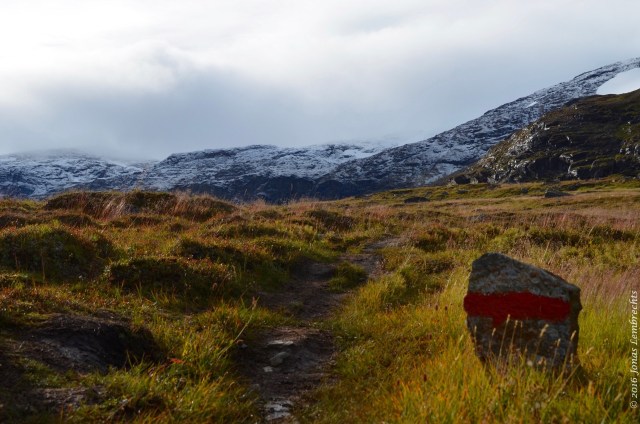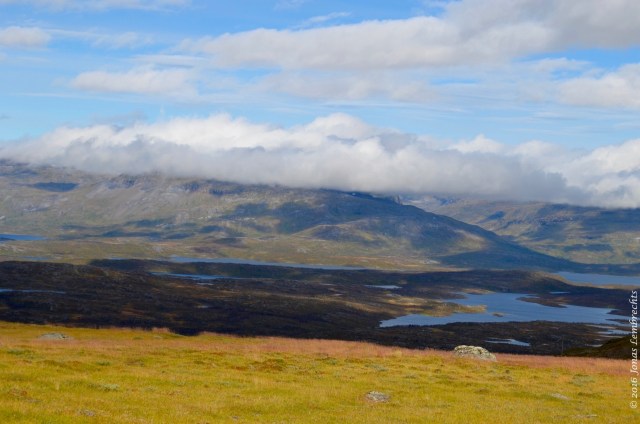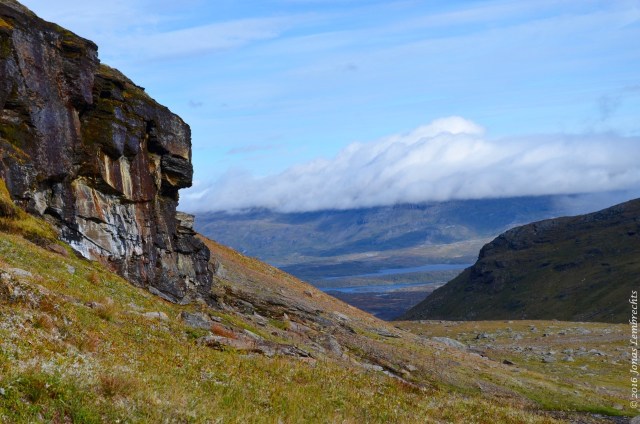
one valley, two seasons

With autumn creeping up on us at home, I’ll bring to you a series on our fieldwork in the amazing autumn of the Arctic in Abisko. This is part III. Click here for part I and II.
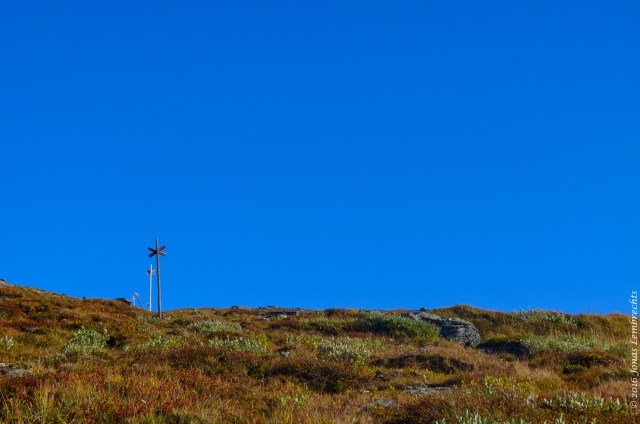
abisko-autumn-96

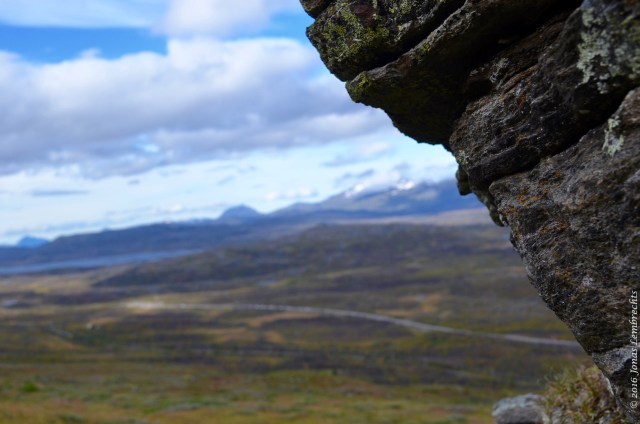
Summer on the Nuolja-side of the mountains

Another day of wild weather wonders in the north.
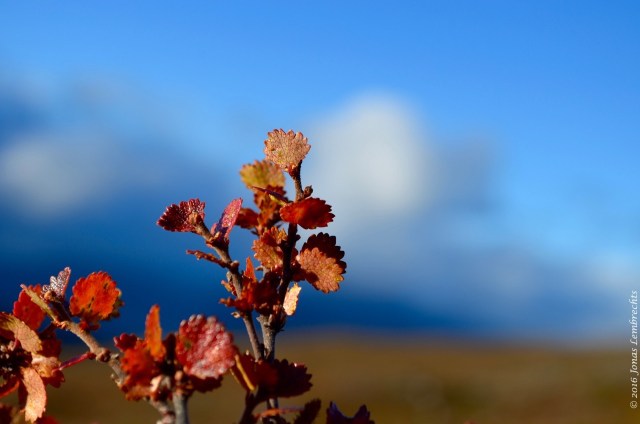
abisko-autumn-107

Betula nana, the dwarf birch, a mini autumn forest on its own

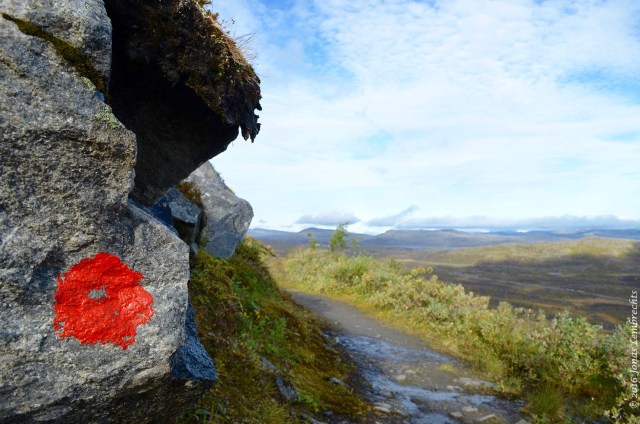
After two successful days of harvesting our experiments, we changed to something new: observations of the effect of mountain trails on the vegetation.

abisko-autumn-91

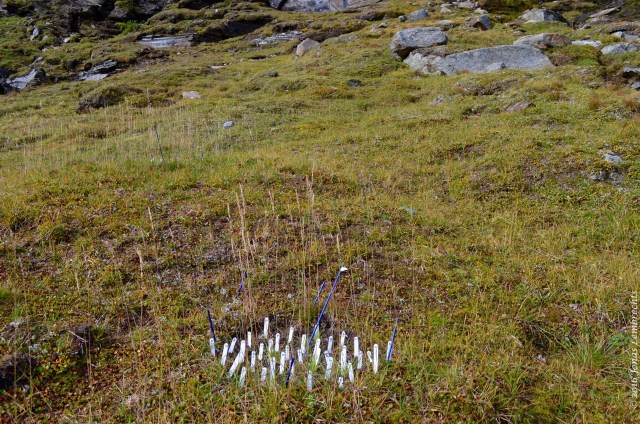
Installing the plots of our trail observations on top of mount Nuolja

Long story short, we track a whole stretch of trail from the lowlands up to 1200 meters and monitor the vegetation next to it.
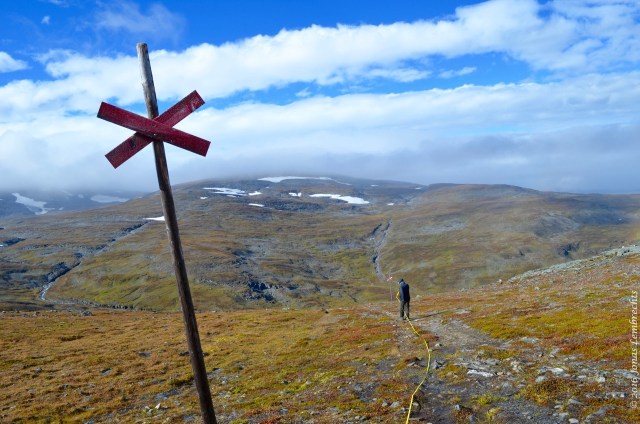
Installing the plots of our trail experiment

That job brought us all the way up on the slope of mount Nuolja (which you might still now from day I). Sunny, but extremely windy, that was the verdict.
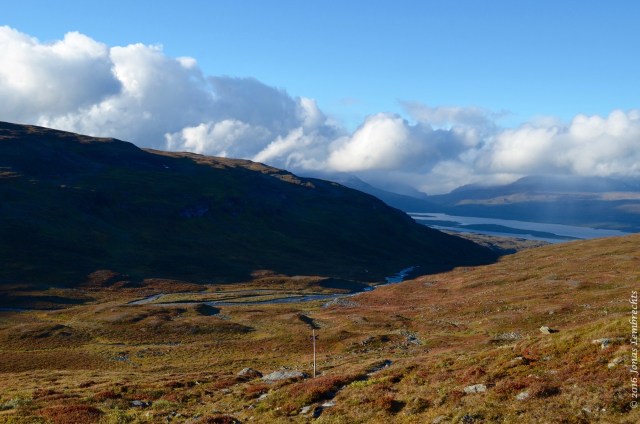
abisko-autumn-103

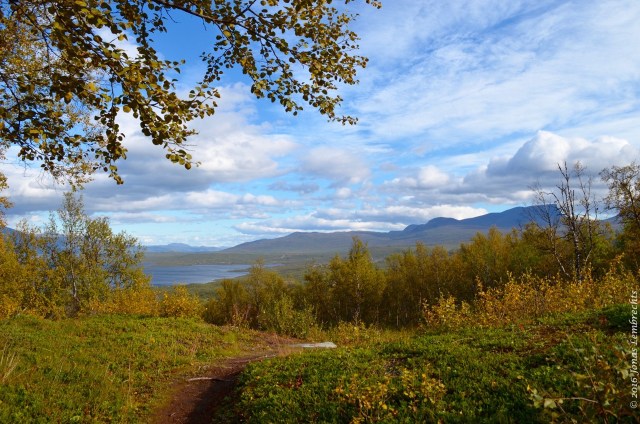
The valley of Björkliden in autumn

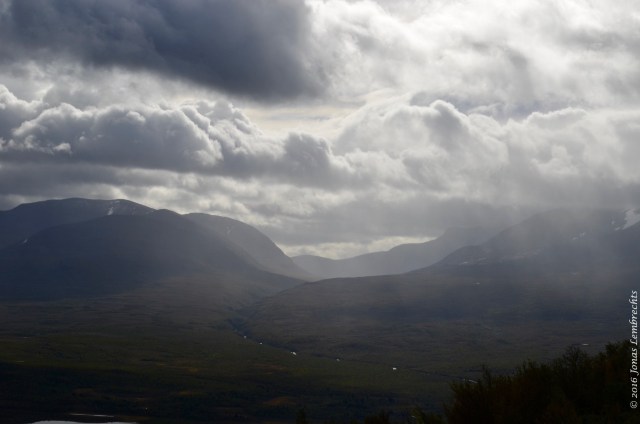
But in the distance loomed the danger: a cloud filled with rain, hail and snow, hiding behind the mountains towards Norway. It could easily reach us in a few seconds with these winds, and ruin our whole plan for the day.
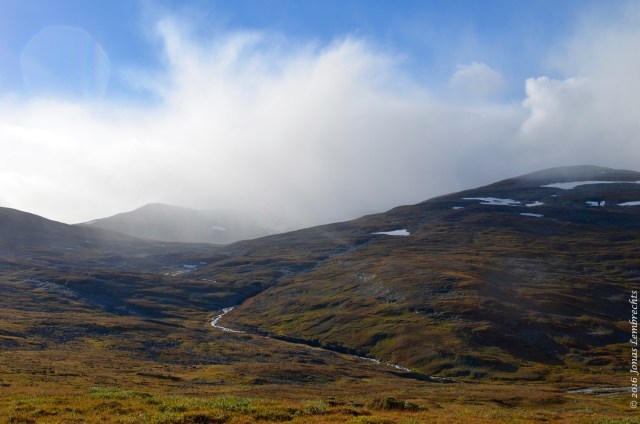
abisko-autumn-94

It’s raining in the west, clouds trapped behind the mountains

Yet topography was a blessing today: once in a while, a little wisp of cloud escaped from the mountain tops, but soon enough it blew over again. Once in another while, it was just horizontal rain, flying straight from the other side of the valley into our eyes.

abisko-autumn-99

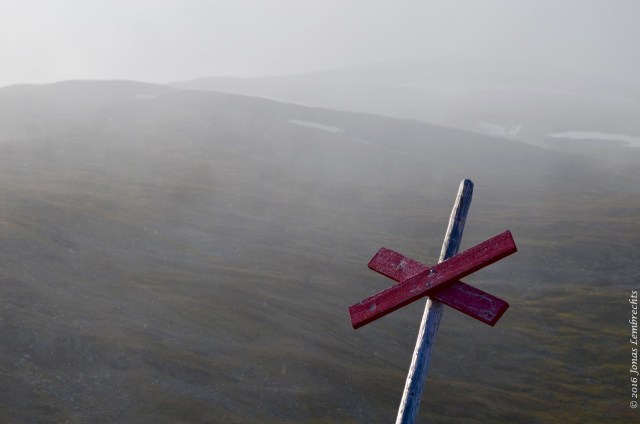
Yet there we were, enjoying rainbows and sunny skies, while the horizon was groaning under a feel of winter. Unfortunately, that was exactly where we would have to go next.
abisko-autumn-98

More pictures? There is a growing picture gallery on the right of my blog, check it out!
 

Posted in General | Tagged , , , , , | Leave a comment

Surviving

abisko-autumn-48

Day 2 of our awesome autumn field trip to Abisko in the north of Sweden (day 1 here) brought us to the beautiful valley of Laktatjakka.

abisko-autumn-53

This year, we did not have the best relationship with this otherwise amazing valley, as especially weather-wise it can be quite a troublemaker.

abisko-autumn-70

You might recall from my previous post that I described the magic of Nuolja, the mountain blessed with the skill to block out the rainclouds from Norway. Laktatjakka has its own magic, but in the opposite direction: it holds the clouds as long as possible, so it often stays damp and cloudy even when the rest of the world is blue.

abisko-autumn-60

Day 2 was a uniquely good day, though. The mountain was kind to us, and delivered an easy and relaxing hike in the sun to 900 meters.

abisko-autumn-59

One of our experimental plots, where we measure the chances of plant invaders in disturbed and undisturbed mountain vegetation

Again, that is where our plots awaited us. And they had a big surprise for us, even those at the highest elevations:

abisko-autumn-62abisko-autumn-78

The growing season must have been fantastic, as even at 900 meter, far above the tree line, many of the non-native plants we had sown there had managed to grow to maturity.

abisko-autumn-77

Not all of them, of course, plenty of them did not survive the winter, but in any case many more were flourishing than you would expect based on the cold climate of the area. Just imagine, it was sometimes hard to stand it counting plants up there in summer, but these little plants, with parents used to the mild climate from the Netherlands, did not seem to bother at all.

abisko-autumn-51

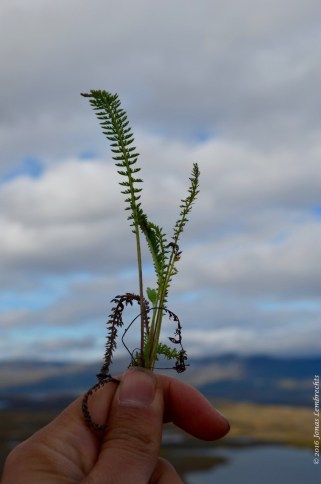
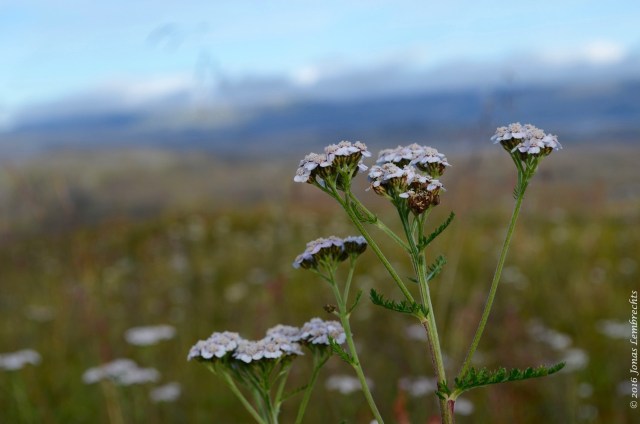
Achillea millefolium, the common yarrow, at 650 meters elevation along a trail

Another sign of the amazing flexibility of these species, as our research has been showing over and over again. It was thus not much of a surprise to see whole patches of common yarrows (one of the most adaptive ones) all along the trail.

abisko-autumn-58

Alpine clubmoss (Diphasiastrum alpinum), small growth, tough leaves, all ready for the cold.

It is interesting to see that these vulnerable-looking species succeed so easily here, while many other plant species in the area look like they only manage to deal with the cold thanks to a whole set of adaptations: small growth, tiny leaves, thick skins.

abisko-autumn-80

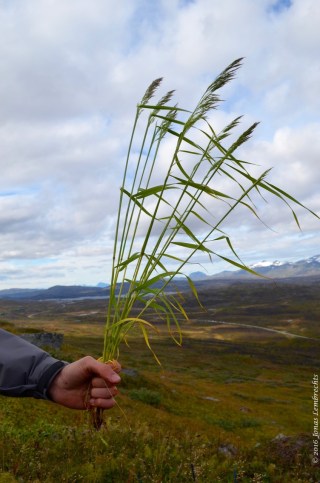
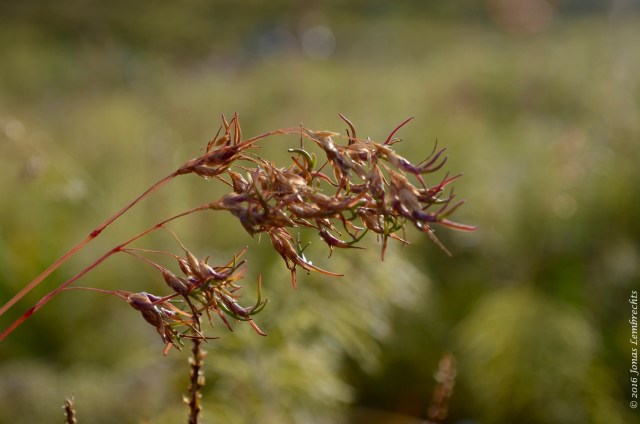
Viviparious Poa alpina, the alpine meadow-grass, with the seedlings growing from the seeds when the seeds are still attached to the plant

Some of them even protect their offspring by growing their seedlings on the mother plant, and only releasing their babies in the wild when they are already more than a centimeter long (like on this picture of Poa alpina, the alpine meadow-grass). All to battle the extreme conditions with low nutrients and cold temperatures in the north.

abisko-autumn-75

After a day of admiring these impressive skills, we hurried back down to the safety of the lowlands, only stopping halfway for a minute to gather another one of the blessings of autumn: blueberries.

abisko-autumn-87

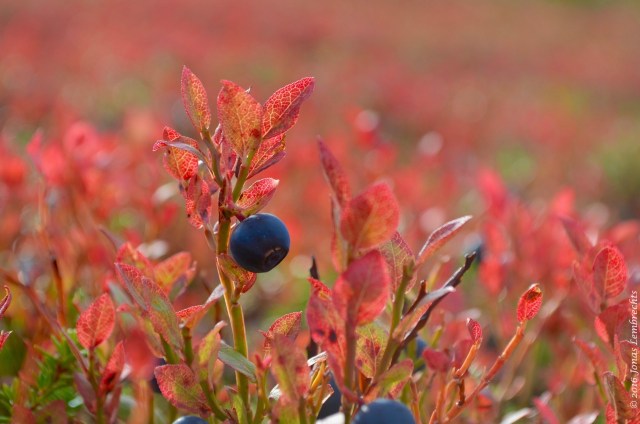
Vaccinium myrtillus, the blueberry, ripe and tasty

Like what you see? All pictures from day 1 and 2 can be found in the picture gallery on the right of my blog!

Posted in Sweden | Tagged , , , , , , , , , , | 1 Comment

Yellow

With autumn creeping up on us at home, I’ll bring to you a series on our fieldwork in the amazing autumn of the Arctic in Abisko. This is part I.

abisko-autumn-3

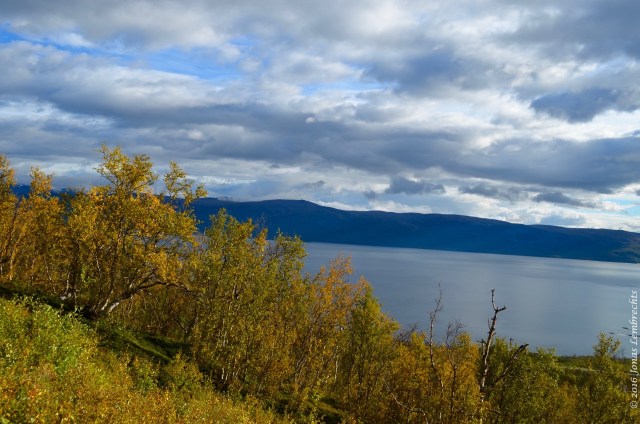
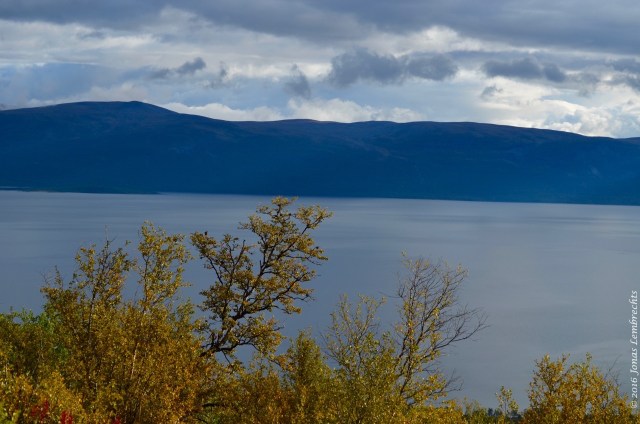
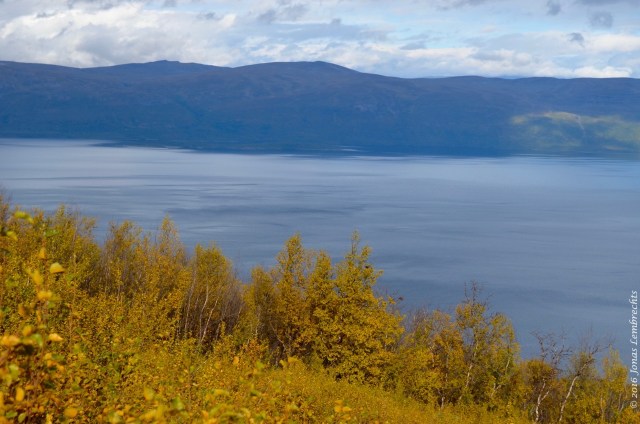
Yellow leaves of mountain birch, with lake Torneträsk in the background.

It started off so amazingly beautiful. After we landed in Kiruna airport (the hub to the Swedish Arctic) on the last day of August, we entered a world of yellow, yellow as far as the eye could see.

abisko-autumn-5

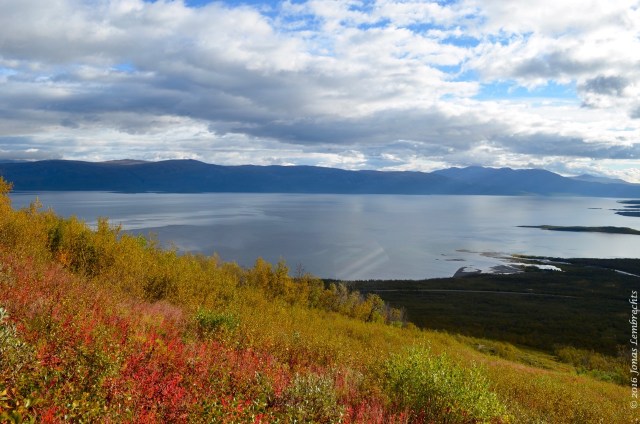
The colours of the north: red fireweed and yellow mountain birches, with lake Torneträsk on the background

The subarctic is a world of birches, prosaically called Betula pubescens czerepanovii, more poetically called the mountain birch. And in autumn they do what they do best: turn the world into a magical place.

abisko-autumn-40

Our first hike in this world of yellow would bring us on to Nuolja, the mountain overlooking the valley of Abisko. A steep climb, I’ll warn you, on a little track that on wet days looks more like a stream in parts, with water tumbling up and over slippery rocks.

abisko-autumn-24

The most beautiful hiking trail of the world: Nuolja in Abisko

But the views, oh the views, they make up for the whole effort. You hike right above lake Torneträsk, the immensely long lake that defines the whole water cycle of the area.

abisko-autumn-21

abisko-autumn-4

At the top, our experiment awaited us. Installed in spring 2015, when we dropped a bunch of seeds in gaps in the vegetation, the plants were now fully grown. We hoped to see variation in their success at different elevations, with all kinds of different factors affecting this success.

abisko-autumn-11

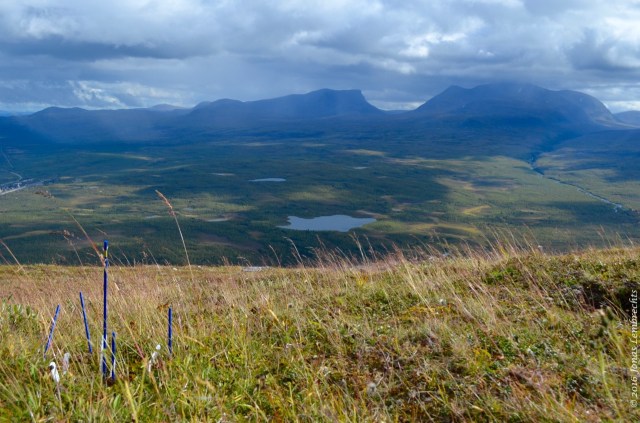
Our little experiment on top of the mountain in Abisko, with a view on Lapporten

Long story short, we did find what we were looking for. Imagine the relief if you come back to your experiment after leaving it alone for so long, to see the plants did exactly what they should do, and maybe even better! More on that later, when the data are analysed.

abisko-autumn-32

In the meantime, we ended up high above the tree line, but even there the colours did not disappoint. Let me tell you one thing: autumn is easily the best moment to visit the subarctic.

abisko-autumn-16

Well, that is a beautiful table with a nice view on lake Torneträsk in Abisko

However, autumn would not be autumn if not for some sudden weather changes.

abisko-autumn-9

The steep slope of mount Nuolja on a dramatic looking morning

The nice sunny weather got as easily replaced by scary rain clouds as the other way around. Sun, rain, sun, rain, not very enjoyable during fieldwork, but perfect for the views.

abisko-autumn-10

Luckily, there is this nice little trick performed by Mount Nuolja: it blocks of most of the rain clouds rolling in from Norway, sheltering the valley from excessive rain most of the time.

abisko-autumn-6

If you are at the correct side of the mountain – and Abisko is – you are thus often protected from the wrath from the West.

abisko-autumn-20

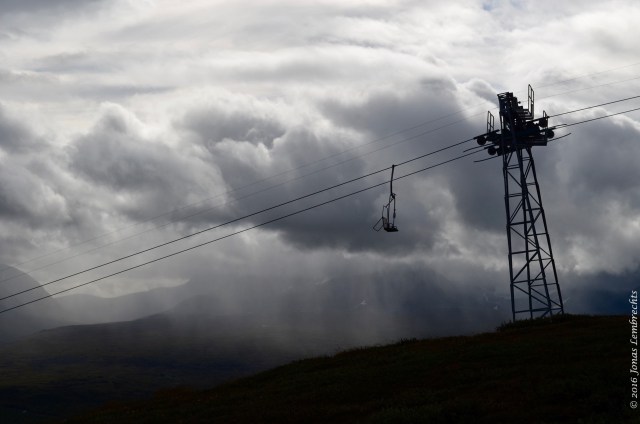
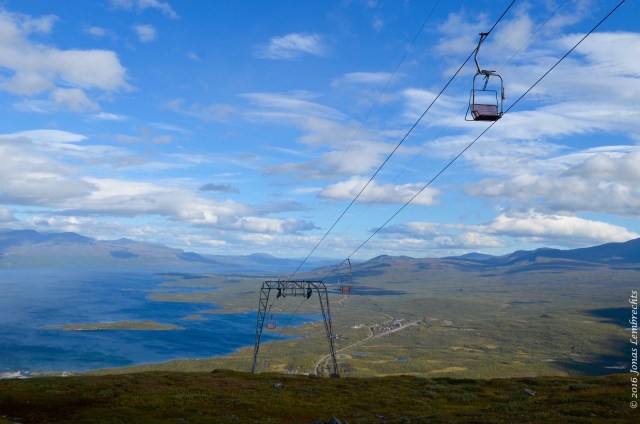
The ski lift with a view on Abisko National Park and Lapporten

Our way down, happy because of the first successful day of fieldwork, thus again bathed in a beautiful light.

abisko-autumn-30

God, I love the Arctic!

abisko-autumn-34

All pictures from this day are also in the picture gallery on the right. Enjoy!

Posted in Sweden | Tagged , , , , , , , , , | 2 Comments

From Vianden to home

On the hill overlooking the beautiful village of Vianden stands a black locust, Robinia pseudoacacia, a North-American tree introduced all over the world for gardening purposes. luxembourg-6

With its nice feathered leaves obscuring the view from the viewpoint, it made a very good case for the conference that took place in the same little village: Neobiota, the science of newly introduced species (see more here).

luxembourg-4

It was good to be part of this conference. Learning about the ideas and projects of your colleagues ensures you keep a broad mind about your own work.

luxembourg-3

Learning what happens with other species, in other ecosystems and on other spatial and temporal scales shows what is similar, but also very importantly what is different. Which processes work for invasion on a global scale, and where the local story is at play.

luxembourg-2

It helps you to break down the walls around your own little project, and explore what can work on a larger scale, and what not.

luxembourg-7

It shows you the view from across the valley, from people with a different understanding of the same story. Sometimes even different truths of the same scientific processes, and yes, even in science that is possible.

luxembourg-1

And most of all, it creates the feeling that everybody is adding their little brick to a growing construction, a growing understanding of what actually happens in the world of natural invasions in particular, and our whole world in general.

luxembourg-5

I took all that information home with me, and hopefully I came out a better scientist. Let’s now try to integrate it in all the papers I am hoping to write this winter!

Posted in Luxemburg | Tagged , , , , , , , , , | Leave a comment

Dinner with a view

dsc_0315

Inside the castle of Vianden

While my previous post was a shout-out for all the fantastic science being presented here at the Neobiota conference in Luxembourg, this one can be short:

dsc_0361

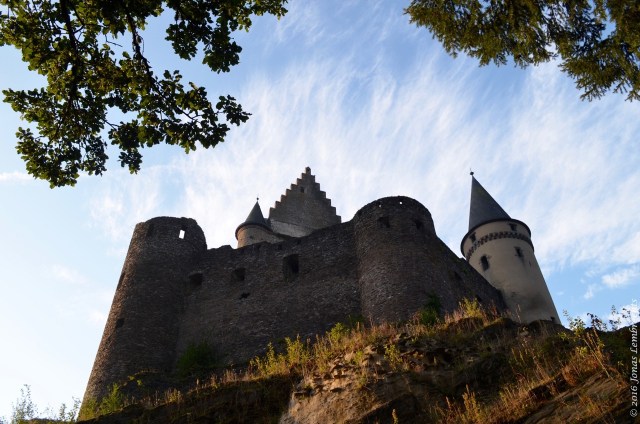
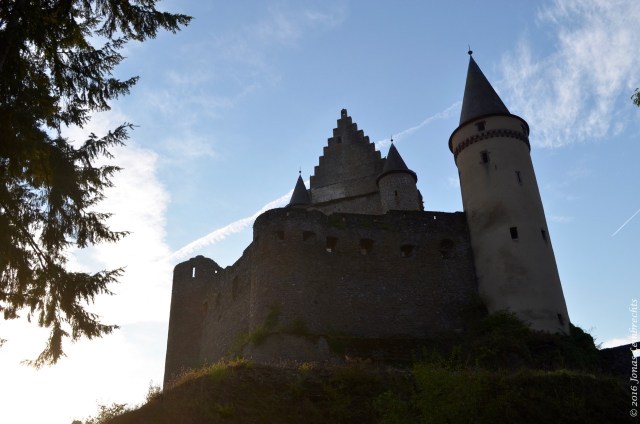
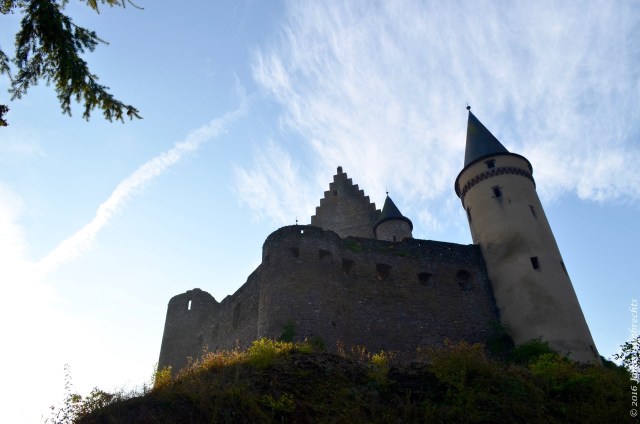
Vianden castle by night

just how amazing is this as a location for a conference dinner!?

dsc_0346

Dining between armours, giant tapestries and life medieval local music in an 11th century castle, how not to fall in love with this country?

dsc_0307

Guarding the dining room

Luxembourg might be small, but they surely know here how to make an impression!

dsc_0341

Posted in Luxemburg | Tagged , , , , , , , | 2 Comments

A gathering of experts

Neobiota 2016: the largest gathering of invasion ecologists I have ever seen, all under the watching eye of Vianden’s famous castle.

dsc_0242

We joined forces here in Luxembourg with more than 260 ecologists from all over the world for what – up till now – is proving worthy to compete for the best conference I ever visited.

dsc_0130

The high levels of all the presentations during this 3-day meeting clearly indicate that invasion ecology has evolved into a mature discipline. As a discipline, we are far past the stage that we remain on our own, looking at our own little specific invasion-related problems.

dsc_0224

No, we now have an important role to play, bridging gaps between evolutionary ecology, functional ecology, biogeography, climate change research, management and many more. While we are implementing knowledge from all these disciplines, invasion ecology is also giving back to the rest of ecology: invasive species have proven to be valuable test cases to understand fundamental ecological problems. From biotic interactions, over effects of human disturbances to the impacts of climate change, research on alien species provides major breakthroughs.

dsc_0223

And again, as I also said after the Perth conference on mountain ecology in 2015, the fastly increasing success and power of big global collaborations (like our own precious MIREN) and even bigger global datasets is playing an important role in these successes.

dsc_0247

There is one more days of talks coming up, but already now the list of good ideas is too long to handle.

Posted in Luxemburg | Tagged , , , , , , , , , , | 2 Comments