At the Functional Ecology conference in Montpellier (see earlier posts), several times I heard the saying that plants cannot fly and as such have a significant limitation compared to other organisms.
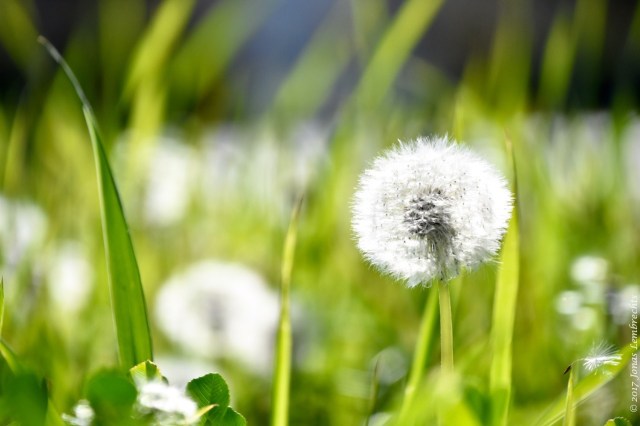
Seeds of the dandelion (Taraxacum officinale), possibly the most well-known image of flying plants
Yet I strongly disagree with that saying, no matter how true it might look at first sight. Plants do fly, some of them even for large distances, just not in all phases of their live. As in all organisms, it is important to understand the live of a plant through the different life stages it is going through: germination – growth – flowering – seed production – dispersal – new germination. Even within the same plant species, factors working in on each of these life cycle stages can be totally different from the other.

A young Euphorbia growing in a bed of poplar tufts, seeds with long white hairs attached to them to aid wind dispersal
Many plant species are highly mobile, either flying, swimming, rolling, jumping or passively travelling attached to other mobile organisms or things. They just aren’t mobile in every life stage; their mobility is limited to their live as seeds. Yet this easily overlooked phase of mobility is not trivial: it defines why plants grow where they grow, it defines if they can track climate change or not, it defines if they are capable to track fast – or slow – changes in their environment.
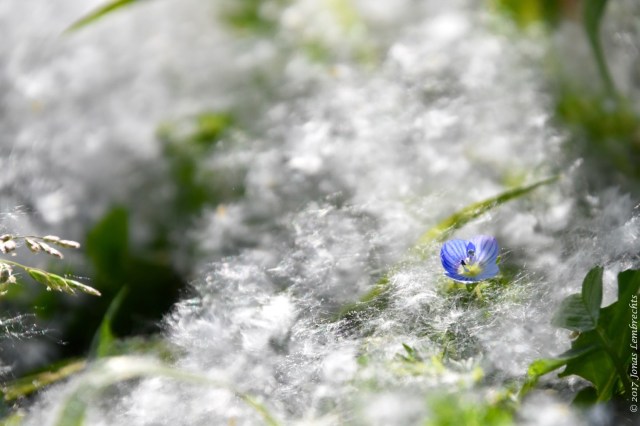
Little purple Veronica flower in a bed of poplar tuft
Even the duration of this phase is not necessarily neglegible. Many plants can stay mobile for a long time, until they find a spot to settle down, and especially for annual species the time spend as seed and as actual plant is not so different at all.
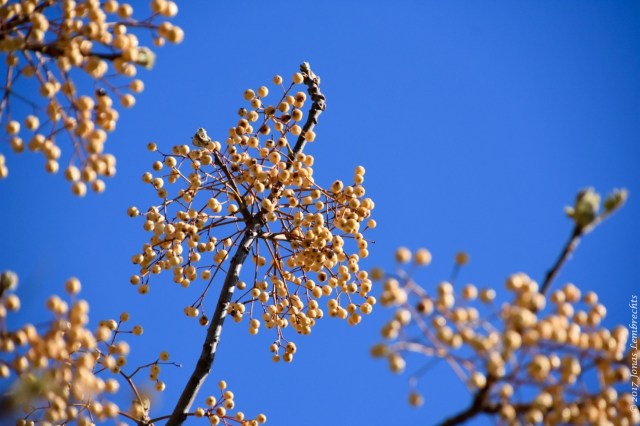
Berries can fly as well, albeit often only in the stomach of a hungry bird
At the conference, I even gave a presentation about travelling plants, using their skills to hike uphill in the mountains. Such unusual travel plans will stay a significant component of my work in the next months, so stay tuned to learn some more!
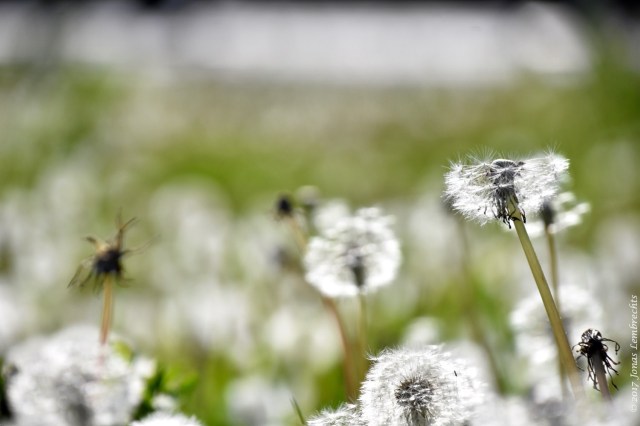
UPDATE 5/4/17: There is a second – highly important – life stage in which plants fly: as pollen. While they can travel impressively large distances in this shape, they of course need to find a conspecific flower at the end of their trip. Yet this gives most plants two distinct options in their lives to travel! Should I convince you more that plants are not suffering from being sessile?




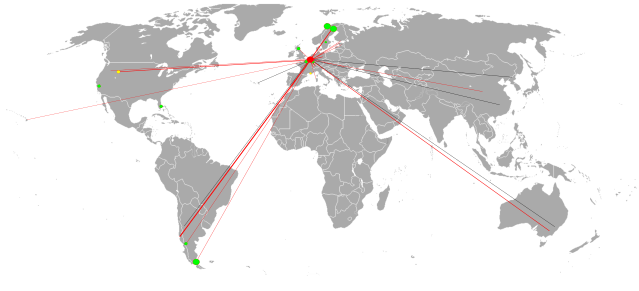 Lines are weighed based on the amount of papers together (bolder lines means more interactions), black lines indicate anticipated future collaborations. The red dot is home (Antwerp, Belgium), green dots stand for past visits, yellow dots for anticipated visits.




 The 3D lab