FEASTing in Abisko

It promised to be a windy day with some scattered rain clouds, when we head out to mount Nuolja to join the FEAST-project.

FEAST stands for Functional Ecology of Alpine SysTems, a large-scale project to assess soil conditions in mountains worldwide. Such a noble joined effort I find hard to resist, so we signed up to add our study sites in the northern Scandes to the growing network. One day of fieldwork, collecting soil samples and associated species occurrences, would be sufficient to move global mountain ecology huge leaps forward.
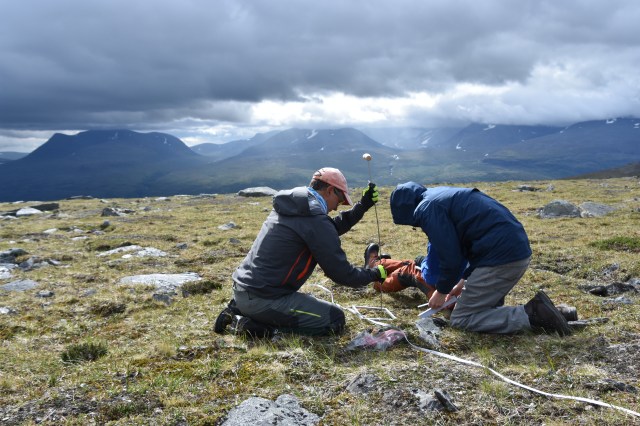
29961473818_d7c5262955_o

Measuring soil conditions for the FEAST-project

Of course we needed a representative mountain, one that would prove valuable in the global analyses. Our eyes fell on mount Nuolja, the 1200 meter high mountain peak overlooking the village of Abisko and the Abisko National Park. For decades, this mountain has been intensively studied by scientists from countless different disciplines in the Abisko Research Station, and it is safe to say that virtually no mountain above the polar circle has better data on all aspects of its ecology. CIRC, the Climate Impact Research Center of the nearby Abisko Research Station, now even re-installed long-term vegetation survey plots that continue century-old scientific traditions.
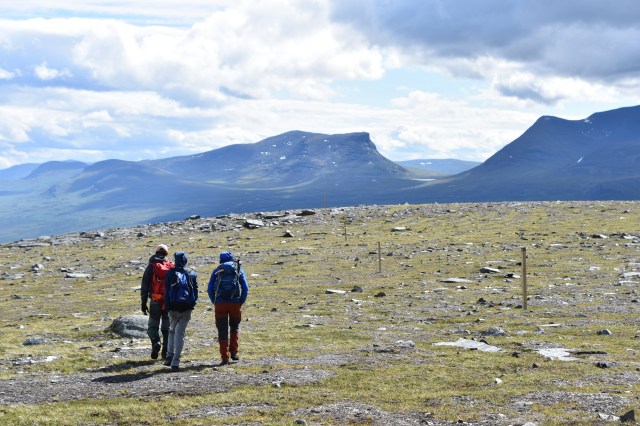
43783201872_fb544d4a8b_o

Wooden poles of the century-old long-term vegetation survey are scattered along the whole elevation gradient of mount Nuolja


Nevertheless, despite all this amazing data, information on the soil functions was still largely lacking. The FEAST-project proved a great first step in the right direction to change just that.
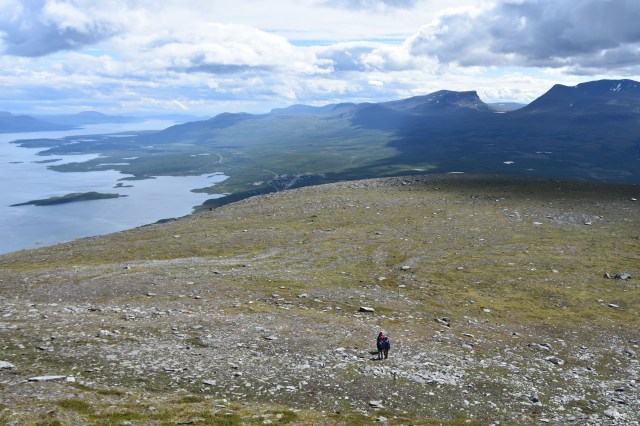
43783193722_2c756924e1_o

The vast open stony tundra at the top of mount Nuolja

The FEAST field day turned out to be a great success. We got some strong winds, I tell you, on top of that unprotected mountain, but we avoided most of the predicted rain. We managed to collect data for the two FEAST-experiments, with the first one looking at typical alpine soils along an elevation gradient and the second one focusing on snowbeds. Snowbeds are areas were snow persists long into the growing season, even when it has molten away everywhere else.
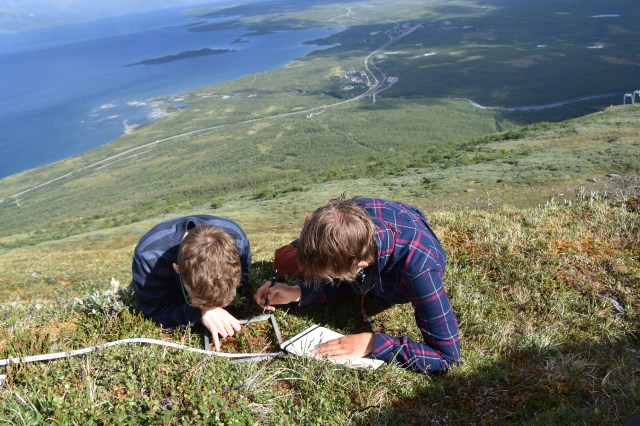
42927598095_3416623e41_o

Surveying plant species diversity in the FEAST-plots

The latter proved especially interesting on mount Nuolja, as the region just emerged from a year with extraordinary weather conditions. With little precipitation in winter and temperatures soaring in summer, even the most persistent snowbed on the mountain was far gone by the time we did the experiment. Extreme weather events that are getting far more common in the north nowadays as a result of the changing climate.
42022782980_9595f4432d_o

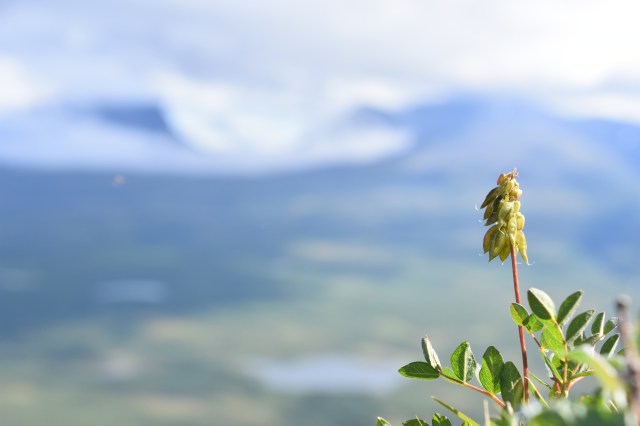
Astragalus alpinus seeds on top of the mountain

Now all soil samples are packed and send to the UK, where they will be analyzed and compared with those from tens of other mountains all over the world. And then, finally, we can set some long-awaited steps forward in understanding the mysteries of the belowground world in mountains. And that’s truly going to be a FEAST!
42022795830_3d09a42b88_o

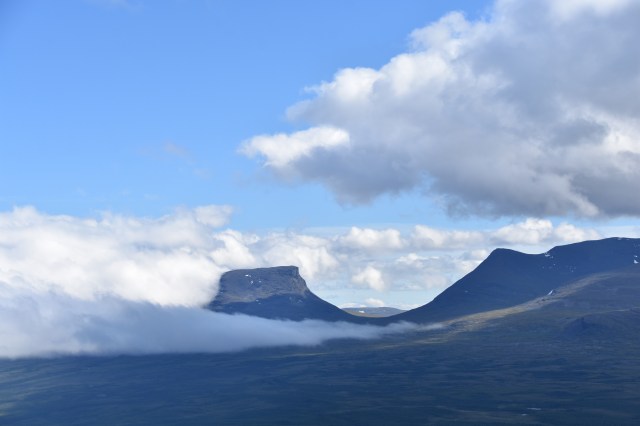
Working with a view: Abisko National Park and the Lapporten mountain range where always visible in the distance

 

Posted in General, Sweden | Tagged , , , , , , , , , , | Leave a comment

The Mississippi

I don’t know about you, but I had this romantic notion of one day being on a boat on the Mississippi, that majestic river that inspired so many tales and songs.

DSC_7143

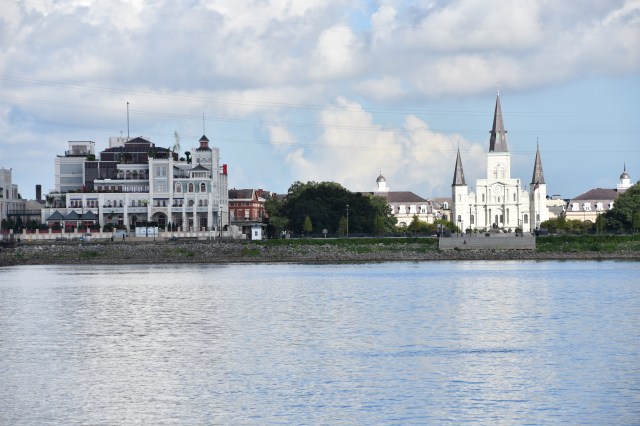
The New Orleans skyline, as seen from on the Mississippi river

Now, being in New Orleans for the annual meeting of the Ecological Society of America (more on that here), the perfect opportunity finally arose.

DSC_7154

Sunlight on the cathedral of New Orleans; a divine intervention?

DSC_7202.JPG

The same cathedral, up close

And you know what? You can take a 50-dollar steamboat cruise, which is probably amazing, but you can also take the ferry to the other side, and pay the little sum of $2 ($4 if you also want to get back), and get that whole feeling for close-to-no money!

DSC_7145

New Orleans from on the ferry

Well, that got me so excited that I had to write about it here! Now back to conferencing, as there is still a lot of people to meet, and a lot of exciting science to learn! I met a lot of fascinating scientists today that helped me shape some of my plans for the future. Which is at least as exciting as being on the Mississippi.

DSC_7115

DSC_7161

Posted in General, USA | Tagged , , , , , , , | 2 Comments

Humans x environment

I am currently in New Orleans, Louisiana, on the shores of the Mississippi river, at a gathering of several thousands of ecologists: the annual meeting of the Ecological Society of America (ESA).

DSC_6866

The city of New Orleans by night

This year’s theme of the conference is an especially fascinating one, and closely intertwined with the recent history of this beautiful city: extreme events, ecosystem resilience and human well-being. More specifically, these thousands of ecologists ask the question how the world bounces back when it gets an uppercut, how humans affect this ability to bounce back, and how this in return affects us humans.

Human and natural structures in New Orleans

Critical questions, and dramatically illustrated by the aftermath of hurricane Katrina, a true exemple of such an extreme event that devastated the city of New Orleans more than a decade ago. A lot of bouncing back happened since that day, but it took an extraordinary amount of time and resources, and it made apparent that when people alter the environment too much, resilience drops.

DSC_7058

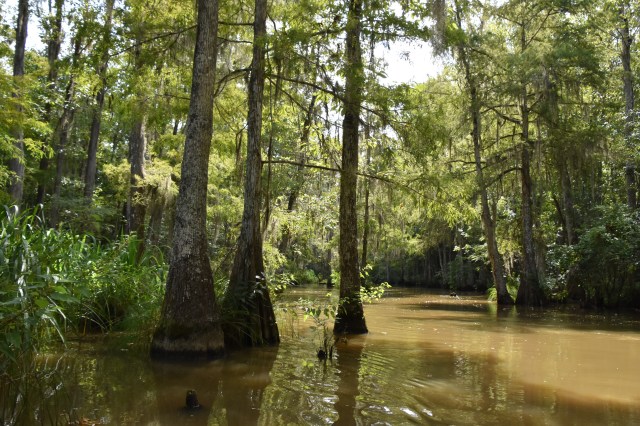
The swamps, marshes and bayous of Louisiana protect the shores against extreme events like hurricane Katrina, yet they are increasingly under threat.

A lot of what we are working on fits neatly into this theme. Right at this moment, for example, one of our PhD-students is monitoring the effects of Urban Heat Islands on non-native plant species in Flanders, right in the driest summer Western Europe has seen in a very very long time.

DSC_6907

Little (Dichondra?) leaves in a hole in the streets in New Orleans. People and the environment are closely intertwined, and despite the dramatic changes in nature’s status quo that this gives, we will have to learn to deal with it.

Assessing the combination of the direct effects of humans (in cities, yet also along roads and trails, etc.) and the indirect ones (through climate change, for example) on plant species is indeed an important cornerstone of our work. I will be presenting a lot more ideas on that matter on Thursday morning in my talk, which will focus on how these direct anthropogenic disturbances are overruling all other possible drivers of plant species distribution changes in mountains. For those of you in New Orleans: you do not want to miss that!

DSC_6909

he ability of ecosystems to respond to extreme events requires their resilience mechanisms to be intact. However, these have often been severely undermined by land-use practices that increase effects of extreme conditions, a thought not hard to believe amidst the giant human-made structures in a large city like New Orleans.

Posted in General, USA | Tagged , , , , , , , , , , | 4 Comments

Live from the mountains

A live blog from the field! That happens rarely!

We are currently taking a break on top of mount Nuolja, close to Abisko, Sweden, after a long day of fieldwork. We resurveyed a nice set of high elevation plots along the mountain trail for our longterm MIREN-survey.

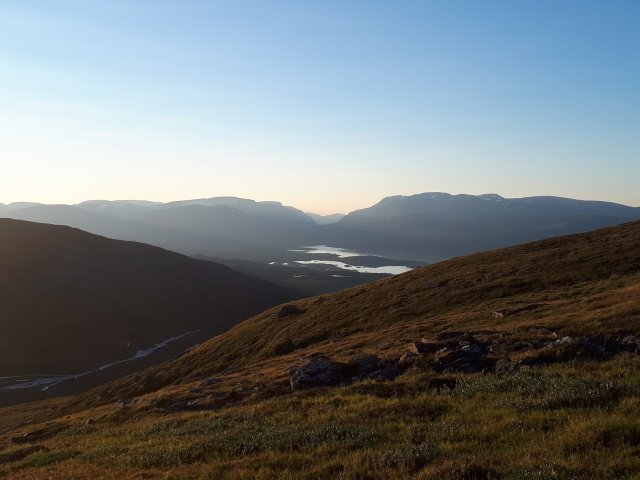
Now it is down to enjoying the sunset, listening to the cry of the golden plover, and take in the magic of the Arctic.

More soon!

Posted in General | 1 Comment

Data flows

Each year, we have a few days in which the data flows in like a tidal wave.

We go to Norway, to our  long-term observation gradients along mountain roads to check out on the temperature sensors we have out there. For the fourth year in a row, we can now add a whole lot of microclimatic data to our growing database, with very limited field effort required.

DSC_5675

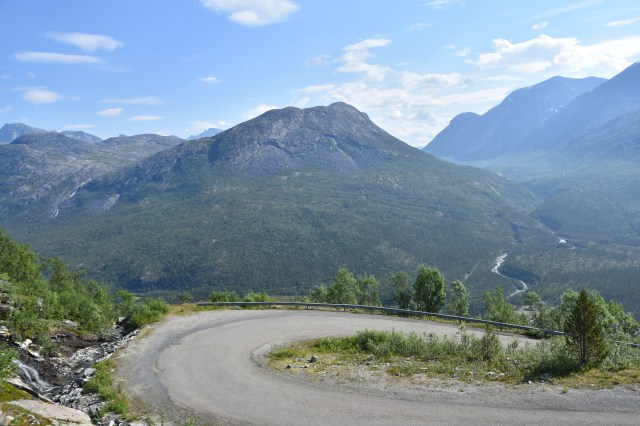
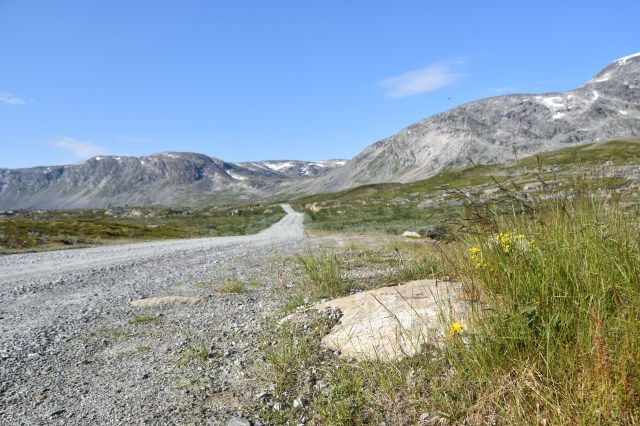
One of our mountain roads, within the longterm observational network of MIREN, the Mountain Invasion Research Network

This steady long-term data flow provides great opportunities for add-on projects. We look at leaf traits, root traits, soil conditions, mycorrhizae, bacterial membrane lipids… A whole variety of questions that all build on that beautiful backdrop that is our temperature data.

DSC_5719

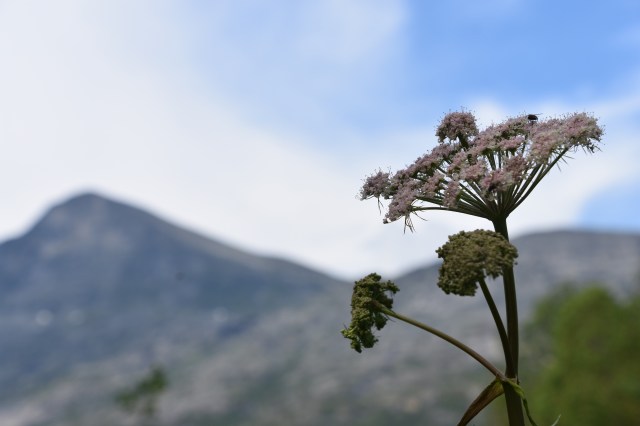
Studying plant species and everything related to them along Norwegian mountain roads

All of that brings a great set of data home, and next months will involve a lot of lab- and computerwork to get all of it figured out. Yet with every extra year in this field campaign, we start to know the system a little bit more, and we can put more and more pieces together.

DSC_5768

Close to midnight in northern Norway

And that is what makes this little trip to Norway feel so great: every year, you feel you understand it more and better. Every year, more questions have been answered.

DSC_5652

More questions will be raised as well – of course – but that is for ‘future me’ to deal with in next year’s field campaign.

DSC_5634

Posted in General, Norway | Tagged , , , , , , , , | Leave a comment

Hot

Fieldwork in northern Scandinavia, above the polar circle. What is the first things that come to your mind? Sunstroke? Shorts and t-shirts at midnight? Probably not.

And yet, that was what we got in the first days of this summer’s fieldwork trip to Abisko, Swedish Lapland. Temperatures easily rose all the way to 30 °C, and in the morning, the north of Scandinavia was even warmer than southern Spain.

DSC_5358

Temporarily bathroom at our camping site – with a view

While it is rather worrying to see more and more extreme weather events plague the north, I have to admit it did make for rather convenient fieldwork conditions in the mountains. We strategically chose this hottest day on record to camp out on the mountain while surveying plant species composition along mountain trails.

DSC_5452

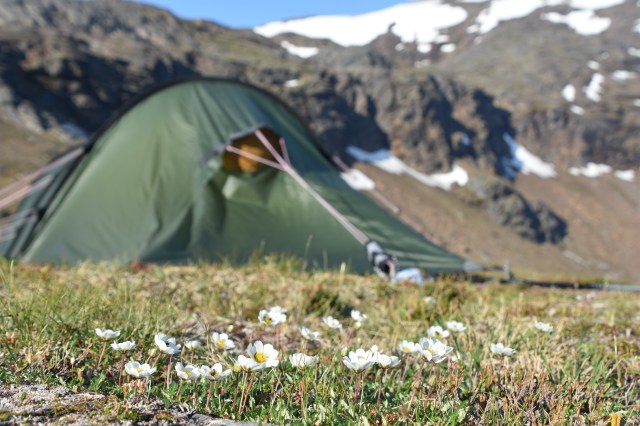
Camping spot in the mountains, with mountain avens (Dryas octopetala) in the front

Two days full of sun, mountain plants and nature, with a steady flow of incoming data, it again made northern Scandinavia in a mountain researcher’s paradise.

DSC_5391

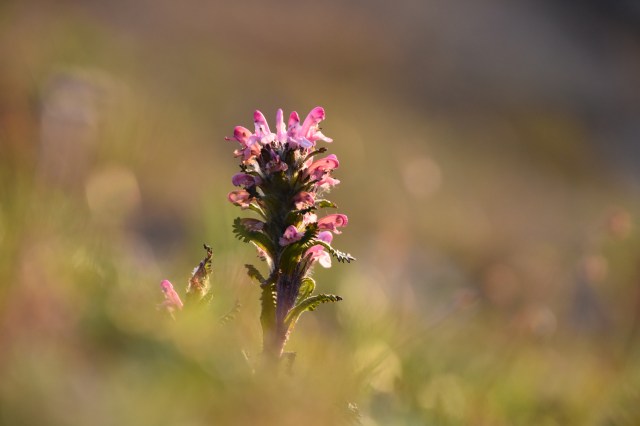
Pedicularis hirsuta, just one examples of the beautiful mountain plants we encountered

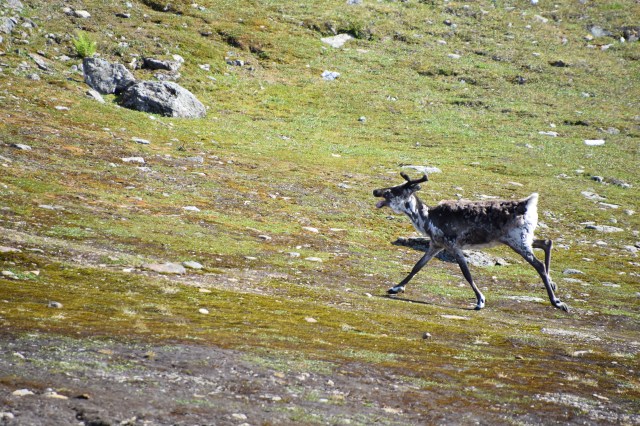
Now a much-needed thunderstorm broke the heat spell, and brought temperatures back to close-to-normal. Much needed, as the reindeer were seemingly suffering quiet a bit from the heat, searching for every bit of refreshment they could find on the retreating snow beds at high elevations.

DSC_5149

A reindeer in search of a cool snow patch, mouth open to cool down

More stories soon of what is turning into an amazing fieldwork stay – as usual.


Posted in General, Sweden | Tagged , , , , , , , , , | 2 Comments