Travelling the world

… without getting anywhere!

I am working on some very interesting global models now, bringing together all the data from our colleagues in mountain regions all over the world. I aim to bring together all this data to make maps of the distribution of our invasive plants over the world.
Fot - 2

It allows me to hop easily from Norway to Hawaii, from Australia to Chile, from Yellowstone to Switzerland. It is nice travelling to all these places, without the burden of taking the plane…

Okay, okay, I admit, not as good as actually being there, but it stays nice to keep the research broader than just my own little village. The patterns we find and will find, are true on a large scale, and that is increasingly important in science.
Fot - 1

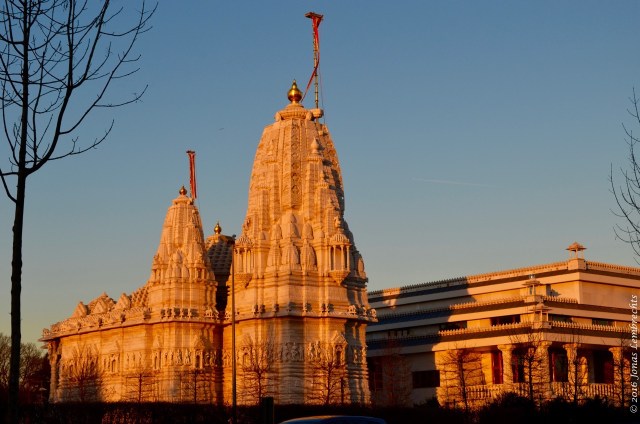
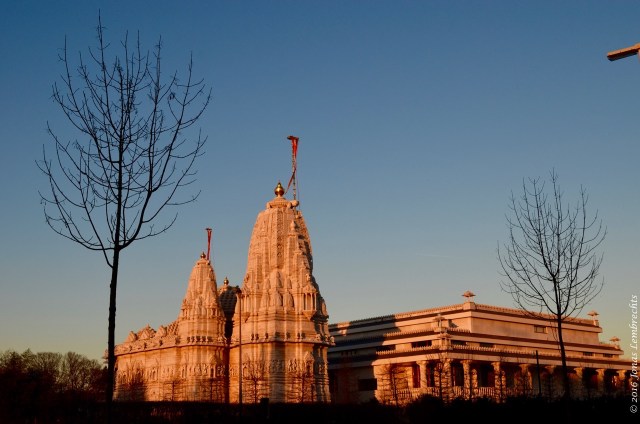
On the same note: I travelled to India, yet also without getting anywhere. There is a big (the biggest outside of India) Jain temple in Wilrijk, the place where I work, and in the evening sun it looked perfectly suited for every travel website. It took me only a quick stop on my way home, but it gave the real feel of India.

Posted in Belgium | Tagged , , , , , , , , , , , | 1 Comment

A fifteen minutes city trip

I am on a roll with my computerwork! With fieldwork being on hold till summer is back, I can thoroughly work on all the data analyses, and that is going very smooth.

With all that working inside, I feared however that I would totally miss the beginning of spring. Luckily, I had the opportunity last week for a fifteen minutes city trip to the ever-amazing city of Antwerp.

Fot - 3

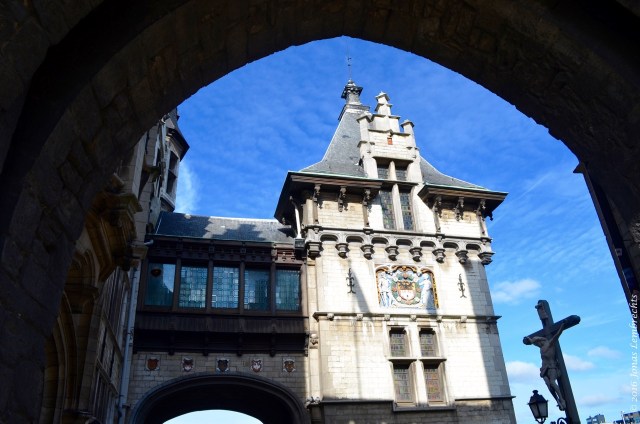
The inner tower of Het Steen, the old fortress on the shore of the river Scheldt

Sun was shining, the first hint of warmth was in the air, birds were becoming more active, the first few on my list of anticipated signs of spring could be crossed off.

Fot - 2

Beautiful view over the river Scheldt.

By the way, I can truly recommend the concept of the fifteen minutes city trip to everybody! When the sun is out, you do not need more time to breath in the atmosphere of a city. Important is, you should not hurry. Just use one landmark that would shine the brightest in the sun and take in its beauty. In that way, a fifteen minutes citytrip is always better than no citytrip at all.

Fot - 4

And after that, it is back to work with a fresh mind and fresh energy to get these awesome papers written!

Fot - 1

The statue of Lange Wapper and Het Steen.

Posted in Belgium | Tagged , , , , , , , , , , | 2 Comments

The road to publication

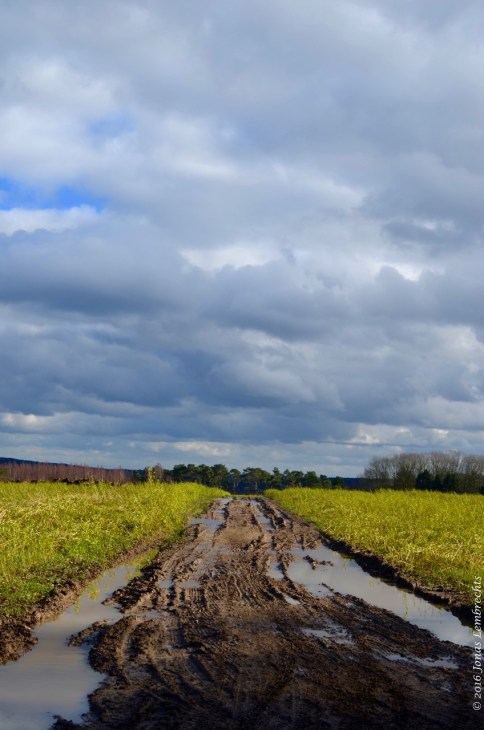
Sometimes, the road to publication feels a bit like this:

Fot - 5

Muddy road through a field in Loonbeek, close to Brussels

A combination of a nice little sun as a promise for a reward in the far future, and crazy mud that will slow you down for months. Or picture this:

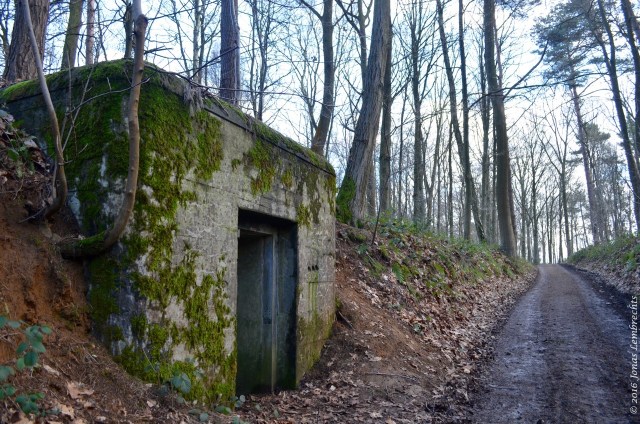
Fot - 18

Bunkers filled with mean reviewers shooting with painfully reasonable comments at your troubled brain…

But last week, a major hord was crossed for my next (and currently dearest) paper. ‘The authors have addressed all my points satisfactorily. I don’t have any further suggestions to add.’ What a relief! I got major revisions on that paper and when it took more than a month to get an update on its status, I got worried.

Fot - 11

Yet now, when the scary waiting is finally over, I can humbly admit that the review process worked perfect, again: the reviewers pointed out some true flaws in my paper. I adjusted them and made significant improvements to my manuscript. Good for me. Good for science. Good for everybody.


Posted in Belgium, Science | Tagged , , , , , , , , , , | Leave a comment

The elegance of tea

For the Dutch-speaking people here: I posted a story on tea on scilogs!

dsc_0139

It tells the story how I had to buy 280 bags of tea at the local supermarket to participate in the Tea Bag Index, a cheap and elegant solution to measure decomposition rates on a global scale, and thus improve our knowledge of climate change.

dsc_0161-1

Posted in Ecology, Science | Tagged , , , , , , , , , , , | 5 Comments

Lessons from history

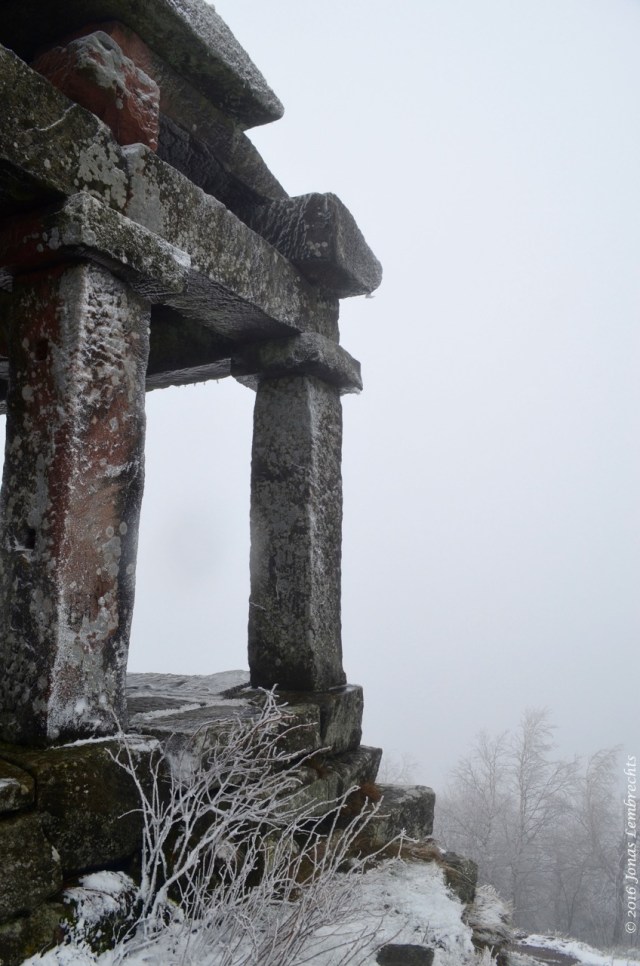
The Celts had been there. The Romans. Napoleon III. Soldiers had built stairs there for the German emperor. Century after century, people had climbed Le Grand Donon to overlook the world.

Fot - 17

It had made for a mythical place, one where humans and nature had finally been integrated into one. One where the human influence finally seemed to do less bad than good for a while.

Fot - 16

Coexistence. That feels like the key to me. A place that could host thousands of years of humans and still have the feel of its original roughness, that is a place where coexistence has been possible.

Fot - 14

I let the wind blow right through me, gave me over to the power of nature and imagined I felt just like the Celts and Romans thousands of years before me.

Fot - 21

Coexistence seems to be hard to find in my research, where human disturbance of the vegetation turns out – time after time – to be the most important driver of change.

Fot - 9

Unfortunately, this disturbance often goes further than a little temple on the top.


Posted in France | Tagged , , , , , , , , , , , | 11 Comments

Microclimate!

It is that time of the year again: when the weather nicely reveals the effect of microclimate on the landscape.

Fot - 3

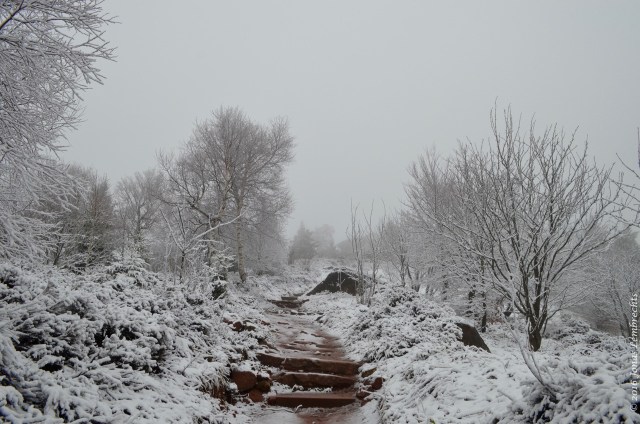
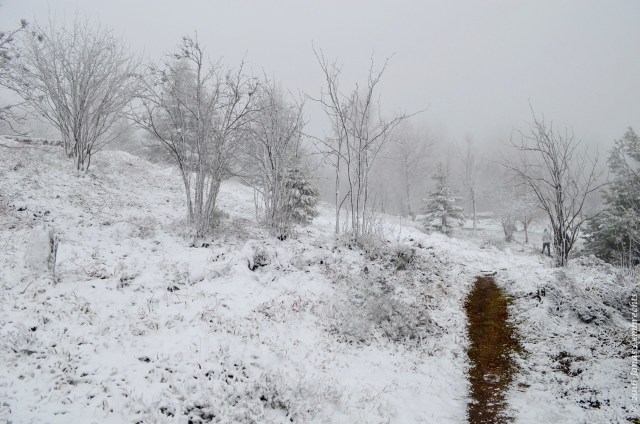
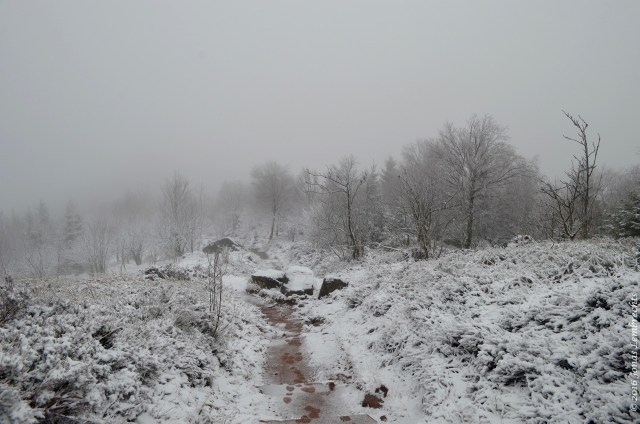
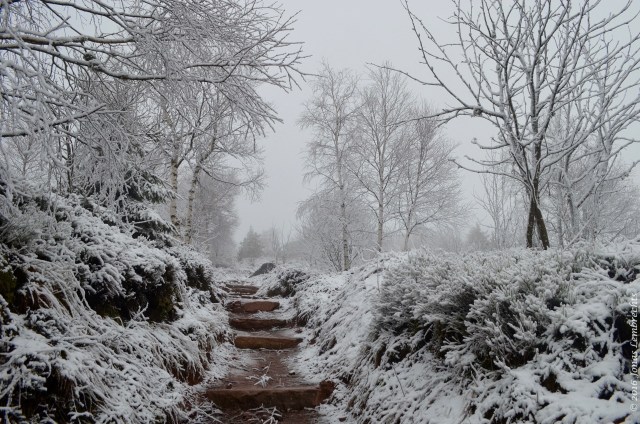
If the world gets covered in a thin layer of snow, we can quickly see which spots are colder than others.

Fot - 26

And that knowledge reveals some interesting patterns that would otherwise easily stay unnoticed. These patterns are very important for my research, which is why I am happy to share them with you.

Fot - 4

It is easy to see what happened in this series of pictures. The snow covered the whole top of the mountain in a nice blanket, except for the trail. There, the snow did not want to stay, at least not at this intensity. We were the first (and maybe the only…) hikers of the day, so it was not a question of high traffic. More likely, it was a slight but significant difference in temperature between the vegetation and the open, disturbed, trail.

Fot - 2

So it turns out our trail is slightly warmer than its environment, which might be a good thing. Yet, there is another side to this story: Even though the trail might be warmer at the moment, it will end up having no protective snow cover. When temperatures drop during the night, the soil surface on the trail will drop substantially more on the trail then around it.

Fot - 21

Posted in France | Tagged , , , , , , , , , , | 6 Comments