This post first appeared on the MRI mountain blogs.
In the discipline of mountain invasion, the enemy has many faces. Some are large and visible, marching uphill in plain sight. Others are small and sneaky, slipping invisibly and unnoticed behind your back. The problem is: it is not always the big and visible enemies that matter most.
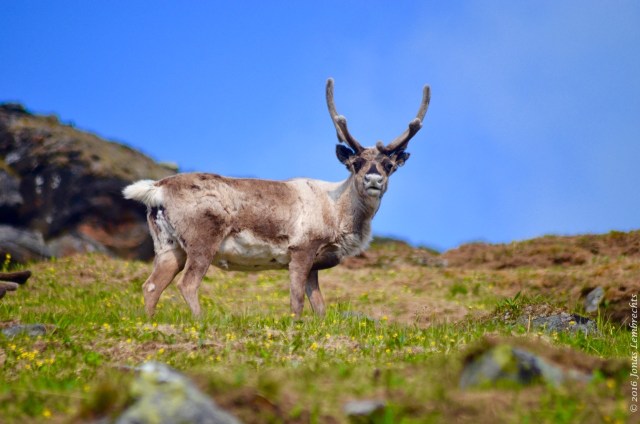
Reindeer herding and migration may increase the rate of pathogen introductions in cold environments, especially under warmer conditions.
It is hard to keep track of all these different faces of the enemy when one stays within his own research discipline. If we want to tackle the global problem of mountain invasion, at least as many different ecologists will be needed as groups of invading species. A recent paper in Biological Invasions describes what might be the world’s first effort ever to use strategic alliances against mountain invaders. The paper shows how 22 scientists with expertise covering all major organism groups and geographic regions joined forces to tackle questions about mountain invasions. Their aim was to find new ways to deal with novel species interactions and the immediate threats posed by emerging invasive species.
The main conclusions of the paper are painfully clear: the main pathways for species invasion into the mountains, whatever the species group, are anthropogenic. This we know very well from the big and visible species groups, like the non-native plants that so clearly follow mountain roads towards higher elevations. It is likely, however, that less visible species like fungi, insects and pathogens also use some kind of human-created pathways. They all have their own (sometimes very devious) ways to hitchhike to the top.
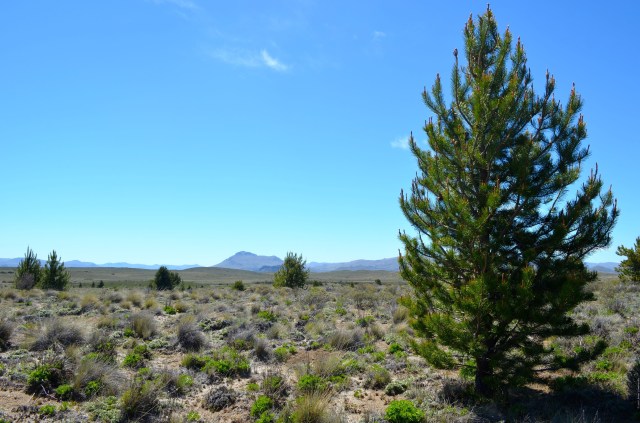
Mycorrhizal mutualism is needed for Pinus contorta to invade in South America.
The main outcome of all these moving species (as both natives and non-natives are hurrying uphill nowadays) is totally new sets of species in the mountains. These shifts in species composition will have important effects on those species that have to welcome the newcomers, and those that are not as fast to join the uphill rush. For now, the effects of these new species interactions remain largely unexplored. It is likely that negative effects can be expected, for example through the invasion of diseases and pathogens into cold environments.
To tackle these complex problems in a changing world, collaborations are our only hope. As shown by the recent paper in Biological Invasions, steps in the right direction have already been taken. Many scientific questions however remain, so future collaborations should be encouraged. Because as we all know, many watchmen see more than one.
Reference:
Pauchard et al. (2015) Non-native and native organisms moving into high elevation and high latitude ecosystems in an era of climate change: new challenges for ecology and conservation. Biological Invasions. DOI 10.1007/s10530-015-1025-x
















 The 3D lab