Science spam

That it was an interesting and informative read, she wrote me about my latest paper. Happy that I took the time publishing it. And if I wanted to consider writing a follow-up for them. They even had been in contact with other scientists in the field that were working on similar things, and discussed some promising future collaborations with them.

Oh yeah, and she was Editor at the ‘Internal Medicine Review’.

Science spam is a peculiar thing, and I always read such e-mails with a lot of interest. I know it is inevitable to get countless e-mails like this if you publish your address with your paper (which we have to do), but the creativity with which some of these e-mails are written makes you realise how big of a business this actually is.

Of course, my research would never ever fit into the Internal Medicine Review, nor would I  ever dare to consider going to the International Conference on Science and Engineering in India or whatever fancy looking title they gave it now; but I can imagine that they will find a few people interested, as long as they try hard enough.
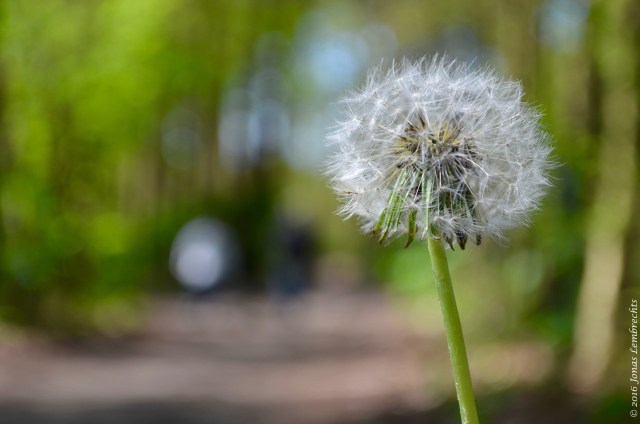
Dandelion - 1

Journal spam is like dandelion seeds: many trials with a low input, hoping one somewhere somehow reaches the right person/soil to succeed

I like to compare this strategy with what we see in a lot of plants: producing thousands of seeds, blindly launching them into the air, and hoping that at least somewhere, sometime, one becomes successful. It is a strategy that works – low input, many trials – but it lives from the power of the numbers. So we will have to forgive them for not checking what my paper was actually about, as that would become so time-consuming in large numbers that their strategy would be doomed to fail.

Posted in Science | Tagged , , , , , , , | Leave a comment

The little hut in the forest

20128328988_c0a41cc976_o

When we first went to Norway in the summer of 2012, we had long searches for the perfect camping spot: close to the little village, next to the river, on top of the mountain… We scouted and tried several places, until one day, we found perfection.

20289997856_ff3aac14b0_o

We found a little hut in the forest, close to the river, right at the foot of the valley. There was a fire pit, a toilet hut, blueberries all around and a little bird nesting in a bird house close-by. And the toilet had trees growing on its roof. Perfection.

19161665240_dfed5d9677_o

The hut was closed and empty,  yet the neighbourhood just came out of a fairytale, so we put our tent on a grassy strip close-by.

20128473610_bc4ccfbf81_o

The next years, we always went back to our campsite of perfection and we spend some great (and sometimes rainy) nights there while working in the Norwegian mountains.

20128410588_eeaee81599_o

Now for this year, I planned for an upgrade. I found the hut on the internet, and we can actually make a reservation for the night! Getting the key will be a bit scary (we’ll have to contact them for the code of the lock), but once insight, we will be safe for the crazy rains we have had there so often.


Posted in Norway | Tagged , , , , , , , , , , | 5 Comments

Learning

Baby animals - 1

Lion cub hunting its mother’s tail

A PhD is a lot about learning. Although I am ‘really’ working for ‘real’ money; and I feel (and act) like a scientist, there is the ‘student’ part in PhD-student that should never be neglected.

Baby animals - 2

Mom and baby ring-tailed lemur

Although I am not truly a baby animal that needs to learn to make its first few steps in the dangerous world, there is a lot of stuff out there to learn for a scientist. That learning process needs some time and, at least as important, it needs some more experienced people to learn it from.

Baby animals - 4

Baby capybara

I am convinced I would never have gotten as far as I am now without the combined input and support of so many people. And still, there is a lot more that the ‘student’-part of me needs to learn from my supervisors before I feel I can truly call myself a scientist.

Baby animals - 3

Mommy giraffe supporting her baby

But there also is another side to this: the PhD is the time to learn new methodologies and spend time trying (and failing). As your academic career continues, you will have less and less time to dive into a topic or a method. You will have gotten faster and better at performing most relevatn tasks, but to reach that level, big chuncks of time are needed to get truly familiar with it.

So I am glad I am not thrown out there just like that and that I can carry the name of student for a little while longer. In the meantime, I’ll just try to get as much out of it as possible!

Posted in The research | Tagged , , , , , , , , , | 2 Comments

Blossoms

Spring blossoms - 2

Buttercups and blossoms from around Beersel, south of Brussels

I arrived at that point in my PhD in which future project ideas grow wilder than the yellow buttercups in this meadow.

Spring blossoms - 3

As could be expected, finding the answers to my first set of questions brings lots of inspiration for new ones. But getting to know the possibilities, the available methods but also the other scientists in the field, all of that sparks new ideas and solutions.

Spring blossoms - 1

It is important for me to encourage this blossoming of ideas, if I want to continue with what I’m doing when my research grant runs out. That is of course still in the future – more than two years to be precise – but to continue after that I will need a solid future plan, and that deserves some time to ripen.

Spring blossoms - 4

We are also always in search to strengthen our research beyond what I am doing. It would be fabulous to set up some more solid collaborations with other scientists. As such we can make sure many more questions will be answered than I would ever be able to answer within the short timespan of my PhD.

27034086266_88f0fb3606_o

And let answering questions be exactly what I hoped for in science!

Posted in Belgium, General | Tagged , , , , , , , , , , , | Leave a comment

Come together

One of my favourite study subjects is all over the news this week! Yet, it is a bit in an unusual manner: I am talking about the dandelion (Taraxacum officinale), the symbol of the upcoming Eurovision Song Contest!

Dandelion - 1

There is not much that I have to do with the Eurovision, except that they chose the dandelion for its well-known ability to spread super fast with its tiny little parachutes.

Dandelion - 2

Let that be exactly the reason why they are so interesting for me as well: they use their tiny parachutes to stay at the forefront of climate change ànd to invade new ranges all over the world!

Dandelion - 3

Or as they say it themselves: “most people can relate to it. It has an enormous growth potential, it is widespread across Europe and it can move”. They do let the parachutes fly in reverse, though, back to the mother plant, which rarely happens in my research, but let us just be happy for the little plant’s week of fame.

Posted in Science | Tagged , , , , , , , | 3 Comments

Ready

image

Totally ready for this summer, thanks to my new Fjallflora! The compact version of my Floran, with a focus on the mountain species. The same amazing drawings, just smaller :-).

Posted in Sweden | Tagged , , , , , , | Leave a comment