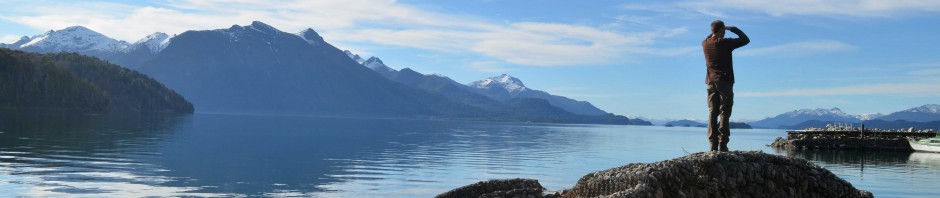
I’ve always considered field work to be a kind of treasure hunt, one in which I march up and down mountains, shading my eyes against the sun in search of the next tell-tale clue. I like to imagine that this is at least how my non-science friends think about me and the fieldwork I do in remote parts of the world. The reality does have these treasure hunts, albeit maybe slightly less poetic than I might have hoped.
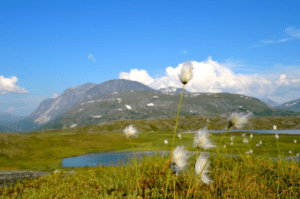
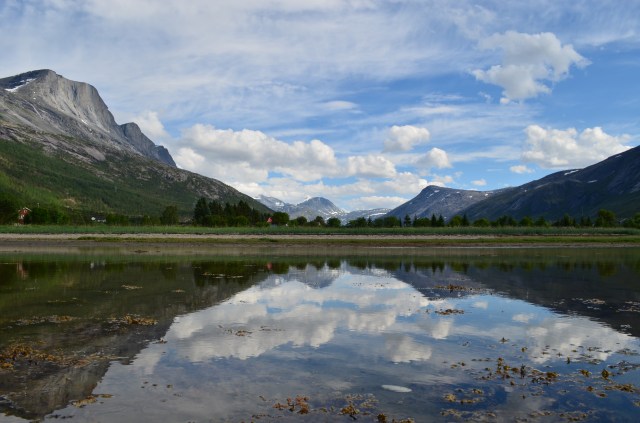
Fjords and lakes, ahoy! A perfect day for fieldwork.
Ecological fieldwork in the mountains can be challenging. There are days you wish that you were cozily stacking test tubes in the lab, or safely analyzing data in the office. Some days, battling rain, cold, mosquitos and 50-kg packs that don’t include lunch just doesn’t add up to a dream job, even if you’re working in a dream location (if only you could actually see it beyond the clouds!) And then there is the work itself, which brings with it its own set of difficulties.
Just imagine: hundreds of soil temperature sensors, only one cm in diameter each. Let me tell you from my own experience: that is super tiny, especially when you scatter them in the soil over a large area in the Norwegian mountains. Then, just to test our scientific dedication, we leave them for a year before – fingers crossed! – retrieving them and their valuable data.

Soil temperature sensors, ready to be hidden in the mountains
We started this game of scientific hide-and-seek last July, and will soon return to our plots in the Northern Scandes, above the polar circle in Norway. We will indeed shade our eyes as we look out over fjords and steep slopes, but that will be in between staring hard at the ground as we use our best treasure-hunter skills to re-find our little sensors.
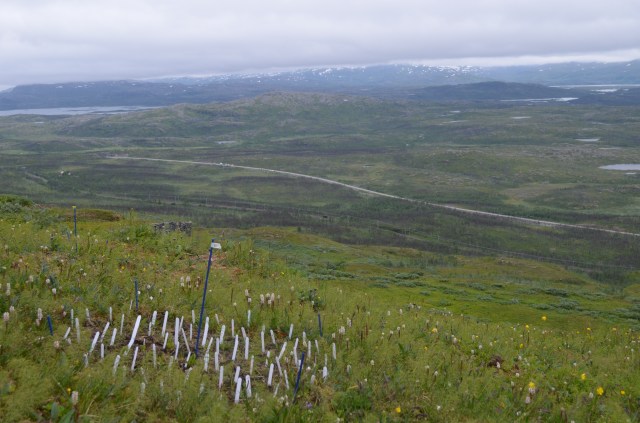
Of course we are not going to build our luck of re-finding these treasures on our memories alone. We will come prepared. Accurate gps coordinates. Colourful plastic sticks poking out of the ground at the exact locations where we planted the sensors. Pictures of the plots from afar and from up close. A written description of where to find them. A metal detector. A little metal rope from the sensor – 3 cm below the surface – to the marking stick. In short: we took all possible measures to make our hunt successful.

Sticks marking the sensor
We are not in the lab, nor seated comfortably at the computer. No, we are out in the vast Scandinavian mountains. All these extra measures are not a luxury, but rather a necessity for ensuring that our chances of re-finding the sensors are actually somewhat better than finding a needle in a haystack. Luckily, our hunts are usually fairly efficient, thanks to all these back-ups. Very few of the sensors disappear during their year out in the wild. In fact, the metal detector has rarely been necessary. Yet we do have some enemies here:

A lemming screaming at us for stealing ‘his’ sensor.
Lemmings! Even though our find rate is currently above 90%, there are a few sensors that go permanently MIA. Almost all of these disappearances show traces of rodents, the cute little bastards. Probably, they love to decorate their nests with them. Although I would not usually deny a fluffy rodent any decoration for its nest, it would be much more worth our project money if we could actually use our sensors for what we bought them: linking the yearly temperatures to the distribution of plant species in the mountains.
So the game is on! Let us again aim for more than 90% again this year. Let us hope for a bad lemming year, no landslides, no crazy human disturbances, no surprises… For science!
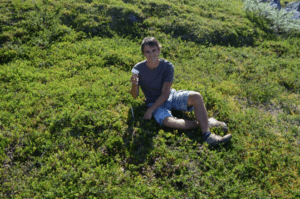
The author, happily re-finding a sensor.


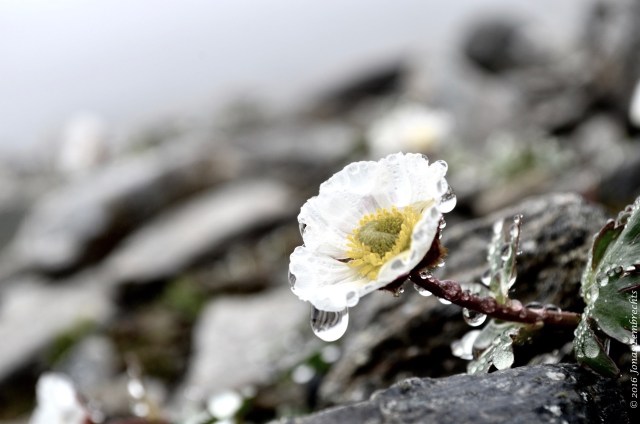



 The 3D lab