The photographing ecologist got an update of his photographing gear, and that is amazing news! Most notoriously, I now got a 18-300 mm lens, a lens famously called a ‘holiday lens’, as it is perfectly suited for holiday trips where you do not want to take several lenses.
This holiday lens is the perfect allround lens, with an incredible range: it can both handle the wide angle ànd the close-up, all of that in just one twitch of the wheel.
While the critics say that you give in in quality if you want to have the whole range in one lens, this extreme flexibility is a blessing for a photographing ecologist (details of what that is, can be found here). As in my job, photography is only secondary. To let the work come first and still achieve breath-taking pictures that tell a story, speed and flexibility are key, and this 18-300 mm allows exactly that.
As the first trials show, the options are promising. Yes, the quality might not be as perfect as in the more expensive – less agile alternatives, but these minor details, the difference between very good and slightly better, do not weigh up to what the lens can do for me: allowing me to quickly jump from the closest to the furthest.
Last week, Hans Rosling died. Who, you might ask, and why mention him? Well, he might have been one of our few statistical heroes, a man who dedicated his life to the spread of knowledge through the correct use of statistics, and to me, that’s enough reason to honour his passing. If you have a spare hour, I strongly recommend you to watch this video of him, as an example:
Trust me, it is worth it. And as soon as he starts talking, you will be hooked, as he was a very gifted speaker; and statistician of course.
The story he tells here is about the world’s population growth, and the population boom we are currently undergoing.
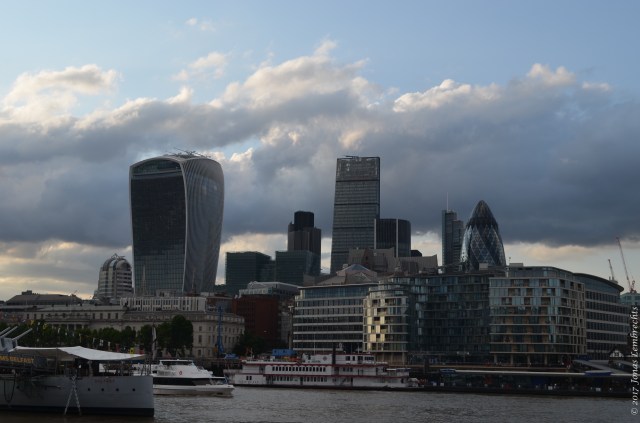
More people live in cities than ever before in human history. Here, London
The best part of the talk is that, even while you think you know the basics of the story (the booming population growth resulting from a time difference between the improvement in health care and the reduction in family size), he can still blow you off your feet.
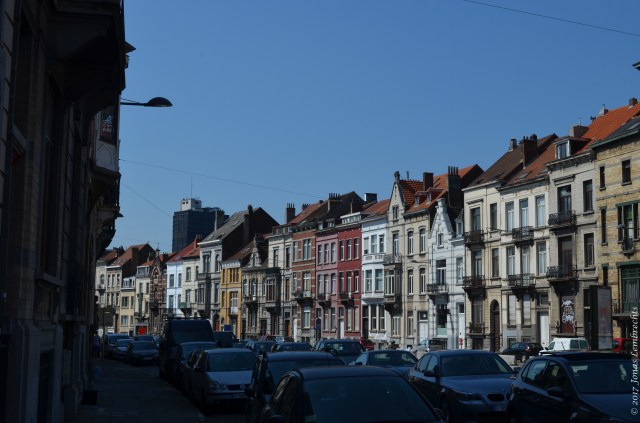
Brussels
And what he wants to convince you of in this video narrows down to this: don’t panic! It is not all as bad as it seems. Countries everywhere in the world are evolving, people are fighting their way out of poverty and the average family even has only 2,5 children anymore, even in less wealthy parts of Asia.
Yes, that last value might be surprising, yet it is most certainly true: we have reached – as he calls it – ‘peak child’. There won’t be more children between the age of 0 and 15 anymore in the future, the number will stay constant at 2 billion.
Delft, the Netherlands
But why is the population still growing so tremendously, even if we reached ‘peak child’? In short: pure mathematics. While there are not more children being born anymore, so the population boom is theoretically over, there are still less old people dying, and that will inevitably be the case till we reach a stable world population at 9 billion. So yes, population is still growing tremendously. However, and that is the big surprise that statistics can show us: this population boom is not at all due (anymore) to uncontrolled child births in extremely poor parts of Africa and Asia.
Antwerp
And even though it might still look at first sight like things are rapidly getting out of hand with our little world, Hans Rosling convincingly shows that it is not all as bad as you think. The population growth is fixing itself, and the world is rapidly taking care of extreme poverty as well. Climate change is the next tough issue to tackle, but it is worth it to stay optimistic that we find solutions for that as well. But who is better suited to convince you about that than Hans Rosling himself? The answer is right there in that beautiful piece of video.
Recently, I have been giving more thoughts to the human influence on nature in our own country. When walking through Flanders, it soon gets obvious that humans are everywhere. Even more, it is clear that the pure, undisturbed nature is gone completely in the region, and has been for many years.
What we have left is a few, scattered patches of half-nature: parks, a few patches of forests, heathlands… A sad notion, indeed. And still, walking through the same Flanders, you can find a lot of potential, if you know where to look.
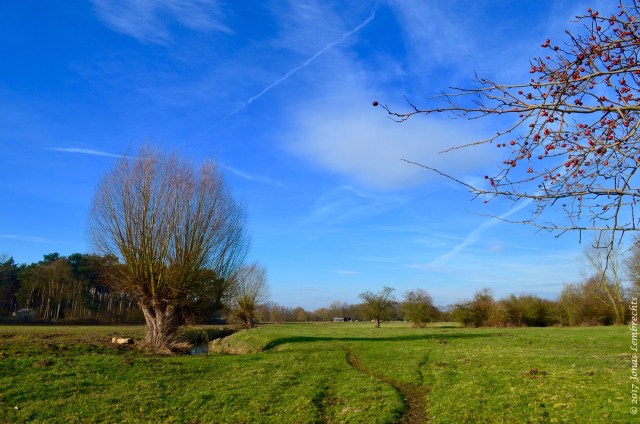
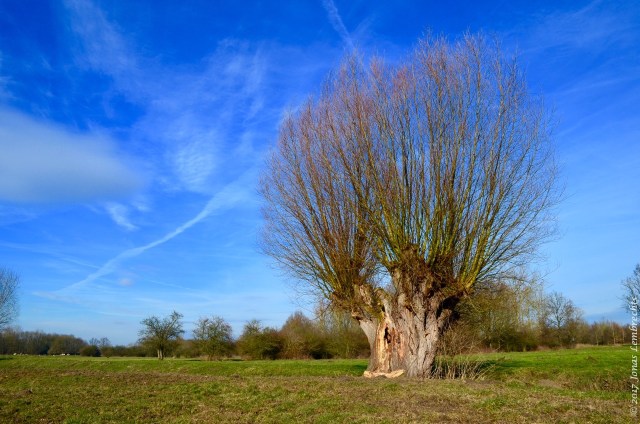
This knotted willow, for example, on the shore of a little stream close to Mechelen, in the populated center of Flanders. A tree that would not exist without humans, a tree that would never look as stunning without our help. A micro-environment for plants, insects and even birds. It might not be what it was before, but it definitely stands in its own right.
Fruit for thought, for sure. To keep out the depression, at least, and believe in a future where humans and nature can live in harmony. Yet definitely not to justify further destruction of the nature we have left.
Our research center – the excellence center on Global Change Ecology – started its own blog! Unfortunately for the international audience here, the blog is in Dutch, yet it featured my recent article on the difference between climate and weather!
Blinded by a snowball, now as ‘verblind door een sneeuwbal’ on the global change ecology blog
We hope to bring up to date and scientifically supported posts on all factors of global change that are covered in our group: climate change, climate extremes, invasive species, nutrient cycling, habitat fragmentation and many more… As the center on global change ecology is a collaboration between 3 research groups, we have the chance to approach these problems from all possible sides, and advance faster to solutions!
Contributing to the understanding of our changing world, one discovery at a time.
What I love about winter is how it accentuates the lines in the landscape.
Yet the most important lines of this season are the deadlines, and this January had quite a lot of them.
We submitted two big projects that – if all goes well – could result in major expansion of our research on plant invasions. Throughout the years, we discovered many more things that we do not know yet, and it would mean a lot if we could go on a hunt for the answers.
For now, it just means waiting… When summer is back upon us, the wait will be finally over.
There once was this US senator who brought a snowball to the parliament to proof climate change is not as bad as we wanted him to believe.
A small act, you could even call it a joke, yet it pops up in my mind every time our world is covered in snow and ice. Yes, it is cold, it can even be extremely cold, it can even snow in Spain and the Sahara. But that does not mean climate change is less real.
Being blinded by a bit of snow is a common misconception. The senator with the snowball could do with a look at the video of the man who walks his dog, showing the difference between trend and variation. The happy dog hops around, going left, going right, going straight, sniffing and looking. His trajectory highly unpredictable. Yet, slowly and steadily, he is going towards the upper right corner of the panel. Even though every next step of our little buddy could surprise us, we still now he is going to end up there. And that is because of the owner, the man on a line, the trend line. The dog symbolises the weather, unpredictable in its every move. The owner is the climate, slowly and steadily warming.
We know this is happening. We do not need the absence of snowballs to proof it. You can see it in our longterm data, like this beautiful, yet shocking, timelapse of the worlds temperature from 1880 till now:
So we should not look at the variation, but at the trend. True. But what if our steady-walking owner is not going in a straight line? He might make some turns as well? And that brings us to another argument of climate change deniers: if we zoom out far enough – let’s say a few thousand or even million years – our owner has been walking all over the place. He has been higher, he has been lower, he has been everywhere.
True. Our climate has seen some variation in the past. Yet we know now that our owner now is climbing an increasingly steep slope. We know that such steep slopes have been extremely disruptive for biodiversity in the past. And we also know that it is our emission of greenhouse gasses that is chasing our guy uphill. Clearly he has been everywhere, but rarely he moves so rapidly, and when he did, it was often catastrophic for live on earth.
Earlier this week I went to a lecture from Jens-Christian Svenning, a scientist from Danmark. He studies longterm effects of climate on biodiversity, and his story is fascinating. He showed that our world is still catching up to climate events from the past, some of them even millions of years ago. The fact that we do not have some species in the Scandinavian mountains that could be there based on where they live in the Alps, or that we do have tons of palm species in the Americas yet relatively few in Africa, it is the result from longterm changes in the climate. This shows how long-lasting the effects of a change in the climate can be. Climate change effects in the past have been big, and their legacy is still felt in the present. Then what to expect from this sudden, massive change in climate that is currently upon us? How far will these effects go? But what this shows most clearly, is that species adjust their distribution to changes in the climate, yet that they are limited in how far they can go.
So yes, the owner is the trend, but that does not mean that the dog does not matter! On the contrary. Extreme weather events, from one year to the next, can have a massive influence on our world. One big frost or drought is sometimes enough to disrupt a whole ecosystem. Indeed, plants and animals do not experience the trend as it is, no, they experience the weather from day to day, often even with small-scale variations over distances of a few meters (or less!).
So, why bother with the owner as it is the dog that is felt in reality? To grasp that, you best check the first video again. Our dog is following the same route as his owner, albeit not directly. We know that the owner/trend will end up at the top right (if nothing changes his path), even when the dog sometimes heads down. Moreover, yet not shown in our little video, we know now that on his way to the top, the dog is getting more and more excited. Climate change is resulting in more extreme weather events, the dog starts to care less about his owner: more ups, more downs, more jumping all around. As it is these ups and downs, these extremes, that are felt by those living on our planet, this obviously creates additional strains on the living world.
So where does this leave us? The smallest scale matters. Yet if the trend is moving upwards, the small scale will follow. More extremes might force the world to adjust rapidly. Yet we know from looking at the past that there is a limit to the adaptability of species. Cross that line, and they are inevitably lost. It leaves us with the conclusion that we should take our climate seriously, and not just throw snowballs and move on.
Want to know more? Check out skepticalscience.com for more common misconceptions about climate change.
Lake Törnetrask, Abisko Research Station, Abisko, Sweden
Narvik, Norway
Norway
Lake Torneträsk
Phyllodoce caerulea
Diapensia lapponica in one of our plots
Eriophorum vaginatum
Laktatjakka valley
Angelica archangelica along mountain road in the northern Scandes, Norway
Lake Törnetrask, Abisko Research Station, Abisko, Sweden
Lake Torneträsk, Abisko, Sweden
Common heather
Narvik, Norway
Abisko, Sweden
Hair’s tail cotton grass
Skjomen valley, northern Norway
Pinus sylvestris, Narvik, Norway
Narvik, Norway
Epilobium angustifolium
Narvik, Norway
Luscinia svecica, Abisko, Sweden
Trifolium repens
Narvik, Northern Scandes, Norway
Lake Torneträsk, Abisko, Sweden
Norway
Sweden
Little red-and-white lighthouse
Seen from Nuolja, Abisko
Luscinia svecica
in the Skjomen valley
Skjomen valley, northern Norway
Norway, Narvik
Hallerbos 2017
Young bluebell (Hyacinthoides non-scripta) surrounded by flowers of yellow archangel (Lamium galeobdolon)
The common bluebell (Hyacinthoides non-scripta), the signature flower of the Hallerbos
Single bluebell flower surviving on a wetter spot, as indicated by the field of wild garlic (Allium ursinum)
A really wet patch of forest, with giant horsetail (Equisetum telmateia) in a field of wild garlic (Allium ursinum)
Wild garlic (Allium ursinum) in the Hallerbos flowers a bit later than the bluebells, yet this one was already in full bloom
A bumblebee visiting yellow archangel (Lamium galeobdolon)
A bumblebee visiting yellow archangel (Lamium galeobdolon)
Wild garlic (Allium ursinum)
Wild garlic (Allium ursinum)
Weirdly beautiful, the inflorescence of pendulous sedge (Carex pendula), typical for the wettest spots in the forest
Weirdly beautiful, the inflorescence of pendulous sedge (Carex pendula), typical for the wettest spots in the forest
A little stream in the Hallerbos, surrounded by endless fields of wild garlic (Allium ursinum)
The herb-paris (Paris quadrifolia), less common in the forest
Wild garlic (Allium ursinum)
Bluebells (Hyacinthoides non-scripta)
Weirdly beautiful, the inflorescence of pendulous sedge (Carex pendula), typical for the wettest spots in the forest
Another one from the wet plots: large bitter-cress (Cardamine amara)
Another one from the wet plots: large bitter-cress (Cardamine amara)
Young beech leaves, as soon as they are fully grown, spring in the understory is over
A beech forest without understory, most likely too dry and too acid for any survivors
A young beech seedling (Fagus sylvatica), looking nothing like a beech, yet everything like a tiny dancer
Young beech seedling (Fagus sylvatica)
Bluebells (Hyacinthoides non-scripta)
Bluebells (Hyacinthoides non-scripta)
Bluebells (Hyacinthoides non-scripta)
Mountain melick (Melica nutans), a grass in the most amazing green
Bluebells (Hyacinthoides non-scripta) in a rare patch of mountain melick (Melica nutans), a grass in the most amazing green
Bluebells (Hyacinthoides non-scripta)
Bluebells (Hyacinthoides non-scripta)
Montpellier 2017
The entrance to the cathedral of Montpellier
The cathedral of Montpellier
The entrance to the cathedral of Montpellier
The cathedral of Montpellier
Narcissus poetics
The cathedral of Montpellier
The botanical garden of Montpellier
The botanical garden of Montpellier
The botanical garden of Montpellier
Brackish Camargue vegetation
Brackish Camargue vegetation
Brackish Camargue vegetation
A typical lagune
Brackish Camargue vegetation
Camargue horses
Camargue horses
Camargue horses
Brackish Camargue vegetation
Brackish Camargue vegetation
Brackish Camargue vegetation
Camargue horses
Brackish Camargue vegetation
Little egret in the evening sun
Flamingo’s in the evening sun
A typical lagune
Dandelion fuzz
Grass lily
Grass lily
Dandelion fuzz
Veronica in a sea of poplar fluff
Euphorbia in a sea of poplar fluff
Poplar
Gare du Midi, Brussels
Gare du Midi, Brussels
Gare du Midi, Brussels
Gare du Midi, Brussels
Sweden autumn 2016
Autumn in Abisko
Yellow leaves of mountain birch, with lake Torneträsk in the background.
Lapporten, the gate to Lapland, in Abisko
Rain blowing over the Abisko National Park
The colours of the north: red fireweed and yellow mountain birches, with lake Torneträsk on the background
Yellow leaves of mountain birch, with lake Torneträsk in the background.
Rain on the background, the ski lift in Abisko on the foreground
The steep slope of mount Nuolja on a dramatic looking morning
The beautiful colors of lake Torneträsk in Abisko
A little stream on top of the mountain, with a view on Lapporten, the gate to Lapland
Well, that is a beautiful table with a nice view on lake Torneträsk in Abisko
Our little experiment on top of the mountain in Abisko, with a view on Lapporten
Autumn in Abisko is extremely colorfull
The ski lift with a view on Abisko National Park and Lapporten
Hiking dowhill towards lake Torneträsk
This green is greener than the greenest green: moss on top of mount Nuolja
Well, that is a beautiful table with a nice view on lake Torneträsk in Abisko
The ski lift with a view on Abisko National Park and Lapporten
The ski lift with a view on Abisko National Park and Lapporten
The most beautiful hiking trail of the world: Nuolja in Abisko
Angelica archangelica, often the biggest plant of the Arctic
The most beautiful hiking trail of the world: Nuolja in Abisko
Cirsium helenioides, the melancholy thistle
Hiking down mount Nuolja
The steep slope of mount Nuolja on a dramatic looking morning
The colours of the north: red fireweed and yellow mountain birches, with lake Torneträsk on the background
The prettiest yellow and blue: autumn in Abisko
Fireweed, Epilobium angustifolium
Campanula or bellflower, I think ‘uniflora’
Vaccinium myrtillus
Cornus suecica, the prettiest red of the world
Hieracium alpinum, alpine hawkweed
Carex atrata, one of my favourite sedges
Alpine clubmoss, Diphasiastrum alpinum
Agrostis capillaris, bentgrass
Common yarrow (Achillea millefolium)
Anthoxanthum odoratum, sweet vernal grass, fully grown and mature
Snow scooter trail
Our plot in the mids of a field of horsetails (Equisetum pratense)
Equisetum pratense
Cliff overlooking the valley with the road to Norway
Seedling of Taraxacum officinale, the dandelion, after two years of growing in bad conditions
Poa alpina, the alpine meadow-grass, with its viviparous seeds
Massive flowerhead of Angelica archangelica
Angelica archangelica
Blueberry (Vaccinium myrtillus) in autumn
A lowland marsh in Abisko in autumn
Installing the plots of our trail observations on top of mount Nuolja
Installing the plots of our trail observations on top of mount Nuolja
Tanacetum vulgare (Tansy), non-native for the high north
Autumn forest down in the valley
The valley of Nuolja to Björkliden
Summer on the Nuolja-side
A full rainbow behind mount Nuolja in Abisko
It’s raining in the west, clouds trapped behind the mountains
A strong wind blowing rain from behind the mountains to our side
A strong wind blowing rain from behind the mountains to our side
Betula nana, the dwarf birch, mini autumn forest
Betula nana, the dwarf birch, mini autumn forest
The valley of Björkliden in autumn
The valley of Björkliden in autumn
The valley of Björkliden in autumn
The valley of Björkliden in autumn
Sweden spring 2016
A rainy hike
Bartsia alpina
Melting snowpatch on a lake
Although the alpine zone has been harder for invasives to access than most places, human structures like trails are often an easy gateway for the invaders to get up there. Picture from Abisko, Swedish Lapland.
Silene suecica
Overlooking the valley of Laktajakka
Dryas octopetala
Ranunculus glacialis
Rubus arcticus
Trifolium pratense
Ranunculus glacialis
Eriophorum vaginatum
Salix reticulata
Western European species like the red clover (Trifolium pratense) here are often listed as non-native species in mountain regions.
Trifolium repens
Silene acaulis
Oxyria digyna
The valley of the lakes
Cornus suecica
Amiens
Cathedral at night
The museum behind the beautiful gates
The southern side
Colourful mirror
View from my office window
House on the square before the cathedral
Sun rising above the water
Sunny but cold, the Quai Bélu
Cathedral with a glimpse of spring
Maria without a shirt
Gargoyle planning to eat the cathedral
Cathedral at night
Winter sun on the Place du Don
View from my office window
Frozen to the bone
Cold!
Amiens is filled with cute little houses
Cathedral at night
Just outside of Amiens
Frozen mirror
Cathedral seen from the frozen Parc Saint-Pierre
Almost cold enough for ice-skating
Sunny but cold, the Quai Bélu
Nice architectural curve
Enjoying silence and the morning sun
Cathedral at night
Le Club d’Aviron in winter weather
Sweden autumn 2015
Lichen
Sweden summer 2015
View on the 1000 meter plots
Doing research on a cold Arctic morning
Plots flooded by the snowmelt
Flooded by the snowmelt
Meltwater river, racing down the mountain
After a hike, even the most basic house looks cosy. Little hut in the mountains, open for everybody
Snowbridge, maybe don’t cross…
Snowbridge
View from a cliff
Silene acaulis or cushion pink, cutest plant of the Arctic
Two seasons in one image
Steep slope
Hiking down
Narvik Kirche, church of the subarctic
Narvik Kirche
Reindeer on top of the mountain
Narvik Kirche
Summer at the church
Summer flowers
Massive waterfall
Young willow catkins
View from Narvik’s hospital, with lilac flowers
Building a bridge over the fjord will gain al drivers at least an hour
Norwegian fjord
Posing with the water, getting soaked
Minimalistic mountains
Insect investigating our reindeer antler
Catching mosquitoes with our license plate, harvest of the year!
Posing with the plot
Fieldwork on the most beautiful spot of the world
Fieldwork on the most beautiful spot of the world
Summer bridge – still next to the sadly impassable river
Rhinanthus flower in the mountains
Plateau in the valley, beautiful brown
Experimental view from my favourite plot
Salix catkins
Extremely old Betula tree
Waterfall from a cliff
Buttercup is the earliest in spring, here
Rocks!
Alpine views
Views!
Fieldwork
Jumping over rivers
Plot
Golden plover
Angry lemming
Green, the whole north is green!
Snow, so much snow left!
Minimalistic mountain moments
Fieldwork
The research center
Red clover – focal invader
Look at this tiny cute snail!
Massive floods of melting water
Bartsia alpina
Hooray, a toilet!
Dryas octopetala
Lowest elevation plots
Butterball!
That’s a lot of water
Midnight sun is the best
At the lakeside
Beautiful Bistorta vivipara
Don’t fall in the water
Midnight sun
Wild river
Art – made by ages of wild rivers
Baby firework for America’s independence day
Midnight sun at the lake
The Abisko canyon was wilder than ever
That’s a crazy amount of water!
The Abisko canyon was wilder than ever
The Abisko canyon was wilder than ever
Black and white
Stone-man overlooking Abisko
Nothing as soft as a willow catkin
Label and soil temperature sensor attached
I’d drive to the top every day
Reflections
Rocks and clouds
Brave little birch
Brewing our camping poison
Basic camping stuff
Camping in Norway
Home-made temperature houses
Roadside research at its best
Norway is crazy
Horsetail is so funny
Little creek in magical forest
Birches, birches everywhere
Beautiful rock, a gift from the river
Another roadside fellow
Lichen
Ready to rock the summer
Collecting mosses
That’s a crazy old lichen
Tiny tiny piny trees, but old, so old!
Ready to jump into the fjord?
Ready to jump into the fjord?
That’s a spiky stone!
Views on Norwegian fjords
Silene in the mountains
Cute little orchid
Skua
Attacking skua, mind your heads!
Watch out for the attack of the fierce skua!
Black snail
New plot!
Still a lot of snow to melt, but this spot was free for a new plot
Reindeer are better than people
Two seasons in one picture
Let’s see what is happening to the balance in mountains! Is this a starting avalanche, or will it last a bit longer?
Cute little hut
Climbing mountains by car
Softest moss in history
Drosera in the marsh
Hiking in no-man’s land
The clouds are coming
Abisko valley
‘Butterball’
Fieldwork in the tundra
Abisko valley
Little plot
Clouds and sun and mountains
Making soup on a campfire with a view
Little creek on high elevations
Skua on the look-out
Melting snow in a river
Rhodiola rosea and the Törnetrask lake
Beginning of spring
Flooded plots, melting snow, impassible wetness
Ferns and horsetails
Chile 2015
Trips to the field sites were sometimes a real adventure, especially right after snowmelt
Lunch made by our local colleague, with funny bread (tasty as well!)








 The 3D lab