Nature disturbs

A few posts ago, I talked about how humans disturb nature. I might have made it look like disturbance is a typical human thing, and mostly bad for nature. Yet nothing is further from the truth.

Disturbance is extremely natural, and even vital for biodiversity. It has been around for as long as the earth.

disturbance-3

Disturbance is a vital part of the circle of life, and one of the main gears that keep it going.

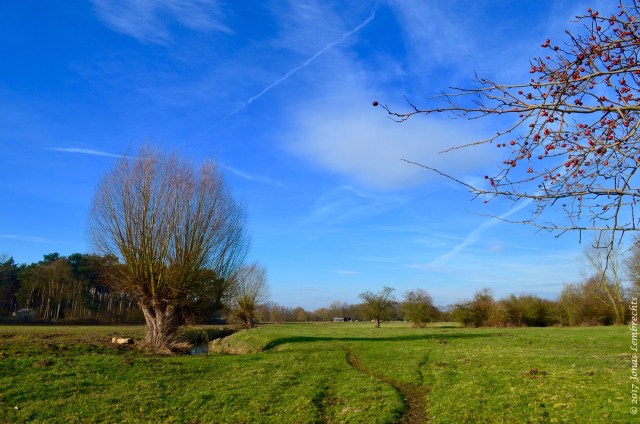
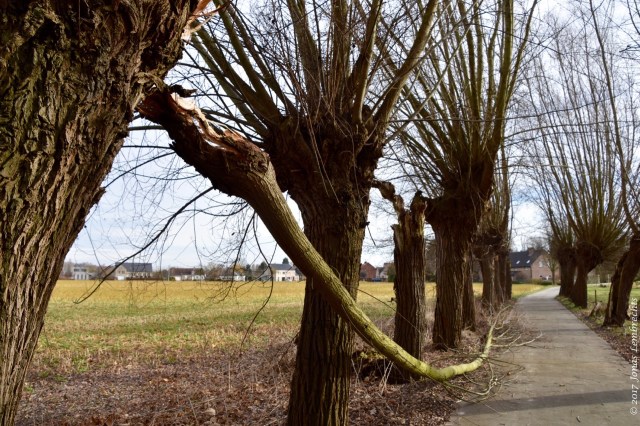
A few days ago, for example, a minor storm passed over Belgium. Nothing bad, nothing out of the ordinary, yet there was some decent damage. A few old trees fell down, a few branches got ripped off. Minor damage, but this kind of damage might play a big role in driving diversity.
disturbance-1

A minor storm, force 6, ripped off branches and threw over some old trees

There is an interesting correlation between diversity and levels of disturbance: an undisturbed system is in climax, a few species will overshadow everything, those with the highest competitive power will be dominant. They won’t leave much room for other species underneath them. Like an old beech forest, for example, with virtually nothing growing on the forest floor.

Yet a few minor disturbance events like this little storm can create an interesting dynamic. A few small gaps, light penetrating through the canopy, opportunities for species in the understory. These opportunities help diversity to improve.

disturbance-4

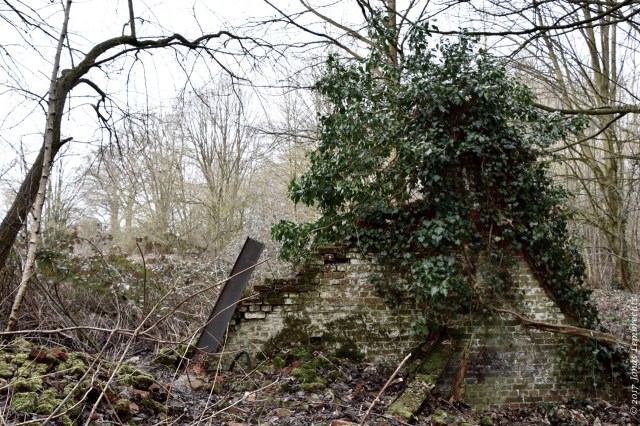
Yet if disturbance starts to get too intense, or these disturbing events start to follow each other too fast in time, opportunities become reduced again. Before you know it, before you have time to grow to full maturity, you get struck by a new disturbing event, and die again. Only those that can handle these extreme stress-levels will be able to thrive. Diversity inevitably goes down again.
disturbance-2

It is thus at intermediate disturbance levels that diversity is at its highest. It has been like that forever, and there is nothing unusual about it. Yet there is indeed something out of the ordinary to these anthropogenic disturbances: they change the disturbance regime, and thus the system to which nature has been adjusting.

And the results of that are highly unpredictable.

Posted in Belgium | Tagged , , , , , , , | 1 Comment

Micro moisture

For a long time, I have been arguing that we should focus on the micro-environment to understand where plants live, and where they will be going in a future with a changing climate. Studying the micro-environment experienced by plants however creates some interesting challenges. The more detail you want, and the closer you want to get to your study species, the more measurements you need to make. On a spatial scale, that is relatively easy to do: you can just put out a whole lot of sensors in the landscape.

micro-moisture-1

Yet there is an often forgotten part to the microscale that is harder to measure: the temporal variation. You could measure the temperature on a thousand spots in the landscape, yet if you can only do this once (or even a few times), your data is virtually useless.

micro-moisture-3

For temperatures, we have some pretty amazing tools to deal with both spatial and temporal microvariation. We have thermal cameras for the finest spatial resolution, and we can even use them to make stop motion movies to capture temporal variation. And we have (relatively) cheap temperature sensors (like the iButtons I wrote about earlier) that can be left outside for a whole year to satisfyingly cover the spatial scale.

micro-moisture-2

Measuring moisture on a small scale turns out surprisingly complicated

For the measurement of soil moisture, the story is surprisingly entirely different. Detailed scanning, like we would do with a thermal camera, is currently hardly impossible for a reasonable price. Cheap sensors that trustworthy measure the soil moisture over time, without complicated wires and data logging issues, is also still lacking. One of the main issues is that the available water strongly depends on the soil type: water in clay is much harder to extract by a plant than water in a sandy soil, for example. It is thus still a search for solutions.

Yet these solutions are on the way, and scientists are showing their most creative side to tackle this issue: exotic sounding methods like using cosmic-ray neutrons, or through GPS-signals or even temperature measurements are rapidly gaining accuracy. Before I loose all my readers to these foreign words, I will just refer everybody on a search for good methods to this paper from Oschner et al. (2013).

Reference

Oschner et al. (2013). State of the Art in Large-Scale Soil Moisture Monitoring. Soil Sci. Soc. Am. J.

Posted in Science | Tagged , , , , , , , , , | 1 Comment

The holiday lens

new-gear-8

The photographing ecologist got an update of his photographing gear, and that is amazing news! Most notoriously, I now got a 18-300 mm lens, a lens famously called a ‘holiday lens’, as it is perfectly suited for holiday trips where you do not want to take several lenses.

new-gear-6

This holiday lens is the perfect allround lens, with an incredible range: it can both handle the wide angle ànd the close-up, all of that in just one twitch of the wheel.

new-gear-4

While the critics say that you give in in quality if you want to have the whole range in one lens, this extreme flexibility is a blessing for a photographing ecologist (details of what that is, can be found here). As in my job, photography is only secondary. To let the work come first and still achieve breath-taking pictures that tell a story, speed and flexibility are key, and this 18-300 mm allows exactly that.

new-gear-1

As the first trials show, the options are promising. Yes, the quality might not be as perfect as in the more expensive – less agile alternatives, but these minor details, the difference between very good and slightly better, do not weigh up to what the lens can do for me: allowing me to quickly jump from the closest to the furthest.

new-gear-7

Posted in General | Tagged , , , , , , , , | 2 Comments

An unusual hero

Last week, Hans Rosling died. Who, you might ask, and why mention him? Well, he might have been one of our few statistical heroes, a man who dedicated his life to the spread of knowledge through the correct use of statistics, and to me, that’s enough reason to honour his passing. If you have a spare hour, I strongly recommend you to watch this video of him, as an example:

Trust me, it is worth it. And as soon as he starts talking, you will be hooked, as he was a very gifted speaker; and statistician of course.

The story he tells here is about the world’s population growth, and the population boom we are currently undergoing.

19710732614_304674d394_o

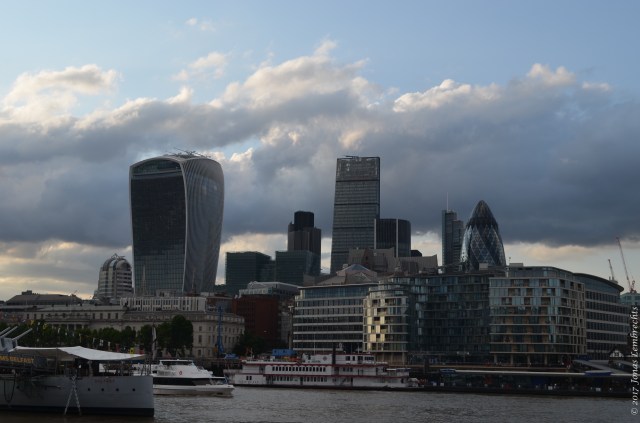
More people live in cities than ever before in human history. Here, London

The best part of the talk is that, even while you think you know the basics of the story (the booming population growth resulting from a time difference between the improvement in health care and the reduction in family size), he can still blow you off your feet.

20170689653_0f5e42a078_o

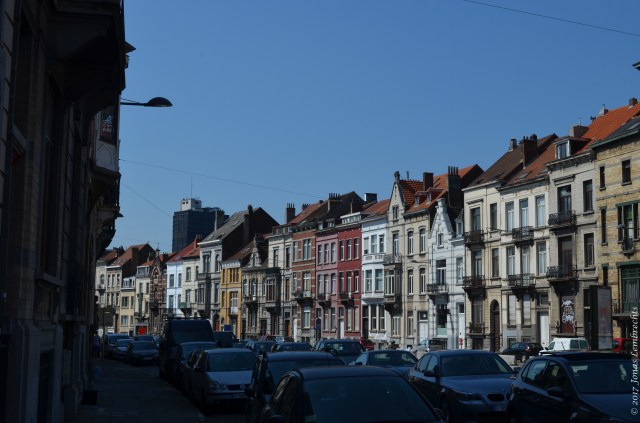
Brussels

And what he wants to convince you of in this video narrows down to this: don’t panic! It is not all as bad as it seems. Countries everywhere in the world are evolving, people are fighting their way out of poverty and the average family even has only 2,5 children anymore, even in less wealthy parts of Asia.

Yes, that last value might be surprising, yet it is most certainly true: we have reached – as he calls it – ‘peak child’. There won’t be more children between the age of 0 and 15 anymore in the future, the number will stay constant at 2 billion.

20341496835_a6912ee529_o

Delft, the Netherlands

But why is the population still growing so tremendously, even if we reached ‘peak child’? In short: pure mathematics. While there are not more children being born anymore, so the population boom is theoretically over, there are still less old people dying, and that will inevitably be the case till we reach a stable world population at 9 billion. So yes, population is still growing tremendously. However, and that is the big surprise that statistics can show us: this population boom is not at all due (anymore) to uncontrolled child births in extremely poor parts of Africa and Asia.

22016702290_e2d773f012_o

Antwerp

And even though it might still look at first sight like things are rapidly getting out of hand with our little world, Hans Rosling convincingly shows that it is not all as bad as you think. The population growth is fixing itself, and the world is rapidly taking care of extreme poverty as well. Climate change is the next tough issue to tackle, but it is worth it to stay optimistic that we find solutions for that as well. But who is better suited to convince you about that than Hans Rosling himself? The answer is right there in that beautiful piece of video.

Posted in Science | Tagged , , , , , , , , , , | 5 Comments

Knotted

Recently, I have been giving more thoughts to the human influence on nature in our own country. When walking through Flanders, it soon gets obvious that humans are everywhere. Even more, it is clear that the pure, undisturbed nature is gone completely in the region, and has been for many years.

knotted-willow-2

What we have left is a few, scattered patches of half-nature: parks, a few patches of forests, heathlands… A sad notion, indeed. And still, walking through the same Flanders, you can find a lot of potential, if you know where to look.

knotted-willow-1

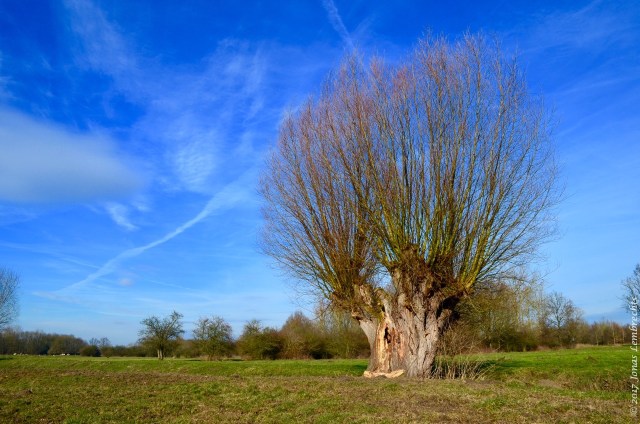
This knotted willow, for example, on the shore of a little stream close to Mechelen, in the populated center of Flanders. A tree that would not exist without humans, a tree that would never look as stunning without our help. A micro-environment for plants, insects and even birds. It might not be what it was before, but it definitely stands in its own right.

Fruit for thought, for sure. To keep out the depression, at least, and believe in a future where humans and nature can live in harmony. Yet definitely not to  justify further destruction of the nature we have left.

Posted in Belgium | Tagged , , , , , , , , , , , | 2 Comments

Global change ecology

Our research center – the excellence center on Global Change Ecology – started its own blog! Unfortunately for the international audience here, the blog is in Dutch, yet it featured my recent article on the difference between climate and weather!


winter-5

Blinded by a snowball, now as ‘verblind door een sneeuwbal’ on the global change ecology blog


We hope to bring up to date and scientifically supported posts on all factors of global change that are covered in our group: climate change, climate extremes, invasive species, nutrient cycling, habitat fragmentation and many more… As the center on global change ecology is a collaboration between 3 research groups, we have the chance to approach these problems from all possible sides, and advance faster to solutions!

Contributing to the understanding of our changing world, one discovery at a time.

Posted in General | Tagged , , , , , , , | Leave a comment