Awareness is raising rapidly in our environment that what we eat affects our environment in undeniable ways. We (should) all know by now that eating too much meat has a massive influence, not only concerning animal welfare, yet most notoriously on the whole environment. Food production costs lots of energy and space, and the carbon footprint of many of our common food sources is unsustainable.
Yet, as often is the case, the story is not as easy as its most straightforward depiction, which in short sounds as follows: cut the meat out of your diet, turn vegetarian or even vegan, and you’ll be a blessing for our environment.
Yes, there is no denying that meat production is in general worse than the production of veggies: you have to give plants to your meat, so you can cut out a whole bunch of steps by just eating those plants yourself.

More than 90% of corn production in Belgium is aimed for meat production
Yet there are many other important factors at play that can define the size of the carbon footprint of your food, or in general its influence on the world: food needs to be harvested, transported, packed, cooled, stored, sold and transported again to your own house… It needs space to grow, it needs people to handle it, it needs all kind of things all through the production process. In every step, there is countless options that are better or worse for the environment, and all together they can give an unexpected outcome to any comparison.

For exotic food, you need to take a lot of traveling into account when calculating its impact on the environment.
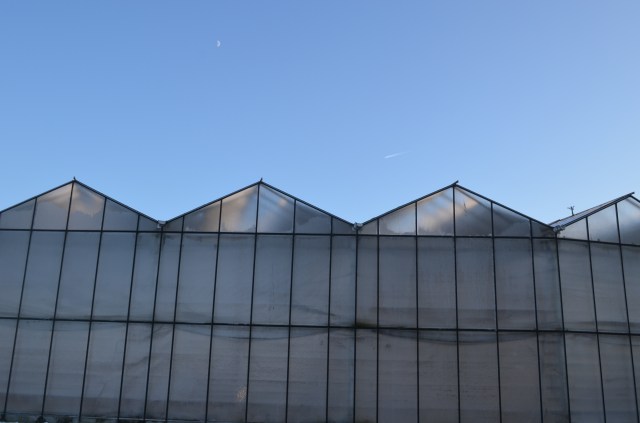
You better buy food from close to home than from elsewhere, but only in the correct season, when it does not need special storage or growing circumstances to make it to you. Fresh fruit from Italy might have a smaller carbon footprint in spring than getting the same fruits out of a Belgian storage in that season. Bananas transported by the millions with a boat from South-America might also be a smarter option than fruits flew in by plane from countries less far away. And vegetables from a heated greenhouse have a higher impact than those produced in open soil.
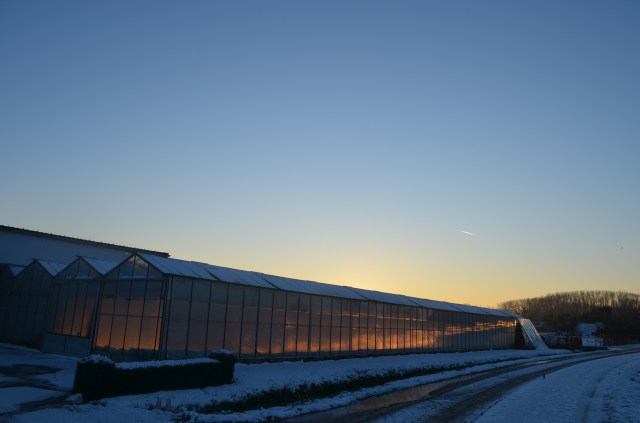
Heating a greenhouse in winter, it might give you ‘local’ crops, but they are definitely carrying a large carbon footprint with them.
And then there is a bunch of other considerations that come into play, making the story even more complicated: animal welfare in food production, for example, often demands more space and resources than the more efficient yet less human mass production, and thus results in a higher carbon footprint. Or the local pork meat that is not bought by a vegetarian might in return be exported to other more recently developing countries, where meat consumption is on the rise, as such increasing its footprint.
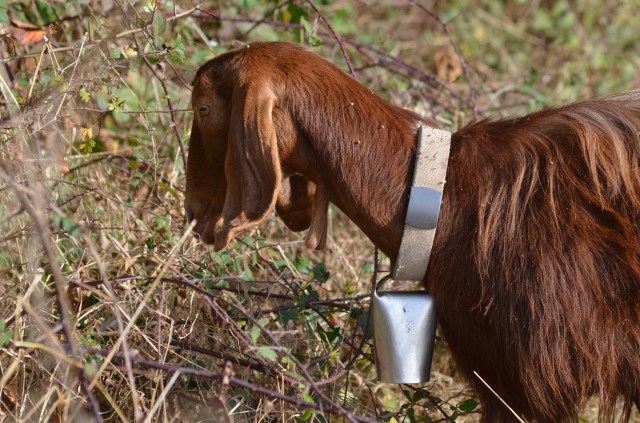
Free-roaming cattle might be healthier and happier, it also puts more pressure on the planet on an individual-base.
Eating beans is on average thus way better than eating beef, eating local most likely trumps importing from other continents. Yet there is one factor that beats all the others in this story, and that’s how many children you have. Staying childless is what reduces your carbon footprint the most, and no other measure is ever going to compensate for that. Yet this doesn’t mean that we should altogether ban the blessings of a happy family, nor that we shouldn’t try to reduce our meat consumption or kilometers in a Hummer. What it does mean, is that being a living human is inevitably going to take its toll and that we should not aim for the complete absence of human influence on the planet. No, our true aim should be to try our best, do what we can, take the world into account in our decisions, yet still aim most and for all for a happy live.

Note that this post is thus not calling for cynicism nor passive ignoring of what is going on on our planet. On the contrary! It wants to highlight the ever-present need for nuance in every big debate, where the absolute truth is rarely visible. It wants to inform people, trigger them to search for information and explore every side of the coin. So please, if reducing your climate impact is your main priority, aim for careful and well-informed decision-making, and stay motivated.
The Washington Post recently posted a very insightful story nuancing this debate as well. Worth checking it out!






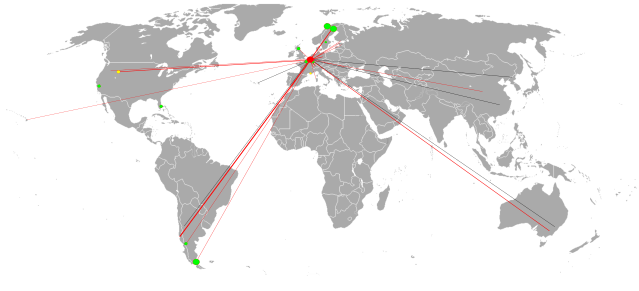 Lines are weighed based on the amount of papers together (bolder lines means more interactions), black lines indicate anticipated future collaborations. The red dot is home (Antwerp, Belgium), green dots stand for past visits, yellow dots for anticipated visits.




 The 3D lab