Malaga

Next week will bring me to Malaga, Spain, to a conference of the International Biogeography Society (IBS), a network of ecologists interested in the distribution of species.

I will go there as a representative of my two favourite global networks: MIREN, the Mountain Invasion Research Network, and SoilTemp, our network for the use of soil temperature data in distribution modelling. Both have broadly the same goal: improving our understanding of where species are living, and how the changing climate and human land use affect these distributions.

41065776821_e72fa917bb_o

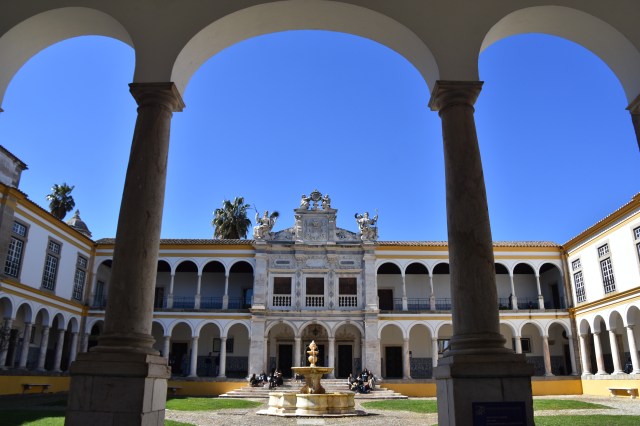
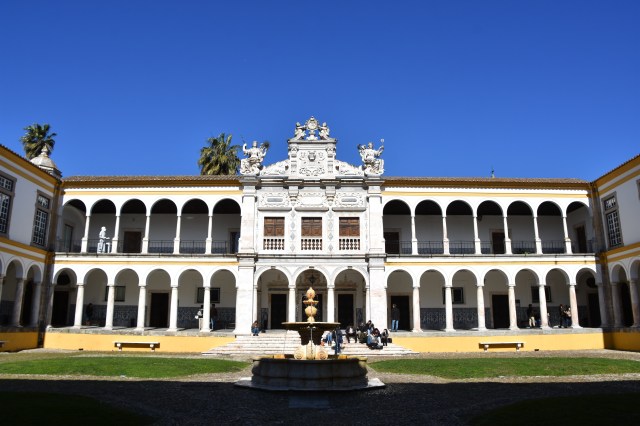
Last year’s meeting of the IBS was in Évora, Portugal, where we hosted a session on what the strong climatic gradients in mountains can teach us about current species distributions

Such questions are well-appreciated at the IBS, where biodiversity and where it is occurring is the main topic of discussion. To me, the main goal of the conference will be to find collaborators for our SoilTemp-project: people who collected soil temperature in the framework of their own studies, and that are willing to join forces with me.

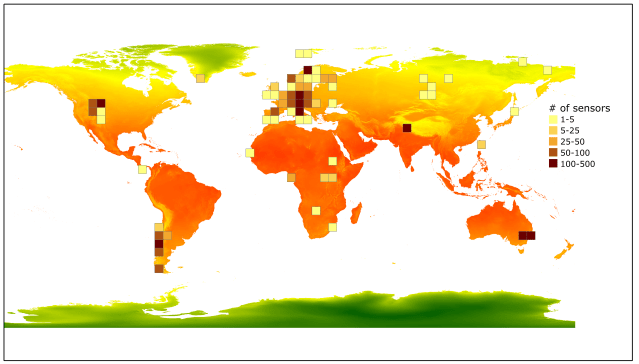
SoilTemp sensors_done.png

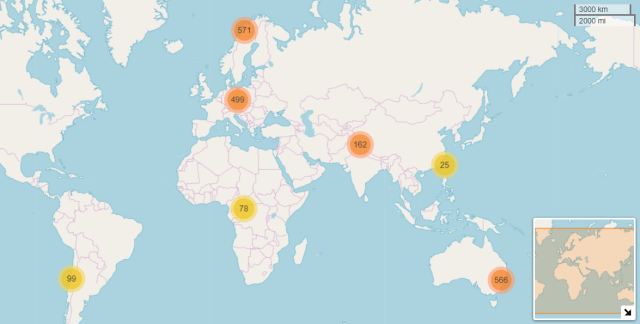
The SoilTemp-network keeps expanding, but there are still a lot of gaps to fill on the world map. We are hoping to fill some of these empty voids at the upcoming IBS-meeting in Malaga.

I will keep you updated about my Spanish adventures, and will hopefully return home with a lot of great new science!

Posted in Spain | Tagged , , , , , , , , | Leave a comment

2018 in stories (2)

Following good-old traditions, we end the year with an overview of the most viewed posts on this blog from the past 12 months. In a previous post, we started our overview of 2018 with the 5 most viewed posts of the first half of the year.  Now, I bring you part 2 of ‘2018 in stories’, with more species on the move, mountain roads and trails, and a lot of microclimate!

6) Running off the road

42024667615_0fc142df73_o

Summer brought a long-anticipated paper from the MIREN-network: we knew a lot about non-native species using mountain roads to hitchhike their way to high elevations, but very little was known if they could then subsequently start invading the natural vegetation from there. This story gives the much-needed answer.

7) SoilTemp

dsc_0015

Perhaps the biggest story of the year, and one that will cause major waves into 2019 and far beyond, was the launch of our SoilTemp-database project back in August. With this post, we first invited all scientists to submit their soil temperatures and associated ecological data to our database. Now, by the end of the year, we already incorporated data from over 3200 loggers from 24 different countries, with no sign of submissions slowing down yet! Check out the website here.

8) Mapping the trail survey

18554741104_566f4cb996_o

Our MIREN Trail Survey again enters this list in the second part of the year. In this post, we gave a first visual overview of all the data that had been submitted to our trail project by all participants from all over the world by the end of last summer. At the same time, we launched a new call for people from the southern hemisphere to keep an eye out on the mountain trails for our focal species, as their summer was only starting.

9) The climate the organism feels

43035841140_9efb21663d_o

Another major accomplishment this year was the publication of our review on the use of microclimate in species distribution models. We brought together all knowledge the scientific community has so far in that regard, and designed a way forward for the field towards the future. We strongly believe all the necessary tools and knowledge are in place now to model the distribution of species based on the climate as they experience it, instead of some rough average from weather huts. You can read our argumentation here.

10) Dovre

45897258731_88ed648061_o

The last major story of this year covered our meeting in Dovre, Norway, in a snowy November. Another story that mostly looks at the future: we came together to officially kick-off the PhD-trajectory of Ronja, who will be studying the role of mountain trails as drivers of vegetation change in the years to come. This post summarizes our plans, generously spiced up with pictures of the beautiful fieldwork region.

Posted in General, Science | Tagged , , , , , , , , , | Leave a comment

2018 in stories (1)

Here on ‘On top of the world’, we have the tradition to end the year with a ‘best of’, a list of the most read stories on this blog from the last year. This list helps us to wrap up everything that happened here in the last 12 months. And that is a lot of big things, as you will see.

12 months ago, our situation was indeed very different from where we are standing now. At the beginning of the year, I was still full-on working on the defence of my PhD, yet since then, this website – and I – have rapidly evolved. Now, this site is a true reflection of the team of people we are, all working together to answer our scientific questions.

Here is part 1 of ‘2018 in stories’, with our growing knowledge on how species are on the move due to global change running as a thread through the year:

1) Species distributions in a messy world

DSC_6795

We kick off the year with an important meeting we had early February in Zürich, Switzerland. The Global Mountain Biodiversity Assessment (GMBA) brought together experts on species distribution modelling and remote sensing. The goal, supported by the European Space Agency (ESA), was to brainstorm around how the future of distribution modelling will look, thanks to the rapid evolvement of remote sensing tools like satellites. The conclusion of this workshop will hopefully be published in the next year, but the blogpost already lifts a tip of the veil.

2) Climate change biogeography
41065780781_20d258498e_o

Our second meeting of the year, in Évora, Portugal, brought together hundreds of biogeographers, scientists studying the distribution of species, and how they change. At this conference, we discussed another fundamental question: how does climate change affect species distributions, in the past, the present, and the future? This blogpost summarizes shortly what we all know so far.

3) Matching the plant with the environment
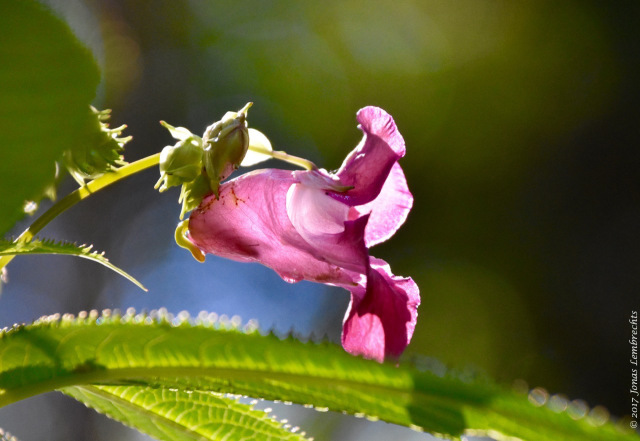
Impatiens

In april, we published a paper on what makes invasive plant species so successful. The perfect match between plants and the environment, so turns out. And that match can even change dramatically between local populations of the same species within our little Flanders, as you can read here.

4) Plant species are on the move, and it is us humans who move them
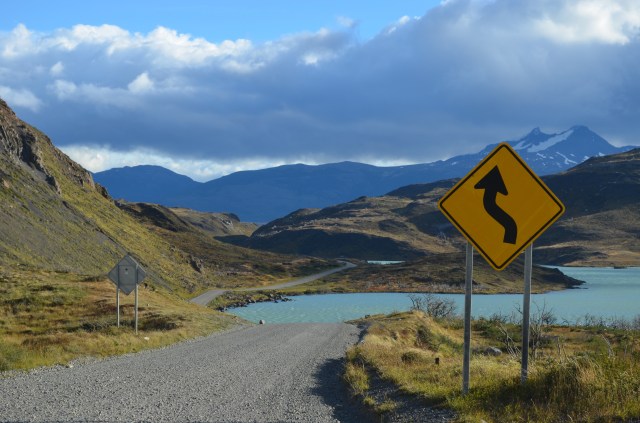
19150984736_b5329369ab_o

April also brought the biggest milestone of the year: my PhD defense! In this post, I summarize the story I wanted to bring to the world after 5 years of scientific inquiry: plant species are on the move, and our human behaviour is speeding up that process, due to the way in which we use the land. Roadsides are a good example of that, with countless plant species travelling up and down mountain roads.

5) Trail adventures
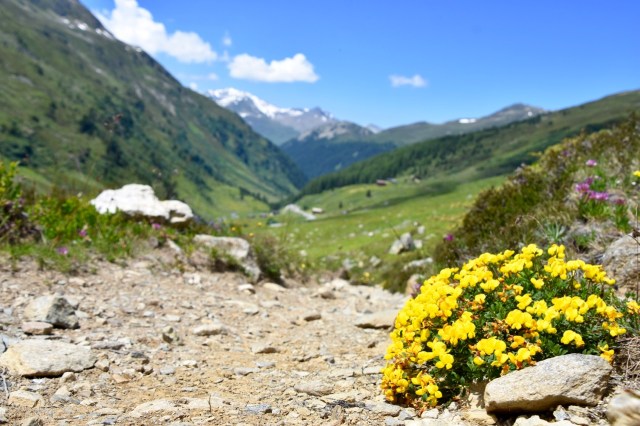
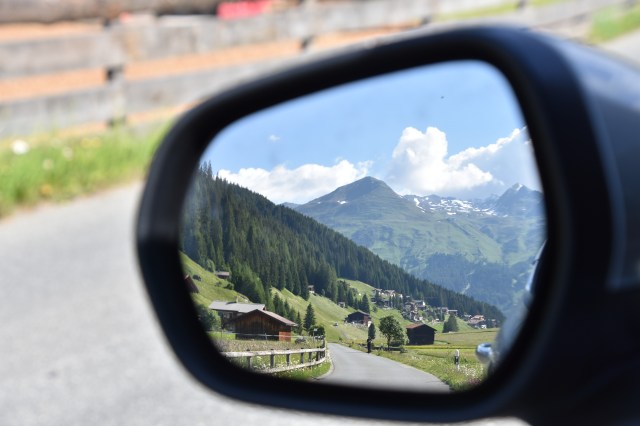
Davos - 10

We end this first half of the year with trail adventures: in June, I spent a few days in Davos, Switzerland to talk about polar ecology, and to hit the trails for science. I used this splendid opportunity in the heart of the Swiss Alps to collect data for our global trail survey. This post summarizes how that endeavour went, as a teaser and an example for any other mountain lover willing to spend a day hiking mountain trails and collecting data for us.
Posted in General | Tagged , , , , , , , , , , | Leave a comment

Growing database

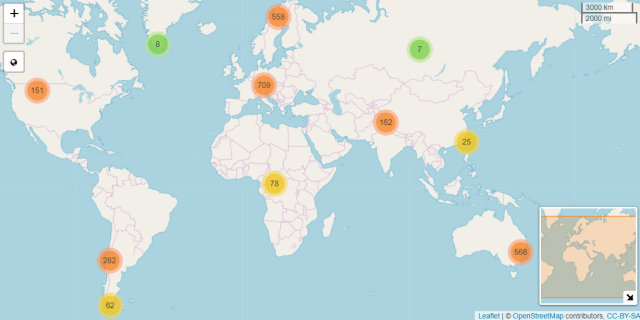
We have been receiving a lot of early Christmas gifts lately. 2608 in total, more precisely, from a mind-boggling 22 different countries across the world. That is the current status of our SoilTemp-database: 2608 unique temperature loggers, many of them with data from several years, and no clear sign of  submissions slowing down just yet.

Click on the map below to explore the metadata of the database in detail, or visit our SoilTemp-website.

Map image

Next up will be 2019, in which we will start processing these vast amounts of data (while continuously adding new datasets) and try to make sense of what we see. Stay tuned!

Posted in General, Science | Tagged , , , , , , , , | 1 Comment

Research network

Science works best when people work together. This is especially true for the big questions, that involve the whole world in all its complexity.

With our growing SoilTemp-database, that is exactly the type of questions we hope to answer: how are belowground temperatures across the world linked to the aboveground climate we all know, and how do these differences affect the distribution of species everywhere? And, most importantly: how are these belowground temperatures changing due to global change, and how is that impacting the biodiversity of everything that lives below or on the surface of our planet?

Map image

The growing SoilTemp-database, our main tool to answer these global-scale questions

Answering such ambitious large-scale questions will require input and expertise from scientists from all over the world. Luckily, the Flemish Research Council (FWO) understood this need, and now granted us with funding to set up an official Research Network.

45897127251_146975d004_o

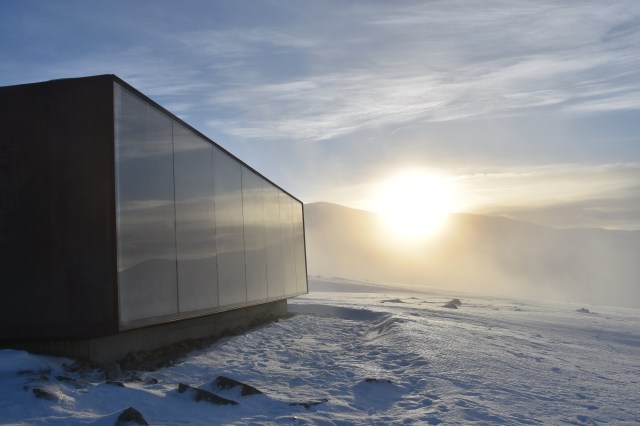
Temperatures in the soil (like below this blanket of snow in the Norwegian mountains) are crucial to the life of so many organisms. Our goal is to improve our understanding of these soil temperatures at the global scale

For the next 5 year, the FWO gave us sufficient resources to bring together the leading experts on microclimate, species distributions and remote sensing from all over the world, to ultimately improve our understanding of where species are living and why.

We aim to make good use of that money, as we do strongly believe in the power of collaboration. Ideally, it will also turn Flanders into a knowledge hub for the worlds’ understanding of microclimate; a goal we are happy to contribute to.

26259538511_a8b30e9973_o

The climate close to the soil surface is highly decoupled from what is measured in weather stations at 2 meter above the ground. 

Posted in General, Science | Tagged , , , , , , , , , | Leave a comment

SoilTemp website launched

SoilTemp, our project working towards a global database of soil temperatures for use in ecological analyses, launched its own website: soiltemp.weebly.com!

Saxifraga oppositifolia

The website allows interested visitors to explore what the project is about and, most importantly, follow the growth of the database through an interactive map.

This map, courtesy of the Environment and Sustainability Institute of the University of Exeter and framed in a bigger effort to map all available microclimatic data across the globe, provides important information on logger locations, as well as details on time, height, resolution etc.

Map image

For scientists interested in using soil temperature data for their own analyses, this map is an amazing tool, as it provides an overview of datasets within regions of interest, as well as pointers to people to contact in order to set up collaborations. This is one of the key goals of our SoilTemp-project: we hope to set up international collaborations using data that for one scientist might be trivial, yet for another holds the key to answer important (micro)climatic and ecological questions.

The map is not done yet, and might very well never be: we will keep updating it with the countless datasets that are not yet processed, and that will keep flowing in in the future. For now, numbers are already bedazzling (and we are not even halfway through): 1867 temperature sensors from 11 countries, from sea level till 6194 meter above the ocean, and covering more than a decade.

We hope this coverage will only increase, so please get in touch if you have any soil temperature data you would like to share with us!

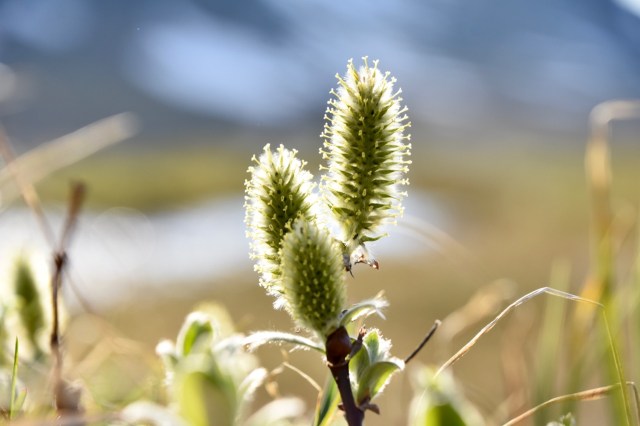
Salix lapponum in the evening sun

Posted in Science | Tagged , , , , , , | Leave a comment