The CurieuzeNeuzen team is one of the winners of the Annual Science Communication Prize of the Royal Flemish Academy of Belgium! The prize is awarded to researchers who are committed to creative and accessible science communication.
CurieuzeNeuzen in de Tuin was praised by the jury for the ‘clever communication campaign and innovative Internet-of-Things technology’, with which we reach a large audience, and thus ‘widely raise awareness about an important climate theme: heat and drought’.
This would of course not have been possible without our partners and enthusiastic participants: so this price is definitely for all of you!
Nice extra: we are still in the running to take home the EOS audience award: you can vote via eoswetenschap.eu.
The end has arrived: this weekend, the 3000 participants of our large-scale citizen science project sent back their ‘garden dagger’ to us, closing the lid on the data collection for the most ambitious thing I have ever undertaken.
Starting of with 50.000 enthusiastic citizens, selecting a representative set of 4400 of them, augmented with a few hundreds of agricultural fields and nature reserves, we set off on a wild measuring rollercoaster in the spring of 2021. After an extremely wet year that made us wade through an unprecedented wealth of data on how garden soils buffer extreme precipitation events, 3000 of our original citizens were found willing to join us again in 2022 for part 2. A little bit less rain, we hoped this time around, for the sake of science…
We were not disappointed, although our gardens and groundwater reserves definitely were.
We could track average soil moisture in Flemish gardens throughout the dry season of 2022, and compare it with the extremely wet summer of 2021.
Yet, even such an exciting project like this one has an end. We have (more than!) enough data to now dive deep into the science. Unexpectedly interesting data as well, with two extremely contrasting summer seasons, and some interesting cold spells in spring.
What’s funny: normally, I would tell you to now ‘stay tuned for the results’! Yet what makes this project especially exciting is that results rolled in every day, and we had plenty of opportunities to keep the participants – and the general public – on what was happening across Flanders’ gardens. Just scroll through the list of articles on De Standaard newspaper website to see (in Dutch) the many interesting insights we got to communicate so far!
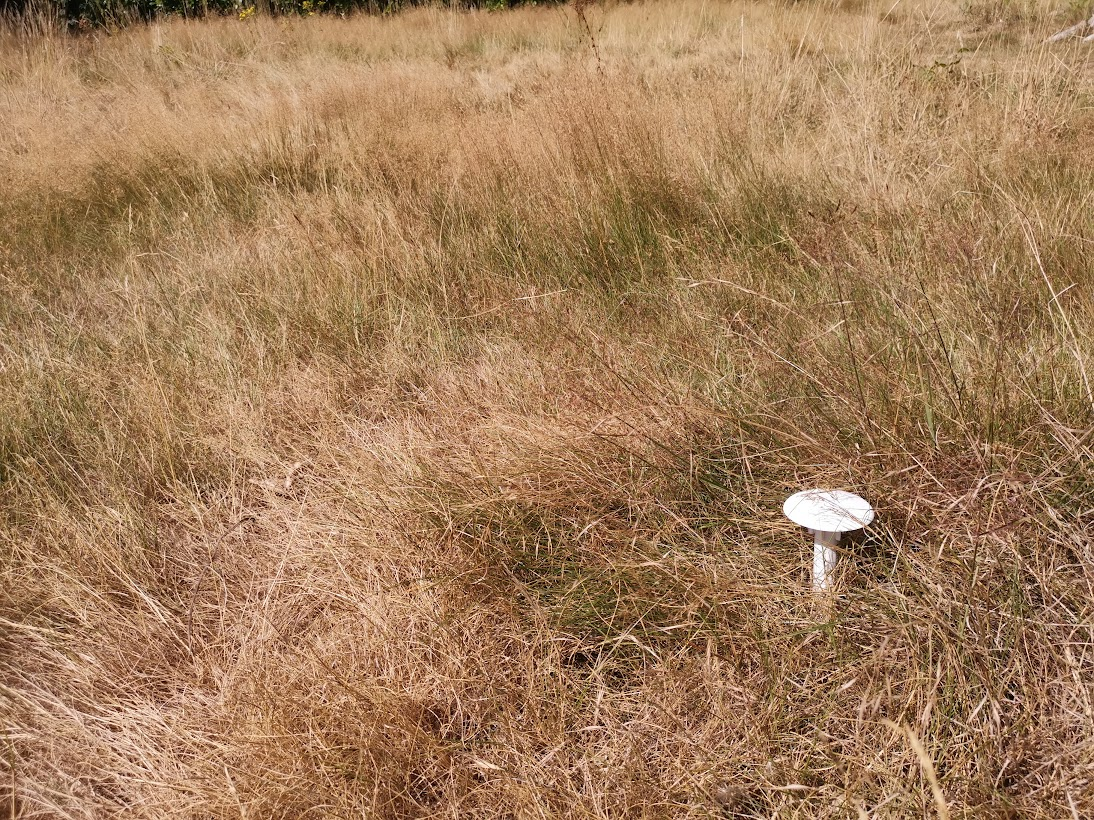
August 2022, Flemish lawns have turned brown after one of the most intensely dry summers since measurements started. A sharp contrast with the wettest summer ever the year before!
Much more to come, of course, so I’ll say it anyway: stay tuned for more cool results!
So, what’s next? My main wish is that this creates a spark, a movement. We want scientists and society to join forces and start monitoring the environment together, as we did here and as is done in other large-scale community science projects (iNaturalist or eBird, to name two). We want more microclimate networks like this, to get a better view of the very local variation in weather conditions there where it matters for plants.
The good news is: that spark is clearly there. We have MANY talks ongoing with people who want to build on what we have here. So again: stay tuned for more!!!
Can one go on a three-day sabbatical? Cause I just gave myself a three-day sabbatical.
Autumn along the mountain trails in the northern Scandes, the perfect atmosphere for creative thinking
I travelled to the northern Scandes on a short trip back to the roots of my research, where it all began in 2012 and where still so much of my favourite science is happening.
I went there to think about how to shape future research plans. I went there to let the plants and the mountains talk to me, let them show me what important questions need to be answered. I went there to puzzle all pieces together of what we learned over 10 years of research up north, on the fingerprints of climate and land use change on our precious tundra vegetation.
Salix herbacea on a rocky cliff. While nature looks stable and unmovable as rocks in the area, change is there for those who see its subtle fingerprints. How long has this little willow been here? And how long can it stay?
I went there for long conversations with Keith, my closest local collaborator, while walking through the autumn landscape, surveying plots and observing changes.
The main goal of all this is trying to wrap my head around 120 years of vegetation change in the region. We have a unique situation up there, with a series of old vegetation, soil and landscape surveys ranging all the way back to 1903, plus an increasingly clear understanding of the dynamics in climate change (the local weather station has measured continuously since the 1910s) and land use change (dynamics in Saami people reindeer herding, railroad building for mining and the ups and downs of tourism over the century.
Such ideas and revelations don’t come to you that easily over yet another Zoom-meeting. Just like Alexander Von Humboldt so many years before us, you have to observe the system while you’re in it to dig the deepest. The more you get to know an ecosystem, the more questions pop up. And so I realized, when standing on a cliff where Thore Fries must have been standing all the way back in 1917: thanks to these historic datasets, we know there was no forest there, as its upper boundary was a mindboggling 200 (elevational!) m or so lower on the hill. Thanks to him, we know what plants were growing there a century ago, and when and how they were flowering.
There was no forest so high up the slope, when Thore Fries was standing there and doing his pioneering vegetation survey in 1917. There was no forest there in the 1950s either? Was it climate change that allowed this rapid upward expansion, or are there other factors at work?
The question will be: can we get to the root cause of what is driving these changes? Can we disentangle the complex interactions that are at play over time in such an ecosystem, making it into what it is now? And can that help us looking forward, to a future in which the Arctic is experiencing ever more unexpected extreme events?
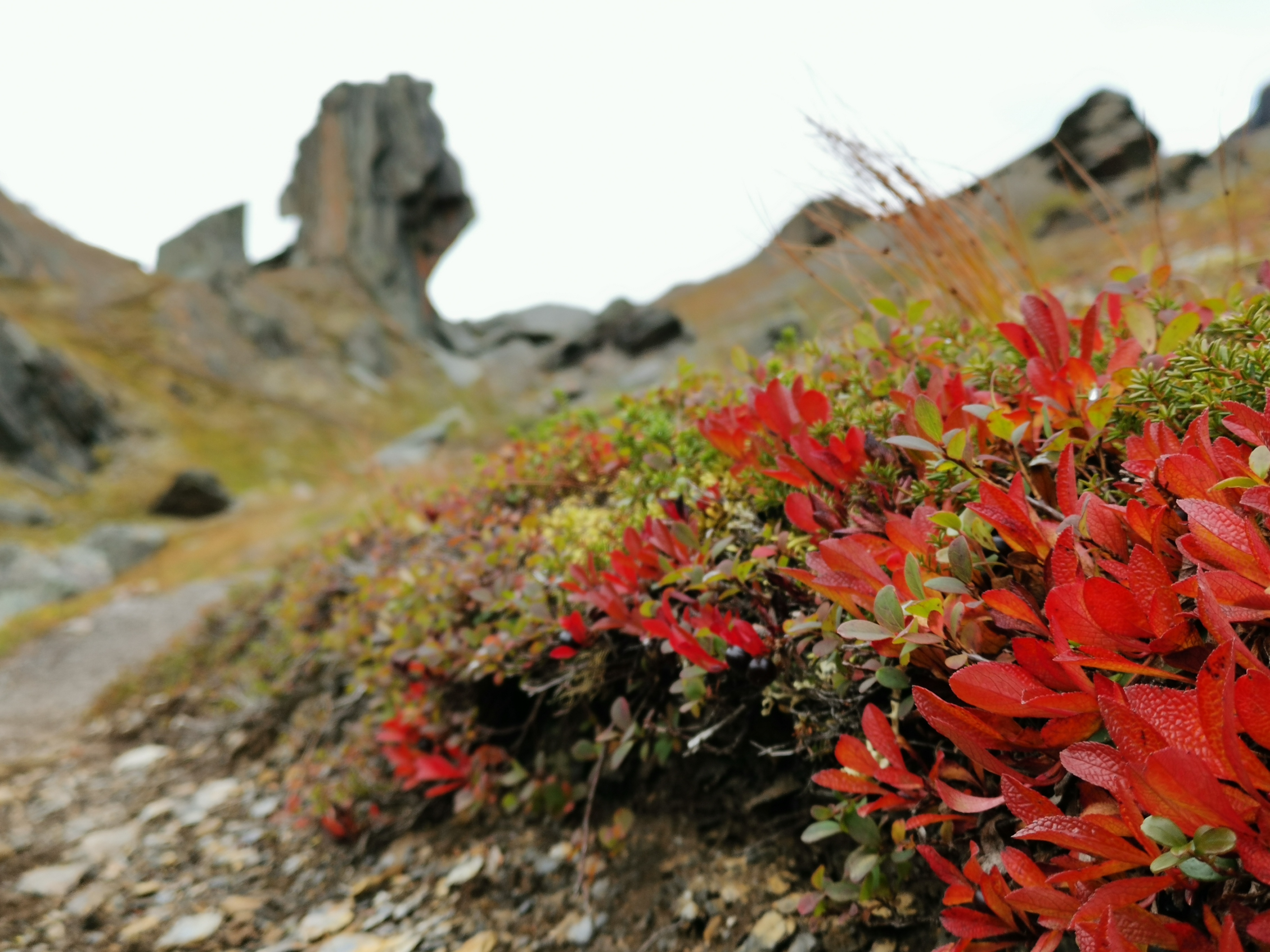
Another caterpillar outbreak has been devastating to the birch trees this year, but even the crowberry (Empetrum nigrum) has now turned brown. Is there a sudden change to the system imminent?
That is something I want to find out over the coming years, as I believe that area, with its unprecedented old datasets, can be a blueprint of what is happening in all these places where we humans perhaps looked less carefully.
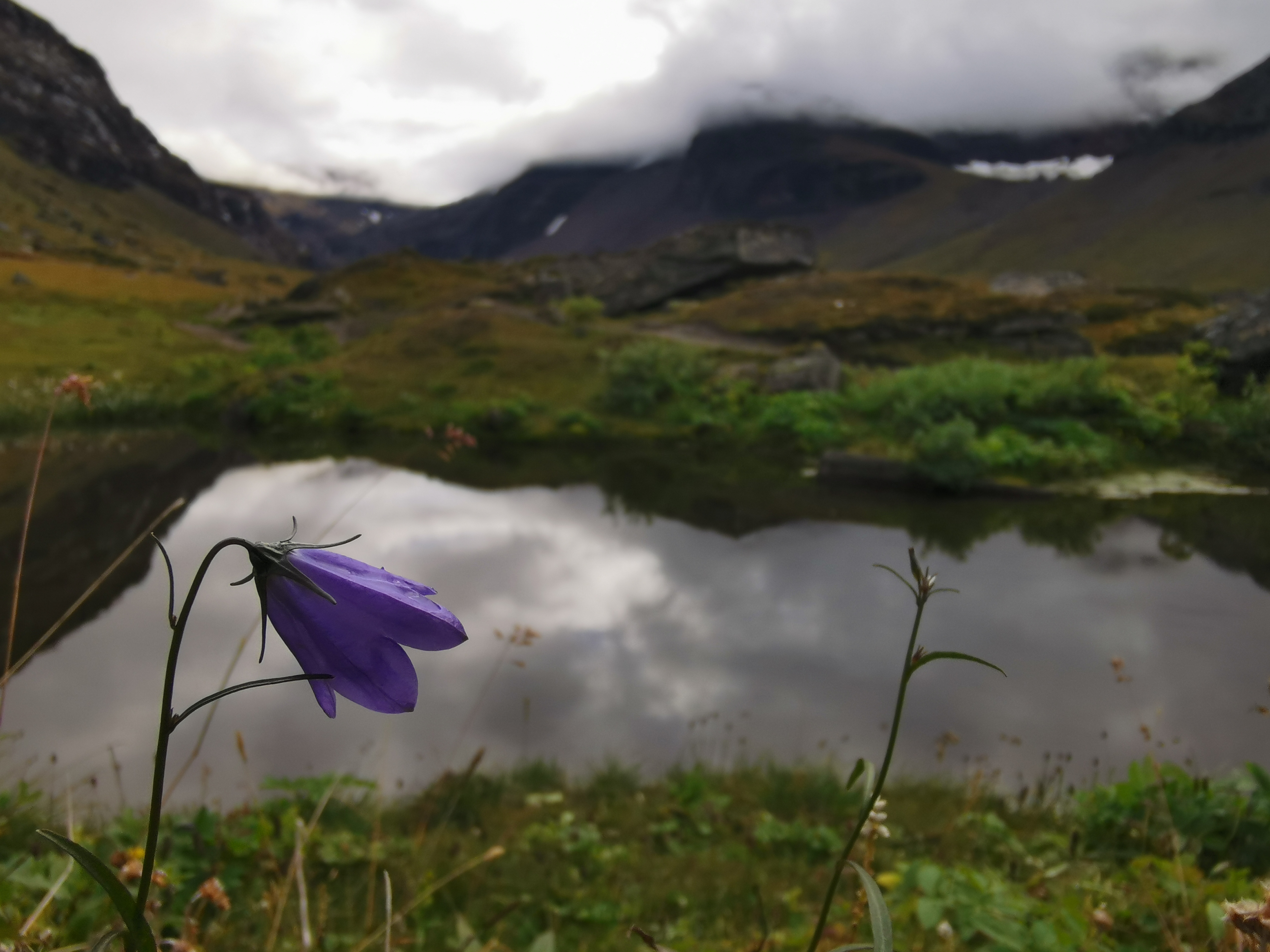
Campanula rotundifolia, one of the few plants flowering this late in the season. How are the flowers in the region reacting to increasingly unpredictable year-to-year changes in the weather?
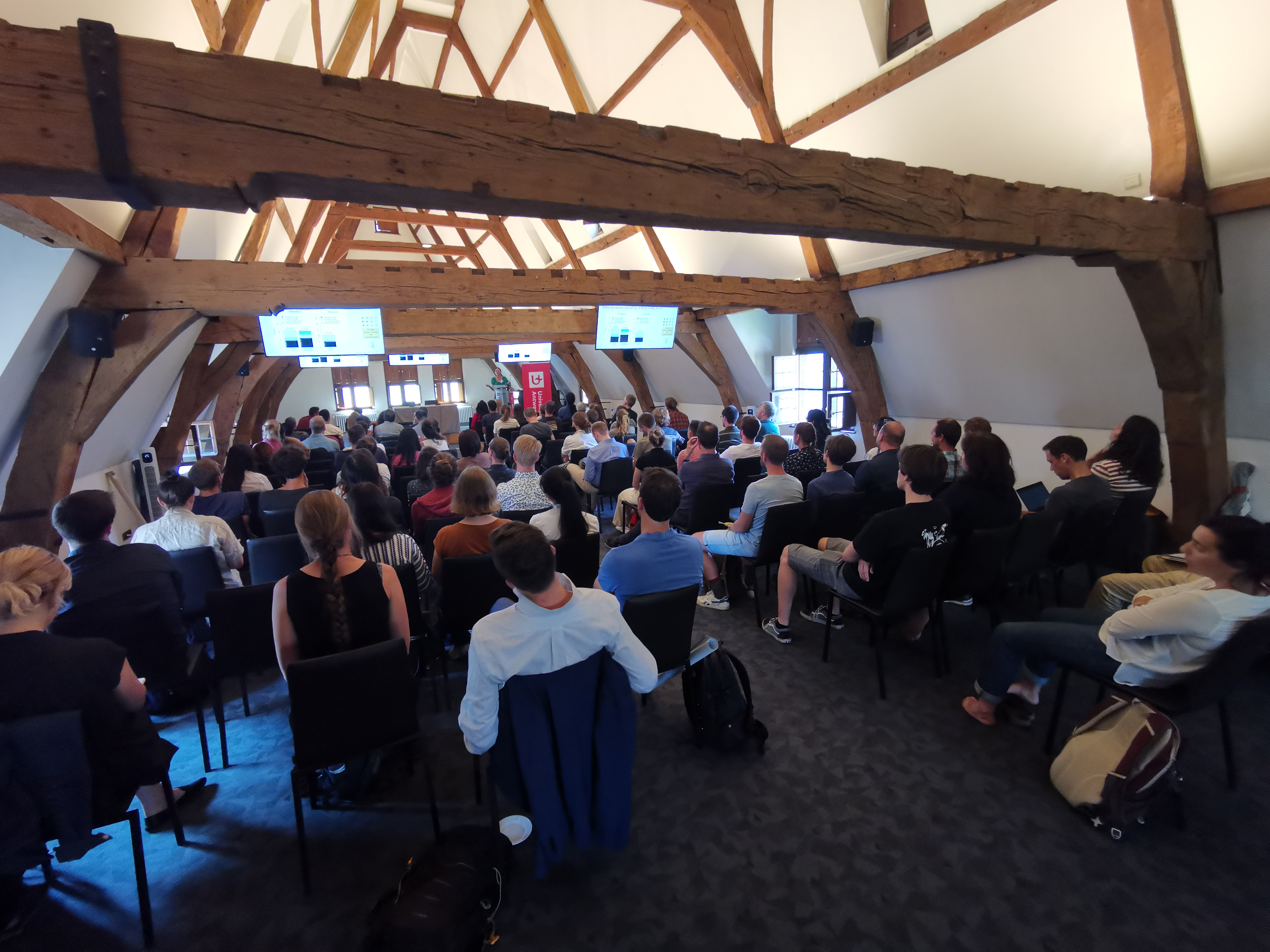
When we started SoilTemp, we had one main goal: making microclimate research into a global science. Achieving that would mean two things: bringing all the data together in a global database was an obvious first, but we had something perhaps more important up our sleeves: bringing the global microclimate community itself together. The latter was the main ambition of the first international Microclimate Ecology & Biogeography conference we organized last week and for this reason alone, it would in any case be one of the main highlights of my scientific career.
Kicking off the conference in the pink heathlands of Flanders’ National Park
Covid tried to derail our plans (see also this breakdown of how the conference came to be), but in the end, the conference exceeded all expectations and my darkest fears*: 128 participants from 28 countries, for starters, to make crystal clear that the microclimate community is alive ánd everywhere. Talks had topics ranging from shrub expansion in the high Arctic tundra to coffee plantation microclimate in tropical Africa, from global high-resolution microclimate maps (keep an eye out for the exciting ‘DirtClim’-work by David Klinges, for example) to the implications for tiny bryophytes. the conference had it all.
Discussing scientific advances at the poster session
I might be a bit biased, of course, but I think this first ME&B-conference was the best conference I ever attended. An incredible density of high-quality talks, a poster session with even more good stuff, and a never-ending chatter during coffee breaks, for example. Or the pre-conference excursion on the first day, taking an interested audience past some of Flanders’ best ecological infrastructure (and the purple heathland of our National Park).
Visiting the ecotron of the University of Hasselt on the pre-conference excursion. A giant building filled with giant blocks of living heathland, probed by sensors on all sides. Big infrastructure ecology, quite impressive and very different from the mini sensors I am used to
So what to take home from this high-energy week? The ecological community – and adjacent fields – has clearly embraced the notion that we need climate data there where it matters for organisms. The amount of solutions – ranging from low-cost sensors over mechanistic models to LiDAR-based environmental mapping – is now also booming. A lot of work remains ahead, of course, as the realisation that each research question, each organism, and each study system might need its tailored microclimate data is making us scramble for ever more creative solutions.
Full house at the keynote lectures
Time is also not on our side, unfortunately. While we are measuring microclimate, that very microclimate is rapidly changing as macroclimate warms and land use restructures (or often removes) vegetation. It might thus serve us scientists well to remain a bit in a hurry. Yet the conference strengthened my hope in that regard, as what I saw here was a community eager to learn from each other, eager to collaborate and eager to work together on correct data-driven answers to the precarious situation our planet is in.
I came into microclimate science with a simple dream: knowing the climate as experienced by my study plants. I soon realized many across the world were having the same dream, and were working on creative solutions to solve that issue. The end result of all that is the SoilTemp network and the SoilTemp database, and the most visible product of it all was this beautiful conference. More to come!
Ending with a big big thank you to the co-conspirators: Pieter and Koenraad, thanks for sharing this dream and working so hard together to make this conference a reality!
* I truly got to think a week before the conference that all my emails would have gone to spam-folders and nobody would show up at the conference itself. Ridiculous, in hindsight…
Next week, it’s finally there: the Microclimate Ecology & Biogeography conference we have been preparing for so long! You can find all details at www.meb2022.com.
An international conference with 128 participants, of which 28 are joining us virtually, with representation from 26 countries across the globe, with 2,5 days of talks, 9 keynote lectures, 3 workshops, a sponsor exhibit, a pre-conference excursion ánd dinner, it got all the ‘real conference’ vibes.
With all that organization now in the pocket, I wanted to reflect shortly on how much time that whole conference has taken me so far. We had a great team of course, with Koenraad Van Meerbeek and Pieter De Frenne as main co-organizers, and a whole suite of lab members and colleagues helping out with everything from excursion logistics to abstract selection. I don’t know their time investment, so I can only speak from my personal tracker (all thanks to the fabulous ‘Timeular’ app).
The idea for this conference was born in March 2020, right when Covid hit us for the first time. Since then, there was a lot of brooding over the plan, a few preliminary meetings and a lot of trying to find a time period that would work with this global pandemic going on. Our first real trial was for January 2022, resulting in a significant uptick in working hours in autumn 2021 (see graph below). Covid once again blew those plans, however, so we lay low for a while till spring came around. Then we went all out, now with this August/September as our target.
So here we are: a total of 91.8 working hours from my side further, the conference is almost ready to welcome you! Be prepared for next week simply blowing off the chart…
Hours for me only – ignoring working hours of the rest of the team!
In new research lead by group member Charly Géron, we show that Belgian cities host different exotic plant species than the countryside. Those urban species come from warm and dry native climates and are better adapted to drought and heat. Therefore, they may well become dominant everywhere during summers like this one.
The Mediterranean city
It has long been clear that the city is warmer than the countryside. We call this phenomenon the ‘urban heat island’ effect. The large amounts of paved surfaces in the city absorb a great deal of heat during the day. Also, the buildings layout forms ‘urban canyons’ with decreased wind speed, which easily traps heat accumulated because of the sun but also because of the human activities (such as air conditioners). This is why the hot air envelops the cities like a blanket on hot days. In addition, the soils in the city are often drier than in the surrounding countryside: there is more water runoff, and the extra heat causes faster evaporation.
Scientists have therefore long suspected that this warmer and drier city climate (sharing similarities with Mediterranean conditions in regions with an oceanic climate) would attract species preferring those conditions. This now appears to be the case for exotic tree species, as shown in new research from the University of Antwerp and Liège. The researchers examined where exotic tree species from warmer and drier or cooler and wetter native climates preferred to reside. What they found is that although most exotic species are dominant in the urban fringe – where they have often escaped from gardens – species from warmer and drier climates are by far dominant in the city, and vice versa.
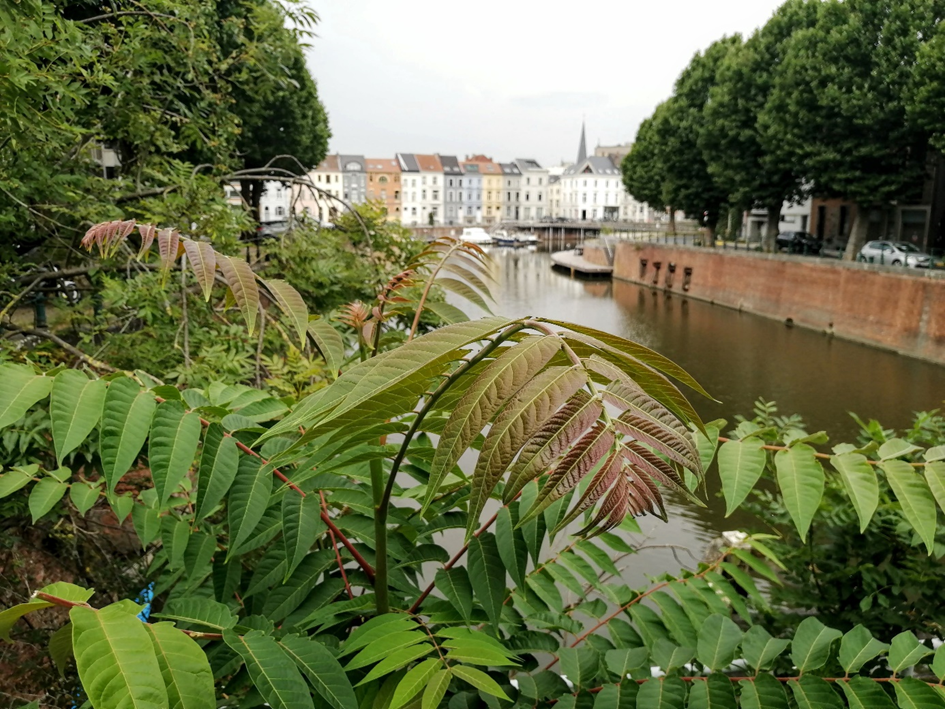
De Tree of Heaven, a typical exotic species profiting from the warmer and drier climate in the city. Pic: Charly Géron.
Problem species in the future?
Until recently, trees of warmer origin (they often have a tropical appearance as well) were restricted to the city by necessity, as the climatic conditions of the countryside were simply not sufficient for their survival. However, now that our summers are increasingly dry and hot but also that our winters are not that cold anymore, the right conditions for their development are expanding. This increases the chance that these urban exotics, such as the ‘Tree of Heaven’ or the ‘Princess Tree’, will become more and more present in the countryside too. This spread could then be at the expense of indigenous biodiversity living in the countryside, which is already weakened because of drought and heatwave periods.
Shadow avoids heat stress
Despite the preference of tropical tree species for the urban climate, all species in the study – from warmer or cooler native climates – suffered from heat and sun exposure during heat waves. Alternatively, they all had lower stress values when growing in areas with protection either from buildings or trees. Even if this is surprising as high temperature differences are caused by the presence of urban structure or tall vegetation, the cooling effect of the vegetation is largely altered during droughts. Indeed, the dry vegetation cannot perform evapotranspiration (i.e. cannot sweat anymore which no longer cools down the air) which is visible when walking near crops or sun-scorched lawns, for example. These results suggest that the difference in distribution of alien plant species from different native climates is probably made in winter rather than summer. The city has fewer cold nights in winter than the countryside, which can make all the difference for many species coming from warm environments.
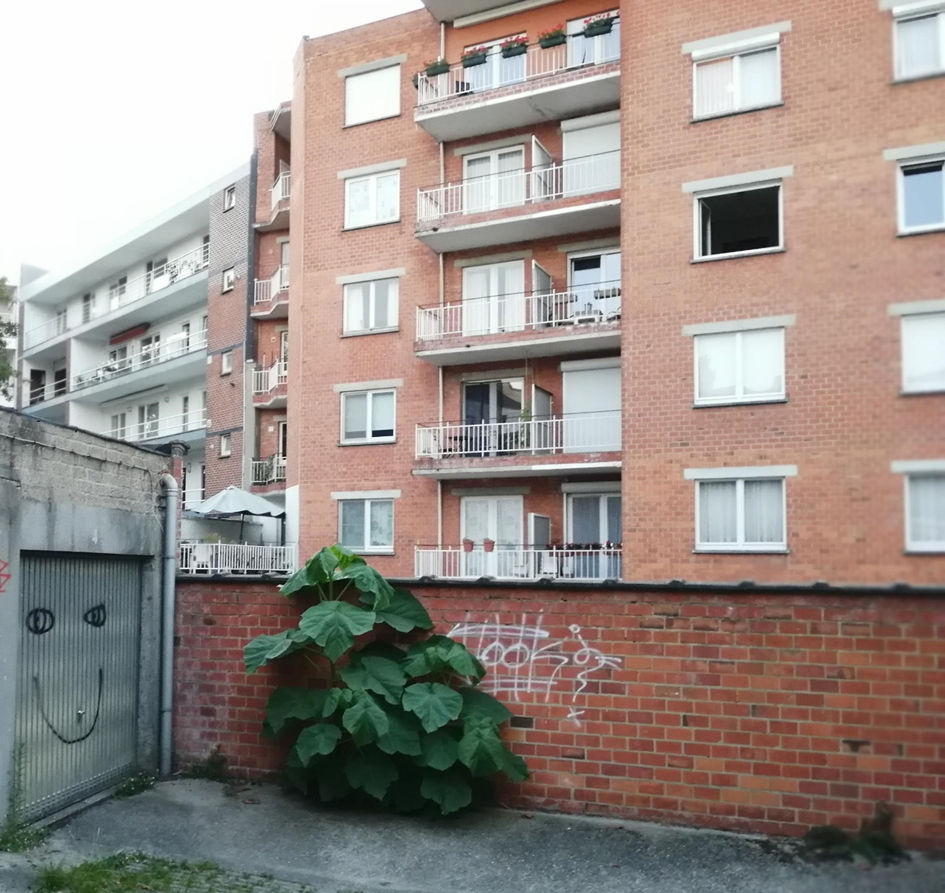
This ‘Empress Tree’, another typical exotic species from warmer climate, will soon be big enough to become a shade tree for this parking lot. Pic: Charly Géron
Lake Törnetrask, Abisko Research Station, Abisko, Sweden
Norway
Angelica archangelica along mountain road in the northern Scandes, Norway
Luscinia svecica
Norway
Skjomen valley, northern Norway
Skjomen valley, northern Norway
Lake Torneträsk, Abisko, Sweden
Laktatjakka valley
Narvik, Norway
Laktatjakka valley
Skjomen valley, northern Norway
Narvik, Norway
Pinus sylvestris, Narvik, Norway
Lake Torneträsk, Abisko, Sweden
Saxifraga aizoides, Narvik, Norway
Skjomen valley, northern Norway
Hair’s tail cotton grass
Abisko, Sweden
Narvik, Norway
Lake Torneträsk
Oenanthe oenanthe
Summer in the Skjomen valley, northern Norway
Seen from Nuolja, Abisko
Lake Törnetrask, Abisko Research Station, Abisko, Sweden
Luscinia svecica, Abisko, Sweden
Phyllodoce caerulea
Laktatjakka valley
Lake Torneträsk, Abisko, Sweden
Little red-and-white lighthouse
Narvik, Northern Scandes, Norway
Sweden
Norway
Lake Torneträsk, Abisko, Sweden
Narvik, Norway
Hallerbos 2017
Young bluebell (Hyacinthoides non-scripta) surrounded by flowers of yellow archangel (Lamium galeobdolon)
The common bluebell (Hyacinthoides non-scripta), the signature flower of the Hallerbos
Single bluebell flower surviving on a wetter spot, as indicated by the field of wild garlic (Allium ursinum)
A really wet patch of forest, with giant horsetail (Equisetum telmateia) in a field of wild garlic (Allium ursinum)
Wild garlic (Allium ursinum) in the Hallerbos flowers a bit later than the bluebells, yet this one was already in full bloom
A bumblebee visiting yellow archangel (Lamium galeobdolon)
A bumblebee visiting yellow archangel (Lamium galeobdolon)
Wild garlic (Allium ursinum)
Wild garlic (Allium ursinum)
Weirdly beautiful, the inflorescence of pendulous sedge (Carex pendula), typical for the wettest spots in the forest
Weirdly beautiful, the inflorescence of pendulous sedge (Carex pendula), typical for the wettest spots in the forest
A little stream in the Hallerbos, surrounded by endless fields of wild garlic (Allium ursinum)
The herb-paris (Paris quadrifolia), less common in the forest
Wild garlic (Allium ursinum)
Bluebells (Hyacinthoides non-scripta)
Weirdly beautiful, the inflorescence of pendulous sedge (Carex pendula), typical for the wettest spots in the forest
Another one from the wet plots: large bitter-cress (Cardamine amara)
Another one from the wet plots: large bitter-cress (Cardamine amara)
Young beech leaves, as soon as they are fully grown, spring in the understory is over
A beech forest without understory, most likely too dry and too acid for any survivors
A young beech seedling (Fagus sylvatica), looking nothing like a beech, yet everything like a tiny dancer
Young beech seedling (Fagus sylvatica)
Bluebells (Hyacinthoides non-scripta)
Bluebells (Hyacinthoides non-scripta)
Bluebells (Hyacinthoides non-scripta)
Mountain melick (Melica nutans), a grass in the most amazing green
Bluebells (Hyacinthoides non-scripta) in a rare patch of mountain melick (Melica nutans), a grass in the most amazing green
Bluebells (Hyacinthoides non-scripta)
Bluebells (Hyacinthoides non-scripta)
Montpellier 2017
The entrance to the cathedral of Montpellier
The cathedral of Montpellier
The entrance to the cathedral of Montpellier
The cathedral of Montpellier
Narcissus poetics
The cathedral of Montpellier
The botanical garden of Montpellier
The botanical garden of Montpellier
The botanical garden of Montpellier
Brackish Camargue vegetation
Brackish Camargue vegetation
Brackish Camargue vegetation
A typical lagune
Brackish Camargue vegetation
Camargue horses
Camargue horses
Camargue horses
Brackish Camargue vegetation
Brackish Camargue vegetation
Brackish Camargue vegetation
Camargue horses
Brackish Camargue vegetation
Little egret in the evening sun
Flamingo’s in the evening sun
A typical lagune
Dandelion fuzz
Grass lily
Grass lily
Dandelion fuzz
Veronica in a sea of poplar fluff
Euphorbia in a sea of poplar fluff
Poplar
Gare du Midi, Brussels
Gare du Midi, Brussels
Gare du Midi, Brussels
Gare du Midi, Brussels
Sweden autumn 2016
Autumn in Abisko
Yellow leaves of mountain birch, with lake Torneträsk in the background.
Lapporten, the gate to Lapland, in Abisko
Rain blowing over the Abisko National Park
The colours of the north: red fireweed and yellow mountain birches, with lake Torneträsk on the background
Yellow leaves of mountain birch, with lake Torneträsk in the background.
Rain on the background, the ski lift in Abisko on the foreground
The steep slope of mount Nuolja on a dramatic looking morning
The beautiful colors of lake Torneträsk in Abisko
A little stream on top of the mountain, with a view on Lapporten, the gate to Lapland
Well, that is a beautiful table with a nice view on lake Torneträsk in Abisko
Our little experiment on top of the mountain in Abisko, with a view on Lapporten
Autumn in Abisko is extremely colorfull
The ski lift with a view on Abisko National Park and Lapporten
Hiking dowhill towards lake Torneträsk
This green is greener than the greenest green: moss on top of mount Nuolja
Well, that is a beautiful table with a nice view on lake Torneträsk in Abisko
The ski lift with a view on Abisko National Park and Lapporten
The ski lift with a view on Abisko National Park and Lapporten
The most beautiful hiking trail of the world: Nuolja in Abisko
Angelica archangelica, often the biggest plant of the Arctic
The most beautiful hiking trail of the world: Nuolja in Abisko
Cirsium helenioides, the melancholy thistle
Hiking down mount Nuolja
The steep slope of mount Nuolja on a dramatic looking morning
The colours of the north: red fireweed and yellow mountain birches, with lake Torneträsk on the background
The prettiest yellow and blue: autumn in Abisko
Fireweed, Epilobium angustifolium
Campanula or bellflower, I think ‘uniflora’
Vaccinium myrtillus
Cornus suecica, the prettiest red of the world
Hieracium alpinum, alpine hawkweed
Carex atrata, one of my favourite sedges
Alpine clubmoss, Diphasiastrum alpinum
Agrostis capillaris, bentgrass
Common yarrow (Achillea millefolium)
Anthoxanthum odoratum, sweet vernal grass, fully grown and mature
Snow scooter trail
Our plot in the mids of a field of horsetails (Equisetum pratense)
Equisetum pratense
Cliff overlooking the valley with the road to Norway
Seedling of Taraxacum officinale, the dandelion, after two years of growing in bad conditions
Poa alpina, the alpine meadow-grass, with its viviparous seeds
Massive flowerhead of Angelica archangelica
Angelica archangelica
Blueberry (Vaccinium myrtillus) in autumn
A lowland marsh in Abisko in autumn
Installing the plots of our trail observations on top of mount Nuolja
Installing the plots of our trail observations on top of mount Nuolja
Tanacetum vulgare (Tansy), non-native for the high north
Autumn forest down in the valley
The valley of Nuolja to Björkliden
Summer on the Nuolja-side
A full rainbow behind mount Nuolja in Abisko
It’s raining in the west, clouds trapped behind the mountains
A strong wind blowing rain from behind the mountains to our side
A strong wind blowing rain from behind the mountains to our side
Betula nana, the dwarf birch, mini autumn forest
Betula nana, the dwarf birch, mini autumn forest
The valley of Björkliden in autumn
The valley of Björkliden in autumn
The valley of Björkliden in autumn
The valley of Björkliden in autumn
Sweden spring 2016
Silene acaulis
A rainy hike
Ranunculus glacialis
Salix reticulata
The valley of the lakes
Melting snowpatch on a lake
Although the alpine zone has been harder for invasives to access than most places, human structures like trails are often an easy gateway for the invaders to get up there. Picture from Abisko, Swedish Lapland.
Oxyria digyna
Overlooking the valley of Laktajakka
Trifolium pratense
Dryas octopetala
Western European species like the red clover (Trifolium pratense) here are often listed as non-native species in mountain regions.
Bartsia alpina
Cornus suecica
Silene suecica
Trifolium repens
Rubus arcticus
Eriophorum vaginatum
Ranunculus glacialis
Amiens
Amiens is filled with cute little houses
View from my office window
Cathedral at night
Sun rising above the water
Nice architectural curve
Just outside of Amiens
Cathedral at night
Cathedral at night
Cathedral at night
Cathedral seen from the frozen Parc Saint-Pierre
Cathedral with a glimpse of spring
View from my office window
Enjoying silence and the morning sun
Sunny but cold, the Quai Bélu
Frozen mirror
Gargoyle planning to eat the cathedral
Cold!
Colourful mirror
Maria without a shirt
Frozen to the bone
Sunny but cold, the Quai Bélu
House on the square before the cathedral
Winter sun on the Place du Don
The museum behind the beautiful gates
Almost cold enough for ice-skating
Le Club d’Aviron in winter weather
The southern side
Sweden autumn 2015
Lichen
Sweden summer 2015
View on the 1000 meter plots
Doing research on a cold Arctic morning
Plots flooded by the snowmelt
Flooded by the snowmelt
Meltwater river, racing down the mountain
After a hike, even the most basic house looks cosy. Little hut in the mountains, open for everybody
Snowbridge, maybe don’t cross…
Snowbridge
View from a cliff
Silene acaulis or cushion pink, cutest plant of the Arctic
Two seasons in one image
Steep slope
Hiking down
Narvik Kirche, church of the subarctic
Narvik Kirche
Reindeer on top of the mountain
Narvik Kirche
Summer at the church
Summer flowers
Massive waterfall
Young willow catkins
View from Narvik’s hospital, with lilac flowers
Building a bridge over the fjord will gain al drivers at least an hour
Norwegian fjord
Posing with the water, getting soaked
Minimalistic mountains
Insect investigating our reindeer antler
Catching mosquitoes with our license plate, harvest of the year!
Posing with the plot
Fieldwork on the most beautiful spot of the world
Fieldwork on the most beautiful spot of the world
Summer bridge – still next to the sadly impassable river
Rhinanthus flower in the mountains
Plateau in the valley, beautiful brown
Experimental view from my favourite plot
Salix catkins
Extremely old Betula tree
Waterfall from a cliff
Buttercup is the earliest in spring, here
Rocks!
Alpine views
Views!
Fieldwork
Jumping over rivers
Plot
Golden plover
Angry lemming
Green, the whole north is green!
Snow, so much snow left!
Minimalistic mountain moments
Fieldwork
The research center
Red clover – focal invader
Look at this tiny cute snail!
Massive floods of melting water
Bartsia alpina
Hooray, a toilet!
Dryas octopetala
Lowest elevation plots
Butterball!
That’s a lot of water
Midnight sun is the best
At the lakeside
Beautiful Bistorta vivipara
Don’t fall in the water
Midnight sun
Wild river
Art – made by ages of wild rivers
Baby firework for America’s independence day
Midnight sun at the lake
The Abisko canyon was wilder than ever
That’s a crazy amount of water!
The Abisko canyon was wilder than ever
The Abisko canyon was wilder than ever
Black and white
Stone-man overlooking Abisko
Nothing as soft as a willow catkin
Label and soil temperature sensor attached
I’d drive to the top every day
Reflections
Rocks and clouds
Brave little birch
Brewing our camping poison
Basic camping stuff
Camping in Norway
Home-made temperature houses
Roadside research at its best
Norway is crazy
Horsetail is so funny
Little creek in magical forest
Birches, birches everywhere
Beautiful rock, a gift from the river
Another roadside fellow
Lichen
Ready to rock the summer
Collecting mosses
That’s a crazy old lichen
Tiny tiny piny trees, but old, so old!
Ready to jump into the fjord?
Ready to jump into the fjord?
That’s a spiky stone!
Views on Norwegian fjords
Silene in the mountains
Cute little orchid
Skua
Attacking skua, mind your heads!
Watch out for the attack of the fierce skua!
Black snail
New plot!
Still a lot of snow to melt, but this spot was free for a new plot
Reindeer are better than people
Two seasons in one picture
Let’s see what is happening to the balance in mountains! Is this a starting avalanche, or will it last a bit longer?
Cute little hut
Climbing mountains by car
Softest moss in history
Drosera in the marsh
Hiking in no-man’s land
The clouds are coming
Abisko valley
‘Butterball’
Fieldwork in the tundra
Abisko valley
Little plot
Clouds and sun and mountains
Making soup on a campfire with a view
Little creek on high elevations
Skua on the look-out
Melting snow in a river
Rhodiola rosea and the Törnetrask lake
Beginning of spring
Flooded plots, melting snow, impassible wetness
Ferns and horsetails
Chile 2015
Lunch made by our local colleague, with funny bread (tasty as well!)
Trips to the field sites were sometimes a real adventure, especially right after snowmelt










 The 3D lab