Winter is coming

Seedling

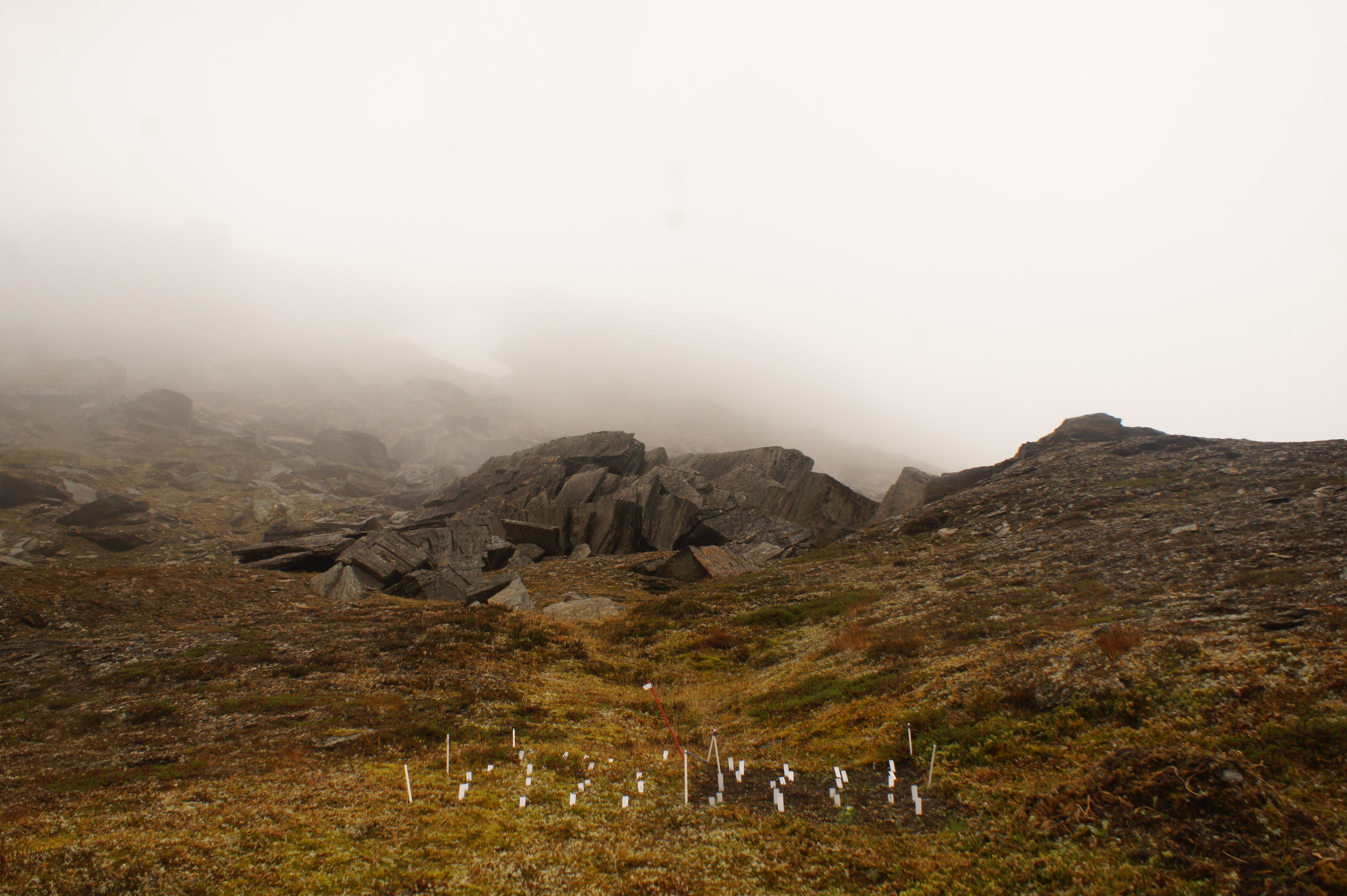
Tiny little plants, that’s everything. Two centimeters tall, three at most. The invaders in full glory. More is not necessary, at least not for now. Germination is the most difficult part, they say. It can only get better in the future! And germinating they do, our little aliens, no mountain high enough to stop them. Yet.

Look at them, so small and ill prepared for the cold. Maybe the subarctic summer tricked them in a germination they don’t want at all. Maybe they are not strong enough for what will happen next.

Winter is coming. Winter will be the next hurdle to take. We still need to see how many of these tiny seedlings emerge from under the thick blanket of snow that’s falling now.  And only then we’ll know the real strength of the aliens.

Posted in Sweden | Tagged , , , | 2 Comments

Punta Arenas

Punta Arenas, city of whirling winds and icy winters. Gateway to Antarctica, master of the street of Magellan and host town of the penguins. That’s my next destination, a short visit down to the southernmost part of South America, the exact opposite of the situation in northern Scandinavia. Short summers, harsh climate and steep climatic gradients in the mountains result in a slow-growing vegetation, prepared for the worst. Low to the ground, sheltered against the wind, with leaves adapted to hold as much water as possible in the freezing cold.

That climate should be a strong enough defense against invasion by plants from our mild, Western-European climate. Plants with big, unprotected leaves, plants used to plenty of water and nutrients, plants from heaven visiting hell! But the situation in northern Scandinavia shows the problem: the invaders are too flexible, they don’t seem to mind the cold of hell, they don’t seem to die from lack of nutrients.

We need to fly all the way south to check if this holds true everywhere, or only in the special case of the northern Scandes. That’s why we’ll prepare exactly the same experiment to check the behavior of the invaders in the mountains. If they act in a similar way in the north ànd south of this planet, we’ll have strong evidence about what will happen in those vulnerable cold areas in the future.

I’ll keep you updated!
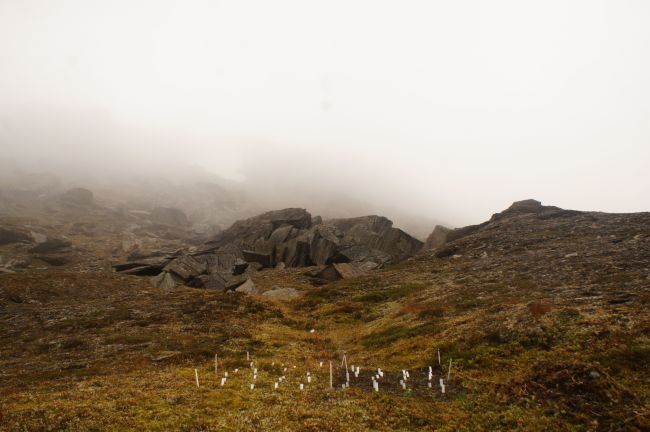
Image

One of our plots in the mountains close to Abisko. We follow up the little seedlings in their struggle against the harsh climatic circumstances.
Posted in Chile | Tagged , , , | 1 Comment

The dragon of the subarctic

There is a special world up there, high in the north. It’s a world of snow and ice, of rocks and wind. A world where trees stay low to the ground, where falling rocks and whirling rivers determine the slow pace of change. A different world, where survival is the result of a tremendous and ongoing struggle. Most importantly: it’s a world that is not used to the speed of the human way of living.

We are intruders of the north, knights in the cave of a sleeping dragon. We build mines and dams, railways and roads, all on top of the dragon’s back. Unaware of the changes in his troubled breathing while he slowly wakes up. The effects of our increased presence in the subarctic are largely unknown. We don’t know what will happen if we keep on crawling and working on the back of the dragon. But we see that he is slowly awakening and that thousands of years of undisturbed subarctic nature are now increasingly changing.

It is my job to warn the world for this sleeping dragon.
It is my job to find a way to preserve his night’s rest.
It is my job to predict his next move, so we are not unexpectedly catched by his swirling tail.

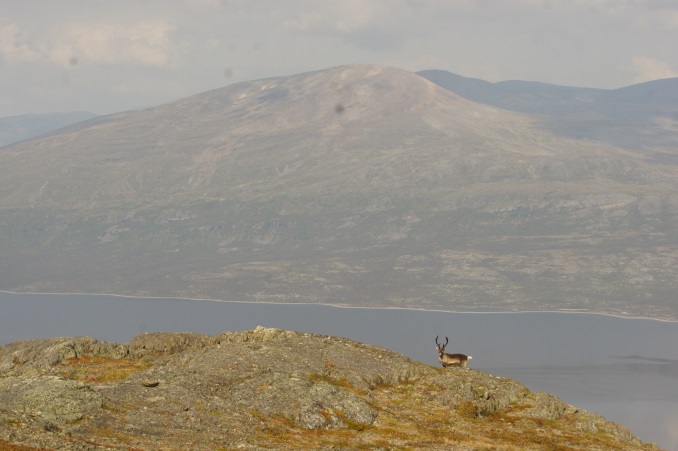
Majestic view over the mountains in northern Norway

Majestic view over the mountains in northern Norway, the land of the sleeping dragon. Fairly undisturbed, as long as it lasts.

Posted in Sweden | Tagged , , | Leave a comment

The big question

How a natural and undisturbed system reacts on human intruders, that’s basically the question that will bring me to all ends of the world.

I found some huge and impressive relatively people-free natural systems in mountains above the polar circle. Harsh climate and wild nature provide a fairly effective barrier against humans. But nothing is a hundred percent human-proof. Cause we are simply everywhere.
Wherever we go on this planet, we leave roads, paths and tracks that facilitate our transport. But this immense network of transportation has a large impact on nature. What I want to know, is what happens in mountains when we build our roads. We know a lot about roads in lowlands, but the nature on top of the world is special and reacts in a completely different way to disturbance. That can be good, or bad. If it’s bad, we better start rethinking our future use of mountains, or their impressive nature will soon be gone.
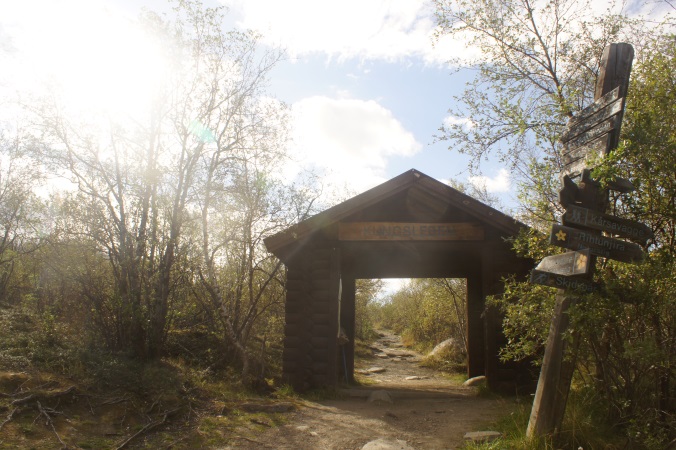
Even tracks (here the start of Kungsleden, Laplands most famous walking tour) can have a strong influence on a natural system, but their effect on mountains is largely unknown.

Even tracks (here the start of Kungsleden, Laplands most famous walking tour)
can have a strong influence on a natural system, but their effect on mountains is largely unknown.

Posted in General | Tagged , | Leave a comment

On top of the world

Science. It’s a strange world.  But it’s a world definitely worth writing about!

With the start of my PhD, I set out on a wonderful journey that will lead me to places as far as north- and southpole, and everything in between. I will climb up mountains, struggle my way through forests, gasp at aurora’s in starry nights and explore unknown horizons, all on a hunt to answer my questions on the mysterious processes of live.
I will stand on top of the world, look down on it and question everything I see, because that’s what scientists do.
This blog needs to share my experience. It wants to give a glimpse of the adventures of an ecologist, from start to finish. It will cover the fieldwork, the exciting trips through nature, as well as the results and the answers on the questions I ask myself.
So please, join me on top of the world, because the view is splendid.
On top of the world
Posted in General | Tagged , | 1 Comment