On monday, I taught a course on plant invasions in extreme environments to the master students during their course on Plant Ecology.
These students had the luck on their side as they were the first to see some of my own research results. I only showed a glimpse, of course, because I want to wait with the big revelations until my work is published.
On this page, I want to give a brief overview of where my research is heading. Every time I get to the next step, it will be added to the story on this page under ‘The results’ in the menu.
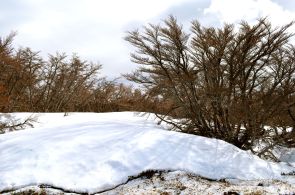
The picture on the left shows a mountain system on a bright day in the middle of spring. Obviously, that’s not a very nice place for plants to live. Only the tough ones, with millions of years of evolutionary adaptation, manage to survive. They are armed with adaptations to short growing seasons, frost, snow, strong winds, stony soils, lack of nutrients and excessive radiation.
For lowland plants, this world is a true nightmare. They don’t have all these nice adaptations, like small leaves, huge root systems, water holding qualities, anti freezing solutions,… They have broad, vulnerable leaves, created to grow quickly when resources are available.
It is clear that these plants do not belong up there. However, and that is the whole point of the story, they ARE growing there. In the beginning there are only a few, some loners here and there. Later on there show more and more plants up. Nowadays, great groups of them are marching uphill. There are a lot of factors behind this strange and recent behavior and it is my scientific duty to find out the truth.
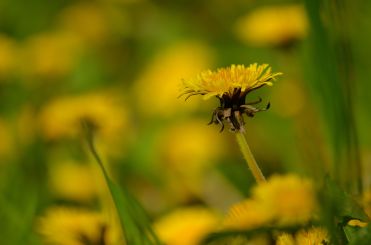 I will tackle the problem from several sides at once (I have several years to fill!). First things first: I answer the question how these invaders find their way up the mountains. This turns out to be a funny one: they come by car, by truck, by foot, even by ski lift… No human transportation method too strange or it can be used by plants to get uphill.
So far so good, but how do they cope with this horrible climate I mentioned before? They can not stay safely in a car and put the heater on! No, they can’t, but they can use their fellow plants for pretty much the same purpose: as natural heater. Nicely sheltered under a well-protected shrub, circumstances can dramatically improve.
Moreover, the alpine climate may be much better suited for invaders than seems on first sight. There isn’t one climate in the mountains. They have a whole patchwork of warm and cold, dry and wet, sheltered and exposed sides. All of them more or less suited for invasion. By using the best spots, the invader can get hundreds of meters higher than expected.
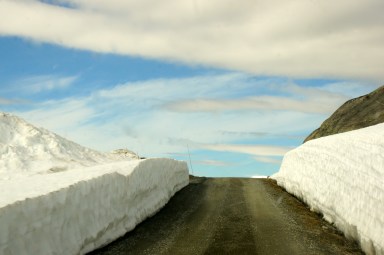
It turns out hiding under vegetation is a valuable trick. But most of the time, it seems to be difficult for a new plant to germinate underneath the hostile vegetation of the alps. Once more they profit from a bit of human help: our destroying capabilities expose bare soil, creating nice open spaces for invaders, free of competition.
As you can see, the two previous explanations show signs of contradiction. Both processes work together: the help of the vegetation is a plus, the competition a minus. The invaders have to choose and weigh the options. What their choice will be, depends on how bad the climate is in that location.

Being a successful invader is not for everybody. It needs the ideal mix of plant superpowers, most of them pointing towards a chameleon-approach. An ideal invader is a plant that fits everywhere: cold or warm, dry or wet.
I am curious to find out the answers on all these different questions. I hope I can soon share them with you.















 The 3D lab