
For those suffering from nostalgic feelings for the summer, click here for a happy and sunny photo gallery from my latest trip to Spain. Enjoy!
For those suffering from nostalgic feelings for the summer, click here for a happy and sunny photo gallery from my latest trip to Spain. Enjoy!
Originally posted on BioDiverse Perspectives.
In a previous post, I wrote about the power of photography for ecologists. Now, it is time to provide some real tips for photographing ecologists. How to take home some pictures that will impress others, without – importantly – losing any working time?

Most ecologists will take a camera into the field anyway. It is used to take pictures of their research site or subject, or record some important details for later. As you already have your camera in your hand, it will not cost you too much effort to take just one more picture.
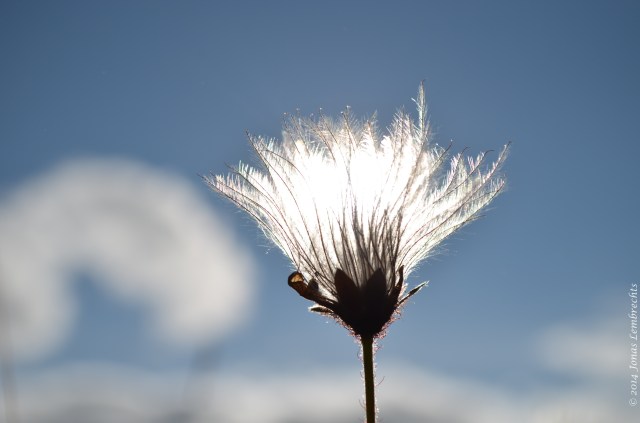
In that case, it might be a smart idea to get a little bit lower, up to the level of your study object, to check the world from its point of view.

The combination of integrating your study object in the landscape and letting it stand out of the background results in more interesting images. It makes it possible for an observer to feel a connection with the subject and it makes the picture tell a much more interesting story.

Even if your study object is a dull bird or a boring plant, getting on its level will bring out the best in it and give it a soul.

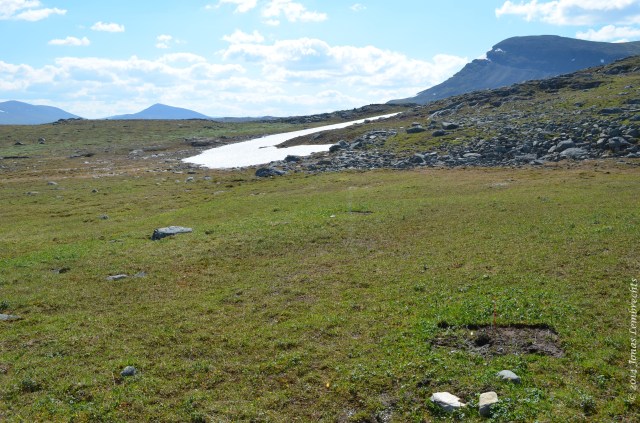
If possible, try to include the horizon in the picture. It will ask a lot more of your knees, but the rewards are big. As the (obviously real) Lappish proverb goes: ‘A beautiful horizon can even make a dead lemming look poetic’.

I invested a lot of effort in getting a nice overview of my study species, the nonnative plants in my plots. An awfully difficult subject for an artist, I have to admit, but by quickly spending two minutes as a photographer before you dive into the science, was highly rewarding even in this case.

Take home message: low! Take your pictures from a low angle and give their stories a boost!

Today is a special day: I arrived safely at the end of my very first year as a PhD-student! A year filled with tons of mountains and plants, filled with beautiful views and endless interesting datasets.

A year with plenty of steps forward: hundreds of questions, thousands of answers and an uncountable pile of new questions. A year in which I started to find my way around in the scientific world and prepared all steps for an exciting future.
I hiked up to the top this year, and now I can see for miles and miles in front of me, towards unexplored horizons. From now on, I plan to stay high, hike my way through the next four years with the amazing views all around me. It is a PhD on top of the world, and I gonna get the best out of it.
It is also the end of my first year of writing this blog. One fantastic year of being a photograping ecologist and sharing my stories and views with you. I hope I was able to lift you, my reader, up to the top of the world with me, and that you are happy to join me on the next part of this journey!
This is a post for those who got the experience from my blog that I am living life in paradise all the time. I have to reveal the hidden secret: there is more to my PhD than mountains and hiking.

The field season is over now, which brought me back to my beloved computer, statistics, administrative work and writing, but also to the university’s basement.

We are spending long hours underneath earth’s surface to weigh all our 2592 bags with plant material, a monstruous amount.
All nice and easy working, although some of our plants made work a little bit more difficult by growing not larger than one tiny little centimeter over those two growing seasons. Getting those teenytiny little things out of their bags and onto the scale without losing them, without them getting stuck to everything or without them hiding in unreachable corners, is kind of a struggle.

So we were always happy with ‘giants’ like the one on the picture, who made it to the full 75 mg, then times as big as our average plants.

This gives a first idea of the big difference between surviving and growing in those harsh environments. As a large amount of our aliens managed to survive the two growing seasons and the fierce winter in between, that does not mean they are likely to become an invasive threat. More is needed for such an accomplishment, but that will be reported later on in my PhD…
Originally posted on BioDiverse Perspectives.
Photography is classified as art, ecology is science. Two distinct worlds that only very rarely show some overlap. I am however convinced that a combination of both disciplines could be very fruitful. Being a photographing ecologist, or ecological photographer not only gives artistic satisfaction, but it can also be a serious addition to your science.
Although taking pictures on a busy fieldwork day might feel like a waste of precious time, it can be really valuable to assign some minutes in the field to photography and make sure you are familiar with at least the basic skills of the art.
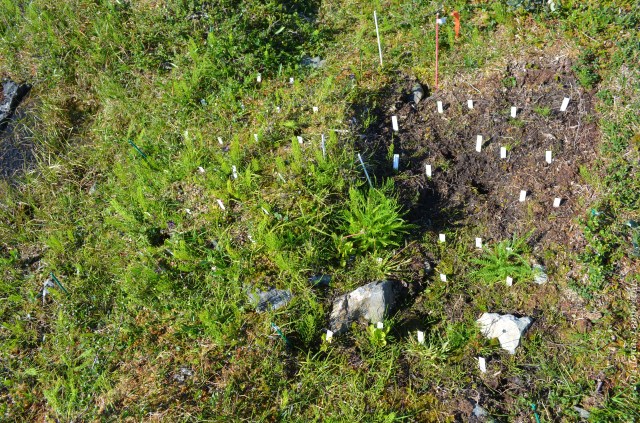
Inevitably, there will be a moment where you have to present your work: posters, powerpoint presentations, or just to a supervisor in the lab. The saying that one image is better than a 1000 words might be getting old, but it still holds true, a thing every scientist probably realizes when working on his slides.
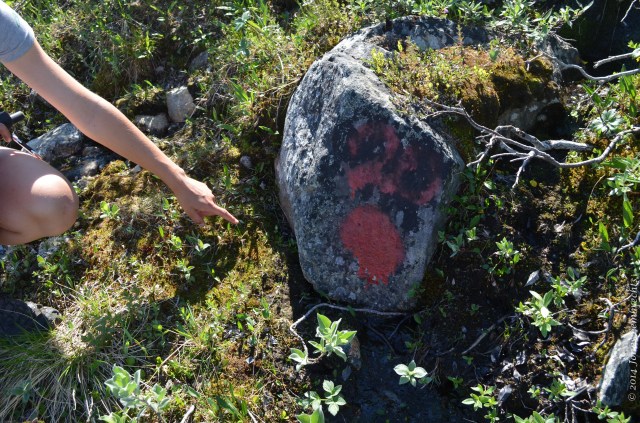
It might be common sense to spend at least five minutes of your working time in the field to photograph field sites, measuring methods and environmental characteristics, for your own reference or other peoples imagination. But it would even be better if you added another five minutes to the first five to zoom in on some details.
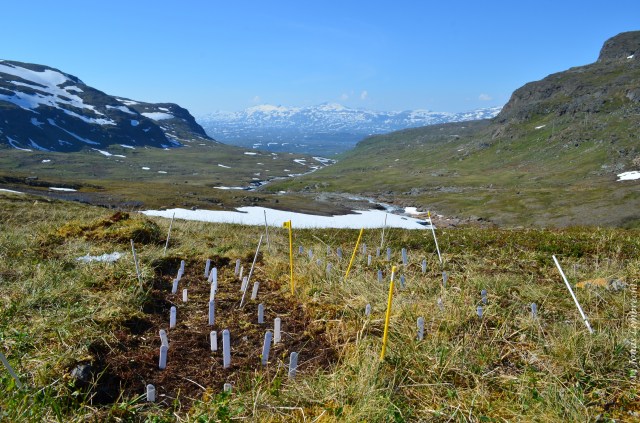
Change the viewpoint and try to catch your field site in its environment. The lower scientific value is replaced by an aesthetic one. Or get some of your study species into focus…

It is pretty obvious that a beautiful picture makes every story more attractive. If you want to convince the non-scientific world of the importance of your research, a catching picture will increase your impact factor a thousandfold (and I promise you, journalists are great at choosing the most irrelevant ones if you leave that task to them).
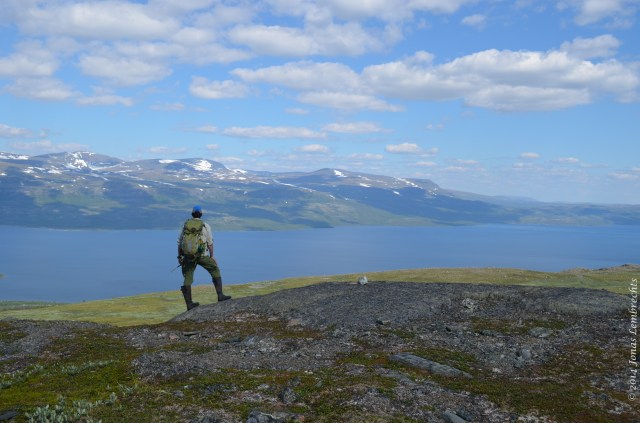
Even for the scientific public, however, a catchy picture will improve the results and the scope. No matter how interesting your story, nice illustrations will keep a larger audience awake during your presentation, and attract more people to your posters. Just give them those few seconds relief from the interesting but tiring statistical theories!
To finish, never forget the power of stories. Science is more than only the results and the 2 or 3 papers that come out of it. The process, arguably the largest part of the work, and the impressive, exotic, adventurous stories resulting from them can help enhancing the public’s understanding and appreciation of your research every day of the year. A photographic diary of your field trip might raise a lot more interest than all your scientific papers combined.

Biology is a foreign discipline to a large part of the population. They do not have a clue about how our scientific statements come into existence. They will be surprised about the complexity of the scientific process, and the variation, excitement and attractiveness of ecological fieldwork. Scientific information will follow on the way.

This should make the importance of the use of photography as a powerful tool in science obvious. Let us thus all pack a camera as indispensable fieldwork gear in the future and revive our artistic alter ego’s. In some future posts, I will cover a set of useful skills to make those few artistic minutes as efficient as possible, so with only 3 or 4 clicks, you can get the best results out of your camera.
Blog from our field assistant with awesome photography and stories from our field trip to Sweden! Check all her fantastic Abisko-related posts by searching for ‘Abisko’ on her website!

Day 2 we visited Läktatjokka. A mountain famous for it’s waflehouse on top! We had planted some sites at 900m and 650m. So we went to count the plants and collect them. It was a nice walk and we had an amazing view over the valley. The sun was shining and the temperature was perfect for climbing the mountain!
Op dag 2 gingen we naar Läktatjokka. Een berg die bekend staat voor zijn wafelhuis op de top. We hadden een paar plots uitgezet met plantjes op 900 en 650m hoogte, dus nu gingen we ze tellen en collecteren. Het was een aangename wandeling en we kregen een prachtig beeld van de vallei. De zon scheen en de temperatuur was net perfect om nog wat te klimmen, zalig!


Copyrights by me! Do not copy or do not use without asking me! Niet kopiëren of gebruiken zonder mij te verwittigen!




 The 3D lab