Far

Originally posted on BioDiverse Perspectives.

In a previous post, the photographing ecologist explained the importance of getting low to get the interesting and catchy pictures of your scientific subjects. As you can imagine the extra effort this would ask from your knees, I here want to highlight one more reason why it is certainly worth the effort: it creates the chance to display your subject in its wider environment.
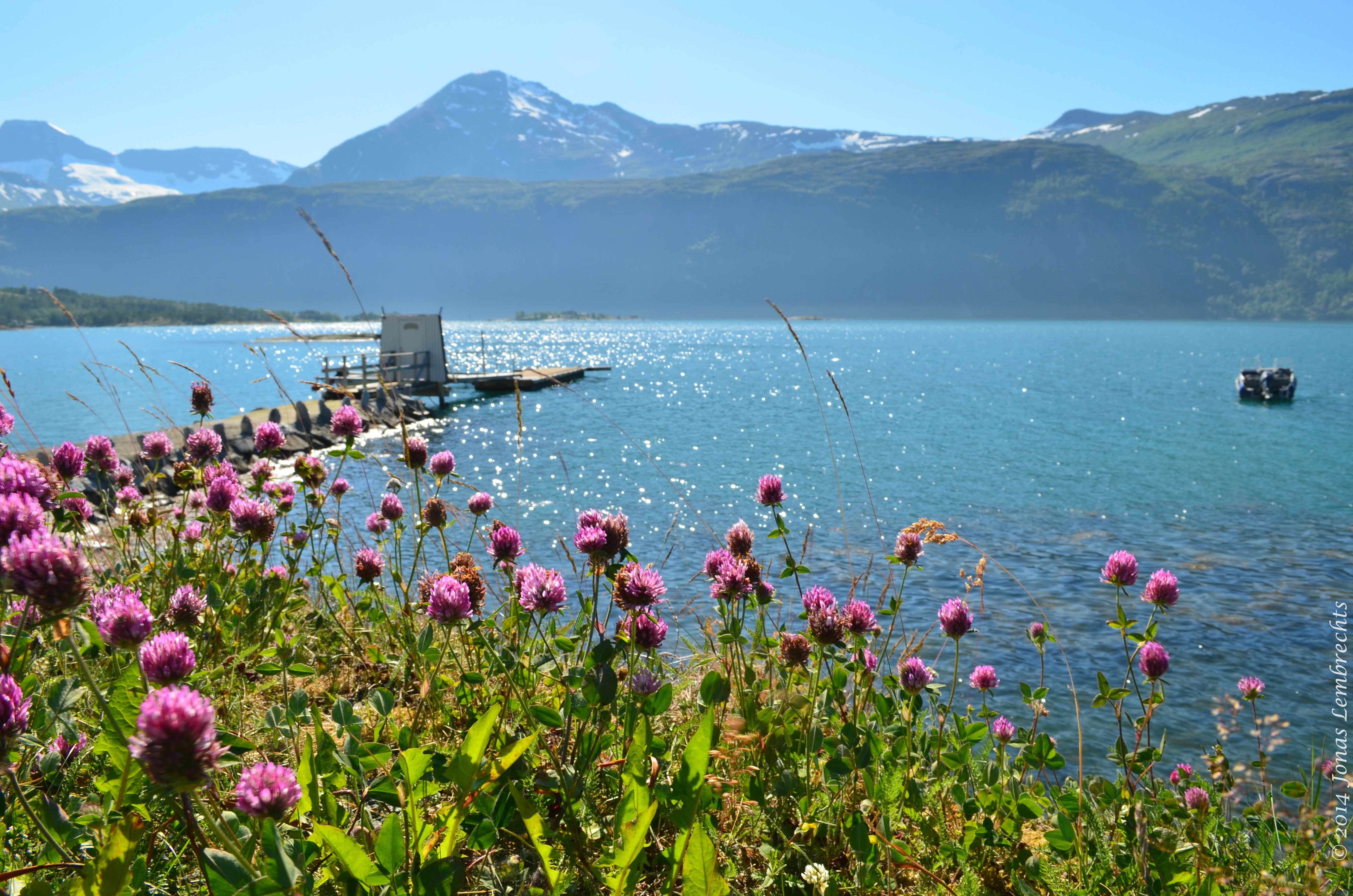
Invasive red clover along a fjord in northern Norway

Invasive red clover along a fjord in northern Norway

This wider environment is an important factor. As scientists, we have the habit to focus too much on the details. From our first steps in the PhD, we dive too deep in our own little niche. And as we get closer and closer to our subjects, it might become difficult to communicate to uninformed outsiders about the broad picture.

DSC_0091

A good picture could be the rescue here. It provides a non-scientific public immediately with a lot of useful information about your study object and its environment. Especially when you took into account the ‘Low’ and ‘Far’ strategies…
DSC_0497

When you dare to ignore the common urge to take a frame-filling picture of your subject, you improve your chances of explaining the details to your audience. A well-designed picture in which attention has been paid to the background, starts telling a story. A story about the world in which your subject lives, the ecological frame where everything is situated. You loose small-scale details if you refrain from close-up images, but in return you get a large amount of information that broadens the view.

Herd of reindeer in their typical environment: roaming the tundra with the Lapporten mountains in the background

Herd of reindeer in their typical environment: roaming the tundra with the Lapporten mountains in the background

Taking some steps back might also help to get a simpler image, one that is easier to understand. Keep an eye out for distinct lines and shapes in the landscape, as they can provide a pause for the eye of the viewer. This will make the true subject of the picture to stand out.

With this close-up of a dead lemming in the Scandinavian mountains, for example, you can see the details of the gruesome torture that happened to this poor animal.

DSC_0019

But I also love this overview, as it immediately adds an extra dimension to the story. How the little fellow was probably left behind there on that rock by a bird of prey. How the hunter was driven out by an unwanted visitor halfway its meal on its favourite rock overlooking the whole valley.

DSC_0022

So, going ‘far’ from your subject turns out to be an interesting way to tell ecological stories. I experienced the trick to work for people as well. A picture of an ecologist in action in the middle of his ‘natural habitat’ emits a lot more power than any detailed close-up will ever get.

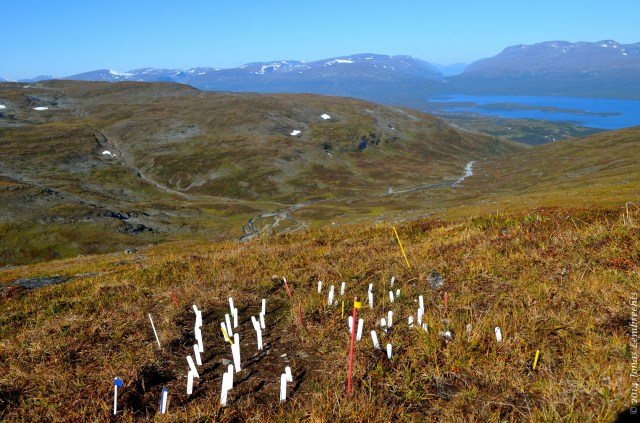
Hiking through the Scandinavian mountains in search for an experimental plot

Hiking through the Scandinavian mountains in search for an experimental plot

Posted in General | Tagged , , , , , , , , , , | Leave a comment

Paradise in the heart of the jungle (2)

Something else: no mountains and cold weather this time, but the hot and humid atmosphere of the tropical rainforest.
Some of my fellow PhD-students started a new project in the forests of French Guyana. This is their blog, a nice mixture of scary jungle creatures and exciting ecological research.
Check it out here!

LLL's avatarLore and Leandro in French Guiana

Sunday morning we prepared ourselves for a 3 hours walk in the rainforest: only +- 8 km and 100m in altitude… The only things we took with us were a hammock, a sleeping bag (yes, in het morning with 100% humidity it can be a bit colder), a towel and soap (a shower after a 3 hours walk in the rainforest is really nice!), clean underwear and t-shirt (yes, this is also really nice :p) and a bottle of water (only one per person was enough, because halfway we could refill them from a small creek). At 9.32h we left the Pararé camp (starting point of our walk) and started our walk to the Inselberg camp (end point of our walk).

After this heavy walk, we arrived at 12.36h! First we enjoyed a lunch with crackers & jam, then we relaxed in our hammocks. While Lore stayed in the camp because…

View original post 149 more words

Posted in General | Leave a comment

Bariloche’s beauty

Called “Little Switzerland”, at the foot of the Andes, Bariloche is a stunning beauty of a place…

Click here to loose yourself in a photo gallery of its amazing lakes and mountains.

DSC_0139

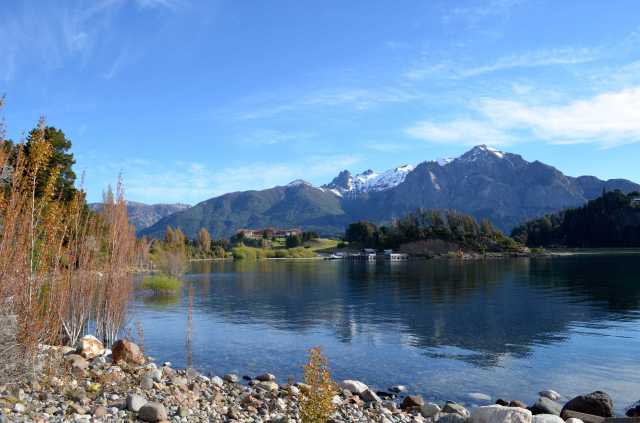
I could try to describe the emotions that run through you when you overlook the lake Nahuel Huapi on a warm spring day, but I will just let the pictures speak for themselves.

DSC_0046

Posted in General | Tagged , , , , , , , , , , , | 3 Comments

Pine-vasion

There are some striking differences between Europe and South-America. An important one that caught my ecological eye is created by the high levels of exotic invasions. Compared to the invasion in  the places I visited in South-America, plant invasion in Europe is only in its starting phase (see also here).

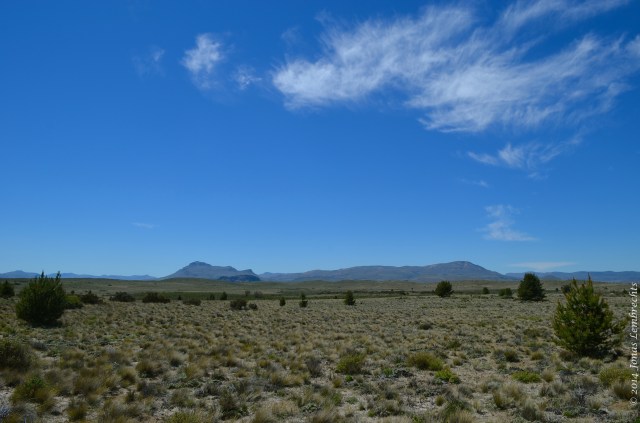
Steppe with pine encroachment

Everywhere I came in Patagonia, exotic species were booming. Cities are almost completely filled with exotics and whole areas start feeling like a European or North-American ecosystem.

Pine in invaded steppe

One of the most obvious problems is created by North-American pine species, in large amounts introduced for their economical value.

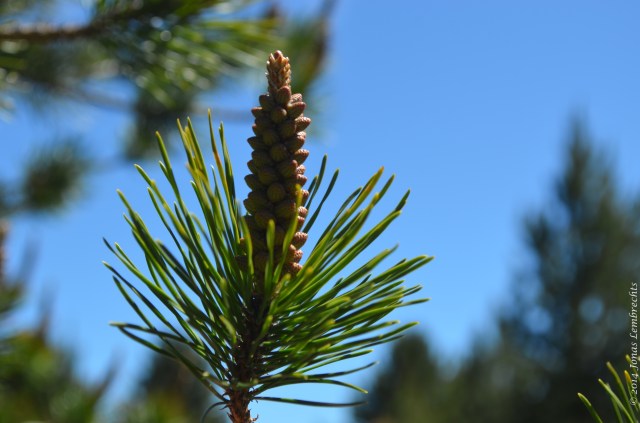
Pine tree

With their love for the growing conditions in the open Patagonian steppes, they turned out to be impossible to constrain within their well-defined plantation. They can be found spreading over large distances, steadily changing the steppe into a closed monoculture.

Steppe invaded by pines

Their capacities to rapidly dig for water in this dry ecosystems probably lies at least partly at  the root of this impressive competitive behaviour.

That's a deep tap root

If you wait too long, management of the invaded sites becomes almost unfeasable. Even if the trees can be eradicated, the question remains if the old steppe will find possibilities to regrow.

Pine management

The main problem is the ever-present seed source, the nearby plantation. As it has its economical value, it can not be removed. As long as the source remains, the fight with the emerging pines might be impossible to win.

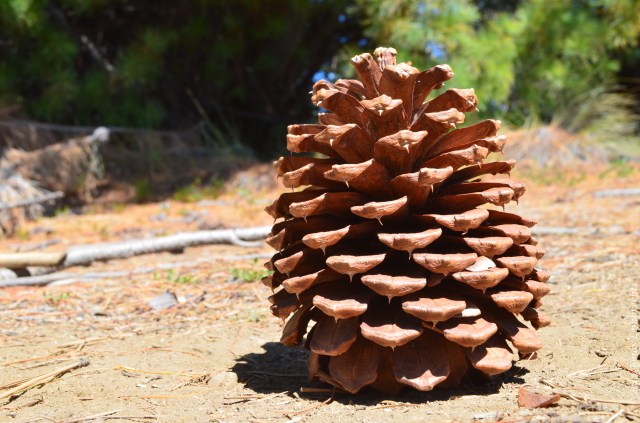
Pine cone

Those eagerly invading pines and the forested system that result from them will have a huge effect on the other exotic invaders underneath them. If that effect is positive or negative, that is a story I hope to tell in a near future.

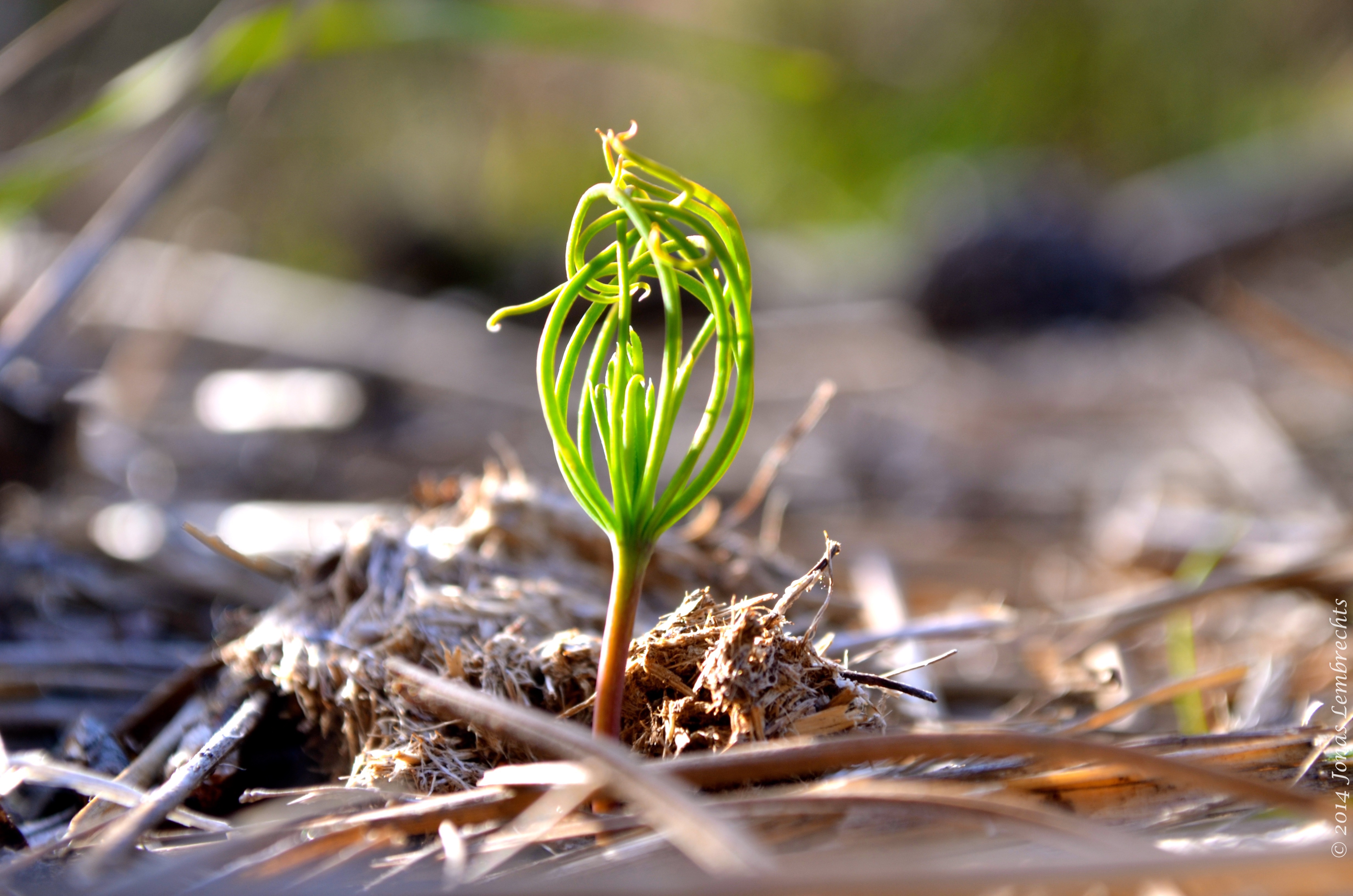
Pine seedling

Specialist on the matter and guide on our highly interesting excursion in the field, is Argentinian scientist Martin Nuñez.

  Pine tree Argentina

Posted in Argentina | Tagged , , , , , , , , , , , | 3 Comments

Plant Invasion in Mountain Ecosystems

Highly recommended post on plant invasions in the mountains from my French colleague after our recent meeting in Argentina!

Jonathan Lenoir's avatarJonathan Lenoir

I have just spent several days in the breathtaking mountain landscapes of the Nahuel Huapi National Park (San Carlos de Bariloche, Argentina) together with Ann Milbau, Jonas LembrechtsAnibal Pauchard and Martin Nuñez talking about plant invasion at high altitudes and latitudes. I’m still very much a novice in the field of plant invasions and thus this post might sound pretty naive to those of you who are plant-invasion geeks. Anyway, I think that I’m learning a lot by hanging around Ann, Jonas, Anibal and Martin who all know a great deal on this topic and thus I’m giving it a try. Please, correct me if I’m saying anything stupid here. One thing that I have rapidely understood is that although these cold and harsh environments are among the least invaded ecosystems in the world, nonnative plants are becoming increasingly common in these environments (Pauchard et al., 2009

View original post 446 more words

Posted in General | Leave a comment

From Argentina to the future

View on the lake

Under clear blue skies, we wrapped up the final thoughts from our Argentinian meeting. This marks the end of a very fruitful week with highly interesting discussions that gonna guide me for the next four years of research.

Wide views on Huapi lake

The wide views at the foot of the Andes only had good influences on our minds. The unique combination of South-American and European vibes truly sparked first-class ideas.

Finding great ideas in the distance It has been a delight to sit together and make such large steps forward. Now it is just a matter of converting this thoughts into actions. The future starts now. Let me surf on the Argentinian energy and see where enthusiasm can bring me.

Harbor on the Nuapi lake Bariloche

There are definitely going to be a lot of sequels!

Posted in Argentina | Tagged , , , , , , , , , , , , | 1 Comment