For decades, climate change ecology has mostly been a story about shifts: species moving upslope, poleward, tracking the climate they’re adapted to as it slides out from under them. It’s one of the best-documented fingerprints of warming in nature.
What we’ve been much worse at showing is what happens at the far end of these shifts: actual extinction. Not “the range is contracting”, but the species being gone, locally, for good. That’s surprisingly hard to prove, and that for two good reasons. First, a single before-and-after comparison – the kind most historical resurvey studies rely on – have a hard time telling a real decline apart from population fluctuations or missed observations; you need repeated resurveys over time, at the same place, to separate signal from noise. Such standardized long-term surveys are rare. Second, alpine specialists are tough, long-lived plants that respond to a changing climate with a considerable lag, so a species can be quietly suffering in silence for decades before it actually disappears. So even though we’ve had every reason to expect that warming is pushing cold-adapted specialists off the top of mountains, actually catching that happening – at scale, and in relation to how much a place has warmed – has remained tricky.
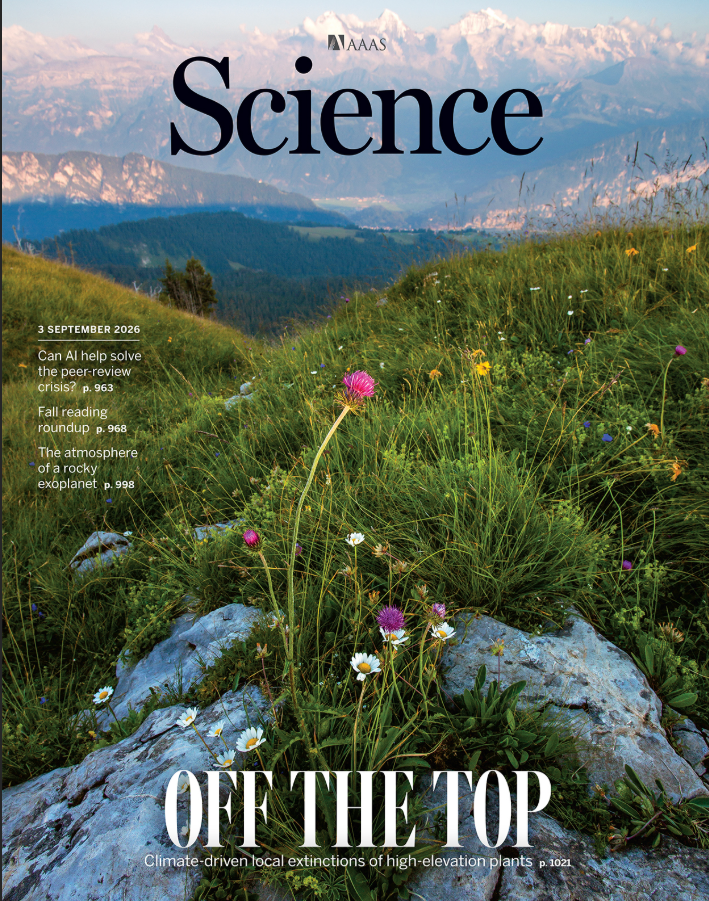
In a new paper out this week in Science, driven by Johannes Wessely, Stefan Dullinger, and a long list of GLORIA colleagues, we finally got to prove what everyone already feared.
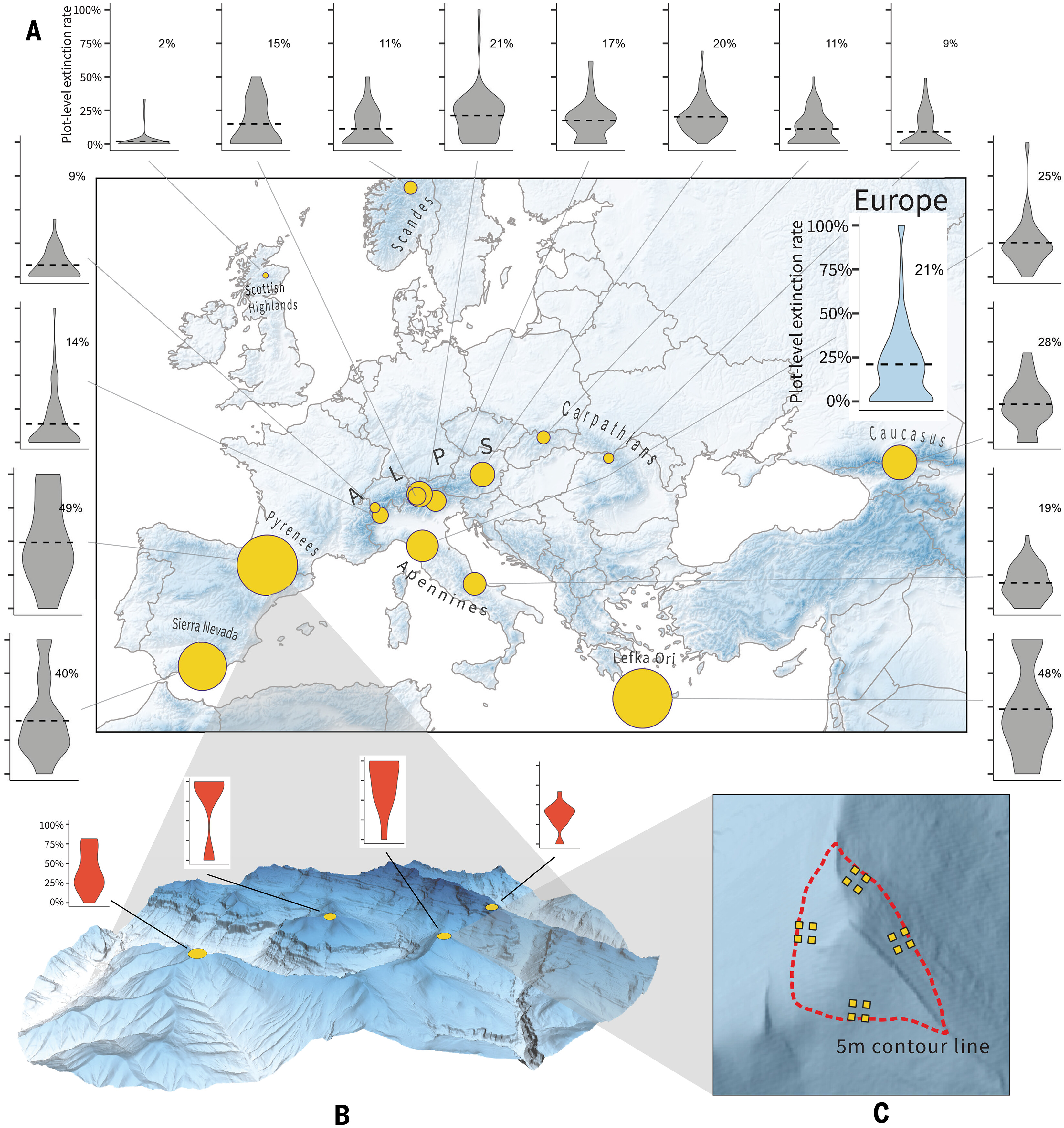
The reason that I – as an ecologists from the ‘lowlands’ – am so drawn to the mountains for my research, is that these mountains are close as we get to a clean experiment. The mountain summits we looked at here experience very little land-use change, no fertilization, none of the usual confounders that make biodiversity loss so hard to pin on any one cause. The GLORIA network has resurveyed the same 1×1 m plots on 62 summits across 16 European ranges every seven years since 2001, resulting in four surveys, 21 years of data from 896 permanent plots. If a species disappears from a mountaintop, warming is one of the few plausible suspects left.
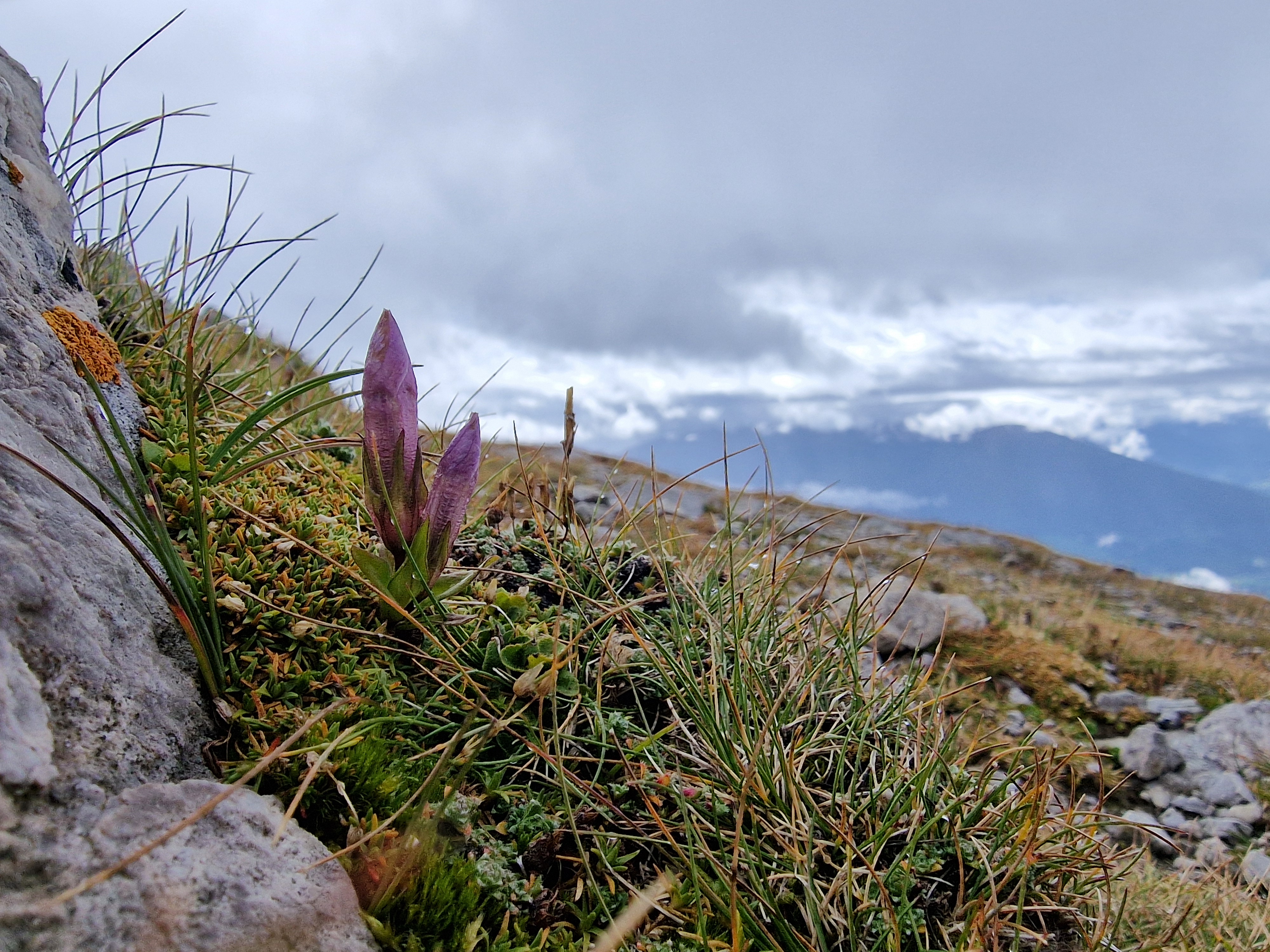
Summit plant diversity has been rising for years, as lowland species colonize newly hospitable ground. We knew that, and that obviously remains true. But behind that increasing richness, local extinctions have been rising too. What’s more: these extinctions are getting faster with each survey, and this at every scale we checked: plots, summits, whole mountain ranges. Richness went up because colonization outpaced extinction, but that fact was hiding the losses. And what we are loosing, unfortunately, are exactly the cold-adapted specialists that make high mountains botanically unique.
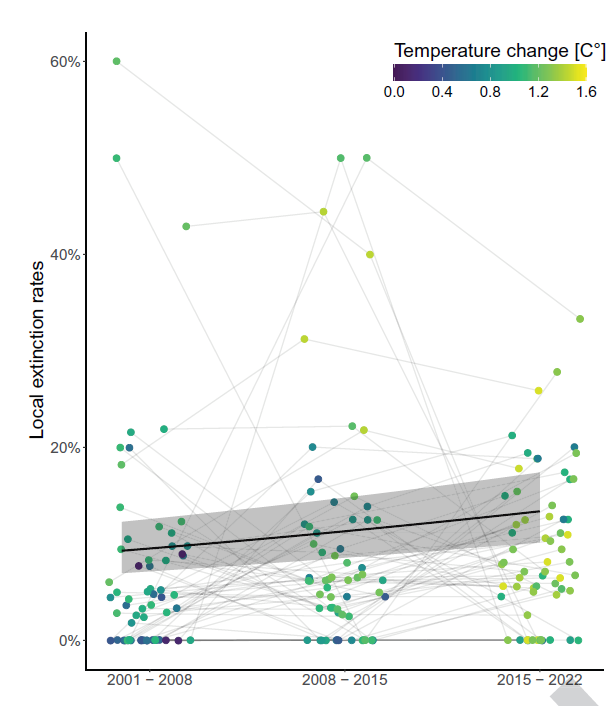
Importantly, what predicted these extinctions was more than just time. Where the paper gets scarily elegant is where it shows that these extinctions truly correlate with how much a summit had actually warmed. Every extra 0.1°C over the preceding 14 years came with a measurable rise in extinction rate, and warming actually explained far more of the pattern than time alone. Species were also more likely to disappear from their warm, low-elevation range margin, and from communities shifting hardest toward warmth-loving species. Good to know, perhaps, as well: a preceding decline in cover was – while noisy – an early warning signal of extinction.
An extinction debt coming due?
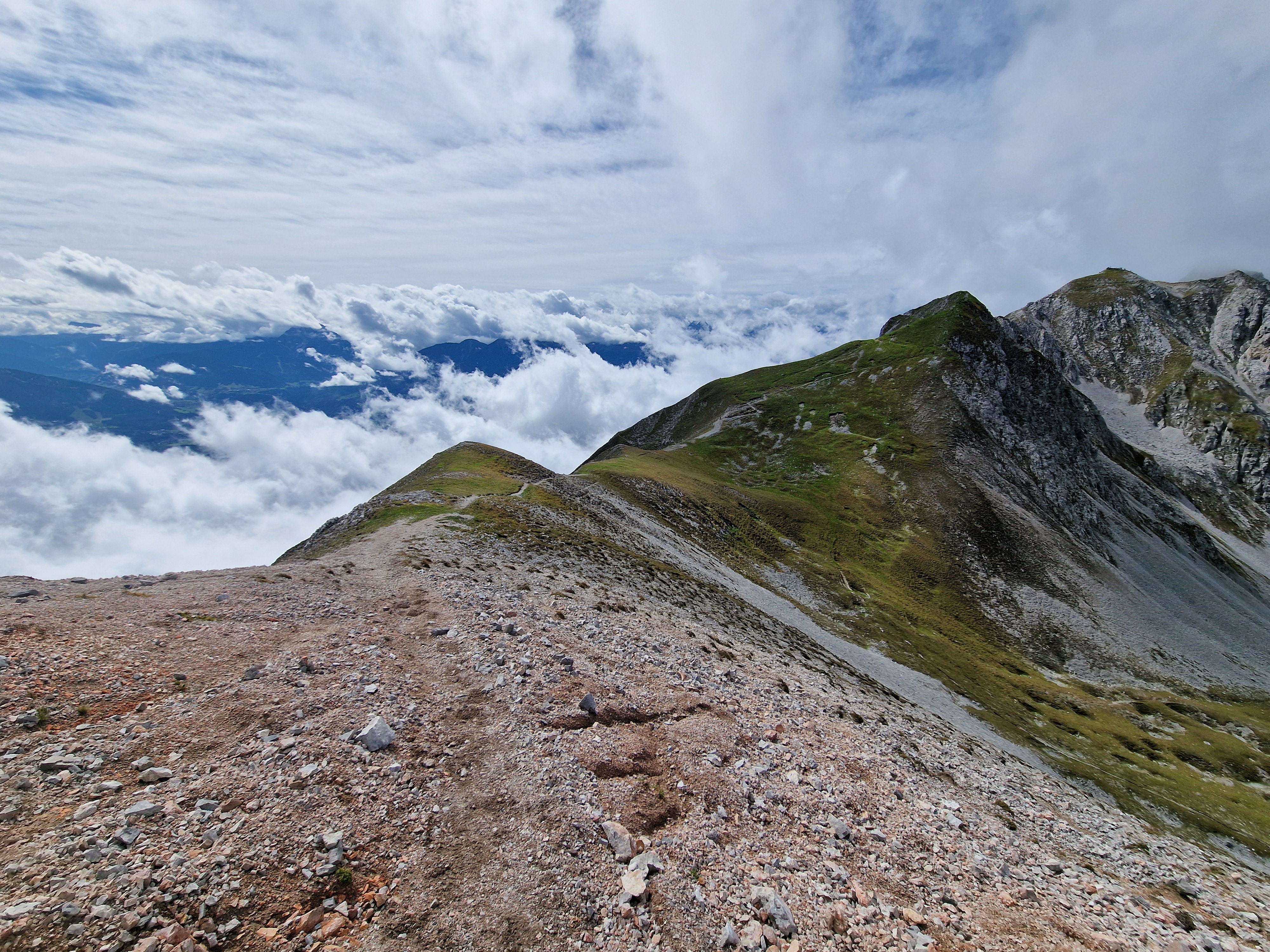
Alpine specialists are tough, slow-growing, long-lived and thus often lagging behind the changing climate. That raises an uncomfortable possibility: what we’re seeing may be the first instalment of an “extinction debt” built up over decades of past warming. Now, that extinction debt is starting to be paid, which means that more losses could already be written in stone.
We’re not claiming climate change is the biggest driver of biodiversity loss everywhere; land-use change and nitrogen deposition still dwarf it in most human-dominated landscapes. But on summits, where those confounders barely exist, the fingerprint of warming on real local extinctions is now about as clear as it gets. And it’s growing. Measurably.